Degree level entry for all Police Officers is a retrograde step which will push a common sense approach to policing even further away down the bureaucratic queue

police-training

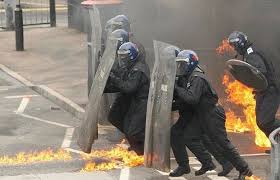
With everything happening across the political and public sector world feeling so very uncertain already, it will have come as a surprise to many that the Government has allowed the College of Policing to announce that candidates wishing to become Police Officers will be required to have Degrees from 2020.

The reasoning cited behind this move is the increasing level of activity within the role including the research which Police Officers are required to undertake online. But is this itself really justification enough to raise the bar to an occupation and public service which in recent years has been a key target to become a lighthouse of diversity?

Information Technology and ‘web fluency’ levels are arguably highest within the generation now reaching the workplace at 16 and above – irrespective of the level of formal education they have attained, simply because use of smartphones and PCs to access the web has now reached a point of social permeation where children are culturally conditioned in their use. To suggest otherwise would arguably demonstrate just how seriously out of touch our policy makers have now become.

Cyber-crime has become increasingly prevalent. But it has not in any way superseded the need for real-world policing, which has itself become painfully absent in recent years as a mix of bureaucracy and the public sector funding crisis have hit the Police Service very hard indeed. The widespread perception exists that the physical presence of our Police forces have now dwindled to a point where it would logical for us to ask if our communities are really safe.

The concept that more can be delivered using less is one that is now followed in every sector. In some cases there are significant efficiencies that can be made within organisations of all descriptions, particularly when new technology can reduce the workload or requirement of staff numbers. However, this is not without consequence as the current raft of strikes in the UK have arguably displayed. There is also a significant question to be addressed regarding these economies being made when the financial benefit has become the priority over the experience of the customer or members of the public.

Like many, I grew up with a respect for the Police which is increasingly hard to justify, given the level and type of interaction which Police Officers and Police Community Support Officers now have within the community. The focus on a system of delivery where you once felt that a Police Constable really did have autonomy as they enforced and represented the Law appears to have long since left the building. It appears to have been replaced with a bureaucratic nightmare where Officers now have to look over their shoulders before they decide either to engage or to act.

It may seem romantic, but an age where a Police Officer didn’t have to resort to making arrests or presenting Court Summons to achieve a real-life result with ‘petty crime’ was not so long in the past. Yes, these Officers of the Law did not have to chase their quarry online, but they also engaged with would-be criminals in a much more meaningful way. One which was adapted to the specific circumstances they were addressing and did not result in so many young people being tarred by acts of stupidity which with the arrival of the net itself, have become far too accessible to the people looking for controversy who need no degree to go searching for any mud that can easily be used to stick.

Most of those less senior Officers had very little formal education. But what they did have was life experience and common sense by the bag load; the essential ingredient for constructive interaction with people of all levels and of all kinds.

Being ‘streetwise’ isn’t something that can be taught from a text book. One of the simple facts that the College of Policing may be seriously overlooking, is that degree level students want to earn their money straight away. University leavers will not have the world view or wherewithal that the public should be able to expect any Police Officer to have, whilst waiting for the graduates who would make ideal police officers to gain experience in other occupations first may prove to be a fruitless exercise given that they will probably stay in other safer, more lucrative and perhaps even more rewarding careers if they have by then already found them.

Police Officers in the UK already undergo extensive training to support them in their roles, and extra modules to support non-specialist officers to fit their IT skills to the purposes of our Law enforcement regime would be no quantum leap for those who have qualified for entry by today’s terms.

Sadly, this move towards elitism within the Police Service has all the hallmarks of taking one very large step in the progress of bureaucracy too far and risks disenfranchising communities from those in power beyond that too.


image thanks to http://www.telegraph.co.uk

The Living Wage is as much Labours’ child as it is the Conservatives’ and their MP’s Band Aid parody highlights the political culture of creating policies which deny the realities of consequence

labour-band-aid

The principle of the Living Wage or rather the concept that everyone should at least earn enough to provide them with a basic standard of living is a good one for many reasons. But in isolation, the coercive nature of such a policy being unleashed upon business and industry was always going to be seriously flawed.

The indirect impact and ripple-effect of this Policy – which have led to consequences outside of political control, were as poorly considered when it was launched and implemented by former Chancellor George Osborne as it was when it was first mooted by Labour Leader Ed Milliband.

That big business has adopted a rationalisation of employee terms and conditions as a method of offsetting the additional expenditure which the Government has effectively imposed upon them should not come as any surprise.

Profit is for many organisations a god after all, and whilst to many the implementation of the Living Wage appears to be a highly positive step in making life better for the lowest paid, it also overlooks many facets of its knock-on effects or indirect impact upon those it was not designed to benefit. Above all, it fails to consider the responses and choices that employers of all kinds would make as a result.

Whilst the behaviour of successive Governments and the City would suggest otherwise, for the rest of us, money doesn’t simply grow on trees. The impact of paying employees more money has many effects besides using up a company profit margin and whilst it may be a principled idea to expect business to warmly welcome such an apparently altruistic move, it is also extremely naive. Would these very same companies not already be paying everything to staff that these politicians expect them to, if the owners or managers making the decisions already believed the idea or principle was right?

Perhaps most concerning when considered in this context, should be the fact that in April 2017, the Living wage will rise by another 30p to £7.50 an hour, and that a further rise will follow the next year. The consequential impact of the Living Wage will continue to become worse as it becomes more widespread, and the economies and efficiencies that have been made to service the inflation-busting rise so far, will simply become unsustainable as the costs escalate beyond where they are today.

There are currently too many factors outside of the control of government, such as the escalating prices charged for services and goods that are essential to a basic standard of living, for isolated meddling to have a genuinely sustainable positive impact. And that is without even factoring in whether the many marketplaces in which different organisations operate can sustain low margin companies paying their staff more.

As things stand, MP’s and activists can bitch about the injustices of the Living Wage all they like, as the story they are telling will in some ways certainly ring true. But until they accept that they must all think differently about how they address the impact of all that they do, it will continue to be the very same people they are telling us they are going to help who will be the ones who will ultimately suffer as a result.

image thanks to http://www.totalpolitics.com

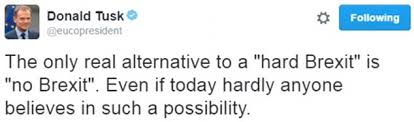
‘Soft Brexit’ or ‘Hard Brexit’ are no more than a Yes/No choice to a question which no longer exists

If you are driving a car and find yourself in the unfortunate position of knowing you are about to hit something, time and space might momentarily slow down as you brace for the inevitable impact, but you don’t get a choice over the damage it will cause and whether the impact will be soft or hard. You just deal with the consequences thereafter.

It’s an analogy that some will quickly dismiss in relation to Brexit, but the parallels are there for all to see. The distinct difference being that in relation to the European Referendum, the result – and therefore the destination to which we already know we must travel, is a genuine exit for Britain from the European Union.

Much is now being made of the difference between the terms ‘soft Brexit’ and ‘hard Brexit’. Yet they are discussed in a way which suggests a choice about leaving the EU continues to exist.

If we respect the will of the majority of the British people, we will also accept that it does not.

What will be discussed when Article 50 has been triggered, both with the remaining Member Countries of the European Union and also the many Countries beyond, will be the relationship and the way that it will work between all of us thereafter.

On the part of some, it is intentionally misleading. With others it is the the effect of a process of engagement being conducted by politicians who simply do not understand the impact on the general public from what they are doing.

Either way, talk about dictating the terms under which the Government will negotiate Brexit do little more than indicate that the ‘remain lobby’ intend to halt Brexit in all but name, simply by insisting that the key qualifications and requirements of membership will ultimately be retained.

For them to succeed would be a political fudge of momentous proportions. Not least of all, because it will be representative of the same manipulation and game playing – focused on self-interest and political expediency by those in power, which inadvertently created the disillusionment and disenfranchisement which led to the choice for Brexit in June.

The choice was not simply about Europe, even if the question was framed that way. Outspoken Europhiles as well as those masquerading as born-again leavers within the political bubble would do well to remember this.

People know their minds and they are not going to accept a giant backslide of the kind being advocated under the auspices of the disingenuous suggestion that anyone sensible or without prejudice who voted for Brexit didn’t have a clue what they were doing.

Talking up technical truths may well have been a big part of what the success of the Leave Campaign message was about. But these messages resonated so well with people because, as any good marketing man knows, the adverts that really sell are always the ones that play on an element of a story which is inherently true.

Remain failed to connect with a working majority not only because they relied upon events that had no guarantee of ever happening – no matter how scary they might have been presented to seem, but because they were not able to sell or even speak of benefits to the lives of everyone in this Country which as a majority we could either see or believe.

It is a mistake to believe that a different campaign on EU membership dressed as ‘soft’ or ‘hard’ Brexit will now yield a different result. Just as it is foolish to imagine that the European political terrain of before the 23rd of June 2016 still exists.

brexit-2

Our focus should now be well and truly upon developing the best post-Brexit relationships that we possibly can, whilst recognising that the remaining Members of the EU have as much to lose from a bad deal with the UK, if not arguably more so than we ever could, given the position as a self-governing, unrestricted and fully-open-for-business entity that this Country will then actually be.

images thanks to http://www.dailymail.co.uk

Festive Strikes defy sense and reason, but we should all be mindful of the unspoken issues behind them which serve as a warning for us all

download-1We should all recognise the value that Unions historically had in influencing positive change in the workplace. But times change and the question over whether they have continued to provide a genuine voice for poor treatment or have simply become little more than an archaic nuisance to business and government alike will certainly lend legitimacy to the arguments against Union power by the more neoliberal within them.

The effect and reach of equalities legislation has permeated through every part of society and our lives to a point which has arguably gone well beyond its point of good, and to a level where its influence has become fundamentally regressive.

From this standpoint alone, you could make a reasoned and valuable argument against any organisation or movement which seeks to progress the work of the rights lobby further, and beyond that see the power of Union Leaders as the menacing anti-business device that the untimely raft of strikes by Southern Rail, Post Office and Argos Staff this December would ultimately suggest that they are.

It is certainly true that in relative terms, there is no difference between bankers creating profit-focused financial devices that speculate the cost of products or services, indirectly raising the cost of living for us all, and a self-serving union rep who places a stranglehold strike on an employer simply to get a pay rise or a perceived improvement in terms for their fellow staff.

But should we really dismiss any kind of industrial action by narrowing cases down and concluding that personal gain is simply what its all about?

On the face of it, it really doesn’t matter if a debate is framed as a matter of health and safety or fairness over holiday conditions and pay. Gain does play a significant part, but so does the fear of loss, and both these two debates are representative of much deeper seated root causes of problems at work around us which are building up as a significant time bomb, whilst they continue to go unchecked.

Union leaders do not help themselves by behaving as if business exists only to create and facilitate jobs. It doesn’t and never has. Yet the drive to pay less for the same work to be done or to do away with specific jobs entirely in order to cut costs when profits are maintained and prices are soaring, rather gives the lie to where a public service provider’s priorities focus. The more concerning element of the Southern Rail strike debate however, is what the introduction of technology which immediately halves the staffing requirement for managing just one train alone will mean or may have already meant when considered outside of this specific context and becomes representative of the impact its is having in every area of business and employment.

Immigration is blamed by many for the loss, or rather diversion of jobs to foreign and particularly Eastern European workers, with the caricature of the Bombay-based call centre worker being used to account for the export of many others. The inference being that jobs are in some way set in stone and that it is just the terms under which they are awarded to an employee or contractor that changes.

What it doesn’t account for is the genuine loss of jobs due to technological advances having literally removed the need for a particular role to exist.

We would perhaps like to think that his march of technology is researched, developed and delivered purely on the basis of improving many different aspects of production and service delivery. That is certainly how the benefits are sold.

What is rarely mentioned – the elephant in the room, is that jobs have been disappearing for a very long time as a result of this pathway of progress, whether it has been within manufacturing, agriculture, public transport or any one of a multitude of industries and skilled areas where services or production have been highly labour intensive.

Up until now, the change has not been noticed. Workers have retrained and like the once redundant miners who moved into call centres in the North, many manual jobs have been replaced by others within newly defined service industries which are focused on producing an experience, rather than some kind of definable or tangible product we can buy.

It sounds good, and little is said when jobs are there for those with apparently transferable skills when a factory closes. But what happens when the new jobs do themselves become the target of efficiencies and the technological breakthroughs which leave a machine doing the job of many different people over its amortised lifetime at a fraction of the cost?

This whole idea will to some sound far-fetched. But the change is very real and is now becoming present as a very clear danger to a broad spectrum of jobs.

Take for instance Amazon Go, which is set to be launched in the United States early in 2017. This forward looking and innovative Company is not standing still when it comes to the platforms from which it seeks to acquire new market share. Within weeks, it will move into location-based grocery stores which do not require shoppers to use tills or a check-out system when they visit. You simply use the smartphone based Amazon Go App which does the work for you and the system even knows and calculates the change when you put an item back.

We need only consider the number of tills at a standard sized Asda, Morrisons, Tesco or Sainsburys near to where we live and the inevitable irritation that queuing to pay causes us all to appreciate just how quickly this new way of shopping could explode, taking many jobs from any one or all of these stores as the concept is rolled out and goes viral throughout the retail industry – which it inevitably will.

In business terms, this development by Amazon can only be commended as the groundbreaking step that it actually is. But the dark realities behind this very appealing change for our instore shopping habits is that its true benefit will be profit to shareholders. It will be masked by a transient benefit to us all as shoppers, but it will ultimately lead to the loss of jobs which may simply never be replaced or made available elsewhere.

The very difficult message that needs to be swallowed, fully considered and then acted upon by policy makers as a whole is that the story which underlies comparatively simple squabbles with the Unions over pay and conditions do indeed relate to the range of still unanswered questions over the continuing cost of living crisis, but are in fact just the tip of a very large iceberg indeed.

In recent weeks, highly respected British Scientist Professor Stephen Hawking and US Tesla CEO Elon Musk have both alluded to these issues with Mr Musk going as far as to suggest that government may have to consider providing a basic income. He is absolutely right.

If industry continues to deliver efficiencies via technology in the way it that it is already doing so, whilst religiously maintaining or increasing margins and raising prices despite the savings being made, profit for the few and the effect it has on the many will unquestionably result in the Government paying the bill to finance a significant workforce which has become unemployable and left without choice.

Less people paying tax will exacerbate the difficulties that the Government faces and families in genuine need will not be sustained on a level of income which doesn’t meet the increase in the cost to maintain a basic standard of living which is being dictated by and large, by the very companies who will benefit from the implementation of the technology that enables them to shed so many staff.

The alternative will be that Government must take the concept of responsible capitalism seriously and consider the steps that may need to be taken to prevent businesses growing to a point where their market share enables them to become a monopolistic menace to the very society that buys its goods or services.

In the mean time, the methods, approach and lack of consideration for the impact of their actions upon people who are struggling in the very same ways as union members are themselves in the run up to Christmas may well make any feelings of support for the Strikes feel somewhat unpalatable. But we may all nonetheless do well to appreciate the value in the story which is not being spoken by the Unions, the media and Government when for far from obvious reasons, the voice of militancy leads an employee to act.


image from source unknown


Social labels and media-friendly umbrella terms are misleading everyone and politicians are too scared or too lazy to communicate the truth

umbrellaYou’ve perhaps heard it said that the simplest use of language is the most intelligent. Great writers such as Orson Welles have been quoted for their direction in trimming unnecessary word use too. And within a culture where the use of subtext allows many of us to make guesswork of messages that we could all too easily say, it might sound strange to suggest that this process could go too far.

Words are truly fascinating things. But we are experiencing times when simplification and the focus of broader meaning down into one or very few words – often for the purposes of marketing or political expedience – has created a cult of watchwords or polysemic terms which overtly mean just one thing, but do in fact hide a multitude of different meanings, which can be as diverse as the number of people reading or indeed using them.

It doesn’t sound like much of a problem when we think about the way we see the world, because its all too easy to assume that everyone uses the same words for the same things as we ourselves do.

The problem is that they don’t.

On a day by day basis, those differences may not be so big as to cause any great problem, and discussing the structural differences and the relative meanings of there, their and they’re, probably creates more humour than it ever will do some level of dangerous misunderstanding between two or many more people.

So what is it I’m trying to say so simply here?

Well, oversimplification of language and/or meaning is not only flawed, it is also fundamentally dangerous. That narrowing dialogue down in to terms which the speaker or author understands takes for granted that the reader or listener will do so too. That people with responsibility to communicate a message should be mindful that the words they use may not generate the same understanding for those who hear.

The profundity of what is becoming a menace, cannot be illustrated better than the use of the term ‘immigration’, and the significance that its use has and continues to have in relation to the debate over Brexit, our relationship with the European Union, and also the different lenses that we are all using to picture the political viewpoints of people across the political spectrum.

So let me ask the question; what do you think of when you hear the term immigration?:

  • Welcoming refugees?
  • Being burdened with unwelcome economic migrants?
  • Creating cultural diversity?
  • Destroying our National identity?
  • Helping those who need our help the most?
  • A source of cheap labour?
  • The loss of British jobs?
  • Long queues in A+E?
  • The source of the housing problem?
  • The reason its so difficult to get an appointment at the Doctors?
  • No place for your children at your most local school?
  • An opportunity for our children to learn other ways of thinking?
  • An opportunity for us to learn other ways of thinking?
  • We are importing terrorists?
  • Being made to feel like a foreigner in your own country?
  • Everything that is wrong about Europe?
  • Everything that is right about Europe?
  • That everything will change for the better if its stops?
  • That everything will go wrong for us if it stops?

The chances are that it could be any one or perhaps more of these or many others., and almost without exception, there is a duality to the particular meaning that it may have, which depending on which side of the Brexit coin you may sit, will be conversely mirrored by someone who sits on the other side.

Knowing that immigration is a word with such diversity of meaning, and that it also makes people think as it is said was in some respects the greatest genius of the Leave Campaign message. However, it may also have been the most dark, bearing in mind that it is clearly the case that the use of a dog whistle of this kind has inadvertently let a rather large genie out of the bottle in terms of the broad misunderstanding of other people that we might previously have thought we understood.

For instance racism in its genuine, un-nuanced and non-pc promoted sense is thankfully rare. But immigration to those few amongst us has always represented the unwilling acceptance of difference within our communities and its end, the removal of all other kinds. These are the few who have shamefully found new confidence in their ignorance and bigotry, taking their vitriol to our streets and transport since the 23rd of June to offend people who have done nothing to deserve such intolerance.

However for those looking on with the moral certainty that Remain was always the enlightened path, this intolerance of immigration must surely be representative of all people who voted Leave on the basis of the immigration question.

Call it being tarred with the same brush or death by association, the fear and frustration that the collapse in public services which has correlated with the arrival of mass immigration is seen as excuse enough to cast many people who want to do nothing more than go happily about their normal lives in safety in the light of thugs who desire no such thing. And all because these issues have been narrowed down into just one thing, which itself overlooks the reality of the role of the EU in immigration in the first place when the matter is correctly put into context by the role of Globalisation.

It seems there is a lot to be said about simplifying language into more accessible terms. But the access can itself can go too far, and the travesty is that simplification of this kind is not rare and is continuing within the government and media sphere all the time.

Take ‘hard Brexit’ and ‘soft Brexit’. What do these terms mean to you?

Whats about JAM’s (Just about Managing). Isn’t that the experience that most of us are having too?

The travesty of using terms like these, is the damage that their being misinterpreted or misunderstood creates. It is distinctly unintelligent to heap so many meanings into such basic terms and then expect everyone else to understand them.

They don’t. and social, demographic or political labelling of this kind is merely serving to create even greater distrust and disenfranchisement than that which shook the establishment with the No Vote in June.

People are never wrong when they understand things their own way, using the lense that their life experience has given them. Some of us would risk simplifying this to the term ‘living in the real world’ and until our leaders begin to respect the people they collectively represent and stop treating us all like an audience which is a seedbed for manipulation, the electoral shocks will continue to come.

Make the effort to put ideas, problems and policy into terms that are easy to understand. But please do us all a favour and stop being lazy as you do.


image thanks to source unknown