A Humpty-Dumpty Heat Pump Policy is yet another act of an out of touch Government risking the success of alternative and workable environmental policies that we could actually afford

In 2007 when I was first elected as a Borough Councillor, one of the first things that I did alongside my newly elected political colleagues, was to push our newly in control Conservative Group to overturn the Councils Standing Orders for its recently approved Recycling Policy. One that didn’t consider the practicalities of the service and worst of all, simply by-passed consideration of what would be the experience of residents as end users.

I recall the look of horror on the face of the Group Leader now. But as we had all campaigned and successfully won our seats with a pledge to introduce a Recycling Scheme that would encourage uptake by making it easy and practical to use, we made it clear that there was no going back from rejecting the Scheme that the last Administration had planned.

What was clear to me, right from when I first began running and designing services for public use – is when you are literally requiring people to change their behaviour the service or product must be easy and make sense for them to use. More importantly still, it MUST offer a perceived improvement and benefit to the user in relation or comparison to what they already have.

One of the biggest mistakes not only politicians, but also many new entrants to business make, is to assume that just because ‘you get it’ and the way your idea works makes perfect sense to you – usually because you already have ‘the background’, that everyone else will simply ‘get it’ AND embrace it too, the very moment that it leaves it’s place on paper and then materialises into real life.

The problem is that people don’t just ‘get it’. And in this case I am only talking about the circumstances where a service is perceived as being ‘free’ to the public or end user. As such it has no directed or calculable financial cost to the end users involved.

The Government’s rapidly evolving policy that will force everyone to begin using Heat Pumps is very different. It certainly makes little sense.

Despite the aggressively optimistic timescale for implementation – which will be either positive or negative, depending upon the ‘green’ views you might have – the shocking reality is that this is a public policy set to cost households a minimum of £10,000.00 – that is itself likely to become ridiculously scalable by the time any law comes into force – and that’s before considering the cost-of-living crisis that people face today being involved.

At a time when the real impact of this Government’s Covid policy of forcing loans and debt onto countless small businesses to ‘survive’ Lockdowns has yet to manifest, it really is quite extraordinary and straight into the realms of the ridiculous for the Government to adopt a wholly idealistic, impractical green policy that is already unaffordable to the majority of the people who it will be forced upon.

Governments will never succeed by forcing through quixotic policies that are neither practical nor affordable for normal people, or do not offer an experience or resultant improvement in quality of life.

The Heat Pump plan is at best a leap backwards from the systems that we already have.

Imposing Heat Pumps at exorbitant cost, with technology that won’t keep people anywhere near as warm, and with practical or physical requirements that might mean the sacrifice of entire rooms – right in the middle of a housing crisis – goes way beyond the sacrifice that any sensible, realistic and thought-through public policy can demand of us.

With technology improving at the rate it is, it is well within reason to expect a Government working for the genuine benefit of the people to design and implement other policies that will not have such regrettable impacts upon the life experiences of others. It is likely that we will very quickly arrive at a point where people will willingly embrace and champion a greener alternative to what we have in our houses today, simply because it works properly, it doesn’t impact or intrude upon life any further than the time it takes to fit and learn to use, and it is something that even the poorest homeowner can afford.

It’s not as if this Government doesn’t have the means or the compunction to use nudges and behavioural insights to get people to accept changes that can be made without financial or lifestyle cost right now. ‘Save the NHS’ is all the evidence needed to understand that there are already seasoned specialists on the establishment payroll who could be using their skills to do something good for everyone in the long term – which is after all what their pseudo-science is supposed to be for.

Sadly, we do not have politicians or leaders in Government today who have the life experience that public representatives should have that would allow them to understand that how life should be and how life actually is are two very different things. There is a massive gap in time and space to be journeyed through between them both that contains a plethora of incalculable factors, impacts and consequences.

Imposing green environmental policy in this way is at its best demonstrative of a puerile view of the world. One that focuses on everything that looks wrong and demands immediate and radical change to address it.

Simply no allowance is ever made for the processes necessary to gain the real understanding of how different people in this Country live, even though it would result in politicians becoming better and more appropriately informed.

We should be able to expect more of our Government. But we are currently stuck with a whole political culture – spearheaded by the Conservatives, which has adopted idealism of one kind or another as part of a self-centred and selfish approach to public representation.

Our politicians have no respect for the laws of cause and effect or the realities of consequence. The Government has already been racking up disproportionate and unmanageable debts under the guise of doing what’s necessary to get us through the Covid pandemic.

Yet before we have even reached the point where normal people become aware of what this mismanagement will cost in the long term, the Government plans to saddle us with unnecessary and avoidable personal debt on the basis of an impractical whim that could end up making every aspect of life green. But equally something that the majority of us can no longer afford.

Great British Railways: Yes Minister, you can change the wrapping, but that won’t remove the structural rot and make rail travel the public service it should be for us all

Before anything else, Railways are a public service, and it is important to recognise what a public service really is or should be.

Public services are the essential services that every member of society should be able to access so that they have the same essential opportunities that everyone should have in life. Public services are usually run by Government or the Public Sector for the benefit of everyone. Either alone or collectively public services are run on the basis that they will provide universal access for the public to the service or services they provide. The master that calls the tune of public services should always be the public itself. One of the key reasons public services are in public hands is the intrinsic truth that providing a universal service means that provision in some locations will be cost effective and in some locations it will not. Public services are run objectively, not subjectively in the way that profit-led services are. Public services are created, maintained and developed for the benefit of us all.

The drive to privatise public services in the 80s and 90s has proven to be one of the Conservatives most destructive steps on the pathway to making the basic building blocks of life unaffordable for the poor.

A series of privatisations like British Telecom and British Gas were sold to us as an opportunity for normal people to take ownership of the services that are provided for us all.

Yet the decision to sell off public services was based on a flawed economic theory expounding the principle that free markets left alone to regulate themselves would ultimately look after and support us all.

The privatisation of public or municipally owned bus companies and franchising of the Rail Network was fundamentally the same. Despite the heavy element of government subsidies being paid even now, the result has been the changing of service priorities from public service to private profit, and that has had implications for us all.

The neoliberal approach to policy and public ownership adopted under the Thatcher regime was the toxic part or downside of the 1980’s Conservative legacy. It created a ticking time bomb that is now in the process of going off with an explosion of implications that are there for us all to see.

Public services are always cut or reformed with an inevitable loss of quality when they fall into private hands, no matter the promises that are made when the process is underway to sell them off or award them to contractors to run. Government subsidies do not matter and in all likelihood make the situation worse as they’re just a way of transferring wealth directly into shareholder hands.

British Railways are at a crossroads where the COVID pandemic has precipitated a steep fall. With private rail operators literally handing contracts back, the situation has literally forced government hands.

The solution that Transport Minister Grant Shapps is now giving us, is the creation of the ‘new’ Great British Railways brand.

Yes, the packaging may take on the look and appearance of a restructure. But the action taken by this Government will do nothing to address the institutional problems embedded within the UK railways system and the way it is operated.

Politically speaking, this is not just a Conservative problem. Labour are historically up to their necks in it too.

Employment rights, an unworkable zero-risk approach to safety and the working time directives that left wing progressives have pursued at every turn created an institutional problem for all public services and the structures of government. The focus on staffing conditions rather than the services they offer has made staff too expensive to afford under ‘public management’ and made a significant list of problems that an organisation as big as the UK rail network faces significantly worse.

Throw into the mix the self-serving influence of union barons, that is no better than the greed and profiteering of greedy bankers at its absolute worst and you have a recipe a disaster, rather than there being any sensible kind of choice when the whole system falls into disarray.

No government or politician can fix the problems that the railways face without addressing all of the different areas of public policy which have influence on the situation leading to the railways demise.

Lack of understanding of how railways and all forms of public transport function and operate has become an endemic flaw within the foundations upon which public transport policy is now made.

For instance, HS2 was never needed in the form of a completely new and separate transport infrastructure. Not when the real questions facing the railways and its management only extend to infrastructure when station capacity and the turnaround of trains at terminus stations in Towns and Cities like London is involved.

Throwing money at the Railways or simply restructuring them will not address the problems that need to be solved.

There is nothing to be gained by either renationalising the railways or continuing to attempt to run this vital public service by placing it in other private hands. 

Until such time as our politicians are big enough and prepared to enact the reforms and development of public policy that will facilitate public ownership of public services to run in the best interests of everyone, Rail services should be placed into the hands of non-profit making trusts. Our Railways should be run as a business by ethical, commercially experienced managers and executives who are motivated to run public services in the most efficient and professional manner and without the expectation that has become endemic throughout the public sector that executives don’t have to worry about income and how they provide value to customers, because their wages will always be paid.

It sounds like a tall order. But this is not something that is impossible to do. It just takes imagination and politicians leading us who have the will to do it, rather than concentrating and focusing on only doing whatever avoids the problem and at the same time makes them look good.  

UK self-sufficiency and localisation of food supply chains from British Farms should now be the Government priority. Not vanity-led trade deals that undermine them

Globalisation as we knew it before the age of Lockdowns is over. We may not feel it, understand it or in most cases even see it. But the World has been changed by the chain reaction that was set in motion by the COVID Pandemic.

Daylight is now beginning to shine upon all the hidden, self-serving and myopic powers that influence our way of life. They are coming together in a concert of chaos with COVID conducting the orchestra – right at the fore.

It may sound dramatic. But the subjectivity and focus we have on everything beyond our own lives and the bubbles we unwittingly live in make it easy for us to ignore how things really are at the objective level. We are and have been living through significant National and World events that have consequences neither we, but even more importantly our politicians, can or now will avoid.

Loss of the realism that a genuine overview provides leaves us out of touch with the reality of what is happening. We take for granted that daily life will always go on as it has and that everything continues in the same way.

Yet the assumption that an encyclopaedic range of foods and products will always meet us when we walk through the supermarket doors or click online is a storybook waiting for a bad ending. And that ending is now almost certain to emerge.

Whilst the Government, media and the establishment they serve tell us that everything will return to the pre-COVID ‘normal’, concocted narratives cannot change nor head off the impact and consequences of the decisions they made, the money they created then spent, and the stories they have told to control people during a pandemic.  

The change is already underway. We can already see it in the questions over home working and many revaluating where they wish to live. Change will touch everything, and this will include even the most basic parts of life, including the clothes we wear and the food that we eat.

We simply don’t need all the things that we buy, eat or drink, and many of us already know and understand this. Whilst it may sound moralistic to say so, it is certainly no coincidence that as a population we are becoming so unhealthy when we are happy sleepwalking through life in the way that we do.

The good, wholesome, locally and ethically produced foods that we genuinely need to live and feed ourselves would not be expensive if we prioritised production using the most localised supply chains possible. It could mean the ingredients of the meals we eat have not travelled outside of our own County boundaries or been carried much further on their journey from farm to fork.

Some may snort at the mere suggestion of returning to a world where butchers, bakers and every kind of traditional village shop or business sell you the produce and goods that have come to them for preparation from local farms and producers.

But this is the way that the world we know will go if it is again to begin making any kind of sense, and we do not need the Government or ambitious Ministers attempting to open up trade flow to Countries that will undercut our own farmers and producers. Indeed, the Countries that Trade Ministers are now talking to should be actively and demonstratively encouraged to develop their own enhanced forms of productivity as we all work towards the level of national and localised self-sufficiency that the post-COVID World and the collapse of global Supply chains will soon demand.

In the simplest terms, the rise and threat of what has been called the ‘Indian variant’ of COVID demonstrates some of the starkest lessons of how this virus works. The ZERO COVID solution that this Government has tied itself to will at some point have to be flipped to become one that we learn to live with it and treat it the same as we do the Flu.

Whether we continue going forward under the premise that COVID control is the only priority or change and accept that there are other ways to live, we can no longer allow or encourage the mass movement of people or encourage unnecessary international supply chains just for the sake of making profit in any way.

Borders will literally have to become borders once again. No matter how much we might we deserve that foreign holiday, we are no longer living in a world where there will continue to be one rule for ‘wealthy’ countries and another for all those that the ignorant and greedy thumb their noses at and call poor.

Viruses and the impacts of ill-considered human behaviour do not recognise boundaries. They have consequences for us all.

For better or worse, COVID is a virus that is here to stay. Global eradication is not possible with the political mindset that the world currently has, and we will soon have no option but to learn and act upon the realities that the spread of a respiratory disease through an interconnected version of the World presents.

Meanwhile, the decision making and behaviours of politicians, banks ad big business as they have struggled to maintain control during the Covid Pandemic has led them to supercharge the growth of the many problems that greed and profiteering have created.

Going local, real localism and putting our communities at the forefront of everything we build our lives around will now become key to addressing the change that events will create and to become happy and content in ways that we have culturally long since forgot.

Farmers, producers and those who run and maintain very local services and cottage industry businesses are going to be key. Allowing any foreign country to undercut local production of any kind – no matter our historic ties – will quickly become one of the greatest acts of economic self-harm in the post-COVID world.

This is not about having a downer on Australia, New Zealand, Canada, the USA or any Country with which we might have once found it desirable to extend trade with. All Countries across the World are going to have to face up to the realities of the step away from globalisation to closed borders and what this really means for prioritising local production too.

Self-sufficiency for food and essential goods must become both a National and Government priority for the UK. Within this, we must look to promote and encourage everyone to shop and focus what they do and the lives they live locally in pretty much the complete opposite way that globalisation and the greed that underpins it has done.

Government must guide and support the development of truly local cooperatives. Legislators must embrace and utilise the freedom we have following our unshackling from the EU to legislate in ways that mean it is both practical and cost effective for every service that businesses require to produce and manufacture locally will not only exist but will thrive in such ways that lead to local products and services being made available to everyone at prices even the poorest in society can afford.

Local Enterprise Partnerships or alternative bodies like them should be used to join up the dots and encourage this growth locally.

Instead of encouraging agriculture and food production to become ever more focused on ‘cost effective’ production that means they increasingly only become viable with the economies of scale and size, our legislators must look at regulating and restricting all of the malign influences that take money out of the supply chain, thereby increasing end-user cost. They are currently adding no value, as part of an equation that increasingly leaves heathy food being a luxury that only the financially wealthy can afford.

Farm shops, farmers markets and the systems of local production that can and must feed into them must be the direction of travel. We must reject the reliance upon retail giants and a system where shareholders and financial speculators make ridiculous sums of money after the companies they ‘own’ can appear to move goods around the planet more cheaply than our own producers can make them. The practice where supermarket buyers crush any farmers ability to both supply them and remain profitable must come to its end.

British Farmers are some of the most innovative and entrepreneurial members of society that we have. There is little doubt that if we both embrace and support the role that they can and will willingly then take within a new and diversified platform for UK food growing and production, the true value to us all of the wider rural and agricultural sector and the community that underpins it will come into its own and be good for us all.
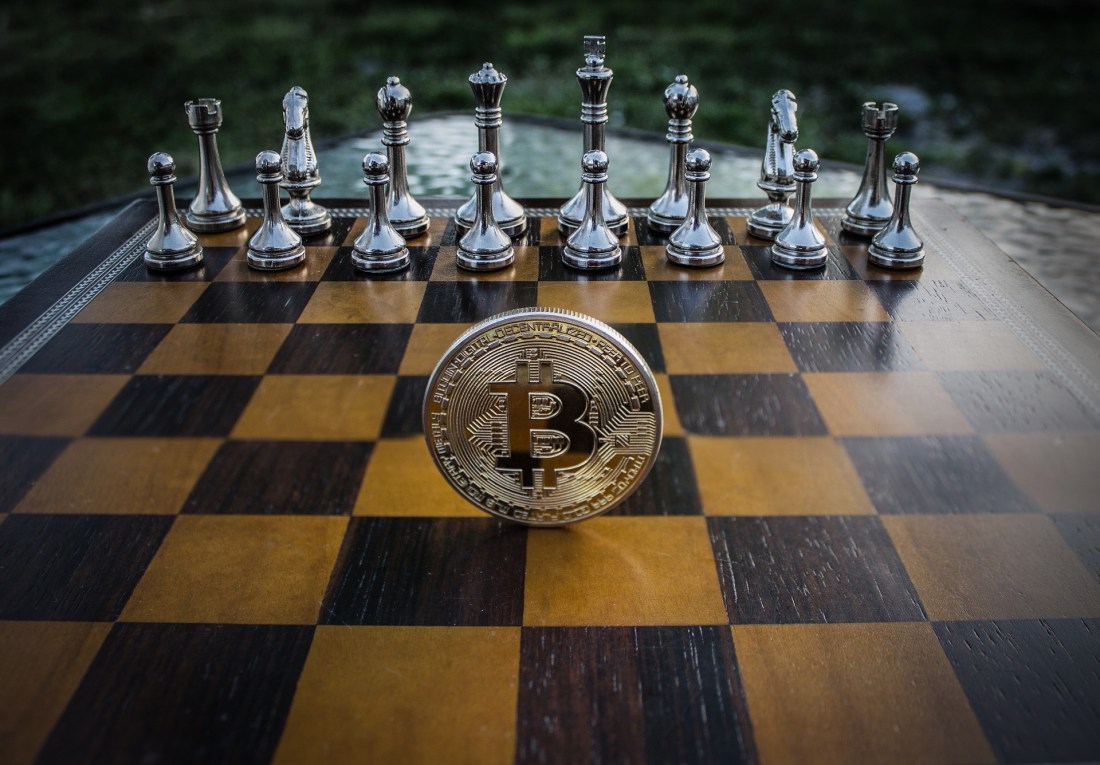
Bitcoin Crash: Currencies are nothing more than a medium of exchange and crashes are inevitable for as long as they are valued as anything else

Money and how it is used to calculate the value of wealth and even the worth of the people we interact with makes it one of the most destructive and dangerous components of contemporary life.

Without realising they are doing it many people look upon every facet of life and consider it in terms of its financial value, what it might cost, or what it would cost to have it themselves.

Very few od us follow the financial markets or observe the way that the economic system works – whether that be the ‘financial economy’ or the ‘real economy’ itself. But what may be one of the great mysteries of the world is the process that has led money and the possession of it to become the most important factor governing the way that we conduct our lives.

Just as many great ideas have the power to help and improve lives, the creation of money as a unit or medium of exchange passed its point of best use and was evolved or developed to become something that it should never have or was never intended to be.

Money was quite literally a practical way of making the exchange of goods or services work effectively when those engaged in that exchange didn’t necessarily want either the goods or the products or the services that the person they were exchanging with could immediately offer them in exchange for their own.

Money was literally a way of giving a universal value to anything that any person could provide so that they could exchange it for what they wanted from anyone else, and also became a way to transfer value or to exchange over great geographical distances.

Had the development of money stopped there or somewhere very similar, the World would now be and would behave very differently from the way that it does today. 

Money itself has never changed. But the way that money is perceived by people has.

Money is now treated as and believed by people to be a thing in its own right.

Yet nothing has changed. Money is still nothing other than the medium of a system to provide universal exchange for services and goods.

Yes, there will be plenty who read this blog who possess lots of money or the means to accumulate it who will read this and quickly conclude that what I’m saying is absolute rubbish.

Money is not real. But the belief that it is make the consequences and the impact of that belief real for all.

Decades of money creation and the use of economic theories and practises such as the FIAT system and the neoliberal push for ‘free markets’ that never look after the interests of others as they theoretically should, have led to the creation and development of the financial economy.

The financial economy is a theoretical system that has been made real by the belief placed in it. Because of the benefits that can be gained by those who ‘play’ it and propagate it, the financial economy has been prioritised and championed above the real economy. Whereas the real economy represents the real world of business and the exchange of labour and goods. The real economy is the basis upon which everything money or financially orientated should work.

Whilst an economist could easily draw up and describe the models of how the monetary, economic or financial system works so that it looks like and can be presented as being very real, money is literally being created out of thin air.

The anger with a self-serving system of this kind that is directly responsible for much of the inequality that exists around the World is palpable amongst all of those who understand and care about what is going on.

The anger against the system has led very intelligent people who are disenfranchised from the system, to search for, develop and launch what they present to us as alternative monetary systems that work fairly because the work in a different way,

Cryptocurrencies – of which bitcoin is probably the best known – are the result of this process.

The intrinsic problem that all cryptocurrencies currently have is that in the process of their creation, they have adopted the most fundamental flaw that all units of currency are currently built on: They are valued as something or a thing to be possessed that itself has value, when cryptocurrencies or currencies of any kind never have been and never will have genuine value of their own.

Yes, you can become financially rich by buying and then selling Bitcoin or any cryptocurrency that has been listed on an exchange. But the process that leads to gains or losses in cryptocurrency value are little more than luck. Buying and selling cryptocurrencies is not a science and any gains you make through a crypto transaction simply means it was just your time to experience a win. Much like spread betting or investing through hedge funds, investing in cryptocurrency is at best nothing more than making a bet. This is no way to run or influence a system that will affect everyone in the World.

The value of Bitcoin and all forms of currency is the belief that underpins them. Their value is directly related to the confidence that investors have to buy them. Nothing more. So, the moment that something shakes that belief, like Elon Musk floating a comment on social media about how Bitcoin mining isn’t very green – the value of this ‘currency’ begins a downward journey towards the floor. It is only then that you can really begin to recognise the true value of what currencies are worth in themselves. Currencies are worth nothing and no more.

Strange as it may sound, this blog is not an argument against the use of cryptocurrencies. There is no question that money and currency use and the legal and ethical value set that underpins their use must be improved as we head deeper into the 21st century and increasingly use the technology that we have available.

A problem for us all is that the entire monetary system is itself flawed but is being deliberately manipulated by people who understand the system well and continue to engage in dangerous practises without any consideration for the consequences and impact upon others. We need comprehensive change.

Because it is legal or the law allows those employed in financial services and in the banking sector to engage in the practices they have been for many years if not decades before, it does not necessarily make what they do morally or ethically right.

For anyone who has spent time studying law or the way that government works, they will soon realise and understand that the law has a habit of being very late to the party. On its route to get there it is often distracted by self interest or the interest of those with influence.

This manipulation of the deck is something that we can no longer afford if we are to all live in a world which is fair and driven to ensure that the poorest members of society can sustain themselves and that a basic self-sufficient life is something that everyone can easily and comfortably afford.

Using Planning Reform to make it even easier to build houses is the obvious solution for a political class that always takes the easy option without view of the consequences first

Politicians are no longer big enough to tackle or even attempt to address issues that they cannot be sure they can control. It is a fool’s game.

Government has been blighted by very normal, overly ambitious people styling themselves as public leaders, whose greatest skill is sniffing out and repelling any meaningful response to the issues and actions that carry the greatest risk to themselves.

The irony should not be lost on many, that if governments were to apply themselves fully and without compromise to addressing the issues of their time and without fear of any electoral risk to them by doing so, they would have done all they need to get re-elected with a decent majority at the end of their 5-year-term.

Regrettably – and to the continued cost of the British Public, this is not how our politicians roll.

Our politicians take the easy and politically lazy route to managing public policy. They deal with issues in isolation, giving little or no consideration to the impact upon other areas of public policy. They focus on the consequences of their actions only for themselves when they should be prioritising the consequences for us all.

The suggestion that using Planning Reform to make it easier to build houses will solve the housing crisis is nothing more than the siren call of greed. A call to action that will line the pockets of the same financiers, builders and political chums as always, whilst people whose lives are being increasingly destroyed by the exponential growth of personal and private debt also see countless other factors that give quality to their lives smashed unnecessarily upon these hidden rocks.

No human being can be in two places at once. Therefore, no human being needs two places in which to live.

Just as is the case in every other part of life, there is ‘enough for everyone’s need, but never enough for everyone’s greed’.

Money, created by a monetary and financial system that is only fair and equitable to those who have no need for any more of it, should not enable anyone to obtain more than they need to facilitate anything more than the requirements of day-to-day function or living. Certainly not when doing so comes at the cost of preventing others with less from having the same.

With a growing population, there will always be a relative need for the country to build new homes. But increasing home building exponentially, just so the whims of some can be met and the profiteering and greed of others can be fed is no solution to a problem that can be solved politically with better, more appropriate and fairer use of resources that already exist.

You never see house prices fall in the area where a new development is built. But you do see problems with flooding. You see the negative impact on infrastructure like roads, schools and GPs Surgeries.

Excessive building leads to a fall in the quality of life for countless numbers of people, many of them everyday, low-wage people who grew up locally. Real people who are being pushed out by deliberately engineered inflation meaning that the new houses the government and media tells us are being built to help them will continue to be the prized lifetime asset they will never be able to afford.

Whilst the term ‘Reset’ or ‘Great Reset’ has been adopted by both the World Economic Forum and by those who love to hate them, there is indeed no better term that can be used to describe what needs to happen to the UKs and the International Monetary and Financial systems so that life and the ability of everyone to live it becomes something that we all can financially afford.

The disproportionate value of homes, relative to what they are genuinely worth could quickly be addressed to a significant degree by a revaluation and rebalancing of the way money is used and manipulated and how the economy works.

But money itself has to be viewed as nothing more than the unit of exchange that it is, rather than the god-like ‘thing’ that greed and selfishness has allowed it to become.

There are already a range of devices that the Government could use to address second and multiple home ownership. This would immediately improve housing stock availability and remove the need for housebuilding to increase or to continue in the forms that are destroying local communities and the environments around them – when there already exists a much more appropriate choice.

Yet our politicians will not use taxation or bans on multiple home ownership, because it would mean wading through a political minefield that they consider too risky to their chances of re-election. They are therefore deemed to be actions that they must do everything to avoid.

By making public policy decisions in this way, our politicians are failing to do the right thing for the people they represent. Meanwhile they are continually creating more and more troublesome consequences for everyone, which they will then once again do everything to avoid.

This lack of leadership in government and the rejection of responsibility by this political class means that the basics of life for many are simply too expensive to afford.