
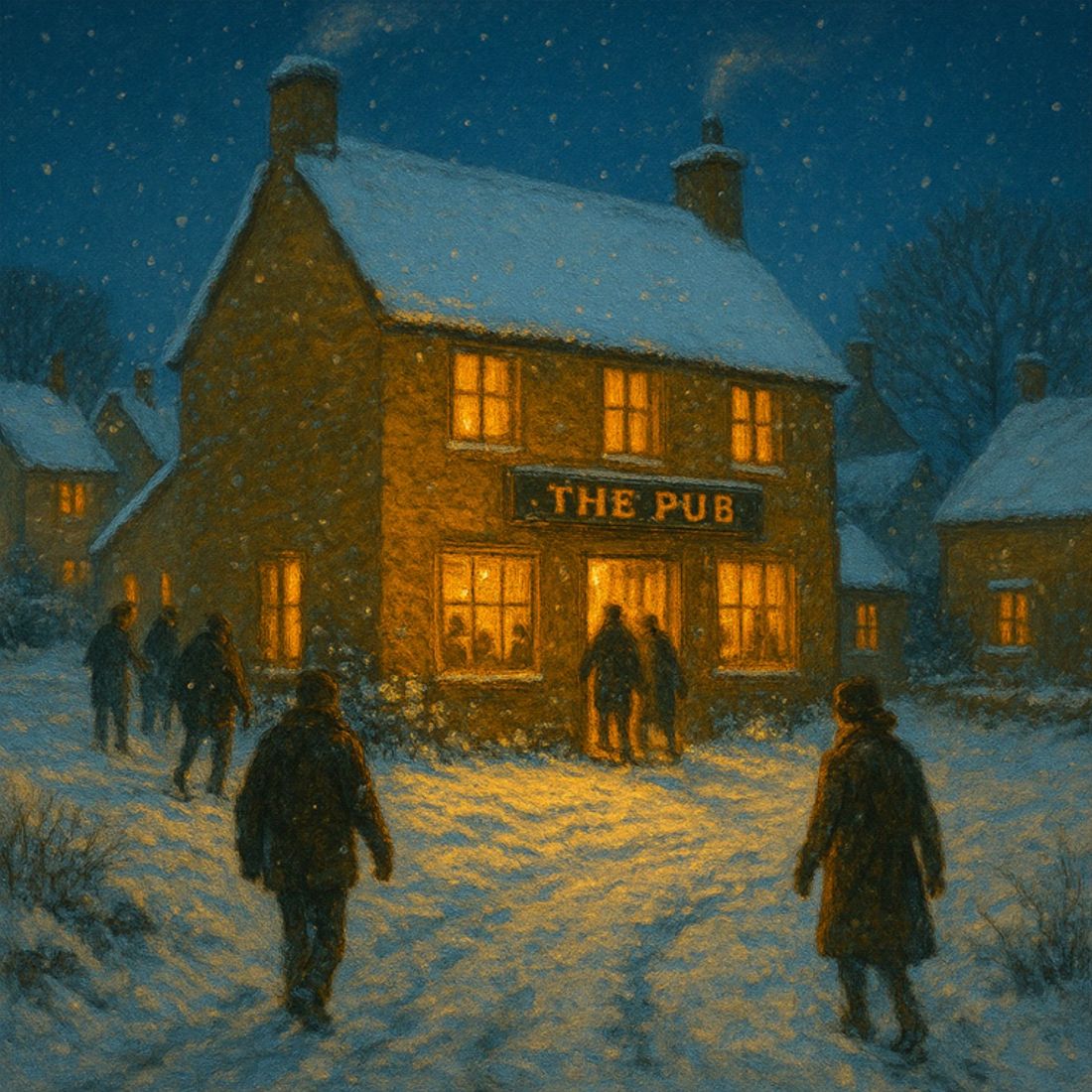
The pub and hospitality industry is in free fall today. Yet, like so many other struggling sectors, it clings to a comforting illusion: that the problems it faces are entirely within the government’s control, and that salvation will come if only our MPs can be persuaded to “see things their way.”
But this belief blinds us to a deeper truth. The crisis facing pubs is not a sudden collapse brought on by taxation, changing tastes, or even the aftermath of the pandemic – although they certainly haven’t helped. It is the result of decades of structural damage – political, commercial, and cultural – that has hollowed out an industry once rooted in community life.
To understand what has gone wrong, we have to remember what pubs used to be. Not drinking venues. Not branded experiences. Not “hospitality units.” But social anchors. Community mirrors. Places where the character of the landlord and the character of the neighbourhood shaped each other in ways no corporate model could ever replicate.
This is the story of how that world was dismantled – slowly, quietly, and often deliberately – and why the solutions being demanded today fail to address the real causes of the decline – no matter how logical they might seem.
The Forgotten Role of Pubs – And Why Their Collapse Makes No Sense at First Glance
The pub is not the only part of British life now in free fall. Farms, social clubs, small independent businesses – many of the sectors that once formed the backbone of our communities – are also struggling or disappearing entirely.
What those working within these businesses all share is a growing sense of frustration and confusion, because on the surface their collapse simply doesn’t make sense.
These are industries that should be thriving. They provide essential services, meet real human needs, and have deep cultural value. Yet they are being destroyed by forces that are not immediately obvious, leading many to assume that government policy alone must be to blame.
But the truth is more complicated.
If we strip alcohol out of the equation and look at pubs in the most obvious, human way possible, their purpose becomes clear. Pubs were once what coffee shops are today – everyday social spaces – but with one crucial difference: they existed in every community, no matter how remote. They were part of the social infrastructure long before commercialism, branding, and legislation began dictating what a “successful” venue should look like.
And just like farms, social clubs, and other small community-rooted businesses, pubs are now being undermined by structural changes that most people never see. That is why so many closures feel illogical. It’s not because demand has vanished. It’s because the systems that once allowed these places to thrive have been quietly dismantled.
The Price of a Pint: A Treat, Not a Habit
Today, publicans – whether freeholders, leaseholders, tenants, or self-employed managers dressed up with misleading titles like “partners” – look at the taxes hitting their industry from every angle and genuinely believe that tax breaks will save them. They see the closures (around 500 pubs since Labour came to power alone) and conclude that taxation is the root of the crisis.
As a consumer and a fan of real ales from regional and microbreweries – and of high-quality lagers like Jeremy Clarkson’s Hawkstone – I understand the frustration. The maths of going out for a drink simply doesn’t add up anymore. In Cheltenham, you can expect to pay £5–£7 a pint in many of the town’s best locals. Meanwhile, supermarkets will sell you three or four times the volume for the same price.
Going to the pub has become a treat, not a habit. It’s easy to look at that reality and blame taxation alone.
But that would be a mistake.
A Personal Window Into the Industry
When I was elected chair of a local licensing authority, I was often greeted with the same wry comment: “Poacher turned gamekeeper.” It made me laugh, not least because I’ve always been fascinated by the industry and what access to a local pub really means.
I also remember firsthand what went on behind the scenes when my father bought and ran a pub – the Airport Inn in Gloucestershire – in the late eighties. Anyone who has grown up around pubs knows that you absorb the industry through osmosis. You see things others don’t. You understand the mechanics, the pressures, the culture.
Looking back over the past 30–40 years, the changes I’ve witnessed form the foundations of the crisis we face today. And these problems were visible long before COVID, long before austerity or the cost-of-living crisis, and long before politicians decided that taxation was their only tool.
When Being a Publican Was a Respected, Rewarding Career
In the 1980s, being a publican was a respected job – and a well-paid one. Yes, the hours were brutal and the work relentless, but the rewards matched the effort. Whether you were a freeholder, leaseholder, or tenant, you could:
• earn a solid income
• drive an executive car
• send your children to private school
• take a proper annual holiday
• run a business with healthy margins
And all of this was possible even in “wet-led” pubs that sold no food at all.
The drinks range was limited, often produced by the brewery that owned the pub. But it didn’t matter. The breweries were happy. The publicans were happy. The customers were happy. The supply chain worked. And most importantly, people didn’t need 40 brands of lager to enjoy themselves. The value was in the social interaction – the incalculable benefit of being out with people you knew – or spent enough time with to get to know.
The Slow, Quiet Collapse Begins
People who lived through these decades often look at the closure of once-successful pubs and assume the cause is obvious:
• “People can’t afford to drink like they used to.”
• “Tastes have changed.”
• “People don’t drink alcohol anymore.”
But these explanations miss the real story.
In the 1980s, the Thatcher government was pushed – by the EU’s single, common or rather free-market agenda – into opening the UK market to European brewers. This meant big British brewers like Whitbread, which had a major brewery in Cheltenham, were forced to sell hundreds of pubs because they could no longer own large, tied estates.
This single policy decision changed everything.
The Rise of the PubCo – And the Death of the Traditional Pub Model
The vast pub estates put up for sale were snapped up by hedge funds and financiers who had no interest in pubs, communities, or hospitality. They were interested in one thing only: profit extraction.
This was the birth of the PubCo.
PubCos redesigned the entire tenancy and leasehold system. They introduced:
• complex and restrictive beer ties
• inflated wholesale prices
• charges on gaming machines
• inflated rents
• fees on everything they could monetise
They sold the dream of “running your own pub” while stripping away every mechanism that once allowed publicans to succeed.
The old culture – “there’s enough for everyone to do well” – was replaced by a new one:
“Money is the only thing that matters. You’ll earn just enough to survive, as long as you treat the business like it’s yours – without ever receiving the rewards of ownership.”
Pubs Treated Like Franchises – When They Are Nothing Like Franchises
Sadly, whilst there are some breweries that still recognise the value a good tenant or leaseholder brings, the changes that created this crisis eventually came from other directions too. The model of stepping beyond rent and a simple beer tie – and instead extracting profit from every function within the business – became irresistible to many traditional owners too.
This is where the industry took a disastrous turn.
Pubs began to be treated like franchises. But they are nothing like franchises.
A true franchise provides:
• a proven business model
• consistent branding
• centralised support
• shared risk
• shared reward
A good pub is the opposite. A good pub is a person. A personality. A living reflection of the community it serves.
No two pubs are the same when they are run properly, because no two communities are the same.
The character of the landlord, the regulars, the local culture – these are the ingredients that make a pub work.
Yet PubCos and some breweries imposed franchise-style controls without offering any of the support or stability that makes franchising viable. They demanded the discipline and the financial commitment of a franchisee, but provided none of the tools, protections, or shared success. They extracted value while giving nothing back.
This fundamental misunderstanding – or deliberate disregard – of what a pub actually is has been one of the most destructive forces in the industry’s decline.
The Human Cost: A Cycle of Exploitation
The impact was catastrophic.
People signed up to run pubs that should still be profitable today, but they were doomed from the moment they signed. PubCos loaded them with artificially inflated costs, took profit from every angle, and left them responsible for everything.
Many were bankrupted. Many lost their homes. Many lost their savings. And the system didn’t care – because there was always another hopeful applicant ready to step in.
A good pub can take years to build. It can be destroyed overnight. And when a struggling pub changes hands under the same broken model, the lost business doesn’t magically return – no matter what the regional manager promises.
Communities Lose Out – The Real Cost of a Broken System
The most painful part of this crisis is not what happens to the operators, as devastating as that is. It’s what happens to the communities left behind.
A pub is not just a commercial unit. It is a social space, a point of connection, a place where people who might never otherwise meet share the same room, the same stories, the same sense of belonging. When a pub closes, the loss is not measured in pints sold but in relationships that no longer form, conversations that no longer happen, and the quiet isolation that grows in the gaps where community life used to be.
And this is the part that makes the decline so hard for many people to understand. In countless towns and villages, the demand for a local pub still exists. People still want somewhere to go. They still want the familiarity, the warmth, the human contact. But the structures that once allowed pubs to survive – fair rents, reasonable margins, supportive ownership – have been replaced by systems that strip value out faster than any community can put it back in.
So pubs close not because they are unwanted, but because they are unviable under the models imposed on them. And when they go, something irreplaceable disappears from the emotional and social landscape of the place they served.
What We Lose When a Pub Closes
The tragedy of the modern pub crisis is that it has been reduced to a debate about tax, taste, or government neglect. Those issues matter, but they are not the heart of the problem. The real story is far more structural – and far more uncomfortable.
Pubs didn’t disappear because people stopped wanting them. They disappeared because the foundations that once allowed them to thrive were quietly dismantled. Ownership shifted from brewers who understood the trade to financial entities that saw pubs only as assets. Fair margins were replaced with extraction. Community-rooted businesses were forced into models that treated them like generic units, even though nothing about a real pub is generic.
And when a pub closes, the loss is not just economic. It is social. Cultural. Human.
A pub is one of the few places where people of different ages, backgrounds, incomes, and beliefs naturally mix. It is where friendships form, where loneliness is eased, where local life becomes visible and shared. When that disappears, the community doesn’t just lose a business – it loses a piece of itself.
If we want pubs to survive, the conversation must move beyond short-term fixes and political sticking plasters. We have to confront the deeper truth: pubs cannot be run like franchises, squeezed like assets, or managed through models designed for industries that bear no resemblance to them. They must be allowed to be what they always were – reflections of the communities they serve, shaped by people who care about them and supported by structures that make their survival possible.
Until we face that reality, the decline will continue – no matter what government does, and no matter how many people still want a place to gather, talk, laugh, and belong.
 Adam Tugwell