Government and politicians have willfully overlooked this truth for decades, whilst helping to remove the regulation and safety barriers that once helped to keep life for the lowest paid affordable to live.
Whilst many pour score upon the lowest paid and society’s most vulnerable and buy into the propaganda that their financial misery is somehow self-inflicted and that only they are at fault, the truth is that the prices of all the essential basics that we all need would never have escalated and reached the unstoppable highs that they have already, if the whole business and financial system hadn’t been manipulated to serve the interests of profiteering and greed.
We have all been conditioned and enslaved by money, the accumulation of material wealth and the status that goes with it.
These are the only things in this world that count. Today.
The function of every real business and organisation is to provide goods or services that support or improve the lives of people. Not to generate income. Yet the businesses that don’t do anything to support or improve the lives of people are the ones pushing up prices and making life for everyone else so hard.
This, the cost-of-living crisis and all of the UKs social problems have come into being because we have become obsessed with money as the key priority in life, rather than having values and humanity which are the benchmark of how a good life should be.
However, the world is changing, and it is changing fast. Nothing is certain in the way that we used to believe, and we are now experiencing a time of chaos and change that cannot offer any certain outcomes for any of us, unless we all embrace the need for meaningful change as a conscious and voluntary choice.
This blog is an excerpt from The Basic Living Standard, published on Amazon for Kindle, April 2024. To find out more, please follow the link below.
We can only solve the problems that society faces if we give the lowest paid the means and opportunity to earn enough to sustain themselves independently and without the need for support.
The national minimum or living wage will never achieve this, because within this broken financial system, the nearer the minimum wage gets to the true cost of living, the faster the cost of all the essentials that we all need will inflate or go up.
We need nothing less than a paradigm shift from a money-centric system to one that puts people first in every respect.
The Basic Living Standard introduces the principle of Locality Based Economics and offers the basis of a new financial system in which we can achieve financial freedom for ALL.
If you are looking for fiction, this is no story. But the snapshots, views and experiences that you are about to share will make you question much that you previously accepted as truth.
Everything you are about to read about the past, about what we are experiencing today and where the future could take us is certainly interconnected.
But the way that the world works suggests that every issue that has happened, that we are experiencing and that we will need to address in the future, sits in isolation in some way.
Until we see the relationship that exists between everything and the problems we face, then accept that we will only solve those problems by thinking differently, our future will continue to be written by interests that will never be aligned with our own.
Touching on everything that relates to the way this Country is run, from education to cryptocurrency, the true value of money, to growing food at home and rules for the internet and AI, Days of Ends and New Beginnings lifts the stone and shines light on many of the issues, motives and reasons for the problems society faces, that have until now been carefully hidden from view.
Repurposing the inevitable period of chaos and change we are now experiencing so the outcome is meaningful change that will benefit us all isn’t a certainty. But by considering what is likely to change, what positive change will look like, and how we can take steps to thrive and survive as we experience that change, the chances are that we can all become a positive influence on what our future will be.
If you are ready to embrace meaningful change, it’s time to look inside.
It’s nearly the middle of April and 2024 has been a washout. You don’t need to be a farmer to know there’s little that feels normal about the wet weather and I know I’m not alone in feeling like it’s been raining nonstop since Christmas.
Is there a conspiracy at work? Is the weather being manipulated? Is this all part of some concocted grand plan?
Well, in terms of the things we should really be worried about, getting lost in the debate over whether Mother Nature or some malevolent force is behind the growing threat of a failed harvest this summer is the only real rabbit hole there is to fall down.
Hopeful as I am for our struggling farmers, that the weather will turn around and put everything back on track, the sober way to start thinking about issues that should really be concerning anyone looking at the wider U.K. food security and production situation is to question how decision makers will frame what may soon be recognised as the 2024 harvest crisis and how they will then respond.
Of all the food security issues we are facing today, which include but are not limited to deglobalisation, climate change, retail profiteering, political ineptitude and anything that falls under the manufactured problems that need a logic defying solution too, weather should never have been the one problem that has the potential to end up making our fragile food security situation even worse.
The reality that we and our farmers face, is that a failed harvest across in 2024 will play straight into the hands of those who believe and advocate that the U.K. doesn’t need to grow its own food.
There is an unsettling belief at work within the establishment that our food supply can always be guaranteed to come from somewhere abroad, and that new technologies and factory foods – like ground up insects, lab growing and warehouse production – will solve all problems. This mindset results in the fallacious idea that there is little reason to continue pandering to farmers who can only be productive when they are a) told what to grow, and then b) are paid for doing so.
Farmers are being set up to fail
For an essential industry already in crisis and under attack from an establishment that views food security and all of the highly beneficial add ons that U.K. produced food can give British people as trivia they can do without, the ongoing storm is one that couldn’t have landed at a less helpful time.
The real risk to U.K. farmers is that government will make token gestures, but in truth do very little to help the industry in the immediate aftermath.
This is likely to lead to many more business exits for what should really be thriving farming businesses, and a situation arising quickly where the U.K. becomes perilously close to losing the ability to feed itself, even at emergency or wartime levels, using recognisable farming methods that are beneficial for everyone involved in the food chain.
Whilst there is growing unrest among farmers, a belief that the powers that be will eventually step in and save the day still regrettably persists.
It is regrettably fair to say that the misconception that government understands the risks to an already critically vulnerable food supply is easily dismissed when we consider that the equivalent of around only 54% of the food we eat is currently grown in the U.K.
Decision makers either don’t see the risk or they don’t want to see the risk. And whichever it is, the result for U.K. farmers, U.K. food production and U.K. food security is pretty much the same.
U.K. farming, the infrastructure that supports it and the legislation that facilitates it might not be anywhere near able to feed the uk population without help today.
But that doesn’t mean that it cannot. It certainly doesn’t mean that the industry shouldn’t redirect, reform and repurpose where needed, so that U.K. food sovereignty is no longer viewed as being pie in the sky.
The wide range of green, environmental, climate, food quality, nutrition, transparency and other farm and food related issues, that have different activists fighting each other for air would all be resolved by getting behind U.K. farmers and food production to refocus. U.K. agriculture will only be saved by moving away from the Globalist/EU production models to one that puts locality and traditional methods at the centre – albeit in a 21st century form.
The power for change sits within the hands of our farmers themselves and the trades that align around U.K. agriculture.
Although many still don’t see it this way, it would be wise for anyone and everyone with an interest in being able to grow or eat a regular, sustainable supply of good, healthy and nutritious food to watch carefully what the establishment does and how it responds if the realities of a 2024 harvest crisis begin to unfold.
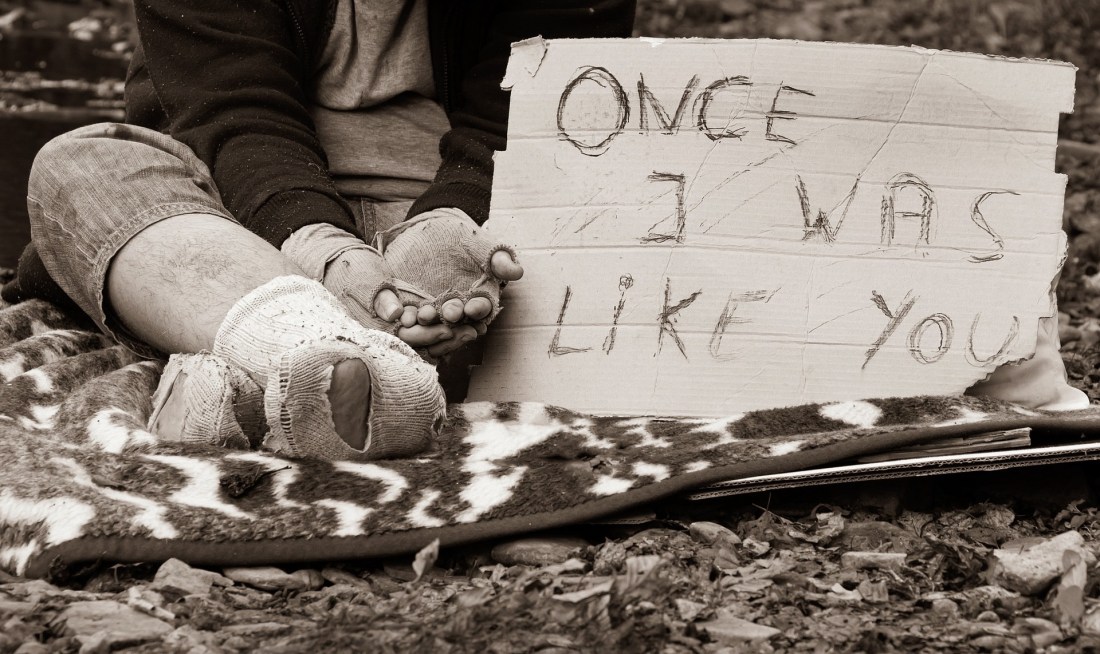
If you lost your job and had no savings or help from loved ones to fall back on, how would you feel if you took any job you could to find that you still couldn’t afford to live?
If benefits put you in the same position, would you take the job or conclude it would be better to just ‘sign on’?
Without enough money to pay every bill, to eat, to stay warm, to travel and do everything else you need to do for yourself, would you feel good about selling yourself to a prospective employer – especially as the worry of the debt you are in starts to mount up?
These are all real questions that increasing numbers of people are asking themselves today and every day.
The real travesty is that too many others have been asking these same questions for a very long time and without the cost-of-living crisis and runaway inflation problem, had previously been hidden from our view.
Our obsession with money and the accumulation of material wealth has meant leaving increasing numbers of people behind. Whilst a broken and privately controlled money system has steadily funneled the volume and value that we believe money to have towards a progressively smaller number of ‘the few’.
We have been conditioned to believe that for us to experience material wealth, abundance and to be financially rich, that others must have the experience of being vulnerable or poor.
It is an equation that works well. Until we find that we ourselves are the ones who need the help – as many of us living in this broken system regrettably now are.
Everything wrong with society that we see whether it’s price inflation, crime, crumbling public services or out of touch politicians, are all symptomatic of the same thing:
We don’t value each person as a human being, and we don’t value every person in the same way.
The key to a better life, better future and a better world for all, is a return to values and humanity that can only be achieved by shifting the focus of everything to locality and to ensuring that every person is able to sustain themselves financially, without the need for support.




 Adam Tugwell