The debate over Virgin removing copies of the Daily Mail from sale on its Trains in the past week highlighted the worrying trend for people to attempt to remove anything from their sphere of influence which they find in some way unpalatable – doing so without any level of regard for the real cost or consequences of doing so.
Whilst this vogue appears new to many, it has been within our awareness for a good period of time. It hinges on blame culture and the overindulgence of the personal slight. It takes the self-righteous influence of the myopic ever nearer the creation and manifestation of a very twisted and unrealistic worldview.
One of the reasons why it is so unrealistic is because it is built upon the foundation of idealism; that of denying that which cannot be denied.
Even in politics now, we have reached a point where apparently well-educated people with significant responsibility placed upon them by many others, believe and apply the fallacious principle that “if I say it is so, then it will actually be so”.
An eye on the future is however one thing, but looking back turns the same coin on to its other side.
History is planned, created and experienced in the present moment by us all. Yet it is an infinite chain of perspectives or opinions, based upon what are almost always a very small number of facts – some of which even the very people who were present and involved may not themselves have actually known.
That we live in a world where opinion has a level of power which just tolerates the occasional fact should really be far more alarming to us all that it really has become.
That individuals have the power to blight the lives of others, simply because they hold a conflicting view, should be something that concerns everyone.
That others are now trying to rewrite history and remove our heritage is a risk and threat to the future of us all and once completed may never be undone.
Culturally, we indulge the notion that only bad news sells, in almost everything we do – almost to the point where is becomes only the bad news about anything itself that we remember, overlooking many more good-news-stories that are available to us as we do.
The most dangerous of steps now being taken – usually by people who believe that they have been in some way slighted by the actions of people that not one of us has or will ever know – is to apply this approach to history, focusing only upon the bad parts of his story, so that the good which may have come will automatically be overlooked and quietly denied.
The politically correct form of censorship manifesting itself through the attempted removal of historic names from buildings and even trusts, like those of Rhodes in Oxford and Colston in Bristol may look like the delivery of justice to the shallow depths of the egocentric. But in terms of what this action overlooks, it is to all of us as a culture and society – in no way any such thing.
Nobody can realistically refute the pain and suffering that colonialism and slavery visited upon many millions of innocent and powerless people over tens and hundreds of years.
Yet the industry and commerce that both were part of also brought prosperity, wealth and yes – learning to all corners of the globe.
It supercharged the path towards a more enlightened and civilised way of being which itself allows the same individuals the freedom and platform to influence the world around them – for better or worse today.
There is no escaping the dark parts of this Country’s historic chapters. But there are also many beneficial lessons to learn by looking them in the eye – not least of all for the purpose of ensuring that we have enough awareness of what can happen when the conditions for oppression and exploitation are right.
The irony of the drive to trash these parts of history, is that they are being repeated all around us in many ways, albeit wrapped differently today. They may not look the same, but they have very much the same effect emotionally on the oppressed within the quiet of their own minds.
Indeed it is a great shame that the energy and passion focused on the drive for political correctness is not itself redirected to help others who are alive and need real help – but in ways that this same lack of human awareness on the part of social justice warriors leaves them unable or unwittingly unable to define.
People are increasingly being enslaved and oppressed by the world around them, financially, by rights, quixotic ideas and by the bureaucratic systems that political correctness is slowly ratcheting around all of us, like a slow pull on a closing cable-tie.
To try to destroy the lessons of history, whilst overlooking live-time oppression is one of the most hideous forms of hypocrisy in action today.
Focusing on events to learn lessons and use them to help others going forward would be much better for us all than playing a disingenuous game of out of sight, out of mind.
Housing has become one of the hot political issues of our time. To read and hear about it in the media, it has become easy to conclude that the Government, our Councils, Housing Associations and Builders alike all share the view that we are in a housing crisis.
The picture they paint suggests that they are all doing everything that they possibly can. But who should we all really believe?
Laid bare, the lack of housing stock really does look nothing like the story we are being presented by the media.
Immigration inflating real need exponentially has become as much an unspoken truth across the whole country, as it has that 2nd homeowners are leaving seaside and rural property empty for much of the year, whilst adding nothing financially or otherwise to the communities in which they don’t have time to live, full-time.
“We need to build more homes” has become the mantra of the many. Yet the real beneficiaries of this process will not be the people who will end up living in many of them. Nor will it be the Government which is operating on the premise that money is the only way to solve any problem, no matter what it might be.
The real beneficiaries of the push to create housing will be the builders and the bankers who finance them, whose real take from all the public money which is being fire-hosed at them is only too well illustrated by the bonus payment being made to the CEO of Persimmon Homes.
Under the auspices of self-serving government and the ineptitude of policy making and long term strategy which has been rolled out in real time within current planning policy, Builders and Developers have found themselves within what can only be described as a smorgasbord of discounts and profits. It is nothing less than the epitome of the one-sided win-win.
Deals are and have been done, not on the basis of what is best for us all. For if that were the true intention, there would be little need for deals of this kind.
Deals are being done, because the focus of this housing crisis is about little more than money and profit itself.
People young and old are being out priced in all parts of the housing market, not because property prices reflect the true value of the market. But because the system and government policy is facilitating house builders, mortgage lenders and private landlords to take us all on one massive, great big bubble-building ride.
The evidence is not difficult to find. Wherever we may live, new housing developments are never far away. Yet when homes are released, we never experience prices being lowered nearby.
Lower house prices within the communities in which these additional homes are built would be the logical outcome within any localised market, left to itself to determine and decide its level naturally.
Instead this so-called ‘crisis’ continually goes on unsolved, whilst we are being sleepwalked into a national travesty in the shape of an unsustainable housing price bubble which is guaranteed to explode.
When it does, those profiteering and responsible now will be the first to run and hide.
Every day we are hearing and reading stories about wage stagnation, price escalation, homelessness of the kind where young people can’t afford their own place, spiralling personal debt and a whole range of stories which relate to the cost of living. Stories that are repeatedly telling us that maintaining a basic life in the UK is very quickly becoming a luxury that many of us simply cannot or will not be able to afford.
Alone, each tale told can and often is attributed to a range of causes which are nonetheless real, but also overlook a common theme throughout all of these issues. The commonality between them all is the economic concept of ‘rent’. The impact of third parties taking ownership of all or part of a product, the delivery of a service, or some other form of purchase at some point in the process from where it originated to where we use or in consume it in some way.
Rent is of course a term we use in daily life to describe paying to use something which belongs to someone else. The most common usage is that of renting of a house, where instead of there being a simple relationship between an owner occupier and their house or property, the occupant rents the property from the owner, essentially increasing a basic two part relationship into three.
In just this example alone, we can take it one stage further and add a bank or mortgage owner of a buy-to-let property (1) which is rented by the occupant (2) from the owner (3) who borrows the money and pays interest to the bank (4), which may itself have borrowed that money from another bank (5).
Whilst we would normally think of just the transaction between the occupier and the property owner as being ‘rent’, in economic terms, any additional party taking something from an overall transaction or supply chain between its origin and use who isn’t essential to the core process is receiving rent of some kind. They in turn may split their role between themselves and others, each adding their own profit as they do every time it happens. Ultimately each additional participant in the chain raises the price of whatever we as users or consumers will be expected to pay.
Sometimes, a number of stages appear necessary. For instance the food we eat might have to be grown by a farmer (1), which is bought by a manufacturer (2) who pays a haulier (3) to transport it to where they will process it. The manufacturer then sells the prepared food to a wholesaler(4) and pays another haulier (5) to deliver it to their warehouse. The wholesaler then sells it to a supermarket (6) and pays another haulier (7) to take it to their distribution centre. The supermarket then pays another haulier (8) to deliver the product to its store, where it sells the finished product to us (9). Do believe me when I say that the chains are usually much more convoluted than that!
Of course, we are all guilty of falling into the trap of forgetting how complex the process is which brings us our food and most of the items that we consume or the services we buy, because for us the process seems to be so very easy. But look closer and we will soon see that even a supply chain of this size may involve unnecessary parts and people taking ‘rent’.
So what does this all this talk of rent really have to do with the cost of living?
The real problem with the provision of goods and services is that the UK operates within what is called a ‘free market’ environment, which it has been since at least the time of the Thatcher Government (1979-90). Within this free market, reduced levels of regulation and influence from the government – who we expect to guard and protect our best interests – provides the opportunity for additional 3rd parties and in fact many more of them to involve or add themselves to the chain of many of our daily transactions. By doing so, they can make significant profits from what in some cases will be as simple for them as a click to buy and another to sell.
Whether it is food, clothing, fuel and oil, transport, communications, borrowing money, or just about anything we can imagine that we can buy, there are now speculators buying and selling products and services, sub contracting responsibilities to others, all of them taking additional profit by taking ‘rent’ which there is no practical reason for anyone needing to pay. They indirectly inflate the prices we pay for the end product, increasingly making those things which should really be quite affordable, simply too expensive for us to buy.
These speculators do this because they can. There are no real rules to stop them, and they are making as much money as they can without any consideration for the impact of their actions on the end users – that’s us. And they have little concern that they will have to stop doing so, because the banks simply continue to lend money to the people who have been forced by this process to borrow – if indeed possible – in order to survive.
Think about what really caused the 2007-08 Financial Crisis, which was the sale, resale and resale again of financial products or debts which became so complex, even the financiers themselves didn’t really know what they were buying and selling on.
Bankers were making massive amounts of money – all because nobody was monitoring exactly what they were doing, whilst their own ‘success’ blinded them to how value was being created by lending to people at one end of this elaborate chain who simply didn’t have the ability to pay back what they had been lent.
The Bankers didn’t care before it happened and they don’t care now. They are still not regulated in the way that they should be, and were actually saved from going under in 2008 by the Labour Government at the time by giving them Billions of Pounds of money in bailouts and rescue funds that the Government itself borrowed, and which we are still paying for through the accumulation of public debt.
These are people, banks and companies who are quite literally making money for nothing, and its all at our expense.
The ‘rent’ economy has been evolving as the reality in which we live for many years now. But it is only as more and more products and services have come under the control of those with the money and unrestricted influence to speculate, whether it has been through privatisation, the development of near monopolies or money simply being placed within unscrupulous hands, that the real impact of ‘farming everything for profit’ has began to become fully clear.
Like Brexit, Hunting has become an emotive subject which is safest left far away from discussion with people we know little about.
Few of us consciously acknowledge why this really is, and the elements of a solution which has the potential to be one supported by all have become hidden by the polarisation of ideas. The inevitable isolation of facts which follows is seen as an unacceptable compromise for each party as they become ever reluctant to recognise validity in any idea which extends beyond the scope and value set of their own.
The biggest elephant in the room for Hunting, is that no matter what supporters or those against this pastime tell us, the debate has long since been anything to do with either the activities or survival of a fox. Yet the actions of both groups in the debate present a story which is very different. If a resolution that works for all is genuinely to be found, each side and the politicians in between them will have to accept that both sides will have to be far more practical in the way they manage the pathways of their respective idealistic ground.
With the various truths presented as fact by some and interpreted as myth by others, the objective reality of this ‘sport’ is that it has very little to do with being competitive and everything to do with a highly social and lifestyle movement, which to its own detriment has become obsessive about a perceived right to hunt our indigenous wild-dog.
The world has moved on. Very few of us believe that the most efficient way to control any kind of mammalian pest, is to become hierarchically attired, mount a very expensive and well-kept horse and then charge around what is left of the open countryside with forty or more others doing exactly the same. Trundling alongside a pack of perhaps a hundred English Foxhounds who are never as happy as when they are simply out for a very long run.
In the years since the implementation of the ‘hunting ban’ under the tenure of the last Labour Government, Hunts around the Country have been doing surprisingly well without any genuine need to reverse the purpose of the Legislation. Hunt protesters and saboteurs would beg to differ, as foxes can often be disturbed and find themselves at the mercy of a brutal, but nonetheless non-intentional act, and it is at this point that we should perhaps all be minded of the propensity of accidents and the fact that many, many more foxes are likely to be killed on the roads during hunting season, than those uncovered accidentally by any hunt which should happen to gallop past.
Open discussion regarding the experience of death for any human or animal concludes quickly for any rational person, as soon as the presence of any deliberate cause or intent is removed. Like it or not, we cannot control that which cannot be controlled, and seeking to prevent any form of accident would easily bring into question just about everything that we do.
Those against hunting – even in its current form should remember this well and be ever mindful of the progressive leap which has already been achieved. There now needs to be an acceptance that this fieldsport is nothing like what it once was and that any form of resentment based upon perception alone, whilst dressed up as a legitimate debate will help no one.
Hunts and the hunt lobby itself would likewise do well to recognise and accept that killing foxes at any costs by applying the law in its most literal sense is a self-defeating act. Using devices such as large birds of prey to kill foxes they have uncovered, gives the true lie to an unnecessary intention and mindset which itself continues to fuel the antagonistic fervour and physical-activist approach of those against whom they have in some cases become violently opposed.
Hunting in its current form and in the way it really should now evolve, is not just the preserve of the wealthy and the one percent which many now love to hate. It is a lifestyle enjoyed by people from all backgrounds and we are as likely to see a plumber, builder or chef taking part as a rider, as we would a landowner or a London banker out for a day from their country home.
It is time that we recognised that Hunting is not about foxes and can be enjoyed by anyone. The Hunts need to stop attempting to play the rules and accept the spirit of the hunting ban in the manner in which it was implemented. The anti-hunt lobby should accept and recognise that they themselves have no legitimate right to police the activities of any hunt, and that holding a set of different ideas to someone else doesn’t mean that we have no choice but to physically collide.
The Hunting Act desperately needs intelligent and considered reform. There is nothing to be gained from it simply being overturned. The direct and related steps that a government seeking to deliver a revised act that would appropriately consider the rights, welfare and respect for the genuine rule of law for all – including the fox itself, could however include:-
Making it illegal to:
Intentionally and/or proactively pursue a fox as, for or as part of a social gathering, either directly with dogs or indirectly with alternative measures such as firearms or birds of prey.
Intentionally and/or proactively interfere with the activities of any hunt, its members, supporters or guests so convened as a social gathering
Recognising that:
Genuine intent is everything. That accidents do occur and no hunt, officer, member, guest or supporter thereof should ever be held liable for the result of any fox or other mammal being uncovered by a group of hounds during the course of a social hunt
Either restructuring the Governance structure of the Charity’s ‘Council’ to ensure that appointments are democratic and reflective of the impartial and non-political nature of the responsibilities with which the RSPCA has been entrusted
Or removing the responsibility and prosecutorial role of the RSPCA altogether, perhaps passing them to local authorities where democratic transparency and professional impartiality would be easier to monitor and define
With the current political environment having made hunting feel almost impossible to discuss, it is little wonder that our embattled Prime Minister is looking to secure votes by being perceived to be considering switching sides. The irony of such a choice is that divisive as Foxhunting may be, the very best solution will be making the effort and winning the arguments which will deliver a less than perfect, but nonetheless beneficial win for all.
Odd as it may seem to many of today’s political class, solutions which work for all of us are always possible, whenever there is a genuine willingness to talk.
Many have suspected that TV, Films and Games can influence real-life behaviours and there are certainly studies that have been carried out which suggest a link. As we watch programming like Coronation Street, Eastenders and now the ‘reality TV’ gems like The Only Way is Essex, Geordie Shore, Made in Chelsea and of course ‘Love Island’, the entertainment for some defiantly comes from the anticipation that anything deemed now acceptable on TV will soon find its way into ‘real life’.
As a rule, TV today has become prescient in a way which is surprisingly quick in its delivery and the mediums of social media running shotgun alongside, have only served to increase the speed with which ‘artistic license’ has become manifest as a reality from which none of us can hide.
Seldom however, does a programme like The Handmaid’s Tale come along, which has all the hallmarks of being exactly the same as a programme which creates real life out of thin air, but feels all the more possible, because it identifies the destination of a process in which our otherwise increasing ‘freedoms’ have been religiously denied.
That the story alludes to and carefully anchors itself in a picture and to experiences of life with which we can all already identify makes the whole possibility more terrifying as we realise within the surety of our own thoughts, how easily a way of life for us all which has been created from nothing more than fear and its bedfellow hate could eclipse the ‘never had it so good’ world that the establishment complacently equates with our own.
But how did we get here, and how could we really jump from a world so apparently full of freedoms into another where freedom could mean nothing at all?
Perhaps most surprisingly, it is the relationship between these ‘freedoms’ and rights that we now have; the way they have come into being, and the impact that they are quietly having on everyone, rather than just the few for whom they were genuinely, but nonetheless idealistically intended, where the real genesis of the problem may lie.
Uncomfortable to read as it may seem, this argument is not about attacking any form of equality, as equality should be the natural approach we intrinsically employ as individuals towards everyone else, one and all.
Regrettably, such levels of selflessness in our consideration have never been the default or conditioned form of all people, whether as individuals or as groups at any point in the history of the World.
This is the very reason that legislation and forms of positive discrimination have been employed in the coercive attempt to put this right and avoid the future wrongs that can and sadly still continue to be committed.
What is being seriously overlooked and in many cases ignored, is that discrimination comes about not because of colour, gender, race, sexuality, disability, culture or indeed anything else which has now become the focus of rights.
Discrimination is present in almost every interaction in some way and at some level, because the self-interest and nucleus of fear which ultimately feeds it within every individual is and will continue to be present universally because it is delivered culturally and in conditioned form.
Discrimination therefore becomes a default setting which can never be completely coerced into being under the control of others, unless it is given voluntarily, consciously and willingly so by each and every individual concerned.
Whilst the eradication of any form of prejudice is a laudable goal, human nature dictates that with the realities of what we call free will, freedom of thought will always prevail beyond the objectives of setting models of behaviour and can all too easily be manipulated by being overtly adhered to whilst the true intentions of those concerned are cleverly hidden, usually in plain sight.
The imposition of rights, which in the minds of their architects should have precipitated an instant result simply did not do so. And so the culture of monitoring was created and continues to be unrealistically and impractically refined.
This whole process has played itself out in so many ways and in so many different directions, but the result has ultimately become the same.
The views of some individuals, their feelings, their opportunities, their ‘rights’ have now and are being openly paraded as being more important than those of the communities in which they live, work and in some cases even themselves would otherwise closely identify.
Somewhere in this process, a definitive line was crossed. A line where a genuine balance could have been established and set to evolve, where people really don’t see difference as a threat. A line where a genuine respect for every other individual and their place within the wider community could have thrived.
The obsession with rights has seen the point where balance could have been achieved, not only crossed, but to a point where the rights of minorities have been flipped and now supersede those of the majority, who have themselves by default and the process of positive discrimination, become those inadvertently discriminated against.
Discrimination, however it is applied, always affects others with the opposite consequence.
Some would suggest that such a response or feeling of fear on the part of the majority, when any number of minorities have been repressed for such a long time would itself be fair. But this is certainly not so and whilst an understandable emotion on the part of those who have been victims of prejudice to the point that they might see things this way, to mirror an injustice in any way is to pick up and continue with the very same form of attack – just going in a different way.
Two wrongs don’t make a right. Particularly not when prejudice against others is typically born out of the fear of difference between people and aspects of others that they simply don’t understand, or has come about simply because certain actions and views are understood as the way that we are culturally expected to do so.
Indeed, the dehumanization of relationships which is steadily evolving on a minute by minute basis by the impact and assimilation of internet, smart phones and by response-at-the-push-of-a-button technology, is almost certain to make things much worse.
Rights have for a long time been costing Government and the Economy a lot of money. Nobody should delude themselves into thinking that there isn’t a price to be paid by us all – financially or otherwise – when business and the public sector becomes less productive as a direct result of rights being enhanced or government officers effectively refusing to take and execute their full responsibilities – passing them on to others such as highly paid consultants – simply because they are living in fear of what will happen if they should be accused of wrongdoing on behalf of someone who as a result of this whole corrupting process believes that their rights have in some way been denied.
The inaction and professional ineptitude which is now common throughout the public sector has far more to do with the insidious nature of the rights culture than it does either because of lack of skilled people or lack of money through the Government’s Policy of Austerity, which has become a very useful and much less risky scapegoat for political activism on all sides.
What has been achieved by this giant overstep and attempt to achieve coercive control is the emergence of two populations within one. The majority which falls increasingly silent as it witnesses attempts by others to even have its thought processes denied. The other, a hybrid minority of over-empowered victims who aggressively and successfully interpret the actions of others within what we used to know as normal life, as being insulting, inconsiderate and unquestionably set against their own ‘human rights’.
Some suggest the fear that this insidious culture has created as Britain having become a Nation without an identity. It isn’t that. The majority of people are just too afraid to openly identify with our National Identity for fear of what injustice towards others they might then be ridiculously accused.
The real harm to our democracy, is the unspoken and dangerously complacent conclusion on the part of those who Govern to conclude that silence itself is equal to acquiescence.
People are much savvier than their actions might otherwise deny, and whilst Westminster continues to misunderstand and misread the electoral actions of the public, it is little wonder that the European Referendum result came as such a surprise because such little account if any is being made for the fact that within the confines of a voting booth, there is a distinct level of anonymity and unhindered choice which even within friendships and families can otherwise be at the very least emotionally denied.
What also appears to be complacently overlooked by the establishment and in particular the liberal elites, is that Government, law, order and social cohesion is on every level dependent fully on the voluntary consent and support of the British People, who continue to respect the idea of democracy and the voluntary surrender of decision making responsibility for affairs affecting us all communally to our so-called elected representatives of the people.
The real problem with the ascendency of the ‘self’ culture and the empowerment of this hybrid mentality where minorities now look upon the majority who they are led to believe have intentionally scorned them, in a way that suggests they can now impose their own values and morality unequivocally upon us all.
For example criminals and prisoners alike are now able to deflect attention away from whatever they have done, simply by complaining that their own rights have been infringed.
They do so knowing that they have blithely and wantonly done exactly the same to innocent others. Innocents who more often than not remain out of the spotlight for fear of what reprisal they will experience as a result of the application of law now being toothless, simply because the rights of the individual are placed before the best interests of the community and therefore openly denied.
People will not go on indefinitely allowing an unjust system to exist. The civil order which is voluntarily maintained on the part of the wider community is as fragile as that of those and their supporters who feel themselves to be justified in taking to the streets and rioting because they now feel it safe to assume that when an opportunity for blame arises, it will always be the party which represents authority which has committed the true crime.
However, whilst we have cause to be genuinely concerned that the good will of the majority of the British People could and does have the potential to snap, we are culturally a very patient People, even beyond that which fear would deny.
As such, the break down of civil order and rioting on the streets simply over the issue of overstretched rights, may in isolation thankfully remain a long way off.
But that isn’t to say that the resentment and true feeling against rights culture and the belief that the silent majority are obliged to play-court to the emperors new clothes which liberalism has made could not itself be the straw that breaks the camels back, should any one of a number of other pressing issues such as a financial meltdown or a consistent run of terrorist attacks increase the feeling that the genuine will of the people is being denied in such a way which precipitates people taking to the streets.
Yet the feelings of mistrust and resentment against what is now widely considered to be an entitled political class and the interests of big business which rightly or wrongly are generally perceived to be behind it, could easily lead to circumstances where social behaviour lead those in power to believe that its genesis is progressively and proactively implied.
Fear leads even the leaders of people to do silly things. In such circumstances, with anarchy considered likely, or even if it is by then present on the streets, it is the immediate denial of the rights which will have previously been seen to promote any idea of complete freedom that would be quickly denied.
Whilst a model of governance like that of the Sons of Jacob may not appear to be on the cards, the power vacuum created as any voluntary form of democracy falls would indeed create an opportunity for any group which can organise itself where its own ideals for living can be implemented and then refined.
We haven’t got there yet. We must all hope that we do not.
But if we do, it will be clear that the price to be paid for the results of a liberalised society which delivers equality for one by taking it away from many others will have proven to have been inhumanly high.

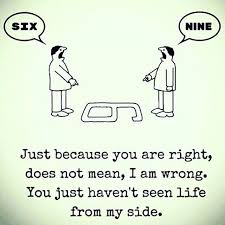 The debate over Virgin removing copies of the Daily Mail from sale on its Trains in the past week highlighted the worrying trend for people to attempt to remove anything from their sphere of influence which they find in some way unpalatable – doing so without any level of regard for the real cost or consequences of doing so.
 Every day we are hearing and reading stories about wage stagnation, price escalation, homelessness of the kind where young people can’t afford their own place, spiralling personal debt and a whole range of stories which relate to the cost of living. Stories that are repeatedly telling us that maintaining a basic life in the UK is very quickly becoming a luxury that many of us simply cannot or will not be able to afford.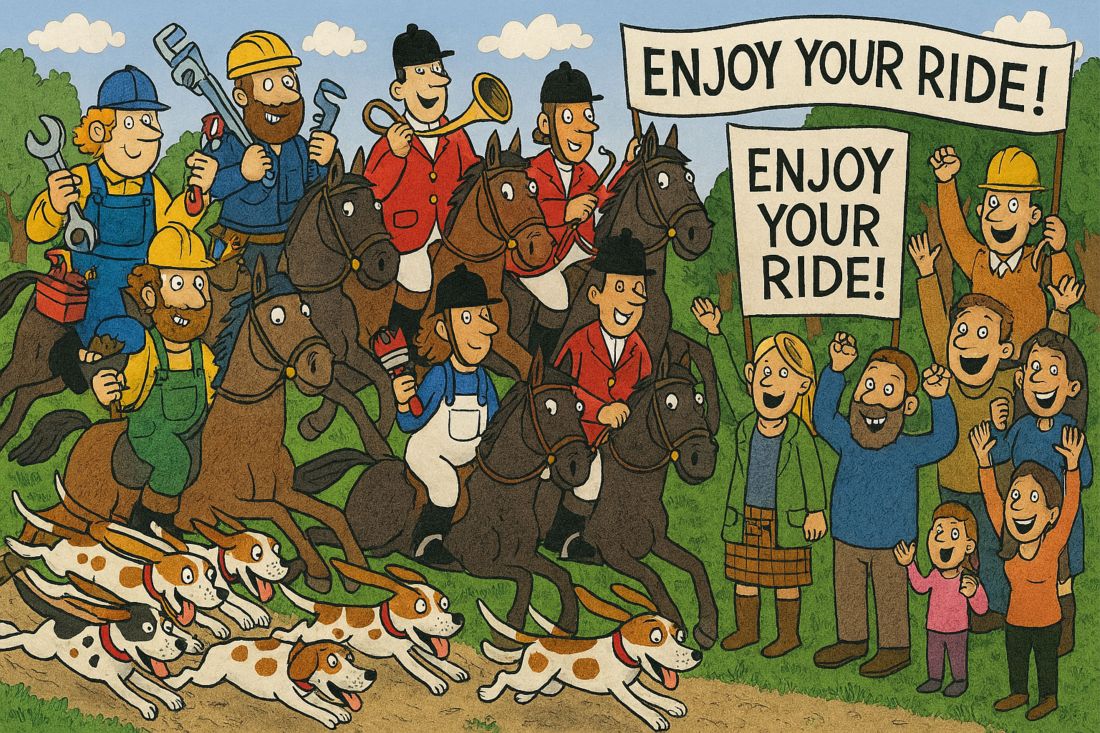
 Many have suspected that TV, Films and Games can influence real-life behaviours and there are certainly
  Adam Tugwell