UK Farmers’ Inheritance Tax Changes: What does the Government’ Christmas Announcement Really Mean for Food Security?

This morning, I was asked by someone who grew up in farming and knows what I do whether I thought the government’s announcement about changes to the farmers’ inheritance tax threshold and transfer allowance would be the end of it.

My immediate reply was that, given the Spring Budget or Statement date had been announced only the day before, the whole thing seemed suspicious to say the very least.

That’s before we even consider the timing: just before Christmas, and only days after the Batters Farming Profitably Review (FPR) was published.

As I suggested in my follow‑up blog, the FPR told many truths about the downward spiral that U.K. farming is now in, but it did so firmly within the context and framing that government and the wider establishment have set.

That’s only helpful if you believe that having the truth spelled out about the things killing an industry – and by default, UK food security – is the same as being heard. And that being heard – if you actually are – will lead to meaningful change rather than simply becoming more words added to the pile.

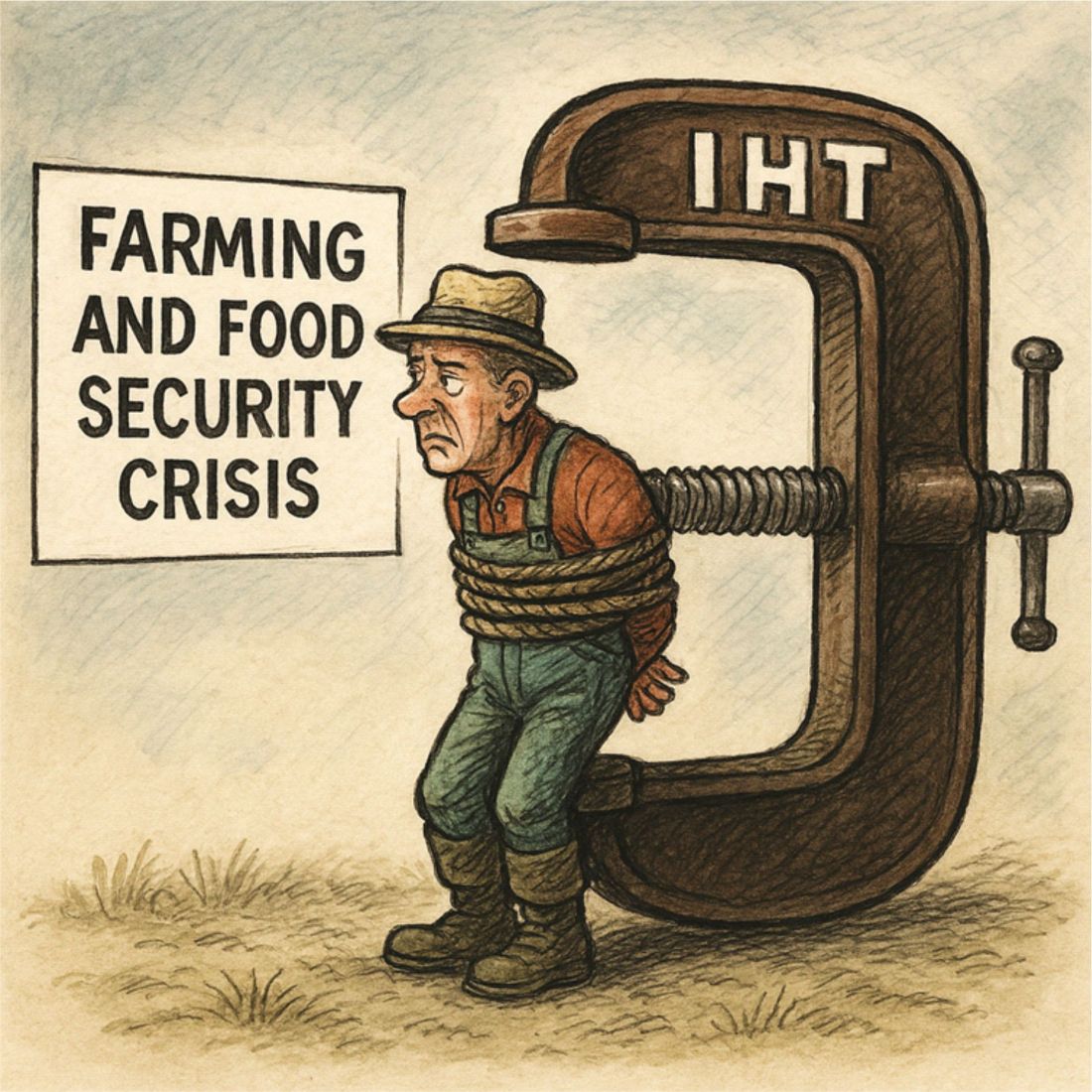
Whilst the news will bring some comfort to those who see the extension of the IHT window as a kind of Christmas gift, the regrettable truth is that even a complete U‑turn by the government on this single policy won’t change the direction of travel.

Nor will it alter the wide range of influences and pressures – many of which were identified in the FPR – that are tightening like a thumb screw and will ultimately destroy independent and traditional farming methods in this country.

The question, regrettably, given that everyone is still moving in the same direction, when you look at what their legs rather than what their lips are doing, is this: what will be the real cost of a story that grabs just enough attention to make people believe the farming and food‑security crisis is suddenly heading somewhere different?
Further Reading: Understanding the Context and Challenges Facing UK Farming

To help you dive deeper into the issues discussed in this blog – especially the government’s inheritance tax changes, the Batters Farming Profitably Review, and the broader crisis in UK food security – here’s a recommended list of Adam’s articles.

Each summary highlights the relevance of the link to the ongoing debate and the future of British farming.

1. https://adamtugwell.blog/2025/12/19/a-few-thoughts-on-minette-batters-farming-profitability-review-fpr/

A critical analysis of the FPR, this post explores the truths revealed about the downward spiral in UK farming, while questioning whether simply acknowledging the problems will lead to meaningful change. It sets the stage for understanding the policy environment and the pressures facing farmers today.

2. https://adamtugwell.blog/2025/08/14/farm-inheritance-tax-was-always-about-wrecking-independent-uk-food-production-thats-why-it-defies-common-sense/

This article delves into the history and intent behind farm inheritance tax, arguing that it has long undermined independent food production in the UK. It provides essential background for readers seeking to understand why inheritance tax remains such a contentious issue.

3. https://adamtugwell.blog/2025/11/22/risk-and-responsibility-why-farmers-must-choose-to-rebuild-the-uk-food-system-before-its-too-late/

This post emphasises the urgency for farmers to take proactive steps in rebuilding the UK food system. It discusses the risks involved and the responsibilities that fall on those within the industry to drive change before the situation becomes irreversible.

4. https://adamtugwell.blog/2025/11/23/understanding-who-controls-our-food-controls-our-future-everything-you-need-to-know/

An exploration of the power dynamics in UK food production, this article explains how control over food systems shapes the nation’s future. It’s a vital read for those interested in the intersection of policy, industry, and food security.

5. https://adamtugwell.blog/2025/01/18/the-need-for-a-collaborative-approach-to-the-uk-farming-and-food-security-problem/

This piece advocates for collaboration among farmers, policymakers, and stakeholders to address the complex challenges facing UK farming and food security. It offers practical insights and solutions for building a more resilient system.

6. https://adamtugwell.blog/2025/12/22/how-the-trail-hunting-ban-exposes-a-bigger-battle-for-britain/

Broadening the discussion, this article connects rural policy battles – like the trail hunting ban- to the larger struggle over Britain’s countryside, farming, and food systems. It provides context for understanding the wider political and cultural forces at play.

7. https://adamtugwell.blog/2025/12/18/adams-food-and-farming-portfolio-a-guide-to-books-blogs-and-solutions/

A comprehensive guide to further reading and resources, this portfolio is ideal for readers who want to explore more about UK farming, food security, and potential solutions.

Adam’s Food and Farming Portfolio: A Guide to Books, Blogs and Solutions

Welcome to Building Better Futures: Food, Community, and Beyond – a portfolio that brings together a diverse collection of blogs and books dedicated to shaping resilient communities and thriving local economies through the lens of food and farming.

This area of work is a vital part of my broader professional journey, reflecting a commitment to practical solutions, thoughtful analysis, and transformative ideas.

Within this collection, you’ll find a wide range of resources – many of which are available as downloadable PDFs at each link, making it easy to access and share insights.

A number of the books are also available for purchase as Kindle editions on Amazon, offering flexible ways to engage with the material.

Central to this portfolio is my belief that food sits at the very heart of future communities and local economies. This vision is explored within the works listed here, with each section delving into how food systems, sustainable agriculture, and collaborative local action can empower individuals and strengthen society.

From foundational essays on the importance of farming, through analyses of current challenges and policy barriers, to practical blueprints for resilient food systems, these resources invite you to reimagine what’s possible for our shared future.

Please explore the links below to discover actionable ideas, innovative models, and a vision for building better futures – starting with food, and reaching far beyond.

1. Foundations: The Importance of Food and Farming

Introduction:
This section lays the groundwork for understanding why food and farming are central to the wellbeing of communities and nations. These pieces highlight the fundamental role of agriculture and the urgent need to recognise and support those who produce our food.


Having established the essential role of food and farming in society, the next section delves into the pressing challenges and threats facing the UK’s food system today.

These entries reveal why urgent attention and action are needed to safeguard our agricultural foundations.

2. Current Challenges: Crisis, Policy, and Threats

Introduction:
This section examines the mounting pressures and systemic issues threatening UK food security. The entries here analyse the causes and consequences of the current crisis, urging immediate action to prevent further decline.


Understanding the scope of the crisis leads naturally to an exploration of the political and economic barriers that hinder progress.

The following pieces critique the policies and market forces that shape – and often obstruct – efforts to build a resilient food system.

3. Political and Economic Barriers

Introduction:
This section explores the political and economic obstacles that hinder progress in food and farming. The entries critique current policies and highlight the need for a shift toward self-sufficiency and local resilience.


With the obstacles clearly outlined, attention turns to how farmers and their allies are responding.

This section examines the spectrum of advocacy and activism, highlighting both the risks and the opportunities for constructive change.

4. Farmer Responses: Advocacy, Militancy, and New Directions

Introduction:
This section discusses how farmers and their supporters are responding to challenges. It encourages constructive, peaceful approaches and warns against divisive or counterproductive activism.


Moving beyond reaction, the next section focuses on solutions. Here, collaboration and local action take centre stage, offering practical pathways to strengthen food security and empower communities.

5. Building Solutions: Collaboration and Localisation

Introduction:
This section presents constructive approaches for improving food security and farming. It emphasizes collaboration, local action, and practical steps to build a resilient food system.


As collaborative efforts gain momentum, the conversation expands to consider new models for local economic governance. These entries introduce innovative mechanisms – such as barter and exchange – that can underpin a more resilient and equitable food system.

6. Economic Systems: Local Governance and Exchange

Introduction:
This section introduces new models for local economic governance, focusing on food as a central pillar. It explores alternative mechanisms like barter and exchange, and proposes frameworks for economies that prioritize collective wellbeing.


Finally, the collection concludes by examining the deeper questions of control and power within food systems.

This last section analyses who holds influence, how policy shapes outcomes, and what it will take to build trustworthy, future-proof food systems for all.

7. Control, Power, and the Future

Introduction:
This section concludes the collection by examining who holds power in food systems and what that means for the future. These entries analyse policy, strategy, and the blueprint for building trustworthy, resilient food systems.

Let’s Continue the Conversation

Thank you for taking the time to explore Building Better Futures: Food, Community, and Beyond.

If the ideas, resources, or practical solutions here have sparked your interest, I would be delighted to hear from you. Whether you have questions, wish to discuss any of the topics in more depth, or are interested in collaborating, please feel free to get in touch.

I am always happy to share insights, exchange perspectives, and support your work. If you’re organizing an event or discussion where these themes are relevant, I welcome invitations to speak and contribute.

Let’s build better futures together – starting with food, and reaching far beyond.