
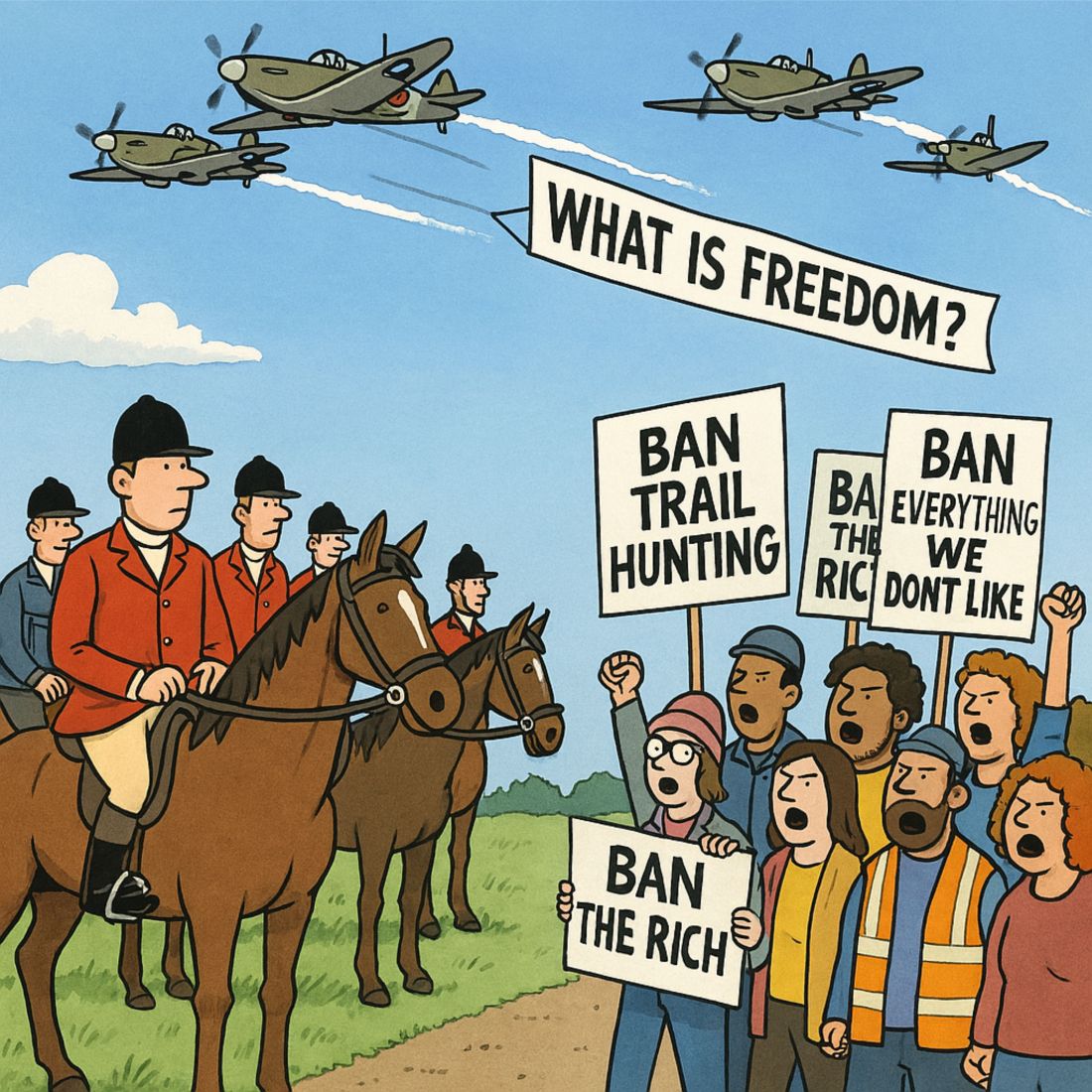
Trying to unpick what looks like the sudden announcement that the government intends to ban trail hunting in the upcoming animal welfare strategy is far more complicated than it first appears.
The easy explanation is to fall back on the familiar left‑vs‑right framing – the tired them‑vs‑us narrative that has shaped the hunting debate for decades. But that framing has always obscured more than it has revealed.
Across the UK today, some will feel they have won and others will feel they have lost. Yet this moment isn’t new, nor is the opportunity to take a different path.
As I argued in my blog published on Christmas Day in 2017, the solutions that could have kept young people, rural voters, and the wider public onside have been hiding in plain sight for years.
Knowing people who hunt and people who don’t – and many who sit somewhere in between – I feel exactly as I did when I wrote that piece.
There was always a workable middle ground. The model we have today could have functioned well and kept most people broadly content, if only all sides had been willing to look beyond their own entrenched positions.
Instead of trying to rewrite the rules of the game or cling to the past as if personal belief were a universal right to impose on others, they could have chosen a bigger‑picture approach that protected both rural culture and public confidence.
But we live in a time when being “right” has become more important than being effective.
That mindset pushes people into emotional trenches, where the goal becomes defeating the other side rather than understanding what winning actually looks like in a changing world.
As the years have passed, since the ‘Hunting Ban’ came into force, the battle lines have hardened. Few have stopped to consider how easily self‑made traps can spring shut. And the hunting community, through its own shortcuts, diversions, and refusal to adapt, has handed the government the perfect excuse to act.
This is the same government that has already shown its willingness to undermine British rural life – the illogical Farm IHT rule being a prime example. Now, with trail hunting, they have been gifted a justification that many outside the community will accept without hesitation.
Many will still refuse to see what is happening. But when a government is openly delaying local elections, it is not unreasonable to expect they may attempt the same with the next general election if they can cling to power until 2029.
At the heart of this is a belief that everyone else is wrong and they alone are right.
If they succeed in pushing this change through before they lose power – assuming they haven’t already managed to entrench themselves further – the concern is that this will mark the true end of hunting as a living part of our culture and heritage.
Once an outright ban, or anything that functions as one, is in place, reversing it will be nowhere near the top of anyone’s agenda. Not with the scale of the political, economic, and social mess we have building up ahead.
 Adam Tugwell