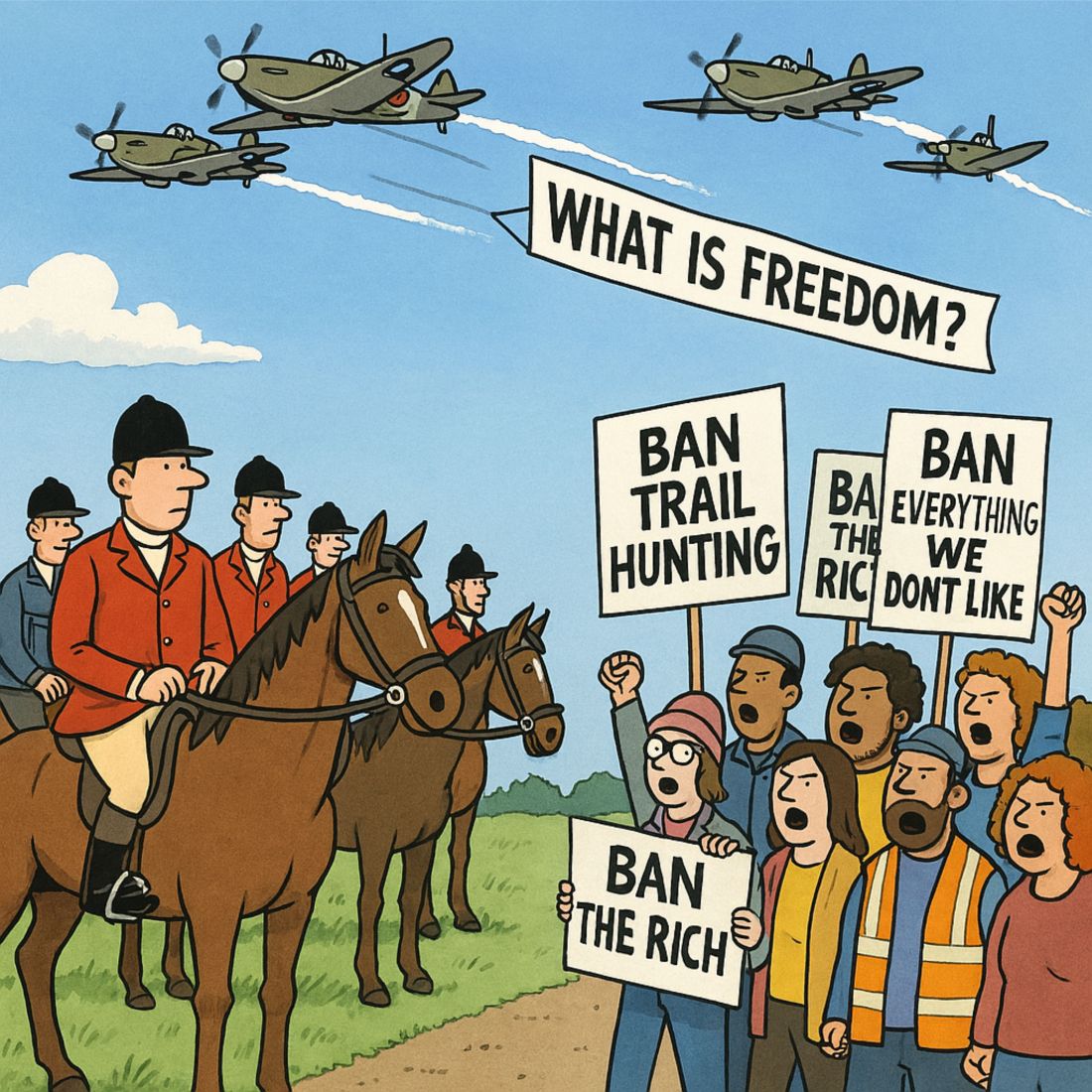
The easy explanation is to fall back on the familiar left‑vs‑right framing – the tired them‑vs‑us narrative that has shaped the hunting debate for decades. But that framing has always obscured more than it has revealed.
Across the UK today, some will feel they have won and others will feel they have lost. Yet this moment isn’t new, nor is the opportunity to take a different path.
As I argued in my blog published on Christmas Day in 2017, the solutions that could have kept young people, rural voters, and the wider public onside have been hiding in plain sight for years.
Knowing people who hunt and people who don’t – and many who sit somewhere in between – I feel exactly as I did when I wrote that piece.
There was always a workable middle ground. The model we have today could have functioned well and kept most people broadly content, if only all sides had been willing to look beyond their own entrenched positions.
Instead of trying to rewrite the rules of the game or cling to the past as if personal belief were a universal right to impose on others, they could have chosen a bigger‑picture approach that protected both rural culture and public confidence.
But we live in a time when being “right” has become more important than being effective.
That mindset pushes people into emotional trenches, where the goal becomes defeating the other side rather than understanding what winning actually looks like in a changing world.
As the years have passed, since the ‘Hunting Ban’ came into force, the battle lines have hardened. Few have stopped to consider how easily self‑made traps can spring shut. And the hunting community, through its own shortcuts, diversions, and refusal to adapt, has handed the government the perfect excuse to act.
This is the same government that has already shown its willingness to undermine British rural life – the illogical Farm IHT rule being a prime example. Now, with trail hunting, they have been gifted a justification that many outside the community will accept without hesitation.
Many will still refuse to see what is happening. But when a government is openly delaying local elections, it is not unreasonable to expect they may attempt the same with the next general election if they can cling to power until 2029.
At the heart of this is a belief that everyone else is wrong and they alone are right.
If they succeed in pushing this change through before they lose power – assuming they haven’t already managed to entrench themselves further – the concern is that this will mark the true end of hunting as a living part of our culture and heritage.
Once an outright ban, or anything that functions as one, is in place, reversing it will be nowhere near the top of anyone’s agenda. Not with the scale of the political, economic, and social mess we have building up ahead.
In recent years, mounting challenges have threatened not only the livelihoods of farmers but also the nation’s ability to control its own food supply.
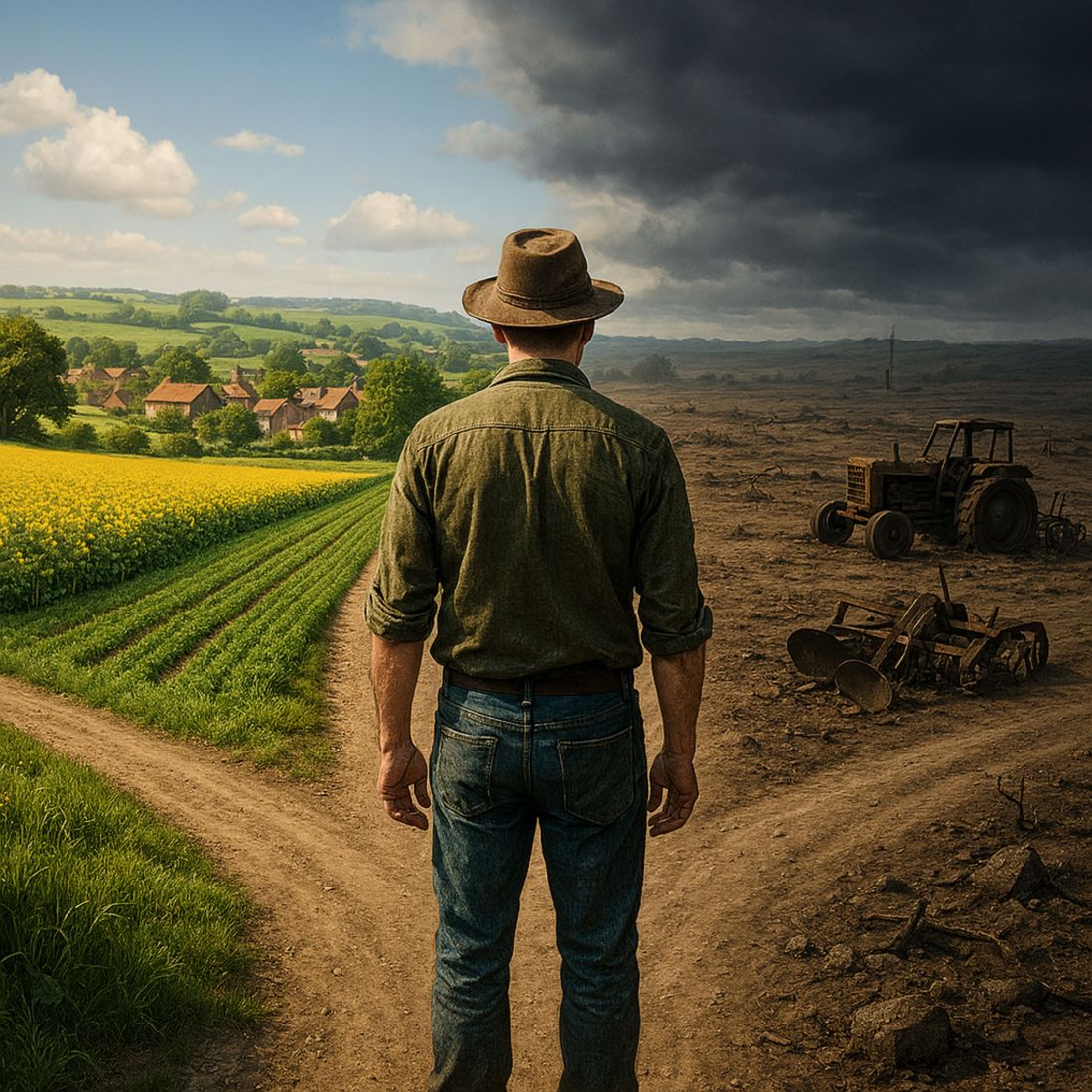
As policies and industry practices increasingly sideline independent food production, farmers face a pivotal choice: continue operating within a system that undermines their independence, or take bold steps to reclaim control and rebuild the UK food chain from the ground up.
This article explores the urgent need for change, the systemic issues facing agriculture, and the powerful impact that farmers’ decisions will have on the future of food security, communities, and the environment.
Farmers’ Choice: Reclaiming Control of the UK Food Chain
Farmers in the UK face a critical decision: either take back control of the nation’s food chain now, or risk losing everything—including the freedom that comes from managing our own food supply.
Background
In the summer of 2023, I published The Glos Community Project, which later evolved into An Economy for the Common Good.
Originally written as a book, The Future is Local, this project explored localising the supply of essential goods and services when our current system collapses.
It offered a practical vision for local communities, emphasising business models that prioritise people, communities, and the environment over profit. The central idea was to shift away from money as the core value and put people first.
Food and food security have always been central themes since I wrote Levelling Level in 2022. Through examining food production within a localised, circular economy, I realised just how pivotal food is to our future.
Unfortunately, the UK food chain’s importance is being sidelined and overlooked today.
The State of UK Agricultural Academia
My focus on UK food security led me to postgraduate study at the Royal Agricultural University in late 2023, where my concerns about the establishment’s approach to agriculture were only amplified.
There are glaring contradictions in the current system – contradictions that academic institutions seem unwilling to address. This reluctance raises questions about the true purpose of agricultural academia if it won’t challenge the status quo.
However, this malaise isn’t unique to agriculture; it reflects a broader trend in UK higher education, which has shifted from providing world-class centres of learning to institutions focused primarily on turnover and getting every student they can through the door.
Challenges Facing Farmers
The experience at the RAU mirrors the state of UK farming today. There is widespread recognition that something is fundamentally wrong, yet calls for change are often muted and deferential to the establishment.
Many across the industry still believe that government, the public sector, and corporate players will prioritise the needs of small businesses and farmers. However, history shows that this is rarely the case.
While farmers, industry speakers, and advocacy groups continue to speak out, their efforts often amount to little more than noise. Many hope that politicians will eventually address the industry’s difficulties, or that a change in government will bring solutions.
But the reality is that UK food security is not being treated as a matter of common sense or urgency.
Who Controls Our Food Controls Our Future
The Farm Inheritance Tax issue highlighted how every part of the UK food chain lacks the priorities that working family farmers and the public deserve.
The system is rigged against independent UK food production because the establishment resists any sector that could foster independence from the current system.
Sadly, instead of helping, advocacy organisations often reinforce the myth that government supports UK farming by prioritising the relationship they have with politicians and officials, even as policies make it increasingly difficult for independent producers to survive.
The reality is that no matter how they are presented, the changes are all designed to encourage the end independent food production in the UK.
Control over the food supply is power. Like other productive industries, UK farming has been systematically undermined under the guise of progress, innovation, and economic policy.
This process began with the adoption of the Neoliberal FIAT money system and the push for global business, and deliberately misled previous generations into believing that joining the Common Market and making increasing commitments to the EU methodologies would benefit everyone.
The Consequences of Inaction
For decades, we have been distracted by consumer culture and promises of continuous improvement, while key industries have been hollowed out.
This has allowed a small group of wealthy individuals and corporations to consolidate control over land, businesses, and resources, often through changes in rules and regulations that once existed to support people, communities and the environment.
While some may dismiss these concerns as conspiracy theories, the evidence is clear: the consequences of these actions have been real and damaging. Many still struggle to believe that such harm could be inflicted for the sake of control and profit.
The Reality Today
Food and our food supply are critically important, yet many fail to grasp this.
Some policymakers believe traditional farming is obsolete and that future food will be produced in factories, regardless of the health or freedom implications.
Reports on farming profitability are rarely taken seriously, as the industry’s problems are symptoms of long-term, deliberate changes.
Governments of all parties are invested in a collapsing system, unable or unwilling to enact meaningful change.
Their solution is now to tax everything in hopes of reviving that failing system, but this approach is unsustainable too.
The Choice for Farmers
Farmers now face a pivotal choice: continue operating within a system that works against them, or walk away from government and industry expectations.
By starting anew and rebuilding the UK food system from scratch, farmers can reclaim control and create a future that prioritizes people, communities, and the environment.
Key Points Summary
Urgency for Farmers: UK farmers must act now to reclaim control of the food chain, or risk losing their livelihoods and the nation’s food security.
Local, People-Focused Economy: We must shift from profit-driven business models to ones that prioritise people, communities, and the environment, as outlined in the newly published Local Economy & Governance System.
Systemic Issues in Agriculture: There are deep-rooted problems in UK agriculture and academia, with institutions reluctant to challenge the status quo, and a broader trend of prioritising financial gain over genuine learning and improvement.
Government and Industry Inaction: Despite widespread recognition of problems, calls for change are often muted. Many in the industry hope for government intervention, but history shows that politicians rarely prioritise farmers’ needs.
Control and Power: The UK food system is structured to prevent independent food production, consolidating control among a small group of powerful interests. Advocacy organisations often reinforce the myth of government support, even as policies undermine farmers.
Consequences of Policy: Decades of policy have hollowed out key industries, transferring land, resources, and businesses to wealthy corporations and individuals, leaving communities and the environment vulnerable.
Dismissal of Concerns: While some may dismiss these issues as conspiracy theories, most recognise that the negative impacts are real and significant.
Misguided Beliefs: Policymakers increasingly believe traditional farming is obsolete, favouring factory-produced food without considering health or freedom implications. Reports and studies on farming profitability and the problems the industry faces are rarely taken seriously.
System Collapse: The current system is unsustainable, and governments are unable or unwilling to enact meaningful change, resorting to increased taxation in a failing attempt to keep the system afloat.
A New Path Forward: Farmers are encouraged to reject the expectations of government and industry, and to rebuild the UK food system from scratch, prioritising independence, community, and sustainability.

 Adam Tugwell