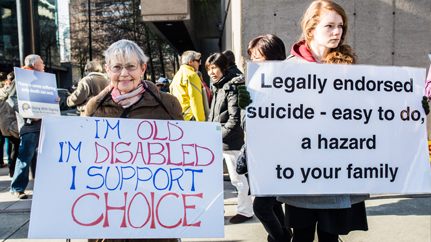
Without Legalising Assisted Suicide & the Right to Die, it is an uncomfortable truth that we are kinder to our animals than we are to other human beings

Without realising that we even do so, it is quite normal for us to look upon any situation and even the content of a conversation in terms of how its content affects us personally at some level.

Fear permeates the decisions that people make at the deepest levels and whilst this can easily prove to be a self-destructive trait, it can also lead to arguably selfish acts in the extreme, when considering the impact and consequences these decisions can have upon others.

Most of us grew up conditioned to think this way and unaware of the processes at work. It is therefore possible to become quite blasé about the way we talk about issues which may not seem to affect us directly, but nonetheless have the effect of pushing a deeply concealed emotional ‘button’ that twangs our personalities just the same once pressed.

Death is one such issue and one that provokes all kinds of responses from people. Probably because of the many unknowns that surround it and the very definite nature of its existence for us as part of our human experience.

When I suffered the acute stages of a serious illness that nearly killed me at 28, I was forced to look my own mortality in the eye. In doing so, I became aware of how self-focused and personal the issues surrounding death can be for partners, relatives and friends who are not going through the experience physically themselves.

My own experience provided invaluable insight and understanding when dealing with the terminal illness and decline of my father, whom I hope may have been at some advantage by having such nearby support.

Sadly, others forced to deal with their own mortality and the many conditions that facilitate terminal decline do not receive that same level of understanding and selflessness that they need from us all and it seems incredible that rules are made for the dying by a majority who have never or may never have experienced what it could be like to be terminally ill, when their perspective on mortality may be dramatically different from what it may be right now.

Our inherent fear of death and the lack of control that we have over it does mean that for many the issue of Assisted Suicide or Right to Die is undoubtedly a personal one. Rather than it being a matter of ethics as many in the world would prefer us to believe.

Very few people are likely to covet death at any time; even those who commit suicide without any form of premeditated suggestion that they are readying themselves to do so.

Suicide is itself a matter of escape and release at a very personal level. It is unlikely that any other person will ever understand the complexity of issues, emotions and pain that any suicidal person is experiencing at that time – no matter how learned they are or how well they have been trained.

It is the same for those contemplating the need for Assisted Suicide or their Right to Die.

As a society, we now not only need to recognise this; we must put personal feelings and perceptions aside and provide help to those who have reasoned and concluded that it would be better for them to be assisted to end their life, without any threat of recourse or stigma being attached to those who have provided or would willingly facilitate that help.

Our fear of Legalising Assisted Suicide and the taboo of the subject are borne from the concern that through illness or debilitation, we could find ourselves or loved-ones unable to communicate with or have influence with the outside world as we now know it. That subsequently, the decision will be made to end our own or their life in that situation whether we consent to it or not.

Such perceptions have been helped little by interpretations of Health Authority Policies such as The Liverpool Pathway. But this should not prevent us from dealing with the subject as we should. If anything, this is the strongest evidence that everything possible must now be done to get this difficult subject addressed in the right way for everyone – and not least of all those who it really concerns.

With input from the Medical Profession, the Government could easily legislate to put the necessary stop-guards in place that would provide the best assurances possible against abuses of a Right to Die.

This could include processes such as a perquisite consultation with 3 independent Doctors and/or Psychologists. Professionals who are likely to know quickly, if an Assisted Death is the right solution if they are able to selflessly put the interests of the patient in question first without any other influences coming in to play.

There is no doubt that those suffering with horrific and terrifying conditions such as Locked-in Syndrome or those who have such low quality of life because of their physical conditions or deterioration should have the right to end their lives, with help, if they so choose.

We must all now be big enough to put our own fears aside and make it as easy as it can be for them to do so.

Without Legalising the Right to Die, it is an uncomfortable truth that in terms of our approach to ease of suffering, we are selfishly kinder to our animals than we are to other human beings.

image thanks to http://www.sunnewsnetwork.ca
Principles for meaningful change in British Politics

grass-roots-header

Most people think that Politicians always lie and that they don’t have principles.

To achieve meaningful change for this Country, this perception must change. The sense of what is right and the sense of justice which inspired many Politicians into seeking Public Office, must no longer be compromised because of decisions made which are best for the individual concerned, or for the benefit of the Political Party to which they have become affiliated.

When I was first Elected on 2007, I was not alone in being horrified at how quickly it became apparent that decisions were made in Government on the pure basis of what was good for the Party, the Group Leaders, or was most likely to result in ‘good press’ or electability in the long run, before anything or anybody else was ever really considered.

Only sheer weight of numbers would ever result in any meaningful results which went against this non-democratic tsunami, primarily because many ‘junior’ Politicians do not want to risk disfavour or risk losing their Seats because they have been seen to disagree with the Party ‘line’.

This is not democracy in its correct sense and every voter is being failed at one point or another. The way that decisions are made in a proper democratic process is by majority, but the way that majorities usually get formed today is wrong, and this means that we are getting wronged the majority of the time.

People before Politics.

Every decision that Politicians make should be focused on the benefit to the majority of people; not the priorities of the few or of the Politicians themselves.

Practicality before Perfection.

We all like the idea of living in a perfect world, but perfection can only ever be an aim in an imperfect world and Politicians must make decisions based upon their practical impact; not just on what they would like to see.

Policies made in isolation lead to isolationist Policies.

Just as one policy may be used as an excuse not for enacting another, new policies should not be created without consideration of their real impact upon or collectively with others. Politicians now need to review the whole System and not use the size of this task as an excuse for not doing so.

Politics is better when it isn’t Personal.

Politics should never be about personalities and when it is, it is a sure sign that those talking are thinking primarily about themselves.

Fear is no excuse in itself.

Any policy made only with emotion and feeling in mind does not consider the wider picture and the full implications. Too many decisions have historically been made by Politicians because of a climate of fear. Over-reaction and under-reaction can be destructive in equal measure and however emotive a subject can be, emotions are personal and do not reflect consideration for what is best for the majority in its strictest and most comprehensive sense.

One size never fits all.

We are all different and policies must recognise and embrace those differences in all ways, but without recourse to any form of discrimination whether that be positive or negative.

Decisions affecting us all similarly should be made by Central Government, whilst decisions based upon Locality should rest in the Locality with Local People and their Political Representatives.

Central Government has as much responsibility to reflect, consider and act upon the decisions made by Local Representatives as it does have the right to ask others to respect the decisions which are made universally for us all.

Lifestyle choices should be for those living that life.

The preferences and actions of individuals should never be questioned or put in doubt so long as they do not compromise the physical safety, security, lifestyle and freedom of choice of others.

A crisis of conscience for one, is no excuse in itself to prevent the lifestyle choices of another and Government should never support it as such.

Government is not the same thing as a business, and should never be run like it is one

AU491810_942longThe word ‘business’ conjures up different meanings for different people, depending on their background and of course what exposure they may have had to its use or application.

Most will agree that its use as a term suggests enterprise and methods of working which would sit snugly within a commercial environment. But should this word actually be applied to the modus operandi of any form of Government when the two terms are completely incongruous?

Much is made of the idea that the best people to run Government at any level are those who have a business background. One of the current arguments against the demographic makeup of our MP’s today is the substantial lack of solid business experience possessed by those who lead the Country from Westminster, with the accompanying notion that MP’s who have run or owned businesses of their own would somehow automatically have an almost esoteric level of understanding and midas touch which would solve just about any problem. They wouldn’t; they don’t and they never have.

With years of Local Government experience as both an Elected Member, an Officer and from working within 3rd Sector Organisations alongside, I have also often heard the term ‘business case’, ‘business plan’ and the idea often suggested that Councils are now run ‘like a business’ in meetings.

The problem with this is of course that the political leadership and members of Councils rarely have ‘hands on’ experience of running any kind of business you could draw reasonable parallels with themselves, and when they do, it is often the case that it has been so long since they did so, that any lack of an appreciation that time moves on or that things continually change will soon erode any tangible benefit.

Perhaps worse is the ability that Officers and Civil Servants have been gifted by political demographics and the opportunity to use such terms in plans, which are then taken as read by those who simply don’t know any better as being a true ‘business case’, when such ‘business’ cases could never be any such thing.

Recognising the differences between running a business in its purest sense, and running Government under the delusion that it can be run as business has never been more essential for today’s politicians, because neither Central or Local Government are businesses, and the people running them have to stop believing and behaving like they are.

A business is of course run for the profit of an individual or shareholders. All decisions will normally be made with the form of pay-off that they will receive firmly in mind. It can be expanded or changed to meet the demands of customers as it sees fit, and a business can choose which customers it may wish to target and how much profit it will seek from delivering any particular product or service. Its revenues are never guaranteed.

On the other hand, Government does not run to make profit, but to provide services and support for all those which it has been elected to serve.

Run properly, Government would not actively target any particular group of customers to provide a different quality of service depending on the feedback or profit that it gets from that group, and would work to meet demand for services as best and prudently as it can, well knowing that it has a duty to do so without seeking payment from one customer to pay for the benefits of another, or to irresponsibly borrow money from lenders that it knows it doesn’t have the appropriate levels of revenue to comfortably repay.

However, Government revenues – as long as they remain sensible – will always be guaranteed, and it is with this significant difference that come the even greater levels of responsibility than no one business should ever realistically be able to have.

One of the greatest dangers facing us as a society comes from the fact that politicians at all levels of Government have either failed to recognise these basic differences and therefore maintain them, or have willingly abused their ability to raise revenues to cover badly managed services or implement policies without any due regard to striking the balance for every member of this society or in applying fairness to all, while they have given every thought to political expedience and electability.

The British political system is broken, because it has adopted those very same values of a profit-making business, which are to further the interests of that business. For politicians, this comes in the form of power, whilst they have ignored the basic rule of business as they have done so; the rule which states they must deliver profit to every single one of the shareholders rather than to themselves. Profit in this sense should always be seen as the delivery of the same results for all.

So if our politicians really feel that they have to treat Government like a business, they then must also realise that if they continue to keep raising the fees on the same old products time and again without offering new products and value for money, they will soon price their offerings way beyond the purse of the people who normally pay, and the cash will soon start ceasing to flow.

Government is not run for a financial profit, any more than it should ever be so for the bottom-line benefit of just the ‘staff’.

Whatever their backgrounds, experience and level, politicians must remember that they are the managers; the facilitators; the decision makers; not the beneficiaries themselves – and especially so where the end profit is not even perceptively the same as what it would be for a business.

The time has long since passed when the electorate could continue to live decent lives, whilst those within Government continue to focus on the end result for themselves. Government is not the same thing as a business, and should never be run like it is one.

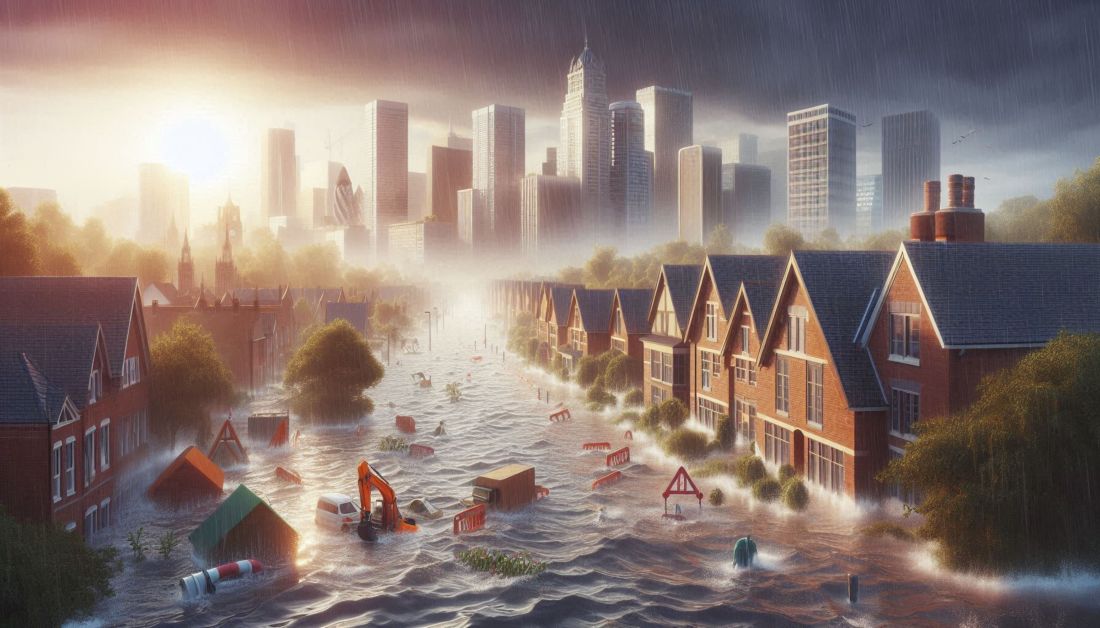
Flooding: A truly democratic system should allow for changes in Planning Legislation which will limit the damage which future flooding events have the power to cause

Christmas will not be that merry for many who have been hit by flooding over recent days, weeks and what has now become months. Even today, news that the seemingly freak weather patterns that have haunted the UK in 2012 are staying put will be sending a shiver down the spines of all those who have closely witnessed or experienced the nightmare of being in a flood.

But is the perceived change in weather patterns the only factor we should be considering for future flood protection, or are the issues governing the severity of future flooding events far more deep seated, but with the potential for control?

In July 2007 and less than 3 months into my first Term as a Councillor, Tewkesbury Borough sat at what felt to many of us like the epicentre of a disastrous flood which demonstrated just how the impact of unforeseen water damage and a systematic failure to plan ahead can actually be and how its power can touch the lives of people who would never normally have reason to live in such fear.

Over a period of 36 hours, home after home in areas that had never been previously considered at risk of flooding became submersed by the affects of just 1 days deluge right across Gloucestershire. Whole Villages went under and for some home owners, many months of pain and torment lay ahead as driveway-based caravans suddenly became the only way to live, rather than the home from home that many choose to put on the road every Easter.

Perhaps the most significant consequence of this unpredictable event was the pollution of fresh drinking water supplies at the Mythe Water Treatment Works near Tewkesbury. Residents and businesses throughout Cheltenham, Gloucester and Tewkesbury were left without drinking water for over two weeks and stories of water thefts and fights at distribution points soon made many aware of just how quickly the civilised facade of our society can begin to break down when the basic elements of daily life that we take for granted are put at risk.

Daily deliveries of bottled water throughout the Ashchurch with Walton Cardiff Ward thereafter and dealing with many flood related issues on behalf of Residents to date has provided an invaluable insight into both the flooding events themselves and the way that the whole issue is handled by organisations as diverse as single-issue pressure groups, local Authorities, the Environment Agency and Central Government.

One of the most concerning elements of that experience has been the illumination of the way in which our centrally-derived Planning Laws and Policies simply do not allow people with local knowledge to exert meaningful levels of influence on building which many quietly agree does not consider either extreme levels of river or fluvial flooding or indeed the more concerning and unpredictable rain-based or pluvial flooding. It is such pluvial events as in 2007 that can present those extreme volumes of water in such short periods of time that  rivers and streams cease to exist leaving an out of control torrent to create its own destructive pathway to its gravity-borne destination.

Most worryingly still is the apparent lack of interest from authorities in these pluvial flood issues, with most prevention work concentrating on fluvial targets and where anything else may be ceremoniously rebuffed with the excuse that such events are so very, very rare and perhaps a only a ‘1 in a 100 year event’. When coupled with such arguable intransigence as the suggestion that built-up land on flood plain by its very nature ceases to be a flood plain – irrespective of where future floods might therefore go; you might see that even politicians like myself have good reason to be concerned for what the future may hold not only for those communities already experienced with floods, but also for those whose experiences may regrettably be still yet to come.

It is a frightening reality that Local Authorities with Planning functions are at this very moment in time formulating policies and projections on building development for the next 20 or 30 years. Development which when even only in existence upon paper is by that very existence arguably irreversible when Councils have effectively been coerced by Central Government to let the development genie out of the bottle, thereby granting the wishes of developers who now appear to be out of control. Developers who have pockets deep enough to challenge any refusal to grant planning permission by those Councils who may go against what may actually be official advice and challenge on the basis of what is right. Councils that may if not already, soon be on the verge of bankruptcy because of other centrally derived and disastrous ‘one size fits all’ policies that are serving nobody but their political architects.

In times when sustainability is a Government mantra, the unsustainable practice of what is in effect unbridled green-field development has to cease.

Housing need must not only be determined by local people at local level; that level of development must itself be based upon what any one local area can support and not upon what Westminster Officials decide as being a requirement.

As a Nation, we simply cannot concrete and tarmac over fields in order to sustain exploding population growth which itself is not contributing either the equivalent or more of what it then demands from a paymaster which continues to function well beyond its means.

Long term housing projections should cease, not only for being the gift that they have become for unscrupulous land-banking developers, but also because we simply do not know what lies in store for us as a population next year, let alone that which may be the case in 30 more.

It is local people and their representatives who should have both the power to decide upon what is and is not sustainable in building terms, along with the right to say no to developers without any fear of unseen bureaucrats undermining or reversing those very same decisions based upon an external and self-serving strategy.

Mankind may not have yet discovered the way to change the weather, but a democratic system should actually allow for changes in Legislation which will limit the amount of damage which future flooding events have the power to cause.

Local people should have the choice to protect their homes, businesses and even lives right now. Not when there is nothing left insurable.

Pensioners, Social Care and the Questions of inevitability, independence & incentives lost

Getting older is one of the few things left that we cannot actually control in our technical age. But how much thought do you give your ability to retain that independence which many of us today simply take for granted?

Just last week, whilst walking through the rain in the local Sainsburys Car Park, I found myself being beckoned by an old lady who literally called ‘will you come to my aid?’. A non-starting car, a phone-call to discover that her roadside assistance was 10 years out of date and then another to drag a Friday-afternoon-weary mechanic out across Town, all paled into insignificance when she excusingly announced that she was 92.

This terrific pensioner regrettably had nobody whom I could call on her behalf to prevent her just sitting there whilst the time passed to the completion of her rescue. But to be fair, I wouldn’t want to make a song and dance if I found myself in a similarly unwelcome situation and would be lying if I were to say anything other than how much I admired her stoic independence and indifference to such items as the seemingly unused mobile phone, still wrapped and jiffy-bagged in the door-well of her car.

Sadly, not many 92 year olds will be driving themselves to the supermarket before returning home alone today, and this is perhaps where many more of us should be casting our thoughts in terms of what support is put in place for older generations, how it is funded and perhaps most importantly how much of that bill we should seriously expect pensioners with varying levels of need to pay themselves.

The issue of Social Care is jumping in and out of the spotlight at the moment. But are MP’s really thinking about the wider issues involved in this nebulous policy area; about how pensioners really feel about having decisions made for them about everything they have worked for? After all, many who have worked hard and been regular taxpayers throughout their lives are potentially being left without the option to leave something for their families, or perhaps even to leave a legacy to a charity which somewhat ironically the Government might itself need to look to for help as part of its push towards ‘Big Society’.

Many are at a loss as to understand what the term ‘National Insurance’ actually means in all this. If any one person can contribute to the NI ‘pot’ on the understanding that they will be supported when they are in times of need, but find that when that need arrives, a judgement is then made on whether they can help themselves first to outwardly save the public purse, can we truly believe that we have a universally-applicable, balanced and fair welfare system?

Evidence would suggest that not only is the welfare system inherently unfair to those who through their actions choose to regularly pay tax, but that it is those who have always paid who will actually continue to keep on doing so. In a modern, civilised and free society it is little more than idealism that creates a situation where some can have all for the price of giving nothing, whilst others can end up with nothing for the price of being forced to give just about all that they have.

The elephant in this room is a difficult one to deal with and most of us appreciate that fact. But we are living in a society where success and simple hard work are now being penalised in every part of life right up until death, and where making little or no effort is now seen to be the ‘right thing’.

No considerate person would suggest that anybody in genuine need should not be given adequate and appropriate help when they need it. But have we really seen the dawn of times when those that work will pay for everything and everyone else throughout their lives and get virtually nothing back in return?