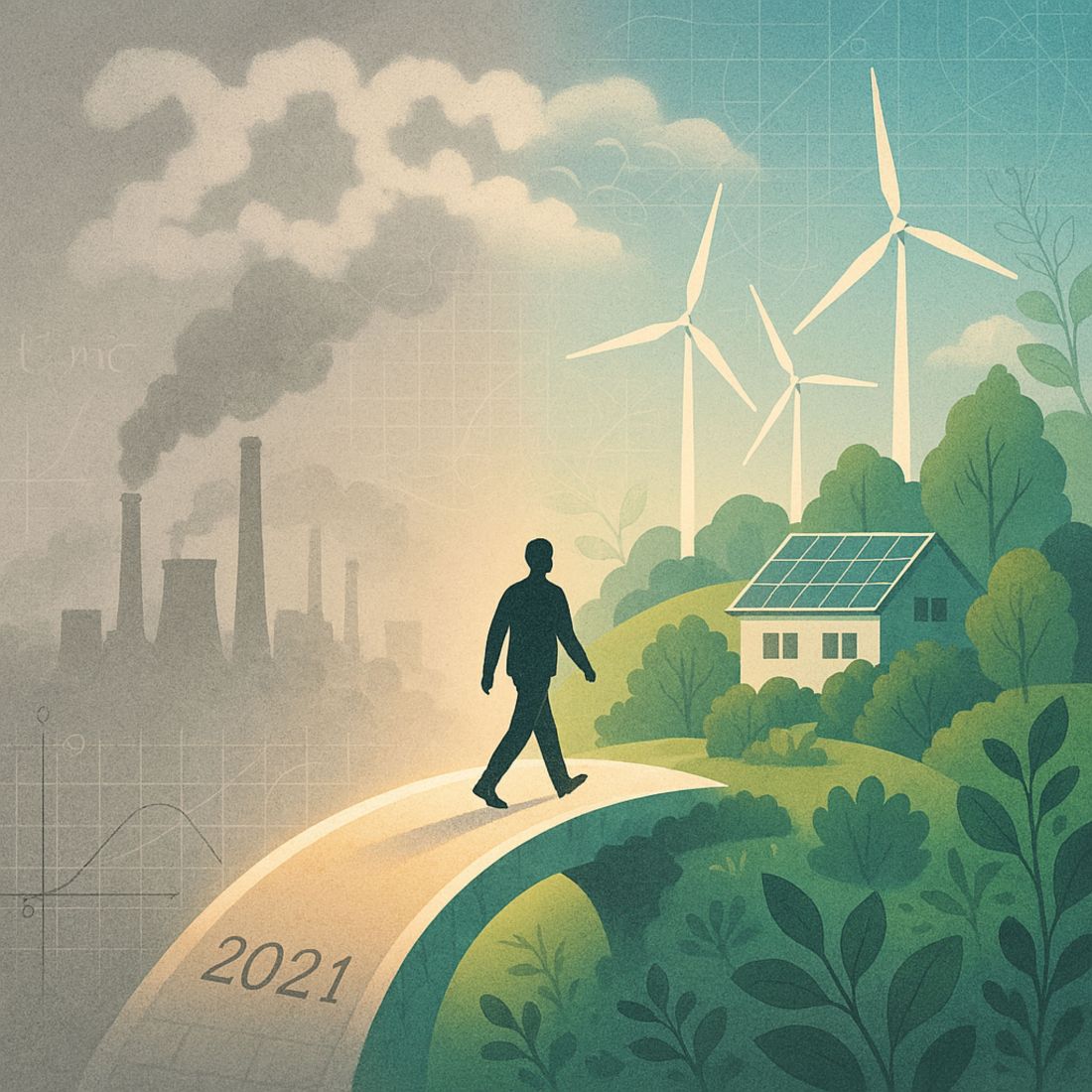
Net Zero is not only possible, we MUST aim for it too. However, it is an objective that requires inspiration and true statesmanship to deliver and it’s foolish to believe it can simply be imposed

Probably one of the most unhelpful arguments being conducted, then pushed by the media is the question over climate change, global warming and who or what is to blame or at fault.

It’s a dead cat debate, doing considerably more harm than good, simply because it is preventing reasoned discussion and action being taken to alleviate the impact on us all from the changes to the weather that are already evident and plain for us to see.

I cannot disagree with the concerns and arguments about the approach of big business and the consequences for the environment and serious risk to our quality of life from industrialisation, mechanisation, globalisation and the driving forces of greed and the motivation for achieving profit whatever the true cost.

But before we can even begin to tackle that problem in a way that will prove to be meaningful for all, there has to be an epiphany in governments right across the world. With it the recognition that public policy and the responsibility of government sits at the heart of the entire environmental debate, and that there are few areas of public policy which do not touch or fail to be influenced by the green question and environmental issues in some way.

The UK itself is already facing a range of problems from the climate changes taking place. A very good example of how different policy areas overlink in ways that are very serious, whilst being overlooked by our MPs and politicians would be the increasing problems that we are experiencing with flooding. Here, a rather large blind eye is also being covered over too, simply because housebuilding has become the obvious answer to a housing crisis that our politicians will not deal with in more appropriate ways. In so doing. Our political class are condemning existing homes, the villages, communities and towns around them to what might soon be very serious flooding problems, when taking responsibility and doing things differently could make this in many cases much easier to avoid.

Building green policy on what looks good in the media, what wins votes and what is easy to do is no way to tackle a worldwide crisis. One that will reach an inescapable point where its impacts are going to become very serious for us all.

Government cannot avoid the way the world works and why people and businesses are invested so heavily in things remaining as they are.

Ironically, the behavioural science that has been so heavily relied upon to coerce people into doing what the government wanted them to do as part of the political response to the Covid Pandemic, could be put to much better and constructive use. It could be applied to providing ‘nudges’ that govern the way people are thinking about their own impact on the environment and what they can independently do to help us all to go green.

However, using policies to force people to change does not consider the practical realities such as affordability, accessibility and what other policies green policy itself will impact – bearing in mind that you can be certain that with each step taken, there will be practical and in many cases hard-hitting consequences for us all.

To hear the Government, the media, the activists and academics preach, you could easily conclude that the UK is one of the worst sinners of the World. But it is not.

Whilst Government may feel galvanised in its ability to ‘impose’ green solutions on us all by the ‘success’ it has ‘achieved’ in forcing the UK to indulge all the unnecessary and costly responses to the Covid Pandemic it has imposed, taking this stupidity even further into the imposition of green technologies will end up in a disaster for this Country. One that will arrive much quicker and be far more consequential for all of us than the alternative of starting to deal with climate change the hard way and the right way. Currently, they are taking the easy route, as control freaks inevitably always do, concluding that giving this date or that date and a reliance on technology that doesn’t even exist, that future change is safe to impose upon us all.

In terms of the environment and the wider green issues that are involved, it is important to remember that the idealist’s viewpoint is that the problem will be solved with unilateral solutions that only affect people and businesses based in the UK. Yet isolated action will only hurt us, whilst doing nothing to address a problem that is the worlds, not just the UKs to own.

The reality is that we will not influence anyone or any other Country in a way that will be helpful to anyone, if our politicians just force through legislation such as heat pumps for homes, that are wholly impractical and consider none of the impacts on anything other than the environment itself – just as the Johnson Government has been doing by undertaking all policy decisions in isolation where Covid has been involved.

One of the biggest obstacles to progress on environmental issues worldwide, is the sordid fact that money is always and inevitably involved.

Money motivates people deeply in an emotionally entrenched way. And people who have lots of it and want more of it will not let issues that don’t agree with their own narrative get in their way.

Corporate interests are a massive part of the climate change problem. They will continue to be so until those responsible can be convinced that the same or more profit can be achieved for them, by conducting their business in a very different and environmentally friendly way.

Sadly, like most things historically, the biggest profits and margins are to be made when whatever you are doing means that you are in a position to exploit.

Morality and ethics are at a rare premium in business these days. It is the same people who are accumulating this wealth who already possess the deep pockets that our politicians suck up to and treat as if they are sacred cows.

There is as such a dangerous inevitability about the level of damage that is going to be done, before that moment of reason land collectively, and everyone starts working together voluntarily to address the issues and work better – because they have come to the decision as an informed and unselfish choice.

The saving grace to all this – strange as it may sound, may turn out to be the Covid Pandemic itself and the decisions that poor politicians have made in response.

Covid has literally seen governments around the world take decision after decision that has exponentially speeded up every problem that poor leadership has created over decades.

It means that a point is approaching where going greener will simply become the way that we all start to do things, rather than us having to wait on people who are so far choosing not to make the green choice.

Globalisation is over and done with in the way that we have known it before. The media are making very little of what is happening with shipping, supply chains and the provision of goods from around the world. But goods are not going to be available as they were before, and as the coming financial crisis beds in for the long haul, the realities of genuine localism, food and the supply of essential daily items from within a very local area, if not the immediate community itself, is going to become prevalent once again.

However, to make the very best of the opportunities that will come from a very serious crisis, it is vital that we have the right people influencing and making all of the key decisions that will need to be made.

Whatever happens next, it is essential that the decisions being made are not aimed purely at an electoral echo chamber as they have been now for decades.

Every decision being taken from now onwards will have very serious consequences for us all.
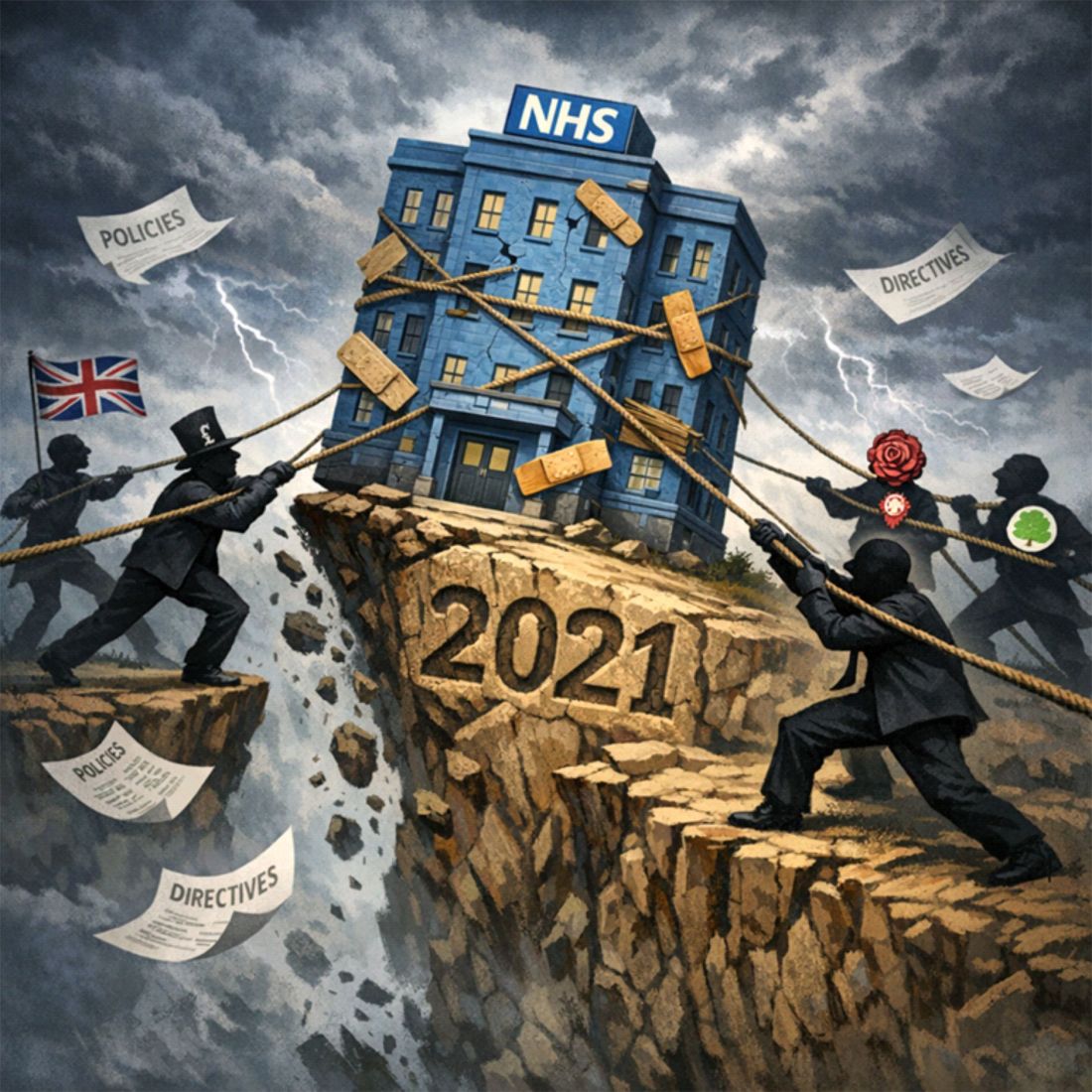
The NHS is broken because every Government (and the EU) have added their own fix. If we don’t have leaders big enough to tackle all that needs to be done very soon, it will no longer exist

Perhaps the greatest travesty of modern politics is the overwhelming desire that our political class have to keep interfering with the management of services which are paid for out of the public purse.

It is easy to fall into the trap of thinking that’s exactly what we elect politicians to do. But we don’t elect them to do that. It’s just what they want us to think.

Overall strategy of public services and how they are paid for is the domain of politicians. Operational management and day-to-day decision making are the preserve of those best suited to address the need or the problem. Operational management is not and should never have become a political choice.

The NHS is in serious trouble today. Not just because of the Covid Pandemic – which has had a big role to play. But because the whole organisation and framework has been a political football for much of the time that it has existed – simply because cynical, self-serving politicians have identified that it is easy for them to use the NHS to big themselves up and ‘win’ votes that way.

On the left, the Labour Party keeps shouting about privatisation. Yet the kind of privatisation that exists has come as a systemic response to the burden of employment rights and unaffordable working conditions that they and their love of EU rules so idealistically but impractically imposed.

On the right, a penchant for throwing money at all problems because there is neither the motivation or principle at work to tackle uncomfortable challenges head on (in case they result in a loss of votes) has meant that the Tories have just poured petrol onto a fire of increasing problems, making the greed and profiteering that drive staffing agencies and contractors legitimate. The most obvious result being that NHS staff don’t get paid as they should, whilst their contemporary temporaries cost more than the organisation or the public purse can normally afford.

It doesn’t stop there. The NHS, like all public sector organisations has become highly protectionist in nature, leaving staff to devalue the use of common sense and stick to the most basic requirements of their job descriptions in a way that would resemble the most effective type of superglue.

Passing the buck to someone whose specific job it is to do anything outside this Public Sector framework is commonplace. And when that doesn’t work, a new job is created, taking even more money away from the frontline and meaning that jobs that were once done by frontline staff or by their immediate managers may have now evolved into multiples of backroom staff or contractors in addition to that one original post.

To be fair to the left, there is no argument that can easily be made to justify the presence of private interests in the provision of public services that are paid for by the public purse. However, the stranglehold that the rights lobby, public sector pensions (and the damage that Gordon Brown did in 1997) and devices such as the EU Working Time Directive have made, make it feel much easier for those obsessed with avoiding difficult management decisions to avoid employing staff directly in a convoluted process that ends up looking like privatisation by choice.

The rich irony is that the NHS is on a precipice, but could be saved from going over, if we had leadership from government and politicians not obsessed with easy options and avoiding all risk to themselves and their position.

We need a Government that is ready to take on the many different agendas that are not patient centric right across the NHS, and replace self-centred thinking with prioritising what’s best for the patient and in the best interests of the public at large.

Otherwise, we could very quickly find ourselves in a place where healthcare provision either becomes tiered in its availability or becomes only accessible at a variety of levels based on ability to pay.

Once this happens, the NHS will be a service that will neither be universal nor public, because it is not something that we can all afford.

Pay rises ARE NOT a lasting solution for Key Workers and the low-paid who ALL deserve more

img_5939

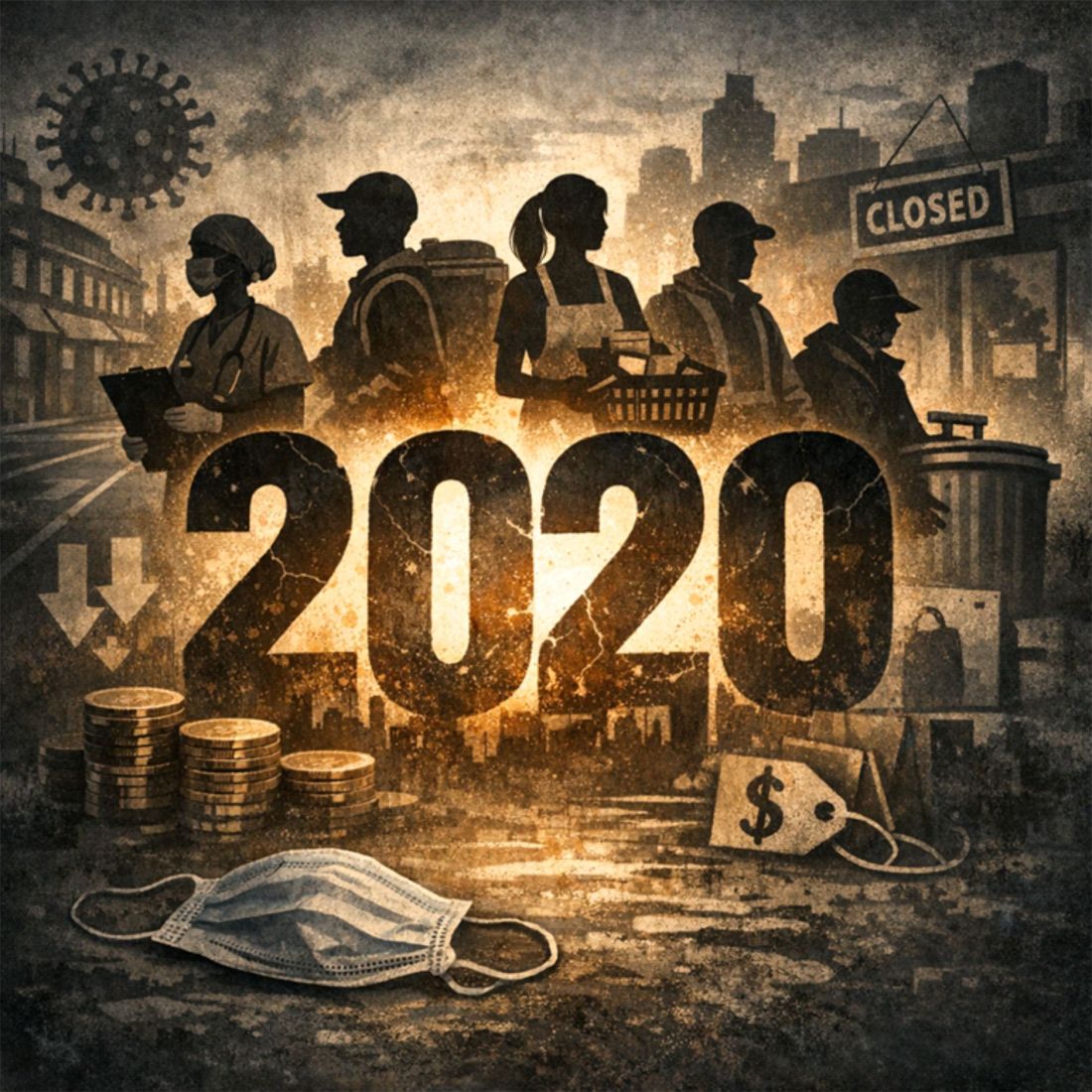
One of the few positives of Coronavirus has been widespread recognition that many of the workers who make much of life as simple as having to pay a bill don’t get nearly enough income so that they can live the lives they have outside of work in the same way as most would choose.

The emphasis has been on Key Workers and specifically the nurses, healthcare workers and medical support staff who work for the NHS. But refuse handlers, van and lorry drivers, shop assistants, shelf stackers, gig economy workers, takeaway staff and many more besides all do jobs that streamline and bring significant value to our lives.

Because we have been conditioned to believe that money is the only thing that really adds value to anything, there is a clear link between public acknowledgement of what these workers do and the growing clamour to provide a financial reward.

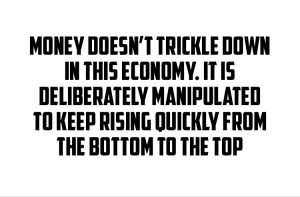
Yet the problem that is difficult for many to see is that by raising the salaries and hourly rates of the lowest paid or those we accept are not paid enough, we simply set off a chain reaction of price rises and financial benefits that stretches right back up to the top. It makes the money we have worth less and quickly takes the real-world value of the new higher wage back to where it was before.

The supply of money isn’t the best way to reward the people that we need to value more.

It is the money system itself that is the problem. The way that it is managed by Government that is broke.

As long as this continues, life will always be something that the low paid simply cannot afford.

Free markets and liberalisation of finance, big business and the banking system are a great idea if everyone working within them operates compassionately and considerately with the emphasis fully on service with profits playing only a happy and coincidental part.

That’s not the way that it works.

With Banks printing money at will, agents buying, selling and transferring goods before they reach us without adding value to the process many times, and a city that speculates on company and asset prices like the impact on users doesn’t matter, the real people who just want to earn enough to provide for themselves and have a life observe the rich who play with money getting so rich they cannot spend all they have, whilst the basics in life are all the low paid can hope for and little more.

The looming financial crisis created by the Lockdown will provide us with the opportunity to put all of this right. That’s as long as we have the right people with the right vision and the motivation to do whats right and see it through in charge.

The basic prices of goods, services and accommodation that are essential for the lowest paid worker to support themselves without help and live a life that is worth living now have to be controlled.

Only Government should have the power to adjust prices, print money or have the ability to manipulate markets.

The management of money and how it can be used against us should no longer be left unhindered in private, profit-hungry hands.

This is the way that every worker no matter what they do and where they do it can do their job and feel that they go home with adequate reward.

Let’s end the idea that more money can solve any problem and just change the way that life works so that it is something that everyone can afford.

Young people and rural voters could all be kept happy with solutions to the Foxhunting debate that are already hiding in plain sight

Like Brexit, Hunting has become an emotive subject which is safest left far away from discussion with people we know little about.

Few of us consciously acknowledge why this really is, and the elements of a solution which has the potential to be one supported by all have become hidden by the polarisation of ideas. The inevitable isolation of facts which follows is seen as an unacceptable compromise for each party as they become ever reluctant to recognise validity in any idea which extends beyond the scope and value set of their own.

The biggest elephant in the room for Hunting, is that no matter what supporters or those against this pastime tell us, the debate has long since been anything to do with either the activities or survival of a fox. Yet the actions of both groups in the debate present a story which is very different. If a resolution that works for all is genuinely to be found, each side and the politicians in between them will have to accept that both sides will have to be far more practical in the way they manage the pathways of their respective idealistic ground.

With the various truths presented as fact by some and interpreted as myth by others, the objective reality of this ‘sport’ is that it has very little to do with being competitive and everything to do with a highly social and lifestyle movement, which to its own detriment has become obsessive about a perceived right to hunt our indigenous wild-dog.

The world has moved on. Very few of us believe that the most efficient way to control any kind of mammalian pest, is to become hierarchically attired, mount a very expensive and well-kept horse and then charge around what is left of the open countryside with forty or more others doing exactly the same. Trundling alongside a pack of perhaps a hundred English Foxhounds who are never as happy as when they are simply out for a very long run.

In the years since the implementation of the ‘hunting ban’ under the tenure of the last Labour Government, Hunts around the Country have been doing surprisingly well without any genuine need to reverse the purpose of the Legislation. Hunt protesters and saboteurs would beg to differ, as foxes can often be disturbed and find themselves at the mercy of a brutal, but nonetheless non-intentional act, and it is at this point that we should perhaps all be minded of the propensity of accidents and the fact that many, many more foxes are likely to be killed on the roads during hunting season, than those uncovered accidentally by any hunt which should happen to gallop past.

Open discussion regarding the experience of death for any human or animal concludes quickly for any rational person, as soon as the presence of any deliberate cause or intent is removed. Like it or not, we cannot control that which cannot be controlled, and seeking to prevent any form of accident would easily bring into question just about everything that we do.

Those against hunting – even in its current form should remember this well and be ever mindful of the progressive leap which has already been achieved. There now needs to be an acceptance that this fieldsport is nothing like what it once was and that any form of resentment based upon perception alone, whilst dressed up as a legitimate debate will help no one.

Hunts and the hunt lobby itself would likewise do well to recognise and accept that killing foxes at any costs by applying the law in its most literal sense is a self-defeating act. Using devices such as large birds of prey to kill foxes they have uncovered, gives the true lie to an unnecessary intention and mindset which itself continues to fuel the antagonistic fervour and physical-activist approach of those against whom they have in some cases become violently opposed.

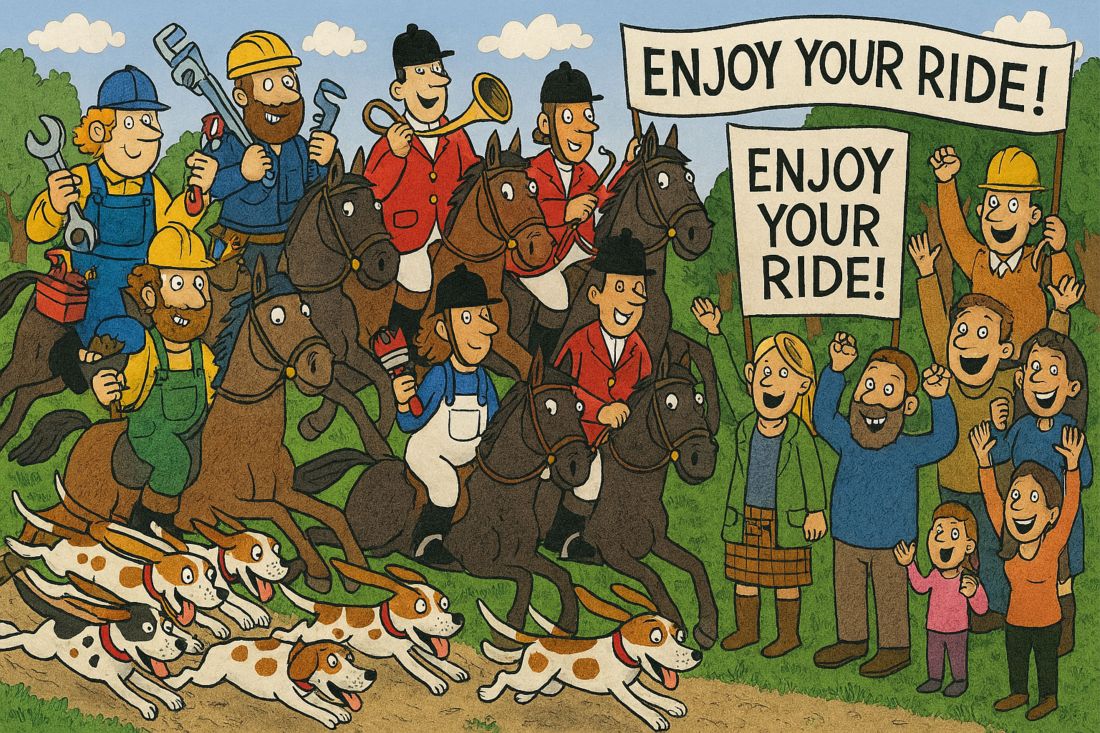
Hunting in its current form and in the way it really should now evolve, is not just the preserve of the wealthy and the one percent which many now love to hate. It is a lifestyle enjoyed by people from all backgrounds and we are as likely to see a plumber, builder or chef taking part as a rider, as we would a landowner or a London banker out for a day from their country home.

It is time that we recognised that Hunting is not about foxes and can be enjoyed by anyone. The Hunts need to stop attempting to play the rules and accept the spirit of the hunting ban in the manner in which it was implemented. The anti-hunt lobby should accept and recognise that they themselves have no legitimate right to police the activities of any hunt, and that holding a set of different ideas to someone else doesn’t mean that we have no choice but to physically collide.

The Hunting Act desperately needs intelligent and considered reform. There is nothing to be gained from it simply being overturned. The direct and related steps that a government seeking to deliver a revised act that would appropriately consider the rights, welfare and respect for the genuine rule of law for all – including the fox itself, could however include:-

Making it illegal to:

  • Intentionally and/or proactively pursue a fox as, for or as part of a social gathering, either directly with dogs or indirectly with alternative measures such as firearms or birds of prey.
  • Intentionally and/or proactively interfere with the activities of any hunt, its members, supporters or guests so convened as a social gathering

Recognising that:

  • Genuine intent is everything. That accidents do occur and no hunt, officer, member, guest or supporter thereof should ever be held liable for the result of any fox or other mammal being uncovered by a group of hounds during the course of a social hunt

Reviewing the role of the RSPCA:

  • Either restructuring the Governance structure of the Charity’s ‘Council’ to ensure that appointments are democratic and reflective of the impartial and non-political nature of the responsibilities with which the RSPCA has been entrusted
  • Or removing the responsibility and prosecutorial role of the RSPCA altogether, perhaps passing them to local authorities where democratic transparency and professional impartiality would be easier to monitor and define

With the current political environment having made hunting feel almost impossible to discuss, it is little wonder that our embattled Prime Minister is looking to secure votes by being perceived to be considering switching sides. The irony of such a choice is that divisive as Foxhunting may be, the very best solution will be making the effort and winning the arguments which will deliver a less than perfect, but nonetheless beneficial win for all.

Odd as it may seem to many of today’s political class, solutions which work for all of us are always possible, whenever there is a genuine willingness to talk.


Principles for meaningful change in British Politics

grass-roots-header

Most people think that Politicians always lie and that they don’t have principles.

To achieve meaningful change for this Country, this perception must change. The sense of what is right and the sense of justice which inspired many Politicians into seeking Public Office, must no longer be compromised because of decisions made which are best for the individual concerned, or for the benefit of the Political Party to which they have become affiliated.

When I was first Elected on 2007, I was not alone in being horrified at how quickly it became apparent that decisions were made in Government on the pure basis of what was good for the Party, the Group Leaders, or was most likely to result in ‘good press’ or electability in the long run, before anything or anybody else was ever really considered.

Only sheer weight of numbers would ever result in any meaningful results which went against this non-democratic tsunami, primarily because many ‘junior’ Politicians do not want to risk disfavour or risk losing their Seats because they have been seen to disagree with the Party ‘line’.

This is not democracy in its correct sense and every voter is being failed at one point or another. The way that decisions are made in a proper democratic process is by majority, but the way that majorities usually get formed today is wrong, and this means that we are getting wronged the majority of the time.

People before Politics.

Every decision that Politicians make should be focused on the benefit to the majority of people; not the priorities of the few or of the Politicians themselves.

Practicality before Perfection.

We all like the idea of living in a perfect world, but perfection can only ever be an aim in an imperfect world and Politicians must make decisions based upon their practical impact; not just on what they would like to see.

Policies made in isolation lead to isolationist Policies.

Just as one policy may be used as an excuse not for enacting another, new policies should not be created without consideration of their real impact upon or collectively with others. Politicians now need to review the whole System and not use the size of this task as an excuse for not doing so.

Politics is better when it isn’t Personal.

Politics should never be about personalities and when it is, it is a sure sign that those talking are thinking primarily about themselves.

Fear is no excuse in itself.

Any policy made only with emotion and feeling in mind does not consider the wider picture and the full implications. Too many decisions have historically been made by Politicians because of a climate of fear. Over-reaction and under-reaction can be destructive in equal measure and however emotive a subject can be, emotions are personal and do not reflect consideration for what is best for the majority in its strictest and most comprehensive sense.

One size never fits all.

We are all different and policies must recognise and embrace those differences in all ways, but without recourse to any form of discrimination whether that be positive or negative.

Decisions affecting us all similarly should be made by Central Government, whilst decisions based upon Locality should rest in the Locality with Local People and their Political Representatives.

Central Government has as much responsibility to reflect, consider and act upon the decisions made by Local Representatives as it does have the right to ask others to respect the decisions which are made universally for us all.

Lifestyle choices should be for those living that life.

The preferences and actions of individuals should never be questioned or put in doubt so long as they do not compromise the physical safety, security, lifestyle and freedom of choice of others.

A crisis of conscience for one, is no excuse in itself to prevent the lifestyle choices of another and Government should never support it as such.