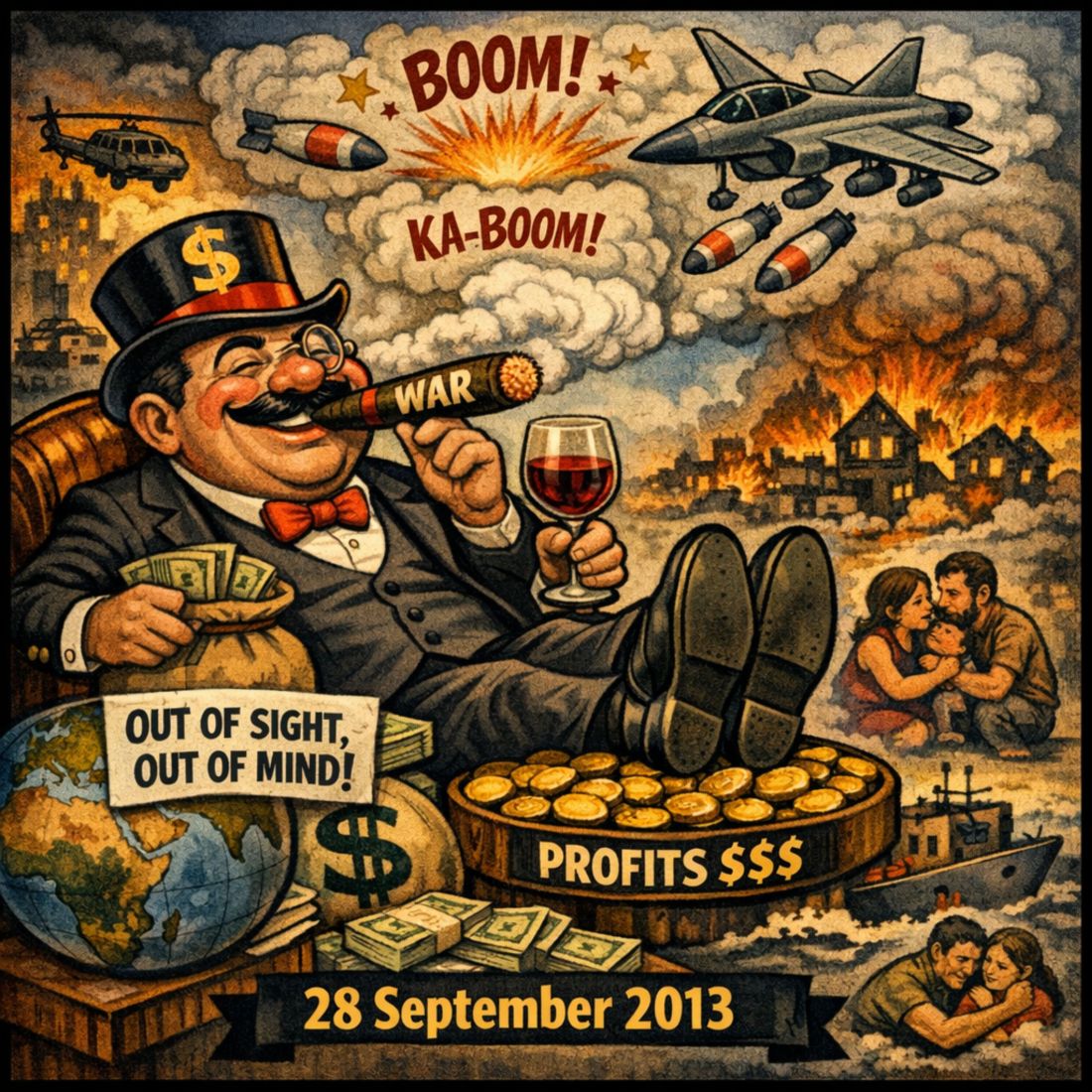
Minimum Wage, Maximum Exploitation: A Collapsing System Propped Up by Rising Taxes

Introduction

As the cost of living continues to climb across the United Kingdom, many households find themselves struggling to maintain even the most basic standards of financial independence.

With impending tax rises on the horizon, the pressure on those already living near the edge is set to intensify, pushing even greater numbers below the threshold of self-sufficiency.

This is not a temporary crisis, but a symptom of a deeper, systemic failure—a collapsing economic model that now survives only by extracting more from those who can afford it least.

The money-centric economic system that we have – The “Moneyocracy” – perpetuates itself by shifting the burden onto workers and taxpayers, while the promise of prosperity grows ever more distant for the majority.

Against this backdrop, it is essential to confront a fundamental question – one that exposes the uncomfortable realities at the heart of our economy.

A Question:

Do you believe the minimum wage is enough for a full-time worker to live on – and if so, why?

The answer to this question, which varies depending on one’s relationship with the minimum wage, reveals uncomfortable truths about the foundations of our economy and the way work is valued in this country.

What is not surprising is that those who already have financial security often agree in principle that low-paid workers should earn more. Yet when confronted with the implications of paying every worker enough to live independently, many recoil. Why? Because such a change would disrupt their own relationship with the economy.

The Minimum Wage Reality

Let us be clear: the national minimum wage in the UK is not enough for anyone working a full-time 40-hour week to live independently—free from reliance on benefits, charity, or debt.

The widespread acceptance of this wage stems from government and establishment narratives.

What is legally mandated is presented as morally and practically sufficient.

Yet, in truth, the minimum wage is a carefully placed rock covering a pit of myths and lies.

Those who benefit from the system prefer not to lift that rock, because doing so would expose their complicity in maintaining the illusion.

The Employee

A worker earning the minimum wage – currently £12.21 per hour, equating to £488.40 per week or £25,396.80 annually – cannot afford the basic essentials required for independent living.

The gap between what they earn and what they need is effectively the amount by which they are underpaid.

Employers exploit workers by failing to cover the true cost of living.

Regardless of how the deficit is filled—through benefits, charity, or debt—someone else is subsidising both the employee and the employer.

The Employer (Small Business)

Small business owners often insist they pay fairly because they comply with the law. Yet compliance does not equate to fairness.

Paying the legal minimum is not the same as paying enough for employees to live independently.

Common justifications include:

• “They can top up with benefits.”

• “I can’t pay more or I’ll go out of business.”

But these arguments miss the point. The government—and by extension, taxpayers—should not subsidise businesses that cannot afford to pay workers a living wage.

In reality, small businesses are also exploited: they cannot operate independently within the current economic system, because they too are constrained by models that undervalue their work.

The Employer (Big Business)

Large corporations differ because they can afford to pay more.

Supermarkets and other major employers of minimum-wage staff generate enormous profits – even during a cost-of-living crisis, like the one we are experiencing now.

They could easily pay wages that allow workers financial independence, if boards and shareholders accepted smaller returns.

Instead, big businesses exploit both employees and taxpayers. Workers are underpaid, while the government subsidises wages through benefits.

This allows corporations to maximise profits while keeping the mechanics of exploitation hidden from public debate.

The Government

Why does the government subsidise wages so small businesses can survive and big businesses can thrive? Why not simply set a minimum wage that reflects the true cost of living?

The answer is stark: doing so would collapse the system.

The economy functions by undervaluing the majority of jobs deemed “low-skilled” or of “little value.”

If wages reflected reality, the house of cards would fall.

The Taxpayer

The system is a con. The complex machinery of what can be called a Moneyocracy manipulates trust and deference so effectively that taxpayers rarely ask basic questions.

Why, in an economy where corporations make billions annually, must taxpayers top up their employees’ wages through taxes?

Why are we threatened with price hikes whenever government policy shifts, while corporate profits remain largely unscrutinised?

Following the money reveals the truth: wealth is funnelled in one direction, made possible only by exploiting workers, taxpayers, and weak governments.

Corporations profit by underpaying staff, then spin narratives that justify charging consumers more.

Reality Bites

Exploitation of normal people has gone too far. The system enriches the few by exploiting the many – sometimes multiple times over – so profits can grow while wages stagnate or reduce in real terms.

The Moneyocracy survives by perpetuating the myth that it is acceptable for many to grow poorer while a few grow disproportionately rich.

The promise dangled before workers – that if they play the game long enough, they too might “live the dream” – is false.

Humanity is destroying itself chasing a dream that continually recedes, because playing the game requires forgetting our true worth.

The basic equation of the Moneyocracy is simple: for some to be rich, most must be poor.

This is neither humane nor true.

The Alternative

There is another way. A system built on real values – where people, communities, and the environment come first – can replace the current money-centric model.

This alternative requires transparency, local systems, and a commitment to prioritising human worth over profit. Instead of hiding self-interest behind complex structures, society must embrace a model where business and life are conducted openly, sustainably, and with fairness at the core.

The choice is absolute: continue with a Moneyocracy that exploits us all or build a future centred on people.

Path Forward

The Local Economy & Governance System provides the foundational framework for a truly people‑centric future – one where People, Community, and Environment sit at the heart of every decision.

At its core lies a new benchmark: The Basic Living Standard, a guarantee that every individual receives a weekly wage sufficient to cover all essential needs.

This principle of equity and equality is not an optional add‑on, but the priority that guides every part of the system.

By shifting away from exploitation and toward fairness, transparency, and sustainability, this model offers a pathway to rebuild trust and resilience in our economic and social structures.

To explore how this vision can be realised and what it means for the future, please follow these links:

AI won’t make life cheaper for those who cannot work and the mega rich would be using their money to help others right now if they were going to do it for everyone in the future

You may have noticed that there is a growing trend for people to generate clicks on social media by creating long threads that tell interesting stories – many of which have already been told before.

One of them has popped up on my feed several times recently and outlines the predictions of some great contemporary sage of future tech who has apparently been proven right several times before.

The next prediction tells us that in no more than a few years, AI will have made everything so cheap that nobody will work and everything we pay for will cost just a few pennies and no more.

This prediction is popular. Because in today’s world everything relates to money.

Therefore, when people are handed the suggestion that everything they want will cost next to nothing, and there will also be no need to work, the immediate response and logic for just about anyone is to frame that in the way that we see, feel and experience our lives today or right now. Rather than considering what the pathway to that place will have changed in our lives and what our life experience will have then become.

The Moneyocracy or money-centric way of living that we are all experiencing today isn’t one where anything we need and certainly nothing that we want comes to us for free or without there being some financial-related cost of some kind.

Whilst the narrative that the establishment, big tech and big business would have us believe is that AI is here to make life much cheaper and easier for us all, the financial growth that the establishment’s pet politicians are so obsessed with and the picture of unfettered abundance for everyone that they want us to buy into, don’t go hand in hand.

Yes, there is of course the chance that the money hoarding elites are doing what they do today and that they have done everything that they’ve done in the past so that once they have optimal control of everything that we know, they will then benevolently give every one of us the perfect life experience that was always the aim. Which of course only ridiculous amounts of cash would allow them to do.

However, before we run away with that idea and think more about living our best material lives for free, there are perhaps just a few alternative truths that we all need to consider.

Money has made money by riding off the backs of the masses. First by making many hands do the work that enriched the few, through industrialisation and everything that came with it. Then by turning the mass population into debtors, exploiting the unwitting who have bought into the money myth themselves, so that the elites can continue to make ridiculous profits, just the same.

The system is very clever. And it is clever because it preys on the darker attributes of the human condition that make too many of us overlook common sense and basic logic when we are in receipt of money, wealth, position and shiny things. Everything that makes us live for a constant flow of temporary yet momentary hits that we have foolishly mistaken for what makes life and living feel good.

Addiction hides truths that are big, small and cover the multitude that sit between.

No matter our level or position within this carefully constructed top-down pyramid, the truth swirls all around us. But we remain blind to it for as long as we continue to be bought in.

So, in the sense of this coming ‘nirvana’ that AI is supposedly now promising us all, perhaps we should consider some of the more serious and consequential truths that we are almost certainly missing whilst we remain within:

The wealthy are only wealthy because of where their wealth sits within the hierarchy of the way that money and the wealth divide works against the rest of us today.

If the masses stop working, there will be billions of mouths around the world to feed and as many people to support with all the basics and essentials for life, just for people to continue to exist.

Even if machines are creating food, creating entertainment, providing transport, building houses and doing just about everything else we can imagine that has historically been done by hand up until now, there will always be a cost of some kind to pay.

The running, energy production, maintenance and replacement of the systems that would be required to enable such a massive workless population not only to survive, but to be sustained at what we would surely expect to be a good standard or experience of life, would remain very high.

Indeed, the cost of supporting billions of people around the world would still be much greater than many would imagine and would not be a cost that could be covered by playing with money and the way that people who are earning money today believe in the power of money right now.

In this sense playing with money means the way that the entire monetary, financial and economic system as we know works.

The ‘money’ and currencies we have today are part of the biggest confidence trick that has ever been played on humanity.

The whole economic system and the way money is created and managed within it is well and truly rigged.

The creation of the wealth, and the levels and scope of the asset ownership that the elites enjoy today would not have been remotely possible without them having and retaining the ability to constantly game the system.

Those running, managing and ‘in’ on the system use money that doesn’t exist to buy up everything that has real, non-monetary value to people.

This ‘ownership’ means that they will control our future and everything within it.

This has all been achieved under a system that they have created and manipulated using the establishment and the political and legislative processes within it to allow them to carry out what amounts to nothing less than legalised theft.

The wealth that has been created to enable this world take over by the wealthy can and will only achieve the aims of creating a utopian world if that world is inhabited by few enough to make the absence of money creation sustainable.

It will not be sustainable in any way, if the few have to manage and provide for a world population tomorrow, where the masses do nothing productive, become professional users and behave or act like farm animals or caged pets that exist in every direction and live all over the place.

Many baulk at even the merest hint or suggestion of there being some kind of plan for depopulation.

But anyone who understands how the money, financial and economic system we have today really works and where it is going, will see that depopulation of some kind is the unavoidable answer that bridges what is otherwise an unbridgeable void on the pathway to the outcome which has always been this Moneyocracy’s aim.

The only challenge they face is how to achieve this on a big enough scale without the masses ever awakening to the idea that national and worldwide crises can be planned and implemented by design. Just as easily as an entire monetary, financial and economic system that has led the majority of us to believe that those who don’t have enough of what they need to live today are the only ones who are at fault.