

The Revaluation
Shifting People, Communities, and the Environment toward a New Way of Living—Secured by a Governance Framework for a Better Future
The Revaluation marks a transformative period—a shift in thinking, behaviour, and systems. It represents the transition from a money-centric, neoliberal, and globalised world model to one that prioritises people, human values, and local communities. In this new paradigm, everything is reimagined to support meaningful, positive life experiences for all.
Traditionally, “revaluation” refers to reassessing monetary or financial worth. However, the term has long applied to any kind of review or reassessment—of objects, actions, or opportunities—where the value we assign influences our decisions and actions.
In essence, anything with value can be revalued. Within the context of the global systems that have shaped and often harmed humanity, The Revaluation is a comprehensive transformation. It aims to build a world that is truly better for everyone. This includes the development of new systems, processes, and governance tools that not only secure and sustain this improved future but also prevent any return to the corrupt, inhumane, and damaging structures of the past.
Why The Revaluation Is Necessary
Restoring Our Moral Compass and Reclaiming Humanity from a System That Has Lost Its Way
For too long, we’ve neglected our moral responsibility to consider others—people, communities, and the environment beyond ourselves. Even those most vulnerable, including the lowest-paid and those reliant on the state, have come to believe that success and survival require putting oneself first. This mindset has made it easy to overlook how those with power and resources have taken this pursuit of “more” to extreme and damaging lengths.
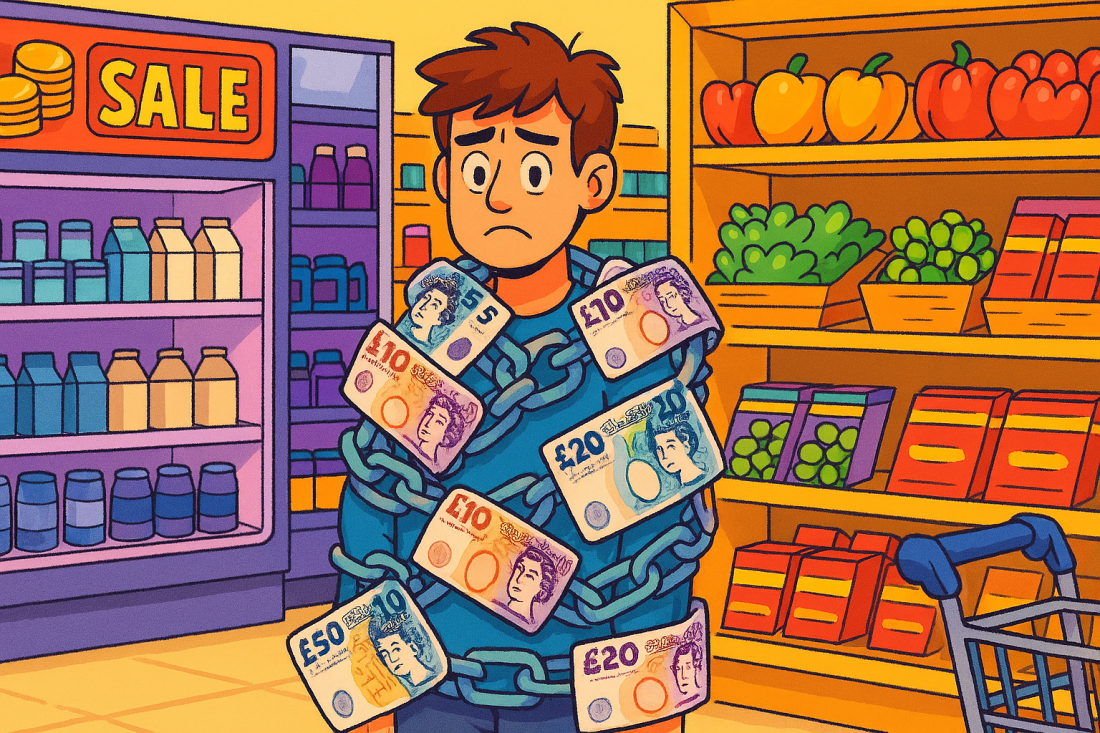
Exploitation—of people, systems, and nature—has become so normalised that many instinctively withdraw from acknowledging social problems, especially when solutions might come at a personal financial cost. Money has become the dominant tool for shaping behaviour, influencing every aspect of life—even those that seem unrelated to finance. It has replaced genuine values with a single benchmark: monetary worth.
This relentless pursuit of profit, wealth, and control by a privileged few has led to the collapse of communities, the erosion of human dignity, and the destruction of the environment. The natural systems that once sustained us have been disregarded, and the principle of sustainable living—once a cornerstone of generational survival—has been cast aside. The result is a world where ordinary people struggle to live independently within systems that no longer serve them.
Tragically, this outcome has not been accidental. It stems from deliberate strategies designed to exploit the masses, with depopulation seen as a desirable end once those in control have extracted all they can. By making life superficially easier, they’ve masked harmful changes and encouraged people to embrace their own diminishing value.
The most insidious part of this strategy is the willing participation of the public. Many still refuse to believe that those driving these harmful agendas have been openly declaring their intentions for decades. Our own selfishness has been weaponised—used to distract us and blind us to the truth hidden in plain sight.
When the truth finally becomes undeniable, few will challenge those responsible. Their defence will be simple: “We told you what we were doing, and you chose to go along.” This complicity is deepened by the addictive nature of money-centric living. Money has become not just a tool, but the ultimate goal—an addiction that feeds itself, offering fleeting satisfaction while eroding real happiness and human connection.
Addiction leaves little room for reflection or accountability. Many reject the uncomfortable truth about their relationship with money and its consequences. The illusion of comfort is easier to accept than the responsibility that comes with waking up and choosing a different path.
Spelling It Out: How Life Doesn’t Work
A Breakdown of some of the Systemic Failures We’re Living With
- The minimum wage is not enough for anyone to live independently. Without benefits, charity support (like food banks), or debt, survival is nearly impossible.
- It’s cheaper to buy food shipped from across the world than to purchase locally grown produce—despite the environmental and social costs.
- Retailers are more focused on selling finance packages than the actual products or services we go to them for.
- Politicians promise whatever they think we want to hear, deliver none of it, and then do as they please until the next election, when the cycle repeats.
- Local councils seem more interested in fining residents for minor offences than in providing meaningful services that help people live well.
- Police forces often appear uninterested in tackling real crime.
- People are expected to self-censor their thoughts, speech, and actions to avoid offending anyone who insists their personal worldview must be universally accepted.
- We’re told that if technology can do something, human involvement is no longer necessary—regardless of the consequences for displaced workers, shuttered communities, or the unsustainable use of resources.
- Individuals are increasingly treated as reference numbers—valued only for their potential to generate income for those who can exploit them.
- Through the influence of big business, government, and the establishment, we’re being led to believe that farms are no longer necessary to produce food.
- Money has become more important than people, values, or the planet.
- Private companies and individuals can own and charge rent for access to natural resources that should belong to everyone.
- Blame is always shifted elsewhere, even though accountability is one of the most powerful tools for learning and growth.
- We’re told to champion diversity, yet the way it’s framed often reinforces divisions between people and communities that might otherwise not exist.
What Will the Revaluation Look and Feel Like?
Understanding the Transformation We’re Already Living Through
The Revaluation—and the process leading up to it—is already underway. We are living through it now.
It’s profoundly difficult to recognise this transformation for what it is, precisely because we’re immersed in it.
Every part of it is unfolding around us and within our individual lives in deeply personal ways.
This makes it nearly impossible to take an objective view—much like walking through a forest and only seeing the trees immediately around us, rather than standing on a hillside and seeing the entire landscape.
The changes we’re experiencing—best described as the gradual disintegration of the system we’re leaving behind—are happening bit by bit, affecting each of us differently. Yet a growing sense of shared experience is emerging.
Increasingly, people are recognising that governments and public services are no longer functioning as they should, and that our current system of governance is in disarray.
This doesn’t mean a dramatic event or series of events won’t occur. In fact, it’s likely that such disruptions are already on the horizon. At some point, the system we’re all riding—like a train—will derail.
We’ll then face a choice: attempt to repair and continue on the same damaged track or accept that our future requires a new direction—one not bound by tracks laid by others and not limited by a system incapable of change.
In truth, we’ve come far enough to know that change is inevitable. The real question is whether we’ll embrace meaningful transformation that could benefit everyone or resist it out of fear—clinging to the comfort of a train we’ve grown dangerously accustomed to.
The opportunity to engage in conversations and act toward building a Local Economic and Governance System is already available to us.
While the defining milestones of The Revaluation may not yet have arrived, they are surely close. Now is the time to explore, plan, and consider how a fully localised, people-centric system can work—for us and for everyone.
 Adam Tugwell