This guide is not produced by a government, official body, or professional organisation. It is offered in the spirit of community, mutual support, and a belief in putting people first. Its purpose is to encourage calm thinking, shared responsibility, and a more grounded approach to uncertainty.
Nothing in this guide should be taken as instruction, direction, or authority. These are suggestions, reflections, and practical ideas intended to help people think differently about how we respond to disruption – individually and together.
You are encouraged to use your own judgement, to talk to the people around you, and to make decisions that fit your circumstances. This guide is simply one contribution to a wider conversation about resilience, community, and the common good.
Preface
The world feels louder than it used to. News travels faster, opinions spread quicker, and uncertainty can ripple into everyday life with surprising speed. In moments like these, people naturally look for clarity, reassurance, or simply a calmer way to make sense of what they’re seeing.
This guide was written in that spirit.
It isn’t an official document. It isn’t a prediction. It isn’t a warning. It’s a contribution – one voice among many – offering a steadier, more grounded way to think about disruption, behaviour, and community.
Most of the challenges people face during shortages or delays aren’t caused by systems failing. They’re caused by how people react when they feel unsure. A little understanding, a little preparation, and a little connection can make those moments far easier to navigate.
This guide is for anyone who wants to stay steady when life gets noisy. It’s for people who care about their community, who want to act responsibly, and who believe that calm behaviour spreads just as quickly as panic – if someone chooses to start it.
If this guide helps you think differently, feel steadier, or support someone else, then it has done its job.
How to Use This Guide
This guide is designed to be simple, calm, and practical. You don’t need to read it all at once, and you don’t need to follow it in order. Think of it as a collection of ideas you can dip into whenever you need clarity.
Here’s how to get the most from it:
Start where you are. If you’re feeling anxious, begin with the sections on behaviour and information. If you want to prepare calmly, go to the practical chapters.
Use what’s relevant. Not every suggestion will apply to every household. Take what fits your life and leave the rest.
Share it with others. Calm thinking spreads through conversation. If something here helps you, it may help someone else too.
Remember the spirit of the guide. This is not about fear, prediction, or authority. It’s about staying steady, connected, and thoughtful when the world feels noisy.
Use this guide as a companion, not a rulebook. It’s here to support you, not instruct you.
1. The Moment Before the Panic
A calm introduction for a world that feels suddenly unsteady
Right now, the world feels tense. You can see it in the headlines, you can hear it in conversations, and you can feel it in the way people are watching the news a little more closely than usual.
Events in the Gulf and the wider region may feel far away, but global systems are tightly connected. What happens in one place can ripple into everyday life somewhere else much faster than most people expect.
When something big shifts in the world, the first impact isn’t usually physical shortages. It’s behaviour.
People don’t panic because shelves are empty.
Shelves become empty because people panic.
That’s the moment this guide is for – the moment when uncertainty becomes visible, when people start to wonder what might happen next, and when small, sensible steps can make a big difference.
This isn’t a guide for preppers. It’s not about bunkers, stockpiles, or imagining the worst. It’s about staying steady when things get wobbly. It’s about understanding how people behave under pressure, and how you can avoid being swept up in fear, rumour, or the emotional noise that spreads faster than any real disruption.
Most people today have grown up in a world where shelves are always full, deliveries always arrive, and money is the key to everything. When that sense of certainty cracks – even slightly – the reaction can be sudden and irrational. People grab more than they need. They buy things they won’t use. They act from fear, not from thought. And in doing so, they create the very shortages they were afraid of.
This guide is here to help you avoid that trap.
It will show you how to prepare calmly and proportionately. How to think clearly when others are reacting emotionally. How to make decisions based on real information, not noise. And how to stay connected to the people around you – because community, not panic, is what gets people through difficult moments.
You don’t need to be afraid. You just need to be ready to act with clarity, responsibility and common sense. That’s what this guide is for.
2. Understanding What’s Actually Happening
Why global events ripple into everyday life – and why behaviour matters more than headlines
When something major happens in the world – conflict, political tension, economic shock – it’s natural to wonder how it might affect your day‑to‑day life.
Most people don’t think about supply chains until something goes wrong. That’s not a criticism; it’s simply how modern life has conditioned us to live. Everything arrives on time, everything is available, and everything feels automatic.
But the truth is that the systems we rely on are far more interconnected, and far more fragile, than they appear.
You don’t need to be an expert to understand this. You just need a clear picture of how things fit together.
How Supply Chains Actually Work (in simple terms)
Every item you buy – food, fuel, medicine, clothing, parts, packaging – depends on a chain of steps:
raw materials
processing
manufacturing
transport
storage
distribution
retail
If any one of those steps slows down, the whole chain slows down. If more than one step is disrupted at the same time, the chain can cough, stall, or temporarily break.
This doesn’t necessarily mean collapse.
It means delay.
And delay is enough to make people nervous.
Why Global Events Affect Local Shelves
Events in the Gulf, the Red Sea, or any major shipping route can:
reroute cargo ships
increase transport times
raise fuel costs
reduce availability of certain imports
create bottlenecks at ports
increase prices for businesses
These effects don’t always show up immediately. Sometimes they take days. Sometimes weeks. Sometimes they appear suddenly because businesses try to absorb the pressure quietly until they can’t.
This is why disruptions often feel like they “come out of nowhere” – even though the causes have been building for some time.
Why Perception Hits Harder Than Reality
Here’s the uncomfortable truth:
A small disruption becomes a big disruption when people react emotionally.
If a supermarket receives 10% less stock, that’s manageable.
If customers buy 50% more than usual because they’re worried, shelves empty overnight.
This is why behaviour matters more than logistics.
The system is built for normal patterns of buying.
It is not built for fear-driven spikes.
Temporary Disruption vs Systemic Collapse
It’s important to understand the difference:
Temporary disruption
Slower deliveries
Patchy availability
Higher prices
Occasional rationing
Short-term inconvenience
Systemic collapse
Widespread, long-term shortages
Breakdown of essential services
Structural failure of supply networks
What we are talking about here – and what this guide prepares you for – is temporary disruption, not collapse.
Temporary disruption is uncomfortable, but manageable.
Collapse is a different conversation entirely.
This guide is about staying steady, not imagining the worst.
Why Your Behaviour Matters More Than You Think
When people feel uncertain, they often act in ways that unintentionally make things worse:
buying more than they need
rushing to shops “just in case”
sharing dramatic posts online
reacting to rumours
assuming the worst
These behaviours create real shortages where none needed to exist.
But the opposite is also true:
calm buying
sharing accurate information
talking to real people
thinking before acting
helping neighbours
These behaviours stabilise the situation.
This is why your actions matter.
Not just for you – but for everyone around you.
The Goal of This Guide
Not to scare you.
Not to predict outcomes.
Not to tell you what to think.
The goal is simple:
To help you stay calm, think clearly, and act responsibly if the world around you becomes noisy or uncertain.
You don’t need fear.
You need understanding.
And once you understand what’s happening, everything else becomes easier to manage.
3. The Psychology of Panic (and How to Avoid It)
Understanding why people react the way they do – and how you can stay steady when others don’t
When the world feels uncertain, people don’t suddenly become irrational. They become human.
Fear is a natural response to uncertainty, and uncertainty is exactly what moments like this create.
The problem isn’t fear itself – it’s what fear can push people to do when they don’t understand what’s happening or don’t feel in control.
If you can understand the psychology behind panic, you can avoid being pulled into it. More importantly, you can help others stay calm too.
Why Panic Happens
Panic isn’t about danger.
It’s about perceived danger.
When people feel:
unsure
uninformed
powerless
overwhelmed
isolated
…their brains look for the fastest way to regain a sense of control. In a modern consumer society, that often means buying things.
Buying feels like action.
Action feels like control.
Control feels like safety.
This is why people grab more than they need. It’s not greed. It’s fear wearing the mask of practicality.
How Panic Spreads
Panic spreads through groups faster than facts ever can. It only takes a few triggers:
someone posting a photo of an empty shelf
a rumour shared in a WhatsApp group
a dramatic headline
a friend saying “I heard…”
seeing other people buying more than usual
Humans are social creatures. When we see others behaving in a certain way, we assume they know something we don’t. So we copy them. And they copy us. And the cycle accelerates.
This is how a small disruption becomes a big one.
Why Panic Feels Logical in the Moment
When people panic, they don’t think they’re panicking. They think they’re being sensible.
Fear narrows focus.
It makes long-term thinking difficult.
It pushes people into “just in case” behaviour.
This is why it’s so important to pause before acting. A moment of reflection can prevent a chain reaction.
How to Stay Grounded When Others Aren’t
Here are simple, practical ways to keep your head clear:
1. Slow down your reactions
If something makes you feel urgent, pause.
Urgency is rarely a sign of truth – it’s a sign of emotion.
2. Look at what’s actually in front of you
Not what someone online says.
Not what a headline implies.
Not what a rumour suggests.
What can you see?
What can you verify?
What do you know?
3. Talk to real people
Fear grows in isolation.
Calm grows in conversation.
Speak to people you trust.
Share concerns without drama.
Make sense of things together.
4. Remember that shortages are often created by behaviour
If you buy proportionately, you help stabilise the situation.
If you buy excessively, you unintentionally contribute to the problem.
5. Keep your focus on what you can control
You can’t control global events.
You can’t control the news cycle.
You can’t control other people’s reactions.
But you can control:
your choices
your pace
your information sources
your conversations
your behaviour
That’s where your power is.
A Calm Mind Helps Everyone
When you stay steady, you don’t just help yourself. You help your family, your neighbours, and your community. Calm behaviour spreads just as quickly as panic – it just needs someone to start it.
You don’t need to be a leader to make a difference.
You just need to be someone who thinks before reacting.
That alone can change the outcome for a lot of people.
4. Staying Smart With Information
How to think clearly when the world gets noisy
When global events escalate, the information environment changes long before the real‑world situation does.
Headlines become sharper. Social media becomes louder. Rumours spread faster. People start sharing things “just in case.” And fear – even mild fear – makes everything feel more urgent than it really is.
In moments like this, the quality of the information you rely on matters just as much as the choices you make.
Staying smart with information isn’t about distrust. It’s about not letting emotion make decisions for you.
The Information Environment Gets Noisy When People Get Nervous
When people feel uncertain, they talk more. They post more. They speculate more. They fill the gaps in their understanding with guesses, assumptions, and recycled content from past crises.
This isn’t because people are malicious. It’s because they’re human.
But the result is the same:
more noise
less clarity
more emotion
less truth
If you don’t manage the information you take in, you can end up reacting to someone else’s fear instead of your own judgement.
Use Critical Thinking, Not Emotional Thinking
A simple rule:
If something makes you feel panicked, angry, or urgent – pause.
Emotion is not evidence.
Before you act on anything, ask yourself:
Who is saying this?
How do they know?
Are they informing me or provoking me?
Is this new information or recycled fear?
Does this match what I can see in real life?
These questions slow your thinking down – and slowing down is how you stay in control.
Beware of Excitable Voices
Some people online:
mirror your fear
amplify your anxiety
speak with confidence they haven’t earned
present opinions as facts
encourage impulsive behaviour (“stock up now!”, “get what you can!”)
They often sound certain.
But certainty is not accuracy.
A calm voice with limited information is more useful than a loud voice with none.
Headlines Are Designed to Grab You, Not Guide You
Modern media – mainstream and social – rewards:
speed
emotion
engagement
Not accuracy, nuance, or calm.
A headline can be technically true but framed to provoke a reaction.
Always read beyond the headline.
Always look for context.
Look for Signals, Not Noise
Signals are things that actually matter:
official announcements
changes in availability
price shifts
supply updates from businesses
what you can see in your own community
Noise is everything else:
speculation
predictions
dramatic commentary
viral posts
anonymous “insider” claims
Signals help you act wisely.
Noise pushes you into panic.
Talk to Real People – Not Just Online Voices
When the world feels uncertain, it’s easy to get pulled into the noise of social media, dramatic commentary, and strangers online who sound confident but don’t actually know any more than anyone else.
That noise can make anyone feel isolated, anxious, or overwhelmed.
The antidote is simple:
Look to the people you know.
Talk to the people you trust.
Make sense of things together.
Real conversations with real people are grounding in a way that online voices never can be. You can hear tone. You can ask questions. You can sense intention. You can calm each other down instead of winding each other up.
Your own community – family, friends, neighbours, colleagues – is a far more reliable source of perspective than any feed or algorithm.
A Community Route puts it clearly:
“Use the people you can interact with, without barriers, as your reference points. Always trust what you can see and access in real life before you even put your faith in anything else.”
This mindset helps you stay steady when the world feels noisy.
Fear grows in isolation.
Calm grows in community.
Anger and Hate Don’t Solve Problems
When people feel overwhelmed, anger can feel like control.
It isn’t. It’s fuel – and it burns through good judgement quickly.
“If you are focusing on punishment and blame, you are missing the point.”
Anger doesn’t fix shortages.
Hate doesn’t make anyone safer.
Both can create new problems very quickly.
Staying calm protects you.
Staying human protects everyone.
The Best Decisions Are Made When You’re Calm
If you stay steady:
you buy proportionately
you avoid hoarding
you think clearly
you help others stay calm
you reduce the risk of behaviour‑driven shortages
This is the heart of the guide:
Your behaviour and response matters more than the disruption itself.
5. Digital Calm: Managing Information in Uncertain Times
When the world feels tense, our phones often make it feel louder. Information comes faster, emotions spread quicker, and it becomes harder to separate what matters from what doesn’t.
You don’t need to disconnect – just create a little space around what you take in.
Here are simple ways to stay digitally steady:
Limit the scroll when you feel anxious. Doomscrolling doesn’t give you more control – it just gives you more noise.
Mute or pause high‑anxiety feeds. You can always check them later if you need to.
Avoid checking the news late at night. Tired minds react more emotionally.
Be cautious with dramatic posts. Emotion spreads faster than accuracy.
Choose a few trusted sources and ignore the rest. More information isn’t better – clearer information is.
Digital calm isn’t about avoiding the world.
It’s about protecting your clarity so you can respond thoughtfully.
6. Staying Connected to Real People
Why your relationships matter more than ever when things feel uncertain
When life becomes noisy or unpredictable, it’s natural to look outward – to headlines, to social media, to dramatic commentary, to strangers who sound confident but don’t actually know any more than anyone else.
But the truth is simple:
The people who help you stay steady are the people you already know.
Your family.
Your friends.
Your neighbours.
Your colleagues.
Your community.
These are the people who share your reality, your environment, your challenges, and your interests.
They are the ones who can help you make sense of things without drama, without agenda, and without the emotional amplification that happens online.
Why Real Conversations Matter
Real conversations are grounding in a way that online voices never can be.
When you talk to someone face‑to‑face or on the phone:
you can hear tone
you can ask questions
you can sense intention
you can clarify misunderstandings
you can calm each other down
you can share perspective, not panic
This is how people have made sense of uncertainty for thousands of years – by talking to each other, not by scrolling through noise.
“Use the people you can interact with, without barriers, as your reference points. Always trust what you can see and access in real life before you even put your faith in anything else.”
Fear Grows in Isolation. Calm Grows in Community.
When people feel alone, fear gets louder.
When people feel connected, fear gets smaller.
Talking to real people helps you:
separate fact from rumour
understand what’s actually happening locally
avoid emotional overreactions
feel supported
stay grounded
make better decisions
You don’t need to agree on everything.
You just need to stay connected.
Make Sense of Things Together
If something worries you, talk about it.
If something confuses you, ask someone you trust.
If something feels overwhelming, share the load.
You don’t need to carry uncertainty alone.
And you don’t need to solve everything yourself.
Sometimes the most powerful thing you can do is sit with someone and say, “What do you make of this?”
That simple act can stop fear from spiralling.
Avoid Anger and Blame – They Create More Problems Than They Solve
When people feel stressed, anger can feel like control.
But anger doesn’t fix shortages.
It doesn’t make anyone safer.
It doesn’t help you think clearly.
To put it plainly:
“If you are focusing on punishment and blame, you are missing the point.”
Anger and hate spread faster than calm – and they do far more damage.
They turn neighbours into opponents.
They turn communities into fragments.
They turn temporary problems into lasting divisions.
Staying human matters.
Staying patient matters.
Staying kind matters.
Your Community Is Your Strength
You don’t need to be a leader to make a difference.
You just need to be someone who:
listens
stays calm
shares information responsibly
supports others
avoids drama
thinks before reacting
These small actions ripple outward.
They help stabilise the people around you.
They help prevent panic from taking hold.
They help your community stay resilient.
And in moments of uncertainty, resilience is everything.
7. Building a Sensible Personal Buffer
How to prepare calmly without contributing to panic
A sensible personal buffer isn’t a stockpile, and it isn’t a bunker. It’s simply a small cushion that helps you stay steady if shelves look thin for a few days or if deliveries slow down.
Most people already keep more at home than they realise – this section helps you organise it, strengthen it, and use it wisely.
The goal is simple:
Be prepared enough that you don’t need to panic.
Not so over-prepared that you cause panic for others.
Why a Buffer Matters
A small buffer gives you:
breathing space
time to think
freedom from impulse buying
protection from short-term shortages
the ability to shop responsibly even when others don’t
It’s not about fear.
It’s about stability.
A Two-to-Four-Week Buffer Is Enough
For most households, a two‑to‑four‑week buffer of essentials is more than enough to stay comfortable during temporary disruptions. This isn’t extreme – it’s simply a practical cushion.
It doesn’t need to be built all at once.
In fact, it shouldn’t be.
The “Buy One Extra” Method
The easiest, calmest way to build a buffer is this:
When you buy something you already use, buy one extra.
That’s it.
No rush.
No panic.
No sudden cost spike.
No emptying shelves.
Over a few weeks, this builds a stable, sensible reserve without affecting anyone else.
What to Include in Your Buffer
Focus on items that:
you already use
store well
rotate naturally
won’t go to waste
Food Basics
Choose things that fit your normal diet:
pasta, rice, noodles
tinned vegetables, beans, soups
sauces and seasonings
oats, cereals
long-life milk
bread that freezes well
frozen vegetables
oils and fats
tea, coffee
Household Essentials
These often disappear quickly during disruptions:
toilet roll
soap and cleaning products
washing powder
bin bags
foil, cling film, kitchen roll
Personal Essentials
People often forget these:
medicines you rely on
pain relief
plasters and basic first aid
toiletries
pet food
baby supplies (if relevant)
Practical Extras
Not survival gear – just useful items:
batteries
matches or lighters
torches
a power bank for phones
Rotate What You Store
A buffer only works if it stays fresh.
Use the first in, first out approach:
put new items at the back
use older items first
keep everything part of your normal routine
This keeps your buffer natural and waste‑free.
Avoid Hoarding – It Hurts Everyone
Hoarding:
empties shelves
creates artificial shortages
increases prices
harms vulnerable people
fuels panic in others
A buffer is responsible.
A stockpile is harmful.
If you buy proportionately, you help stabilise the situation for everyone.
Keep It Simple
You don’t need:
specialist equipment
expensive kits
extreme supplies
anything you wouldn’t normally use
You just need a little extra of what you already rely on.
This is preparation, not fear.
It’s responsibility, not panic.
It’s calm, not chaos.
8. Practical Resilience at Home
Simple ways to stay comfortable if things slow down for a while
A short-term disruption doesn’t mean chaos. It doesn’t mean hardship. It doesn’t mean you need specialist gear or extreme measures. It simply means life might run a little slower for a few days – and with a bit of practical thinking, that’s easy to handle.
This section gives you small, sensible steps that make everyday life smoother if shelves look thin, deliveries are delayed, or certain items become temporarily harder to find.
Water Basics
In most disruptions, water supplies remain completely unaffected. But it’s still sensible to have a little extra on hand.
You don’t need crates of bottled water.
You just need enough to stay comfortable.
A simple approach:
Keep a few bottles of long-life water in a cupboard
Refill reusable bottles and store them in the fridge
Know where your local refill points are (many shops and cafés offer this)
This isn’t about emergency storage – it’s about convenience and peace of mind.
Power Basics
Short power interruptions are rare, but they can happen. A few simple items make them easy to ride out:
a torch (not just your phone)
spare batteries
a power bank for charging devices
candles and matches (used safely)
These small things make a big difference if the lights flicker or you need to navigate the house in the dark.
Cooking Flexibility
If certain foods become temporarily unavailable, flexibility is your friend.
Think in terms of methods, not specific ingredients:
pasta, rice, noodles, couscous – all interchangeable
tinned vegetables can replace fresh
frozen items are often just as nutritious
beans, lentils, and pulses stretch meals easily
sauces can be improvised with herbs, stock, and tinned tomatoes
A flexible cook never feels the pinch of a missing ingredient.
Simple Substitutions When Items Are Unavailable
If something you normally buy isn’t on the shelf, try:
a different brand
a different size
a similar product
a homemade version
a different shop
Shortages are often patchy, not universal.
A little adaptability goes a long way.
Basic First Aid and Household Fixes
A small kit helps you avoid unnecessary trips out:
plasters
antiseptic wipes
pain relief
bandages
tweezers
basic tools (screwdriver, tape, scissors)
You don’t need a medical cabinet – just enough to handle everyday scrapes and minor issues.
Stretching Meals Without Feeling Deprived
If you need to make food last a little longer:
add rice, pasta, or potatoes to bulk out meals
use beans or lentils to stretch meat dishes
make soups or stews that last two days
freeze leftovers
plan meals around what you already have
This isn’t about going without – it’s about using what you have wisely.
Comfort Matters Too
Resilience isn’t just practical. It’s emotional.
A few comfort items can make a difficult week feel normal:
tea, coffee, hot chocolate
snacks you enjoy
a favourite meal in the freezer
a good book or film
warm blankets
Small comforts keep morale steady – and steady morale keeps behaviour calm.
You Don’t Need to Be an Expert
Practical resilience isn’t a skill set.
It’s a mindset.
It’s about:
staying flexible
staying calm
using what you have
avoiding waste
thinking ahead just enough
These small habits make temporary disruptions feel like inconveniences, not crises.
9. Community: Your Most Important Resource
Why people – not supplies – get us through difficult moments
When life becomes uncertain, it’s easy to think in terms of “me” – my food, my home, my family, my needs. But the truth is that people cope better together than they ever do alone.
Community is not a luxury. It’s a stabiliser. It’s a safety net. It’s a source of calm, clarity, and practical support.
In every disruption – whether it’s a storm, a shortage, a strike, or a global shock – the people who fare best are the ones who stay connected.
Not because they have more.
But because they have each other.
Why Community Matters More Than Stockpiles
A cupboard full of supplies can help you for a short time.
A community full of people can help you for a long time.
Community gives you:
shared information
shared resources
shared skills
shared reassurance
shared responsibility
It turns uncertainty into something manageable.
How to Connect With the People Around You
You don’t need to organise a meeting or start a group.
Community begins with simple actions:
say hello to neighbours
check in on people who live alone
share what you know calmly
ask how others are doing
offer help where you can
accept help when it’s offered
These small gestures build trust – and trust is what holds people steady.
Share Tools, Skills, and Information
Most people underestimate how much value they already have to offer.
Maybe you can:
cook
fix things
grow food
organise
drive
teach
listen
stay calm
Someone else will have different strengths.
Together, those strengths become resilience.
Sharing doesn’t mean giving away what you need.
It means recognising that everyone has something useful to contribute.
Look Out for Vulnerable People
In every community, there are people who:
struggle with mobility
live alone
have health conditions
rely on regular deliveries
don’t drive
feel anxious easily
A quick check-in can make a huge difference.
When you look out for others, you strengthen the whole community.
And when the community is strong, everyone feels safer.
Cooperation Reduces Shortages
This is one of the most important truths in the entire guide:
When people act calmly and cooperatively, shortages shrink.
When people act individually and fearfully, shortages grow.
If a community:
buys proportionately
shares what it can
communicates honestly
avoids panic
supports each other
…then shelves stay fuller, pressure stays lower, and everyone gets what they need.
Calm Behaviour Spreads
Just as panic spreads quickly, so does calm.
When one person stays steady, others feel steadier.
When one person speaks calmly, others listen more clearly.
When one person avoids drama, others follow their lead.
You don’t need to be a leader to make a difference.
You just need to be someone who chooses calm over chaos.
That choice ripples outward.
Community Is the Real Safety Net
In uncertain moments, people often look to systems – government, supermarkets, supply chains – to keep everything stable. But systems can wobble. Systems can slow down. Systems can struggle.
Communities, when they stay connected, do not.
A strong community:
shares information responsibly
supports vulnerable members
avoids unnecessary panic
spreads calm
adapts quickly
protects each other
This is the foundation of resilience.
This is how people get through difficult moments.
This is how stability is maintained when the world feels unsteady.
10. Supporting Others Without Overstepping
In uncertain moments, people naturally look out for one another. But support works best when it’s offered with respect, not assumption.
Here are gentle ways to help without overwhelming anyone:
Check in, don’t check up. A simple “How are things for you at the moment?” goes a long way.
Offer, don’t insist. “I’m heading to the shop – can I pick anything up for you?” leaves space for people to say yes or no.
Share information calmly. Not everyone wants updates. Ask before sending things on.
Respect people’s independence. Support is about empowerment, not taking over.
Remember that everyone copes differently. Some people talk. Some stay quiet. Some prepare. Some don’t. All of these are valid.
Community works best when help is offered with kindness, not pressure.
11. What To Do If You’re Already in the Middle of It
How to stay steady when shelves look thin and everyone else is rushing
Not everyone prepares early. Not everyone sees disruption coming. And even if you did prepare, you might still walk into a shop one day and find empty shelves, long queues, or people behaving anxiously.
This section is for that moment – the moment when the disruption is already visible, and you need to act with clarity rather than emotion.
You’re not too late.
You’re not powerless.
You just need to slow down and think clearly.
1. Don’t Panic-Buy – It Makes the Situation Worse
When shelves look empty, the instinct is to grab whatever you can. But panic-buying:
empties shelves faster
creates artificial shortages
drives up prices
harms vulnerable people
fuels more panic in others
If you stay calm, you help stabilise the situation for everyone – including yourself.
2. Prioritise Essentials, Not Extras
Focus on what you actually need for the next few days:
basic foods
medicines
toiletries
baby or pet supplies (if relevant)
cleaning essentials
Ignore the impulse to buy “just in case” items.
Ignore the urge to fill a trolley.
Ignore the fear that says “get everything you can.”
You don’t need everything.
You just need enough.
3. Make a Simple 72-Hour Plan
A short disruption is usually just that – short.
A 72-hour plan helps you stay steady:
What meals can you make with what you already have?
What substitutions can you use?
What items can you borrow or share with neighbours?
What can wait until next week?
Many households have more food than they realise.
A quick check of your cupboards often reveals days of meals.
4. Use What You Already Have Before Buying More
Before you head out again:
check your freezer
check your cupboards
check your fridge
check your bathroom supplies
You may find:
forgotten tins
frozen meals
dry goods
leftovers
cleaning products you didn’t realise you still had
Using what you already have reduces pressure on shops and gives the system time to recover.
5. Shop Responsibly Even When Others Aren’t
You might see people filling trolleys.
You might hear rumours.
You might feel the urge to copy what others are doing.
Pause.
Their behaviour is driven by fear, not fact.
If you buy proportionately:
you protect your own budget
you avoid waste
you help shelves refill faster
you reduce panic in your community
Responsible behaviour is contagious – just like panic, but far more helpful.
6. Stay Calm When the News Cycle Gets Loud
During disruptions, the news often becomes dramatic.
Social media becomes emotional.
Rumours spread quickly.
Remember:
headlines are designed to grab attention
dramatic posts spread faster than calm ones
people often share fear, not facts
online voices don’t know your reality
Look at what’s happening around you, not just what’s happening online.
Talk to real people.
Check what you can see.
Trust your own judgement.
7. Ask for Help If You Need It – And Offer Help If You Can
Community is a stabiliser.
If you’re struggling to find something essential:
ask a neighbour
ask a friend
ask a family member
ask a local community group
And if you have more than you need, or you find something someone else is missing, offer it.
Small acts of cooperation prevent big problems.
8. Remember: This Is Temporary
Most disruptions last days, not weeks.
Most shortages are patchy, not permanent.
Most systems recover quickly once panic settles.
Your goal is not to prepare for collapse.
Your goal is to stay steady until normality returns.
And it will.
12. Money, Work & Stability During Disruptions
How to stay financially steady when the world feels unsteady
When supply chains wobble or global events dominate the news, people often worry about more than food or essentials. They worry about money. They worry about work. They worry about what might happen next. That’s natural – uncertainty always makes people look for security.
This section helps you stay financially calm and avoid decisions that create more stress than they solve.
You don’t need to overhaul your life.
You just need to make small, steady choices that keep you stable.
1. Keep a Small Financial Buffer
You don’t need a large emergency fund.
You don’t need months of savings.
You just need a little breathing room.
A small buffer – even £20–£50 set aside – can:
reduce stress
prevent impulse buying
help you handle small surprises
give you a sense of control
If money is tight, build it slowly.
A few pounds at a time is enough.
2. Avoid Panic Spending
When people feel uncertain, they often spend more, not less:
“I should buy this now before it runs out.”
“I might need this later.”
“Everyone else is getting one.”
This is fear disguised as practicality.
Before you buy anything, ask:
Do I need this today?
Do I already have something similar?
Is this fear talking?
Most of the time, the answer is clear once you pause.
3. Reduce Unnecessary Costs – Gently
You don’t need to cut everything.
You just need to trim the things that don’t matter.
Simple adjustments help:
cook at home more often
use what you already have
avoid duplicate purchases
plan meals to reduce waste
buy own-brand items
pause non-essential subscriptions
These small changes add up without feeling restrictive.
4. Don’t Make Big Financial Decisions During Uncertainty
When the world feels tense, people sometimes:
switch jobs suddenly
take on new debt
make large purchases
invest impulsively
cancel important services
These decisions are often driven by emotion, not logic.
If something can wait, let it wait.
Clarity returns once the noise settles.
5. Work: Stay Steady, Stay Reliable
Most disruptions don’t affect employment directly.
But uncertainty can make people anxious about work.
The best approach is simple:
keep your routine
stay reliable
communicate clearly
avoid assumptions
don’t make sudden changes unless necessary
Stability at work creates stability at home.
6. If You Need Support, Reach Out Early
There is no shame in asking for help.
Most people need support at some point in their lives.
If you’re struggling:
talk to someone you trust
speak to your employer
look for community support groups
check what local services are available
Asking early prevents small problems becoming big ones.
7. Don’t Compare Yourself to Others
Some people will appear fully prepared.
Some will seem calm.
Some will look like they’re coping effortlessly.
You don’t know their situation.
You don’t know their pressures.
You don’t know their fears.
Focus on your own stability, not someone else’s performance.
8. Remember: Disruptions Are Temporary
Prices may rise for a short time.
Certain items may be harder to find.
The news may sound dramatic.
But systems recover.
Supply chains adapt.
Shops restock.
Life settles.
Your goal is not to prepare for collapse.
Your goal is to stay steady until normality returns.
And it will.
13. Templates, Checklists & Quick Wins
Simple tools to help you stay steady and prepared
This section gives you clear, practical resources you can use right away. No complexity. No pressure. Just straightforward tools that make life easier when things feel uncertain.
A. Two‑Week Essentials Checklist
A calm, sensible list – not a stockpile
Food (choose items you already use)
Pasta, rice, noodles
Tinned vegetables
Tinned beans, lentils, chickpeas
Tinned tomatoes or sauces
Tinned soups or stews
Oats or cereal
Long‑life milk
Bread for freezing
Frozen vegetables
Cooking oil
Tea, coffee, hot drinks
Household Essentials
Toilet roll
Soap and handwash
Washing powder
Cleaning spray
Bin bags
Foil, cling film, kitchen roll
Personal Essentials
Regular medication
Pain relief
Plasters and basic first aid
Toothpaste, shampoo, toiletries
Pet food
Baby supplies (if relevant)
Practical Items
Torch
Batteries
Power bank
Matches or lighter
This list is a guide, not a target.
You don’t need everything – just what fits your life.
B. “Build Your Buffer Gradually” Plan
A simple, stress‑free way to prepare
Week 1: Buy one extra of something you already use
Week 2: Add one long‑life food item
Week 3: Add one household essential
Week 4: Add one personal essential
Week 5: Review what you have – rotate older items
Week 6: Fill any small gaps
After six weeks, you’ll have a calm, sensible buffer without ever feeling like you were “stocking up.”
C. “If Shelves Are Empty Today” Quick Guide
What to do in the moment – without panic
Pause. Breathe. Slow down.
Buy only what you need for the next few days.
Check for alternatives:
different brand
different size
similar product
frozen instead of fresh
tinned instead of fresh
Use what you already have at home.
Ask a neighbour if you’re missing something essential.
Avoid buying multiples – it makes shortages worse.
Remember: this is temporary.
D. Simple Meal Planning Template
Helps you stretch what you have without stress
Step 1: List what you already have
Fresh items
Frozen items
Tinned items
Dry goods
Step 2: Build meals around those items
Meal 1:
Meal 2:
Meal 3:
Meal 4:
Meal 5:
Step 3: Identify small gaps
What one or two items would make these meals easier?
Step 4: Shop only for those gaps
This keeps costs low and avoids unnecessary buying.
E. Skills Worth Learning (They Make Life Easier)
Not survival skills – just useful everyday abilities
Basic cooking
Making meals from simple ingredients
Basic first aid
Fixing small household issues
Growing herbs or simple vegetables
Budgeting and planning
Staying calm under pressure
Talking openly with neighbours
These skills reduce stress and increase confidence – especially during uncertain moments.
F. Community Contact Sheet
Because connection is your strongest safety net
Write down the people you can rely on – and who can rely on you:
Family
Friends
Neighbours
Local community groups
People who may need checking on
People who have useful skills
People who stay calm in a crisis
Keep this somewhere visible.
In difficult moments, connection matters more than supplies.
14. Quick Reference Summary
A calm, at‑a‑glance guide for when things feel uncertain.
Five Things That Help
Buy proportionately
Talk to real people
Check what you already have
Stay flexible with brands and ingredients
Share calm, not drama
Five Things to Avoid
Panic‑buying
Rumour‑driven decisions
Doomscrolling
Anger and blame
Acting before thinking
If Shelves Look Thin
Pause
Buy only what you need
Look for alternatives
Use what’s at home
Ask neighbours if you’re stuck
If You Want to Prepare Calmly
Build a small buffer slowly
Rotate what you store
Keep essentials simple
Avoid hoarding
Focus on stability, not stockpiling
This page is designed to be shared, printed, or kept somewhere visible.
15. Staying Human When Things Get Difficult
The world may feel unsteady, but you don’t have to be
When life becomes noisy, when shelves look thin, when headlines feel sharp, and when people around you seem tense, it’s easy to feel like the ground beneath you is shifting. But moments like these don’t define us. How we respond to them does.
You don’t need to be fearless.
You don’t need to be perfect.
You just need to stay human.
Everything in this guide – from understanding supply chains, to managing information, to building a small buffer, to staying connected with others – comes down to one simple truth:
Calm, thoughtful behaviour protects everyone.
Not just you.
Not just your household.
Your whole community.
Disruptions Pass – People Remain
Supply chains recover.
Shops restock.
Prices settle.
The news cycle moves on.
But the relationships you build, the conversations you have, the support you offer, and the calm you spread – those things last.
They strengthen the fabric of your community.
They make you more resilient.
They make others feel safer.
They turn uncertainty into something manageable.
Preparation Is Responsibility, Not Fear
A small buffer isn’t panic.
A plan isn’t paranoia.
Staying informed isn’t overreacting.
Talking to people isn’t weakness.
These are the habits of someone who understands that stability comes from steady choices, not dramatic ones.
You don’t need to prepare for collapse.
You just need to prepare for inconvenience.
And you’ve already done that by reading this guide.
Community Is Your Anchor
When systems wobble, people hold each other steady.
People, not institutions, are the foundation of a healthy, resilient society. That real strength comes from the ground up. That calm, human behaviour is more powerful than any rule or policy.
You’ve seen throughout this guide how true that is.
When you talk to real people, fear shrinks.
When you buy proportionately, shelves stay fuller.
When you stay calm, others follow your lead.
When you help someone else, you strengthen everyone.
This is how communities get through difficult moments – not with panic, but with connection.
Small Steps Make Big Differences
You don’t need grand gestures.
You don’t need to overhaul your life.
You don’t need to be the calmest person in the room.
You just need to:
think before reacting
buy what you need, not what you fear
talk to people you trust
stay flexible
stay patient
stay kind
These small actions ripple outward.
They shape the behaviour of others.
They stabilise your community.
They protect the people around you.
You Are More Capable Than You Think
Uncertain moments reveal something important:
People are far more resilient, adaptable, and resourceful than they realise.
You’ve already taken the most important step – you’ve chosen to understand, not panic.
You’ve chosen to prepare calmly. You’ve chosen to think about others as well as yourself.
That choice matters.
That choice makes a difference.
That choice is what gets people through.
A Final Thought
The world will always have moments of tension.
Systems will always have weak points.
People will always feel uncertain from time to time.
But if you stay calm, stay connected, and stay human, you’ll navigate those moments with clarity and confidence – and you’ll help others do the same.
You don’t need fear.
You don’t need drama.
You just need steady steps, thoughtful choices, and the people around you.
That’s how we get through difficult moments.
That’s how we protect each other.
That’s how we thrive, not just survive.
16. What Happens Next
Disruptions feel big when you’re in the middle of them, but most of them pass quietly once the noise settles. Systems adapt. Shelves refill. People adjust. Life finds its rhythm again.
What lasts longer than any disruption is how people treat each other during it.
If you stay calm, stay connected, and stay thoughtful, you help create the kind of community where uncertainty doesn’t turn into panic – it turns into cooperation.
Moments like these remind us that resilience isn’t built from fear or stockpiles. It’s built from steady choices, shared understanding, and the simple act of looking out for one another.
Carry that forward, and you’ll be ready for whatever comes next.
Further Reading & Other Work
If you found this guide useful, you may appreciate some of the other writing and ideas that sit alongside it. Much of my work explores community, behaviour, resilience, and the ways people can support one another when the world feels uncertain.
You can find essays, reflections, and related pieces at:
We are living through the final years of a world built on assumptions that no longer hold. For generations, we have been encouraged to believe that progress is inevitable, that growth is permanent, and that the systems we inherited will always be capable of meeting our needs. We have been taught to trust in money, in markets, in global supply chains, and in the idea that technology will always arrive in time to save us from the consequences of our own choices.
Yet beneath the surface of everyday life, the foundations of that world are failing.
The oil‑based economy that made globalisation possible is now fragile, volatile, and increasingly unable to sustain the complexity it created. The money system that once promised opportunity has become a mechanism of control, inequality, and dependency. The political structures that were meant to serve us have become entangled with the interests of those who profit most from keeping things exactly as they are. And the technologies we were told would liberate us are now being used to replace us, monitor us, and shape our behaviour in ways we barely notice.
We stand at a crossroads where the old world cannot continue, yet the new world has not been built.
This book is not an argument for returning to the past, nor is it a manifesto for a green ideology that replaces one form of control with another. It is a practical, grounded exploration of how we can build a future that works – a future where people, communities, and the environment are placed at the centre of everything we do.
It begins by confronting the truths we have avoided for too long: the role of mineral oil in shaping modern life, the way money has distorted our values, and the psychological barriers that make new systems seem impossible even when the old ones are visibly collapsing. It examines the myths that have kept us trapped – the myth of progress, the myth of abundance, the myth of energy scarcity – and explains why these stories have prevented us from imagining anything different.
But this book is not about collapse. It is about opportunity.
It is about rediscovering the knowledge, skills, and practices that once made communities resilient – and combining them with the best of what we know today. It is about creating a local, circular economy where reuse, repair, and restoration are normal; where contribution replaces taxation; where meaningful work replaces meaningless employment; and where technology serves people rather than replacing them.
It is about building a world where abundance is defined not by how much we can accumulate, but by how independently and securely we can live.
The ideas in this book draw on the foundations laid in Foods We Can Trust, A Community Route, The Local Economy & Governance System, The Basic Living Standard, and An Economy for the Common Good. Together, these works explore the failures of the old system and the principles of a new one. This book brings those principles together into a single, coherent framework – a blueprint for communities that wish to thrive without oil, without manipulated money, and without the centralised structures that have shaped our lives for far too long.
The future will not be built by governments, corporations, or institutions. It will be built by people – by communities who choose to take responsibility for their own lives, their own resources, and their own destiny.
This book is written for them.
It is written for anyone who senses that the world is changing, who feels the instability beneath the surface, and who knows that waiting for someone else to fix things is no longer an option. It is written for those who believe that a fairer, more compassionate, more resilient way of living is possible – and who are ready to take the first steps toward creating it.
The world we have known is ending.
The world we need is waiting to be built.
Let us begin.
Introduction
We are entering a period of history that few alive today are prepared for, not because the challenges ahead are unknowable, but because we have spent decades avoiding the truths that would have prepared us.
The world we inhabit has been shaped by systems that were never designed with human wellbeing in mind. They were designed for efficiency, for profit, for control, and for the expansion of industries whose interests have long overshadowed the needs of ordinary people.
For most of us, life has unfolded within a framework we did not choose. We were born into a world where money defines value, where oil defines possibility, and where global systems define the limits of our imagination. We have been conditioned to believe that the way things work today is the only way they can work, and that any alternative must be unrealistic, impractical, or naïve.
Yet the evidence of our own eyes tells a different story.
The systems we rely on are becoming unstable. The cost of living rises while wages stagnate. Food supply chains stretch across continents and break under the slightest pressure. Energy markets fluctuate wildly, leaving households and businesses exposed. Public services strain under the weight of demand they were never designed to meet. Communities fracture as people become more isolated, more anxious, and more dependent on systems that no longer serve them.
We are told that these problems are temporary. That the economy will recover. That technology will save us. That governments will step in when needed. But beneath the comforting language lies a deeper truth: the foundations of the old world are failing, and no amount of political messaging or technological optimism can restore what has already been lost.
This book begins from a simple but uncomfortable premise:
We cannot fix the world using the same assumptions that broke it.
We cannot build resilient communities while depending on global supply chains that collapse under stress.
We cannot create fairness while using a money system that rewards extraction and punishes contribution.
We cannot achieve sustainability while relying on mineral oil for everything from food to medicine to transport.
We cannot protect human dignity while allowing technology to replace the very people it was meant to serve.
To build a future that works, we must first understand the forces that shaped the present. We must examine the role of oil not just as a fuel, but as the hidden foundation of modern life. We must confront the way money has been manipulated to create dependency and inequality. We must recognise how narratives, language, and political identity have been used to keep us compliant. And we must acknowledge the psychological barriers that make new systems seem impossible, even when the old ones are visibly collapsing.
Only then can we begin the real work: imagining and building a world that places people, community, and the environment at its heart.
This book does not offer a fantasy. It offers a practical, grounded, and achievable framework for a post‑oil, post‑money, human‑centred society.
It draws on the best of our history – the crafts, trades, and community structures that once made life resilient – and combines them with the best of our present – the knowledge, tools, and technologies that can support a local, circular, regenerative economy.
It is not a call to return to the past. It is a call to reclaim the wisdom we abandoned, and to apply it with the insight we have gained.
It is a call to build communities that can withstand instability, provide for themselves, and thrive without relying on systems that are already failing.
It is a call to redefine abundance, not as the accumulation of everything we could want, but as the guarantee that our needs will always be met.
It is a call to restore personal sovereignty, not as an abstract ideal, but as a lived reality grounded in contribution, responsibility, and mutual respect.
Above all, it is a call to recognise that the future will not be shaped by governments, corporations, or institutions. It will be shaped by communities – by people who choose to step forward, question the assumptions they inherited, and begin building something better.
The chapters that follow will take you through the world as it is, the world as it could be, and the steps we must take to bridge the gap between the two. They will challenge assumptions, dismantle myths, and offer a clear, practical path toward a future that is fair, resilient, and rooted in human dignity.
The old world is ending.
The new world will not build itself.
But it can be built – and it can be built by us.
Let’s begin.
Part I – The World We Built on Oil and Manipulated Money
Chapter 1 – The Hidden Foundation: Oil as the Skeleton of Modern Life
Modern society is built on a story we rarely question. We are encouraged to believe that progress is the result of human ingenuity, technological brilliance, and the natural evolution of civilisation. We are told that the comforts and conveniences of modern life are the inevitable outcome of innovation and economic growth. But beneath this comforting narrative lies a truth that is far more mechanical, far more fragile, and far more dangerous than most people realise.
The world we inhabit today is not the product of human progress alone. It is the product of mineral oil – a single resource that has shaped every aspect of modern life, from the food we eat to the clothes we wear, the medicines we rely on, the buildings we live in, and the systems we depend on without ever seeing them.
Oil is not simply a fuel.
Oil is the skeleton of modern civilisation.
It is the hidden architecture that holds everything together, the invisible infrastructure that makes the impossible seem normal, and the silent force that has allowed a small number of people and institutions to accumulate unprecedented levels of power and control.
To understand why the world is becoming unstable – and why a new system is not only desirable but necessary – we must begin by understanding the true role of oil.
1.1 Oil as the Bloodstream of the Modern World
When most people think of oil, they think of petrol and diesel. But fuel is only the surface. The deeper truth is that oil is embedded in almost every material, process, and system that defines modern life.
Oil is not just burned.
Oil is transformed – into the physical substance of the modern world.
Here is a more complete picture of where oil actually goes:
Oil in Everyday Life
Oil is used to make:
clothing (polyester, nylon, acrylic, elastane)
shoes and trainers
carpets and rugs
bedding and pillows
curtains and upholstery
cleaning products
detergents and soaps
cosmetics and skincare
toothpaste and deodorant
disposable razors
nappies and sanitary products
toys and household goods
Most people wear oil, sleep on oil, wash with oil, and clean their homes with oil – without ever realising it.
Oil in Food and Agriculture
Oil is essential for:
fertilisers (natural gas feedstock)
pesticides and herbicides
diesel for tractors and harvesters
diesel for food transport
plastic packaging
plastic crates and pallets
irrigation systems
greenhouse films
food processing equipment
Without oil, industrial farming collapses within weeks.
Oil in Medicine and Healthcare
Oil is used to produce:
pharmaceuticals
syringes and needles
IV bags and tubing
surgical gloves
masks and PPE
medical packaging
prosthetics
hospital mattresses
diagnostic equipment casings
Modern healthcare is built on petrochemicals.
Oil in Manufacturing and Industry
Oil becomes:
plastics
resins
adhesives
solvents
lubricants
rubber
insulation
sealants
paints and coatings
composite materials
Every factory, every machine, every production line depends on oil.
Oil in Electronics and Technology
Oil is used in:
phone casings
laptop housings
circuit boards
wiring insulation
server racks
routers and modems
televisions and monitors
batteries (manufacturing processes)
Digital life is petrochemical life.
Oil in Construction and Infrastructure
Oil is essential for:
asphalt roads
roofing materials
PVC pipes
insulation foams
sealants and adhesives
paints and varnishes
flooring materials
synthetic carpets
construction machinery
Without oil, modern construction slows to a crawl.
Oil in Transport and Logistics
Oil powers:
cars
lorries
buses
ships
planes
trains (diesel and maintenance)
agricultural machinery
mining equipment
emergency services vehicles
And oil is used to make:
tyres
lubricants
hydraulic fluids
brake fluids
plastics in interiors
Transport is not just fuel – it is materials.
Oil in Energy Systems
Even renewable energy depends on oil for:
manufacturing solar panels
producing wind turbine blades
transporting components
maintaining infrastructure
producing batteries
mining rare earth metals
Oil is the hidden input behind “clean” energy.
Oil in Packaging and Waste
Oil is used for:
plastic bottles
plastic films
bubble wrap
polystyrene
food trays
carrier bags
bin liners
industrial containers
And almost all of this becomes waste – another oil‑based problem.
Oil as the Foundation of Globalisation
Oil made possible:
global supply chains
just‑in‑time logistics
cheap consumer goods
mass tourism
international trade
centralised production
disposable culture
Without oil, globalisation collapses.
1.2 Oil and the Illusion of Abundance
The abundance we take for granted – full supermarket shelves, cheap consumer goods, fast delivery, global travel, and endless choice – is not the result of efficiency or innovation. It is the result of a system that burns through millions of years of stored energy to maintain the illusion of stability.
Oil made it possible to:
grow food on an industrial scale
transport goods across continents
manufacture products cheaply
build global supply chains
centralise production
expand cities
create disposable culture
This abundance is not natural.
It is engineered – and it is temporary.
The moment oil becomes scarce, expensive, or politically unstable, the entire system begins to fracture.
We are already seeing the early signs: rising prices, supply chain disruptions, energy insecurity, and governments scrambling to maintain the appearance of control.
1.3 Oil and the Architecture of Dependency
Oil did not just power the modern world. It shaped its structure.
Because oil made long‑distance transport cheap, production became centralised.
Because oil made industrial farming possible, local food systems collapsed.
Because oil made plastics cheap, disposable culture replaced repair culture.
Because oil made globalisation profitable, communities lost the ability to provide for themselves.
Because oil made complexity appear affordable, simplicity was dismissed as primitive.
Oil created a world where:
we depend on systems we do not control
we rely on supply chains we cannot see
we trust institutions that do not serve us
we consume products we cannot repair
we live in communities that cannot sustain themselves
This is not progress.
This is dependency.
And dependency is the opposite of sovereignty.
1.4 Oil and the Concentration of Power
The story of oil is also the story of power.
Control of oil has allowed:
governments to wage wars
corporations to dominate markets
financial institutions to manipulate economies
political elites to shape global policy
a small number of actors to influence the lives of billions
Oil created the conditions for:
monopolies
centralisation
surveillance
inequality
political capture
economic coercion
The more dependent society became on oil, the more power accumulated in the hands of those who controlled it.
This is why the transition away from oil is not simply an environmental issue.
It is a political, economic, and moral issue.
A post‑oil world is a world where power must be redistributed – not by force, but by necessity.
1.5 Oil and the Fragility of Modern Systems
The modern world appears stable because oil has allowed us to hide its fragility.
But the truth is that:
global supply chains are brittle
industrial farming is unsustainable
manufacturing is dependent on petrochemicals
transport systems cannot function without diesel
healthcare relies on oil‑based materials
construction depends on oil‑derived products
digital infrastructure requires oil‑based components
Remove oil, and the complexity collapses.
This is not speculation.
It is physics.
Every system built on oil inherits the fragility of oil.
1.6 Why We Must Begin Here
This book is about building a future without oil and without manipulated money – a future where communities can thrive independently, sustainably, and with dignity.
But we cannot begin to imagine that future until we understand the world we currently inhabit.
We must begin with oil because:
it explains why the old system cannot be saved
it reveals the true scale of the challenge
it exposes the illusions we have been living under
it shows why local, circular, regenerative systems are not optional – they are necessary
it prepares us for the instability that lies ahead
it frees us from the belief that the current system is permanent
Oil is the skeleton of the modern world.
But it is also the reason that world is collapsing.
To build something new, we must first see the old world clearly.
Only then can we begin the work of creating a system that serves people, communities, and the environment – not profit, power, and control.
Chapter 2 – The Money Illusion: How Manipulated Money Controls People
Modern society treats money as if it were a natural force – something that simply exists, like gravity or the weather.
We are taught from childhood that money is the measure of value, the reward for effort, the gateway to opportunity, and the foundation of security.
We are encouraged to believe that money is neutral, rational, and fair.
But money is none of these things.
Money is a human invention.
Money is a political tool.
Money is a mechanism of control.
Money is the invisible architecture of inequality.
And most importantly:
Money is the single greatest barrier to building a society that works for people, communities, and the environment.
To understand why the old system cannot be fixed, we must understand the role money plays in shaping behaviour, morality, and power.
2.1 Money as a Tool of Dependency
Money is presented as a means of exchange – a simple way to trade goods and services. But in practice, money has become something very different: a system that forces people to depend on structures they do not control.
Money creates dependency by:
making people reliant on wages for survival
tying basic needs to financial markets
forcing communities to outsource essential services
turning housing, food, and energy into commodities
making individuals vulnerable to economic shocks
When your ability to live depends on money, and money depends on systems you cannot influence, you are not free. You are dependent.
This dependency is not accidental.
It is engineered.
2.2 Manufactured Scarcity: The Engine of Control
The modern money system is built on a simple principle:
Scarcity creates obedience.
If people believe there is not enough to go around, they will:
compete instead of cooperate
accept unfair conditions
tolerate exploitation
fear change
cling to the familiar
defend the system that harms them
Scarcity is not a natural condition.
It is manufactured through:
inflation
debt
speculation
artificial pricing
land banking
corporate monopolies
financialisation of essentials
The result is a society where people spend their lives chasing money, not because they want more, but because they fear having less.
2.3 How Money Distorts Morality and Value
Money has become the moral framework of modern life.
People are judged not by their contribution, character, or integrity, but by:
income
possessions
job title
financial status
This distortion leads to a world where:
exploitation is rewarded
contribution is undervalued
essential work is poorly paid
destructive industries are profitable
community service is treated as charity
wealth is mistaken for virtue
Money has replaced morality.
Profit has replaced purpose.
This is why the old system cannot be reformed.
It is built on the wrong measure of value.
2.4 Why People Defend Money Even When It Harms Them
One of the most powerful illusions of the modern world is the belief that money is essential for order, fairness, and stability.
People defend money because they believe:
it creates opportunity
it rewards hard work
it ensures fairness
it protects freedom
it reflects merit
But these beliefs collapse under scrutiny.
Money does not reward hard work – it rewards ownership.
Money does not create fairness – it creates hierarchy.
Money does not protect freedom – it restricts it.
Money does not reflect merit – it reflects access.
Yet people cling to these beliefs because the alternative feels frightening.
If money is not the foundation of society, then what is?
This fear is the greatest obstacle to change.
2.5 Money and the Concentration of Power
Money is not just a medium of exchange.
It is a mechanism for centralising power.
Those who control money control:
land
resources
labour
production
politics
media
technology
public services
This concentration of power is not a flaw in the system.
It is the system.
The modern economy is designed to funnel wealth upward, not distribute it outward.
The more dependent people become on money, the more power accumulates in the hands of those who issue, manipulate, and control it.
This is why inequality is not an accident.
It is a feature.
2.6 Money as a Barrier to Real Solutions
Every major problem in society – housing, healthcare, food security, energy, education, transport – is framed as a financial issue.
We are told:
“There isn’t enough money.”
“We can’t afford that.”
“It’s too expensive.”
“We must prioritise economic growth.”
But these statements are not about resources.
They are about control.
Money prevents real solutions because:
it limits imagination
it restricts action
it prioritises profit over need
it forces public services to operate like businesses
it makes communities dependent on external funding
it turns essential goods into commodities
We cannot build a people‑first system while money remains the organising principle.
2.7 Why a Post‑Money Framework Is Necessary
This book is not about abolishing money overnight.
It is about recognising that:
Money cannot be the foundation of a fair, resilient, human‑centred society.
A post‑money framework means:
needs are met through contribution, not income
value is defined by usefulness, not profit
communities provide for themselves
essentials are guaranteed, not purchased
work is meaningful, not transactional
abundance is measured by independence, not accumulation
This is not utopian.
It is practical.
It is how communities functioned for most of human history – and how they will function again when the oil‑money system collapses.
2.8 Why We Must Question Money Before We Can Build Anything New
Money is the invisible barrier that prevents people from imagining alternatives.
It is the lens through which we judge possibility.
If we do not question money, we cannot:
question the economy
question globalisation
question inequality
question dependency
question the purpose of work
question the structure of society
And if we cannot question these things, we cannot build anything new.
To create a system that serves people, community, and environment, we must first free ourselves from the illusion that money is the only way to organise life.
Only then can we begin to imagine – and build – a world where value is measured by contribution, not profit; where abundance is defined by security, not consumption; and where sovereignty is a lived reality, not a political slogan.
Chapter 3 – The Power Problem: How Oil and Money Centralised Control
Every system has a centre of gravity – a point around which everything else must orbit. In the world we inherited, that centre of gravity is not people, community, or the environment. It is the intersection of oil, money, and power.
Oil made the modern world possible.
Money made the modern world controllable.
Power made the modern world unequal.
Together, they created a system where a small number of institutions – governments, corporations, financial markets, and global organisations – hold extraordinary influence over the lives of billions.
This concentration of power is not an accident. It is the predictable outcome of a world built on resources and systems that require centralised control to function.
To understand why the old world cannot be reformed, we must understand how oil and money created a structure that rewards centralisation, punishes independence, and suppresses alternatives.
3.1 The Rise of Corporate Empires
Oil did not simply fuel industry – it created it.
The companies that grew around oil became some of the largest and most powerful institutions in human history. They shaped:
global trade
national policy
military strategy
environmental regulation
technological development
public perception
Oil companies became more than businesses.
They became geopolitical actors.
Their influence extended into:
banking
pharmaceuticals
agriculture
plastics
transport
construction
media
Every sector that relied on oil – directly or indirectly – became part of a vast, interconnected corporate ecosystem. And because oil was essential, these corporations became untouchable.
This is why governments rarely challenge them.
They cannot.
The system depends on them too deeply.
3.2 Political Capture: When Governments Serve Systems, Not Citizens
As oil and money concentrated power in corporate hands, governments adapted – not by resisting, but by aligning themselves with the interests of those who controlled the economic engine.
Political capture happens when:
policy is shaped by industry
regulation protects monopolies
public services are outsourced
political parties rely on corporate funding
governments fear economic instability more than public wellbeing
This is not corruption in the traditional sense.
It is structural dependency.
Governments do not serve citizens because they cannot afford to.
They serve the system that keeps the economy functioning.
This is why:
energy policy protects fossil fuels
food policy protects industrial agriculture
housing policy protects landowners
economic policy protects financial markets
technology policy protects large platforms
The system is not broken.
It is working exactly as designed.
3.3 How Centralised Systems Suppress Alternatives
Centralised systems fear decentralisation because decentralisation reduces dependency – and dependency is the source of their power.
This is why alternatives are:
dismissed as unrealistic
regulated out of existence
priced out of viability
ridiculed in public discourse
ignored by mainstream media
undermined by policy decisions
Examples include:
local food systems
community energy
cooperative housing
repair culture
local currencies
regenerative agriculture
human‑centred technology
decentralised governance
These alternatives threaten the logic of the old world because they reduce the need for:
oil
money
corporate products
centralised services
political control
A system built on dependency cannot tolerate independence.
3.4 The Illusion of Choice in a Centralised World
Modern society gives the appearance of choice – thousands of products, dozens of political parties, endless entertainment, constant information. But beneath the surface, the choices that matter are tightly controlled.
You can choose between brands, but not between economic models.
You can choose between politicians, but not between systems of governance.
You can choose between products, but not between ways of living.
You can choose between jobs, but not between forms of value.
This is not freedom.
It is managed perception.
The system allows variation, not transformation.
3.5 Why Centralised Power Creates Fragility
Centralisation creates efficiency – but it also creates vulnerability.
When everything depends on:
a small number of energy sources
a small number of corporations
a small number of supply chains
a small number of political institutions
a small number of financial systems
…then any disruption becomes a crisis.
This is why:
a single pipeline failure can raise global prices
a single shipping delay can empty supermarket shelves
a single financial shock can destabilise economies
a single political decision can affect millions
Centralisation magnifies risk.
Localisation distributes it.
3.6 Why Power Will Not Decentralise Itself
It is tempting to believe that governments or corporations will lead the transition to a fairer, more resilient world. But this belief misunderstands the nature of power.
Power does not decentralise itself.
Power protects itself.
Those who benefit from the current system have no incentive to change it – and every incentive to preserve it for as long as possible.
This is why:
governments deny the scale of the energy crisis
corporations promote “green” versions of the same model
financial institutions resist local economic alternatives
political leaders promise stability they cannot deliver
media narratives reinforce the status quo
The old world will not collapse because it chooses to.
It will collapse because it cannot sustain itself.
3.7 Why Decentralisation Is the Only Path to Sovereignty
A post‑oil, post‑money world cannot be built on centralised foundations.
It must be built on:
local production
local energy
local governance
local food systems
local skills
local accountability
This is not ideology.
It is physics, economics, and human nature.
Centralised systems require:
vast energy
vast resources
vast infrastructure
vast control
Local systems require:
cooperation
contribution
stewardship
transparency
The first model is collapsing.
The second model is emerging.
3.8 Why We Must Understand Power Before We Can Reclaim It
This chapter is not about blame.
It is about clarity.
We cannot build a new system until we understand:
how the old one works
why it works that way
who it serves
who it harms
why it cannot be reformed
why it will resist change
why it will eventually fail
Only then can we begin the work of reclaiming power – not through conflict, but through independence.
A decentralised, human‑centred, regenerative future is not just desirable.
It is necessary.
And it begins with understanding the forces that shaped the world we are leaving behind.
Chapter 4 – The Collapse Sequence: What Happens When Oil Fails
Collapse is not a future scenario. It is a process already underway. The signs are visible in rising prices, fragile supply chains, political instability, and the increasing inability of governments to maintain the illusion of control.
The modern world is so deeply dependent on oil that even small disruptions – a conflict, a shipping delay, a refinery outage, a price spike – ripple outward and expose the fragility of systems that once appeared unshakeable.
This chapter is not about predicting catastrophe.
It is about recognising the pattern we are already living through.
The collapse of an oil‑dependent world is not a dramatic event. It is a slow, grinding unravelling of complexity. It is the moment when systems built on assumptions of abundance meet the reality of scarcity – and when the stories we tell ourselves about stability no longer match the world we experience.
And it begins long before the pumps run dry.
4.1 Collapse Begins With Declining Energy Return
Collapse does not begin when oil “runs out”, but when the surplus energy available to society becomes too small to sustain complexity.
This is best understood through Energy Returned on Energy Invested (EROEI) – the ratio between the energy gained from a resource and the energy required to obtain it.
Early oil extraction returned extraordinarily high surplus energy, often close to 100 units for every unit invested, enabling the growth of industrial society, global supply chains, and highly complex systems*.
Over time, this ratio has fallen steadily as extraction has become more difficult, dispersed, and energy‑intensive.
There is no single collapse threshold, but as EROEI declines into very low single digits, maintaining modern levels of complexity becomes increasingly difficult. More energy must be diverted simply to secure energy itself, leaving less available for transport, healthcare, infrastructure, governance, and social systems.
Long before oil is physically exhausted, declining surplus energy imposes unavoidable limits on what societies can sustain. The result is not a sudden end, but a progressive loss of resilience, rising costs, and growing fragility across every system built on abundant energy.
*Please note: The reference to complexity used here means the ability to maintain large cities, global supply chains, specialised healthcare, and highly interdependent systems.
4.2 Transport Falters First
Transport is the bloodstream of the modern world – and the first place where instability becomes visible.
Recent years have shown how quickly:
shipping lanes can be disrupted
fuel prices can surge
haulage companies can collapse
delivery schedules can break
aviation can become unaffordable
These events are not isolated.
They are early warnings.
When transport falters:
supermarket shelves thin out
imported goods become expensive
local businesses struggle
supply chains become unpredictable
Transport is the first domino.
Current events are already pushing it.
4.3 Industrial Farming Breaks Down
Modern agriculture is an oil‑powered machine.
And it is already showing signs of strain.
Recent fertiliser price spikes, crop failures, and supply chain disruptions have demonstrated how fragile industrial farming really is.
When oil becomes unstable:
fertiliser becomes unaffordable
yields drop
farmers go bankrupt
food imports become unreliable
supermarket prices rise
Food insecurity is not a future threat.
It is emerging now.
4.4 Manufacturing Grinds to a Halt
Manufacturing depends on oil as both a material and a process.
Recent shortages of plastics, microchips, and basic components have shown how quickly production can falter.
When oil becomes unstable:
factories face rising costs
supply chains break
components become scarce
production slows
prices rise
This is already happening across multiple industries.
The system is not failing because of these events – these events are happening because the system is failing.
4.5 Construction Stalls
Construction is one of the most oil‑intensive sectors.
Recent years have seen:
soaring material costs
delayed projects
labour shortages
infrastructure deterioration
These are not temporary issues.
They are signs of a system losing its foundation.
A society that cannot build or repair is a society in decline.
4.6 Healthcare Becomes Fragile
Healthcare is one of the most oil‑dependent systems of all.
Recent shortages of medicines, PPE, and medical equipment have shown how quickly the system can be destabilised.
When oil falters:
medical supplies become scarce
costs rise
waiting lists grow
hospitals struggle
Healthcare fragility is already visible.
It is one of the most dangerous stages of collapse because it affects trust and social cohesion.
4.7 Everyday Life Becomes Unpredictable
As the system weakens, instability becomes part of daily life.
People experience:
rising prices
unreliable services
energy volatility
food inflation
transport disruption
declining public services
These are not random problems.
They are the lived experience of a system under strain.
4.8 Political Instability Follows System Instability
When the material foundations of society weaken, political systems follow.
Recent years have shown:
governments struggling to manage crises
public trust collapsing
polarisation increasing
emergency measures becoming normal
narratives shifting to maintain control
This is the stage where false solutions become attractive – the promise of a return to “normal” in exchange for obedience.
4.9 Collapse Is Not the End – It Is the Transition
Collapse is not a single event.
It is the unravelling of a system that can no longer sustain itself.
But collapse is also an opportunity.
It is the moment when:
assumptions break
illusions fall
alternatives become visible
communities rediscover their strength
The old world is failing.
The new world is waiting to be built.
4.10 The Catalysts: How Current Events Trigger the Collapse Sequence
Collapse does not begin with empty shelves or fuel shortages.
It begins with stress – the kind of stress we are already seeing.
Current events act as catalysts.
They do not create the underlying problems – they reveal them.
Recent disruptions have shown how quickly:
a conflict can destabilise global energy markets
a shipping lane closure can disrupt food supply
a refinery outage can raise prices nationwide
a harvest failure can trigger food inflation
a political crisis can undermine public trust
a pandemic can expose supply chain fragility
These events accelerate the collapse sequence by:
increasing costs
reducing resilience
exposing dependency
amplifying inequality
undermining trust
destabilising institutions
The system is not failing because of these events.
These events are happening because the system is failing.
We are not waiting for collapse.
We are living in its early stages.
Chapter 5 – The Crisis We Cannot Avoid
Instability, Hardship, and the Temptation of False Solutions
The collapse of an oil‑dependent, money‑manipulated world is not just a material crisis. It is a psychological one.
People do not experience collapse as a neat sequence of events. They experience it as confusion, frustration, rising anxiety, and a growing sense that something fundamental is wrong – even if they cannot articulate what it is.
This chapter is about that experience.
It is about the moment when the stories we were raised on – progress, stability, growth, abundance – collide with the reality of a system that can no longer sustain itself.
It is about the emotional and political turbulence that follows. And it is about the dangerous allure of false solutions that promise a return to “normal” in exchange for obedience.
We cannot avoid this crisis.
But we can understand it – and prepare for what comes next.
5.1 The Moment When Normal Stops Feeling Normal
People rarely recognise collapse when it begins.
They recognise something else:
life becoming harder
prices rising faster than wages
services becoming unreliable
shelves emptying more often
energy bills becoming unpredictable
political messaging becoming more desperate
institutions becoming less trustworthy
These are not dramatic events.
They are small, cumulative signals that the system is losing coherence.
Most people respond by trying to hold on to normality:
cutting back
working more
blaming individuals
hoping things will stabilise
waiting for government intervention
But normality is not returning.
The system is not in a temporary crisis – it is in structural decline.
5.2 Why Governments Cannot Tell the Truth
Governments know the system is fragile.
They know energy is unstable.
They know supply chains are brittle.
They know public services are stretched.
They know the money system is distorted.
But they cannot say this openly.
If governments admitted the truth:
markets would panic
investors would flee
political legitimacy would collapse
public trust would evaporate
people would demand structural change
So instead, they offer narratives:
“temporary disruption”
“unexpected volatility”
“global pressures”
“short‑term challenges”
“the economy is fundamentally strong”
These narratives are not lies in the traditional sense.
They are management tools – designed to maintain order, not to inform.
5.3 The Illusion of “Temporary Crisis”
Every stage of collapse is framed as temporary:
a temporary spike in energy prices
a temporary shortage of goods
a temporary strain on healthcare
a temporary rise in inflation
a temporary disruption to supply chains
But these “temporary” crises keep returning – each time slightly worse, slightly deeper, slightly harder to ignore.
This is because the underlying problem is not temporary.
It is structural.
The system is not experiencing a series of unrelated crises.
It is experiencing the early stages of systemic failure.
But because each crisis is presented as isolated, people do not see the pattern.
They see inconvenience, not transformation.
5.4 Why People Cling to the Familiar
When faced with instability, people do not seek change.
They seek comfort.
They cling to:
familiar routines
familiar explanations
familiar political identities
familiar economic assumptions
familiar narratives about progress
This is not weakness.
It is human nature.
Change is frightening.
Uncertainty is frightening.
The unknown is frightening.
So people defend the system that harms them because the alternative feels unimaginable.
5.5 The Rise of Blame, Division, and Polarisation
As the system weakens, people look for someone to blame.
They blame:
immigrants
the poor
the rich
the government
the opposition
corporations
foreign countries
political parties
cultural groups
Blame is easier than understanding.
Division is easier than cooperation.
This is why collapse is always accompanied by:
political extremism
cultural fragmentation
conspiracy narratives
scapegoating
social unrest
These are not causes of collapse.
They are symptoms.
5.6 The Temptation of False Solutions
When people are frightened, they become vulnerable to promises.
False solutions appear in many forms:
“green growth”
“energy independence”
“economic stimulus”
“technological salvation”
“strong leadership”
“temporary emergency powers”
“national unity”
“return to normal”
These promises share one thing:
They offer comfort without change.
They promise stability without addressing the underlying problem.
They promise progress without questioning the assumptions that created the crisis.
They promise safety in exchange for obedience.
False solutions delay adaptation – and deepen the eventual shock.
5.7 Why This Crisis Cannot Be Avoided
We cannot avoid this crisis because:
the energy foundation is weakening
the money system is distorted
globalisation is fragile
supply chains are brittle
public services are overstretched
political systems are captured
inequality is rising
trust is collapsing
These are not temporary problems.
They are structural failures.
The crisis is not a deviation from the system.
It is the system reaching its limits.
5.8 Why This Crisis Is Also an Opportunity
The crisis we cannot avoid is also the opportunity we cannot ignore.
It is the moment when:
assumptions break
illusions fall
alternatives become visible
communities rediscover their strength
people begin to question the old world
new systems become possible
The crisis is not the end.
It is the transition.
It is the moment when the old world becomes too unstable to sustain itself – and the new world becomes necessary.
This book is about that new world.
Chapter 6 – The Assumptions That Make New Systems Seem Impossible
Why We Struggle to Imagine a Different Future
The collapse of the old world is not just a material crisis. It is a crisis of imagination.
Even when people sense that the current system is failing, they struggle to imagine anything beyond it. This is not because alternatives are impossible – it is because we have been conditioned to believe they are.
This chapter explores the assumptions, narratives, and psychological barriers that make new systems seem unrealistic, impractical, or naïve. These assumptions are not natural. They were shaped by the oil‑money‑power system to protect itself.
To build a new world, we must first understand the mental cage that keeps us inside the old one.
6.1 The Assumption of Permanence
The first and most powerful assumption is that the modern world is permanent.
People believe:
supermarkets will always be full
fuel will always be available
money will always have value
governments will always be in control
global supply chains will always function
technology will always advance
the economy will always grow
These beliefs are not based on evidence.
They are based on familiarity.
We mistake what we have known for what will always be.
But permanence is an illusion.
The modern world is a temporary arrangement built on temporary conditions – cheap energy, abundant resources, and political stability. As those conditions fade, the illusion collapses.
6.2 The Assumption That Complexity Is Normal
Modern life is extraordinarily complex:
global supply chains
financial markets
digital infrastructure
industrial agriculture
multinational corporations
centralised governance
This complexity feels normal because we were born into it.
But it is not normal. It is energy‑dependent.
Complexity is only possible when:
energy is cheap
transport is reliable
materials are abundant
systems are stable
As EROEI declines and instability rises, complexity becomes harder to maintain. Yet people assume that complexity is the natural state of civilisation – and that anything simpler must be primitive or regressive.
This assumption blinds us to the possibility of resilient, local, human‑scale systems.
6.3 The Assumption That Money Is Necessary for Order
People believe that without money:
society would collapse
people would stop working
chaos would ensue
nothing would get done
This belief is so deeply embedded that alternatives seem absurd.
But money is not the foundation of order.
Cooperation is. Contribution is. Community is.
For most of human history, societies functioned without money as the organising principle.
Needs were met through:
shared labour
mutual obligation
local production
stewardship of resources
social accountability
Money replaced these systems not because it was better, but because it served the interests of those who wanted centralised control.
The assumption that money is essential is one of the greatest barriers to imagining a different future.
6.4 Why We Treat Systemic Collapse as a Series of Unrelated Events
People struggle to see collapse because they interpret each crisis as isolated:
a fuel shortage
a price spike
a supply chain delay
a political scandal
a healthcare backlog
a crop failure
a financial wobble
This fragmentation is reinforced by:
media framing
political messaging
institutional incentives
cultural narratives
psychological coping mechanisms
language is used to obscure systemic failure by presenting each symptom as a separate problem with a separate cause.
This prevents people from seeing the pattern:
These are not separate crises.
They are expressions of the same underlying collapse.
Until people see the system as a whole, they cannot imagine replacing it.
6.5 The Assumption That Technology Will Save Us
People believe that technology will solve:
energy scarcity
food insecurity
climate instability
economic inequality
political dysfunction
This belief is comforting – and dangerous.
Technology is not independent of the system.
It is a product of it.
Technology requires:
oil
minerals
global supply chains
industrial manufacturing
stable political conditions
complex financial systems
As these foundations weaken, technology becomes harder to produce, maintain, and scale.
The assumption that technology will save us prevents people from preparing for a world where technology becomes less available, not more.
6.6 The Assumption That Centralisation Is Efficient
People assume that centralised systems are efficient because they appear streamlined and coordinated.
But centralisation is only efficient when:
energy is abundant
transport is cheap
materials are plentiful
complexity is affordable
As these conditions fade, centralisation becomes:
fragile
expensive
slow
unresponsive
vulnerable to disruption
Local systems become more efficient – but people struggle to imagine them because they have been taught to equate centralisation with progress.
6.7 The Assumption That People Won’t Cooperate
One of the most damaging assumptions is that people are inherently selfish, lazy, or untrustworthy – and that without external control, society would fall apart.
This belief is convenient for those who benefit from centralised power.
It justifies:
surveillance
bureaucracy
coercion
inequality
dependency
But it is not true.
When systems fail, people in communities do not descend into chaos.
They cooperate. They organise. They help each other.
The assumption that people cannot be trusted is a psychological barrier that prevents communities from reclaiming responsibility for their own lives.
6.8 The Assumption That Alternatives Are Unrealistic
When people hear about:
local food systems
community energy
cooperative housing
contribution‑based economies
repair culture
circular production
local governance
…they often respond with:
“That would never work.”
“People won’t do that.”
“It’s too idealistic.”
“It’s not scalable.”
“It’s unrealistic.”
But these assumptions are not based on evidence.
They are based on conditioning.
The old system taught us that alternatives are impossible because alternatives threaten the old system.
The truth is simple:
The old world is becoming impossible.
The new world is becoming necessary.
6.9 Breaking the Mental Cage
To build a new system, we must break the assumptions that keep us trapped in the old one.
This means recognising that:
permanence is an illusion
complexity is temporary
money is a tool, not a necessity
collapse is systemic, not isolated
technology is dependent, not independent
centralisation is fragile, not efficient
people are cooperative, not chaotic
alternatives are practical, not utopian
Once these assumptions fall, the future becomes visible.
And once the future becomes visible, it becomes possible.
Chapter 7 – The Myth of Scarcity
How Manufactured Shortage Keeps Society Dependent
Scarcity is the story that underpins the modern world. It is the justification for inequality, the excuse for political inaction, the foundation of economic theory, and the psychological lever that keeps people obedient.
We are taught from childhood that there is “not enough to go around” – not enough money, not enough resources, not enough opportunity, not enough time.
But scarcity is not a natural condition.
It is a manufactured one.
This chapter exposes how scarcity is created, why it is maintained, and how it shapes behaviour, morality, and power.
It is the final piece of the puzzle that explains why the old world cannot be reformed – and why a new system must be built on a completely different foundation.
7.1 Scarcity as a Story, Not a Reality
Human beings evolved in environments of genuine scarcity – food, shelter, warmth, safety.
But the modern world is not defined by natural scarcity.
It is defined by artificial scarcity created through:
pricing
ownership
regulation
monopolies
land control
financial systems
political decisions
We live in a world where:
food is destroyed to keep prices high
homes sit empty while people sleep outside
energy is restricted to maintain profit
land is hoarded by a minority
essential goods are made scarce by design
Scarcity is not the result of nature.
It is the result of systems built to benefit the few.
7.2 Scarcity as a Tool of Control
Scarcity keeps people:
compliant
anxious
competitive
dependent
distracted
divided
When people believe there is not enough to go around, they:
accept unfair conditions
tolerate exploitation
fear change
defend the status quo
compete with each other instead of cooperating
Scarcity is the psychological foundation of the oil‑money‑power system.
It is the story that keeps people inside the cage.
7.3 How Money Turns Abundance Into Scarcity
Money does not measure value.
Money measures access.
And because money is controlled, manipulated, and distributed unevenly, it creates artificial scarcity even when resources are abundant.
Examples:
There is enough food – but not enough money to buy it.
There are enough homes – but not enough money to access them.
There is enough energy – but not enough money to afford it.
There is enough labour – but not enough money to employ it.
Money creates scarcity by limiting access to what already exists.
This is why the belief that “we can’t afford it” is one of the most powerful tools of control in modern society.
7.4 How Oil Creates the Illusion of Abundance – and the Reality of Scarcity
Oil created the illusion of abundance by making:
food cheap
goods plentiful
transport global
energy abundant
complexity affordable
But this abundance was never real.
It was borrowed – from the past, from the environment, and from the future.
As oil becomes harder to extract and more expensive to produce, the illusion fades.
Scarcity reappears – not because resources are lacking, but because the system that distributes them is collapsing.
The scarcity we face now is not natural.
It is the result of a system losing its foundation.
7.5 Scarcity as a Political Strategy
Scarcity is politically useful.
Governments use scarcity to justify:
austerity
privatisation
centralisation
emergency powers
surveillance
reduced public services
increased taxation
reduced rights
Scarcity creates fear.
Fear creates obedience.
This is why governments rarely challenge the narrative of scarcity – even when it is false.
7.6 Scarcity as a Market Strategy
Corporations use scarcity to:
raise prices
control supply
manipulate demand
justify monopolies
suppress competition
maintain dependency
Examples include:
planned obsolescence
land banking
intellectual property hoarding
artificial shortages
supply chain manipulation
Scarcity is profitable.
Abundance is not.
This is why the market will never voluntarily create abundance – even when it is possible.
7.7 Scarcity as a Psychological Condition
Scarcity shapes how people think.
When people feel scarcity, they:
focus on short‑term survival
become risk‑averse
lose creativity
fear change
distrust others
cling to the familiar
become easier to manipulate
Scarcity shrinks imagination.
It makes alternatives seem impossible.
This is why scarcity is the final barrier we must dismantle before we can build a new system.
7.8 The Truth: We Live in a World of Abundance
The world is not short of:
food
land
energy
labour
knowledge
skills
creativity
potential
What we lack is:
fair distribution
local production
community autonomy
resilient systems
shared responsibility
meaningful contribution
human‑centred design
Abundance is not a fantasy.
It is the natural state of a well‑organised, well‑connected, human‑scale society.
The scarcity we experience today is the result of systems designed to create dependency – not the result of actual limits.
7.9 Why the Myth of Scarcity Must Fall Before Anything New Can Rise
Scarcity is the story that keeps people trapped in the old world.
To build a new system, we must replace the myth of scarcity with the reality of abundance – not abundance as consumption, but abundance as security, contribution, and community.
This means recognising that:
needs can be met locally
value can be created without money
energy can be generated sustainably
food can be grown regeneratively
housing can be built affordably
work can be meaningful
communities can be self‑reliant
Once people stop believing in scarcity, they stop believing in the systems that depend on it.
And once they stop believing in those systems, they become free to build something better.
Part II – The World We Can Build
Chapter 8 – The Principles of a Human‑Centred Society
The Foundations of a Future That Works for People, Not Systems
The collapse of the old world is not the end of civilisation. It is the end of a particular way of organising civilisation – a way built on oil, manipulated money, centralised power, and manufactured scarcity.
What comes next is not a return to the past, nor a continuation of the present. It is something new.
This chapter outlines the core principles of a human‑centred society – a society built on contribution, cooperation, resilience, and local autonomy.
These principles are not theoretical. They are practical, grounded, and aligned with how human beings naturally function when they are not distorted by systems designed to extract, exploit, and control.
These principles form the blueprint for the chapters that follow.
8.1 Principle One: Human Needs Come Before System Needs
In the old world, systems come first and people come second.
The economy must grow, even if people suffer.
Markets must be protected, even if communities collapse.
Corporations must profit, even if the environment is destroyed.
Political stability must be maintained, even if truth is sacrificed.
A human‑centred society reverses this logic.
The purpose of systems is to serve people – not the other way around.
This means:
food systems that feed people, not markets
housing systems that shelter people, not investors
energy systems that empower communities, not corporations
governance systems that reflect lived reality, not ideology
When human needs come first, systems become simpler, fairer, and more resilient.
8.2 Principle Two: Local First, Global When Necessary
The old world is built on globalisation – long supply chains, distant production, and centralised control.
This model is efficient only when energy is cheap and abundant. As that era ends, globalisation becomes fragile, expensive, and unstable.
A human‑centred society is built on local first:
local food
local energy
local production
local governance
local skills
local accountability
Global connections still exist – but they are supportive, not foundational.
Money reduces human relationships to transactions.
It turns contribution into labour, value into price, and community into competition.
A human‑centred society is built on contribution:
people contribute what they can
people receive what they need
value is measured by usefulness, not profit
work is meaningful, not coerced
responsibility is shared, not outsourced
Contribution is not utopian.
It is how humans naturally organise when systems do not distort behaviour.
When contribution replaces transaction:
trust increases
inequality decreases
community strengthens
waste disappears
purpose returns
This principle is the foundation of a post‑money world.
8.4 Principle Four: Simplicity Over Complexity
The old world worships complexity:
complex supply chains
complex financial systems
complex governance
complex technology
complex bureaucracy
But complexity is fragile.
It requires vast energy, constant maintenance, and centralised control.
A human‑centred society values simplicity:
simple systems
simple processes
simple governance
simple production
simple tools
Simplicity is not primitive.
It is resilient.
A simple system can be understood, maintained, repaired, and improved by the people who depend on it.
8.5 Principle Five: Regeneration Over Extraction
The old world extracts:
energy
resources
labour
time
attention
wellbeing
Extraction creates profit in the short term and collapse in the long term.
A human‑centred society regenerates:
soil
ecosystems
communities
skills
relationships
purpose
Regeneration is not an environmental concept.
It is a social, economic, and moral one.
A regenerative society becomes stronger over time, not weaker.
8.6 Principle Six: Transparency Over Manipulation
The old world relies on:
narrative management
selective truth
political spin
corporate messaging
media framing
economic illusions
Manipulation is necessary when systems do not serve people.
A human‑centred society relies on transparency:
clear information
shared understanding
open decision‑making
visible processes
honest communication
Transparency builds trust.
Trust builds cooperation.
Cooperation builds resilience.
8.7 Principle Seven: Community Over Individualism
The old world teaches individualism:
compete
accumulate
protect yourself
trust no one
succeed alone
This is not human nature.
It is a cultural distortion.
Humans are cooperative by design.
We thrive in groups, not in isolation.
A human‑centred society prioritises community:
shared responsibility
shared resources
shared purpose
shared resilience
Individual wellbeing emerges from community wellbeing – not the other way around.
8.8 Principle Eight: Adaptation Over Preservation
The old world is obsessed with preserving itself:
preserving growth
preserving markets
preserving institutions
preserving political power
preserving the illusion of stability
This obsession prevents adaptation.
A human‑centred society embraces adaptation:
change is normal
systems evolve
communities innovate
structures respond to reality
resilience comes from flexibility
Adaptation is the opposite of collapse.
It is the ability to change before change is forced upon you.
8.9 Principle Nine: Purpose Over Productivity
The old world measures everything by productivity:
output
efficiency
profit
performance
growth
This reduces human beings to economic units.
A human‑centred society measures life by purpose:
contribution
meaning
connection
wellbeing
stewardship
Purpose creates motivation.
Productivity creates burnout.
A society built on purpose is sustainable.
A society built on productivity is disposable.
8.10 Principle Ten: Enough Over More
The old world is built on “more”:
more consumption
more production
more growth
more profit
more extraction
This is the logic of collapse.
A human‑centred society is built on enough:
enough food
enough energy
enough housing
enough security
enough opportunity
“Enough” is not scarcity.
It is sufficiency.
It is the foundation of a stable, resilient, humane society.
8.11 Why These Principles Matter
These principles are not abstract ideals.
They are the practical foundations of a world that can survive the collapse of the old one.
They matter because:
they align with human nature
they reduce dependency
they increase resilience
they decentralise power
they eliminate artificial scarcity
they make communities sovereign
they make collapse survivable
they make the future liveable
These principles are the blueprint for the chapters that follow – where we begin to design the systems, structures, and behaviours that turn these principles into reality.
Chapter 9 – Food: The First Foundation of a Sovereign Community
Why Local Food Systems Are the Cornerstone of Resilience
Food is the foundation of life, community, and civilisation. It is also the system most distorted by the oil‑money‑power model.
Modern food systems are global, fragile, energy‑intensive, and controlled by a small number of corporations.
They depend on oil for fertilisers, pesticides, machinery, transport, packaging, refrigeration, and distribution.
This means one simple thing:
If the food system fails, everything fails.
A sovereign community – one that can survive the collapse of the old world and build the new – must begin with food. Not as a hobby, not as a lifestyle choice, but as the core of its resilience.
This chapter explains why food is the first foundation, what a resilient food system looks like, and how communities can begin building one long before the old system collapses completely.
9.1 Why Food Comes First
Food is the most essential human need after water and shelter.
But in the modern world, food is treated as a commodity – something to be bought, sold, traded, and speculated on.
This creates several vulnerabilities:
long supply chains
dependence on oil
exposure to global markets
price volatility
corporate control
loss of local skills
loss of food sovereignty
When food is centralised, communities become dependent.
When food is local, communities become sovereign.
Food comes first because:
without food, nothing else matters
food security stabilises communities
food production builds skills and relationships
food systems anchor local economies
food is the easiest system to localise quickly
food is the most powerful tool for rebuilding trust
A community that can feed itself is a community that cannot be controlled.
9.2 The Fragility of the Modern Food System
The modern food system appears efficient – until you look closely.
It relies on:
oil‑based fertilisers
oil‑based pesticides
diesel machinery
refrigerated transport
global supply chains
just‑in‑time logistics
centralised processing
supermarket distribution
This system is vulnerable to:
energy price spikes
geopolitical conflict
supply chain disruption
extreme weather
financial instability
corporate consolidation
soil degradation
Recent years have shown how quickly supermarket shelves can empty when even one part of the chain falters.
The fragility is not a future risk.
It is a present reality.
9.3 The Illusion of Choice
Supermarkets create the illusion of abundance:
dozens of brands
thousands of products
year‑round availability
global variety
But this abundance is deceptive.
Most food comes from:
a handful of corporations
a handful of regions
a handful of supply chains
a handful of seed companies
a handful of distributors
Choice is not diversity.
Choice is branding.
Real diversity comes from local production, local varieties, and local knowledge – all of which have been eroded by industrial agriculture.
9.4 The Return of Food Sovereignty
Food sovereignty means:
communities control their own food supply
food is produced locally
food is grown sustainably
food is distributed fairly
food is culturally appropriate
food systems are resilient
Food sovereignty is not a political slogan.
It is a survival strategy.
A sovereign community:
grows its own food
stores its own food
processes its own food
shares its own food
teaches its own food skills
Food sovereignty is the foundation of independence.
9.5 What a Resilient Local Food System Looks Like
A resilient food system is:
local – grown close to where it is eaten
diverse – many crops, many methods
regenerative – soil improves over time
low‑energy – minimal machinery and transport
community‑based – shared responsibility
seasonal – aligned with natural cycles
distributed – many producers, not few
redundant* – multiple sources for each need
It includes:
community gardens
small farms
allotments
orchards
food forests
regenerative agriculture
seed saving networks
local processing facilities
local storage
local distribution
This is not a return to the past.
It is a return to sanity.
*Please Note on the use of the term “redundant” in resilient systems
In everyday language, redundant means “unnecessary”.
But in resilience design, it means something very different.
Redundancy = having more than one way to meet a critical need, so the system keeps working even if one part fails.
For example:
• several growers instead of one
• multiple seed sources instead of a single supplier
• different storage methods instead of one central facility
Redundancy is backup capacity, not waste.
It’s what makes a food system robust rather than fragile.
9.6 The Skills We Must Relearn
Modern society has lost many of the skills that once made communities resilient.
A sovereign food system requires:
growing
composting
seed saving
soil building
preserving
fermenting
drying
storing
cooking
repairing tools
managing water
understanding seasons
These skills are not difficult.
They are simply unfamiliar.
Once relearned, they become second nature – and they reconnect people to each other and to the land.
9.7 The Social Power of Food
Food is not just nutrition.
Food is culture, identity, and connection.
Local food systems:
rebuild community
strengthen relationships
create shared purpose
reduce loneliness
improve health
restore dignity
build trust
Food is the easiest way to bring people together.
It is the most natural form of cooperation.
A community that grows together becomes a community that can face anything together.
9.8 Food as the First Step Toward a Post‑Money Society
Food is the easiest system to transition away from money.
In a local food system:
people contribute labour
people share harvests
people exchange skills
people support each other
people build trust
Food becomes:
a shared resource
a shared responsibility
a shared reward
This is contribution in action.
This is community in action.
This is the beginning of a post‑money society.
9.9 Why Food Must Come Before Everything Else
Food is the first foundation because:
it is essential
it is localisable
it is practical
it is visible
it is immediate
it builds community
it builds skills
it builds confidence
it builds sovereignty
Once a community can feed itself, it can:
generate its own energy
build its own housing
organise its own governance
create its own economy
educate its own children
care for its own people
Food is the gateway to independence.
Food is the gateway to resilience.
Food is the gateway to the new world.
Chapter 10 – Energy: Powering a Sovereign Community
Why Local, Low‑Complexity, Human‑Centric Energy Is the Backbone of Resilience
If food is the first foundation of a sovereign community, energy is the second.
Without energy, nothing moves, nothing is built, nothing is preserved, nothing is communicated, and nothing is repaired.
Energy is the invisible infrastructure that makes everything else possible.
But the modern world treats energy the same way it treats food: as a commodity, a market, a geopolitical weapon, and a tool of control.
A sovereign community must treat energy differently.
Not as a product to be bought, but as a shared resource to be generated, stewarded, and used wisely.
This chapter explores the full spectrum of energy sources – ancient, modern, and emerging – and shows how a human‑centred community can use all of them sustainably, intelligently, and in ways that strengthen autonomy rather than dependency.
10.1 Why Energy Comes Second
Energy is the enabler of:
food production
water management
heating
communication
transport
construction
tools and machinery
community infrastructure
But unlike food, energy is not optional.
You can skip a meal.
You cannot skip energy.
A sovereign community must be able to:
generate its own energy
store its own energy
distribute its own energy
maintain its own energy systems
This is not about becoming “off‑grid” in the romantic sense.
It is about becoming unmanipulable.
10.2 The Fragility of the Modern Energy System
The modern energy system is:
centralised
globalised
oil‑dependent
politically vulnerable
financially manipulated
technologically complex
ageing and under‑maintained
It relies on:
long supply chains
international markets
geopolitical stability
high‑EROEI fuels
constant extraction
constant consumption
This system is already showing signs of strain:
price volatility
grid instability
infrastructure failures
geopolitical energy shocks
declining EROEI
rising maintenance costs
The fragility is not theoretical.
It is visible.
10.3 The Illusion of “Energy Security”
Governments talk endlessly about “energy security”.
But what they mean is:
securing imports
securing markets
securing corporate interests
securing political stability
They do not mean:
securing communities
securing households
securing local resilience
Energy security in the modern world is a geopolitical fantasy.
Real energy security is local.
10.4 The Return to Sanity: Local Energy for Local Needs
A sovereign community does not need:
a national grid
a global market
a multinational supplier
a complex trading system
A sovereign community needs:
local generation
local storage
local distribution
local maintenance
This is not a step backwards.
It is a step out of madness.
Local energy systems are:
simpler
cheaper
more resilient
easier to repair
harder to manipulate
aligned with real needs
This is what sanity looks like.
10.5 The Full Spectrum of Local Energy
A resilient community does not rely on one energy source.
It uses everything that works, sustainably and intelligently.
Mechanical Energy (the forgotten powerhouse)
Not all energy needs to be electricity.
Mechanical energy is often more efficient and more durable.
This includes:
windmills for milling, pumping, and mechanical work
water wheels for sawing, grinding, and continuous power
treadle and pedal‑powered tools
hand‑crank machinery
gravity‑fed systems
Mechanical energy is:
low‑complexity
long‑lasting
easy to repair
independent of electronics
ideal for essential tasks
Animal Power (renewable, local, and multi‑functional)
Horses, oxen, donkeys, and even dogs provide:
transport
ploughing
hauling
pumping
threshing
Animal power is:
renewable
regenerative
compatible with local agriculture
deeply resilient
Water Power (the most reliable energy source of all)
Streams and rivers can power:
mills
pumps
workshops
small generators
Water power is:
continuous
predictable
low‑maintenance
incredibly efficient
Biomass and Wood (used wisely, not wastefully)
Sustainable biomass includes:
coppiced wood
charcoal
wood gasification
biogas digesters
efficient rocket stoves
thermal mass heating
Used responsibly, biomass is:
renewable
local
reliable
essential for heating and cooking
Modern Renewables (used appropriately)
Solar, wind, and micro‑hydro provide:
electricity
lighting
communication
refrigeration
small‑scale automation
They are:
clean
scalable
community‑maintainable
ideal for essential electrical needs
A sovereign community uses all of these – not as luxuries, but as the backbone of resilience.
10.6 The Myth of “Unlimited Energy”
The old world is built on the fantasy of unlimited energy:
unlimited growth
unlimited consumption
unlimited production
unlimited travel
unlimited convenience
This fantasy was only possible because oil once had an EROEI of 100:1.
Those days are gone.
A sovereign community does not chase unlimited energy.
It designs life around sufficient energy.
And crucially:
A sovereign community does not eliminate fossil fuels entirely – it eliminates dependency on them.
Limited, prioritised use of mineral‑based fuels and lubricants will continue for applications where alternatives are unsafe or impractical:
emergency response
critical machinery
specialist tools
defence and community protection
medical or safety‑critical equipment
These uses are governed by availability, not assumption.
They are treated as strategic resources, not everyday conveniences.
This is not deprivation.
It is realism – and liberation.
10.7 The Skills We Must Relearn
A resilient energy system requires skills that modern society has forgotten:
basic electrical knowledge
battery maintenance
solar installation
wind turbine repair
micro‑hydro management
thermal storage design
insulation and heat retention
efficient cooking and heating
energy budgeting
tool repair
animal handling
mechanical milling and pumping
wood gasification
charcoal production
These skills are not specialist.
They are practical.
Once learned, they become part of everyday life – like cooking, gardening, or repairing a bicycle.
10.8 Energy as a Shared Responsibility
In the old world, energy is something you buy.
In a sovereign community, energy is something you participate in.
This means:
shared maintenance
shared decision‑making
shared investment (time, not money)
shared storage
shared infrastructure
shared responsibility
Energy becomes a community asset, not a corporate product.
This shift is transformative.
It turns passive consumers into active stewards.
10.9 Energy as the Bridge to a Post‑Money Society
Energy is one of the easiest systems to take out of the money economy.
In a local energy system:
people contribute labour
people share infrastructure
people maintain systems together
people allocate energy based on need
people build trust through cooperation
Energy becomes:
a shared resource
a shared responsibility
a shared benefit
In this sense, energy becomes “free”:
free from corporate ownership
free from market pricing
free from political manipulation
free at the point of use
free because the community built and maintains it
Not infinite.
Not magical.
Simply unpriced, unmetered, and unowned.
This is contribution in action.
This is sovereignty in action.
10.10 The 21st‑Century Village Green
A sovereign community is not a return to the past.
It is a fusion of the best of the past with the best of the future.
This includes:
solar panels on workshops
windmills beside water wheels
horses working alongside electric cargo bikes
community‑owned micro‑grids
localised AI supporting planning and resource management
community “clouds” hosting shared apps and knowledge
open‑source automation tools
digital systems that serve people, not extract from them
This is the 21st‑century village green:
traditional community mentality
modern tools used wisely
technology valued as a partner
energy systems that are human‑centred
digital infrastructure that is local, ethical, and unowned
This is not regression.
It is evolution.
10.11 The Innovation We Haven’t Seen Yet
The old system does not just control supply.
It controls imagination.
For over a century, ideas that threatened the oil‑money‑power structure have been:
ridiculed
marginalised
underfunded
bought out
patented and shelved
quietly suppressed
From Tesla’s wireless energy concepts to modern rumours of zero‑point devices, magnetic systems, and unconventional generation methods, the pattern is always the same:
If an idea cannot be owned, metered, or monetised, it is treated as a threat.
This does not mean every rumoured technology is real.
It means the environment in which innovation occurs has been hostile to anything that cannot be captured by those with deep pockets and deep influence.
But when the old system collapses – when the incentive to suppress disappears – something extraordinary happens:
innovation accelerates
experimentation becomes open
ideas are shared, not patented
breakthroughs are not bought and buried
communities become laboratories
technology serves people, not profit
A sovereign community does not rely on “free energy” in the mythical sense. But it creates the conditions where suppressed, ignored, or undeveloped ideas can finally be explored without fear, without capture, and without corporate gatekeeping.
This is not fantasy.
It is what happens every time a controlling system loses its grip.
The next wave of energy innovation will not come from corporations.
It will come from communities – curious, collaborative, unowned.
And it will take our understanding of what is possible into a completely different league.
10.12 Why Energy Must Come Before Everything Else (After Food)
Energy is the second foundation because:
it enables food production
it enables water security
it enables communication
it enables construction
it enables tools and repair
it enables community infrastructure
it enables autonomy
it enables resilience
Once a community can feed itself and power itself, it becomes:
unmanipulable
ungovernable by fear
independent of markets
independent of corporations
independent of political instability
Food gives a community life.
Energy gives a community power.
Together, they give a community freedom.
Chapter 11 – Housing: Building for People, Not Profit
Shelter as a Human Right, a Community Asset, and a Foundation of Stability
Housing is one of the most distorted systems in the modern world.
It has been financialised, commodified, and weaponised.
Homes are treated as investment vehicles, not places for people to live.
This distortion has created:
homelessness
insecurity
generational inequality
inflated land values
speculative bubbles
community fragmentation
dependence on debt
A sovereign community must reclaim housing from the market and return it to its rightful place: a human necessity, a shared responsibility, and a cornerstone of resilience.
This chapter explores what housing looks like when it is built for people, not profit – and how communities can create homes that are affordable, sustainable, adaptable, and deeply rooted in place.
11.1 The Failure of the Modern Housing System
Modern housing systems are built on three false assumptions:
Land is a commodity
Homes are financial assets
People must go into debt to live
These assumptions create a world where:
houses sit empty while people sleep outside
land is hoarded by those who never intend to use it
construction is driven by profit, not need
communities are priced out of their own towns
young people cannot afford to start families
housing becomes a tool of control
This is not a natural outcome.
It is a design choice – and a destructive one.
11.2 Housing as a Foundation of Sovereignty
A sovereign community must ensure that:
everyone has shelter
no one is dependent on landlords or banks
housing is stable, not speculative
homes are built to last
communities control their own land
construction is local, sustainable, and repairable
Housing is not just a roof.
It is:
security
dignity
belonging
stability
community cohesion
Without secure housing, nothing else works.
11.3 The Return to Sanity: Building for Need, Not Profit
When housing is built for people, not markets, everything changes.
Homes become:
simple
durable
efficient
repairable
affordable
community‑owned
designed for real life
This is not a return to poverty.
It is a return to sanity.
A sovereign community builds homes that:
use local materials
use local labour
use local energy
are adapted to local climate
are easy to maintain
are designed for generations, not decades
This is how housing becomes resilient.
11.3.1 LEGS Housing Policy: Essentials Cannot Be Financialised
Under LEGS, housing is categorised as a Basic Essential within the Basic Living Standard (BLS).
This places it under the same protection as food, water, and energy.
This means:
Housing cannot be supplied for profit
No individual or organisation may extract financial gain from another person’s need for shelter.
The price of all basic essentials is set by the Circumpunct
This ensures:
a realistic margin
no dynamic pricing
no inflationary pressure
no exploitation
no artificial scarcity
The Circumpunct stabilises essentials and prevents them from being captured by greed.
No person may own more than one home
Need is finite.
Accumulation is not.
Multiple‑home ownership has created:
artificial housing shortages
inflated prices
empty homes in full towns
generational exclusion
LEGS ends this permanently.
Privately owned homes cannot sit empty
A home that is not lived in must be:
allocated
shared
transferred
repurposed
Housing is a living resource, not a trophy.
Housing rental cannot be conducted for commercial or profit‑making purposes
Rental under LEGS is:
at cost
transparent
community‑regulated
based on the BLS equation
designed to meet need, not generate income
Social housing is run and maintained at cost
No profit margins.
No speculative development.
No extraction.
Just homes, maintained by the community, for the community.
Housing is a human necessity, not a financial instrument.
The moment profit enters, scarcity follows.
The moment scarcity enters, exploitation begins.
LEGS removes this distortion entirely.
11.4 The Full Spectrum of Housing Materials and Methods
Just as energy requires a full spectrum of sources, housing requires a full spectrum of materials and techniques.
A resilient community uses:
Traditional Materials
timber
stone
clay
straw
lime
earth
thatch
cob
wattle and daub
These materials are:
local
breathable
repairable
low‑energy
long‑lasting
Modern Materials (used wisely)
structural timber panels
hempcrete
recycled steel
reclaimed brick
compressed earth blocks
insulated natural plasters
high‑performance glazing
These materials are:
efficient
durable
adaptable
compatible with modern needs
Hybrid Approaches
The best homes combine:
traditional wisdom
modern engineering
local materials
community labour
sustainable design
This is the 21st‑century village green in physical form.
11.5 Housing That Works With Energy, Not Against It
Homes in a sovereign community are designed to:
stay warm with minimal heating
stay cool with minimal cooling
use passive solar gain
use thermal mass
use natural ventilation
use local energy systems
integrate mechanical and electrical tools
support community infrastructure
A well‑designed home reduces energy demand dramatically.
This makes the entire community more resilient.
11.6 Community‑Owned Land and Housing
A sovereign community must control its land.
This means:
community land trusts
cooperative ownership
shared stewardship
no speculative buying
no absentee landlords
no extraction of rent from necessity
Land becomes:
a shared resource
a shared responsibility
a shared inheritance
Homes are not owned by investors. They are lived in by people.
11.7 Housing as a Shared Project
In a sovereign community, housing is not built by corporations.
It is built by:
local builders
local craftspeople
apprentices
volunteers
neighbours
community teams
This creates:
skills
pride
belonging
interdependence
resilience
Building homes becomes a community act – not a financial transaction.
11.8 Technology That Supports Housing, Not Controls It
The 21st‑century village green includes:
localised AI that helps design efficient homes
community software clouds that store building knowledge
apps that coordinate labour and materials
digital twins of buildings for maintenance
open‑source tools for planning and modelling
sensors that monitor humidity, temperature, and air quality
automation that reduces labour without reducing autonomy
Technology becomes:
a partner
a teacher
a tool
a shared asset
Not a surveillance system.
Not a landlord.
Not a gatekeeper.
11.9 Housing That Evolves With the Community
A sovereign community builds homes that can:
be extended
be adapted
be repaired
be repurposed
be passed down
be shared
be reconfigured
Homes are not static.
They evolve as families and communities evolve.
This flexibility is essential for resilience.
11.10 Housing as the Physical Expression of Community Values
When housing is built for people, not profit, it reflects:
cooperation
sustainability
dignity
beauty
practicality
interdependence
stewardship
Homes become:
warm
welcoming
human‑scaled
rooted in place
connected to nature
connected to each other
Housing becomes the physical embodiment of the community’s soul.
11.11 Why Housing Must Be Reclaimed
Housing is the third foundation of sovereignty because:
without shelter, people cannot thrive
without stability, communities cannot form
without land, autonomy is impossible
without local construction, resilience collapses
without community ownership, dependency returns
Food gives life.
Energy gives power.
Housing gives stability.
Together, they give a community the ability to stand on its own feet.
Chapter 12 – Water: The Lifeblood of a Sovereign Community
Why Water Security Is the Fourth Pillar of Resilience and Human Dignity
Water is the most essential resource on Earth.
It is the foundation of life, health, agriculture, sanitation, and community stability.
Yet in the modern world, water is treated as:
a commodity
a utility
a bill
a political bargaining chip
a privatised asset
a profit centre
This is not just misguided – it is dangerous.
A sovereign community must reclaim water as a shared, protected, and sacred resource, managed collectively and distributed according to need, not wealth.
This chapter explores how water becomes secure, sustainable, and community‑owned under LEGS – and how the Basic Living Standard ensures that no human being is ever denied access to the most fundamental element of life.
12.1 The Fragility of Modern Water Systems
Modern water systems appear robust, but they are deeply vulnerable.
They rely on:
centralised treatment plants
ageing infrastructure
long‑distance pumping
chemical‑intensive processes
privatised ownership
profit‑driven management
fragile supply chains
energy‑dependent distribution
This creates multiple points of failure:
drought
contamination
infrastructure collapse
energy shortages
corporate mismanagement
political interference
price manipulation
Most people do not realise how close they are to water insecurity until the tap runs dry.
12.2 Water as a Basic Essential Under LEGS
Under LEGS, water is categorised as a Basic Essential within the Basic Living Standard (BLS).
This means:
water cannot be privatised
water cannot be sold for profit
water cannot be withheld due to inability to pay
water cannot be manipulated for political or financial gain
water access is guaranteed to every person, unconditionally
The Circumpunct sets the cost of water services at:
the true cost of maintenance
the true cost of treatment
the true cost of distribution
No more.
No less.
No profit margins.
No shareholder dividends.
No inflated bills.
No artificial scarcity.
Water becomes what it always should have been: a shared, protected, community‑owned resource.
12.3 The Return to Sanity: Local Water for Local Needs
A sovereign community does not rely on:
distant reservoirs
privatised utilities
fragile mega‑infrastructure
political negotiations
corporate goodwill
A sovereign community relies on:
local water sources
local treatment
local storage
local distribution
local stewardship
This is not regression. It is a return to sanity.
Local water systems are:
more resilient
easier to maintain
harder to corrupt
cheaper to operate
aligned with community needs
Water becomes a shared responsibility, not a bill.
12.4 The Full Spectrum of Water Sources
A resilient community uses every available water source, sustainably and intelligently.
Rainwater Harvesting
rooftop collection
community cisterns
seasonal storage
filtration and UV treatment
Rainwater is abundant, clean, and free.
Groundwater
wells
boreholes
hand pumps
solar pumps
community‑owned pumping stations
Groundwater is reliable when managed responsibly.
Surface Water
streams
rivers
lakes
ponds
wetlands
Surface water requires careful stewardship but provides enormous value.
Greywater Systems
reuse of household water
irrigation
flushing
cleaning
Greywater reduces demand dramatically.
Blackwater Treatment
composting toilets
biogas digesters
reed bed systems
decentralised treatment
These systems turn waste into resources.
Community Reservoirs
small‑scale
distributed
gravity‑fed
low‑maintenance
Reservoirs provide stability through seasonal variation.
A sovereign community uses all of these – not as luxuries, but as the backbone of resilience.
12.5 Water and Energy: A Symbiotic Relationship
Water systems depend on energy.
Energy systems depend on water.
A sovereign community designs both together.
This means:
gravity‑fed distribution to reduce pumping
mechanical pumps powered by wind or water wheels
solar pumps for wells
micro‑hydro powering treatment systems
thermal energy used for purification
water storage integrated with energy storage
When water and energy are aligned, both become more resilient.
12.6 Water Quality as a Shared Responsibility
Under LEGS, water quality is not outsourced to corporations.
It is managed by:
trained community stewards
local water teams
transparent testing
open data
shared responsibility
This creates:
trust
accountability
resilience
empowerment
Water quality becomes a community skill, not a corporate secret.
12.7 Technology That Supports Water, Not Controls It
The 21st‑century village green uses technology wisely:
localised AI monitors water quality
community clouds store water data
apps coordinate maintenance and usage
sensors track flow, pressure, and contamination
open‑source tools manage distribution
digital twins model water networks
automation reduces labour without reducing autonomy
Technology becomes:
a partner
a guardian
a teacher
a shared asset
Not a gatekeeper.
Not a profit extractor.
12.8 Water Rights Under LEGS
LEGS establishes three non‑negotiable principles:
1. Every person has an unconditional right to water
No exceptions.
No conditions.
No barriers.
2. Water cannot be owned
Land can be stewarded.
Infrastructure can be maintained.
But water itself belongs to everyone.
3. Water cannot be withheld
Not for debt.
Not for punishment.
Not for political leverage.
Water is life.
Life is not conditional.
12.9 Water as a Community Asset
A sovereign community treats water as:
sacred
shared
protected
respected
stewarded
essential
This creates:
stability
health
dignity
cooperation
interdependence
Water becomes a unifying force – not a source of conflict.
12.10 Why Water Must Be Reclaimed
Water is the fourth foundation of sovereignty because:
without water, life ends
without clean water, health collapses
without stable water, agriculture fails
without local water, communities depend on distant powers
without community stewardship, water becomes a commodity
Food gives life.
Energy gives power.
Housing gives stability.
Water gives continuity.
Together, they give a community the ability to thrive without fear.
Chapter 13 – Health: Care Without Exploitation
Reclaiming Wellbeing as a Human Right, a Community Responsibility, and a Foundation of Sovereignty
Health is not a commodity.
It is not a market.
It is not a product to be sold or a service to be billed.
Health is:
a human right
a shared responsibility
a community asset
a foundation of dignity
a prerequisite for sovereignty
Yet the modern world treats health as:
a profit centre
a political tool
a pharmaceutical marketplace
a debt trap
a system of dependency
This chapter explores what health looks like under LEGS – where care is provided without exploitation, where prevention is prioritised over intervention, and where wellbeing is woven into the fabric of everyday life.
13.1 The Failure of the Modern Health System
Modern health systems are built on three destructive assumptions:
Illness is profitable
Health is a commodity
People must pay to live
This creates a world where:
chronic illness is normalised
prevention is neglected
pharmaceuticals dominate
mental health is sidelined
care is rushed and impersonal
debt is tied to survival
profit dictates treatment
This is not healthcare.
It is disease management.
13.2 Health as a Basic Essential Under LEGS
Under LEGS, health is categorised as a Basic Essential within the Basic Living Standard (BLS).
This means:
healthcare cannot be supplied for profit
no one can be denied care
no one can be charged exploitative fees
no one can be financially punished for being unwell
no one can be forced into debt to survive
The Circumpunct sets the cost of all essential health services at:
the true cost of materials
the true cost of labour
the true cost of maintenance
No more.
No less.
Health becomes a shared responsibility, not a financial burden.
13.3 The Return to Sanity: Prevention First
A sovereign community prioritises:
nutrition
clean water
movement
rest
sunlight
social connection
mental wellbeing
environmental health
These are the foundations of real health – and they cost almost nothing.
Under LEGS, prevention is not an afterthought.
It is the core of the system.
13.3.1 The Food–Health Revolution Under LEGS
Most of the chronic illnesses of the consumer age – obesity, diabetes, heart disease, autoimmune disorders, digestive conditions, hormonal disruption, and many mental health issues – are not mysteries.
They are the predictable outcome of:
ultra‑processed foods
chemical additives
industrial agriculture
nutrient‑depleted soils
sugar‑heavy diets
marketing‑driven consumption
convenience over nutrition
These conditions have become widespread only in the last century – the same century in which food became industrialised and illness became profitable.
Under LEGS, with food becoming:
local
fresh
unprocessed
nutrient‑dense
chemical‑free
community‑grown
…most chronic illness simply fades away.
This is not alternative medicine.
It is the removal of the cause.
When food is sane, health becomes normal.
13.4 Community‑Centric Healthcare
Healthcare under LEGS is:
local
accessible
human‑centred
relationship‑based
preventative
holistic
integrated
non‑commercial
This includes:
community clinics
local practitioners
herbalists and natural medicine
midwives and birth support
mental health stewards
physiotherapists
nutritionists
first‑aid teams
emergency responders
Care becomes a community function, not a corporate service.
13.5 The Full Spectrum of Healing
A sovereign community uses the full spectrum of healing modalities:
Traditional Knowledge
herbal medicine
massage
breathwork
fasting
heat and cold therapy
movement practices
community care
These methods are time‑tested and deeply human.
Modern Medicine (used wisely)
diagnostics
surgery
emergency care
antibiotics
vaccines
advanced imaging
specialist treatment
Modern medicine is invaluable – but it must be used appropriately, not as a default.
Integrative Approaches
The best outcomes come from combining:
traditional wisdom
modern science
community support
preventative practices
This is healthcare that works.
13.5.1 The Return of Suppressed Healing
The corporate medical model has dismissed, ridiculed, or suppressed countless healing modalities because they threaten profit and control.
Under LEGS, with no profit motive and no corporate gatekeeping, these fields will flourish.
Innovation will explode in:
nutritional therapy
herbal medicine
fasting and metabolic health
electromagnetic and frequency‑based therapies
microbiome‑centred treatments
regenerative practices
mind‑body medicine
community‑based healing
What was once labelled “quackery” will be re‑examined with open minds and open data.
The true cost of suppression – measured in suffering, reduced longevity, and diminished quality of life – will finally be understood.
When profit no longer dictates truth, healing becomes possible.
13.6 Mental Health as a Community Priority
Under LEGS, mental health is not medicalised, stigmatised, or ignored.
It is treated as:
a social issue
a community responsibility
a human need
This includes:
peer support
community circles
shared meals
meaningful work
connection to nature
purpose and belonging
trauma‑informed care
local mental health stewards
Isolation is one of the greatest causes of suffering.
Community is the cure.
13.7 Technology That Supports Health, Not Controls It
The 21st‑century village green uses technology to enhance wellbeing:
localised AI helps track community health trends
apps coordinate care and appointments
community clouds store anonymised health data
sensors monitor air and water quality
open‑source tools support diagnostics
digital twins model health infrastructure
automation reduces administrative burden
Technology becomes:
a partner
a guide
a support system
Not a gatekeeper.
Not a profit extractor.
Not a surveillance tool.
13.8 Pharmaceuticals Under LEGS
Pharmaceuticals are:
produced at cost
distributed at cost
prescribed based on need
never marketed
never used to create dependency
The Circumpunct ensures:
no inflated prices
no profit margins
no manipulation
no exploitation
Medication becomes a tool, not a business model.
13.9 Emergency and Specialist Care
A sovereign community maintains:
emergency response teams
trauma care
surgical capacity
specialist networks
regional cooperation
shared expertise
These services are:
publicly owned
community‑funded
provided without profit
coordinated across regions
No one is left behind.
13.10 Health as a Shared Responsibility
Under LEGS, health is not something done to people.
It is something done with people.
This means:
shared knowledge
shared responsibility
shared care
shared prevention
shared wellbeing
Health becomes a cultural norm, not a medical intervention.
13.11 Why Health Must Be Reclaimed
Health is the fifth foundation of sovereignty because:
without health, people cannot thrive
without care, communities cannot function
without prevention, systems collapse
without dignity, humanity erodes
without autonomy, wellbeing becomes a commodity
Food gives life.
Energy gives power.
Housing gives stability.
Water gives continuity.
Health gives capability.
Together, they form the Basic Living Standard – the unshakeable foundation of a sovereign community.
Chapter 14 – Education: Learning for Life, Not for Labour
Reclaiming Knowledge as a Human Birthright and a Foundation of Sovereignty
Education is one of the most misunderstood and misused systems in the modern world.
It has been shaped not by human development, but by economic demand.
Modern education is designed to:
produce workers
enforce conformity
reward obedience
suppress creativity
standardise thinking
prepare people for jobs that may not exist
funnel young people into debt
This is not learning.
It is conditioning.
A sovereign community must reclaim education as a human birthright, a shared responsibility, and a lifelong process rooted in curiosity, capability, and contribution.
This chapter explores what education looks like under LEGS – where learning is liberated from economic coercion and restored to its rightful place at the heart of human flourishing.
14.1 The Failure of the Modern Education System
Modern education is built on three false assumptions:
Children must be prepared for the labour market
Learning must be standardised and measurable
Success is defined by economic productivity
These assumptions create a world where:
creativity is stifled
curiosity is punished
individuality is suppressed
stress and anxiety are normalised
learning becomes a chore
young people are funnelled into debt
education becomes a tool of economic control
This is not education.
It is industrial training.
14.2 Education as a Basic Essential Under LEGS
Under LEGS, education is categorised as a Basic Essential within the Basic Living Standard (BLS).
This means:
education cannot be monetised
learning cannot be restricted by wealth
no one can be denied access
no one can be forced into debt to learn
no one can be shaped for labour rather than life
The Circumpunct ensures that all essential educational resources are provided:
at cost
transparently
sustainably
without profit
Education becomes a shared inheritance, not a commodity.
14.3 The Return to Sanity: Learning as a Lifelong Journey
A sovereign community understands that learning:
begins at birth
continues throughout life
is driven by curiosity
thrives in community
is shaped by experience
is enriched by diversity
is not confined to classrooms
Under LEGS, education is not a phase.
It is a way of living.
14.4 The 21st‑Century Village Green: Learning in Community
Education under LEGS is decentralised, human‑centred, and woven into daily life.
It includes:
community learning hubs
workshops and maker spaces
gardens and farms
apprenticeships
mentorship networks
intergenerational learning
local libraries and archives
digital learning clouds
open‑source knowledge platforms
Children learn from:
craftspeople
farmers
engineers
artists
elders
scientists
healers
technologists
Learning becomes a community ecosystem, not an institutional pipeline.
14.5 The Full Spectrum of Learning
A sovereign community embraces all forms of knowledge:
Practical Skills
growing food
dairy processing (cheese, yoghurt, butter)
bread making and fermentation
preserving and curing
animal care
tool use
basic plumbing and electrics
home maintenance
firewood and heating management
Clothing and Fabric Skills
spinning
weaving
knitting
sewing and mending
natural dyeing
leatherwork
shoe repair
Repair and Maintenance Skills
carpentry and joinery
metalwork and welding
bicycle repair
small engine repair
appliance repair
furniture restoration
tool sharpening
Local Production Skills
soap and candle making
pottery
basketry
rope making
simple manufacturing
micro‑enterprise creation
Intellectual Skills
critical thinking
logic and reasoning
mathematics
languages
history
philosophy
science
Creative Skills
art
music
writing
design
storytelling
performance
Technological Skills
coding
robotics
electronics
AI literacy
digital ethics
open‑source development
Human Skills
empathy
communication
cooperation
conflict resolution
leadership
emotional intelligence
This is education that builds whole human beings.
14.5.1 Skills for Household and Community Sovereignty
A sovereign community is built from sovereign households.
A household becomes sovereign when it can:
feed itself
clothe itself
repair what it owns
maintain its tools
preserve its food
manage its waste
heat its home
contribute to the local economy
These skills are not nostalgic.
They are freedom skills – the foundation of a distributed, resilient, human‑centred economy.
And crucially:
Most of these skills are best passed on 1‑to‑1, from elders to the young.
This intergenerational transmission creates:
social confidence
communication skills
patience
emotional grounding
philosophical reflection
cultural continuity
belonging
identity
When an elder teaches a young person to mend a shirt, bake bread, repair a tool, or make cheese, they are passing on far more than technique.
They are passing on wisdom, presence, and a sense of place in the world.
This is education at its most human.
14.6 Learning Styles: Honouring Human Diversity
A sovereign community recognises that people learn differently.
Some are:
thinkers
abstract learners
conceptual explorers
academically inclined
Others are:
practical
experiential
hands‑on
sensory learners
And many move between these modes throughout their lives.
Under LEGS:
no learning style is superior
no child is forced into a mould
no person is judged for their pace
no one is locked into a path
no one is told what they “should” be
The system supports and encourages both academic and practical learners – not by directing them, but by creating space for them to discover themselves.
Learning becomes a joy because it is:
self‑paced
self‑directed
curiosity‑driven
supported, not pressured
a recognition of personal growth
a celebration of individuality
This is the opposite of the conformity‑driven system of today.
14.7 Inclusion, Humanity, and the Value of Every Person
A sovereign community recognises that not everyone learns at the same pace, in the same way, or with the same abilities.
Some people face physical, cognitive, emotional, or developmental challenges.
Some carry trauma.
Some need more time, more support, or more patience.
Under LEGS, these individuals are not marginalised.
They are not hidden.
They are not treated as burdens.
They are recognised as essential members of the community, because they teach everyone else:
compassion
patience
empathy
responsibility
perspective
humanity
Their presence strengthens the social fabric.
Their needs remind the community of its values.
Their contributions – whether practical, emotional, creative, or relational – are honoured.
Education under LEGS is designed to support every person:
gently
respectfully
individually
without pressure
without comparison
without judgement
The vulnerable and disadvantaged are not “accommodated” – they are included, valued, and central to the community’s understanding of what it means to be human.
14.8 Technology That Supports Learning, Not Controls It
The 21st‑century village green uses technology wisely:
localised AI tutors
community‑owned learning clouds
open‑source educational tools
digital twins for hands‑on learning
augmented reality for skill development
apps that track personal learning journeys
collaborative platforms for shared projects
Technology becomes:
a guide
a mentor
a creative partner
a knowledge amplifier
Not a surveillance tool.
Not a grading machine.
Not a corporate gatekeeper.
14.9 Apprenticeship and Mastery
A sovereign community revives the ancient model of:
apprenticeship
mentorship
mastery
Young people learn by:
doing
observing
participating
contributing
experimenting
collaborating
This creates:
competence
confidence
purpose
belonging
intergenerational bonds
Mastery becomes a lifelong pursuit, not a credential.
14.10 Education Without Coercion
Under LEGS, education is:
voluntary
self‑directed
curiosity‑driven
supported, not forced
Children are not coerced into:
exams
rigid schedules
standardised curricula
competitive ranking
performance anxiety
Instead, they are supported to explore, discover, and grow at their own pace.
This produces healthier, happier, more capable human beings.
14.11 The Role of Elders
In a sovereign community, elders are not sidelined.
They are central to education.
They provide:
wisdom
perspective
history
stories
guidance
emotional grounding
cultural continuity
Elders become living libraries – a resource modern society has forgotten.
And through teaching, they remain:
valued
connected
purposeful
integrated
This is how a community honours its past while preparing its future.
14.12 The End of Credentialism
Under LEGS, credentials do not determine worth.
Skills do.
People are valued for:
what they can do
what they can create
what they can contribute
how they help others
how they enrich the community
This ends the tyranny of:
degrees
certificates
institutional gatekeeping
inflated qualifications
Competence replaces credentials.
14.13 Why Education Must Be Reclaimed
Education is the sixth foundation of sovereignty because:
without learning, people cannot grow
without knowledge, communities cannot adapt
without skills, resilience collapses
without curiosity, innovation dies
without wisdom, humanity loses its way
Food gives life.
Energy gives power.
Housing gives stability.
Water gives continuity.
Health gives capability.
Education gives possibility.
Together, they form the Basic Living Standard – the unshakeable foundation of a sovereign community.
Chapter 15 – Work and Contribution: Ending the Myth of Employment
Why Human Purpose Thrives When Labour Is Liberated from Survival
Modern society is built on a lie so pervasive that most people never question it:
You must work to deserve to live.
This belief underpins:
employment
wages
debt
taxation
corporate power
political control
social hierarchy
It is the foundation of the consumer age – and the foundation of human misery.
Under LEGS, this lie is dismantled.
Work is no longer tied to survival.
Contribution replaces employment.
Purpose replaces coercion.
Community replaces competition.
This chapter explores what work becomes when it is liberated from the economic machinery that has defined it for centuries.
15.1 The Myth of Employment
Employment is not a natural human system.
It is a historical invention – a mechanism created to:
extract labour
enforce dependency
maintain hierarchy
control populations
generate profit
Employment is not about human flourishing.
It is about economic throughput.
This is why modern work produces:
burnout
stress
anxiety
depression
disconnection
purposelessness
exploitation
People are not meant to spend their lives trading hours for survival.
15.2 The LEGS Perspective: Work Is Not a Condition for Life
Under LEGS, the Basic Living Standard guarantees:
food
water
housing
energy
healthcare
education
These are not rewards for labour.
They are the foundation of dignity.
This means:
no one works to survive
no one is coerced into labour
no one is punished for inability
no one is forced into unsuitable roles
no one is trapped in meaningless jobs
Work becomes a choice – not a requirement.
15.3 Contribution: The Human Alternative to Employment
Humans are naturally driven to:
create
build
help
explore
solve
improve
collaborate
express
When survival pressure is removed, contribution emerges organically.
Contribution under LEGS includes:
growing food
repairing tools
caring for children
supporting elders
building homes
teaching skills
maintaining infrastructure
creating art
innovating technology
stewarding nature
participating in community decisions
These are not “jobs”.
They are roles, gifts, and participations.
15.4 The End of Useless Work
Modern economies are filled with work that exists only to:
justify wages
maintain bureaucracy
sustain consumption
keep people busy
preserve hierarchy
Under LEGS, this disappears.
There is no need for:
advertising
corporate bureaucracy
financial speculation
compliance departments
sales targets
meaningless paperwork
artificial “growth”
planned obsolescence
exploitative service roles
When profit is removed, only meaningful work remains.
15.5 The Full Spectrum of Contribution
A sovereign community values all forms of contribution equally.
Practical Contribution
farming
building
repairing
crafting
maintaining
cooking
preserving
cleaning
caring
Intellectual Contribution
research
design
engineering
planning
teaching
writing
problem‑solving
Creative Contribution
art
music
storytelling
performance
design
cultural expression
Emotional and Social Contribution
listening
supporting
mentoring
mediating
organising
community building
Technological Contribution
coding
robotics
AI development
digital infrastructure
open‑source tools
Environmental Contribution
rewilding
conservation
soil restoration
water stewardship
ecological monitoring
Every person contributes in their own way, at their own pace, according to their own strengths.
15.6 The Role of Personal Sovereignty in Work
Under LEGS, people are encouraged to:
know themselves
understand their strengths
explore their interests
follow their curiosity
develop their gifts
contribute authentically
Some people thrive in:
abstract thinking
conceptual work
research
design
philosophy
Others thrive in:
hands‑on work
practical tasks
physical creation
sensory learning
And many move between these modes throughout their lives.
The system supports both – not by directing, but by allowing.
Work becomes an expression of identity, not a constraint on it.
15.7 The Vulnerable and Disadvantaged in a Contribution‑Based Society
A sovereign community recognises that not everyone can contribute in the same way.
Some people:
face physical limitations
have cognitive differences
carry trauma
need more support
move at a different pace
Under LEGS, these individuals are not excluded from contribution – they are included in ways that honour their humanity.
Their contributions may be:
emotional
relational
creative
observational
philosophical
social
And their presence teaches the community:
compassion
patience
perspective
humility
responsibility
The vulnerable are not a burden.
They are a source of moral grounding.
15.8 Technology as a Partner in Contribution
The 21st‑century village green uses technology to:
reduce drudgery
amplify creativity
support accessibility
enhance capability
free people from repetitive labour
enable innovation
Localised AI becomes:
a collaborator
a tool
a mentor
a creative partner
Not a replacement for human purpose.
Automation does not eliminate work —
it eliminates meaningless work.
15.9 The End of Wage Labour
Under LEGS, the concept of employment as a condition for survival disappears – but money, exchange, and local economic activity absolutely continue to exist.
The Basic Living Standard (BLS) can be:
provided directly,
supported through community contribution,
or paid in full or in part using local coin,
which is a non‑speculative, non‑accumulative medium of exchange.
Local coin exists to:
facilitate fair exchange
support local production
enable personal choice
strengthen community markets
reward contribution without coercion
It is not:
a store of value
a tool for wealth accumulation
a mechanism for control
a requirement for survival
Alongside local coin, communities also use:
barter,
direct exchange,
gifting,
time‑based contribution,
and the local market exchange system,
all of which operate without hierarchy, scarcity manipulation, or profit extraction on essentials.
This means:
people can trade
people can earn
people can exchange
people can create value
people can participate in markets
…but no one is forced into labour to survive, and no one is controlled through what they consume.
The purpose of the local economy is simple:
Ensure there is enough of what everyone needs, and allow people to exchange freely for everything else.
Money exists. Coercion does not.
Exchange exists. Exploitation does not.
Contribution exists. Employment does not.
15.10 Purpose, Not Productivity
Modern society measures people by:
output
efficiency
productivity
economic value
Under LEGS, people are measured by:
kindness
creativity
wisdom
integrity
cooperation
contribution
character
Purpose replaces productivity.
Meaning replaces metrics.
Humanity replaces economics.
15.11 Why Work Must Be Reclaimed
Work is the seventh foundation of sovereignty because:
without purpose, people feel lost
without contribution, communities weaken
without autonomy, labour becomes exploitation
without meaning, life becomes hollow
without freedom, work becomes slavery
Food gives life.
Energy gives power.
Housing gives stability.
Water gives continuity.
Health gives capability.
Education gives possibility.
Contribution gives purpose.
Together, they form the Basic Living Standard – the unshakeable foundation of a sovereign community.
Chapter 16 – Governance: Leadership Without Power
How Communities Thrive When Authority Is Replaced by Representation and Stewardship
Modern governance is built on a simple, destructive assumption:
Power must be held by a few, and the many must be governed.
This assumption has shaped:
nation‑states
political parties
bureaucracies
corporate structures
legal systems
policing
taxation
It has created a world where:
leaders rule rather than serve
decisions are made far from those affected
power concentrates upward
corruption becomes inevitable
citizens become spectators
communities lose agency
Under LEGS, governance is reimagined from the ground up.
Power is dissolved.
Authority is decentralised.
Leadership becomes a rotating act of service, not a position of control.
This chapter explores how communities govern themselves when sovereignty is distributed, not hoarded.
16.1 The Failure of Modern Governance
Modern governance is built on three flawed beliefs:
People cannot be trusted to govern themselves
Power must be centralised to maintain order
Leadership requires authority over others
These beliefs create systems where:
citizens are managed, not empowered
decisions are imposed, not co‑created
laws are enforced, not understood
leaders become insulated from consequences
communities lose the ability to shape their own lives
This is not governance.
It is administration of the population.
16.2 The LEGS Principle: Governance Is a Function, Not a Power
Under LEGS, governance is not:
a hierarchy
a ruling class
a political elite
a career path
a power structure
Governance is:
coordination
stewardship
facilitation
conflict resolution
resource management
community decision‑making
It is a function, not a position.
A responsibility, not a privilege.
A service, not a source of authority.
16.3 Distributed Sovereignty: Power Returns to the Community
A sovereign community does not outsource its decision‑making.
It does not hand authority to distant institutions.
It does not rely on representatives who act without accountability.
Instead, sovereignty is:
local
distributed
participatory
transparent
shared
Communities make decisions about:
land
housing
food systems
energy
water
education
health
infrastructure
culture
conflict resolution
This is not direct democracy in the traditional sense.
It is community sovereignty – the natural state of human organisation before centralised power emerged.
16.4 The Role of Community Representatives
Under LEGS, communities appoint Community Representatives – individuals chosen by the community from the community to serve the community.
They are not leaders in the traditional sense.
They do not hold authority over others.
They do not govern people.
Community Representatives are selected for:
trustworthiness
communication skills
fairness
calm judgement
willingness to serve
Their role is to:
represent the community’s voice
coordinate shared tasks
facilitate discussions
mediate disagreements
communicate decisions
ensure transparency
uphold community values
They do not:
command
enforce
legislate
accumulate authority
act unilaterally
serve personal interests
Representation is:
temporary
rotational
accountable
transparent
rooted in service
A Community Representative is not “in charge”.
A Community Representative is in service, carrying out the collective will of the people.
16.5 Decision‑Making in a Sovereign Community
Communities use a combination of:
Consensus
Used for decisions that affect everyone deeply.
Consent‑based decision‑making
Used when consensus is not required but broad alignment is.
Delegated responsibility
Small groups handle specific tasks with community oversight.
Open assemblies
Regular gatherings where issues are discussed openly.
Digital participation
Local community clouds allow:
proposals
feedback
voting
discussion
transparency
Elder councils
Not for authority – but for wisdom, perspective, and grounding.
This creates a governance system that is:
slow where it needs to be
fast where it can be
inclusive
transparent
adaptive
human
16.6 The End of Political Parties
Political parties exist to:
consolidate power
create division
manufacture identity
control narratives
win elections
maintain hierarchy
Under LEGS, they have no function.
There are no:
campaigns
elections
manifestos
party lines
political careers
Governance is not a competition.
It is a shared responsibility.
16.7 Law Without Punishment: Restorative Justice
Modern legal systems are built on:
punishment
incarceration
fines
coercion
fear
Under LEGS, justice is:
restorative
reparative
community‑based
focused on healing
focused on accountability
focused on reintegration
This includes:
mediation
community circles
restitution
support for victims
support for offenders
trauma‑informed processes
The goal is not to punish.
The goal is to restore balance.
16.7.1 Serious Harm and Necessary Restrictions
A sovereign community does not pretend that serious harm never occurs.
Human beings are complex, and in rare cases, individuals may act in ways that endanger others.
Under LEGS:
serious crimes are treated with seriousness
safety is prioritised
accountability is required
intent is always considered
context is always examined
Most conflicts can be resolved restoratively.
But some situations require protective measures, including:
temporary separation
supervised environments
long‑term restriction of movement
structured therapeutic support
community‑monitored reintegration
or, in rare cases, permanent protective separation
These measures are not punitive.
They are protective – for the community and for the individual.
A sovereign community protects people from harm and from harming themselves.
16.7.2 Intent, Accountability, and Systemic Harm
Not all harm is the same.
A humane system distinguishes between:
unintentional harm
negligent or self‑interested harm
intentional harm
Unintentional Harm
Accidents or actions without awareness of consequences require:
support
learning
restitution where appropriate
reintegration
Negligent or Self‑Interested Harm
This includes harm caused by:
political decisions
financial manipulation
policy negligence
exploitation
self‑serving actions while in positions of influence
Under LEGS, individuals who have caused systemic harm:
cannot hold positions of responsibility again
cannot serve as Community Representatives
forfeit any material benefit gained through harmful actions
participate in restorative processes
This is not punishment.
It is protection.
Intentional Harm
Deliberate acts of violence or exploitation require:
clear accountability
protective restrictions
long‑term monitoring
therapeutic support
separation where necessary
Intent is always a weighing factor.
A person who acted with malice poses a different risk than someone who acted in panic or desperation.
Systemic Harm Is Real Harm
Under LEGS, harm caused through:
governance
finance
corporate power
institutional decisions
…is recognised as real harm, even if no physical force was used.
A sovereign community ensures that those who have abused influence cannot do so again.
16.7.3 A Happier Society Has Less Crime
A sovereign community built on the Basic Living Standard experiences far fewer social problems than modern societies.
This is not idealism – it is a direct consequence of meeting human needs.
When people are:
secure
fed
housed
healthy
educated
connected
valued
purposeful
free from economic coercion
…they do not need to steal, exploit, manipulate, or harm to survive.
Most crime today is a symptom of:
inequality
scarcity
desperation
alienation
trauma
unmet needs
systemic injustice
LEGS removes these pressures.
Harm does not disappear entirely – humans are complex –
but it becomes:
rarer
less severe
easier to address
more visible
more preventable
A happier society is a safer society.
And because harm is rarer, communities can respond to it:
more compassionately
more proportionately
more effectively
A society that puts people first creates the conditions where most harm never arises – and where the harm that does occur can be addressed in ways that honour both the community and the individual.
16.8 Transparency as a Foundation
Under LEGS, governance is transparent by default.
This means:
open budgets
open decision‑making
open records
open discussions
open data
open representation
Nothing is hidden.
Nothing is obscured.
Nothing is done behind closed doors.
Transparency removes the conditions in which corruption grows.
16.9 Technology That Supports Governance, Not Controls It
The 21st‑century village green uses technology to:
facilitate participation
store community knowledge
track resources
support decision‑making
model outcomes
maintain transparency
Localised AI helps:
summarise discussions
identify patterns
highlight concerns
support consensus
provide neutral analysis
But it does not:
make decisions
enforce rules
override human judgement
Technology is a tool, not a ruler.
16.10 The Vulnerable in Governance
A sovereign community ensures that:
the vulnerable
the disadvantaged
the disabled
the traumatised
the elderly
the neurodivergent
…are not only protected, but included.
Their voices matter.
Their needs shape decisions.
Their perspectives deepen the community’s humanity.
A community that excludes its vulnerable is not sovereign.
It is broken.
16.11 Why Governance Must Be Reclaimed
Governance is the eighth foundation of sovereignty because:
without shared decision‑making, power concentrates
without representation, leadership corrupts
without transparency, trust collapses
without participation, communities weaken
without distributed sovereignty, freedom becomes fragile
Food gives life.
Energy gives power.
Housing gives stability.
Water gives continuity.
Health gives capability.
Education gives possibility.
Contribution gives purpose.
Governance gives direction.
Together, they form the Basic Living Standard – the unshakeable foundation of a sovereign community.
Chapter 17 – Security and Safety: Protection Without Oppression
How Communities Stay Safe When Fear Is Not a Tool of Control
Modern societies treat security as something that must be imposed:
through policing
through surveillance
through punishment
through fear
This approach assumes that people are inherently dangerous and must be controlled.
It creates a world where:
citizens are treated as suspects
communities are monitored
fear is normalised
violence becomes cyclical
safety becomes a commodity
Under LEGS, security is reimagined entirely.
Safety is not enforced from above – it is cultivated from within.
This chapter explores how communities protect themselves when fear is no longer a tool of governance.
17.1 The Failure of Modern Security Systems
Modern security systems are built on three flawed assumptions:
People are naturally dangerous
Safety requires force and surveillance
Authority must be feared to be effective
These assumptions create systems where:
policing becomes militarised
surveillance becomes normal
communities become alienated
violence becomes cyclical
punishment replaces prevention
fear replaces trust
This is not safety.
It is control.
17.2 The LEGS Principle: Safety Is a Community Function
Under LEGS, safety is not:
a policing industry
a surveillance apparatus
a punitive system
a political tool
a source of fear
Safety is:
a shared responsibility
a cultural norm
a community practice
a product of wellbeing
a reflection of trust
A community that meets human needs creates the conditions for safety naturally.
17.3 Why LEGS Communities Experience Less Crime
A happier, healthier society experiences dramatically less harm.
This is not idealism – it is observable human behaviour.
When people are:
secure
fed
housed
healthy
educated
connected
valued
purposeful
free from economic coercion
…they do not need to harm others to survive.
Most crime today is a symptom of:
inequality
desperation
trauma
alienation
unmet needs
systemic injustice
LEGS removes these pressures.
Harm does not disappear entirely – humans are complex – but it becomes:
rarer
less severe
easier to address
more preventable
A happier society is a safer society.
17.4 Community Safety Teams
Under LEGS, communities maintain Community Safety Teams – groups of trained individuals who:
de‑escalate conflict
respond to emergencies
support vulnerable individuals
mediate disputes
coordinate with Community Representatives
ensure community wellbeing
They are not police.
They do not carry weapons.
They do not enforce laws.
They do not operate through fear.
Their role is:
protective
supportive
preventative
relational
They are trained in:
conflict resolution
trauma‑informed practice
mental health first aid
mediation
de‑escalation
community engagement
Their authority comes from trust, not force.
17.5 Technology That Supports Safety, Not Surveillance
The 21st‑century village green uses technology to:
detect hazards
monitor infrastructure
support emergency response
coordinate community alerts
assist in missing‑person cases
provide real‑time information
But it does not:
track individuals
monitor behaviour
collect personal data
enforce compliance
create fear
Technology is a tool for safety, not a mechanism of control.
17.6 Emergency Response and Crisis Support
Communities maintain:
fire response teams
medical first responders
crisis intervention groups
disaster preparedness units
environmental hazard monitors
These teams are:
trained
coordinated
community‑embedded
supported by local technology
integrated with regional networks
Safety is proactive, not reactive.
17.7 Supporting the Vulnerable in Safety Systems
A sovereign community ensures that:
the vulnerable
the disabled
the traumatised
the elderly
the neurodivergent
…are not only protected, but supported.
Safety is not about control.
It is about care.
A community that protects its vulnerable protects its humanity.
17.8 When Restriction Is Necessary
While harm is rare in LEGS communities, it is not non‑existent. A humane system must acknowledge that some individuals may act in ways that endanger others.
Protective measures may include:
temporary separation
supervised environments
structured therapeutic support
community‑monitored reintegration
or, in rare cases, long‑term protective separation
These measures are not punitive.
They are protective – for the community and for the individual.
17.9 Community Culture as the First Line of Safety
The strongest form of safety is cultural, not institutional.
LEGS communities cultivate:
empathy
cooperation
mutual care
interdependence
shared responsibility
social cohesion
emotional literacy
When people feel connected, seen, and valued, they are far less likely to harm others – and far more likely to intervene early when something feels wrong.
Safety becomes a natural expression of community life.
17.10 Why Security Must Be Reclaimed
Security is the ninth foundation of sovereignty because:
without safety, freedom collapses
without trust, communities fracture
without protection, vulnerability becomes danger
without accountability, harm repeats
without compassion, safety becomes oppression
Food gives life.
Energy gives power.
Housing gives stability.
Water gives continuity.
Health gives capability.
Education gives possibility.
Contribution gives purpose.
Governance gives direction.
Security gives peace.
Together, they form the Basic Living Standard – the unshakeable foundation of a sovereign community.
Chapter 18 – Economy: Wealth Without Extraction
How Value Flows When Money No Longer Controls People
The modern economy is built on a set of assumptions that shape every aspect of life:
wealth must accumulate
growth must be endless
scarcity must be engineered
debt must be normal
profit must be prioritised
people must compete
consumption must increase
value must be financial
These assumptions have created a world where:
inequality is structural
poverty is manufactured
debt is universal
housing is an asset, not a home
food is a commodity, not nourishment
energy is a market, not a necessity
work is coerced, not chosen
wealth concentrates upward
communities are hollowed out
Under LEGS, the economy is reimagined from the ground up.
Wealth is no longer something extracted from people – it is something created with people.
This chapter explores how value flows in a sovereign community.
18.1 The Failure of the Modern Economy
The modern economy is not broken – it is functioning exactly as designed:
to extract
to accumulate
to concentrate
to control
It is built on:
debt
scarcity
speculation
competition
dependency
And it produces:
insecurity
inequality
instability
environmental destruction
social fragmentation
This is not an economy that serves people.
It is an economy that uses people.
18.2 The LEGS Principle: Wealth Is Wellbeing
Under LEGS, wealth is not:
money
assets
property
capital
accumulation
Wealth is:
health
time
relationships
community
knowledge
creativity
security
purpose
belonging
access to essentials
A wealthy community is one where everyone’s needs are met and everyone can contribute meaningfully.
18.3 The Role of Local Coin
Local coin exists under LEGS – but it functions very differently from modern money.
Local coin is:
non‑speculative
non‑accumulative
non‑extractive
non‑coercive
not a store of value
Its purpose is simple:
To facilitate fair exchange within the community without creating dependency or hierarchy.
Local coin can be used for:
personal choice
non‑essential goods
services
crafts
local trade
community markets
It can also be used to contribute toward the Basic Living Standard (BLS), but:
it cannot be hoarded
it cannot be used to control others
it cannot be used to accumulate power
it cannot be used to extract wealth
Local coin flows – it does not pool.
18.4 The Local Market Exchange System (LME)
A hybrid digital‑physical economy that keeps value local
Every LEGS community maintains a Local Market Exchange System – a transparent, community‑run ecosystem where:
goods
services
skills
time
creativity
surplus production
…can be exchanged freely.
The LME has two interconnected components:
1. The Physical Marketplace
A real, tangible, community‑owned space where people:
trade goods
offer services
display crafts
share surplus
repair items
collaborate
meet, talk, connect
It is:
social
cultural
economic
relational
The physical marketplace is the beating heart of the local economy – a place where value is visible, human, and shared.
2. The Locally Administered App
A digital layer that supports the physical marketplace by enabling:
listings of goods and services
local coin transactions
time‑based contribution tracking
community credit
availability coordination
transparent exchange histories
accessibility for those unable to attend in person
The app is:
community‑owned
locally governed
privacy‑respecting
non‑surveillant
non‑commercial
non‑extractive
It is a tool, not a platform.
A facilitator – not a controller.
Together, they create a hybrid economy that is:
human
accessible
transparent
resilient
inclusive
non‑exploitative
The LME is not a capitalist market.
It is not a competitive arena.
It is not a profit‑driven system.
It is a community ecosystem, designed to:
meet needs
encourage creativity
strengthen relationships
support local production
reduce dependency on external systems
18.5 The End of Extraction
Extraction is the defining feature of the modern economy:
landlords extract rent
employers extract labour
corporations extract profit
banks extract interest
governments extract taxes
markets extract value from communities
Under LEGS, extraction ends.
There is:
no rent
no interest
no profit on essentials
no speculative investment
no financialisation of basic needs
no ownership of community resources
Value stays where it is created – in the community.
18.6 The End of Debt
Debt is one of the primary tools of control in the modern world.
It:
creates dependency
enforces compliance
limits freedom
extracts wealth
shapes behaviour
punishes the vulnerable
Under LEGS:
there is no debt for essentials
there is no interest
there is no credit system designed to trap people
there is no financial punishment for hardship
Communities may use community credit, but it is:
interest‑free
non‑punitive
short‑term
transparent
based on trust
used only for practical needs
Debt no longer shapes lives.
18.7 Value Creation Without Exploitation
In LEGS communities, value is created through:
contribution
creativity
craftsmanship
innovation
care
knowledge
culture
relationships
stewardship
This value is:
shared
recognised
celebrated
exchanged
reinvested in the community
No one extracts value from others.
No one profits from scarcity.
No one accumulates wealth at the expense of others.
18.8 Local Production and Circular Economies
LEGS communities prioritise:
local food production
local energy generation
local manufacturing
local repair and reuse
local materials
local craftsmanship
This creates:
resilience
independence
sustainability
community pride
reduced waste
reduced dependency on global supply chains
Circular economies ensure that:
materials are reused
waste is minimised
resources stay local
production is regenerative
18.9 The Role of Technology in the LEGS Economy
Technology supports the economy by:
reducing labour
increasing efficiency
enabling creativity
supporting accessibility
improving local production
strengthening community exchange systems
But it does not:
replace human purpose
centralise power
create dependency
extract data
enforce behaviour
Technology is a tool – not a master.
18.10 Wealth Without Inequality
Under LEGS, inequality cannot form because:
essentials are guaranteed
money cannot accumulate
resources are shared
extraction is impossible
power is distributed
value is human, not financial
People still differ in:
skills
interests
contributions
creativity
passions
But these differences do not translate into:
hierarchy
privilege
domination
exclusion
control
Wealth becomes a shared experience, not a private possession.
18.11 Why the Economy Must Be Reclaimed
The economy is the tenth foundation of sovereignty because:
without economic freedom, all other freedoms collapse
without local value, communities weaken
without ending extraction, inequality persists
without ending debt, people remain controlled
without shared wealth, society fractures
Food gives life.
Energy gives power.
Housing gives stability.
Water gives continuity.
Health gives capability.
Education gives possibility.
Contribution gives purpose.
Governance gives direction.
Security gives peace.
Economy gives flow.
Together, they form the Basic Living Standard – the unshakeable foundation of a sovereign community.
Chapter 19 – Community: Belonging as the Foundation of Human Flourishing
How Human Connection Becomes the Centre of a Sovereign Society
Modern society is lonely.
Despite living closer together than ever before, people feel:
isolated
disconnected
unseen
unsupported
overwhelmed
replaceable
rootless
Loneliness has become a public health crisis.
Communities have been hollowed out by:
economic pressure
transient work
housing instability
digital distraction
individualism
competition
the erosion of shared spaces
Under LEGS, community is not an afterthought – it is the core of human life.
Belonging is not optional.
It is foundational.
This chapter explores how communities thrive when people are no longer forced to compete for survival.
19.1 The Collapse of Community in the Modern World
The modern world has replaced community with:
markets
institutions
screens
transactions
bureaucracy
People no longer know:
their neighbours
their local growers
their elders
their craftspeople
their storytellers
their community history
This loss is not accidental – it is structural.
When people are isolated, they are easier to:
control
manipulate
sell to
divide
exhaust
A disconnected population is a compliant population.
19.2 The LEGS Principle: Community Is a Human Need
Under LEGS, community is not:
a hobby
a club
a side‑effect
a luxury
a nostalgic idea
Community is:
identity
belonging
safety
meaning
connection
shared purpose
emotional grounding
Humans are social beings.
We thrive in groups.
We heal in groups.
We learn in groups.
We grow in groups.
A sovereign community recognises this truth and builds around it.
19.3 The 21st‑Century Village Green
Every LEGS community has a village green – a central, shared space that functions as:
a marketplace
a meeting place
a cultural hub
a learning space
a celebration ground
a democratic forum
a social anchor
It is the physical heart of the community.
Around it, you find:
the physical marketplace
community gardens
workshops
learning spaces
gathering halls
play areas
performance spaces
quiet corners for reflection
This is where life happens.
19.4 The Role of Shared Spaces
Shared spaces are essential for:
connection
collaboration
creativity
conflict resolution
celebration
intergenerational relationships
LEGS communities prioritise:
communal kitchens
shared workshops
community gardens
co‑working spaces
youth spaces
elder spaces
cultural venues
outdoor gathering areas
These spaces are not “public amenities”.
They are the infrastructure of belonging.
19.5 The Social Fabric: Rituals, Traditions, and Celebrations
Community is strengthened through shared experiences.
LEGS communities cultivate:
seasonal festivals
harvest celebrations
communal meals
storytelling nights
music gatherings
craft fairs
rites of passage
remembrance ceremonies
These rituals:
reinforce identity
build continuity
create shared memory
deepen emotional bonds
A community without shared rituals is a collection of individuals.
A community with them is a living culture.
19.6 Intergenerational Living
Modern society separates people by age:
children in schools
adults in workplaces
elders in care homes
This fragmentation weakens everyone.
Under LEGS, communities encourage intergenerational connection:
elders mentor youth
youth support elders
families share responsibility
skills and wisdom flow freely
loneliness is reduced
resilience increases
Intergenerational living is not a burden – it is a strength.
19.7 Inclusion and Diversity
A sovereign community is inclusive by design.
It welcomes:
different cultures
different abilities
different identities
different neurotypes
different life experiences
Diversity is not a challenge to be managed.
It is a resource to be celebrated.
Communities thrive when everyone is seen, heard, and valued.
19.8 The Role of Contribution in Belonging
Contribution is not “work”.
It is participation in community life.
People contribute through:
growing food
repairing tools
teaching skills
caring for children
supporting elders
creating art
organising events
maintaining spaces
offering time
sharing knowledge
Contribution creates:
pride
purpose
connection
identity
mutual respect
When people contribute, they belong.
When they belong, they flourish.
19.9 Conflict as a Pathway to Connection
Conflict is natural.
It is not a sign of failure – it is a sign of relationship.
LEGS communities approach conflict through:
dialogue
mediation
restorative circles
community support
emotional literacy
shared responsibility
Conflict becomes:
an opportunity for growth
a chance to understand
a moment to strengthen bonds
Not something to fear – something to navigate together.
19.10 The Digital Layer of Community
Technology supports community by:
connecting people
coordinating events
sharing knowledge
facilitating exchange
enabling participation
supporting accessibility
But it does not replace:
physical presence
shared meals
human touch
eye contact
laughter
collective experience
Digital tools enhance community – they do not substitute for it.
19.11 Why Community Must Be Reclaimed
Community is the eleventh foundation of sovereignty because:
without belonging, people feel lost
without connection, society fractures
without shared purpose, life becomes hollow
without support, vulnerability becomes danger
without culture, identity fades
Food gives life.
Energy gives power.
Housing gives stability.
Water gives continuity.
Health gives capability.
Education gives possibility.
Contribution gives purpose.
Governance gives direction.
Security gives peace.
Economy gives flow.
Community gives meaning.
Together, they form the Basic Living Standard – the unshakeable foundation of a sovereign community.
Chapter 20 – Technology: Tools That Serve Humanity
How Technology Enhances Life Without Replacing What Makes Us Human
Technology today is everywhere – and yet, in many ways, it has never felt more distant from human needs.
Modern technology is built on:
surveillance
data extraction
behavioural manipulation
addictive design
centralised control
profit‑driven incentives
It shapes how people think, feel, work, communicate, and relate to one another.
It often replaces human connection rather than strengthening it.
Under LEGS, technology is reimagined entirely.
It becomes a tool, not a master.
A support, not a substitute.
A local asset, not a global mechanism of control.
This chapter explores how technology enhances life when it is aligned with human wellbeing.
20.1 The Problem With Modern Technology
Modern technology is not neutral.
It is designed to:
capture attention
harvest data
influence behaviour
maximise profit
centralise power
create dependency
This leads to:
digital addiction
social fragmentation
loss of privacy
algorithmic manipulation
erosion of autonomy
weakened communities
reduced attention spans
increased anxiety
Technology has become a force that shapes humanity – often without consent.
20.2 The LEGS Principle: Technology Must Serve People
Under LEGS, technology is not:
a replacement for human connection
a tool of surveillance
a mechanism of control
a profit‑driven platform
a centralised authority
Technology is:
supportive
transparent
local
empowering
optional
humane
It enhances life without dominating it.
20.3 Local Technology, Local Control
Every LEGS community maintains its own local technology infrastructure, including:
local servers
local data storage
local communication networks
local digital tools
local governance of digital systems
This ensures:
privacy
autonomy
resilience
transparency
community ownership
No corporation or external institution controls the community’s digital life.
20.4 The Community App Ecosystem
Each community uses a suite of locally administered apps that support:
the Local Market Exchange (LME)
community coordination
event planning
contribution tracking
learning resources
emergency alerts
local governance participation
knowledge sharing
These apps are:
open‑source
community‑owned
privacy‑respecting
non‑commercial
non‑extractive
They exist to make life easier – not to monetise attention or behaviour.
20.5 Technology That Strengthens Community
Technology under LEGS is designed to:
connect people
support collaboration
enhance learning
reduce labour
increase accessibility
improve communication
enable creativity
support local production
It does not replace:
physical presence
shared experiences
human relationships
community rituals
emotional connection
Technology enhances community – it does not substitute for it.
20.6 Automation Without Displacement
Automation in the modern world is used to:
replace workers
reduce wages
increase profit
centralise wealth
Under LEGS, automation is used to:
reduce drudgery
free time
support accessibility
improve safety
enhance creativity
increase community capacity
Automation does not threaten livelihoods because livelihoods are not tied to employment or profit.
People contribute because they want to – not because they must.
20.7 AI as a Supportive Tool
Artificial intelligence under LEGS is:
local
transparent
accountable
limited in scope
designed for support, not control
AI assists with:
summarising discussions
modelling outcomes
supporting learning
identifying patterns
improving accessibility
helping with community planning
But it does not:
make decisions
enforce rules
monitor behaviour
replace human judgement
manipulate emotions
AI is a tool not an authority.
20.8 Technology and the Local Economy
Technology strengthens the local economy by supporting:
local manufacturing
repair and reuse
digital fabrication
community workshops
circular economies
local energy systems
local food production
Tools like:
3D printers
CNC machines
digital design tools
local cloud systems
open‑source software
…enable communities to produce what they need without relying on global supply chains.
20.9 Digital Literacy as a Community Skill
In LEGS communities, digital literacy is:
universal
accessible
taught intergenerationally
grounded in ethics
focused on empowerment
People understand:
how technology works
how data flows
how to protect privacy
how to use tools creatively
how to avoid manipulation
Digital literacy becomes a form of sovereignty.
20.10 Technology Without Addiction
Modern technology is designed to be addictive.
Under LEGS, technology is designed to be:
calm
intentional
non‑intrusive
non‑manipulative
respectful of attention
Notifications are minimal.
Interfaces are simple.
Design is human‑centred.
Technology fits into life – not the other way around.
20.11 Why Technology Must Be Reclaimed
Technology is the twelfth foundation of sovereignty because:
without digital autonomy, communities are vulnerable
without privacy, freedom collapses
without local control, power centralises
without ethical design, manipulation thrives
without human‑centred tools, technology replaces humanity
Food gives life.
Energy gives power.
Housing gives stability.
Water gives continuity.
Health gives capability.
Education gives possibility.
Contribution gives purpose.
Governance gives direction.
Security gives peace.
Economy gives flow.
Community gives meaning.
Technology gives capability.
Together, they form the Basic Living Standard – the unshakeable foundation of a sovereign community.
Chapter 21 – Culture: The Stories We Choose to Live By
How Shared Meaning Shapes a Society That Puts People First
Culture is the invisible architecture of human life.
It shapes:
how we see ourselves
how we treat one another
what we value
what we celebrate
what we fear
what we aspire to
what we believe is possible
Modern culture has been shaped – and often distorted – by:
consumerism
competition
individualism
celebrity worship
manufactured aspiration
algorithmic influence
political polarisation
economic pressure
It tells people:
you are what you earn
you are what you own
you are what you consume
you must compete to matter
you must perform to belong
Under LEGS, culture is reclaimed.
It becomes something communities create intentionally – not something imposed by markets or institutions.
This chapter explores how culture becomes a force for connection, meaning, and human flourishing.
21.1 The Cultural Crisis of the Modern World
Modern culture is fragmented.
People live in:
digital echo chambers
isolated routines
algorithm‑shaped realities
hyper‑individualised identities
commercialised experiences
Shared meaning has been replaced by:
trends
brands
influencers
entertainment cycles
political narratives
This fragmentation weakens:
community
identity
belonging
empathy
resilience
A society without shared culture becomes a society without shared purpose.
21.2 The LEGS Principle: Culture Is Co‑Created
Under LEGS, culture is not:
a product
a commodity
a marketing tool
a political instrument
a top‑down narrative
Culture is:
participatory
communal
expressive
intergenerational
rooted in place
shaped by lived experience
It emerges from:
shared rituals
shared stories
shared spaces
shared values
shared contributions
Culture becomes something people do, not something they consume.
21.3 The Stories We Tell About Ourselves
Every society is built on stories.
Modern stories often centre on:
scarcity
competition
individual success
fear of failure
economic worth
national identity
political division
LEGS communities tell different stories:
everyone belongs
everyone contributes
everyone has value
everyone is needed
everyone is capable of growth
everyone is part of something larger
These stories shape:
how children grow
how adults relate
how elders are honoured
how communities respond to challenge
Stories become the emotional foundation of sovereignty.
21.4 Rituals That Reinforce Belonging
Rituals are the heartbeat of culture.
LEGS communities cultivate rituals that:
celebrate the seasons
honour the land
recognise contribution
welcome newcomers
support transitions
remember those who have passed
mark moments of growth
These rituals are:
simple
meaningful
inclusive
community‑created
emotionally grounding
They reinforce the idea that life is shared – not endured alone.
21.5 Art, Music, and Creativity as Everyday Life
In modern society, creativity is often:
commercialised
professionalised
gatekept
undervalued
underfunded
Under LEGS, creativity is:
everyday
accessible
communal
celebrated
integrated into life
Communities support:
local artists
musicians
storytellers
makers
performers
craftspeople
Art is not a luxury.
It is a form of expression, healing, and connection.
21.6 Intergenerational Culture
Culture is strongest when it flows across generations.
LEGS communities encourage:
elders sharing stories
youth teaching new skills
families collaborating
traditions evolving
wisdom being passed on
innovation being welcomed
Intergenerational culture creates continuity – a sense that the community is part of a long, living story.
21.7 Culture Without Commercialisation
Modern culture is shaped by:
advertising
branding
corporate influence
algorithmic curation
commercial entertainment
Under LEGS:
culture is not monetised
creativity is not commodified
attention is not harvested
identity is not marketed
Culture belongs to the people – not to corporations.
21.8 The Role of Shared Spaces in Cultural Life
Culture needs places to live.
LEGS communities maintain:
performance spaces
storytelling circles
art studios
music rooms
community kitchens
gardens
workshops
village greens
These spaces allow culture to be:
visible
participatory
embodied
shared
Culture thrives where people gather.
21.9 Technology as a Cultural Tool
Technology supports culture by:
preserving stories
sharing knowledge
connecting people
enabling creativity
supporting accessibility
documenting community history
But it does not:
replace physical gatherings
dictate cultural trends
commercialise creativity
manipulate behaviour
Technology amplifies culture – it does not define it.
21.10 Culture as a Source of Resilience
A strong culture helps communities navigate:
conflict
change
loss
uncertainty
crisis
Shared meaning creates:
emotional stability
collective identity
mutual support
psychological safety
Culture becomes a form of resilience – a way of holding each other through difficult times.
21.11 Why Culture Must Be Reclaimed
Culture is the thirteenth foundation of sovereignty because:
without shared meaning, society fragments
without belonging, people feel lost
without creativity, life becomes mechanical
without ritual, life loses rhythm
without story, identity dissolves
Food gives life.
Energy gives power.
Housing gives stability.
Water gives continuity.
Health gives capability.
Education gives possibility.
Contribution gives purpose.
Governance gives direction.
Security gives peace.
Economy gives flow.
Community gives meaning.
Technology gives capability.
Culture gives identity.
Together, they form the Basic Living Standard – the unshakeable foundation of a sovereign community.
Chapter 22 – The Basic Living Standard: The Foundations of Sovereignty
How Guaranteed Essentials Create Freedom, Stability, and Human Flourishing
Every society is built on a foundation – whether acknowledged or not.
In the modern world, that foundation is:
economic coercion
scarcity
dependency
inequality
competition
insecurity
People must “earn” the right to live.
They must trade their time, health, and dignity for access to the basics of survival.
This is not a natural state of human life.
It is a manufactured one.
Under LEGS, the foundation is rebuilt entirely.
The Basic Living Standard (BLS) becomes the bedrock of a sovereign community – a guarantee that every person has what they need to live, grow, and contribute.
This chapter explains what the BLS is, why it matters, and how it transforms society.
22.1 The Problem With Modern Foundations
Modern society is built on the assumption that:
People must struggle to deserve stability.
This belief creates:
poverty
homelessness
hunger
burnout
chronic stress
inequality
social fragmentation
political manipulation
economic dependency
When the basics of life are insecure, everything else becomes unstable.
People cannot:
plan
grow
heal
learn
contribute
create
rest
dream
The foundation is broken – and everything built on it is fragile.
22.2 The LEGS Principle: Essentials Are Non‑Negotiable
Under LEGS, the Basic Living Standard guarantees access to:
food
energy
housing
water
health
education
contribution
governance
security
economy
community
technology
culture
These are not privileges.
They are not rewards.
They are not conditional.
They are rights of existence – the minimum required for a human life lived with dignity.
The BLS is not charity.
It is not welfare.
It is not a safety net.
It is the floor on which a sovereign society stands.
22.3 The Thirteen Foundations of the Basic Living Standard
Each chapter in this section has explored one foundation.
Together, they form a complete system.
1. Food – Life
Local, sovereign, regenerative food systems.
2. Energy – Power
Community‑owned, renewable, resilient energy.
3. Housing – Stability
Secure, dignified, non‑speculative homes.
4. Water – Continuity
Protected, local, sustainable water systems.
5. Health – Capability
Preventative, community‑centred, accessible care.
6. Education – Possibility
Lifelong learning rooted in curiosity and growth.
7. Contribution – Purpose
Meaningful participation without coercion.
8. Governance – Direction
Leadership without power; representation without hierarchy.
9. Security – Peace
Protection without oppression; safety without fear.
10. Economy – Flow
Wealth without extraction; value without accumulation.
11. Community – Meaning
Belonging as the foundation of human flourishing.
12. Technology – Capability
Tools that serve humanity, not control it.
13. Culture – Identity
Shared stories, rituals, and creativity.
These foundations are not separate.
They reinforce one another.
They create a system where people can live fully and freely.
22.4 Why the Basic Living Standard Works
The BLS works because it is:
local
distributed
regenerative
community‑owned
non‑extractive
transparent
human‑centred
It does not rely on:
centralised institutions
political parties
corporate systems
global markets
speculative finance
It is built from the ground up – literally and figuratively.
When communities control their essentials, they become:
resilient
sovereign
stable
creative
compassionate
collaborative
The BLS is not a cost.
It is an investment in human potential.
22.5 The BLS Is Not Universal Basic Income
UBI gives people money.
The BLS gives people security.
UBI assumes:
markets will provide
prices will remain fair
housing will be accessible
food will be affordable
energy will be available
These assumptions are false.
The BLS bypasses markets entirely for essentials.
It guarantees access directly, without dependency on:
landlords
employers
corporations
financial institutions
It is not income.
It is infrastructure.
22.6 The BLS Creates Freedom, Not Dependency
Critics of guaranteed essentials often claim it creates dependency.
But the opposite is true.
When people have:
food
shelter
health
education
community
safety
…they become more independent, not less.
They can:
take risks
innovate
create
contribute
learn
rest
heal
grow
Freedom is not the absence of support.
Freedom is the presence of security.
22.7 The BLS Makes Harm Rarer and Easier to Address
When essentials are guaranteed:
desperation decreases
inequality shrinks
stress reduces
trauma heals
conflict softens
crime drops
community strengthens
Most harm in the modern world is a symptom of unmet needs.
The BLS removes those conditions.
What remains is:
rare
visible
manageable
humanely addressed
The BLS creates the conditions for safety and compassion.
22.8 The BLS Enables True Contribution
When people are not forced to work for survival, they contribute because they want to – not because they must.
Contribution becomes:
meaningful
creative
voluntary
diverse
community‑driven
People contribute in ways that reflect:
their strengths
their passions
their values
their curiosity
The BLS unlocks human potential.
22.9 The BLS Is the Foundation of Sovereignty
Sovereignty means:
self‑determination
autonomy
freedom
dignity
agency
A community cannot be sovereign if its essentials are controlled by:
markets
corporations
landlords
political parties
distant institutions
The BLS returns power to the people.
22.10 Why the Basic Living Standard Must Be Claimed
The BLS is the fourteenth and final foundation of sovereignty because:
without essentials, freedom is fragile
without stability, life is precarious
without security, potential is limited
without belonging, society fractures
without meaning, culture fades
Food gives life.
Energy gives power.
Housing gives stability.
Water gives continuity.
Health gives capability.
Education gives possibility.
Contribution gives purpose.
Governance gives direction.
Security gives peace.
Economy gives flow.
Community gives meaning.
Technology gives capability.
Culture gives identity.
The Basic Living Standard gives freedom.
Together, they form the unshakeable foundation of a sovereign community.
Chapter 23 – Transition: How We Get There From Here
A Practical Pathway from a Fragile World to a Sovereign One
Every great transformation begins with a simple truth:
We do not need permission to build a better world.
We only need to begin.
The systems we live under today feel immovable – political, economic, cultural, technological.
But they are not natural laws.
They are human constructions.
And what humans built, humans can change.
The transition to LEGS is not a revolution, not a collapse, not a takeover.
It is a shift – gradual, grounded, community‑led, and entirely achievable.
This chapter explores how communities move from dependency to sovereignty, step by step.
23.1 The Myth of “All or Nothing”
One of the biggest barriers to change is the belief that:
the entire system must change at once
everyone must agree
governments must approve
corporations must cooperate
society must collapse first
None of this is true.
LEGS is designed to be:
modular
incremental
adaptable
community‑driven
scalable
non‑confrontational
Communities can begin with one foundation, then build outward.
The transition is not a leap – it is a path.
23.2 Start Where You Are
Every community begins from a different place.
Some already have:
community gardens
local energy projects
repair cafés
time banks
maker spaces
cultural hubs
strong neighbourhood networks
Others have none of these – and that’s fine.
The transition begins with a single question:
What can we build here, with what we have, right now?
The answer is always something.
23.3 The First Step: Food Sovereignty
Food is the easiest and most powerful starting point.
Communities can begin with:
shared gardens
allotments
rooftop growing
school gardens
community orchards
regenerative micro‑farms
local food cooperatives
Food builds:
connection
resilience
confidence
skills
trust
Food is the foundation on which everything else grows.
23.4 The Second Step: Energy Independence
Energy projects can start small:
solar cooperatives
community batteries
micro‑wind
shared heat pumps
local energy clubs
Energy independence:
reduces costs
increases resilience
builds technical skills
strengthens community identity
It also demonstrates that sovereignty is practical, not theoretical.
23.5 The Third Step: Housing Security
Communities can begin with:
cooperative housing
community land trusts
shared ownership models
renovation collectives
tiny‑home villages
intergenerational living projects
Housing stability transforms lives.
It also anchors people in place – the soil in which community grows.
23.6 Building the Local Market Exchange (LME)
Once food, energy, and housing begin to stabilise, communities can introduce the LME:
the physical marketplace
the locally administered app
local coin
time‑based contribution
community credit
repair and reuse hubs
local production workshops
The LME is the economic engine of sovereignty.
It keeps value local and ends dependency on extractive systems.
23.7 Governance Without Waiting for Permission
Communities do not need government approval to:
hold assemblies
appoint Community Representatives
create shared agreements
practice restorative justice*
make local decisions
manage shared resources
Governance begins the moment people gather to decide their own future.
*A Note on Restorative Practice in Transition
It is important to be clear that the restorative practices described here are not a replacement for the legal system, nor are they a form of parallel courts or religious arbitration. Communities remain fully within the law.
Restorative practice in the context of transition refers to:
neighbour‑to‑neighbour conflict resolution
community dialogue
repairing relationships
supporting understanding
reducing harm through communication
These practices already exist in many schools, workplaces, and community groups today.
Under LEGS, they simply become more intentional and more widely used – not more powerful.
They are not:
legal rulings
binding judgments
alternative courts
systems of religious law
mechanisms for bypassing the justice system
They are a way for communities to strengthen trust and resolve everyday issues with humanity and care, while all serious matters continue to be handled through the appropriate legal channels.
23.8 Culture and Community as Accelerators
Cultural life accelerates transition more than any policy or plan.
Communities can strengthen identity through:
festivals
shared meals
storytelling
music
art
rituals
intergenerational projects
Culture creates emotional momentum.
It makes the new world feel real long before it is complete.
23.9 Technology as a Support, Not a Driver
Communities can adopt technology that supports transition:
local servers
community apps
open‑source tools
digital fabrication
local communication networks
Technology should amplify human capability – not replace it.
23.10 The Role of Existing Institutions
LEGS does not require:
overthrowing governments
dismantling institutions
abolishing systems overnight
Existing institutions can:
support community projects
provide funding
offer land
share resources
collaborate on infrastructure
adopt LEGS principles gradually
The transition is cooperative, not adversarial.
23.11 The Transition Is Not Linear
Communities will:
experiment
adapt
fail
learn
try again
evolve
There is no perfect sequence.
No universal blueprint.
No single path.
The transition is organic – like a forest growing.
23.12 The Tipping Point
As more communities adopt LEGS foundations:
local networks form
regional alliances emerge
knowledge spreads
resources are shared
systems interconnect
resilience multiplies
Eventually, a tipping point is reached:
The old system becomes optional.
The new system becomes normal.
People choose sovereignty because it works – not because they are forced.
23.13 The Transition Is Already Happening
Around the world, people are already building:
community energy cooperatives
local currencies
regenerative farms
cooperative housing
maker spaces
repair cafés
time banks
community assemblies
cultural hubs
mutual aid networks
LEGS does not invent these ideas.
It unifies them into a coherent system.
The future is not hypothetical.
It is emerging.
23.14 The Only Requirement: Begin
The transition does not require:
permission
perfection
consensus
funding
expertise
It requires:
willingness
curiosity
collaboration
patience
imagination
courage
The first step is always small.
The second step is easier.
The third step is inevitable.
23.15 Why Transition Must Begin Now
Transition is the fifteenth foundation of sovereignty because:
the old system is unstable
communities are fragile
inequality is rising
trust is collapsing
climate pressures are increasing
people are exhausted
the future is uncertain
But the path forward is clear.
Food gives life.
Energy gives power.
Housing gives stability.
Water gives continuity.
Health gives capability.
Education gives possibility.
Contribution gives purpose.
Governance gives direction.
Security gives peace.
Economy gives flow.
Community gives meaning.
Technology gives capability.
Culture gives identity.
The Basic Living Standard gives freedom.
Transition gives possibility.
The world we want is not far away.
It begins wherever people choose to build it.
Chapter 24 – The 21st‑Century Village Green: A Vision of the Future
A Day in a Community Built on Sovereignty, Belonging, and Shared Purpose
Imagine waking up in a world where the basics of life are secure.
Where your community is not a backdrop, but a living, breathing part of your daily experience.
Where you know the people around you – and they know you.
Where contribution is meaningful, not coerced.
Where technology supports life without dominating it.
Where culture is something you create, not something sold to you.
This is the 21st‑century village green – the heart of a sovereign community.
Let’s walk through it.
24.1 Morning: A Community That Wakes Together
You wake in a home that is secure, warm, and yours – not because you bought it, but because housing is a foundation of life, not a commodity.
Outside, the village is already alive:
children walking or cycling to learning spaces
elders tending early‑morning gardens
neighbours greeting each other by name
the smell of fresh bread from the community kitchen
sunlight glinting off solar roofs and community greenhouses
There is no rush.
No frantic commute.
No anxiety about bills or deadlines.
The day begins with calm, not pressure.
24.2 The Walk to the Village Green
The path to the village green winds through:
edible landscapes
shared gardens
small workshops
communal seating areas
art installations created by local makers
People stop to talk.
Not because they have to – because they want to.
The village green is the centre of everything:
the physical marketplace
the learning spaces
the community hall
the repair workshop
the performance stage
the shared kitchen
the LME hub
the digital noticeboard
the community gardens
It is the beating heart of daily life.
24.3 The Marketplace: Where Value Flows Locally
The physical marketplace is alive with activity:
growers offering fresh produce
craftspeople displaying handmade goods
repairers fixing tools and electronics
musicians playing softly in the background
children helping at stalls
elders sharing stories and advice
Transactions happen through:
local coin
barter
gifting
time‑based contribution
The locally administered app quietly supports everything:
listing available goods
tracking local coin
coordinating exchanges
sharing community updates
connecting people who need help with those who can offer it
There is no advertising.
No pressure to buy.
No extraction.
Just exchange, connection, and abundance.
24.4 Learning as a Living Experience
Learning spaces are open, fluid, and intergenerational.
You might see:
a group of teenagers learning carpentry from a local maker
children exploring a science project with a community mentor
adults attending a workshop on regenerative gardening
elders teaching local history through storytelling
a digital lab where people learn coding, design, or fabrication
Learning is not confined to age or curriculum.
It is woven into daily life.
Curiosity is the engine.
Community is the classroom.
24.5 Contribution: Purpose Without Pressure
In the afternoon, you contribute to the community – not because you must, but because you want to.
Contribution might be:
tending the gardens
cooking in the shared kitchen
repairing tools
mentoring youth
helping with energy systems
supporting elders
organising a cultural event
creating art
maintaining shared spaces
Contribution is not measured in hours or productivity.
It is measured in meaning.
Everyone contributes in their own way.
Everyone is valued.
24.6 Technology That Enhances, Not Replaces
Technology is present, but quiet.
You might use:
the community app to coordinate a project
a local server to access shared knowledge
a digital fabrication tool to create a part
an AI assistant to summarise a meeting
a community network to share updates
There are no addictive feeds.
No algorithmic manipulation.
No data extraction.
Technology is a tool – not a master.
24.7 Shared Meals and Shared Stories
As evening approaches, the community gathers for a shared meal.
Long tables are set out on the village green.
Food comes from local growers and community kitchens.
People bring dishes, stories, and laughter.
There is music.
There is conversation.
There is belonging.
Children run between tables.
Elders sit comfortably, surrounded by people who value them.
Newcomers are welcomed without hesitation.
This is not an event.
It is normal life.
24.8 Culture That Belongs to the People
After dinner, the community gathers for a cultural evening:
music performed by local artists
poetry read by teenagers
a short play written by a community group
dancing under lanterns
storytelling circles
art displays
quiet corners for reflection
Culture is not consumed – it is created.
It is alive, participatory, and deeply human.
24.9 Night: A Community at Peace
As night falls:
lights powered by local energy glow softly
the village green quiets
people walk home together
children fall asleep safe and secure
the community rests
There is no fear.
No loneliness.
No sense of being lost in a world too big to understand.
The village sleeps – not in isolation, but in connection.
24.10 The 21st‑Century Village Green Is Not a Fantasy
Nothing in this vision is utopian.
Every element exists somewhere today:
community energy cooperatives
local currencies
regenerative farms
cooperative housing
maker spaces
repair cafés
community assemblies
cultural hubs
mutual aid networks
restorative practices
local learning centres
The 21st‑century village green is simply the place where all these pieces come together.
It is not a dream.
It is a direction.
24.11 Why This Vision Matters
The 21st‑century village green is the embodiment of the Basic Living Standard.
It shows:
what sovereignty feels like
what belonging looks like
what freedom sounds like
what community tastes like
what meaning becomes when it is shared
Food gives life.
Energy gives power.
Housing gives stability.
Water gives continuity.
Health gives capability.
Education gives possibility.
Contribution gives purpose.
Governance gives direction.
Security gives peace.
Economy gives flow.
Community gives meaning.
Technology gives capability.
Culture gives identity.
The Basic Living Standard gives freedom.
The 21st‑century village green gives us a place to live that freedom together.
This is the world we can build.
This is the world we deserve.
This is the world waiting to be claimed.
Part III – Building the Future Together
Chapter 25 – The First Ten Steps: A Practical Guide for Any Community
How to Begin the Transition From Dependency to Sovereignty
Every community, no matter how small or fragmented, has the capacity to begin the transition toward sovereignty.
Not through revolution.
Not through confrontation.
Not through waiting for permission.
But through small, practical, achievable steps that build momentum, confidence, and capability.
These first ten steps are designed for:
neighbourhoods
villages
towns
estates
rural communities
urban blocks
informal groups
existing organisations
They require no special funding, no political approval, and no expertise.
They simply require people who are willing to begin.
Step 1 – Gather a Small Circle of People Who Care
Every movement begins with a handful of people.
You don’t need:
a committee
a constitution
a formal group
a large turnout
You need 3–10 people who share:
curiosity
hope
frustration
imagination
willingness
This is your seed group – the nucleus of everything that follows.
Meet in a home, a café, a park, a pub, a community hall.
Talk about what matters.
Talk about what’s missing.
Talk about what’s possible.
This is where the future begins.
Step 2 – Map Your Community’s Assets
Every community has hidden strengths.
Map:
skills
trades
tools
spaces
land
knowledge
materials
local businesses
community groups
elders
youth
unused buildings
underused land
local producers
This is not a deficit map.
It’s an abundance map.
You’re not looking for what’s wrong.
You’re looking for what’s possible.
Step 3 – Start With Food: The Easiest, Fastest Win
Food is the most powerful starting point because:
everyone eats
everyone understands it
it builds connection
it builds confidence
it builds capability
it builds community
Start small:
a shared garden
a community allotment
a school garden
a rooftop planter
a herb bed
a seed‑sharing circle
a composting project
Food is the gateway to sovereignty.
Step 4 – Create a Shared Space (Physical or Digital)
Communities need a place to gather.
This can be:
a community hall
a pub back room
a church hall
a school room
a workshop
a shed
a garage
a garden
a WhatsApp group
a simple website
a locally hosted app (later)
The space doesn’t matter.
The connection does.
Step 5 – Start a Repair and Reuse Circle
This is one of the fastest ways to build:
capability
confidence
community
pride
resilience
Begin with:
clothing repair
tool sharpening
bike repair
furniture fixing
electronics troubleshooting
People love learning practical skills.
And they love helping each other.
Step 6 – Introduce a Simple Exchange System
You don’t need a full LME yet.
Start with:
a time bank
a skill swap
a tool library
a clothing library
a “give and take” table
a community noticeboard
a shared spreadsheet
This builds trust and shows people that value can flow without money.
It also prepares the community for the full Local Market Exchange later.
Step 7 – Host a Community Meal or Seasonal Gathering
Nothing builds belonging faster than:
shared food
shared stories
shared laughter
shared culture
This can be:
a potluck
a harvest meal
a seasonal celebration
a soup night
a picnic
a barbecue
This step is emotional, not logistical.
It creates the feeling of community – the glue that holds everything together.
Step 8 – Identify One Local Trade to Revive
Choose one trade that:
your community has history with
someone still knows
someone wants to learn
uses local materials
meets a real need
Examples:
bread baking
wool spinning
leatherworking
carpentry
blacksmithing
cheesemaking
butchery
fishmongery
pottery
basket weaving
herbal medicine
tool repair
Start with one.
It will grow.
Step 9 – Create a Micro‑Project That Shows Real Results
People believe what they can see.
Choose a project that:
is small
is achievable
has visible results
benefits everyone
builds confidence
Examples:
a community bread day
a wool‑to‑yarn demonstration
a tool‑sharpening workshop
a seasonal food preservation session
a clothing repair evening
a composting system
a shared greenhouse
This step proves the future is real.
Step 10 – Tell the Story of What You’re Doing
People need to see themselves in the story.
Share:
photos
updates
successes
failures
lessons
invitations
Use:
local noticeboards
community newsletters
social media
word of mouth
local press
school networks
This step spreads the idea.
It attracts new people.
It builds momentum.
And it shows the community that change is happening.
The First Ten Steps Are Not the Whole Journey – They Are the Spark
These steps:
build trust
build capability
build confidence
build identity
build momentum
build community
They prepare the ground for:
the revival of trades
the return of local materials
the regeneration of soil
the creation of the LME
the rebuilding of local economies
the restoration of sovereignty
These steps are the beginning of everything that follows.
Chapter 26 – The Productive Community: Reviving Trades, Materials, and Local Capability
How Traditional Skills and Modern Tools Rebuild the Foundations of a Sovereign Society
For decades, people have been told that:
traditional trades are outdated
small‑scale production is inefficient
local materials are obsolete
regenerative farming can’t feed us
supermarkets are essential
industrial farming is the only way
craft is a hobby
repair is uneconomical
soil is dying
nature is failing
None of this is true.
These narratives serve a money‑centric system, not a people‑centric one.
The truth is simple:
Communities become sovereign when they can feed themselves, clothe themselves, build for themselves, repair for themselves, and steward their land.
This chapter shows how that happens – in real, practical, tangible terms.
26.1 The End of the Supermarket Era
Supermarkets were sold as convenience.
In reality, they are:
value extractors
quality reducers
community hollowers
job destroyers
supply‑chain dependents
price manipulators
waste generators
They centralise profit and decentralise responsibility.
A sovereign community replaces supermarkets with:
local growers
local processors
local butchers
local bakers
local fishmongers
local dairies
local mills
local markets
local distribution
local capability
This is not a step backward.
It is a step into resilience.
26.2 Food Production as a Craft, Not an Industry
Food is not a commodity.
It is a craft – a series of skilled, interconnected trades that turn land into nourishment.
A sovereign community revives the full chain:
Growing
regenerative grazing
mixed farming
crop rotation
cover crops
hedgerows
orchards
market gardens
agroforestry
community allotments
Processing
milling grain
pressing oil
churning butter
making cheese
fermenting vegetables
curing meats
smoking fish
drying herbs
preserving fruit
Preparation
baking bread
butchery
fishmongery
seasonal cooking
community kitchens
Distribution
local markets
community food hubs
shared storage
seasonal calendars
This is not quaint.
It is infrastructure.
26.3 Soil: The Most Misunderstood Resource on Earth
People have been told:
“Soil is dying.”
But soil is not dying.
It is being depleted by:
monoculture
synthetic fertilisers
pesticides
deep tilling
industrial grazing
chemical dependency
corporate farming models
And the same system that caused the damage now claims:
“Only we can fix it.”
This is false.
Soil regenerates naturally when we:
rotate crops
graze animals properly
compost organic matter
plant cover crops
reduce tilling
restore hedgerows
diversify species
let land rest
This is not ideology.
It is ecology.
And it works.
26.4 The Revival of Animal‑Based Trades
Animals are not “inefficient”. They are essential to:
soil health
nutrient cycles
biodiversity
land management
local economies
A sovereign community revives:
Shearing and Wool Processing
shearing
sorting
scouring
carding
spinning
weaving
felting
knitting
natural dyeing
Wool becomes:
clothing
blankets
insulation
felt goods
craft materials
Meat and Dairy
small abattoirs
ethical butchery
cheesemaking
yoghurt and butter
curing and smoking
bone broth
tallow products
Leather
tanning
softening
cutting
stitching
shoemaking
bag making
tool sheaths
Fisheries
local fishmongers
smokehouses
drying racks
shellfish processing
These are not hobbies.
They are jobs – real, skilled, essential jobs.
26.5 The Regeneration of Plant‑Based Materials
A sovereign community uses what grows locally:
Hemp
fibre
rope
cloth
insulation
paper
Flax
linen
thread
canvas
Timber
carpentry
joinery
furniture
building
tool handles
Clay
pottery
tiles
bricks
cookware
Natural Dyes
woad
madder
walnut
onion skins
indigo
Herbal Medicine
tinctures
salves
teas
poultices
These materials become the backbone of local production.
26.6 The Workshop Economy: Making, Repairing, Creating
A sovereign community is a maker community.
Workshops include:
Woodworking
carpenters
joiners
furniture makers
boat builders
Metalworking
blacksmiths
toolmakers
welders
fabricators
Pottery and Clay
potters
tile makers
brick makers
Textiles
weavers
spinners
tailors
seamstresses
knitters
Leatherworking
shoemakers
bag makers
harness makers
Repair Trades
electronics repair
appliance repair
clothing repair
tool repair
bike repair
Modern Fabrication
3D printing
CNC routing
laser cutting
digital design
Tradition + technology = capability.
26.7 The Circular Trades: Nothing Is Waste
A sovereign community sees waste as a resource.
Circular trades include:
repair hubs
reuse centres
recycling workshops
upcycling studios
clothing libraries
tool libraries
vehicle sharing
composting
biochar production
material recovery
This reduces:
cost
waste
dependency
environmental impact
And increases:
creativity
capability
resilience
community wealth
26.8 The Local Market Exchange (LME): Where Everything Connects
The LME is the beating heart of the productive community.
It connects:
growers
makers
processors
repairers
traders
learners
elders
youth
It enables:
local coin
barter
time exchange
community credit
shared resources
local supply chains
It replaces:
supermarkets
wholesalers
logistics giants
extractive intermediaries
The LME is not a marketplace.
It is an economic ecosystem.
26.9 Job Specs: Real Roles in a Real Economy
Here are examples of real, tangible roles:
Community Miller
operates small grain mill
maintains equipment
works with local growers
supplies bakers
teaches milling workshops
Local Butcher
processes meat ethically
works with small abattoirs
prepares cuts for community kitchens
teaches knife skills
Wool Processor
sorts, washes, cards wool
operates spinning equipment
supplies weavers and knitters
Leatherworker
tans hides
produces shoes, belts, bags
repairs leather goods
Community Baker
bakes daily bread
uses local grain
teaches baking skills
Repair Technician
fixes appliances, tools, electronics
reduces waste
teaches repair skills
Workshop Facilitator
manages shared tools
supports makers
maintains equipment
Vehicle‑Share Coordinator
manages community fleet
schedules use
maintains vehicles
These are not “jobs of the past”.
They are jobs of the future.
26.10 The Economic Power of Local Production
Local production:
keeps wealth local
creates meaningful work
reduces dependency
increases resilience
improves quality
strengthens community
reduces waste
restores dignity
It is not less efficient.
It is more efficient – because it eliminates:
transport
packaging
waste
middlemen
marketing
profit extraction
This is an economy for the common good.
26.11 The Productive Community Is the New Bedrock of Life
This is not a hobby.
This is not a lifestyle.
This is not nostalgia.
This is:
sovereignty
capability
resilience
identity
dignity
community
ecology
economy
future
A sovereign community is a productive community.
This is the new normal.
This is the new foundation.
This is the world we can build.
Chapter 27 – The Role of Communities: How Groups Begin the Shift
From Neighbours to Makers: How Communities Build Sovereignty Together
Communities are the engine of the LEGS transition.
Not governments.
Not corporations.
Not institutions.
Communities.
Because sovereignty is not something granted from above – it is something built from the ground.
This chapter explores how groups of people, in real places, begin to shift from dependency to capability, from isolation to connection, from consumption to production.
It is not abstract.
It is not idealistic.
It is not theoretical.
It is practical, tangible, and achievable.
27.1 Communities Are Already More Capable Than They Think
Most communities underestimate themselves.
They see:
what they lack
what’s broken
what’s missing
what they can’t do
But every community has:
skills
knowledge
tools
spaces
land
elders
youth
creativity
history
identity
potential
The first role of a community is to recognise its own strength.
Once people see what they already have, the future becomes possible.
27.2 The Power of the Small Group
Communities don’t begin with hundreds of people.
They begin with:
a handful of neighbours
a group of parents
a circle of friends
a local WhatsApp group
a few people who care
This small group becomes:
the organisers
the connectors
the storytellers
the doers
the catalysts
They don’t need permission.
They don’t need funding.
They don’t need expertise.
They need willingness.
27.3 The First Community Projects: Visible, Simple, Achievable
Communities build confidence through small wins.
The first projects should be:
easy
visible
low‑cost
low‑risk
high‑impact
Examples:
a shared herb garden
a community composting system
a monthly repair evening
a seed‑sharing table
a clothing swap
a shared tool shed
a seasonal meal
a community noticeboard
These projects show people:
“We can do things together.”
That belief is the foundation of everything that follows.
27.4 Building the Culture of Participation
Communities thrive when participation becomes normal.
This requires:
open invitations
no pressure
no hierarchy
no gatekeeping
no perfectionism
no judgement
People participate when they feel:
welcome
valued
safe
useful
appreciated
The role of the community is to create the conditions where participation feels natural.
27.5 Creating Shared Spaces for Shared Life
Communities need places to gather.
These can be:
a community hall
a school room
a church hall
a pub back room
a workshop
a garden
a shed
a garage
a courtyard
a village green
The space doesn’t need to be perfect.
It needs to be available.
Shared spaces create:
shared identity
shared culture
shared capability
They are the physical heart of community life.
27.6 The Community Workshop: The Birthplace of Capability
Every sovereign community eventually creates a workshop.
This is where:
tools are shared
skills are taught
repairs are made
materials are processed
trades are revived
creativity flourishes
A workshop can begin with:
a few benches
a set of hand tools
a sewing machine
a sharpening stone
a loom
a spinning wheel
a forge
a 3D printer
a CNC router
It grows as the community grows.
The workshop is where people rediscover their ability to make, repair, and create.
27.7 Reviving Local Trades: The Community as an Apprenticeship Hub
Communities become sovereign when they revive:
food trades
material trades
repair trades
craft trades
building trades
processing trades
This requires:
elders teaching youth
skilled people teaching beginners
apprenticeships
mentorship
skill‑sharing circles
community guilds
Communities become the new apprenticeship system – informal, intergenerational, and deeply human.
27.8 Building Local Supply Chains
Communities don’t need to be self‑sufficient.
They need to be interdependent.
Local supply chains emerge when:
growers supply bakers
shepherds supply wool processors
tanners supply leatherworkers
carpenters supply builders
metalworkers supply toolmakers
fishers supply smokehouses
repairers supply households
workshops supply the LME
These supply chains are:
short
resilient
transparent
regenerative
community‑owned
They replace global dependency with local capability.
27.9 The Community as an Economic Engine
Communities generate wealth when they:
produce
repair
reuse
recycle
trade
teach
create
This wealth is:
local
shared
non‑extractive
regenerative
The community becomes:
the producer
the processor
the distributor
the marketplace
the educator
the employer
the innovator
This is the economy for the common good.
27.10 Governance Without Hierarchy
Communities don’t need:
councils
committees
boards
executives
bureaucracy
They need:
assemblies
facilitators
representatives
agreements
transparency
accountability
Governance becomes:
simple
human
participatory
restorative
local
Communities make decisions together – not through power, but through process.
27.11 The Role of Storytelling in Community Transformation
Communities grow through stories.
Stories of:
what’s working
what’s possible
what’s changing
what’s emerging
what’s being built
Storytelling:
attracts new people
builds pride
strengthens identity
spreads ideas
creates momentum
Communities must tell their own story – loudly, proudly, and often.
27.12 The Community as the Foundation of Sovereignty
A sovereign society is not built by:
governments
corporations
institutions
It is built by:
neighbours
makers
growers
repairers
elders
youth
families
friends
Communities are the foundation of:
food sovereignty
energy sovereignty
housing sovereignty
material sovereignty
economic sovereignty
cultural sovereignty
Communities are where the future begins.
Chapter 28 – The Role of Institutions: How Existing Systems Can Support Transition
Why the Transition Doesn’t Require Permission – But Benefits From Partnership
The LEGS transition is community‑led.
It begins with people, not institutions.
But institutions – councils, schools, charities, landowners, local businesses, health services, and even national bodies – can play a powerful supporting role.
This chapter explores how institutions can help without dominating, diluting, or bureaucratising the movement.
It shows how existing structures can become allies in a people‑centred transition.
28.1 Institutions Are Not the Enemy – But They Are Not the Engine Either
Institutions often feel slow, rigid, or disconnected from real life.
But they are also:
holders of land
holders of buildings
holders of resources
holders of knowledge
holders of legitimacy
holders of networks
Communities don’t need institutions to lead the transition.
But institutions can:
accelerate it
stabilise it
legitimise it
resource it
amplify it
The key is balance:
communities lead, institutions support.
28.2 Councils: From Gatekeepers to Enablers
Local councils often control:
land
buildings
planning
funding streams
community development teams
local partnerships
Councils can support transition by:
offering unused land for community growing
opening buildings for workshops and gatherings
supporting local markets
easing planning for community projects
funding small‑scale initiatives
connecting groups with each other
sharing data and insights
recognising community assemblies
They don’t need to run the projects.
They simply need to open doors.
28.3 Schools: The Heart of Intergenerational Learning
Schools are natural hubs for:
gardens
workshops
kitchens
assemblies
apprenticeships
community events
They can support transition by:
teaching practical skills
hosting community workshops
connecting youth with elders
integrating local trades into learning
using school kitchens for community meals
opening grounds for food growing
supporting repair and reuse projects
Schools become learning commons, not isolated institutions.
28.4 Charities and Community Organisations: The Connective Tissue
Charities often have:
volunteers
networks
funding access
organisational experience
community trust
They can support transition by:
hosting projects
providing training
offering equipment
supporting vulnerable groups
connecting people
sharing knowledge
helping with governance
They become partners, not owners.
28.5 Local Businesses: The First Beneficiaries of a Local Economy
Local businesses thrive in a LEGS environment because:
value stays local
supply chains shorten
customers become neighbours
waste becomes resource
collaboration replaces competition
Businesses can support transition by:
offering space
sharing tools
mentoring apprentices
supplying materials
participating in the LME
hosting workshops
adopting circular practices
They become anchors of the new economy.
28.6 Landowners and Farmers: Stewards of Regeneration
Farmers and landowners hold the key to:
soil
food
biodiversity
water
materials
grazing
woodland
They can support transition by:
adopting regenerative practices
collaborating with community growers
hosting apprenticeships
supplying local processors
opening land for community projects
reviving traditional trades
participating in local markets
They become partners in stewardship, not isolated producers.
28.7 Health Services: Supporting Wellbeing Through Community Capability
Health services benefit when communities:
eat better
move more
connect socially
reduce stress
gain purpose
reduce isolation
build resilience
Health institutions can support transition by:
prescribing community activities
supporting gardens and workshops
collaborating with community kitchens
hosting wellbeing events
sharing data on local needs
They become allies in prevention, not just treatment.
28.8 Universities and Colleges: Knowledge Without Extraction
Higher education institutions can:
research regenerative methods
support local innovation
offer training
host maker spaces
collaborate on materials science
support apprenticeships
share expertise
But they must avoid:
extracting data
dominating projects
imposing frameworks
Their role is to support, not to steer.
28.9 National Institutions: Creating the Conditions for Local Flourishing
National bodies can:
fund local projects
support regenerative agriculture
reform planning rules
encourage local markets
support apprenticeships
invest in community energy
recognise community governance
They don’t need to design the system.
They simply need to stop blocking it.
28.10 How Institutions Avoid Taking Over
Institutions must follow three principles:
1. Support, don’t steer
Communities decide.
Institutions assist.
2. Enable, don’t extract
No taking credit.
No taking control.
No taking value.
3. Partner, don’t dominate
Work with communities.
Not above them.
Not instead of them.
This ensures the transition remains people‑centred, not institution‑centred.
28.11 The Transition Works Best When Everyone Plays Their Part
Communities lead.
Institutions support.
People participate.
Trades revive.
Land regenerates.
Economies localise.
Culture flourishes.
The transition is not a revolution.
It is a rebalancing.
Institutions don’t lose power.
They gain purpose.
Communities don’t reject institutions.
They reclaim agency.
Together, they build a society where:
capability is local
resilience is shared
value circulates
nature regenerates
people thrive
This is the partnership that makes the future possible.
Chapter 29 – The Role of Technology and Innovation in Scaling LEGS
Tools That Empower People, Not Replace Them
Technology is not the enemy of sovereignty.
But the way technology has been deployed in the modern world often is.
Today, technology is used to:
extract data
centralise power
automate jobs away
manipulate behaviour
create dependency
accelerate consumption
disconnect people from nature
replace human skill
But technology itself is neutral.
It becomes harmful only when it serves extractive systems.
In a LEGS community, technology is reclaimed.
It becomes:
local
open
transparent
supportive
regenerative
human‑centred
community‑owned
This chapter explores how technology and innovation help communities scale capability, strengthen resilience, and deepen sovereignty – without losing their soul.
29.1 Technology Should Make Life Easier – Not Emptier
Modern technology often increases:
stress
distraction
dependency
complexity
surveillance
But in a sovereign community, technology:
reduces friction
increases capability
supports learning
strengthens connection
simplifies coordination
enhances production
protects privacy
respects autonomy
Technology becomes a tool, not a trap.
29.2 The Principle of Appropriate Technology
LEGS communities use appropriate technology – tools that:
fit the scale of the community
are repairable
are understandable
are maintainable
are energy‑efficient
are open‑source where possible
enhance human skill
do not create dependency
Examples:
solar dehydrators
small‑scale mills
community ovens
low‑energy refrigeration
open‑source software
local servers
3D printers for spare parts
CNC routers for precision work
digital design tools
community‑owned EVs
shared e‑bikes
water‑saving irrigation systems
Technology becomes practical, not performative.
29.3 Digital Tools That Strengthen Local Economies
The Local Market Exchange (LME) is supported by digital tools that:
track local coin
coordinate exchanges
list goods and services
manage community credit
schedule workshops
share surplus
match needs with offers
support circular trades
These tools are:
locally hosted
community‑owned
privacy‑respecting
transparent
non‑extractive
No ads.
No algorithms.
No data harvesting.
Just useful tools for real people.
29.4 Technology in the Workshop: Tradition Meets Innovation
Workshops blend:
Traditional Tools
hand planes
chisels
looms
spinning wheels
forges
knives
hammers
pottery wheels
Modern Tools
3D printers
CNC routers
laser cutters
digital pattern makers
open‑source design software
microcontrollers
small robotics for repetitive tasks
This fusion allows communities to:
produce high‑quality goods
repair complex items
fabricate replacement parts
innovate new designs
reduce waste
increase precision
Technology becomes a partner to craft, not a replacement.
29.5 Technology in Food Production and Processing
Regenerative food systems benefit enormously from:
soil sensors
weather data
moisture monitors
low‑energy greenhouses
solar‑powered irrigation
small‑scale processing equipment
digital crop planning
community‑owned cold storage
open‑source farm management tools
These tools:
reduce labour
increase yields
protect soil
support seasonality
reduce waste
improve quality
Technology helps and works with nature – it doesn’t override it.
29.6 Technology in Energy and Infrastructure
Community energy systems use:
solar arrays
micro‑wind
heat pumps
community batteries
smart meters
local microgrids
energy‑sharing apps
These systems:
reduce costs
increase resilience
decentralise power
support local autonomy
Energy becomes a shared resource, not a commodity.
29.7 Technology in Learning and Skill Transmission
Technology supports learning through:
online tutorials
digital apprenticeships
community knowledge libraries
open‑source manuals
video demonstrations
AI‑assisted learning tools
local servers hosting skill archives
This allows:
elders to share knowledge
youth to learn at their own pace
communities to preserve skills
trades to evolve
innovation to flourish
Technology becomes a bridge between generations.
29.8 Technology in Governance and Decision‑Making
Digital tools support governance by:
hosting community assemblies
sharing proposals
enabling transparent voting
documenting decisions
tracking progress
coordinating volunteers
managing shared resources
These tools are:
simple
transparent
locally controlled
non‑hierarchical
Technology strengthens democracy – it doesn’t replace it.
29.9 Technology in Circularity and Waste Reduction
Circular systems benefit from:
material tracking
repair databases
3D‑printed spare parts
digital repair manuals
community recycling apps
shared inventory systems
waste‑to‑resource mapping
This helps communities:
reduce waste
reuse materials
repair more
recycle better
innovate new uses
Technology becomes a catalyst for circularity.
29.10 Technology Without Extraction
The modern tech industry is built on:
surveillance
data harvesting
planned obsolescence
addictive design
centralised control
profit extraction
LEGS communities reject this model.
They use technology that is:
open
transparent
repairable
community‑owned
privacy‑respecting
non‑addictive
non‑exploitative
Technology becomes ethical by design.
29.11 Innovation Rooted in Place
Innovation doesn’t come from Silicon Valley.
It comes from:
workshops
farms
kitchens
gardens
markets
makers
elders
youth
communities
Innovation is:
practical
local
regenerative
human‑centred
grounded in real needs
Communities become innovation hubs, not consumers of distant inventions.
29.12 Technology as the Quiet Backbone of Sovereignty
Technology in a LEGS community is:
present
helpful
supportive
empowering
unobtrusive
ethical
regenerative
It amplifies:
human skill
local production
community connection
ecological stewardship
economic resilience
Technology becomes the quiet backbone of a sovereign society – never the master, always the tool.
Chapter 30 – Obstacles, Fears, and Misconceptions
Why the Transition Feels Hard – and Why It’s Easier Than We Think
Every meaningful change encounters resistance.
Not because people are incapable, but because they have been conditioned to believe they are.
This chapter addresses the most common fears and misconceptions that individuals, communities, and institutions face when imagining a sovereign, productive, regenerative future.
We don’t dismiss these fears.
We meet them head‑on – with truth, clarity, and practical reassurance.
30.1 “This sounds too big. Where do we even start?”
This is the most common fear – and the easiest to answer.
You start small.
You start with:
a garden
a workshop
a shared meal
a repair evening
a seed swap
a community meeting
Every large system begins with a small group of people doing something simple.
The transition is not a leap.
It is a path – walked step by step.
30.2 “We don’t have the skills.”
Communities always have more skills than they realise.
Hidden within every neighbourhood are:
carpenters
gardeners
bakers
mechanics
teachers
nurses
engineers
artists
elders with deep knowledge
young people with digital fluency
And skills can be learned.
In fact, people want to learn practical skills.
They crave capability.
Communities don’t need experts.
They need beginners who are willing.
30.3 “We don’t have the money.”
Money is helpful – but not essential.
Most of the first steps require:
time
willingness
creativity
shared tools
shared spaces
local materials
Communities can begin with:
donated tools
borrowed spaces
volunteer time
reclaimed materials
small contributions
local fundraising
micro‑grants
And once the LME begins to function, value circulates locally without needing large amounts of cash.
The old system needs money.
The new system needs people.
30.4 “People won’t get involved.”
People get involved when:
they feel welcome
they feel valued
they see results
they enjoy themselves
they feel part of something
they see others participating
Participation is a cultural shift – and culture changes through:
invitation
storytelling
small wins
visible progress
shared meals
shared pride
People don’t resist community.
They resist pressure.
Remove the pressure, and participation grows naturally.
30.5 “This sounds like going backwards.”
This is a powerful misconception – and completely false.
LEGS is not about returning to the past.
It is about bringing the best of the past into the future.
It combines:
traditional craft
regenerative farming
local materials
community capability
with:
modern tools
digital coordination
open‑source technology
renewable energy
community apps
modern design
scientific understanding
This is not regression.
It is integration.
It is the next stage of human development – not a retreat.
30.6 “Traditional farming can’t feed us.”
This is one of the most damaging myths of the modern era.
Industrial farming has:
depleted soil
reduced biodiversity
increased chemical dependency
created fragile supply chains
produced low‑quality food
harmed rural economies
Regenerative farming:
rebuilds soil
increases biodiversity
reduces inputs
improves nutrition
strengthens local economies
restores ecosystems
The idea that regenerative methods are “inefficient” is a narrative created by industries that profit from industrial dependency.
Nature is not failing.
It is being misused.
And it can recover – quickly – when we work with it.
30.7 “We don’t have enough land.”
Communities don’t need vast land to begin.
They can start with:
gardens
rooftops
balconies
allotments
verges
school grounds
churchyards
unused plots
community farms
micro‑orchards
And food is only one part of sovereignty.
Material trades, repair trades, circular trades, workshops, and the LME require very little land.
Sovereignty is not about acreage.
It is about capability.
30.8 “This will never scale.”
It already scales.
Around the world, communities are:
running local currencies
operating community energy
reviving wool and hemp
building repair hubs
running community kitchens
hosting maker spaces
managing local markets
practicing regenerative farming
The old system scales through centralisation.
The new system scales through replication.
One community inspires another.
One workshop teaches another.
One LME connects to another.
This is how forests grow – not from one giant tree, but from many seeds.
30.9 “People won’t give up convenience.”
Convenience is a myth.
Supermarkets are not convenient when you consider:
poor quality
long supply chains
hidden costs
waste
dependency
loss of skills
loss of community
loss of resilience
Real convenience is:
knowing your baker
knowing your grower
knowing your butcher
knowing your repairer
walking to the market
sharing tools
borrowing instead of buying
eating seasonal food
having a community that supports you
Convenience is not about speed.
It is about ease, trust, and connection.
30.10 “This sounds idealistic.”
It only sounds idealistic because people have been taught to expect so little.
They have been told:
communities are weak
people are selfish
nature is fragile
local economies are inefficient
traditional trades are obsolete
technology must dominate
convenience is king
extraction is normal
None of this is true.
What is truly idealistic is believing that the current system – fragile, extractive, isolating, and unsustainable – can continue indefinitely.
LEGS is not idealistic.
It is practical.
It is the only path that:
restores soil
rebuilds community
strengthens resilience
reduces dependency
increases capability
improves wellbeing
regenerates nature
creates meaningful work
Idealism is believing the old system can be fixed.
Realism is building a new one.
30.11 “What if we fail?”
Failure is part of the process.
Communities will:
try things
adapt
learn
adjust
improve
evolve
Failure is not a threat.
It is feedback.
The only true failure is not beginning.
30.12 The Biggest Obstacle: Belief
The hardest part of the transition is not:
money
land
skills
tools
institutions
It is belief.
People must believe:
they are capable
their community is capable
nature is capable
the future is capable
Once belief shifts, everything else follows.
The transition is not a technical challenge.
It is a cultural one.
And culture changes the moment people realise:
“We are allowed to build the world we want.”
Chapter 31 – A Call to Courage: Choosing the Future We Deserve
The moment we stop waiting for permission and start building the world we want
Every generation reaches a crossroads.
A moment when the old world can no longer sustain itself.
A moment when the stories we were told no longer make sense.
A moment when the systems we inherited no longer serve us.
A moment when the future is not something that happens to us – but something we must shape.
We are living in that moment now.
This chapter is not about information.
It is about intention.
It is about courage.
It is about choice.
Because the truth is simple:
We already know how to build a better world.
What we need now is the courage to begin.
31.1 The Old World Is Ending – Not Because It Failed, But Because It Cannot Continue
The systems we live under were built for a different time:
a time of cheap energy
a time of abundant resources
a time of industrial expansion
a time of centralised power
a time of disconnected communities
Those conditions no longer exist.
The old world is collapsing under its own weight:
soil depletion
supply chain fragility
loneliness
burnout
inequality
ecological breakdown
economic precarity
political distrust
This is not a crisis of nature.
It is a crisis of imagination.
The old world is ending – and that is not a tragedy.
It is an invitation.
31.2 The New World Is Already Emerging
Across the world, people are:
growing food
repairing tools
reviving trades
restoring soil
building workshops
sharing resources
creating local markets
forming assemblies
teaching skills
regenerating land
building community energy
hosting shared meals
weaving new cultures
The future is not waiting.
It is unfolding – quietly, steadily, beautifully – in thousands of places.
The question is not whether a new world is possible.
The question is whether we will choose to participate in it.
31.3 Courage Is Not the Absence of Fear – It Is the Decision to Act Anyway
People often imagine courage as something dramatic.
But real courage is quiet.
It looks like:
planting a seed
knocking on a neighbour’s door
repairing something instead of replacing it
learning a new skill
teaching an old one
starting a small project
hosting a gathering
speaking up
showing up
trying again
Courage is not loud.
It is consistent.
It is the willingness to take the next step – even when the path is not fully visible.
31.4 We Are Not Waiting for Leaders – We Are Becoming Them
For too long, people have been told:
“Someone else will fix it.”
“The government will sort it out.”
“Experts know best.”
“You don’t have the power.”
These stories were never true.
Leadership is not a title.
It is a behaviour.
A leader is anyone who:
begins
invites
listens
builds
learns
adapts
persists
The future will not be built by institutions.
It will be built by ordinary people doing extraordinary things together.
31.5 The Future Is Not a Destination – It Is a Practice
Sovereignty is not a switch.
It is a rhythm.
A community becomes sovereign by:
growing
making
repairing
sharing
learning
deciding
celebrating
regenerating
These are not tasks.
They are practices – woven into daily life.
The future is not something we reach.
It is something we live.
31.6 We Are Not Starting From Zero – We Are Returning to Ourselves
Everything we need already exists:
the land
the skills
the tools
the knowledge
the materials
the creativity
the community
the desire
We are not inventing a new way of living.
We are remembering one.
A way of living that is:
grounded
connected
regenerative
communal
capable
human
We are not going backwards.
We are going home.
31.7 The Only Permission We Need Is Our Own
No one is coming to save us.
No one is coming to stop us.
We do not need:
approval
funding
legislation
validation
certification
permission
We need:
willingness
imagination
courage
community
action
The moment we stop waiting, the future begins.
31.8 The Choice Before Us
We stand at a fork in the road.
One path leads to:
deeper dependency
greater fragility
more extraction
more isolation
more burnout
more ecological collapse
The other leads to:
capability
resilience
community
dignity
regeneration
sovereignty
The choice is not abstract.
It is not ideological.
It is not theoretical.
It is practical.
It is material.
It is human.
And it is ours.
31.9 A Call to Courage
This book is not a blueprint.
It is an invitation.
An invitation to:
plant
build
repair
learn
teach
gather
create
regenerate
imagine
begin
The world we deserve is not far away.
It is one decision away.
The decision to act.
The decision to believe.
The decision to build.
The decision to choose the future we know is possible.
Because the truth is simple:
We are the ancestors of the world to come.
What we build now is the inheritance we leave behind.
“Locality is the natural scale of human life. Everything else is a managed simulation.”
A Note from Adam
This essay sits within a wider body of work that includes The Local Economy & Governance System, The Basic Living Standard, The Revaluation, The Contribution Culture, Foods We Can Trust – A Blueprint’ and Centralisation Only Rewards Those at the Centre.
All of these pieces are attempts to describe something that should be obvious, but has become strangely difficult to see: that the world we live in today is not built on real life, but on layers of abstraction that have replaced it.
The tragedy – and the reason this work is necessary – is that when people are raised inside an abstract world, the real world begins to look abstract.
Locality looks naïve.
Community looks unrealistic.
Contribution looks idealistic.
Real food looks nostalgic.
Real governance looks impossible.
Real value looks imaginary.
Real life looks like a fantasy.
This inversion is not accidental. It is the predictable outcome of a system that has normalised distance, centralisation, and money as the organising principles of life.
When the abstract becomes normal, the real becomes suspicious.
People reject the very things that would make them healthy, grounded, connected, and free – not because they are wrong, but because they have been conditioned to believe that the real is impractical, inefficient, or outdated.
This rejection is not a rational act. It is a form of self‑harm.
It is the moment when a person turns away from the only scale of life that can sustain them – the local, the human, the grounded – and chooses instead the familiar discomfort of the abstract world.
This essay is written to break that spell.
It is written to help people see the abstract world clearly, perhaps for the first time. It is written to show how the real world has been hidden in plain sight. It is written to reveal why the real feels abstract, and why the abstract feels real. It is written to open the doorway back to a life that makes sense.
If the ideas inside this essay feel unfamiliar, strange, or even unsettling, that is not a sign that they are wrong. It is a sign of how deeply the abstract world has shaped our perception.
The work that follows – including LEGS, the Basic Living Standard, and the wider architecture of a local, human or people-first economy – is not an attempt to invent a new world.
It is an attempt to return to the only world that has ever truly worked.
A world where life is lived at the scale of human beings. A world where value is real. A world where community is lived. A world where food is understood. A world where governance is accountable. A world where health is natural. A world where meaning is visible. A world where people are whole.
This essay is the beginning of that return.
Stepping Out of the Abstract: Why This Essay Exists
We live in a world where almost everything that matters has been lifted out of daily life and placed somewhere distant, managed by people we never meet, shaped by systems we never see, and justified by narratives we never question.
This distance has become so normal that most people no longer recognise it as distance at all.
They mistake abstraction for reality because they have never known anything else.
This is the quiet tragedy of the money‑centric, centralised world:
When you are raised inside the abstract, the real begins to look abstract.
Locality – the natural scale of human life – begins to feel naïve. Community begins to feel unrealistic. Contribution begins to feel idealistic. Real food begins to feel nostalgic. Real governance begins to feel impossible. Real value begins to feel imaginary.
And because the abstract world is all we have been shown, many people reject the real world when they first encounter it – not because it is wrong, but because it feels unfamiliar.
This rejection is not a failure of intelligence.
It is a consequence of conditioning.
It is also a form of self‑harm.
Because the real world – the local, the human, the grounded – is the only place where health, meaning, agency, and freedom can genuinely exist.
This essay is written for the moment when people begin to sense that something is wrong, even if they cannot yet name it.
It is written for the moment when the abstract world stops feeling natural. It is written for the moment when the doorway to the real world becomes visible – even if only faintly.
It draws on the wider body of work – including Centralisation Only Rewards Those at the Centre – to show how the abstract world hides in plain sight, how it shapes our behaviour without our consent, and how it convinces us to reject the very things that would make our lives whole again.
This essay is not an argument.
It is an invitation.
An invitation to see clearly. An invitation to understand deeply. An invitation to step back into the real.
SECTION 1 – Life Inside the Abstract
Most people can feel that something is wrong with the world today, even if they can’t quite name it. There is a sense of disconnection running through everything – work, community, politics, food, even our relationship with ourselves.
Life feels harder than it should be. Nothing seems to add up. And yet, when we look around, the structures that shape our lives appear normal, familiar, even inevitable.
The truth is far more uncomfortable.
We are not living real lives anymore.
We are living in an abstract world – a world built on systems, narratives, and mechanisms that sit outside our direct experience, yet govern almost every part of it.
We have been conditioned to treat these abstractions as reality, even when they bear no resemblance to the lives we actually live.
We mistake the abstract for the real because we have forgotten what real life feels like.
Real life is local.
Real life is human.
Real life is experienced directly – through people, places, relationships, and the natural world.
But the world we inhabit today is mediated through layers of distance, bureaucracy, digital interfaces, centralised systems, and economic structures that most of us never see.
We live inside a world of processes we do not control, rules we did not write, and decisions made by people we will never meet.
We have been taught to believe that this is normal.
It isn’t.
It is simply the result of a system that has replaced lived experience with abstraction – and then convinced us that the abstraction is real.
This is why so many people feel exhausted, anxious, or powerless. It is why work feels meaningless. It is why communities feel hollow. It is why food feels fragile. It is why politics feels distant. It is why life feels precarious.
We are trying to live real lives inside an abstract world.
And the abstract world is collapsing.
To understand why – and to understand the alternative – we must first see the architecture of the abstract world clearly. Because once you see it, you cannot unsee it. And once you understand how abstraction has replaced reality, you begin to understand why the only real solution is to return life to the scale where humans actually exist.
That scale is the local.
And the system that makes that return possible is the Local Economy & Governance System (LEGS).
But before we can reach that point, we must first understand how the abstract world was built – and why it has taken us so far away from the lives we were meant to live.
SECTION 2 – How Abstraction Shapes Daily Life
One of the most important things we have to recognise – and perhaps the hardest – is just how much of the world we take for granted without ever questioning how it really works.
We assume that because something is familiar, it must also be real. We assume that because something is normal, it must also be natural. And we assume that because something has always been presented to us in a certain way, that way must be the truth.
But much of what we now treat as “real life” is nothing of the sort.
We are living in an abstract world – a world built on ideas, systems, and processes that sit far outside our direct experience, yet shape almost everything we do. And because these abstractions have been with us for so long, we rarely notice them. They hide in plain sight, precisely because we have stopped looking for anything else.
But the question itself reveals something much deeper.
Because we already have compulsory subjects in schools.
And yet almost none of them connect children to real life.
They are taught in the abstract.
They are delivered through textbooks, screens, worksheets, and exam specifications – not through lived experience. Children learn about the world through representations of the world, not through the world itself. They learn about life without ever touching life.
So when we say “make food education compulsory,” we are really saying “add food to the list of things we teach abstractly.”
We don’t even notice the contradiction.
We don’t notice that the very structure of schooling has become abstract – detached from the realities of life, detached from the skills that sustain us, detached from the communities we live in. We don’t notice that the way we teach children about the world is itself part of the problem.
We don’t notice because abstraction has become normal.
We have been conditioned to believe that learning happens in classrooms, not in fields, kitchens, workshops, or communities.
We have been conditioned to believe that knowledge comes from institutions, not from experience.
We have been conditioned to believe that the abstract version of life is the real one – and that the real one is somehow outdated, inefficient, or unnecessary.
This is how deeply the abstract world has embedded itself.
We no longer see the distance between the representation and the reality. We no longer see the gap between what we are taught and what we need. We no longer see that the systems we rely on are not built around life at all.
Food education is just one example – but it is the example that exposes the whole pattern.
Because food is not abstract.
Food is life. Food is local. Food is real.
And yet most people now understand food only through the abstract lens of supermarkets, supply chains, packaging, and price labels.
They understand food as something they buy, not something they grow, prepare, preserve, or share.
They understand food as a product, not a relationship.
So when we talk about teaching food in schools, we are really talking about teaching the abstract version of food – the version that fits neatly into a curriculum, not the version that sustains life.
This is the heart of the problem.
We are trying to fix the consequences of abstraction by adding more abstraction.
We are trying to reconnect people to real life through systems that are themselves disconnected from real life.
We are trying to solve a problem we have not yet recognised.
Because the problem is not that children don’t understand food.
The problem is that children – and adults – no longer live in a world where real life is visible.
We live in the abstract. We think in the abstract. We learn in the abstract. We work in the abstract. We eat in the abstract. We govern in the abstract.
And because abstraction has become normal, we no longer see what it has taken from us.
But once you begin to see it – once you notice how much of life has been lifted out of reality and placed into distant systems – you begin to understand why so much feels wrong, disconnected, or hollow.
You begin to understand why the sums no longer add up.
You begin to understand why people feel lost.
You begin to understand why communities feel empty.
You begin to understand why the world feels fragile.
And you begin to understand why the only real solution is to return life to the scale where it actually exists.
The local.
The human.
The real.
SECTION 3 – Food: The Evidence for Local Reality
If there is one place where the difference between real life and the abstract world becomes impossible to ignore, it is food. Food exposes the truth that sits beneath everything else:
Local is real. Local is healthy. Local is human.
Abstract is false. Abstract is unhealthy. Abstract is dehumanising.
Food shows us this more clearly than anything else because food cannot be understood in the abstract. You cannot learn food from a worksheet. You cannot respect food from a PowerPoint. You cannot understand food from a supermarket shelf.
Food is something you learn by living with it.
For most of human history, food was part of daily life. Children didn’t need lessons about food – they absorbed it simply by being present.
They saw seeds planted, animals cared for, bread made, meals prepared, leftovers preserved, and seasons change.
They learned respect for food because they saw the work, the patience, the skill, and the care that food requires.
Food was not a subject. Food was a relationship. Food was real.
And because food was real, it made life real.
It grounded people physically, mentally, emotionally, and socially. It connected them to nature, to community, and to themselves.
This is what locality does.
Locality makes life real.
Locality makes life healthy.
But today, food has been lifted out of daily life and placed into the abstract.
Most people no longer grow food. Most people no longer prepare food from scratch. Most people no longer understand where food comes from or what it takes to produce it.
Instead, food arrives through a system that is distant, centralised, and invisible. We experience food through packaging, branding, supply chains, and price labels. We “know” food only as something we buy – not something we understand.
And because food has become abstract, our relationship with life has become abstract.
We no longer see the soil. We no longer see the seasons. We no longer see the labour. We no longer see the community. We no longer see the meaning.
We see only the abstraction – and we mistake it for reality.
This is why the suggestion that food production should be compulsory in schools misses the point so completely. It assumes that the problem is lack of information. It assumes that the solution is more teaching. It assumes that adding food to the curriculum will reconnect children to real life.
But compulsory subjects are already taught in the abstract.
They are delivered through screens, worksheets, and exam specifications – not through lived experience. They are disconnected from the world they claim to describe. They teach children about life without ever letting them touch life.
So when we say “teach food in schools,” we are really saying “teach the abstract version of food.”
We don’t even notice the contradiction because abstraction has become normal.
But food refuses to be abstract.
Food exposes the lie.
Food reveals the truth.
Because food can only be understood locally.
Food can only be respected locally.
Food can only be lived locally.
And when food is local, life becomes local.
When food is real, life becomes real.
When food is part of daily life, people become grounded, connected, and healthy – physically and mentally.
This is the deeper truth hiding in plain sight:
Anything that is real must be lived locally.
Anything that is abstract becomes unhealthy – for people, for communities, and for the world.
Food shows us this with absolute clarity.
When food is local, people are independent.
When food is local, communities are resilient.
When food is local, life makes sense.
But when food becomes abstract, people become dependent.
Communities become hollow. Skills disappear. Respect disappears. Meaning disappears. Health – physical and mental – declines.
Food is the proof that abstraction is not just a philosophical idea.
It is a lived experience with real consequences.
And it is also the proof that the way back to a healthy, grounded, human life is through locality.
Because food cannot be centralised without becoming abstract. And life cannot be centralised without becoming abstract.
Food shows us the truth we have forgotten:
Local is real. Local is healthy.
Abstract is false. Abstract is unhealthy.
And once you see this in food, you begin to see it everywhere.
SECTION 4 – When Abstraction Disrupts Meaning
Once you begin to see how food reveals the difference between the real and the abstract, something else becomes clear: the reason so much of life feels confusing, unstable, or unhealthy today is because we are trying to live real lives inside systems that are not real.
When life is local, it is grounded.
When life is local, it is human.
When life is local, it makes sense.
But when life becomes abstract, it becomes distorted. It becomes stressful. It becomes unhealthy – physically, mentally, emotionally, socially.
And because abstraction has become normal, we rarely connect the dots.
We feel the symptoms, but we don’t see the cause.
We feel overwhelmed, but we don’t see the distance that created it. We feel powerless, but we don’t see the systems that removed our agency. We feel disconnected, but we don’t see how far we’ve been pulled from real life. We feel anxious, but we don’t see that the world we live in is built on instability. We feel lost, but we don’t see that the map we were given was abstract all along.
Food shows us this clearly.
When food was part of daily life, people understood the world around them. They understood seasons, weather, soil, animals, and the rhythms of nature. They understood effort, patience, and consequence. They understood community, because food required community.
This understanding created stability – not just physical stability, but mental and emotional stability too.
Locality grounds people.
Locality gives life shape.
Locality gives life meaning.
But when food becomes abstract, that grounding disappears.
People no longer understand the rhythms of life. They no longer see the connection between effort and outcome. They no longer experience the satisfaction of contribution. They no longer feel part of anything bigger than themselves. They no longer feel capable of providing for themselves.
This creates a deep, quiet anxiety – the kind that sits beneath everything else.
Because when the most essential part of life becomes abstract, everything else becomes abstract too.
Work becomes abstract – disconnected from purpose. Community becomes abstract – disconnected from place. Governance becomes abstract – disconnected from people. Value becomes abstract – disconnected from meaning. Identity becomes abstract – disconnected from reality.
And when everything becomes abstract, life stops making sense.
People feel like they are constantly running but never arriving. They feel like they are constantly working but never secure. They feel like they are constantly consuming but never satisfied. They feel like they are constantly connected but never seen. They feel like they are constantly informed but never understanding.
This is not a personal failing. It is the predictable outcome of living in a world that has replaced reality with abstraction.
A world where:
food is a product, not a relationship
work is a transaction, not a contribution
community is a slogan, not a lived experience
governance is a bureaucracy, not a responsibility
value is a price tag, not a truth
identity is a profile, not a person
A world where the things that should be local – food, work, community, governance, meaning – have been centralised, standardised, and abstracted.
A world where the things that should be lived have been turned into things that are managed.
A world where the things that should be experienced have been turned into things that are consumed.
A world where the things that should be human have been turned into things that are economic.
And because this world is abstract, it is unhealthy.
It is unhealthy for bodies. It is unhealthy for minds. It is unhealthy for communities. It is unhealthy for the environment. It is unhealthy for democracy. It is unhealthy for life.
Locality is not a lifestyle choice.
Locality is the natural scale of human existence.
When life is local, it becomes real again. When life is local, it becomes healthy again. When life is local, it becomes meaningful again.
Food shows us this. Food proves this. Food is the doorway into this understanding.
And once you see how food reveals the truth about locality and abstraction, you begin to see the deeper structure behind it – the mechanism that created the abstract world and keeps it in place.
That mechanism is centralisation.
And centralisation only ever rewards those at the centre.
SECTION 5 – How Centralisation Sustains Abstraction
Once you see how abstraction pulls life away from the local, the next questions become unavoidable:
Why has so much of life been lifted out of the local in the first place?
Who benefits from life becoming abstract?
And why does the system keep moving further away from the real?
The answer is centralisation.
Centralisation is not an accident. It is not a side‑effect. It is not an unfortunate by‑product of “modern life.”
Centralisation is the mechanism that makes the abstract world possible.
It is the structure that takes power, ownership, and decision‑making away from the local – away from the people who live with the consequences – and moves it upward, into the hands of those who benefit from distance.
And once you understand centralisation, you understand why the world feels the way it does.
Centralisation grows because abstraction feeds it
The money‑centric system we live in today is built on a simple equation:
Money → Wealth → Power → Control → Centralisation
Everyone understands the first step.
Even people with very little money know that money gives them more control over their own lives.
But as you move up the hierarchy, the dynamic changes.
Money no longer gives control over your own life – it gives control over other people’s lives.
And once that dynamic exists, centralisation becomes inevitable.
Because the more centralised a system becomes, the easier it is for those at the centre to extract value from everyone else.
Centralisation rewards the centre.
Abstraction hides the extraction.
Locality is the only thing that resists it.
This is why the system keeps pulling life away from the local.
Locality is real. Locality is human. Locality is healthy. Locality is accountable.
And centralisation cannot survive in a world where people live real, local lives.
Centralisation always removes the local – and replaces it with the abstract
You can see this pattern everywhere once you know what to look for.
Food used to be local. Now it is controlled by global supply chains, supermarket monopolies, and distant corporations.
Work used to be local. Now it is shaped by national policy, global markets, and corporate structures that have no relationship to the communities they affect.
Governance used to be local. Now decisions are made by people who will never meet those they govern.
Education used to be rooted in community life. Now it is delivered through standardised curricula designed far away from the children they are meant to serve.
Health used to be grounded in local knowledge, local relationships, and local responsibility. Now it is managed through centralised systems that treat people as data points.
In every case, the pattern is the same:
Centralisation removes life from the local and replaces it with the abstract.
And because abstraction is unhealthy – physically, mentally, socially, environmentally – centralisation always harms the people furthest from the centre.
Centralisation creates distance – and distance removes empathy
When decisions are made locally, they are made by people who see the consequences.
When decisions are made centrally, they are made by people who never do.
This is why centralised systems feel cold, bureaucratic, and indifferent.
It is not because the people inside them are bad.
It is because the structure itself removes the human connection that makes good decisions possible.
A policymaker in Westminster does not see the farmer whose livelihood is destroyed by a regulation. A supermarket executive does not see the community that loses its last local shop. A global corporation does not see the soil degraded by its supply chain. A distant official does not see the child who never learns where food comes from.
Centralisation makes harm invisible – and therefore easy.
Centralisation is the opposite of locality – and the opposite of health
Locality is real. Locality is grounding. Locality is healthy.
Centralisation is abstract. Centralisation is distancing. Centralisation is unhealthy.
Locality connects people to life. Centralisation disconnects people from life.
Food shows us this more clearly than anything else.
When food is local, people are healthy – physically and mentally.
When food is abstract, people become dependent, disconnected, and unwell.
This is not a coincidence. It is the structure of the system.
Centralisation only rewards those at the centre
This is the truth that sits beneath everything:
Centralisation always rewards the centre and always harms the local.
It cannot do anything else.
Because centralisation is built on extraction – the extraction of wealth, power, autonomy, and meaning from the many to benefit the few.
And the only way to maintain that extraction is to keep life abstract.
Because abstraction hides the mechanism. Abstraction hides the harm. Abstraction hides the loss of agency. Abstraction hides the loss of independence. Abstraction hides the loss of community. Abstraction hides the loss of health.
Once you see this, you understand why nothing will change until we stop living in the abstract and return life to the local.
And that is where the doorway opens.
Because if centralisation is the engine of the abstract world, then locality is the engine of the real one.
And LEGS is the structure that makes that return possible.
SECTION 6 – Locality: Where Life Becomes Real
Once you understand how abstraction pulls life away from the real, and how centralisation keeps everything abstract, the next truth becomes impossible to ignore:
Real life only exists at the local scale.
Everything else is a managed simulation.
This isn’t ideology. It isn’t nostalgia. It isn’t a romantic longing for the past.
It is simply how human beings work.
Locality is the natural scale of human life because it is the only scale where life can be experienced directly – through our senses, our relationships, our responsibilities, and our contributions.
Locality is where we see the consequences of our actions.
Locality is where we understand the world around us.
Locality is where we feel connected to something bigger than ourselves.
Locality is where we experience meaning.
Locality is where we experience health – physical, mental, emotional, social.
Locality is real. Locality is grounding. Locality is human. Locality is healthy.
And food shows us this more clearly than anything else.
Food proves that locality is the natural scale of life
When food is local, it is part of daily life.
You see it. You touch it. You smell it. You prepare it. You share it. You understand it.
Food becomes a relationship – not a product.
And because food is real, life becomes real.
People who live close to their food systems are more grounded, more resilient, more connected, and more mentally healthy.
They understand the rhythms of nature. They understand the value of effort. They understand the meaning of contribution. They understand the importance of community.
Local food systems create local understanding. Local understanding creates local agency. Local agency creates local resilience. Local resilience creates local freedom.
This is why every healthy society in history has been rooted in locality.
Not because people were primitive. Not because they lacked technology. But because locality is the only scale where life can be lived fully.
Abstraction destroys the grounding that locality provides
When food becomes abstract, life becomes abstract.
People no longer understand the world around them. They no longer feel connected to anything real. They no longer feel capable of providing for themselves. They no longer feel part of a community. They no longer feel grounded in place. They no longer feel secure.
This is why anxiety rises. This is why depression rises. This is why loneliness rises. This is why communities fracture. This is why people feel lost.
It is not because people have changed. It is because the scale of life has changed.
We are trying to live human lives inside systems that are not human.
Locality restores what abstraction removes
When life returns to the local, everything changes.
People begin to feel connected again. They begin to feel capable again. They begin to feel responsible again. They begin to feel valued again. They begin to feel grounded again. They begin to feel healthy again.
Locality restores:
meaning
agency
contribution
community
resilience
identity
belonging
stability
health
Locality is not small. Locality is not limiting. Locality is not backward.
Locality is the scale at which human beings thrive.
And this is the doorway into the next part of the argument:
If locality is the natural scale of life, then we need a system that is built around locality – not around centralisation, abstraction, or money.
We need a system that:
restores real life
restores real value
restores real contribution
restores real community
restores real governance
restores real independence
restores real health
This is where LEGS enters the picture.
LEGS is not an idea. LEGS is not a theory. LEGS is not an ideology.
LEGS is the practical structure that makes locality work – economically, socially, and politically.
And the first step in that structure is the Basic Living Standard.
SECTION 7 – The Basic Living Standard: Security for Real Life
If locality is the natural scale of human life, then the next questions are simple:
What stops people from living locally today?
What prevents people from reconnecting with real life?
What keeps them trapped in the abstract world?
The answer is fear.
Not dramatic fear. Not panic. Not terror.
A quieter fear – the fear of falling.
The fear of not being able to pay the rent. The fear of not being able to heat the home. The fear of not being able to feed the family. The fear of losing work. The fear of losing stability. The fear of losing everything.
This fear is the glue that holds the abstract world together.
It is the mechanism that keeps people compliant, exhausted, distracted, and dependent. It is the reason people stay in jobs that drain them. It is the reason people accept systems that harm them. It is the reason people tolerate centralisation, even when it destroys their communities. It is the reason people cannot step back into real life, even when they can see the doorway.
Fear is the invisible chain that binds people to the abstract world.
And that is why the Basic Living Standard exists.
The Basic Living Standard removes the fear that keeps people trapped in the abstract
The Basic Living Standard (BLS) is not a benefit. It is not welfare. It is not charity. It is not a safety net.
It is the foundation of a healthy society – the point at which survival is no longer tied to employment, and life is no longer held hostage by money.
The BLS guarantees that every person who works a full week at the lowest legal wage can meet all of their essential needs:
food
housing
heat
water
clothing
healthcare
transport
communication
basic participation in community life
This is not generosity. This is not ideology. This is not utopian.
This is the minimum requirement for a real life.
Because without security, people cannot live locally. Without security, people cannot contribute freely. Without security, people cannot think clearly. Without security, people cannot be healthy – physically or mentally. Without security, people cannot resist centralisation. Without security, people cannot step out of the abstract world.
The BLS removes the fear that centralisation depends on.
It breaks the coercive link between survival and employment. It breaks the psychological link between money and worth. It breaks the structural link between centralisation and control.
It gives people the ground beneath their feet.
The BLS makes locality possible again
Locality is not just a preference. It is a way of living that requires stability.
You cannot grow food if you are terrified of losing your home. You cannot contribute to your community if you are working three jobs to survive. You cannot learn real skills if you are constantly firefighting your finances. You cannot participate in local governance if you are exhausted by insecurity. You cannot build a real life if you are trapped in the abstract one.
The BLS creates the conditions in which locality can flourish.
It gives people the freedom to:
choose meaningful work
contribute to their community
learn real skills
participate in local governance
grow food
support neighbours
build resilience
live with dignity
The BLS is not the end of the journey. It is the beginning.
It is the point at which people can finally lift their heads from the grind of survival and see the world around them – the real world, not the abstract one.
The BLS restores the meaning of contribution
In the abstract world, work is a transaction.
In the real world, work is a contribution.
The BLS makes this shift possible.
When survival is guaranteed, people no longer work out of fear. They work out of purpose. They work out of interest. They work out of ability. They work out of connection. They work out of contribution.
This is the foundation of a healthy local economy.
Not competition. Not scarcity. Not extraction. Not centralisation.
Contribution.
And contribution only becomes possible when people are no longer trapped in the abstract world by fear.
The BLS is the first structural step back into real life
Locality is the natural scale of human life. But locality cannot function without security.
The BLS provides that security.
It is the point at which:
fear dissolves
agency returns
contribution becomes possible
community becomes real
locality becomes viable
centralisation loses its grip
abstraction loses its power
The BLS is the foundation of LEGS because it is the foundation of real life.
It is the moment where the abstract world begins to fall away, and the real world begins to reappear.
And once the foundation is in place, the next step becomes clear:
Food is the clearest example of how life has been lifted out of the real and placed into the abstract. But it is only the doorway. Once you step through it, you begin to see the same pattern everywhere.
Because the truth is this:
We are not just eating in the abstract.
We are living in the abstract.
Food simply makes the invisible visible.
When you realise that your relationship with food has become abstract, you begin to notice that your relationship with almost everything else has too.
Work has become abstract
Work used to be something people did for each other – a contribution to the life of the community. You could see the value of your work. You could see who it helped. You could see the difference it made.
Today, work is defined by:
job titles
performance metrics
compliance systems
productivity dashboards
wages
contracts
HR policies
Work has become a transaction, not a contribution.
You don’t see who benefits. You don’t see the outcome. You don’t see the meaning. You only see the abstraction.
And because work is abstract, it is unhealthy – mentally, emotionally, socially.
Value has become abstract
Value used to be rooted in usefulness, skill, care, and contribution.
Today, value is defined by price – a number that often has no relationship to the real worth of anything.
A handmade loaf of bread is “worth” less than a factory loaf.
A neighbour who cares for an elderly parent is “worth” nothing in economic terms.
A farmer who grows real food is “worth” less than a corporation that processes it.
Price has replaced meaning. Money has replaced value. Abstraction has replaced reality.
Governance has become abstract
Governance used to be local, human, and accountable.
Decisions were made by people who lived among those affected by them.
Today, governance is:
distant
bureaucratic
centralised
opaque
unaccountable
Policies are written by people who will never meet the communities they shape.
Rules are imposed by people who will never experience their consequences.
Governance has become abstract – and therefore unhealthy.
Community has become abstract
Community used to be lived.
It used to be physical. It used to be relational. It used to be local.
Today, “community” is:
a slogan
a marketing term
a digital group
a brand identity
a political talking point
People live near each other, but not with each other.
They share space, but not life.
They share information, but not responsibility.
Community has become abstract – and therefore fragile.
Identity has become abstract
Identity used to be shaped by:
relationships
contribution
place
experience
responsibility
community
Today, identity is shaped by:
job titles
income brackets
digital profiles
algorithms
branding
labels
Identity has become abstract – and therefore unstable.
Food is not the whole story – it is the proof
Food is the example that exposes the pattern.
Because food cannot be abstract without consequences.
Food cannot be centralised without harm.
Food cannot be disconnected from daily life without disconnecting people from life itself.
And once you see this in food, you begin to see it everywhere.
You begin to see that the abstract world is not natural. You begin to see that the abstract world is not inevitable. You begin to see that the abstract world is not healthy. You begin to see that the abstract world is not sustainable. You begin to see that the abstract world is not human.
And you begin to see why life feels the way it does.
Food is the doorway. But the destination is understanding the entire structure of the abstract world – and why we must leave it behind.
And that brings us to the next step:
If abstraction is the problem, and locality is the solution, then we need a system built entirely around locality.
That system is LEGS.
SECTION 9 – LEGS: Rebuilding Real Life
By now, the pattern is clear:
The abstract world is unhealthy.
Centralisation keeps life abstract.
Locality is the natural scale of human life.
The Basic Living Standard removes the fear that keeps people trapped in the abstract.
But recognising the problem is only half the journey.
The next step is understanding the structure that replaces it.
Because locality is not just a feeling. It is not just a preference. It is not just a philosophy.
Locality requires a system – a practical, grounded, human system – that allows people to live real lives again.
That system is the Local Economy & Governance System (LEGS).
LEGS is not an ideology.
LEGS is not a political programme.
LEGS is not a utopian dream.
LEGS is a design – a structure built around the natural scale of human life.
It is the opposite of the abstract world. It is the opposite of centralisation. It is the opposite of the money‑centric system.
LEGS is what life looks like when it returns to the local.
LEGS begins with a simple truth: people are the value of the economy
In the abstract world, value is defined by money.
In the real world, value is defined by people.
LEGS restores this truth.
It recognises that:
people create value
people sustain communities
people maintain the environment
people are the economy
Money is not the centre.
People are.
This single shift changes everything.
Because when people are the value, the economy must be built around people – not the other way around.
LEGS restores the natural relationship between people, work, and community
In the abstract world, work is a transaction.
In the real world, work is a contribution.
LEGS makes this shift possible by:
removing fear through the Basic Living Standard
grounding work in the needs of the community
recognising contribution in all its forms
ensuring that work is visible, meaningful, and connected to real life
Work becomes something you do with your community, not something you do for a distant system.
This is how work becomes healthy again – mentally, physically, socially.
LEGS restores locality to the centre of economic life
The abstract world depends on distance.
LEGS depends on proximity.
It brings:
production
exchange
governance
responsibility
contribution
decision‑making
back to the scale where life is actually lived.
This is not small. This is not limiting. This is not backward.
This is the scale at which human beings thrive.
LEGS makes food local again – because food is the anchor of real life
Food is not the whole story, but it is the centre of the story.
Because food is the one part of life that cannot be abstract without consequences.
LEGS restores:
local food production
local food processing
local food exchange
local food skills
local food resilience
Food becomes part of daily life again – not a distant system controlled by people you will never meet.
And when food becomes local, life becomes local.
LEGS restores governance to the people who live with the consequences
In the abstract world, governance is distant and unaccountable.
In the real world, governance is local and human.
LEGS replaces:
hierarchy with participation
bureaucracy with responsibility
distance with proximity
abstraction with lived experience
Decisions are made by the people who live with the outcomes – not by distant institutions.
This is what real democracy looks like.
This is what real accountability looks like.
This is what real community looks like.
LEGS is not a theory – it is a practical system built on natural principles
LEGS works because it is built on the same principles that have sustained human life for thousands of years:
locality
contribution
reciprocity
transparency
shared responsibility
community
stewardship
human scale
These are not political ideas.
These are human truths.
LEGS simply gives them structure.
LEGS is the system that replaces the abstract world
The abstract world is collapsing – socially, economically, environmentally, psychologically.
LEGS is not a reaction to that collapse.
LEGS is the alternative that makes sense once you understand why the collapse is happening.
Because LEGS is:
local where the abstract world is centralised
real where the abstract world is false
human where the abstract world is mechanical
healthy where the abstract world is harmful
grounded where the abstract world is unstable
meaningful where the abstract world is empty
LEGS is not the future because it is new.
LEGS is the future because it is natural.
It is the structure that allows people to live real lives again – lives that are grounded, connected, meaningful, and healthy.
And once you see the abstract world clearly, LEGS stops looking radical.
It starts looking obvious.
SECTION 10 – The Revaluation: Seeing the Real World Anew
There is a moment – sometimes sudden, sometimes gradual – when the abstract world stops feeling normal.
A moment when the distance, the confusion, the instability, the disconnection, the exhaustion, the sense that life is happening somewhere else finally becomes visible.
A moment when you realise that the world you have been living in is not the real world at all – it is a constructed world, an abstract world, a world built on distance, centralisation, and money.
That moment is the beginning of The Revaluation.
The Revaluation is not a policy.
It is not a programme.
It is not a political movement.
The Revaluation is a shift in perception – a change in how you see value, meaning, contribution, community, and life itself.
It is the moment when you stop accepting the abstract world as inevitable, and begin to see it for what it is: a system built on distance, dependency, and fear.
And it is the moment when you begin to see locality – real life – again.
The Revaluation begins when you see the abstract world clearly
For most people, the abstract world is invisible because it is normal.
We grow up inside it. We are educated inside it. We work inside it. We consume inside it. We are governed inside it.
We mistake the abstract for the real because we have never known anything else.
But once you see the pattern – once you see how food has become abstract, how work has become abstract, how value has become abstract, how governance has become abstract – you cannot unsee it.
You begin to notice the distance everywhere.
You begin to notice the disconnection everywhere.
You begin to notice the centralisation everywhere.
You begin to notice the harm everywhere.
This is the first stage of The Revaluation: seeing clearly.
The Revaluation deepens when you understand what locality really means
Locality is not small. Locality is not nostalgic. Locality is not backward.
Locality is the natural scale of human life.
It is the scale at which:
meaning is created
relationships are formed
contribution is visible
responsibility is shared
governance is human
food is real
work is purposeful
value is grounded
identity is stable
health is supported
Locality is not a political idea.
Locality is a human truth.
And once you see locality clearly, you begin to understand what has been taken from you – and what can be restored.
This is the second stage of The Revaluation: understanding deeply.
The Revaluation becomes real when you recognise your own place in it
The abstract world teaches people to feel powerless.
It teaches people to believe that change is something done by others.
It teaches people to believe that systems are fixed, permanent, immovable.
But once you see the abstract world clearly, and once you understand locality deeply, something else happens:
You begin to feel your own agency again.
You begin to feel your own value again.
You begin to feel your own contribution again.
You begin to feel your own connection again.
You begin to feel your own responsibility again.
You begin to feel your own humanity again.
This is the third stage of The Revaluation: reclaiming yourself.
The Revaluation is the bridge between the abstract world and the real one
The Revaluation is not the end of the journey. It is the beginning.
It is the moment when:
the abstract world becomes visible
the real world becomes imaginable
locality becomes desirable
centralisation becomes unacceptable
fear becomes unnecessary
contribution becomes meaningful
community becomes possible
LEGS becomes obvious
The Revaluation is the shift in consciousness that makes the return to real life possible.
It is the moment when the reader – without being told – begins to feel:
“I want to live in the real world again.”
And that is the doorway into the final section.
Because once you see the abstract world clearly, and once you understand locality deeply, and once you recognise your own agency, the next questions become simple:
What does a real life actually look like?
And how do we build it?
That is where we go next.
SECTION 11 – What Local Life Truly Means
By now, the shape of the truth is visible.
You can see the abstract world for what it is: a system built on distance, centralisation, and money – a system that disconnects people from the real, from each other, and from themselves.
You can see how food exposes the pattern – not because food is the whole story, but because food refuses to be abstract without consequences.
You can see how centralisation maintains the abstract world by removing life from the local and placing it in the hands of people who never experience the outcomes of their decisions.
You can see how locality is the natural scale of human life – the scale at which meaning, health, contribution, and community become possible again.
You can see how the Basic Living Standard removes the fear that keeps people trapped in the abstract world.
You can see how LEGS provides the structure that allows real life to function again – economically, socially, and politically.
And you can see how The Revaluation is not a policy or a programme, but a shift in consciousness – the moment when the real world becomes visible again.
So what does a real, local, human life actually look like?
It looks like this:
A life where food is part of daily experience, not a distant system
You know where your food comes from. You know who grew it. You know how it was made. You know what it means.
Food becomes grounding again – physically, mentally, emotionally, socially.
Food becomes a relationship, not a product.
Food becomes the anchor of real life.
A life where work is contribution, not coercion
You work because you want to contribute, not because you fear falling.
You see the impact of what you do. You see who benefits. You see the meaning.
Work becomes human again.
Work becomes visible again.
Work becomes part of community life again.
A life where value is real, not abstract
Value is no longer defined by price.
Value is defined by usefulness, contribution, care, skill, and meaning.
A neighbour who helps an elder is valued. A farmer who grows real food is valued. A craftsperson who repairs what others throw away is valued. A parent who raises children is valued.
Value becomes grounded again.
A life where governance is local, human, and accountable
Decisions are made by people who live with the consequences.
Governance is not distant. Governance is not abstract. Governance is not bureaucratic.
It is participatory. It is transparent. It is relational. It is human.
This is what real democracy looks like.
A life where community is lived, not imagined
Community is not a slogan.
It is not a digital group. It is not a marketing term.
Community is the people you see, speak to, help, support, and rely on.
It is the people who share responsibility with you. It is the people who share the place with you. It is the people who share life with you.
Community becomes real again.
A life where identity is grounded, not constructed
Identity is no longer defined by job titles, income brackets, or digital profiles.
Identity is shaped by:
contribution
relationships
place
responsibility
experience
community
Identity becomes stable again.
A life where health is supported by the structure of daily living
Locality reduces stress.
Contribution reduces anxiety.
Community reduces loneliness.
Real food improves physical health.
Real relationships improve mental health.
Real responsibility improves emotional health.
Health becomes a natural outcome of real life – not a service purchased in the abstract world.
A life where the environment is cared for because people live close to it
When life is local, the environment is not an idea.
It is the place you live. It is the soil you depend on. It is the water you drink. It is the air you breathe.
Money does not dominate. Money does not accumulate. Money does not control.
Money becomes what it always should have been: a tool for exchange, nothing more.
A life where fear no longer dictates behaviour
The Basic Living Standard removes the fear of falling.
And when fear disappears, something else appears:
agency
dignity
contribution
creativity
responsibility
connection
meaning
Fear is the foundation of the abstract world.
Security is the foundation of the real one.
A life where the abstract world finally loses its power
Once you see the abstract world clearly, it stops feeling inevitable.
Once you understand locality deeply, it stops feeling small.
Once you recognise your own agency, you stop feeling powerless.
Once you see LEGS, you stop feeling trapped.
And once you experience even a glimpse of real life – grounded, local, human – the abstract world begins to feel as strange as it truly is.
This is a doorway
This essay is not the whole journey. It is a doorway.
It is the moment where the abstract world becomes visible, and the real world becomes imaginable.
It is the moment where you begin to see that the life you have been living is not the only life available.
It is the moment where you begin to understand that locality is not a step backward – it is the only step forward that makes sense.
It is the moment where LEGS stops looking radical and starts looking obvious.
It is the moment where The Revaluation begins.
And once you step through this doorway, the rest of the work – the deeper structures, the practical mechanisms, the full system – are waiting for you.
Not as theory. Not as ideology. Not as abstraction.
But as the architecture of a real, local, human life.
Closing Reflection
When the Real World Stops Looking Abstract
If you have reached this point, something important has already happened.
You have seen the abstract world clearly enough to recognise its shape.
You have seen how distance, centralisation, and money have replaced the real with the artificial.
You have seen how food reveals the pattern.
You have seen how locality restores what abstraction removes.
You have seen how the Basic Living Standard and LEGS make real life possible again.
But more importantly, you have felt something shift.
The real world – the local, the human, the grounded – no longer looks abstract.
It no longer looks naïve. It no longer looks unrealistic.
It looks obvious.
This is the beginning of The Revaluation – the moment when the real becomes visible again, and the abstract begins to lose its power.
It is the moment when you realise that rejecting the real was never a rational choice – it was a conditioned response.
It is the moment when you recognise that the systems we inherited were never designed for human wellbeing.
It is the moment when you understand that stepping back into the real is not a risk – it is a return.
A return to meaning. A return to agency. A return to contribution. A return to community. A return to health. A return to life.
This essay is not the end of the journey.
It is the threshold.
Beyond this point lies the deeper work – the full architecture of The Local Economy & Governance System, the Basic Living Standard, the Local Market Exchange, the redefinition of work, the restoration of value, the rebuilding of governance, and the practical steps that make a real, local, human life possible again.
If the abstract world once felt like the only world available, and the real world once felt like an abstraction, that illusion has now begun to dissolve.
You are standing at the doorway.
The rest of the journey is yours to choose.
Further Reading: Stepping Beyond Abstraction
The essay “Out of the Abstract” invites readers to step through a doorway – leaving behind a world shaped by distance, centralisation, and abstraction, and returning to a life grounded in locality, contribution, and real value.
The following readings are curated to guide you further along this path, each expanding on the foundational concepts and practical steps introduced in the essay.
Whether you seek philosophical context, practical frameworks, or blueprints for change, these resources offer a coherent continuation of the journey.
1. Foundations of a People-First Society
The Philosophy of a People-First Society https://adamtugwell.blog/2026/01/02/the-philosophy-of-a-people-first-society/ Summary: This piece lays the philosophical groundwork for a society that prioritises human wellbeing over abstract systems. It explores the values, principles, and mindset shifts necessary to move from centralised, money-centric structures to local, people-first communities. The essay provides context for why locality is not just preferable, but essential for meaningful, healthy lives.
2. The Architecture of Locality: LEGS and Its Ecosystem
The Local Economy & Governance System (LEGS) – Online Text https://adamtugwell.blog/2025/11/21/the-local-economy-governance-system-online-text/ Summary: This comprehensive resource details the LEGS framework, the practical system designed to restore locality as the natural scale of human life. It explains how LEGS re-centres value, work, and governance around people and communities, providing the structure for economic and social resilience.
Visit the LEGS Ecosystem https://adamtugwell.blog/2025/12/31/visit-the-legs-ecosystem/ Summary: This link offers a guided exploration of the LEGS ecosystem, showcasing real-world applications, solutions, and the impact of locality-driven systems. It’s an invitation to see how theory can become practice, and how communities can thrive when grounded in local principles.
The Contribution Culture: Transforming Work, Business, and Governance for Our Local Future with LEGS https://adamtugwell.blog/2025/12/30/the-contribution-culture-transforming-work-business-and-governance-for-our-local-future-with-legs/ Summary: This essay explores the shift from transactional work to meaningful contribution, showing how LEGS enables a culture where work is valued for its impact on community and wellbeing. It discusses the transformation of business and governance when contribution, not extraction, becomes the central principle.
4. Food, Security, and Community Resilience
Foods We Can Trust – A Blueprint for Food Security and Community Resilience in the UK https://adamtugwell.blog/2025/12/15/foods-we-can-trust-a-blueprint-for-food-security-and-community-resilience-in-the-uk-online-text/ Summary: Building on the essay’s theme that food is the anchor of real life, this blueprint offers practical strategies for restoring local food systems, ensuring food security, and strengthening community resilience. It demonstrates how food education, production, and sharing can reconnect people to the real world.
5. The Basic Living Standard: Security as Foundation
The Basic Living Standard Explained https://adamtugwell.blog/2025/10/24/the-basic-living-standard-explained/ Summary: This resource clarifies the concept of the Basic Living Standard (BLS), the foundation that removes fear and enables people to live locally. It explains how BLS guarantees essential needs, liberates individuals from the coercion of abstract systems, and creates the conditions for genuine contribution and community.
6. Centralisation and Its Consequences
Centralisation Only Rewards Those at the Centre https://adamtugwell.blog/2026/01/31/centralisation-only-rewards-those-at-the-centre/ Summary: This essay exposes the mechanisms and consequences of centralisation, showing how it perpetuates abstraction, distance, and inequality. It complements the main text’s argument by detailing why centralisation undermines locality and how reclaiming the local is essential for health, agency, and democracy.
Conclusion
Together, these readings form a coherent pathway for anyone seeking to move “out of the abstract” and into a reality that is local, human, and whole.
They offer philosophical depth, practical frameworks, and actionable blueprints – each one a step further into the architecture of a life that makes sense.
Frequently Asked Questions & Common Objections
1. Isn’t locality just nostalgia or romanticism?
Answer: Locality is not about longing for the past or rejecting progress. It’s the natural scale at which human beings thrive – where relationships, meaning, and health are experienced directly.
The argument for locality is grounded in practical realities: when life is lived locally, people are more resilient, communities are stronger, and systems are more accountable. Locality is not backward; it’s the foundation for a future that makes sense.
2. Is centralisation always bad?
Answer: Centralisation isn’t inherently evil, but when it becomes the dominant organising principle, it creates distance, removes empathy, and undermines accountability.
The problem arises when centralisation replaces local agency and turns lived experience into abstraction.
The goal is not to eliminate all central systems, but to restore balance – ensuring that decisions and value creation happen at the scale where people actually live.
3. Isn’t locality inefficient compared to global systems?
Answer: Efficiency is often measured in terms of speed, scale, or profit, but these metrics can hide the true costs: loss of meaning, health, and resilience.
Local systems may appear less “efficient” in narrow economic terms, but they excel at creating stability, agency, and wellbeing.
Locality is not small or limiting – it’s the scale at which human beings can flourish, adapt, and sustain themselves.
4. How can locality work in urban or highly connected environments?
Answer: Locality is not limited to rural areas. Urban communities can – and do – build local food systems, governance structures, and networks of mutual support.
The principles of locality apply wherever people live: grounding life in relationships, contribution, and shared responsibility.
Technology can be harnessed to strengthen local connections, not just to centralise control.
5. What about global challenges like climate change or pandemics?
Answer: Global challenges require cooperation across scales, but local resilience is essential for effective response.
Local systems are better able to adapt, mobilise, and care for their members.
The argument is not for isolation, but for restoring the capacity of communities to act meaningfully – while still collaborating globally where needed.
6. Isn’t the Basic Living Standard (BLS) just another form of welfare?
Answer: The BLS is not welfare, charity, or a safety net.
It’s a structural guarantee that every person who works a full week at the lowest legal wage can meet their essential needs.
The BLS removes the fear that keeps people trapped in the abstract world, enabling genuine contribution, agency, and community. It’s the foundation for a healthy society, not a handout.
7. How does LEGS differ from other economic or governance models?
Answer: LEGS – The Local Economy & Governance System – is not an ideology or utopian dream. It’s a practical structure built around the natural scale of human life.
LEGS centres value, work, and governance on people and communities, rather than money or distant institutions.
It restores visibility, accountability, and meaning to everyday life.
8. Isn’t this vision unrealistic in today’s world?
Answer: What’s truly unrealistic is expecting people to thrive in systems that disconnect them from meaning, agency, and community.
The abstract world is collapsing – socially, economically, and environmentally.
The vision of locality, BLS, and LEGS is not radical; it’s obvious once you see the costs of abstraction.
The journey begins with a shift in consciousness, and practical steps are possible for individuals, communities, and policymakers.
9. How do I start making my life more local and real?
Answer: Begin by noticing where abstraction has replaced reality in your daily life – food, work, relationships, governance.
Seek out opportunities to reconnect: grow or source local food, participate in community initiatives, support local businesses, and engage in local decision-making.
The journey is incremental, but every step toward locality restores meaning, agency, and health.
Glossary of Key Terms
Abstraction The process by which real, lived experiences are replaced by distant systems, representations, or mechanisms.
In the context of this book, abstraction refers to the way modern life is organised around concepts, structures, and processes that are removed from direct human experience.
Locality The natural scale of human life, where relationships, value, and meaning are experienced directly.
Locality emphasises living, working, and governing at the community or human scale, as opposed to distant or centralised systems.
Centralisation The concentration of power, decision-making, and resources in distant institutions or authorities, often at the expense of local agency and accountability.
Centralisation is identified as the engine that perpetuates abstraction and undermines local resilience.
Basic Living Standard (BLS) A structural guarantee that every person who works a full week at the lowest legal wage can meet all essential needs – food, housing, heat, water, clothing, healthcare, transport, communication, and basic participation in community life.
The BLS is designed to remove the fear that keeps people trapped in abstract systems.
Local Economy & Governance System (LEGS) A practical framework for organising economic and social life at the local scale.
LEGS centres value, work, and governance on people and communities, restoring visibility, accountability, and meaning to everyday life.
Contribution Work or effort that benefits the community or others, as opposed to transactional labour driven by fear or necessity.
Contribution is valued for its impact on wellbeing and community, not just its economic output.
Revaluation A shift in consciousness where individuals begin to see the abstract world clearly, understand the importance of locality, and reclaim agency, meaning, and connection.
The Revaluation marks the beginning of the journey back to real, local, human life.
Food Security The condition in which communities have reliable access to sufficient, safe, and nutritious food produced and distributed locally.
Food security is presented as a cornerstone of local resilience and wellbeing.
Community A group of people who share responsibility, relationships, and lived experience at the local scale.
Community is distinguished from abstract or digital groups by its grounding in place and mutual support.
Agency The capacity of individuals or communities to act meaningfully, make decisions, and shape their own lives.
Agency is diminished by abstraction and centralisation, but restored through locality and the Basic Living Standard.
Resilience The ability of individuals or communities to adapt, recover, and thrive in the face of challenges.
Local systems are described as more resilient than centralised ones because they are grounded in relationships and direct experience.
The solutions we need won’t come from anything we already do. Because it’s everything we already do that caused the problems.
The Familiar Path That Led Us Here
Right now, people believe they’re seeing the full picture. They believe they understand the crisis, the chaos, the uncertainty – because the surface‑level symptoms are impossible to ignore.
But the deeper reality is still being missed. Not because it’s hidden, but because most people aren’t yet in a place where they can recognise what they’re looking at.
Perspectives shape perception. And when perspectives are shaped by habit, fear, conditioning, or the comfort of familiar narratives, they filter out the very things that matter most.
That’s why so many warning signs are dismissed. Why so many contradictions go unchallenged. Why people can feel informed while still being completely unaware of what’s actually unfolding.
Understanding doesn’t come from information alone. It comes from readiness – from the moment when someone’s internal landscape shifts enough for them to finally see what was always there.
Until that readiness arrives, even the clearest truth will look like noise, exaggeration, or irrelevance.
And that’s the challenge we face: not just to speak truth, but to recognise that truth only lands when the conditions allow it to.
Seeing Through the Fog of Perspectives
In times like these, people assume they’re fully aware of what’s happening around them.
The noise is loud, the chaos is visible, and the headlines never stop. It creates the illusion of clarity – as if simply noticing the disruption means understanding its cause.
But awareness and understanding are not the same thing.
Much of what matters is still out of view. Not because it’s hidden, but because most people aren’t yet equipped to recognise the patterns behind the events.
They see the symptoms, not the structure.
They see the fallout, not the forces shaping it.
They see the drama, not the design.
That’s why so many explanations sound far‑fetched to those who aren’t ready for them. Why warnings are dismissed. Why truths are labelled extreme until the moment they become obvious.
And this is the danger: when people believe they already see everything, they stop looking for what they’ve missed.
Rattles in the Vehicle We Thought Was Safe
We are, metaphorically speaking, passengers in a vehicle we don’t realise is breaking or already broken.
We race along, ignoring the rattles, because it’s still moving.
We convince ourselves everything’s fine, right up until the moment it stops and we’re forced to accept that we’ve broken down.
The warning signs are everywhere. No matter your business, sector, or situation, the red flags are waving from every direction in plain sight. But because the wheels are still turning – or appear to be – we keep believing that a change of driver or a quick pit stop is all we need.
We imagine that after a brief pause, the journey will resume, more comfortable than before, with a better seat and a better view.
But the vehicle – whether you can picture it as a car, train, or bus – represents everything we do and everything we believe we’ve always done.
The road beneath it is the path we’ve been set upon, shaped by our behaviours, expectations, attitudes, approaches, and the values we’ve allowed to guide us.
The Quiet Ways We All Contributed
And here’s the uncomfortable truth: no matter what problem you’re facing, no matter what crisis is unfolding, if it involves decisions made by others, then yes – you can probably identify who’s responsible. But at some level, we all share responsibility. We all helped build the road.
Even if we didn’t make the active choices that led us here, into this mess, we made choices nonetheless.
When we avoided risk, chose the easy option, kept quiet to avoid rocking the boat, ignored the truth, or failed to do what was right – we took action. And often, that action was simply allowing those with hidden agendas to get their way.
Everything has a cost.
For decades, we’ve been conditioned by manipulation, sleight of hand, and narratives designed to convince us that non‑conformity leads to isolation.
But the real cost has been far greater.
Everything that once held value – our businesses, workplaces, sports, social spaces, food, water, money, communication, education, jobs, reputations – has been diminished.
Not by accident, but by design. So it could be reformed, centralised, and ultimately placed under someone else’s control – even while we still believe we own it.
This includes the institutions people still trust by default: government, the public sector, and the systems built around them. They were supposed to safeguard society, yet they’ve become part of the machinery that has allowed decline, mismanagement, and manipulation to take root. Not because everyone within them is corrupt, but because the structures themselves are no longer fit for purpose – and haven’t been for a long time.
Understanding Comes Only When We’re Ready
The problems we face — in farming, hospitality, industry, with people, community, the environment, government, the public sector – all stem from the same system. From all the “everythings” each and every one of us do.
No matter our background or bubble, it all adds up to the same thing: the trouble the world is now in.
And what we’ve done and been doing so far cannot or will not fix it.
It doesn’t matter if we wait for a change in government while continuing to elect candidates chosen by people we don’t know.
It doesn’t matter if we keep believing the establishment is structured to serve us, or that it has the integrity to do so.
It doesn’t matter if we trust the financial system, or believe that inflation and the cost of living are beyond anyone’s control.
If we don’t change the fundamental building blocks – of life, economics, and governance – then no matter who’s in charge, things will only get worse.
And we’ll keep being told they’re getting better.
Crisis as Catalyst
Today, life just happens to us.
Business, money, governance – they’re systems we’re expected to show up for, participate in, and conform to. That’s it.
But conformity is what brought us here. And we’re standing at the doorway of something that, once we step through it, may quickly reveal that there is no way back.
It’s only this way and we only got here because we surrendered our power – more often than not without ever realising that we had even given it up.
Building Something That Puts People First
If we want to change anything – even the smallest thing – in the world around us, we must participate. We must play our part. That’s what living a proper life demands.
And if we want things not just to improve, but to become truly better, then we must all get involved.
The collapse we’re experiencing offers something rare: the chance to see and experience life differently. A chance that wouldn’t have come if things had continued as they were. Which they no longer can.
As circumstances worsen and reality begins to speak for itself, we have a choice.
We can take back our power. We can work with the people we know – the people we share our lives with – to reclaim genuine control. To put people, community, and the environment first.
The Local Economy & Governance System (LEGS) – built upon The Basic Living Standard – offers a new structure for the future.
LEGS isn’t a shortcut, and it isn’t a promise that someone else will fix things for us.
LEGS is simply a framework that puts people, community, and the environment back at the centre of life – where they always should have been.
What comes next won’t be shaped by governments, institutions, or systems that have already failed us. It will be shaped by the choices we make now, the conversations we have with the people around us, and the willingness we each find to choose and step through the doorway in front of us, that leads to a Future that no one else can define.
The world we knew is ending. But what replaces it is still ours to decide.
Further Reading
1. Awakening & How We Perceive the Crisis
Understanding how people ‘wake up’ to what’s really happening
A People First Society is one where people, community, and the environment come before money and profit.
It’s about making sure everyone has what they need to live well — and that everyone can contribute to the wellbeing of the whole.
Why does this matter?
Because too many people today are:
struggling to afford the basics
stressed, insecure, or isolated
working hard but still falling behind
disconnected from their community
living in systems that don’t put them first
A People First Society changes that.
What does this philosophy believe about people?
It starts with a simple truth: People do best when they feel secure, trusted, and valued.
Most people want to:
help
contribute
belong
make a difference
When life isn’t a constant struggle, people naturally step up.
What is the Basic Living Standard?
It’s a guarantee that everyone can afford the essentials of life — food, housing, transport, clothing, communication, and social participation — from a normal week’s work.
No debt. No welfare dependency. No fear of falling through the cracks.
Just a fair foundation for everyone.
What is LEGS?
LEGS stands for the Local Economy & Governance System. It’s a practical way of running communities so that decisions are made locally, transparently, and with everyone involved.
LEGS focuses on:
local food
local services
local decision‑making
local businesses that serve the community
local resilience and sustainability
It’s about bringing life back to the local level.
What is The Revaluation?
The Revaluation is the shift from seeing life through the lens of money to seeing it through the lens of people.
It’s a change in mindset:
from scarcity to security
from competition to contribution
from hierarchy to participation
from profit to wellbeing
It’s the moment we realise life can be organised differently – and better.
Is this anti‑business?
No. It supports businesses that:
meet real needs
treat people fairly
protect the environment
strengthen the community
It only challenges businesses that exploit people or extract wealth without giving anything back.
Why is local decision‑making so important?
Because people understand their own community better than distant institutions do.
Local decision‑making means:
more accountability
more transparency
quicker solutions
stronger communities
decisions that actually make sense
It brings power back to the people it affects.
What does this philosophy say about the environment?
The environment isn’t a resource to use up – it’s the foundation of life. A People First Society protects and regenerates the land, water, and ecosystems we depend on.
Healthy communities need a healthy environment.
What does “freedom” mean in a People First Society?
Freedom means being able to live without fear, contribute without pressure, and participate without barriers.
Real freedom requires:
security
dignity
opportunity
community
a healthy environment
Freedom is something we build together.
What’s the goal of all this?
To create a society where:
everyone has what they need
no one is left behind
communities are strong and resilient
people can contribute meaningfully
the environment is protected
life feels fair, connected, and human again
A People First Society is simply a society that works – for everyone.
Want to learn more?
This leaflet is a short introduction.
If you’d like a deeper explanation, more materials, or help sharing this philosophy in your community, just ask.


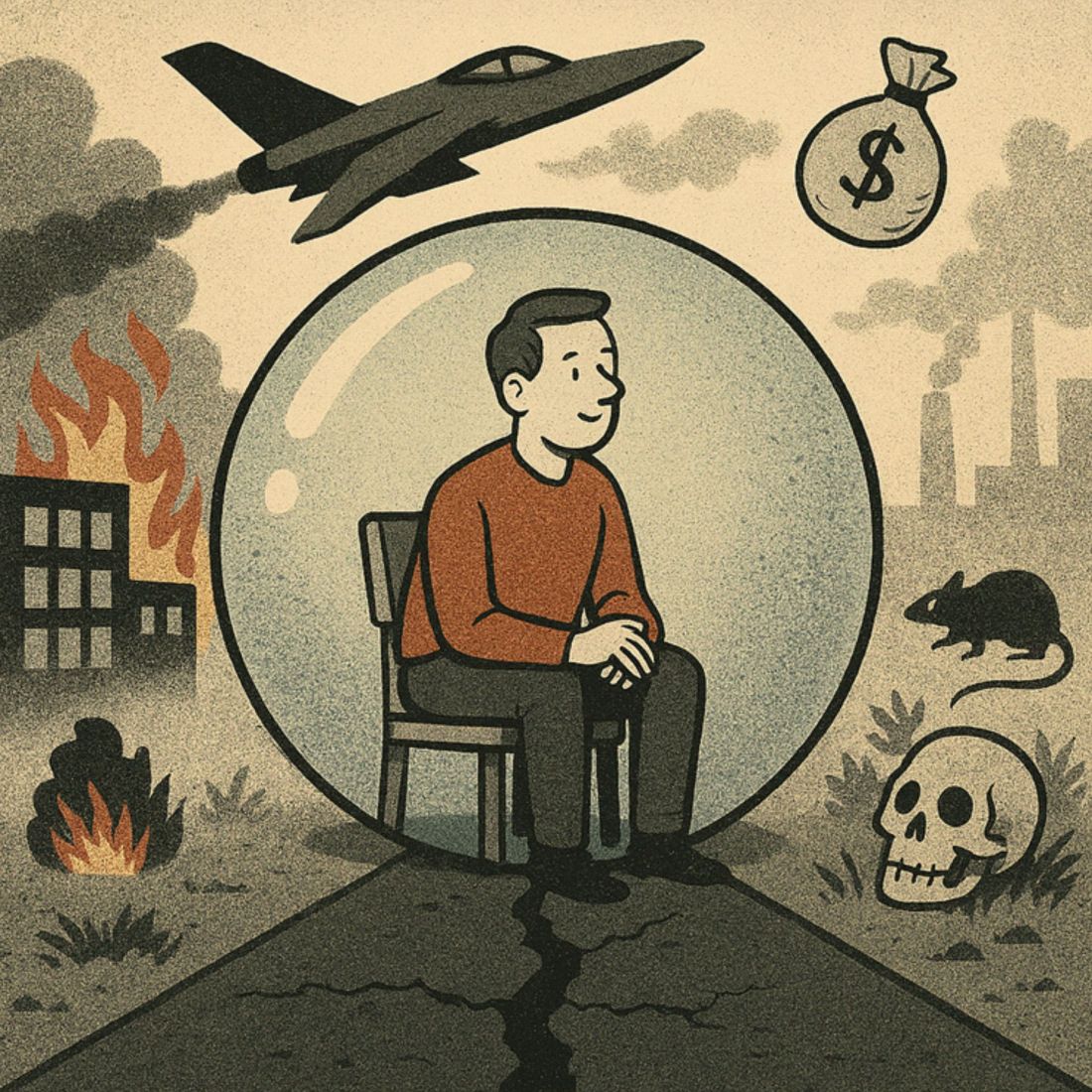
 Adam Tugwell