A Few Thoughts on Minette Batters’ Farming Profitability Review (FPR)

Expectations of the FPR

The Farming Profitability Review, authored by Minette Batters, was finally released yesterday. Like many others, I downloaded the 150‑page document hoping it might herald positive change for our farmers.

Given Minette’s respected tenure as NFU president, many anticipated that this review would provide a clear, unvarnished account of the situation.

Authored and presented by one of their own, it was expected to carry the weight and credibility needed to push government support for UK farming back to where it belongs.

On that basis, the content does read as a genuine set of proposals rooted in what the industry itself recognises as urgent needs. Phrases such as “A New Deal for Profitable Farming”, the FARM proposal, and the assertion that “The UK is widely regarded as one of the most prized food markets in the world” will sound like music to many ears. Yet they also underscore the uncomfortable question: why, when everyone in the UK needs food every day, are farm businesses failing or closing?

Industry Context & Policy

The report covers the expected themes – profitability, overseas trade, nutrition, and more. But context is everything.

The elephant in the room is that farming policy continues to follow the establishment’s agenda: serving government and big business interests rather than what is genuinely best for farmers, and therefore for all of us.

This is where major food and farming advocacy organisations, and their champions old and new, fall short. They continue to operate within the framework defined by government, addressing symptoms rather than causes, and avoiding the deeper realities of the industry’s decline.

Documents of this kind often reveal the underlying truths driving government thinking. One of the clearest comes early in the Foreword, where Minette reminds readers that politicians dismiss farming because it represents only 0.6% of GDP. This stark figure highlights that, for politicians, the economy and money matter far more than farming, food security or the human issues as most normal people see them.

An industry valued at just 0.6% of GDP, reliant on grants and subsidies that do little to boost GDP, is not seen as an engine of growth. Ministers repeatedly emphasise their obsession with economic output, because under the current financial system – broken and rapidly failing as it is – growth is the only measure that sustains their positions while allowing them to avoid responsibility.

Profitability: Competing Definitions

The fact that the review is overtly about profitability says it all – not least because the term carries very different meanings depending on who is using it.

For farmers and small business owners, profitability means staying in the black: running a viable enterprise that pays wages and hopefully leaves a little extra. For politicians, however, profitability is measured in terms of supermarket margins and GDP contributions.

This warped definition highlights how broken the system has become: profitability is reduced to a metric of economic growth, rather than the lived reality of whether farms can survive.

In this way, farming is forced to fit into an economic narrative that serves government borrowing and spending priorities, rather than the needs of those who produce our food.

Economic Pressures and Regulatory Burdens

The figures in the report speak volumes: machinery costs have risen by 31%, and compliance with new regulations demands massive investment.

Though introduced under the guise of improving standards, these rules inevitably push more farmers and allied businesses out of the market because they cannot compete – and that reality bears much of the truth that lies behind the journey that UK farming has been on since the early 70’s.

Put bluntly, farming within this framework is not viable – and was never intended to be.

The establishment does not want traditional, independent farms to survive.

Even Minette’s more positive suggestions, however well‑intentioned, cannot succeed in this context. They risk becoming distractions – “dead cats” -designed to maintain the illusion that government is invested in the UK food chain and food security, when the evidence clearly shows otherwise.

What I would have liked to see is a stronger message about the importance of UK food production and the need to move towards self‑sufficiency.

Feeding the British public with fresh, healthy, nutritious food that is accessible and affordable should not be an aspiration – it should already be the baseline.

With food as vital as it is, and every one of us needing at least two meals a day, this is surely more important than abstract questions of GDP growth.

Harsh though it may sound, this report feels more like a whitewash than a clean shet. It’s exactly the kind of document political and establishment leaders hope for to cover their tracks and agendas.

Knowing how those from the farming advocacy organisations play along with government to stay close to power rather than risk friction, it stands to reason that the review may have been genuine and well‑intentioned but never risked being positioned to create problems for politicians by tabling the full truth. Regrettably, it fails to grapple with the central issue: the government’s relationship with farming is not about food, farming, or feeding the nation – it is simply about money and the transfer of power and wealth.

Government is not deaf to farmers – it simply does not care. That indifference is the real crisis.

The current approach to UK Agricultural and Food Policy, embedded long before this Labour government, is dismantling our food production capability by making it impossible for farmers to continue. This is a growing risk to everyone.

If borders closed tomorrow and external food supplies were cut off, around only 12% of the UK’s food supply would be immediately available to consumers.

The rest – despite the UK producing 52–58% the equivalent of what it consumes – would not be any good to the public for a considerable time, because the UK farming is subservient to and fits within the Euro‑Global food chain.

The majority of our People could go hungry in a real crisis and this is the reality we should be confronting – not how profits and therefore more helpful statistics are made.

A Call for Farmer-Led Change

Ultimately, only the farming industry can save itself – and that means taking immediate risks.

However, taking risks while there is still an industry left worth risking must surely be better than passively watching its demise until every independent and family farm in the UK has been shut down.

Summary & Key Takeaways:
Adam offers a critical perspective on the Farming Profitability Review, highlighting both its intentions and its limitations from the viewpoint of UK farmers and food producers.

Key Points

  • High Expectations, Mixed Delivery:
    Farmers and industry stakeholders anticipated a transformative report, given Minette Batters’s reputation and leadership. The FPR presents genuine suggestions but remains constrained by establishment narratives.
  • Profitability Framed by Policy:
    The FPR’s focus on profitability is shaped by government priorities – specifically, farming’s small contribution to GDP. This economic lens overshadows broader issues like food security and the viability of independent farms.
  • Systemic Challenges:
    Rising costs (e.g., machinery up 31%) and regulatory burdens are pushing more farmers out of business. The FPR acknowledges these pressures but doesn’t fully address their root causes.
  • Establishment Influence:
    The FPR is too aligned with government and the aims of large corporate organisations that influence the food chain, lacking the independent advocacy needed to truly represent farmers’ interests.
  • Food Security Concerns:
    Adam’s response stresses the importance of UK food self-sufficiency, noting that current policies leave the nation vulnerable if external supply chains are disrupted.
  • Call for Farmer-Led Solutions:
    Ultimately, Adam argues that only the farming industry itself can safeguard its future, urging collective action and risk-taking to preserve independent and family farms.

Further Reading:

The resources below have been selected to help you explore the central themes discussed in this response.
Key topics include:

  • The roles and priorities of farmers and consumers in UK food production
  • The impact of government policy, economic pressures, and systemic challenges on farming
  • The importance of food security and community resilience
  • Practical solutions and future directions for rebuilding and sustaining the UK food system

1. Understanding UK Food Production & Stakeholders

2. Policy, Economics & Systemic Challenges

3. Solutions, Action & Future Directions

Adam’s Food and Farming Portfolio: A Guide to Books, Blogs and Solutions

Welcome to Building Better Futures: Food, Community, and Beyond – a portfolio that brings together a diverse collection of blogs and books dedicated to shaping resilient communities and thriving local economies through the lens of food and farming.

This area of work is a vital part of my broader professional journey, reflecting a commitment to practical solutions, thoughtful analysis, and transformative ideas.

Within this collection, you’ll find a wide range of resources – many of which are available as downloadable PDFs at each link, making it easy to access and share insights.

A number of the books are also available for purchase as Kindle editions on Amazon, offering flexible ways to engage with the material.

Central to this portfolio is my belief that food sits at the very heart of future communities and local economies. This vision is explored within the works listed here, with each section delving into how food systems, sustainable agriculture, and collaborative local action can empower individuals and strengthen society.

From foundational essays on the importance of farming, through analyses of current challenges and policy barriers, to practical blueprints for resilient food systems, these resources invite you to reimagine what’s possible for our shared future.

Please explore the links below to discover actionable ideas, innovative models, and a vision for building better futures – starting with food, and reaching far beyond.

1. Foundations: The Importance of Food and Farming

Introduction:
This section lays the groundwork for understanding why food and farming are central to the wellbeing of communities and nations. These pieces highlight the fundamental role of agriculture and the urgent need to recognise and support those who produce our food.


Having established the essential role of food and farming in society, the next section delves into the pressing challenges and threats facing the UK’s food system today.

These entries reveal why urgent attention and action are needed to safeguard our agricultural foundations.

2. Current Challenges: Crisis, Policy, and Threats

Introduction:
This section examines the mounting pressures and systemic issues threatening UK food security. The entries here analyse the causes and consequences of the current crisis, urging immediate action to prevent further decline.


Understanding the scope of the crisis leads naturally to an exploration of the political and economic barriers that hinder progress.

The following pieces critique the policies and market forces that shape – and often obstruct – efforts to build a resilient food system.

3. Political and Economic Barriers

Introduction:
This section explores the political and economic obstacles that hinder progress in food and farming. The entries critique current policies and highlight the need for a shift toward self-sufficiency and local resilience.


With the obstacles clearly outlined, attention turns to how farmers and their allies are responding.

This section examines the spectrum of advocacy and activism, highlighting both the risks and the opportunities for constructive change.

4. Farmer Responses: Advocacy, Militancy, and New Directions

Introduction:
This section discusses how farmers and their supporters are responding to challenges. It encourages constructive, peaceful approaches and warns against divisive or counterproductive activism.


Moving beyond reaction, the next section focuses on solutions. Here, collaboration and local action take centre stage, offering practical pathways to strengthen food security and empower communities.

5. Building Solutions: Collaboration and Localisation

Introduction:
This section presents constructive approaches for improving food security and farming. It emphasizes collaboration, local action, and practical steps to build a resilient food system.


As collaborative efforts gain momentum, the conversation expands to consider new models for local economic governance. These entries introduce innovative mechanisms – such as barter and exchange – that can underpin a more resilient and equitable food system.

6. Economic Systems: Local Governance and Exchange

Introduction:
This section introduces new models for local economic governance, focusing on food as a central pillar. It explores alternative mechanisms like barter and exchange, and proposes frameworks for economies that prioritize collective wellbeing.


Finally, the collection concludes by examining the deeper questions of control and power within food systems.

This last section analyses who holds influence, how policy shapes outcomes, and what it will take to build trustworthy, future-proof food systems for all.

7. Control, Power, and the Future

Introduction:
This section concludes the collection by examining who holds power in food systems and what that means for the future. These entries analyse policy, strategy, and the blueprint for building trustworthy, resilient food systems.

Let’s Continue the Conversation

Thank you for taking the time to explore Building Better Futures: Food, Community, and Beyond.

If the ideas, resources, or practical solutions here have sparked your interest, I would be delighted to hear from you. Whether you have questions, wish to discuss any of the topics in more depth, or are interested in collaborating, please feel free to get in touch.

I am always happy to share insights, exchange perspectives, and support your work. If you’re organizing an event or discussion where these themes are relevant, I welcome invitations to speak and contribute.

Let’s build better futures together – starting with food, and reaching far beyond.

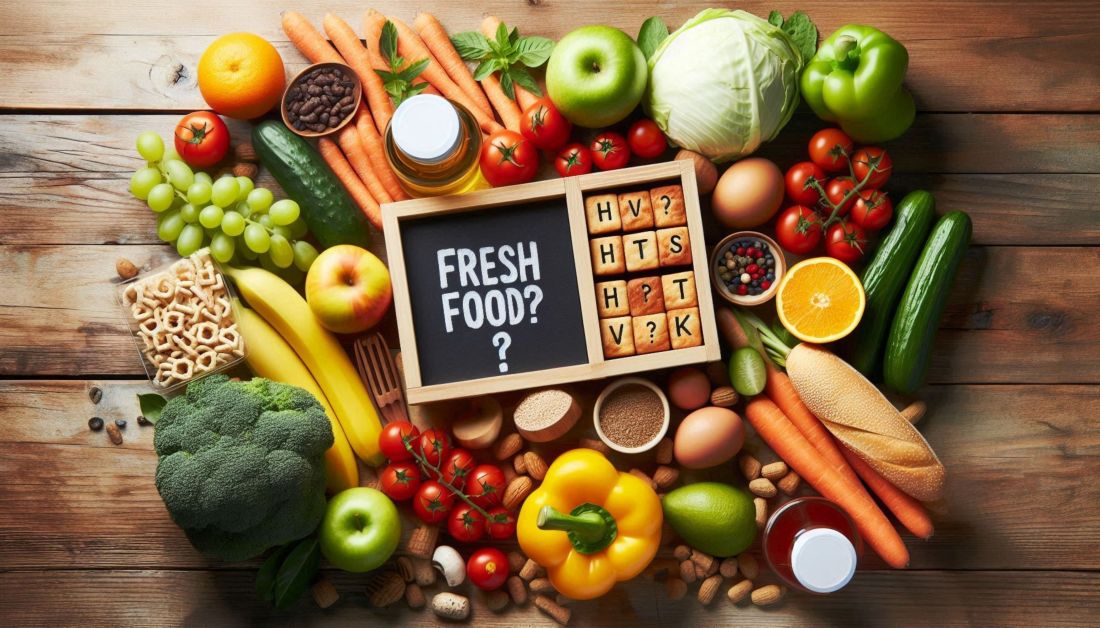
Fresh Food is the foundation of a happy, healthy and productive life. So why would anyone think humanity can survive by leaving the basic building blocks of good living behind?

There is nothing in life that everyone shares the same need for, whilst having such individual, specific or idiosyncratic approaches to, as food and what we eat.

Minded that to be healthy, we should all have access to at least 2 nutritious meals per day, it is amazing that so many of us think so little about the food that we eat. Where it comes from. What it consists of. And whether the food we are eating is actually benefiting or harming us, despite the fact that eating continues to be a socially shared activity, and what we put in our mouths is just as important as the air that we breathe.

The lack of interest or ‘taking food for granted’ of those who aren’t really thinking about the food that they eat, regrettably makes the issues that surround food and how it can be used to further the interests of those who are aware of that disconnect, very easy to exploit.

In times like those we are experiencing and with the very uncertain future that we currently have, this means we are quite literally in a situation where food cannot only be used to control us. Food can also be used as a way to hurt us both physically and emotionally, whilst Food Security and access to the supply of food is and can continue to become less safe, as it is progressively taken away from us as consumers and from the people who grow and produce it.

Food Complacency

On the face of it, too many of us are happy to accept the idea that if we have eaten and therefore, we are not hungry, it doesn’t matter what we actually eat.

Take that one step forward again. Many have an increasingly restricted choice about what they eat, because the priority of what they eat isn’t based on a decision between what might be on offer. It is based solely upon what the person or family can afford.

Whilst there are many who would happily debate the questions of whether food is a fundamental right or whether food is a public good, the fact is that we are only in a position where we can even have such a debate or that it is possible for these questions to exist, because there are other cultural, legal, ethical and many other manmade ‘rights’ that place some of us in a position where we can control what anyone or indeed any living thing on the planet can have access to.

Meanwhile, the questions that we should be asking but are not is whether it is right and proper within any part of Food Production and the supply chains around food, that any parts of it can or should be privately owned, and where they are, what those interests should allow them to do to food and how we access it.

The absence of ethics in profit-driven Food Production and Supply

Food is a basic requirement for life that we all share. Yet the processes, issues of ownership and what food can be used to achieve for anyone with the power to do so, have now become all that food is really about.

The entire food supply now revolves a global system that quickly moved way beyond improved methods for feeding larger numbers of people and became all about the money that can be made by those who are in control instead.

The creation of large food chains, where so little can be seen has meant that the real truths that have increasingly underpinned all parts of food production for so long can easily be hidden.

When so much of the food chain processes has been hidden and maximised for the profit that it can provide to vested interests, the next step for those who are driven by greed is to then manipulate and change the content of food so that every bit of profit that it contains from every ingredient that can be added, can then be exploited and profited from just the same.

Food in its most basic or natural forms is the healthiest for all of us that it is possible for it to be

Whilst basic processes such as milling, pasteurisation, cheesemaking, baking, hanging, smoking and all those things that are ancestors have been doing to store, preserve and create meals from basic, natural ingredients have done for centuries, it stands to reason that adding anything to food that isn’t readily available to us in some natural or hand-processed way, isn’t going to help anyone who eats it, because our digestion is designed to work naturally with foods that we eat in natural forms.

It’s an equation that doesn’t require us to understand science for us to make sense of. Because it really is common sense that we all eat food in its most basic or unadulterated forms.

The Taste Trap

Before reaching any conclusions, it’s also important to understand the role that sugar and salt, and more recently, anything that appears to improve the taste or feeling that we have from eating food that contains it has had, and the genuine take-away that we should be having from it.

It is thought that sugar was first recognised for its sweet properties around 8000 years ago. However, sugar didn’t come to Western attention until the time of The Crusades in the 11th century, and even then was a luxury until at least the 16th century when the first industrialised sugar processing began.

Although it ultimately comes from natural source, Sugar must be processed to be used in the way that we use it as a food ingredient and in the refined forms that we add it to drinks like coffee and tea.

Sugar in its modified or rather in its changed form is highly addictive. And if you understand the role that excess sugar plays in health-related conditions such as diabetes and obesity, it is also much easier to see the relationship that exists between eating any kind of food or ingredient that doesn’t resemble its original or natural form, and the impact that it can have on the human body.

The body is effectively tricked by unnatural ingredients and responds in what often end up being very destructive ways when those harmful ingredients are consumed regularly or in quantities that are simply too much for the very clever system that our bodies have to deal with.

In these modified forms, these artificial ingredients are no better than being a poison that becomes more and more dangerous in its cumulative forms.

In respect of the ingredients that are added to foods to enhance the taste and hide many other ingredients within processed foods and the UPFs that we wouldn’t otherwise consider eating, the line in the Savage Garden hit song ‘Affirmation’ – “junk food tastes so good, because it’s bad for you” is absolutely correct.

We are being conned into eating foods that we shouldn’t, so that those who make and sell them can continue to make a profit – with the true cost always being at the expense of our own health and wellbeing.

Whether we like it or not; whether we believe we have a choice of what we eat or not, as a nation, the UK is addicted to foods that are actually harming and, in some respects, killing us.

The people who are pushing us in this direction and want us to become even more reliant on manufactured food, rather than the fresh food that can only come from a local garden, field or farm, are very happy to exploit that addiction so that they can keep benefitting. Whilst the whole process is doing each of us and the whole of the UK more and more harm.

The Ethics of Food are about Taste all the same

The odd thing about taste is that it manifests as both a physical sensation and also in the way that we think. That’s how addictions generally work, after all.

So, when anyone becomes obsessed by a particular way of eating, because of the way that they think, the rules of addiction – and the need to force others to join us in that same addiction so that they can share that particular form of guilt, inevitably also play out, no matter how clever or compelling their arguments might be.

When people are at peace with their eating habits or indeed anything else that defines them as the person or the individual that they are, they will not experience any need to force their own approach into the lives of anyone else, no matter what the habits of those other people are, or indeed, what it might be that they eat.

It really shouldn’t matter what anyone else eats. The only thing that we should all be concerned with is that each and every one of us has access to natural, healthy and fresh food in an adequate quantity from which we can then exercise any health-related, ethical or other form of choice that doesn’t impact upon the choices of anyone else.

The Food Hangover is just one way we know that the food we eat isn’t good for us

Whilst few who drink alcohol would relate their drinking habits to being an addiction at any level, it is unlikely that anyone who has ever had more than a few sips and done so on a regular basis, hasn’t had a hangover at some point afterwards. Before they find themselves back in a place where they feel physically the same as they did previously.

Headaches, sickness, insomnia, feeling ‘groggy or lethargic’ or generally not feeling anything like ourselves, are typical post-alcohol reactions that we class as hangovers – because we have been drinking ethanol, which is a poison.

When we have been eating foods that are processed and are filled with many additives and manufactured ingredients, the results for any of us taking note, can be similar if not exactly the same.

Food that is natural or in forms that we can recognise in their original form when we eat them very rarely make us feel unwell. Unless we eat too much of them, or they haven’t been prepared in a way that removes any bacteria or anything else that can harm our bodies in some way.

The direction of UK Farming and Food Production is all about a greed-driven reliance upon manufactured food

It is at this point that it is time to recognise just how important the problem that UK Farmers are facing really is, for us all.

There isn’t some great conspiracy at work in the way that conspiracy theorists are increasingly presenting it.

However, there are people who for one reason or another have gained significant power and responsibility over the lives of others. They see it as being imperative that the whole world is changed so that everyone behaves in ways that they have decided that the world can sustain, which at the same time will coincidentally ensure that those same elites can continue making obscene profits, being quite literally ‘baked in’.

Everyone making money out of the masses eating manipulated ingredients that will cause increasing levels of health problems and in all probability lead to early deaths, isn’t worried about the nutritional value of the food that people eat.

The most important thing to all of them is ensuring that the masses can never make the argument that they are going hungry. In that way, no matter how bad the food may be for anyone, if its tasty and available, the elites will always remain in control.

Today, UK Farmers still have choices over what they grow and how they grow it. Even though many are tied into contracts that are ultimately controlled by a very small number of companies who control the food supply and whose longer-term profit-making interests will benefit if independent Farmers go out of business, so that they can control even more of the food supply.

Those with roles that are there to help, don’t help anyone at all

The useful idiots that we now have in government and running policy and services across the public sector don’t help matters at all.

Whilst very few can accept this truth at first glance, the reality is that decades of farm and food production related subsidies have only served to move more and more of the power that our Farmers and Food Producers once had towards the big companies that incentivise and control politicians.

Meanwhile, Agriculture has become more and more dependent upon the political lead. Whilst local infrastructure and everything that supports local and independent food production has been progressively destroyed, either legislatively or in direct physical form.

If we can accept this – and that’s by no means an easy thing to do, we can also then accept that UK Farming and Food Production needs to go in the completely opposite direction, embracing much more traditional methods of food production and returning Farms, Farming and Food Production so that they are providing everyone with the basic, natural, healthy, nutritious and fresh forms of foods that we all actually need.

For us all to have and benefit from this, means that Agriculture and growing food must be right at the heart of our communities once more.

Mindful eating

The battle to save natural food production in the UK (and in other areas of the world too), only exists today, because so many of us take for granted the lives that we have and the continued access to food and everything else that makes life seem so easy. All without being conscious of the real cost to us, or without recognising that we do have a choice.

Greedy profiteering companies only produce foods that can harm us on the scale that they do so, because we keep on buying and eating them, without ever giving any thought to anything that these companies and the people behind them are doing.

If we all began looking at the ingredients of foods and take note of where the food or where the ingredients actually come from, we would very quickly see the difference between ‘natural’ food that we can recognise because it usually resembles its original form, and everything else which doesn’t look like or resemble anything that we could recognise in nature.

This is a very quick and effective way of being able to tell if eating or drinking anything, is likely to end up harming us in some way.

Changing the way we eat is how we keep our freedom to be who we are

The harsh truth that we all need to face:

The control of food is power and the power behind food is a way that those dependent on someone else’s food supply be controlled.

Whilst the UK Farming and Food Producing communities now have a massive fight on their hands to regain control of their own destiny – not least of all within that community, the fact remains that we can all help change the direction of UK (and World) Food Production by changing the way that we approach the food that we eat.

By doing so, we will ultimately help ourselves.

The smallest steps are the biggest when it comes to change of this kind. And if we all start to do what we can to reject processed foods and UPFs wherever and in any way that we find them or that they come into our lives, the impact that we can collectively have upon the food chain and the way that food is produced would become meaningful in no time at all.

Changing the eating habits that we have is not easy for anyone. Not least of all, because our habits are the truth we have chosen to believe.

However, the truths that we believe about food today are not truths that we can call or should be prepared to accept as our own.

Good, healthy, nutritious, locally produced fresh food IS a public good and we all deserve to be able to access enough of it every day and at prices that we can all easily afford.

We can only make this possible if each and every one of us exercises what still remains of our freedom of choice to change the world for the better, one choice at a time.

The priority of Farmers today is money. But farms cannot run profitably with profit being the priority anymore

So, this is a statement that will need some more thought. Surely it’s the case that every business is run to make money, isn’t it?

On the face of it, the argument that all businesses exist to make a profit is very sound. However, it is only sound because of the way that the world currently works and how we think, placing money at the heart of everything. Instead of prioritising the real reasons that any business exists, which are the products or the services that they provide to customers (or end users).

We can take this thought further. The real reason for providing those goods or services are to help, support or enable people to live, in whatever way that product or service will help those people to do so.

At risk of stating what should be obvious to everyone but actually isn’t, UK Agriculture, Food Production and UK Farms are about or should be about providing the UK population with a secure, accessible, ongoing supply of healthy, nutritional basic or essential foods. And they should do this collectively on the basis of providing the UK Population with the widest variety that is available to us from being grown, ideally as local to the end user as possible, but at the very least, from somewhere from within the geography of the nation state that we all share.

I don’t know a farmer who isn’t passionate about what they do.

Farming isn’t just a business. Farming is a vocation and lifestyle choice for all those who are genuinely committed to the industry, in what I will suggest is a healthy way.

However, as we have moved further and further away from subsistence farming the scale of risk has grown at the same pace as the commitment to production growth.

It has naturally followed that the power that Farmers and Food Producers in the UK once had, has progressively been surrendered to whoever will guarantee the greatest longevity of income. Even though it has now been arguably many years since such guarantees have also offered anything like what we would likely agree to be viable prices.

One of the reasons that Clarkson’s Farm on Amazon Prime has been such a good champion for UK Farmers is that it has lifted the lid on just how precarious Farming in the UK has now become. Yet few Farmers have the opportunity to do TV work or lean on the marketing power of celebrity to make a new farm shop or a brewery buy-in an instant hit.

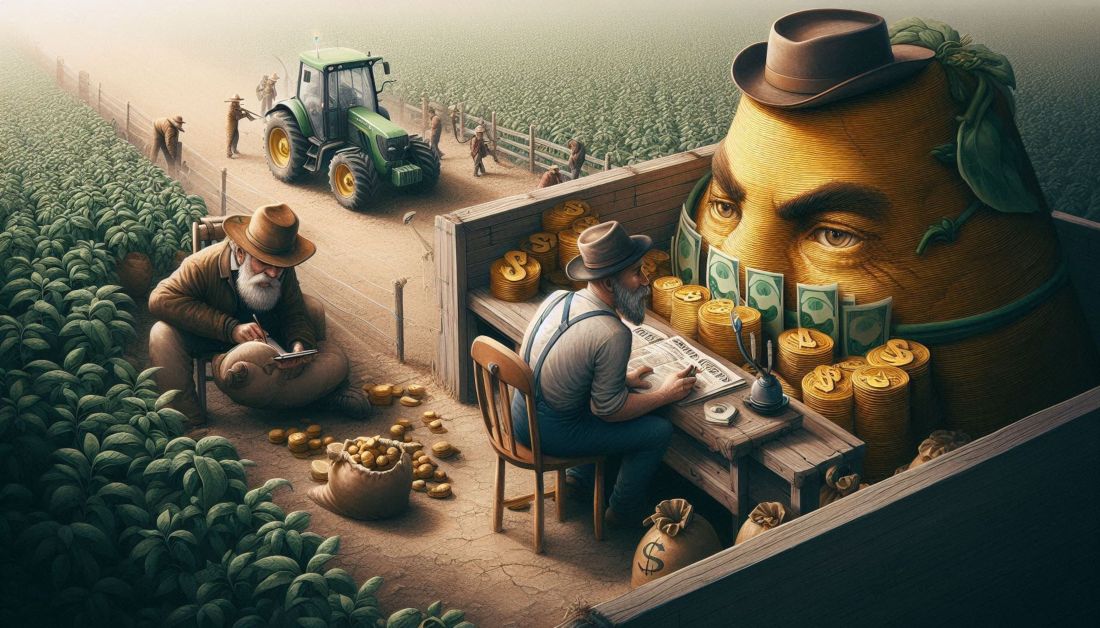
The reality is that for many Farmers, it has been the culture of payments and subsidies that have taken over everything in Agriculture, alongside the ‘deals with the devil’ that have been made with traders and supermarkets, that are the only reason that what should be ridiculously successful food producing businesses stay afloat.

It is impossible for Farmers to stand still at a static or subsistence level as it once was, as ‘growth’ and therefore growing ‘turnover’ is the only way that earnings can be kept static.

The alternative for many being either to sell up or go broke.

Farmers, Food Producers and the entire UK Agricultural Industry are vulnerable to whatever the supermarkets, retailers, traders and the establishment demands of them next. Because they have surrendered their power to money, and forgotten how to do what they really do best.

Current thinking and every message that we hear tells us that big and bigger are the only way that things can now go. That ‘growth’ equals progress. Yet none of this is in any way true.

The future of Farming is the return to being a predominantly local, community-focused industry with emphasis on the production of foods and goods that local people need. Not what some want and only they can afford.

I realise that the immediate argument that will come back from many farmers who are thinking about the situation that they are really now in, will be that the infrastructure, support networks and governance (laws, rules and regulations) simply don’t exist to make anything like this work without financial support, and that just this factor alone, before anything like the economies of scale are considered, make any such move one that would be impossible to work.

It certainly looks that way. But without UK Farmers, Food Producers and Agriculturally aligned industries taking back their own power by taking those risks necessary for themselves now, the reality is that within perhaps only a few years, Farming as we recognise it in the UK today, will simply no longer exist.

It’s not just British Beef at stake: the future of U.K. food production and our food security is on a knife edge

So obsessed have we become with tech, the next big thing and the apparent ease with which we can get everything that we want, that we have forgotten what’s actually important in life. And when it comes to the basic essentials for life, there’s likely to be nothing more important than what we eat.

Just like the air that we breathe, it’s easy to take the supply of food for granted. Unless you are already one of the growing number of us who cannot always afford to buy enough.

Yet, it’s not even as simple as having access to the food that we genuinely need.

For half a century and probably more, the food we eat, the systems, the supply chains that provide it and the governance that is supposed to be there in place to maintain supplies of the things that meet our basic needs have been changed, manipulated and replaced from top to bottom and from left to right. For no better reason than to allow someone somewhere to make more and more money, without any regard for consequences or what for us – and for our farmers and growers, is already becoming a very high price.

To really grasp the horror story currently unfolding, there is need to have understanding of our political system, of human nature and how money runs the world and makes everything work. Not in the sense of how we see it or how we talk about it. But in the sense of how it all really is.

This past weekend saw Channel 4 give a platform to yet another attack on meat production and specifically beef farming, leaning very much upon the narrative that to tackle global warming, cutting down and ideally stopping eating meat is the best place for everyone to begin.

Never mind the queues of private jets lining up at the very same time to fly an ‘elite group’ of very rich people to a meeting where they can all work out plans to force more of their green rules on the public, all in the comfort of luxury hotel suites in Dubai.

Regrettably, many of the people gifted high profile platforms to speak passionately about the guilt people trying to eat a balanced diet should expereince for eating properly have become the useful idiots of a very cynical strategy. One being pushed by people who were never elected to their roles and so recognise that to have control over everything, they must gain control of any basic essentials for life that everyone seeking to exert their own freedoms and will must automatically prioritise first.

What they forget to mention – even when these same people have responsibility for public health, is that good, healthy and nutritious food, as part of a balanced natural diet, is the essential building block and foundation of a happy life.

So, why would anyone of sound mind want to destroy or kick the foundation of good, healthy and nutritious diets away?

You can be sure that its not anything to do with the methane that animals, humans and just about every natural biological process produces. But it certainly has a lot to do with money and the two things  that come with it: power and control.

Yes, it sounds like a conspiracy theory. But everything that the world is doing to itself today is thoroughly unsustainable.

The irony is that it is the same people, businesses and financial minds that created the false ‘need’ we have bought into who are responsible. On one hand, they have normalised unsustainable behaviour that has depleted the planets resources for no good reason. On the other they have systematically destroyed the governance and infrastructure that would make it easier for us to choose and adopt alternative ways of living that would be much healthier, affordable and sustainable too.

It is these same selfish and self-serving minds that are now determined to dictate the solutions to the problems they caused, so that we change and then behave in ways that will work better for them.

Food is power

Whilst it will make uncomfortable reading for farmers, including many great friends that I know, an entire industry populated by some of the most creative and entrepreneurial people imaginable has been reconditioned to accept grants, subsidies and ‘guaranteed’ contracts with big business and retailers as being ‘normal’. Instead of using their own freedom to do all the things that only British farmers and growers know how to do best.

The consequences of what is happening because of greed and self-interest are very serious indeed.

Yes, farms are going out of business and land is being taken out of production at an alarming rate. But the fact the food the U.K. grows or is capable of growing doesn’t often find itself into the mouths of the very people who live closest to the farms where it was grown is both part of the nightmarish reality that people in food poverty are suffering obesity and diabetes, and the accompanying reality that basic healthy fruit, veg and and high quality meat and fish that resembles its origin in an unadulterated form is now for many, simply too expensive to eat.

It shouldn’t be this way. Yet the travesty doesn’t end there.

Whilst we should all be able to depend on the public representatives that we have elected to put our health and the security of UK food production first, the reality we all have to face is that whether it’s the Conservatives this year, Labour or anyone else occupying No. 10 and the green benches to the right of the Speaker, next, none of these politicians have any idea of just how fragile the UK food supply is right now. Nor how serious even a few shortages of outside food supplies could make things get.

U.K. agriculture has reached the point where farmers, growers and the industries that are inextricably linked to U.K. food production will either choose to accept the risk of taking the steps necessary to facilitate its own revival or wait perhaps no more than just a couple of years and see everything that still exists swallowed up by some impractical idealists 2030-based agenda of some kind.

Farmers and the public are the two key stakeholders in U.K. food production and accompanying supply relationship. Yet neither farmers nor consumers have anything like the genuine say and influence that they should have.

It’s money, self interest and other people’s agendas at every step of the way.

The UKs Farmers shouldn’t have to lead the revolution of reality. But the reality is that a meaningful commitment to changing U.K. food supply and recreating the local infrastructure that would be able to make that work, will soon gather growing public support once the work has really begun.

Its then and only then that our hapless politicians will have no option but to follow.