
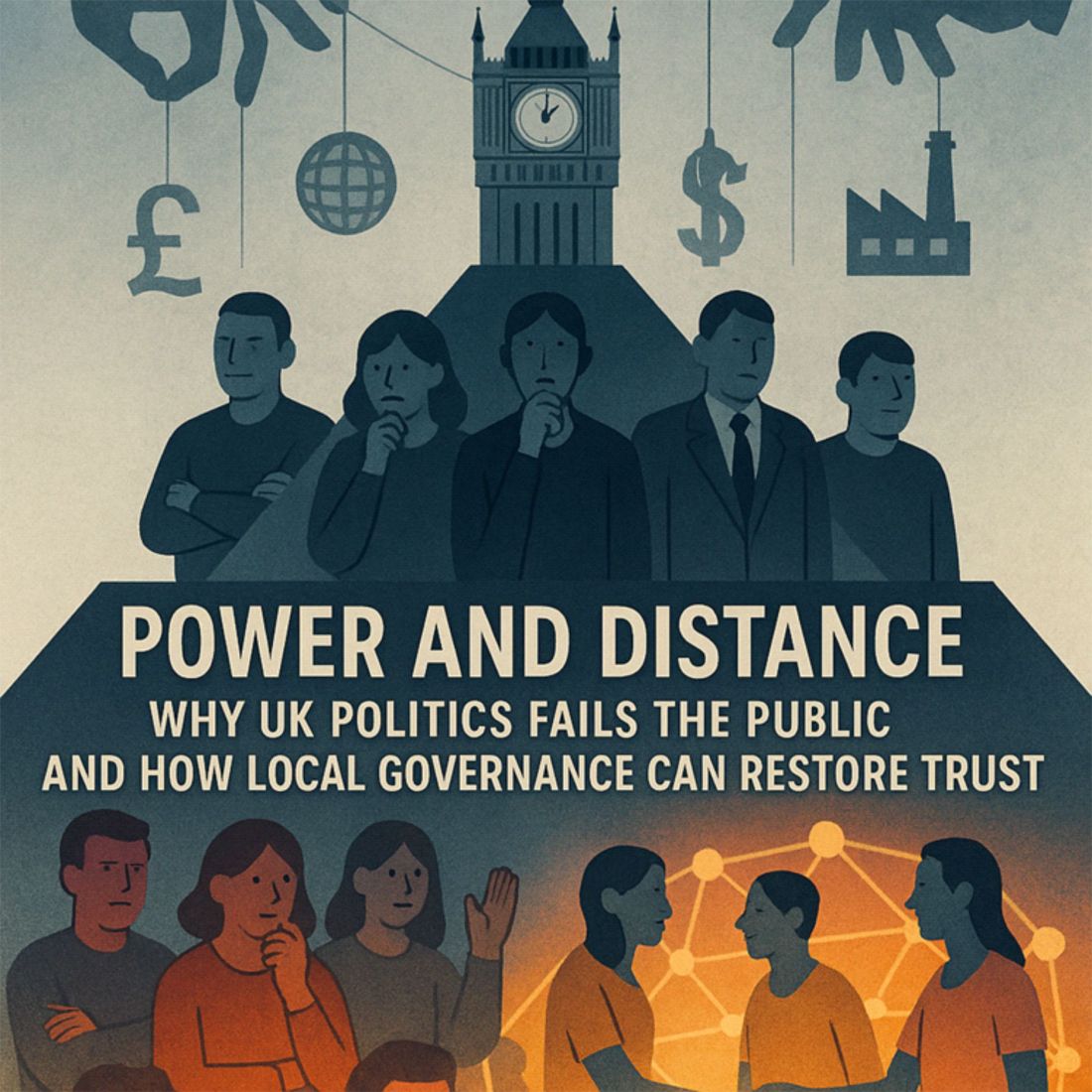
As a writer, commentator, and former local councillor, I witness the frustration, anger, and despair felt by individuals and groups – such as our farmers – who struggle with a system where politics and government no longer work for them.
I share some of these feelings myself, not simply because their experiences are clearly unjust. But because of the persistent, unwritten expectation from people who are being hurt by all this, that these problems are only temporary.
Too often the problems are dismissed as misunderstandings or assumed to be issues that will resolve once new politicians are elected. Yet very recent history has shown us that changing politicians changes nothing: the downward trajectory of growing unfairness and imbalance continues, remaining at best unchanged.
It is fair to say there is a widespread disconnect between what the public rightly expects from the system and what we actually receive. This gap exists in part because we have been conditioned to believe that government, politics, and the public sector operate in a very black‑and‑white way – clear, predictable, and straightforward in how they function.
Public Perceptions vs. Reality
Whilst this view should be one that we could all rely upon, the reality is very different.
The complexity and mechanics of policymaking and delivery are extraordinarily difficult to navigate – well beyond what most people imagine. And this is before we even begin to confront the thorny issue of corrupt or self‑serving behaviour, whether by a single individual, multiple actors, or indeed by politicians, executives, managers, and officers across a nebulous hierarchy that stretches through many levels and points of influence.
Most people believe that power in Parliament works like this:
- An election is called.
- We vote for the person we think will best represent us in our constituency (though in practice, most people base this choice almost entirely on political party affiliation).
- That representative then decides how to act when a policy comes up for a decision, guided by what is best for us.
- If our chosen political party forms the government, the policy is enacted.
And we believe that everything necessary happens as a result of this, because all the public servants working in government departments, quangos, NGOs, and any other service funded – and therefore led – by the government (in other words, paid for by us) simply follow the instructions of politicians. After all, it is the politicians who are the legislators, elected to make those decisions on behalf of us all – isn’t it.
That, in principle, is how public policymaking and implementation across the UK should work. Yet the reality is that it rarely does, largely because:
- The hierarchical structures and systems reaching across the public sector are simply too vast – too much “big government.”
- Most importantly, very few politicians or public servants actually see it this way.
Barriers to Effective Policy Implementation
Regrettably, the vast and convoluted structure of the public sector, with its top‑down nature and multiple ‘decision makers,’ often distorts the process.
Commands that reach them are reinterpreted, repackaged, and passed along in ways that suit the direction they wish those instructions to take.
As a result, the action at the point of implementation can look very different from the original decision – not because that decision was unclear, but because countless influences and policies, each carrying their own interpretations, reshape and redirect almost everything along the way.
This happens even before the protectionist prejudices of public servants add further obstacles.
The outcome is that two very different results – the one envisaged and the one delivered – can exist under exactly the same name.
And that, of course, is how it works – assuming that what government says it is doing, and has done, truly matches the actions it takes.
Yet the clever use of words and interpretation often means that, even before a decision leaves Westminster, the outcome we expect and the outcome intended are already heading in completely opposite directions.
If this already sounds complicated and conflicted enough, we must also consider what influences our politicians, and how those influences shape their decisions.
We should ask whether the people we see on TV and hear on the radio – the very individuals we elected – are truly the ones sitting at the top, occupying the seats where the ultimate responsibility rests.
The Mechanics of Power in UK Politics
- Political parties select candidates to run in elections for Parliament, local councils, and mayoralties (typically only where local decisions reflect the interpretation of national policy once local policy is adopted). More often than not, his is also where elected politicians receive an allowance or salary.
- Parties choose candidates who will follow instructions from the party – or more specifically, from senior politicians within it – regardless of the constituency they represent after a successful election.
- The area or location itself doesn’t matter. It’s a numbers game: just as the first‑past‑the‑post system (FPTP) elects the candidate (and therefore the party) with the most votes in a given area, Parliament and councils also make decisions based on majority votes. This is why the party with the most seats after an election forms the government or administration – it is assumed that the result of all votes thereafter will fall in line with them and whatever decisions they make.
- Locally and nationally, leaders of councils, mayors, and the prime minister become the de facto decision‑makers of their administration, mayoralty, or Parliament, because there is an expectation that members of the party holding power or the majority will always vote the same way and do as instructed.
- Any party aligned politician who fails to vote as required by the party risks losing favour. Depending on the importance of the vote, they may be excluded from the party (have the whip removed), fail to be reselected as a candidate, or at the very least be sidelined until they are seen to be behaving as expected.
- Whips act as party enforcers, pressuring and often bullying sitting politicians into remembering who put them in their “job” and what they are really there to do and who they are there to do it for.
- Leaders and mayors are typically expected to follow whatever the party leadership or prime minister in London demands in relation to national policy, though they retain some flexibility where decisions are entirely local.
- Prime ministers are seen to hold the ultimate executive authority over what happens in Parliament. This is why they can appear to function like a president—unless they take deliberate steps to remind everyone that we have a parliamentary system, where things do not always work in that way.
That is how most people working in or around politics and the machinery of government interpret the power structure today.
The prevailing assumption is that whatever Parliament, the prime minister, or cabinet ministers say the government is doing – and why – is usually how everything will unfold, once public servants play their part and make it happen as expected.
However, beyond the reality that political parties typically decide who represents us – even though we perceive the list of party candidates on our ballot papers as offering what a genuine choice – there is also an assumption that anyone elected as a politician, and therefore as a public representative, is automatically qualified, experienced, and possesses the knowledge, understanding, and capability required to carry out the responsibilities of the ‘job’ they have been ‘chosen’ to do.
In reality, while some individuals put themselves forward as political candidates with genuine public service in mind – and possess both the background and, most importantly, the integrity required to carry out the role of being a public representative properly – the majority of those who reach political office, appearing on TV and speaking publicly, do not.
The majority of our politicians sought the ‘job’ rather than the responsibility – even though some have never seen it this way. But they were willing to say yes to anything and do whatever was necessary to secure a position of control, allowing them to appear as though they were leading, when all the time, they have been led.
Yes‑men or yes‑women—it makes no difference. Anyone who advances by saying “yes” to those who hold power over their progress, and never pauses to say “no” when decisions affect the lives of the people they are meant to represent, does not truly understand what it takes to lead.
And any politician who claims they merely “played along” until they were in charge, promising they would then do the right thing, cannot credibly be believed.
Leaders who cannot truly lead depend on those around them. The people with ‘supportive’ jobs offering ideas, suggestions, or solutions that give the illusion they can.
When politicians, especially very senior figures or those ‘singled out for great things,’ have to rely upon others to supply the words that are later seen to come from their own mouths, they become highly vulnerable to anyone with influence who can reach them and exert control in a seemingly ‘helpful’ way.
Influence of External Actors
Unfortunately, the system we live within today is money‑centric, and our entire framework of values is shaped in the same way.
It follows, then, that money, big business, and those who control or are sanctioned by them have become the people – or influencers – that politicians increasingly turn to for guidance and solutions.
This reliance grows stronger as they approach power. Because it is the only way that out-of-their-depth politicians can identify solutions that appear to work within the very system they are supposed to control.
Politicians are just as captivated – if not more so – by big names and high‑profile figures in business, finance, and global governance organisations – entities that are closely aligned and working together with them because of what is perceived to be the symbiotic relationship between government and money.
The same relationship plays out between the most senior public servants and the policy teams for all of the organisations that have real influence. Much of their time is spent behind the scenes collaborating with counterparts who represent the real interests that set government direction.
At this stage, it should be clear that the real forces driving and controlling central government – and shaping both what it appears to do and what it actually does from Westminster – are those who advise, ‘support,’ and influence the government and its subservient politicians.
What we see is little more than a carefully staged performance: a well‑developed display of theatrics and political cosplay delivered by the political classes, rolled out in every direction where real power is supposed to reside, designed to make it seem as though that is how the system truly works.
Remember that the imposters are usually the ones who believe they should be there.
They don’t work for us. They work for them.
Some politicians are certainly honest. Yet even among those, many are either naïve or fail to grasp how the bigger picture operates within a system that is fundamentally corrupt.
This silent corruption stems from the way individuals act. Whether in their own interests, in service of their party, or according to personal beliefs.
In more extreme cases however, there is plenty of anecdotal evidence to suggest politicians have been compromised by their own actions or bought off with promises of post‑parliamentary jobs, directorships, speaking fees, or an endless array of sweeteners.
These incentives encourage them to vote in ways that align with the company they keep in London, rather than prioritising what truly needs to happen to benefit the local people in the constituencies they are meant to represent – That’s people like you and me.
Regrettably, it is not only politicians who are distorted by the distance created by the current system and structure of government across the UK.
Public servants, working across the many organisations and tiers of government funded by the taxpayer, primarily focus on and prioritise the agendas and practices handed down by their employers. Employers who have long forgotten what it truly means to be public service organisations.
Instead, they have fostered a protectionist culture that encourages risk avoidance and discourages anything that might compromise career paths, gold‑plated pensions, or the safety of sticking rigidly to tick‑box processes.
As a result, public servants often shy away from tailoring their workload to meet the specific needs of the very members of the public they are appointed to serve.
Consequences of Leadership Gaps
The simplest interpretation of the events that have led to this system‑wide malaise might be to conclude that no public servant works for anyone other than themselves.
Yet the reality is more complex: institutional factors have long created an environment in which protectionism thrives. Chief among these is the absence of genuine leadership in Parliament and across key public sector organisations – institutions filled with individuals beholden to agendas other than those of the people they are meant to represent.
As a result, the public sector has effectively been on autopilot for a very long time, propelled by inertia and sustained by the convenient myth that everything continues exactly as it always has.
Limits of Leadership Change in Westminster
Many people hope that another change in government will be enough to resolve the problems now facing the country – issues that just as many seem to accept as having been caused by the current Labour government, and in only the 17 months it has been in power.
Sadly, while it would be great for there to be a quick, overnight solution – or a set of solutions – that could be easily implemented and pushed through under some new scheme such as Reform UK’s proposed ‘DOGE,’ the reality is different.
As you may already have gathered from what you’ve read above, the problems are now beyond systemic.
Believing that simply cutting budgets and arbitrarily slashing costs will be enough for the public sector to regain balance and correct itself is, like so many politicians who fail to see the bigger picture, dangerously naïve.
Beyond the rot we have already discussed, one of the truly colossal problems in fixing public services is the influence that money, markets, and big business already exert.
Added to this are external power-centric players such as the EU and global governance bodies like the WHO, UN, and WEF, whose policies and power have become inextricably intertwined with almost everything the UK public sector currently does.
In reality, if Reform were to begin slicing and dicing across the public sphere without coordinating – and thereby subjugating – its policies to the demands of today’s ‘key’ influencers, the strategy it proposes would quickly resemble a game of Jenga. The players might believe they have steady enough hands to start by removing the foundational layers, but the structure would inevitably become unstable very quickly indeed.
The leaders of Reform may yet prove themselves to be the “Jenga Boys” of public policy, As bringing the whole house of cards down almost as quickly as they take power—if that is what happens at the next General Election, is the outcome their rhetoric currently indicates will be most likely if they lead the next government.
Without exception, all of our politicians are currently tied into the system that is backed and pushed by the establishment.
If all they intend to do is reach for sticking plasters and offer superficial fixes, the result will inevitably be the same, and their suggested approach will merely speed the process of collapse up – if it isn’t already complete by then.
Systemic Breakdown: Causes and Implications
The reason attempts to ‘fix’ the public sector as we know it will not succeed is the inseparable relationship it has with everything else beyond government and controlled by the elites – relationships that revolve around money and a financial system that is fundamentally flawed and now destroying everything.
Put bluntly, everything harming people today is a direct consequence of how the entire money centric system operates, and how it has been operating for a very long time.
Whether the collapse comes from factors seemingly beyond politicians’ control, or directly from actions the next government and its leaders are knowingly prepared and brave enough to take, the reality remains the same: the only way to restore balance, fairness, and justice for everyone across all areas of life is if the current money‑centric system is either deliberately brought down or allowed to collapse on its own.
Then – and only then – will the majority of us be ready to embrace the kinds of changes that must take place across every part of the economy, governance, and daily life, so that, in time, something recognisable as genuine sanity can be restored.
If those in power act only in ways that serve their own local interests, why shouldn’t your power remain local and stay with you?
It would be easy to stop here – having laid out the detail of what is wrong – and leave it at that.
Yet if you are reading this, the chances are you already sense that something much bigger and more profound is wrong, even if it defies logic and is difficult to grasp in terms of what exactly those wrongs are. Or rather what the true causes of the problems have been.
The reality is that there is nothing easy to accept about how government and the public sector operate, especially when measured against what any of us should reasonably expect – and what our lived experience increasingly shows us instead.
Members of the public are not alone in their disbelief. The reality we face is that many of those perpetuating the problems within government, politics, and the public sector are acting as they do simply because they are told that this is how everything gets done.
That excuse only goes so far.
Institutional Failure
For many, the real implications of institutionalised failure to take responsibility for those you serve are far from victimless.
They manifest in scandals such as Rotherham, the Grooming Gangs, and the Post Office cases. Stories brought into the light only because many different people, through their lived experiences which they effectively share, revealed events that can ultimately be understood and summarised as being the same thing.
Individuals are being failed by our system of government every single day. Not only structurally and institutionally, but also by the politicians and public representatives who hold local seats across every tier of government.
Too often, they act in ways that serve themselves, rather than doing what is right for the people they are meant to represent.
The damage of distance
The dangerous myth of the digital age – one we have been encouraged to believe – is that every kind of information and guidance we need for life can be trusted to appear on the nearest screen.
While this may feel intimate in nature, it is in fact a remote interface that creates distance not only between us and the sources we too readily trust but also erodes the value of genuine relationships and social interactions that once filled the space in between.
The irony is that politicians and decision‑makers continue to keep everything local when it comes to their own sources of information and guidance.
While this is no excuse for the consequences of their actions – or for the harm caused by the system they have enabled- it does reveal something important.
When people recognise that power rests with them, they naturally turn to local resources and relationships. Face‑to‑face interaction fosters trust in ways that distant sources never can, making it both sensible and effective to rely on what is close at hand rather than on remote influences.
The difference between us and the politicians – and those truly in power– is that they exploit the distance they have created between themselves and the public for their own benefit, all while constructing a narrative that insists whatever they do, and whatever harm they inflict, there is simply no alternative.
They can only do this because we have forgotten that the power they abuse is, in fact, ours.
If we were to recover, restore, and remember the true nature of our own power, we must return to relying on the people and communities around us – those who we can genuinely trust.
After all, the individuals you can look in the eye and interact with every day rarely have the opportunity to abuse that trust, and the behaviour such relationships foster and require makes exploitation far less possible.
A Vision for Local Governance and Economic Reform
Recognising how things could be different – and what it means to embrace an alternative system with all that comes with it – is an essential starting point for us all.
It will help shape or identify both the choices we will make and the responsibilities we must accept when the most obvious signs of collapse begin to appear.
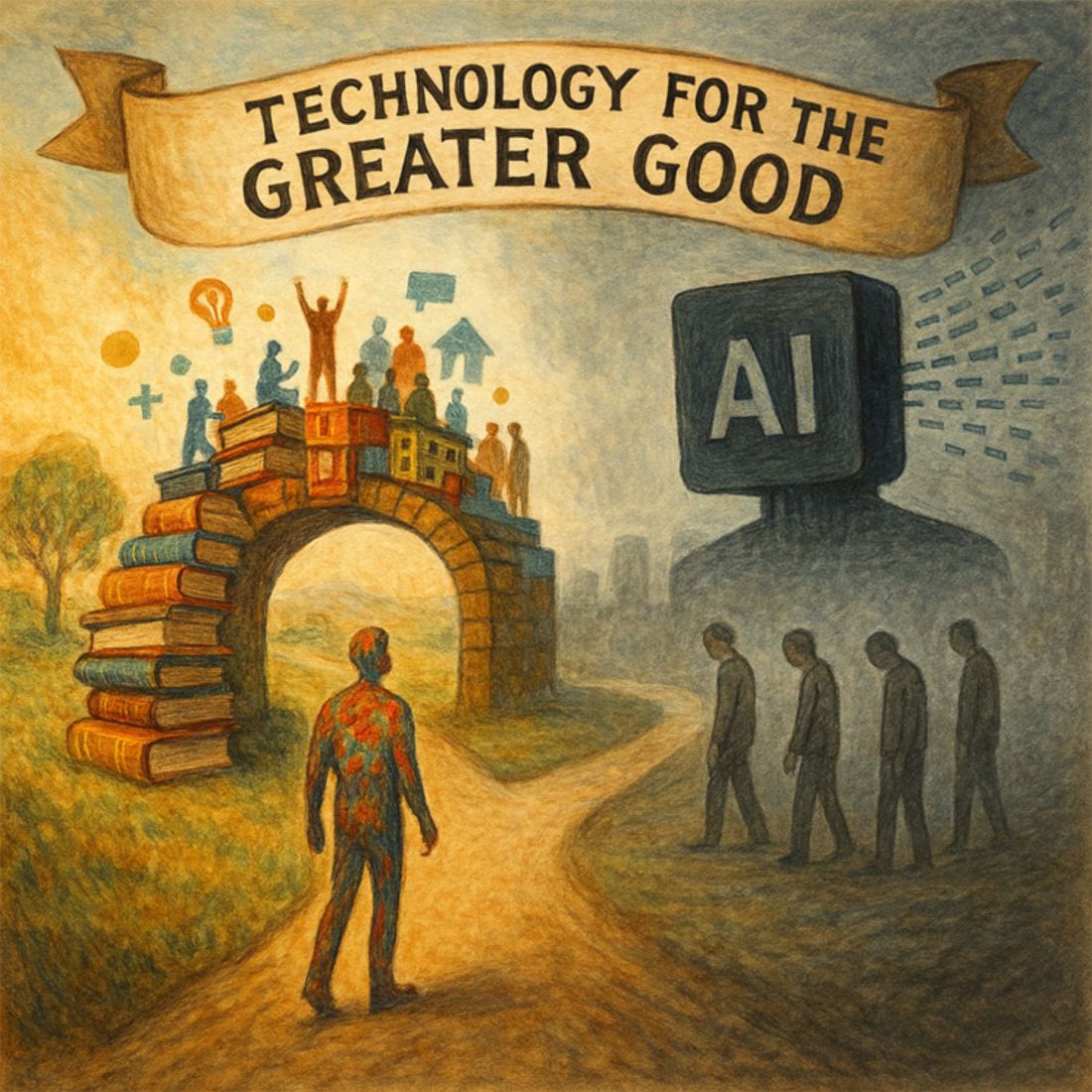
When that moment comes, we will face a choice: to take a different path that restores power to ourselves, or to become fully enslaved and captive to a system that survives only because the power of each individual has been taken away and concentrated in the hands of one—or a few.
Be assured that once you realise you are there, those in control will have already put in place the safeguards necessary to ensure it can never be any other way again.
By now, everyone has heard of Orwell’s 1984 and the dystopian hell it depicts – a reality awaiting those who embrace and continue on the current path, only to discover, when it is already too late, that they have been stripped of all meaningful value.
The alternative is to reject the money‑centric, top‑down, hierarchical, and patriarchal system, that has long concealed the fact it has not only failed us. But has also enabled little more than sanitised or legalised criminal behaviour against us all.
Instead, we must embrace a system that places the dignity and freedom of every individual – rooted in people, community, and the environment – at the forefront of everything that we do.
The Local Economy & Governance System offers a new and alternative perspective, presenting the frameworks and rules that would shape a localised model of democracy and public policy‑making.
This system places what is right at the heart of every decision.
Decisions made by, or on behalf of, the people in each community, whose fates and destinies are inevitably and permanently intertwined.
Key Takeaways
Before exploring further reading and resources, it’s important to reflect on the central insights that we have shared.
The following key takeaways highlight the underlying causes of public distrust in UK politics, the influence of power structure and external actors, and the urgent need for reforms that refocus towards local governance.
These points offer a foundation for understanding both the challenges and the potential pathways toward restoring trust and accountability in public life.
- Systemic Disconnect: There is a persistent gap between public expectations and the actual workings of UK politics and government. The complexity and hierarchical nature of the public sector often distort policy implementation, leaving many feeling unrepresented and frustrated.
- Power Structures: Political parties and senior figures exert significant control over elected representatives, often prioritising party interests and external influences over genuine public service. This results in a system where decisions are shaped by those with power, rather than by the needs of local communities.
- Influence of Money and External Actors: The increasing reliance on big business, financial interests, and global organisations has further distanced politicians and public servants from the people they are meant to serve. This money-centric system perpetuates unfairness and undermines trust.
- Leadership Gaps: The absence of genuine leadership and accountability in both Parliament and the public sector has led to institutional inertia and protectionism, with public servants often prioritizing self-interest over public good.
- Local Governance as a Solution: Restoring trust and balance requires a shift toward local governance, where decisions are made by and for communities. Face-to-face relationships and local accountability are essential for rebuilding trust and ensuring that power serves the public.
- Call to Action: This work urges readers to recognise their own power, reject the current top-down, money-driven system, and embrace local, community-focused models of democracy and public policy-making.
Further Reading & Resources
To dive deeper into the challenges of governance, economics, and reform — and to explore practical ideas for change — these selected readings from Adam’s Archives provide context, critique, and pathways forward.
1. Foundations & Historical Context
- How the UK Was Led Into the Fiscal‑Driven Armageddon We Are Now Within (Mar 2025)
Explores the fiscal decisions and political choices that set the stage for today’s economic crisis. - The Harmful Truths Hidden Behind Political Growth (Dec 2024)
Unpacks the hidden costs of growth‑driven politics and its impact on society. - The Contemporary Politicians’ Dilemma (Dec 2024)
Examines the challenges modern politicians face when balancing ambition with responsibility.
2. Critiques of Politics & Leadership
- Any Fool Can Be a Politician (Oct 2025)
A sharp critique of the accessibility of political office versus the competence required to lead. - After the Collapse: Who Gets the Blame? (Nov 2025)
Considers accountability and scapegoating in the aftermath of systemic failure.
3. Economic & Governance Challenges
- Money Is the Greatest Crime of Our Time (Nov 2025)
Argues that financial systems themselves perpetuate injustice and inequality. - The Local Economy Governance System – Online Text (Nov 2025)
Outlines a framework for reshaping governance through local economic systems.
4. Pathways Forward
- Choosing Outcomes Over Comfort: A Path to a Better Future (Nov 2025)
Encourages prioritising long‑term societal outcomes over short‑term convenience and comfort.


 Adam Tugwell