Expectations of the FPR
The Farming Profitability Review, authored by Minette Batters, was finally released yesterday. Like many others, I downloaded the 150‑page document hoping it might herald positive change for our farmers.
Given Minette’s respected tenure as NFU president, many anticipated that this review would provide a clear, unvarnished account of the situation.
Authored and presented by one of their own, it was expected to carry the weight and credibility needed to push government support for UK farming back to where it belongs.
On that basis, the content does read as a genuine set of proposals rooted in what the industry itself recognises as urgent needs. Phrases such as “A New Deal for Profitable Farming”, the FARM proposal, and the assertion that “The UK is widely regarded as one of the most prized food markets in the world” will sound like music to many ears. Yet they also underscore the uncomfortable question: why, when everyone in the UK needs food every day, are farm businesses failing or closing?
Industry Context & Policy
The report covers the expected themes – profitability, overseas trade, nutrition, and more. But context is everything.
The elephant in the room is that farming policy continues to follow the establishment’s agenda: serving government and big business interests rather than what is genuinely best for farmers, and therefore for all of us.
This is where major food and farming advocacy organisations, and their champions old and new, fall short. They continue to operate within the framework defined by government, addressing symptoms rather than causes, and avoiding the deeper realities of the industry’s decline.
Documents of this kind often reveal the underlying truths driving government thinking. One of the clearest comes early in the Foreword, where Minette reminds readers that politicians dismiss farming because it represents only 0.6% of GDP. This stark figure highlights that, for politicians, the economy and money matter far more than farming, food security or the human issues as most normal people see them.
An industry valued at just 0.6% of GDP, reliant on grants and subsidies that do little to boost GDP, is not seen as an engine of growth. Ministers repeatedly emphasise their obsession with economic output, because under the current financial system – broken and rapidly failing as it is – growth is the only measure that sustains their positions while allowing them to avoid responsibility.
Profitability: Competing Definitions
The fact that the review is overtly about profitability says it all – not least because the term carries very different meanings depending on who is using it.
For farmers and small business owners, profitability means staying in the black: running a viable enterprise that pays wages and hopefully leaves a little extra. For politicians, however, profitability is measured in terms of supermarket margins and GDP contributions.
This warped definition highlights how broken the system has become: profitability is reduced to a metric of economic growth, rather than the lived reality of whether farms can survive.
In this way, farming is forced to fit into an economic narrative that serves government borrowing and spending priorities, rather than the needs of those who produce our food.
Economic Pressures and Regulatory Burdens
The figures in the report speak volumes: machinery costs have risen by 31%, and compliance with new regulations demands massive investment.
Though introduced under the guise of improving standards, these rules inevitably push more farmers and allied businesses out of the market because they cannot compete – and that reality bears much of the truth that lies behind the journey that UK farming has been on since the early 70’s.
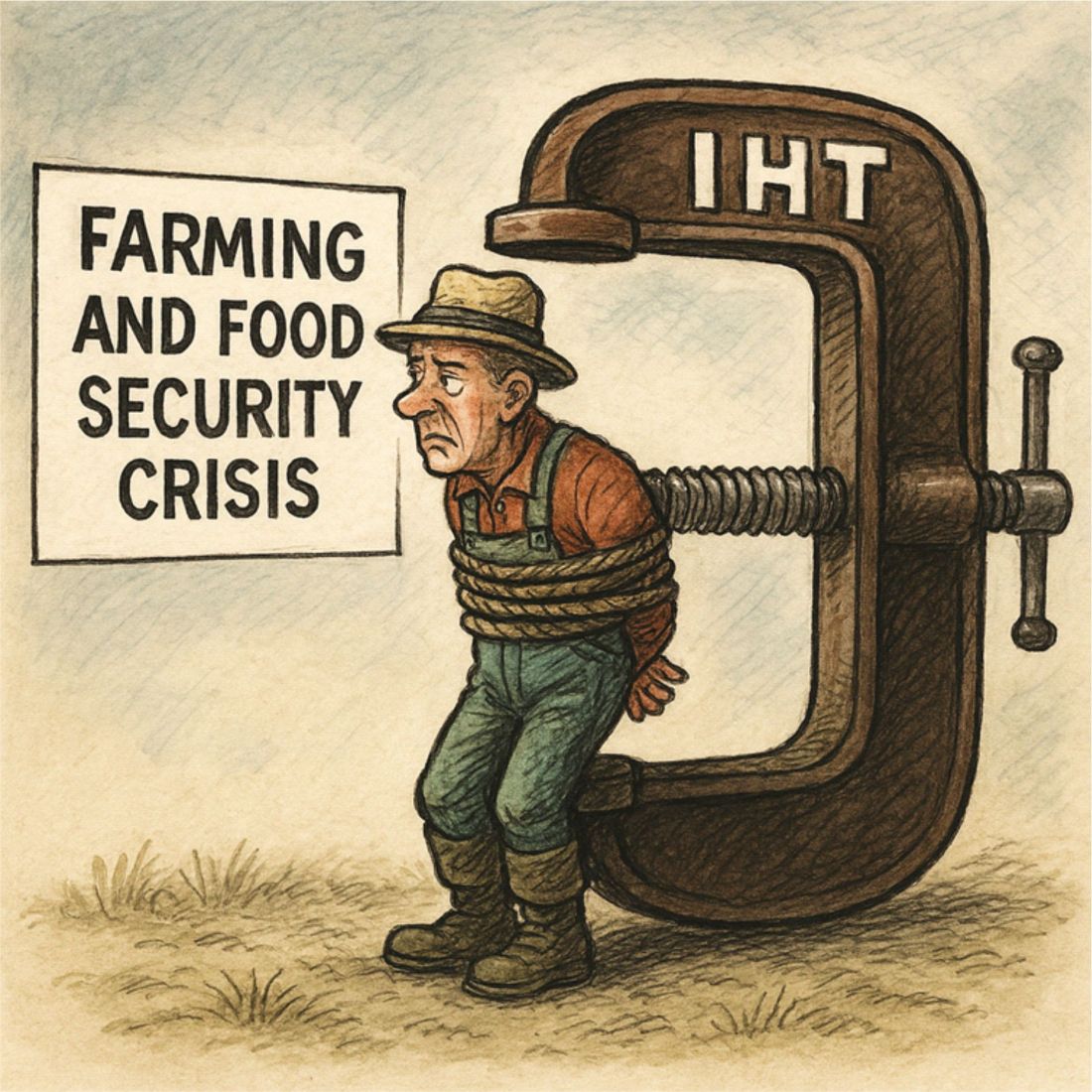
Put bluntly, farming within this framework is not viable – and was never intended to be.
The establishment does not want traditional, independent farms to survive.
Even Minette’s more positive suggestions, however well‑intentioned, cannot succeed in this context. They risk becoming distractions – “dead cats” -designed to maintain the illusion that government is invested in the UK food chain and food security, when the evidence clearly shows otherwise.
What I would have liked to see is a stronger message about the importance of UK food production and the need to move towards self‑sufficiency.
Feeding the British public with fresh, healthy, nutritious food that is accessible and affordable should not be an aspiration – it should already be the baseline.
With food as vital as it is, and every one of us needing at least two meals a day, this is surely more important than abstract questions of GDP growth.
Harsh though it may sound, this report feels more like a whitewash than a clean shet. It’s exactly the kind of document political and establishment leaders hope for to cover their tracks and agendas.
Knowing how those from the farming advocacy organisations play along with government to stay close to power rather than risk friction, it stands to reason that the review may have been genuine and well‑intentioned but never risked being positioned to create problems for politicians by tabling the full truth. Regrettably, it fails to grapple with the central issue: the government’s relationship with farming is not about food, farming, or feeding the nation – it is simply about money and the transfer of power and wealth.
Government is not deaf to farmers – it simply does not care. That indifference is the real crisis.
The current approach to UK Agricultural and Food Policy, embedded long before this Labour government, is dismantling our food production capability by making it impossible for farmers to continue. This is a growing risk to everyone.
If borders closed tomorrow and external food supplies were cut off, around only 12% of the UK’s food supply would be immediately available to consumers.
The rest – despite the UK producing 52–58% the equivalent of what it consumes – would not be any good to the public for a considerable time, because the UK farming is subservient to and fits within the Euro‑Global food chain.
The majority of our People could go hungry in a real crisis and this is the reality we should be confronting – not how profits and therefore more helpful statistics are made.
A Call for Farmer-Led Change
Ultimately, only the farming industry can save itself – and that means taking immediate risks.
However, taking risks while there is still an industry left worth risking must surely be better than passively watching its demise until every independent and family farm in the UK has been shut down.
Summary & Key Takeaways:
Adam offers a critical perspective on the Farming Profitability Review, highlighting both its intentions and its limitations from the viewpoint of UK farmers and food producers.
Key Points
- High Expectations, Mixed Delivery:
Farmers and industry stakeholders anticipated a transformative report, given Minette Batters’s reputation and leadership. The FPR presents genuine suggestions but remains constrained by establishment narratives.
- Profitability Framed by Policy:
The FPR’s focus on profitability is shaped by government priorities – specifically, farming’s small contribution to GDP. This economic lens overshadows broader issues like food security and the viability of independent farms.
- Systemic Challenges:
Rising costs (e.g., machinery up 31%) and regulatory burdens are pushing more farmers out of business. The FPR acknowledges these pressures but doesn’t fully address their root causes.
- Establishment Influence:
The FPR is too aligned with government and the aims of large corporate organisations that influence the food chain, lacking the independent advocacy needed to truly represent farmers’ interests.
- Food Security Concerns:
Adam’s response stresses the importance of UK food self-sufficiency, noting that current policies leave the nation vulnerable if external supply chains are disrupted.
- Call for Farmer-Led Solutions:
Ultimately, Adam argues that only the farming industry itself can safeguard its future, urging collective action and risk-taking to preserve independent and family farms.
Further Reading:
The resources below have been selected to help you explore the central themes discussed in this response.
Key topics include:
- The roles and priorities of farmers and consumers in UK food production
- The impact of government policy, economic pressures, and systemic challenges on farming
- The importance of food security and community resilience
- Practical solutions and future directions for rebuilding and sustaining the UK food system
1. Understanding UK Food Production & Stakeholders
2. Policy, Economics & Systemic Challenges
3. Solutions, Action & Future Directions



 Adam Tugwell