A question that more and more people have begun to ask is: who does government really work for?
For some, that question comes from living at the sharpest edge of society’s problems – for example, those who can no longer afford to feed themselves properly. But the truth is that across every part of society – our communities, small businesses, clubs, pubs, and the countless organisations that sit outside the government or public‑sector bubble – rules, regulations and requirements are appearing everywhere. And when you look at what these rules actually do, many no longer make any sense at all in terms of allowing people to continue doing what they have always done.
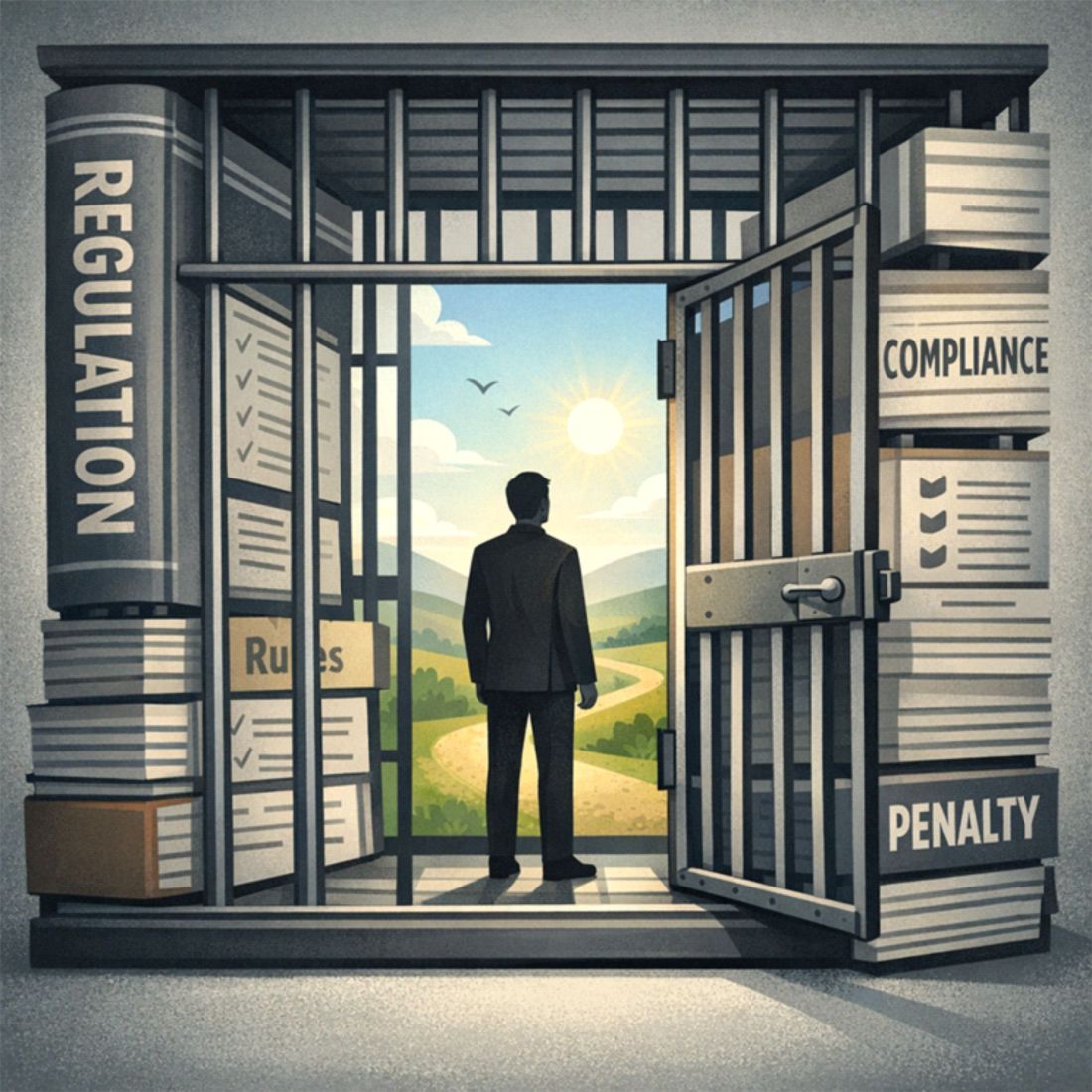
Look more closely and the picture darkens further. Through licences, taxation, penalty notices, workplace directives and endless compliance demands, the ability of anything small, people‑centred, cost‑effective or community‑driven to function is being slowly strangled.
The cumulative effect is suffocating. Many businesses have already gone to the wall because of red tape alone – and that’s before we even consider the wider impact of a money‑centric system and a government culture obsessed with growth, targets and perpetual money creation.
Very few have questioned any of this. Not because people haven’t sensed something was wrong, or felt that the direction of travel jarred with the common sense of real life. But because every change introduced over decades has been sold as “progress”.
Each new rule has been framed as something that improves life, modernises society, or makes everything better for us all – as if the past was universally terrible and the only possible path was the one we’re on.
Yet the freedom we believe we have today is already hollow. With every new move the machinery of government makes, that freedom becomes more restricted.
At some point, we must confront the uncomfortable truth: what is being presented as freedom is increasingly just conformity to a narrative – a form of oppression wearing a very misleading name.
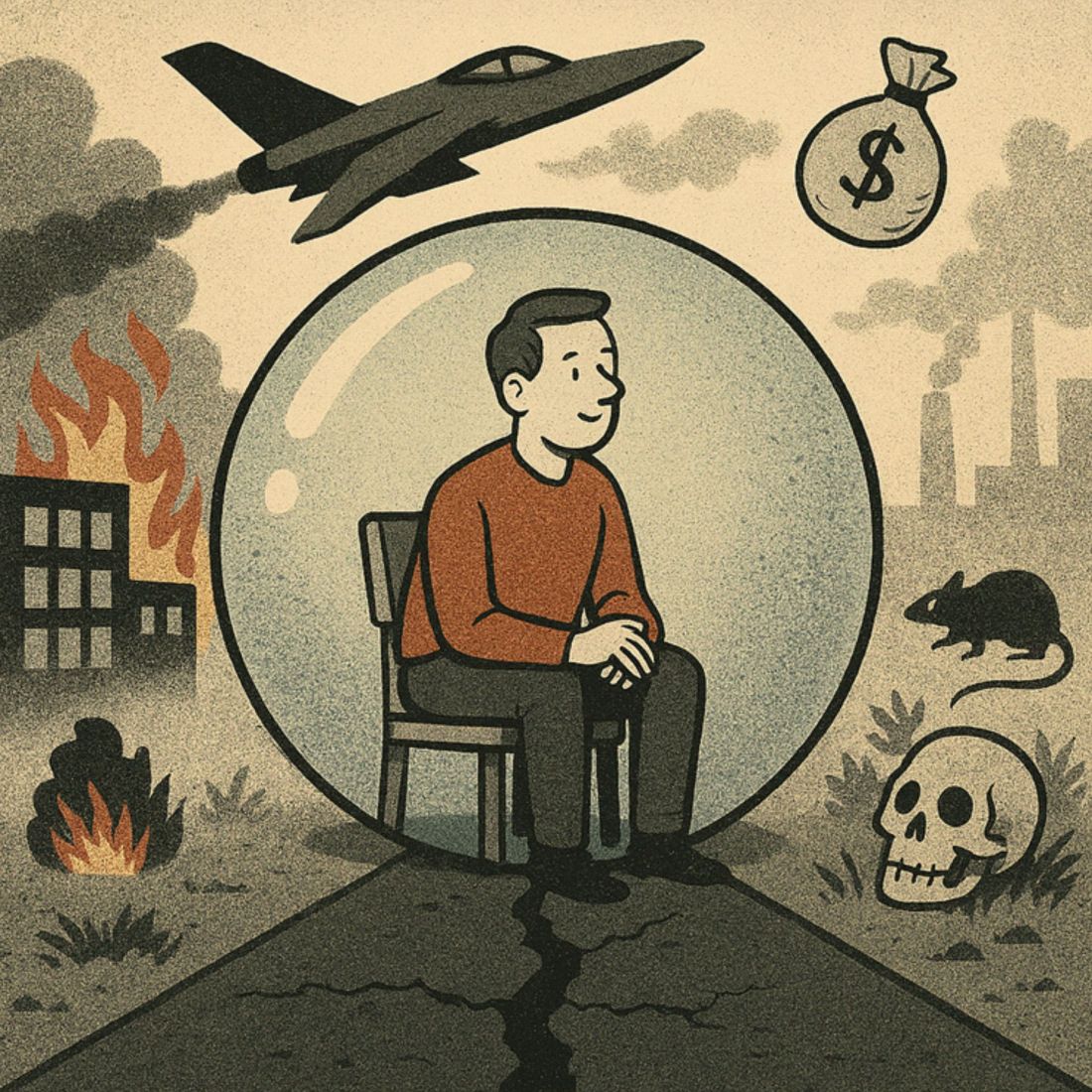
And all of this is happening at a time when global tensions are escalating. With our traditional allies across the Atlantic now posturing over who “owns” Greenland, and European elites openly entertaining the idea of war with Russia and the East, the systems we rely on are heading toward collapse – potentially in a matter of months. That’s before we even consider the other crises and issues lining up behind them.
Without meaningful change – and without a wholesale rejection of the rule‑based system that is already choking every part of life – we face a future where people simply cannot help themselves when they most need to.
Whether it’s farms being unable to grow food, pubs being unable to operate as social spaces, or low‑paid workers being unable to earn enough to live, the dark clouds gathering ahead point to a moment where survival becomes impossible. Not because people lack the will or ability, but because someone in an office miles away decided to make normal life illegal.
Yes, governments talk about “emergency powers” – the idea that in a crisis, the state will temporarily turn a blind eye to rules that would otherwise be enforced. But that raises a very telling question: if these rules can be suspended when reality demands it, who were they ever really serving in the first place?
The time is fast approaching when people may have no choice but to ignore rules and regulations that were created solely because they suited someone else’s interests, rather than being developed to help people live. Frameworks that should never have existed in a genuinely free society, that are now the very things preventing society from functioning.
Of course, we will always need accepted and shared ways of doing things. But those ways should be created, maintained and managed by the people actually involved and the communities they will affect. Not by distant agendas and idealistic theories detached from basic human values.
Systems should reflect how life really works for everyone, not how it might look in the imagination of those who believe people must be forced to behave as they are told.
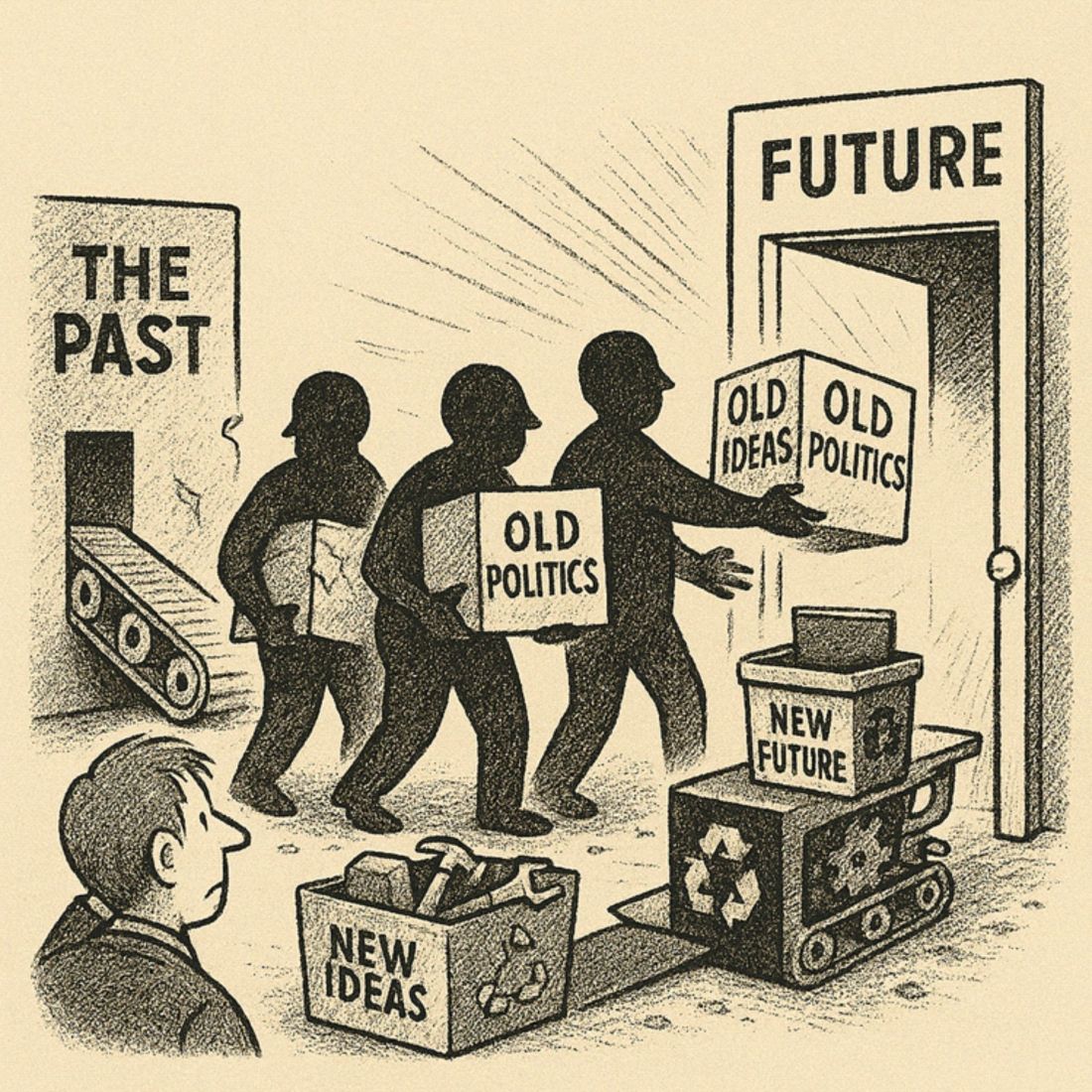
Dark as the future may appear, there is an opportunity emerging. People and Communities can take back our power and build a system centred on people, community and the environment – one that genuinely puts human beings first.
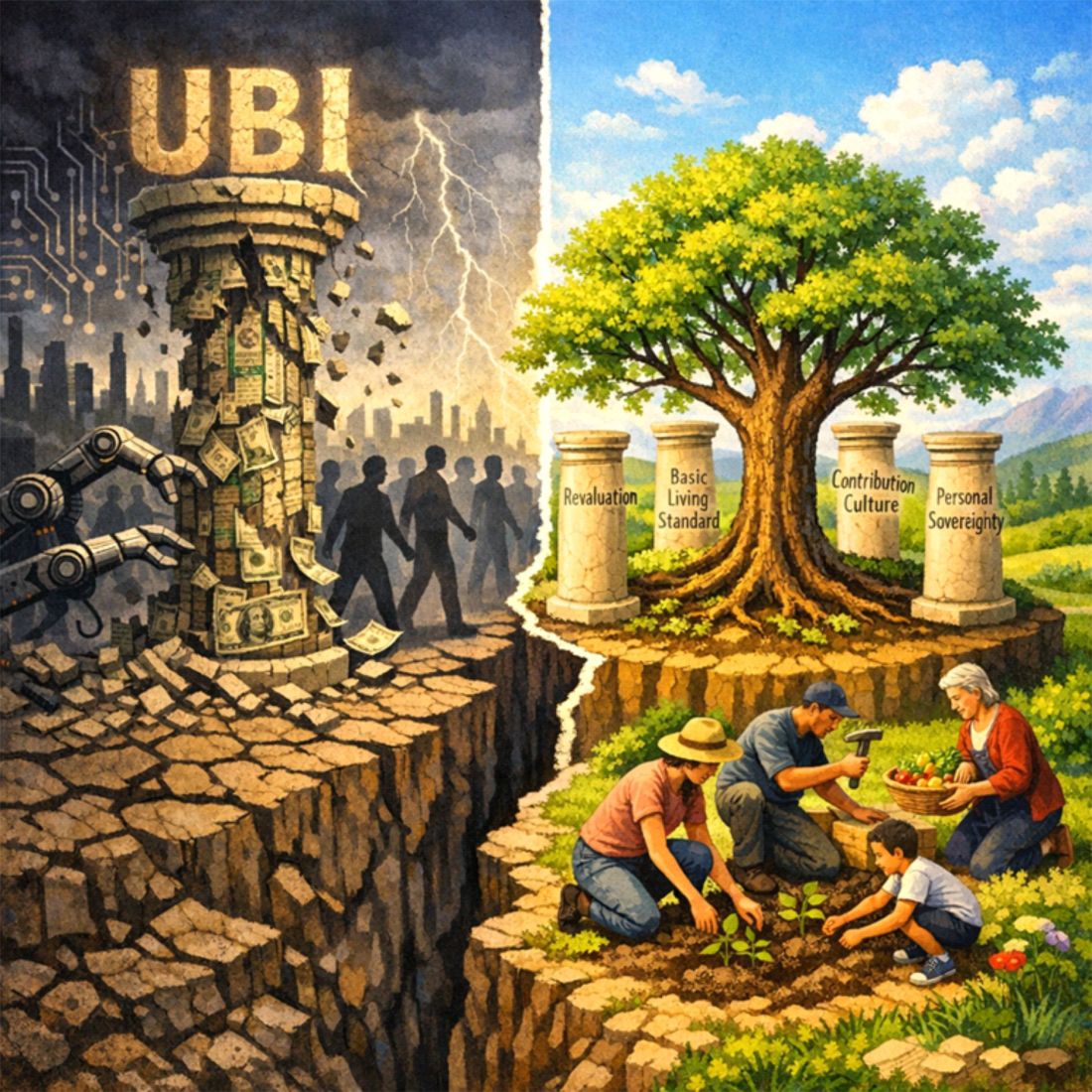
This alternative already exists in outline. It’s called the Local Economy & Governance System. Built on the foundation of The Basic Living Standard, and shaped by principles such as participatory democracy and the contribution culture.
It offers a complete shift away from the money‑centric disaster path we are currently on. It creates a world where accountability is shared, where frameworks support life rather than restrict it, and where everyone is involved in shaping the society they live in.
Further Reading: Building a People-First Society
To deepen your understanding of the ideas discussed in this work – especially the critique of centralised governance and the vision for a people-centred alternative – these readings from Adam’s Archive provide a logical pathway.
They move from foundational principles, through practical frameworks, to real-world applications and philosophical context. Each resource is accompanied by a brief description to help you navigate the journey.
1. The Basic Living Standard Explained
https://adamtugwell.blog/2025/10/24/the-basic-living-standard-explained/ Start here to understand the foundational principle underpinning the proposed alternative system. This article explains what the Basic Living Standard is, why it matters, and how it serves as the bedrock for a fairer, more resilient society.
2. The Local Economy & Governance System (Online Text)
https://adamtugwell.blog/2025/11/21/the-local-economy-governance-system-online-text/ This resource introduces the Local Economy & Governance System, outlining its structure and how it departs from traditional, money-centric models. It’s a practical overview of how communities can reclaim agency and build systems that genuinely serve people.
3. From Principle to Practice: Bringing the Local Economy & Governance System to Life (Full Text)
“When you finally hear yourself, the world sounds different.”
Introduction
You don’t need to understand this book before you begin. You don’t need to believe anything, or follow anything, or get anything right.
Just start.
Move through it at your own pace. Let the words land however they land. Pause when something catches you. Keep going when it doesn’t.
This isn’t a book that asks anything of you. It doesn’t require effort or interpretation.
But if you’ve been feeling a quiet shift inside yourself – a sense that something in your life, and the world around you, no longer fits the way it used to – you may find something here that helps you recognise what that is.
Take your time. See what meets you. See what feels true.
That’s all this book needs.
Our World as we experience it today
You know that feeling you get sometimes – the one where you’re doing everything you’re supposed to do, but it still feels like you’re falling behind?
Most people don’t talk about it, but they feel it too.
It’s that moment when you’re staring at your inbox thinking, “Why does this feel harder than it used to?”
Or when you’re sitting in the car outside work, taking a breath before you go in, because something in you is already tired.
People think these moments are personal failures. They’re not. They’re signals.
And if you’ve been feeling them, you’re not imagining it.
You’re not weak. You’re not alone. You’re living through a world that’s shifting under your feet, and no one gave you the language for it.
Most people don’t say this out loud, but they’re noticing the same things you are:
that life feels heavier
that the pace feels unnatural
that the pressure doesn’t match the reward
that the story we were given doesn’t fit the world we’re in
And when you start to notice these things, you begin to realise something important:
It’s not you that’s breaking. It’s the system you’re inside of.
Once you see that, the whole picture changes.
You start noticing how many people around you are quietly struggling. Not dramatically – just stretched thin in ways they can’t quite explain.
You see it in the colleague who jokes about burnout because the alternative is admitting they’re scared.
You see it in the friend who says they’re “fine” but looks like they haven’t slept properly in months.
You see it in the parent who feels guilty for being exhausted all the time.
You see it in yourself when you realise you’ve been running on fumes for longer than you want to admit.
And when you start to see all this, something clicks:
This isn’t an individual problem. It’s a collective experience.
That’s the moment the conversation changes.
Not “What’s wrong with me?”
But
“What’s happening to all of us?”
And that’s where the deeper recognition begins – not as a lecture, but as something shared:
“You’re not the only one feeling this. You’re not imagining it. And there’s a reason it feels this way.”
The subtle changes already underway
Once you realise you’re not the only one feeling this way, something loosens.
Not everything – but enough to breathe.
You start noticing things you used to brush past. Like how many people say they’re “just tired” in a way that doesn’t sound like they mean sleep.
Or how often someone pauses before answering a simple question, as if they’re searching for a version of themselves they misplaced somewhere along the way.
And you start to see the pattern:
Everyone is trying to hold together a life that was designed for a world that doesn’t exist anymore.
It’s like we were all handed a map years ago – a map that told us how to live, what to aim for, what counted as success – and we followed it because it seemed to work.
But now the landmarks don’t match the terrain. The roads don’t lead where they used to. The instructions don’t make sense.
And the strange thing is, no one updated the map.
We’re all still trying to navigate by it, even though the world has changed underneath us.
You can feel that mismatch in your body. That’s why the simplest things feel harder than they should. That’s why you feel like you’re always catching up. That’s why you sometimes feel like you’re failing at something you never agreed to do.
And when you start to see that, you also start to see something else:
People are already adjusting, quietly, instinctively, without making a big deal out of it.
You see it in the person who decides they’re not answering emails after 6pm anymore. You see it in the friend who starts working fewer hours because they want their life back. You see it in the neighbour who’s learning how to fix things instead of replacing them. You see it in the colleague who’s stopped pretending their job is meaningful when it clearly isn’t.
These aren’t acts of rebellion. They’re acts of self‑respect.
They’re small, practical ways of saying, “I can’t live by the old rules anymore. They don’t fit.”
And when enough people start doing that – even quietly – the whole atmosphere changes.
You start to feel less alone. You start to feel less like you’re the problem. You start to feel more like you’re part of something that’s happening everywhere, even if no one’s naming it yet.
And that’s when the bigger picture starts to come into focus.
Not as a theory. Not as a manifesto. Just as a simple, honest recognition:
The world is shifting.
People are shifting with it.
And you’re not behind – you’re part of the shift.
This is where the next part of the story begins – not with instructions, but with understanding.
How People Start Responding
Once you realise the old map doesn’t match the terrain anymore, you don’t suddenly overhaul your life.
Most people don’t.
What actually happens is quieter, more human.
You start making small adjustments – the kind you might not even notice at first.
Maybe you stop checking your work email the moment you wake up. Maybe you take a longer route home because you need a few extra minutes of silence. Maybe you say no to something you would’ve said yes to a year ago. Maybe you start wondering why you’re doing things that drain you instead of things that matter.
These aren’t dramatic changes. They’re the first signs of your internal compass recalibrating.
And the interesting thing is, once you start making these small shifts, you begin to notice how many other people are doing the same.
You see someone at work quietly pushing back on unrealistic deadlines. You see a friend choosing a simpler life over a more “successful” one. You see a neighbour spending more time with their kids and less time chasing status. You see people choosing rest over hustle, connection over performance, meaning over metrics.
It’s like everyone is slowly stepping out of a story that stopped making sense.
And when you talk to people – really talk – you hear the same themes over and over:
“I’m exhausted.” “I don’t know what I’m doing this for anymore.” “I feel like I’m always behind.” “I want something different, but I don’t know what.” “I can’t keep living like this.”
These aren’t complaints.
They’re confessions.
They’re the early language of a population waking up.
And once you hear enough of them, you realise something important:
People aren’t breaking down.
They’re breaking out.
They’re not failing. They’re outgrowing a system that can’t keep up with the world it created.
And the moment you see that, you stop treating your own discomfort as a flaw.
You start treating it as information.
You start asking different questions:
What if the pressure I feel isn’t a sign I’m weak, but a sign the system is misaligned?
What if the exhaustion isn’t personal, but structural?
What if the things I’m struggling with aren’t mine to carry alone?
What if the life I’m trying to maintain isn’t actually sustainable for anyone?
These questions don’t make your life easier overnight. But they make it clearer. And clarity is the beginning of agency.
Because once you understand that the problem isn’t you, you stop trying to fix yourself and start looking at what actually needs to change.
You start noticing the cracks in the old system – not to judge them, but to understand them.
You start noticing the new patterns emerging – not to romanticise them, but to recognise them.
And slowly, almost without realising it, you begin to shift from coping to adapting.
Not because someone told you to. Not because you read a book about it.
But because your life is telling you the truth, and you’re finally listening.
How People Quietly Start Building the New Logic
Once you realise the old way of living doesn’t fit anymore, you don’t suddenly become a different person. You just start doing things a little differently – almost without thinking about it.
You might notice yourself reaching for simplicity in places where you used to reach for convenience.
Or choosing connection in moments where you used to choose speed.
Or saying “no” to things you used to say “yes” to because you finally understand the cost.
And the interesting thing is, these small shifts don’t feel like rebellion. They feel like relief.
You start cooking more because it calms your mind. You start fixing things instead of replacing them because it feels grounding. You start spending time with people who make you feel like yourself. You start letting go of things that drain you, even if you can’t explain why.
It’s not a strategy.
It’s a response.
And when you look around, you realise other people are doing the same.
Someone on your street starts sharing tools instead of everyone buying their own. A friend starts a small side project that feels more meaningful than their job. A neighbour sets up a WhatsApp group for swapping food or helping with childcare. A colleague quietly shifts their hours to something more humane.
None of this is coordinated.
No one is announcing a movement.
It’s just people adjusting to a world that’s changing faster than the systems built to manage it.
And the thing is, these small adjustments add up.
They create pockets of stability in places where the old system is wobbling. They create networks of support in places where institutions feel distant. They create meaning in places where the old story has gone hollow.
It’s like watching a new pattern appear in the corner of your eye – not fully formed, not official, but unmistakably there.
You see it in:
the friend who starts working with their hands because they’re tired of screens
the family who chooses a smaller life because it feels more real
the group of neighbours who start sharing skills because it just makes sense
the person who finally admits they don’t want to live at a pace that hurts them
These aren’t grand gestures.
They’re the early architecture of a different way of living.
And the more you notice them, the more you realise something important:
People aren’t waiting for the new world to arrive.
They’re building it in the cracks of the old one.
Not because they’re idealists. Not because they’re activists. But because the old logic has stopped working, and the new one – even in its early, fragile form – feels more human.
You can feel it in the way people talk about the future now. There’s less certainty, but more honesty. Less ambition, but more intention. Less performance, but more presence.
It’s not that people have given up. It’s that they’ve stopped pretending.
And once you stop pretending, you start creating.
Not in a dramatic, world‑changing way – but in the small, steady ways that actually matter.
You start shaping your life around what feels true. You start making choices that align with who you are. You start building connections that feel real. You start trusting your own sense of what works.
And that’s how the new logic grows – not through declarations, but through behaviour.
One person at a time. One choice at a time. One small act of alignment at a time.
How These Small Shifts Start Forming Something Bigger
When people start making those quiet adjustments – the ones that come from instinct rather than ideology – something interesting happens.
They begin to create stability in places where the old system is wobbling.
Not intentionally. Not strategically. Just because they’re trying to make their lives workable.
You see it in the way people start leaning on each other more. Not in a dramatic “we’re building a community” way – more like:
“Hey, I’ve got extra food if you need some.”
“Do you want me to pick up your child whilst I’m out?”
“I’ve got tools you can borrow.”
“Let me show you how to fix that.”
“Come over if you need company.”
These small gestures don’t look like system‑building. But they are.
They’re the early architecture of a world where people rely on each other instead of on systems that no longer feel reliable.
And once you start noticing these things, you realise they’re happening everywhere.
Someone starts a small repair group because everyone’s tired of throwing things away.
A few neighbours share the cost of a lawnmower or a drill because it makes more sense than everyone buying their own.
A friend starts a weekly dinner because people are lonely and stretched thin.
A local business begins swapping services instead of money because it keeps everyone afloat.
None of this is coordinated. No one is calling it a movement. But it’s unmistakably a shift.
It’s like people are quietly building scaffolding around each other – not because they planned to, but because the old supports are cracking and they don’t want anyone to fall.
And the more this happens, the more you start to see a pattern:
People are creating the next system in the gaps left by the old one.
Not out of idealism. Out of necessity.
You see it in the way people start valuing skills again – real skills, not job titles.
Someone learns how to grow food. Someone learns how to repair electronics. Someone learns how to manage a group. Someone learns how to navigate conflict. Someone learns how to make things instead of buying them.
These skills become the new currency – not because money disappears, but because capability becomes more valuable than credentials.
And as people build these capabilities, they start sharing them.
Not as teachers. Just as humans who know something useful.
This is how the new logic spreads – not through institutions, but through conversations, favours, shared moments, and the quiet exchange of knowledge.
It’s slow. It’s subtle. It’s deeply human.
And it’s happening everywhere.
You can feel it in the way people talk about the future now. There’s less certainty, but more honesty. Less ambition, but more intention. Less performance, but more presence.
People aren’t trying to build a perfect world. They’re trying to build a liveable one.
And that’s enough to change everything.
Because once people start building small pockets of stability, those pockets connect. And once they connect, they form networks. And once networks form, the old system stops being the only option.
Not because it collapses.
But because people quietly outgrow it.
When These Networks Start to Change the Landscape
At first, all these small adjustments people make – the shared tools, the swapped skills, the slower pace, the honest conversations – feel isolated. Like little pockets of sanity in a world that’s still running on an outdated script.
But then something subtle happens.
You start noticing that these pockets aren’t isolated at all. They’re everywhere.
A friend in another city tells you their neighbourhood has started doing the same thing yours has.
Someone at work mentions they’re part of a local group that trades services instead of money.
You hear about a community garden in a place you’ve never been.
You see people online talking about the same feelings you’ve been carrying quietly for years.
And you realise:
This isn’t just you, and it isn’t just your circle.
It’s happening everywhere, all at once.
Not because someone organised it. Not because there’s a manifesto. But because people are responding to the same pressures in the same human ways.
It’s like watching grass push through cracks in concrete. Not dramatic. Not coordinated. But unstoppable.
And once you see it, you can’t unsee it.
You start noticing how many people are choosing a different pace. How many are questioning the old definitions of success. How many are prioritising their health, their relationships, their sanity. How many are quietly refusing to sacrifice themselves for systems that don’t give anything back.
It’s not rebellion. It’s recognition.
People are realising that the old way of living was built for a world that no longer exists – and they’re adjusting accordingly.
And as more people make these adjustments, something bigger starts to shift.
Workplaces begin experimenting with shorter weeks because burnout is costing more than productivity.
Local groups start solving problems faster than official institutions.
Small businesses begin collaborating instead of competing because it keeps everyone afloat.
Communities start sharing resources because it just makes sense.
None of this looks like a new system. But it functions like one.
It’s decentralised. It’s human‑scaled. It’s built on trust instead of pressure. It’s built on capability instead of credentials. It’s built on cooperation instead of competition.
And the more it grows, the more the old system starts to feel… optional.
Not gone. Not collapsed. Just less central.
People still use it, but they don’t rely on it the way they used to. They don’t believe in it the way they used to. They don’t organise their lives around it the way they used to.
Because they’ve found something that works better – even if it’s still small, still fragile, still forming.
And here’s the part that matters:
This is how new paradigms always begin.
Not with a bang, but with a shift in behaviour.
Not with a revolution, but with a quiet refusal to keep pretending.
People don’t wait for permission. They don’t wait for institutions. They don’t wait for collapse.
They start building the next world in the cracks of the current one.
And eventually, those cracks connect.
When the New Paradigm Starts to Become Visible
There’s a moment – and it doesn’t happen all at once – when you start to realise the world isn’t just breaking down. It’s also reorganising itself.
You notice it in small ways first.
Someone you know leaves a job that was draining them and ends up healthier, calmer, more alive than you’ve seen them in years.
A local group solves a problem in a week that a big institution has been stuck on for months.
A friend starts a tiny business that shouldn’t work on paper, but somehow does because people want something real.
A neighbour tells you they feel more supported by the people on their street than by any official service.
These moments don’t feel like “the future.” They feel like sanity.
And then you start seeing the pattern.
You realise that the people who seem most grounded right now aren’t the ones trying to keep up with the old pace – they’re the ones who’ve stepped out of it. They’re the ones who’ve stopped pretending the old rules still apply. They’re the ones who’ve built small, stable lives that actually make sense.
And you start to notice something else: the old system feels increasingly… hollow.
Not gone. Not irrelevant. Just strangely disconnected from the reality people are living.
It’s like watching a machine keep running long after everyone has stopped believing in it. It still makes noise. It still demands attention. But it doesn’t feel central anymore.
Meanwhile, the new thing – the thing people are building quietly, instinctively – starts to feel more real.
You see it in:
the way people talk about work now
the way they talk about time
the way they talk about meaning
the way they talk about each other
There’s less performance. Less pretending. Less “I’m fine.” More honesty. More presence. More “I can’t keep living like that.”
And when enough people start speaking from that place, the atmosphere changes.
It’s not that the new paradigm suddenly arrives fully formed. It’s that people start recognising it in each other.
You hear someone say, “I thought I was the only one feeling this way,” and someone else replies, “No, I’ve been feeling it too.”
You hear someone admit they’re overwhelmed, and instead of being judged, they’re met with understanding.
You hear someone talk about wanting a slower, more grounded life, and instead of being dismissed, they’re met with curiosity.
This is how a new paradigm becomes visible – not through announcements, but through recognition.
People start seeing themselves in each other’s stories. They start realising their private struggles are shared. They start understanding that the pressure they’ve been carrying isn’t personal – it’s structural.
And once that happens, something shifts inside them.
They stop feeling alone. They stop feeling defective. They stop feeling like they’re failing at a life that was never designed for human beings in the first place.
Instead, they start feeling connected. They start feeling understood. They start feeling like maybe – just maybe – there’s a different way to live.
And that feeling, even in its early form, is powerful.
Because once people see the new paradigm – even faintly – they can’t go back to pretending the old one makes sense.
They might still participate in it. They might still rely on it. But they no longer believe in it.
And that’s the turning point.
Not collapse. Not revolution. Just a quiet, collective shift in belief.
A sense that the old story is ending, and a new one is beginning – not out there, but right here, in the way people are choosing to live.
What It Feels Like When You Start Moving Through the Transition With Clarity
There’s a moment – and it’s rarely dramatic – when you realise you’re no longer just reacting to the world around you. You’re responding to it.
It’s subtle. It’s quiet. But it’s real.
You notice that the things that used to overwhelm you don’t hit as hard. Not because they’ve gone away, but because you’re seeing them differently.
You’re not blaming yourself for being tired anymore. You’re not assuming you’re failing when things feel heavy. You’re not trying to force yourself into a pace that hurts you.
Instead, you’re starting to ask different questions:
What actually matters to me?
What can I let go of?
What do I need to feel grounded?
Who are the people I can rely on?
What’s the smallest step that makes my life feel more like mine?
These questions don’t solve everything. But they shift the centre of gravity.
You stop feeling like you’re being swept along by a current you can’t control. You start feeling like you’re wading – slowly, deliberately – toward something that makes sense.
And the interesting thing is, once you start moving this way, you begin to notice how many other people are doing the same.
Someone at work quietly rearranges their schedule to protect their mornings. A friend starts saying “no” to things that drain them. A neighbour begins organising small gatherings because people are lonely and don’t know how to say it. Someone in your family admits they’re struggling, and instead of shutting down, the conversation opens up.
It’s not that the world becomes easier. It’s that people stop pretending it’s easy.
And that honesty – that shared recognition – makes everything feel a little less impossible.
You start to realise that the transition isn’t something happening to you. It’s something you’re participating in.
Not by choice, maybe. But by presence.
You’re adapting. You’re adjusting. You’re finding your footing in a landscape that’s still shifting.
And the more you do that, the more you notice something else:
You’re not as alone as you thought.
You start having conversations you didn’t know you needed. You start hearing your own thoughts reflected back to you in other people’s words. You start feeling connected to something larger – not a movement, not a cause, just a shared human experience.
And that connection changes the way you move through the world.
You stop trying to carry everything by yourself. You start letting people in. You start asking for help in small ways. You start offering help without feeling like it’s a burden. You start trusting that you’re part of something – even if you can’t name it yet.
This is what clarity feels like in a collapsing paradigm.
Not certainty. Not confidence. Just the quiet sense that you’re no longer lost.
You’re still in the fog, but you’re not wandering. You’re walking. And you’re walking with others.
That’s the beginning of agency. That’s the beginning of resilience. That’s the beginning of the next chapter.
How People Start to Stabilise Themselves (and Each Other)
Once you realise the old way of living doesn’t fit anymore, you don’t suddenly become calm or enlightened. You just start looking for solid ground – anywhere you can find it.
And the interesting thing is, the solid ground isn’t where the old system told you it would be.
It’s not in working harder. It’s not in being more productive. It’s not in keeping up. It’s not in pretending everything’s fine.
It’s in much smaller, more human places.
You start noticing what actually helps you feel steady. Maybe it’s a slower morning. Maybe it’s a walk without your phone. Maybe it’s cooking something simple. Maybe it’s talking to someone who doesn’t expect you to perform.
These things don’t fix the world. But they help you find your footing inside it.
And once you find even a little bit of footing, you start making different choices.
You stop saying yes to things that drain you. You stop apologising for needing rest. You stop trying to meet expectations that were never realistic. You stop pretending you’re fine when you’re not.
These aren’t acts of rebellion. They’re acts of self‑preservation.
And the more you do them, the more you realise other people are doing the same.
Someone at work quietly protects their lunch break because they need the pause. A friend starts being honest about how overwhelmed they are. A neighbour admits they’re struggling and suddenly three people offer help. A colleague starts taking mental health days without shame.
It’s not that people suddenly become more capable. It’s that they stop carrying everything alone.
And that’s when stabilisation becomes collective.
You start seeing people support each other in ways that feel small but matter deeply.
Someone drops off a meal because they know you’ve had a hard week. Someone offers to watch your kids for an hour so you can breathe. Someone shares a skill that saves you time or money. Someone listens without trying to fix you.
These moments don’t look like “building a new system.” But they are.
They’re the early structure of a world where people rely on each other instead of on systems that feel increasingly unreliable.
And the more these moments happen, the more the atmosphere shifts.
People start being more honest. More present. More willing to admit they’re human. More willing to ask for help. More willing to offer it.
It’s not that the world becomes less chaotic. It’s that people stop pretending they have to face the chaos alone.
And that changes everything.
Because once you feel supported – even a little – you stop living in survival mode. You start thinking more clearly. You start making better decisions. You start noticing what actually matters. You start feeling like you have some agency again.
And that’s the beginning of real stability.
Not the kind that comes from certainty. The kind that comes from connection.
The kind that says:
“I don’t know what’s coming next, but I’m not facing it alone.”
How People Begin to Build Real Resilience
When people start stabilising themselves – even in small ways – something shifts.
Not dramatically. Not overnight. But enough that they begin to feel a little more solid inside their own lives.
And from that place, resilience starts to grow.
Not the kind where you force yourself to endure more than any human should. Not the kind where you pretend you’re fine until you break. Not the kind where you “bounce back” to a life that was hurting you.
Real resilience looks different.
It’s quieter. More grounded. More honest.
It starts with noticing what drains you and what restores you. And then – slowly, gently – choosing more of the latter.
You begin to understand your limits, not as flaws, but as information. You start pacing yourself instead of pushing yourself. You start planning your days around your actual capacity, not the capacity you wish you had.
And the interesting thing is, once you start doing this, you realise how many people around you are doing the same.
Someone at work stops scheduling back‑to‑back meetings because they’ve finally admitted it’s unsustainable. A friend starts taking one day a week offline because they need the mental space. A neighbour begins organising shared childcare because everyone is stretched thin. A colleague starts blocking out time for deep work because constant interruptions were burning them out.
These aren’t productivity hacks. They’re survival strategies. And they work.
Because real resilience isn’t about being tougher. It’s about being supported.
And support doesn’t always look like grand gestures.
Most of the time, it looks like:
someone checking in on you
someone sharing a skill that saves you time
someone offering a lift when you’re overwhelmed
someone listening without trying to fix you
someone reminding you that you’re not failing
someone saying “I feel that too”
These small moments create a kind of emotional scaffolding – the kind that keeps you upright when the world feels unstable.
And as people build this scaffolding for each other, something bigger starts to happen.
Communities become more resilient. Not because they’re organised. Not because they have a plan. But because they’re connected.
You start seeing people share resources instead of competing for them. You see people pool knowledge instead of hoarding it. You see people solve problems together instead of waiting for institutions to catch up. You see people create small, local systems that actually work.
It’s not polished. It’s not perfect. But it’s real.
And it’s enough to make the chaos feel less overwhelming.
Because resilience isn’t about eliminating uncertainty. It’s about having enough support – internally and externally – to face uncertainty without collapsing.
It’s the difference between standing alone in a storm and standing with others who are holding the same rope.
And once you feel that – even once – you realise something important:
You don’t have to be strong all the time.
You just have to not be alone.
That’s the heart of resilience in a world that’s changing this fast.
Not toughness. Not endurance. Connection.
Connection to yourself. Connection to others. Connection to what actually matters.
And once that connection is there, the transition stops feeling like something you’re surviving and starts feeling like something you’re navigating.
Not easily. Not perfectly. But together.
How People Begin Letting Go of the Old Paradigm
Letting go doesn’t usually look like a big moment.
It’s not someone standing up and declaring, “I reject this system.”
It’s quieter than that. More personal. More honest.
It often starts with a simple realisation:
“I can’t keep living like this.”
Not because you’re weak. Not because you’re failing. But because the old way of living has become too heavy, too fast, too disconnected from what actually matters.
And once you feel that – really feel it – something inside you loosens.
You stop trying to force yourself into shapes that hurt. You stop pretending the pace is normal. You stop apologising for needing rest. You stop organising your life around expectations that don’t fit the world anymore.
It’s not a rejection. It’s a release.
You start letting go of things you thought were essential:
the constant pressure to be productive
the idea that your worth comes from your output
the belief that exhaustion is normal
the fear of falling behind
the need to perform stability
the expectation that you should be coping better than you are
These things don’t fall away all at once. They loosen slowly, like knots that have been tight for years.
And as they loosen, you start noticing how much of your life was built around trying to survive a system that wasn’t built for human beings.
You start seeing the old paradigm for what it is:
A story that made sense once, but doesn’t match the world anymore.
And once you see that, you can’t unsee it.
You notice how many people around you are also quietly stepping back. Not quitting their jobs or abandoning their responsibilities – just refusing to sacrifice themselves for a system that doesn’t give anything back.
You hear it in the way people talk now:
“I don’t want to live to work anymore.” “I’m tired of pretending I’m okay.” “I want more time, not more stuff.” “I don’t care about climbing the ladder.” “I just want a life that feels like mine.”
These aren’t complaints. They’re awakenings.
They’re the early language of people letting go of a paradigm that no longer fits.
And the more people speak this way, the more normal it becomes.
You start seeing people choose rest without guilt. You see people prioritise their health over their job title. You see people value relationships over status. You see people choose meaning over metrics. You see people build lives that feel human instead of impressive.
It’s not that the old system disappears. It’s that people stop believing in it.
They still participate in it where they have to. They still navigate it because it’s there. But they no longer organise their identity around it.
And that’s the real letting go.
Not abandoning the old world. Just refusing to let it define you.
You start living from a different centre – one that’s quieter, steadier, more grounded in what actually matters.
And once you start living from that place, the old paradigm loses its grip.
Not because you fought it. Because you outgrew it.
How People Begin Stepping Into the New Paradigm
By the time someone has stabilised themselves a bit, built some resilience, and let go of the parts of the old paradigm that were hurting them, something shifts inside them.
It’s not dramatic. It’s not a “new chapter” moment. It’s more like a quiet internal click – a sense that you’re no longer trying to get back to how things were.
You’re moving forward now.
Not because you’re ready. Not because you have a plan. But because going back simply isn’t an option anymore.
And stepping into the new paradigm doesn’t feel like stepping into a new world. It feels like stepping into your own life more fully.
You start noticing what actually works for you – not what you were told should work, not what looks good from the outside, but what genuinely supports you.
You start choosing:
work that feels meaningful over work that looks impressive
relationships that nourish you over relationships that drain you
routines that stabilise you over routines that speed you up
communities that support you over institutions that exhaust you
skills that make you capable over credentials that make you marketable
These choices don’t feel revolutionary. They feel sane.
And the more you make them, the more you realise you’re not alone.
You see other people doing the same – quietly, steadily, without fanfare.
Someone leaves a job that was slowly eroding them and finds something smaller but healthier.
Someone starts a tiny business that aligns with their values instead of chasing growth for its own sake.
Someone begins organising local meetups because they’re tired of feeling disconnected.
Someone learns a practical skill because they want to feel more capable in a world that feels unpredictable.
These aren’t lifestyle tweaks. They’re paradigm shifts.
Because the new paradigm isn’t about building a perfect world. It’s about building a liveable one.
A world where:
people value time more than speed
connection more than consumption
capability more than credentials
meaning more than metrics
community more than competition
And the thing is, once you start living this way – even in small ways – you begin to feel something you haven’t felt in a long time.
A sense of alignment.
Not constant. Not complete. But real.
You start waking up with a little more clarity. You start feeling less like you’re fighting your own life. You start noticing moments of ease you didn’t used to have. You start trusting your own instincts again.
And that trust is important.
Because the new paradigm isn’t something you enter by understanding it. You enter it by living it.
By making choices that feel true. By building connections that feel real. By creating stability where you can. By letting go of what hurts. By moving toward what supports you.
And as you do that, you start to feel something else too:
You’re not just adapting to the new paradigm.
You’re helping shape it.
Not through grand gestures. Not through activism. Just through the way you live.
Your choices ripple. Your clarity influences others. Your stability becomes a reference point. Your honesty gives people permission. Your presence helps others feel less alone.
And that’s how the new paradigm grows – not from the top down, but from the inside out.
One person at a time. One choice at a time. One honest conversation at a time.
Until eventually, what once felt like a private struggle becomes a shared direction.
How People Begin to Coordinate (Without Calling It Coordination)
What’s interesting about this stage is that it doesn’t feel like a stage.
It doesn’t feel like people suddenly decide to “work together” or “build a new system.”
It feels more like people following the same instinct at the same time.
You start noticing that the things you’ve been doing to stabilise your own life – simplifying, slowing down, connecting, sharing – are the same things other people are doing too.
And because you’re all moving in similar directions, coordination just… happens.
Not because someone planned it. Because it’s the natural next step.
You see it in small, everyday moments:
Someone mentions they’re learning a skill you’ve been wanting to learn, and suddenly you’re learning together.
Someone starts a small group to share tools or food or childcare, and it fills instantly because everyone’s been quietly needing the same thing.
Someone posts a question in a local chat, and ten people respond because they’ve been dealing with the same issue.
Someone suggests meeting in person, and it feels like relief instead of obligation.
These aren’t committees. They’re connections.
And they work because they’re built on real needs, not abstract goals.
People coordinate around:
what helps
what stabilises
what saves time
what reduces pressure
what makes life feel more human
what makes the future feel less frightening
It’s coordination rooted in lived experience, not ideology.
And the more it happens, the more you start to see patterns.
A neighbour who grows vegetables starts sharing them, and suddenly three more people are growing food too.
A friend who knows how to fix things starts teaching others, and suddenly the whole street is repairing instead of replacing.
A colleague who’s good at organising people starts quietly connecting those who need help with those who can offer it.
A local group forms around a shared problem, and before long it’s solving things faster than official channels.
None of this feels like “building a new system.” It feels like people doing what works.
And because it works, it spreads.
Not virally. Not explosively. Just steadily.
You start seeing:
shared childcare circles
neighbourhood repair hubs
local skill‑swap networks
small cooperative projects
community‑owned resources
informal support groups
micro‑business clusters
shared transport arrangements
These things don’t replace the old system. They just make people less dependent on it.
And that’s the quiet power of this stage.
People aren’t overthrowing anything. They’re outgrowing it.
They’re building alternatives that feel more stable, more human, more aligned with the world as it actually is.
And because these alternatives are built on relationships rather than rules, they’re flexible.
They adapt quickly. They respond to real needs. They don’t require permission. They don’t require perfection. They just require people showing up for each other in small, consistent ways.
And once you’ve experienced that – once you’ve felt what it’s like to be part of a network that actually works – it changes how you see everything.
You stop waiting for institutions to fix things. You stop assuming you have to handle everything alone. You stop believing that the only way forward is through the old structures.
You start trusting the small, local, human-scale solutions. You start trusting the people around you. You start trusting yourself.
And that trust – that quiet, grounded confidence – is what makes coordination possible.
Not because everyone agrees. Not because everyone has the same vision. But because everyone is moving from the same place:
“We can’t keep living the old way. So let’s build something that actually works.”
How These Networks Become the Early Architecture of the Next System
What’s striking about this stage is that it doesn’t feel like building.
It feels like noticing.
You start to realise that all these small, human‑scale things people have been doing – the things that made life feel a little more manageable – aren’t isolated at all.
They’re connected.
They’re forming a shape.
It’s like looking at stars. At first, they’re just points of light. But once you see the constellation, you can’t unsee it.
You notice that the same patterns are appearing everywhere:
people sharing resources
people teaching each other skills
people organising locally
people solving problems together
people choosing meaning over metrics
people building small, stable pockets of sanity
And when you zoom out – not intellectually, but intuitively – you realise these aren’t coping mechanisms.
They’re the early structure of a different way of living.
A way that’s:
more local
more relational
more resilient
more flexible
more human
And the thing is, no one designed it.
It’s emerging because people are responding to the same pressures in the same human ways.
You see it in the way people talk now.
There’s a shift – subtle, but unmistakable.
Instead of saying, “Someone should fix this,” people start saying, “What can we do about it?” Instead of waiting for institutions, people start relying on each other. Instead of competing for scarce resources, people start pooling them. Instead of feeling isolated, people start feeling connected.
It’s not utopian. It’s practical.
People aren’t trying to build a better world. They’re trying to build a workable one.
And that’s what makes it powerful.
Because when enough people start doing what works – even quietly – the old system stops being the only system.
Not because it collapses. But because people have alternatives.
You start seeing:
neighbourhood groups that respond faster than official services
local food networks that reduce dependence on fragile supply chains
shared transport that makes more sense than everyone owning a car
micro‑business clusters that support each other instead of competing
community spaces that become hubs of capability and connection
informal safety nets that catch people long before institutions do
These things aren’t polished. They’re not perfect. But they’re real.
And they’re growing.
Not because someone is pushing them. Because people are tired of systems that don’t work and are quietly building ones that do.
And once you see this – once you recognise the pattern – something shifts inside you.
You stop feeling like you’re living in a world that’s falling apart. You start feeling like you’re living in a world that’s rearranging itself.
Not neatly. Not smoothly. But meaningfully.
You start to understand that the old paradigm isn’t disappearing. It’s dissolving.
And the new one isn’t arriving. It’s emerging.
Through people. Through choices. Through small acts of alignment. Through networks of support. Through the quiet, steady work of making life liveable again.
And that’s when the architecture becomes visible – not as a blueprint, but as a pattern you can feel in your bones:
The next system isn’t something we build.
It’s something we become.
How People Begin to Orient Themselves in the New Landscape
There’s a point in this transition where you realise you’re no longer trying to get back to the old normal.
You’re trying to understand the new one.
And that’s disorienting at first. Because the old map – the one that told you what to aim for, how to measure success, what counted as progress – doesn’t fit anymore.
But here’s the thing: people don’t stay disoriented forever.
Once they’ve stabilised a bit, once they’ve built some resilience, once they’ve let go of the parts of the old paradigm that were hurting them, they start to look around with clearer eyes.
And what they see is this:
The world is still uncertain, but they’re not lost in it anymore.
They start orienting themselves in new ways – ways that feel more grounded, more human, more aligned with the reality they’re living in.
It usually begins with a simple shift:
Instead of asking, “What should I be doing?” people start asking, “What actually matters to me?”
And that question changes everything.
Because when you stop organising your life around external expectations, you start organising it around internal truth.
You start noticing:
what gives you energy
what drains you
what feels meaningful
what feels performative
what brings you closer to yourself
what pulls you away
These aren’t abstract reflections.
They’re practical signals.
And once you start paying attention to them, you begin to navigate differently.
You choose work that aligns with your values, even if it’s less prestigious. You choose relationships that feel reciprocal, not performative. You choose routines that support your nervous system, not your productivity metrics. You choose communities that feel real, not impressive. You choose goals that feel alive, not obligatory.
This is orientation in the new paradigm – not a map, but a compass.
And the compass is internal.
But here’s the part that surprises people: as soon as they start orienting themselves this way, they begin to notice others doing the same.
Someone says, “I’m trying to live slower now.” Someone else says, “I’m choosing work that feels meaningful, even if it pays less.” Another person says, “I’m focusing on what I can actually influence.” Another says, “I’m trying to build a life that feels like mine.”
And suddenly, you realise you’re not wandering alone.
You’re part of a whole population quietly re‑orienting itself.
Not toward the old markers of success. Not toward the old definitions of stability. But toward something more human.
People start navigating by:
connection
capability
meaning
health
time
community
presence
integrity
These become the new coordinates.
And once you start navigating this way, the world feels different.
Not easier. Not predictable. But more coherent.
You stop feeling like you’re failing at a life that doesn’t fit.
You start feeling like you’re shaping a life that does.
And that’s the moment orientation becomes direction.
Not a straight line. Not a five‑year plan. Just a sense of where “forward” is for you.
And that’s enough.
Because in a world where the old map has dissolved, the people who thrive aren’t the ones with the best plan.
They’re the ones with the clearest compass.
How People Begin to Act With Intention
Once someone has a clearer internal compass – once they’ve stabilised, built some resilience, and let go of the parts of the old paradigm that were hurting them – something shifts in how they move.
They stop acting out of habit. They stop acting out of fear. They stop acting out of obligation.
They start acting out of alignment.
And alignment doesn’t feel like confidence.
It feels like honesty.
It’s the moment you say, “I know what matters to me now, and I’m going to move in that direction, even if it’s slow.”
And the actions that follow aren’t dramatic.
They’re small, steady, human.
You start choosing work that feels meaningful, even if it’s not glamorous. You start spending time with people who make you feel like yourself. You start creating routines that support your nervous system instead of overwhelming it. You start learning skills that make you feel capable in a world that’s unpredictable. You start investing your energy where it actually makes a difference.
These choices don’t look like “building the future.” They look like taking care of your life.
But that’s exactly how the future gets built.
Because intention has a way of spreading.
When you act from alignment, people notice.
Not because you’re louder, but because you’re clearer.
Someone sees you protecting your time, and they realise they can do the same. Someone sees you choosing rest without guilt, and it gives them permission. Someone sees you being honest about your limits, and it makes them feel less ashamed of theirs. Someone sees you building a life that feels human, and it reminds them that they want that too.
This is how momentum forms – not through force, but through resonance.
People start moving in similar directions because they’re responding to the same truth:
The old way doesn’t work anymore, and the new way feels better.
And as more people act with intention, the landscape shifts.
You start seeing:
small businesses that prioritise people over growth
workplaces experimenting with humane schedules
communities organising around shared needs
families choosing slower, simpler rhythms
individuals building capability instead of chasing status
groups forming around meaning instead of metrics
These aren’t isolated choices.
They’re coordinated responses to the same reality.
And the more they accumulate, the more the new paradigm takes shape.
Not because someone designed it. Because people are living it.
And here’s the part that matters:
Intention turns the transition from something you’re enduring into something you’re participating in.
You stop feeling like you’re being pushed by the world.
You start feeling like you’re shaping your place in it.
Not perfectly. Not fearlessly. But consciously.
And that consciousness – that quiet, steady awareness of what matters and what doesn’t – becomes a kind of internal anchor.
It doesn’t eliminate uncertainty. It just gives you something solid to move from.
And when enough people move from that place, the whole atmosphere changes.
The transition stops feeling like collapse.
It starts feeling like emergence.
How Intention Becomes Collective Direction
There’s a point in this transition where you start noticing something subtle but unmistakable:
People aren’t just making individual choices anymore.
They’re moving in similar directions, even without talking about it.
It’s not coordination.
It’s coherence.
You see it in conversations that happen between people who’ve never met. You see it in choices being made in different cities, different countries, different contexts – all pointing toward the same underlying truth.
People want:
more time
more connection
more meaning
more stability
more capability
more community
more honesty
more humanity
And they’re willing to reorganise their lives to get it.
Not dramatically. Not all at once. But steadily.
And when enough people start doing that, something interesting happens:
The future stops feeling abstract.
It starts to have a shape.
Not a blueprint. Not a plan. A shape – something you can sense, even if you can’t fully describe it.
You start noticing that the things people are moving toward – slower rhythms, local networks, shared resources, meaningful work, grounded relationships – all point in the same direction.
It’s like watching a flock of birds change direction mid‑flight.
There’s no leader. No signal. No command. Just a shared instinct.
People feel the shift before they can articulate it.
And because they feel it, they start acting in ways that reinforce it.
Someone chooses a job that gives them time instead of status. Someone else starts a small community project because it feels needed. Another person learns a practical skill because they want to feel capable. A group forms around shared childcare because everyone is stretched thin. A neighbourhood starts sharing tools because it just makes sense.
These actions aren’t coordinated.
But they’re aligned.
And alignment is powerful.
Because when people move in aligned ways – even quietly – the world begins to reorganise around those movements.
You start seeing:
workplaces adjusting because people won’t tolerate burnout anymore
communities strengthening because people are tired of isolation
small businesses thriving because people want authenticity
local networks growing because people want resilience
shared spaces emerging because people want connection
new forms of support appearing because people want stability
It’s not a revolution.
It’s a reorientation.
People aren’t trying to overthrow the old paradigm. They’re simply walking toward something that feels more human.
And the more they walk, the clearer the path becomes.
Not because someone draws it. Because people reveal it by moving.
This is how collective direction forms – not through consensus, but through resonance.
People recognise themselves in each other’s choices.
They feel less alone. They feel more certain. They feel more grounded. They feel more capable of imagining a future that isn’t just a continuation of the past.
And that’s the moment when the emerging paradigm stops being theoretical.
It becomes lived.
Not fully. Not evenly. But undeniably.
You can feel it in the air – a quiet sense that the future is no longer something happening to people.
It’s something they’re shaping, together, through the way they live.
How Collective Direction Crystallises Into Shared Understanding
There’s a moment in every transition where people start to feel something before they can explain it.
A kind of atmospheric shift. A sense that the centre of gravity has moved.
You see it in the way people talk. You hear it in the pauses between their words. You feel it in the choices they’re making – choices that don’t look coordinated, but somehow rhyme.
It’s not that everyone suddenly agrees on the future. It’s that people start sensing the same contours of it.
A shared intuition emerges.
Not spoken. Not formalised. Just understood.
People begin to realise:
the pace we were living at was unsustainable
the isolation we normalised was unnatural
the pressure we carried was unreasonable
the systems we relied on were brittle
the values we were taught don’t match the world anymore
And once enough people feel this, the culture shifts – quietly, but unmistakably.
You start hearing the same themes everywhere:
“I want a life that feels real.” “I’m tired of pretending I’m fine.” “I want to be part of something.” “I want to slow down.” “I want to feel capable.” “I want to feel connected.” “I want to feel human again.”
These aren’t slogans.
They’re signals.
Signals that people are converging on a new understanding of what matters – not because someone told them to, but because the world itself is pushing them toward it.
And as this shared intuition grows, something else happens:
People stop looking backward for answers.
They stop trying to recreate the old normal. They stop waiting for institutions to stabilise. They stop assuming the future will look like the past.
Instead, they start paying attention to what’s emerging right in front of them.
They notice:
the strength of local networks
the value of practical skills
the importance of emotional honesty
the power of small communities
the stability of slower rhythms
the resilience of shared resources
the meaning found in contribution rather than consumption
These aren’t trends.
They’re foundations.
Foundations of a paradigm that isn’t fully formed yet, but is already shaping how people live.
And the more people recognise these foundations, the more confident they become in moving toward them.
Not because they have certainty. But because they have coherence.
A sense that:
“This feels right. This feels human. This feels like the direction life is pulling us.”
And that shared sense – that collective intuition – becomes a kind of cultural compass.
People don’t need a map. They don’t need a leader. They don’t need a plan.
They just need to keep following the same quiet truth:
The future that works is the one that feels human.
And once that understanding crystallises – even without language – the transition stops feeling chaotic.
It starts feeling purposeful.
Not because the world is stable. But because people are.
How New Forms of Meaning Begin to Emerge
When a culture is shifting, meaning doesn’t disappear – it relocates.
The old sources of meaning start to feel thin. The old markers of success start to feel hollow. The old narratives about what a “good life” looks like start to feel disconnected from reality.
But people don’t live without meaning.
They find it somewhere else.
And in this transition, you can see meaning migrating – quietly, steadily – into new places.
It starts with small recognitions:
“I feel more alive when I’m doing something that actually matters to someone.”
“I feel more grounded when I’m connected to people around me.”
“I feel more stable when I’m capable of meeting my own needs.”
“I feel more human when I’m not rushing.”
“I feel more myself when I’m honest.”
These aren’t philosophical insights. They’re lived truths.
And once people feel them, they start reorganising their lives around them.
Meaning begins to gather in places the old paradigm overlooked:
in relationships
in community
in shared effort
in practical capability
in slower rhythms
in honest conversations
in small acts of contribution
in the feeling of being part of something larger than yourself
Not grand causes. Not heroic missions. Just the everyday work of being human in a world that’s changing.
And what’s striking is how universal this shift is.
People in different countries, different cultures, different circumstances – all gravitating toward the same kinds of meaning, even if they don’t talk about it in the same way.
You see it in:
the rise of local groups
the return of practical skills
the hunger for real connection
the desire for work that feels purposeful
the move toward simpler, more grounded lives
the instinct to support each other through uncertainty
These aren’t trends. They’re signals of a deeper reorientation.
Meaning is moving away from abstraction and back toward embodiment.
Away from performance and back toward presence.
Away from individual achievement and back toward shared life.
And as this happens, people start to feel something they haven’t felt in a long time:
A sense of belonging.
Not belonging to an institution. Not belonging to a role.
Belonging to each other.
Belonging to a shared moment in history. Belonging to a collective shift. Belonging to a future that’s being shaped from the ground up.
And that belonging gives people something they’ve been missing:
A sense of purpose that isn’t tied to productivity or status.
Purpose becomes:
showing up
contributing what you can
supporting others
building capability
creating stability
living honestly
choosing what matters
helping shape the emerging world
It’s not glamorous. It’s not dramatic. But it’s real.
And it’s enough to make people feel anchored in a time that could easily feel unmoored.
Because meaning isn’t found in certainty.
It’s found in connection. In contribution. In coherence. In living in alignment with what feels true.
And once people start finding meaning in these places, the transition stops feeling like a loss.
It starts feeling like a beginning.
Not a clean one. Not a comfortable one. But a real one.
How Identity Begins to Shift in the Emerging Paradigm
Identity used to be built around roles. Job titles. Achievements. Status markers. The story you could tell about yourself that made sense inside the old system.
But when the old system starts to wobble, those identities wobble with it.
People feel it as a kind of internal dissonance:
“I’m doing everything I was told to do, but it doesn’t feel like me anymore.”
“I’ve achieved the things I aimed for, but I don’t feel grounded.”
“I’m performing a version of myself that doesn’t match my actual life.”
“I don’t know who I am outside of my responsibilities.”
This isn’t a crisis. It’s a recalibration.
Because once the old paradigm loosens, identity starts to reorganise around something more stable than roles or performance.
It starts to reorganise around values, capabilities, and connection.
People begin to see themselves differently.
Not as what they produce, but as what they contribute. Not as what they achieve, but as what they embody. Not as what they own, but as what they can offer. Not as what they perform, but as who they are when the performance drops.
Identity becomes less about:
status
speed
productivity
comparison
external validation
And more about:
integrity
presence
honesty
capability
contribution
connection
alignment
It’s a shift from “What do I do?” to “How do I live?”
And that shift changes everything.
You see it in the way people introduce themselves. They talk less about their job and more about what they care about. They talk less about their achievements and more about their values. They talk less about their plans and more about their priorities.
You see it in the way people make decisions.
They choose what aligns with who they’re becoming, not who they were expected to be.
You see it in the way people relate to each other. Conversations become more honest. Connections become more grounded. Relationships become more reciprocal.
And you see it in the way people carry themselves.
There’s less performance. Less pretending. Less armour.
More presence. More clarity. More coherence.
Identity becomes something lived, not displayed.
And because it’s lived, it’s flexible.
It adapts as the world adapts. It grows as people grow. It strengthens as people strengthen.
This is the kind of identity that can survive a paradigm shift – because it isn’t built on the structures that are dissolving.
It’s built on the human qualities that endure.
And once people start living from this kind of identity, something else happens:
They feel less lost. Less fragile. Less dependent on external validation. Less afraid of uncertainty.
Because they’re no longer trying to be someone the old world needed.
They’re becoming someone the emerging world can rely on.
Not a hero. Not a leader. Just a grounded, capable, connected human being.
And that’s enough.
Because in a world that’s reorganising itself, the most valuable identity is one that’s aligned with reality – not with the expectations of a system that’s fading.
How Behaviour Changes When Identity Becomes Coherent
When someone starts living from a more grounded identity – one built on values, connection, capability, and honesty rather than status or performance – their behaviour naturally changes.
Not because they force it. Not because they make resolutions. Not because they reinvent themselves.
It changes because the old behaviours simply stop making sense.
You see it in small, everyday choices:
They stop saying yes when they mean no. They stop rushing through their days as if speed is a virtue. They stop apologising for needing rest. They stop performing stability they don’t feel. They stop chasing things that don’t matter to them anymore.
And they start doing things that align with who they’re becoming:
They protect their time. They invest in relationships that nourish them. They learn skills that make them feel capable. They contribute to their community in ways that feel natural. They choose work that aligns with their values. They create routines that support their nervous system. They speak more honestly. They listen more deeply. They show up more fully.
These behaviours aren’t dramatic. They’re steady. They’re grounded. They’re sustainable.
And because they’re sustainable, they accumulate.
A person who once felt overwhelmed starts feeling more stable. A person who once felt isolated starts feeling connected. A person who once felt directionless starts feeling purposeful. A person who once felt fragmented starts feeling whole.
And the interesting thing is, these behavioural shifts don’t just change the person. They change the environment around them.
When someone moves from coherence, people feel it.
Their presence calms the room. Their clarity influences others. Their boundaries give others permission to set their own. Their honesty makes others feel safe to be honest too. Their steadiness becomes a reference point for people who are still finding their footing.
This is how behaviour becomes contagious – not through pressure, but through resonance.
People see someone living in alignment and think:
“I want that too.”
And because the emerging paradigm rewards coherence more than performance, these behaviours spread quickly.
You start seeing:
workplaces adjusting because people won’t tolerate burnout
communities strengthening because people show up for each other
friendships deepening because people are more honest
families becoming more stable because people communicate differently
local networks forming because people value capability and connection
small groups solving problems faster than institutions
These aren’t isolated improvements.
They’re the behavioural signature of a paradigm shift.
People aren’t acting from fear anymore.
They’re acting from alignment.
And alignment is powerful.
It makes people more resilient. It makes communities more stable. It makes networks more capable. It makes the future feel less chaotic.
Because when behaviour is grounded in identity – real identity, not performative identity – it becomes consistent, intentional, and trustworthy.
And that trust is what allows the emerging paradigm to take root.
Not through force. Not through ideology. Through lived behaviour.
Through people quietly choosing what feels true, and living in a way that reflects it.
How Coherent Behaviour Begins to Reshape the Social Fabric
When enough people start acting from alignment instead of pressure, the world around them begins to shift – not because they’re trying to change it, but because behaviour is contagious.
Culture is, at its core, a collection of repeated behaviours.
Change the behaviours, and the culture follows.
And that’s exactly what starts happening in this stage.
1. Norms Begin to Loosen
People stop pretending they’re fine. They stop performing busyness. They stop treating exhaustion as a badge of honour.
And when they stop, others feel permission to stop too.
Suddenly it’s normal to say:
“I need a slower pace.”
“I can’t take on more right now.”
“I’m choosing rest today.”
“I’m overwhelmed.”
These statements used to feel like admissions of failure. Now they sound like honesty.
And honesty becomes a new norm.
2. Expectations Start to Shift
When people act from coherence, they stop rewarding the behaviours the old paradigm depended on.
They stop admiring:
overwork
constant availability
relentless productivity
emotional suppression
competitive individualism
And they start valuing:
presence
boundaries
steadiness
contribution
connection
This shift in what people admire changes what people aspire to.
And aspiration is one of the strongest cultural forces there is.
3. Relationships Deepen
When people show up as themselves – not as the version they think they’re supposed to be – relationships become more real.
Conversations become more grounded. Friendships become more reciprocal. Communities become more resilient.
People stop relating through performance and start relating through presence.
And that presence creates trust – the kind of trust that makes collective action possible.
4. Communities Become More Capable
As people act with intention, they naturally start sharing skills, resources, and support.
Not because they’re trying to build a new system.
Because it makes life easier.
And when communities become more capable, they become less dependent on fragile institutions.
You start seeing:
shared childcare
tool libraries
local repair groups
neighbourhood support networks
skill‑sharing circles
small cooperative projects
These aren’t “alternatives.”
They’re upgrades.
5. Institutions Feel the Pressure to Adapt
When enough people change how they live, institutions eventually have to respond.
Workplaces adjust schedules. Schools rethink expectations. Local governments support community initiatives. Businesses shift toward human‑centred models.
Not because they’re visionary.
Because the culture has moved, and they have to keep up.
6. The Social Atmosphere Changes
This is the part that’s hardest to describe but easiest to feel.
The air gets clearer. People feel less alone. There’s more softness in the way people speak. More patience. More presence. More willingness to help. More willingness to admit vulnerability.
It’s not utopia.
It’s just human.
And that’s enough to change the texture of everyday life.
7. The Culture Begins to Reorganise Around What’s Real
When people consistently act from coherence, the culture stops rewarding performance and starts rewarding authenticity.
It stops rewarding speed and starts rewarding steadiness. It stops rewarding individualism and starts rewarding contribution. It stops rewarding burnout and starts rewarding balance.
This is how the social fabric rewrites itself not through revolution, but through repetition.
People live differently. Others feel it. They adjust. The culture shifts.
Not all at once. Not evenly. But unmistakably.
How Larger Systems Begin to Bend Toward the Emerging Paradigm
Big systems don’t change because they want to.
They change because the culture underneath them shifts so much that the old assumptions stop working.
And that’s exactly what starts happening here.
People have already changed how they live. They’ve already changed what they value. They’ve already changed what they tolerate. They’ve already changed what they’re willing to give their time, energy, and attention to.
And when enough people change, the systems built on the old paradigm start to feel… out of sync.
1. Institutions Lose Their Cultural Authority
Not because people rebel.
Because people stop believing the institution understands their reality.
You see it in:
workplaces that can’t retain people unless they offer humane conditions
schools that feel outdated because they’re preparing kids for a world that no longer exists
healthcare systems strained because people’s needs are more relational than clinical
governments struggling because people want local, responsive solutions
The authority doesn’t collapse.
It just becomes less relevant.
2. Systems Start Adapting Out of Necessity
Institutions don’t lead the shift.
They follow it.
They adjust because they have to.
You start seeing:
flexible work becoming standard
mental health support becoming non‑negotiable
local decision‑making gaining traction
community partnerships replacing top‑down programs
But they still move the system closer to the emerging paradigm.
3. Economies Begin to Reorient Around What People Actually Value
When people stop chasing status and start chasing meaning, the economy follows.
You see growth in:
local businesses
repair and reuse industries
cooperative models
wellness and mental health services
community‑based enterprises
practical skill education
sustainable, human‑scale production
And you see decline in:
hyper‑consumerist sectors
burnout‑driven industries
prestige‑based markets
extractive business models
The economy doesn’t collapse.
It recalibrates.
4. Technology Shifts Toward Human‑Centred Design
As people demand tools that support their lives rather than dominate them, tech companies adapt.
You see:
tools that reduce cognitive load
platforms that prioritise connection over engagement
systems that support local networks
AI used for capability, not distraction
interfaces designed for calm, not addiction
Technology becomes less about acceleration and more about augmentation.
5. Governance Becomes More Distributed
Not because of ideology.
Because people want responsiveness.
You see:
local councils gaining influence
community‑led initiatives receiving support
participatory decision‑making models emerging
neighbourhood‑level problem‑solving becoming normal
Governance becomes less centralised, more adaptive, more human‑scale.
6. The Old Paradigm Stops Being the Default
This is the quiet turning point.
The old system doesn’t disappear.
It just stops being the reference point.
People no longer ask, “How do we fix the old model?”
They ask, “What actually works now?”
And that question reshapes everything.
7. The New Paradigm Becomes the Path of Least Resistance
This is how large systems change in real life – not through upheaval, but through drift.
The emerging paradigm becomes:
easier
more efficient
more humane
more stable
more aligned with reality
And because it works better, systems gradually bend toward it.
Not because they’re enlightened.
Because they’re practical.
How the Emerging Paradigm Begins to Stabilise
Stabilisation doesn’t happen with a big announcement.
It happens the same way dawn happens – gradually, quietly, and then all at once you realise the light has changed.
You start noticing that the things which once felt “alternative” or “countercultural” now feel normal.
The slower pace. The deeper relationships. The local networks. The emphasis on capability. The honesty about limits. The prioritising of health over hustle. The preference for meaning over metrics.
These aren’t fringe behaviours anymore.
They’re just… how people live.
1. The New Rhythms Become Familiar
People no longer feel guilty for resting. They no longer feel strange for choosing slower routines. They no longer feel like they’re “falling behind” for living at a human pace.
The nervous system recalibrates. The body trusts the rhythm. The mind stops bracing for impact.
What once felt like a break now feels like the baseline.
2. The New Norms Become Invisible
Cultural norms are invisible when they’re working.
You don’t notice them. You just live inside them.
And in this stage, the new norms – honesty, presence, boundaries, reciprocity – stop feeling like conscious choices.
They become the water people swim in.
You hear it in the way people speak:
“I don’t want to overload myself.” “I’m keeping my weekends clear.” “I’m focusing on what matters.” “I’m spending more time with people who feel like home.”
These aren’t declarations.
They’re just facts.
3. The New Networks Become Reliable
The local groups, the shared resources, the skill‑circles, the mutual support – they stop feeling improvised.
They start feeling dependable.
People know who to call. People know where to go. People know who can help with what. People know they’re not alone.
This reliability is what turns a network into a system – not a formal one, but a living one.
4. The New Values Become the Cultural Centre
Every paradigm has a centre of gravity – the values everything else orbits around.
In the old paradigm, it was productivity, speed, growth, competition.
In the emerging one, it becomes:
connection
capability
contribution
presence
health
meaning
community
integrity
These values stop being aspirational.
They become expected.
5. The New Identity Becomes Stable
People no longer feel like they’re “trying to be” a certain kind of person. They simply are that person.
Grounded. Honest. Connected. Capable. Aligned.
Identity stops wobbling.
It settles.
And when identity settles, behaviour becomes consistent. And when behaviour becomes consistent, culture stabilises.
6. The Old Paradigm Fades Into the Background
Not because it collapses. Because it becomes irrelevant.
People stop referencing it. Stop aspiring to it. Stop organising their lives around it.
It becomes a historical phase – something that shaped people, but no longer defines them.
7. The New Paradigm Feels Natural
This is the real stabilisation point.
When people stop thinking, “This is the new way of living,”
and start thinking, “This is just life.”
The emerging paradigm stops being “emerging.” It becomes the environment.
The atmosphere. The default. The way things are.
And people feel it in their bodies – a sense of coherence, of alignment, of being in a world that finally matches the way they’re built to live.
Not perfectly. Not without challenges. But with a kind of grounded sanity that was missing before.
How People Begin to Look Back on the Transition
When a paradigm stabilises, people eventually turn around and ask the same quiet question:
“What did we just live through?”
And the answer doesn’t come as a single narrative.
It comes as a mosaic – a thousand small stories that, together, explain how the world changed.
1. People Remember the Pressure First
Not the collapse. Not the chaos. The pressure.
The sense that everything was too fast, too heavy, too much. The sense that they were always behind. The sense that life had become something to endure rather than inhabit.
People look back and say:
“I didn’t realise how exhausted I was.” “I thought it was just me.” “I didn’t know everyone else was struggling too.”
This shared recognition becomes the first layer of the story.
2. Then They Remember the Cracks
The moments when the old paradigm stopped making sense.
The job that drained them. The system that failed them. The expectations that broke them. The pace that made them feel less human.
People don’t remember these moments as catastrophes.
They remember them as turning points.
3. Then They Remember the Small Shifts
The tiny decisions that didn’t feel like much at the time:
saying no
slowing down
asking for help
choosing rest
reconnecting with people
learning a skill
joining a local group
These small shifts become the seeds of the new paradigm.
People look back and say:
“That was the moment I started living differently.”
4. Then They Remember the Recognition
The moment they realised they weren’t alone.
Someone else said the thing they’d been afraid to say. Someone else admitted they were overwhelmed. Someone else chose a slower life. Someone else walked away from the old expectations.
People look back and say:
“That’s when I knew it wasn’t just me.”
5. Then They Remember the Networks
The informal, improvised, human-scale structures that held them up:
neighbours helping neighbours
shared childcare
tool libraries
local support groups
skill-sharing circles
community projects
People remember these not as “alternatives,” but as lifelines.
6. Then They Remember the Shift in Values
The moment when meaning migrated.
When connection mattered more than consumption. When capability mattered more than credentials. When presence mattered more than performance. When community mattered more than competition.
People look back and say:
“That’s when life started to feel real again.”
7. Then They Remember the Feeling
Not the events. The atmosphere.
The sense that something was ending. The sense that something was beginning. The sense that they were part of a collective turning. The sense that the future was being shaped from the ground up.
People remember the transition not as a crisis, but as a crossing.
A crossing from a world that demanded too much to a world that made sense again.
8. Eventually, They Tell the Story Simply
Not as a dramatic upheaval. Not as a revolution. But as a human shift.
They say:
“We realised the old way wasn’t working. We started living differently. And the world changed because of it.”
That becomes the cultural memory. Not the chaos. Not the fear. The humanity.
The way people found each other. The way people adapted. The way people rebuilt meaning. The way people shaped a new paradigm without ever naming it.
How People Begin Teaching the Next Generation About the Transition
When a paradigm stabilises, the people who lived through the shift eventually become the storytellers.
Not in a grand, mythic way – in a grounded, human way.
They don’t say, “We survived a collapse.”
They say, “We lived through a change, and here’s what we learned.”
And what they teach isn’t fear.
It’s perspective.
1. They Teach What Pressure Does to a Society
Not to scare the young, but to help them recognise the signs.
They explain how people were pushed too hard for too long. How exhaustion became normal. How isolation became invisible. How speed became a value instead of a tool.
They teach this so the next generation knows what to avoid.
2. They Teach the Importance of Listening to the Body
Because one of the biggest lessons of the transition was that the body knew the truth long before the culture did.
They teach:
rest is not laziness
slowness is not failure
overwhelm is information
burnout is a boundary being crossed
This becomes part of the cultural wisdom.
3. They Teach the Power of Small, Human Choices
They explain that the world didn’t change because of big movements.
It changed because millions of people made small, sane decisions:
choosing connection
choosing honesty
choosing rest
choosing community
choosing meaning
choosing capability
They teach this so the next generation understands that agency doesn’t require scale.
4. They Teach the Value of Local Networks
They tell stories about how neighbours helped each other.
How communities stepped in where institutions couldn’t. How shared resources made life easier. How local capability created stability.
They teach this so the next generation knows where real resilience comes from.
5. They Teach That Identity Can Be Rebuilt
They explain how people had to let go of old roles, old expectations, old definitions of success.
How they had to rediscover who they were without the pressure of performance.
They teach this so the next generation knows that identity is flexible, not fixed.
6. They Teach That Systems Follow Culture
They explain that institutions didn’t lead the shift – people did.
That the world changed because the culture changed first.
That systems adapt when enough people live differently.
They teach this so the next generation understands their influence.
7. They Teach That Meaning Lives in Connection
They tell stories about how meaning migrated:
from productivity to presence
from status to contribution
from individualism to community
from speed to depth
They teach this so the next generation doesn’t chase hollow goals.
8. They Teach That Change Doesn’t Have to Be Violent
This is one of the most important lessons.
They explain that the transition wasn’t a revolution. It wasn’t a collapse. It wasn’t a fight.
It was a shift in how people lived. A shift in what people valued. A shift in what people were willing to tolerate.
They teach this so the next generation knows that transformation can be gentle.
9. They Teach That Humanity Is the Anchor
Above all, they pass down the understanding that saved them:
When everything feels unstable, you come back to what makes you human.
How the Next Generation Builds on the Stabilised Paradigm
Once the new way of living has settled – once it’s no longer “new” but simply normal – the next generation grows up inside it.
They don’t carry the same wounds. They don’t carry the same nostalgia. They don’t carry the same pressure to return to something that no longer exists.
They inherit the wisdom of the transition, not the weight of it.
And because of that, they’re free to innovate.
1. They Don’t Have to Unlearn What Their Parents Had to Unlearn
The previous generation had to shed:
overwork
isolation
constant acceleration
performative identity
brittle systems
hollow markers of success
The next generation doesn’t start with those burdens.
They start with:
connection
capability
community
presence
meaning
slower rhythms
grounded identity
This gives them a different foundation – one that’s already aligned with reality.
2. They Treat Community as Infrastructure, Not an Afterthought
For them, community isn’t a “nice to have.”
It’s the operating system.
They grow up seeing:
shared resources
local networks
cooperative projects
mutual support
interdependence
So they naturally design systems that assume collaboration rather than competition.
3. They Innovate From Stability, Not Scarcity
The previous generation innovated because they had to.
The next generation innovates because they can.
They’re not trying to escape burnout. They’re not trying to survive instability. They’re not trying to fix broken systems.
They’re building on a foundation that already works.
And that means their creativity is expansive, not reactive.
4. They Blend Technology With Humanity More Seamlessly
Because they grew up in a world where tech is a tool, not a tyrant, they use it differently.
They design:
tools that support local networks
systems that reduce cognitive load
platforms that strengthen relationships
interfaces that encourage presence
automation that increases capability, not dependency
They don’t see a conflict between tech and humanity.
They see tech as an extension of human values.
5. They Redefine Ambition
Ambition stops being about scale.
It becomes about depth.
They aim for:
meaningful work
resilient communities
sustainable systems
creative expression
collective wellbeing
They’re not trying to be the biggest.
They’re trying to be the most aligned.
6. They Create New Cultural Forms
Every paradigm has its own art, its own aesthetics, its own language.
The next generation creates:
stories about interdependence
art about presence
music about connection
rituals that honour community
celebrations that centre contribution
spaces designed for slowness and gathering
Their culture reflects the world they inherited – grounded, relational, human.
7. They Strengthen What Their Parents Started
The previous generation built the scaffolding.
The next generation builds the architecture.
They take:
local networks
shared resources
cooperative models
human‑centred systems
grounded values
And they refine them.
Expand them.
Stabilise them.
Make them elegant.
They turn improvisation into infrastructure.
8. They Don’t Fear the Future
This might be the biggest shift.
Because they grew up in a world that values coherence over chaos, they don’t see the future as a threat.
They see it as a canvas.
They’re not trying to survive it. They’re trying to shape it.
And they do – not through grand visions, but through grounded, human‑scale innovation that grows naturally from the world they know.
How the Paradigm Matures and Becomes Generative
Once the new paradigm has settled – once people are living in alignment, communities are functioning, systems have adapted, and the next generation has taken root – something subtle but profound begins to happen.
The culture stops being defined by what it left behind.
It starts being defined by what it’s capable of creating.
1. The New Foundations Become Launchpads
The values that stabilised the paradigm – connection, capability, presence, meaning – become the soil for new growth.
People aren’t just maintaining stability anymore. They’re building on it.
You start seeing:
new forms of collaboration
new models of work
new kinds of community spaces
new approaches to learning
new ways of organising resources
These aren’t reactions to crisis.
They’re expressions of possibility.
2. Creativity Expands Because Pressure Has Lifted
In the old paradigm, creativity was often squeezed into the margins – something people did after work, on weekends, when they weren’t exhausted.
In the matured paradigm, creativity becomes a natural part of life.
People have:
time
energy
community support
emotional bandwidth
a sense of purpose
And creativity thrives in that environment.
You see it in:
local arts
community festivals
shared workshops
collaborative projects
new cultural rituals
The culture becomes more expressive, more playful, more alive.
3. Innovation Becomes Human‑Centred
Innovation stops being about disruption and starts being about coherence.
People design things that:
reduce friction
strengthen relationships
increase capability
support wellbeing
enhance local resilience
Technology becomes quieter, more integrated, more supportive.
Systems become simpler, more modular, more adaptable.
Innovation isn’t about speed. It’s about fit.
4. Learning Becomes Lifelong and Communal
Education stops being a phase of life and becomes a continuous, shared practice.
People learn:
practical skills
emotional skills
relational skills
creative skills
community skills
And they learn them together.
Workshops, circles, apprenticeships, peer‑learning groups – these become the norm.
Learning becomes less about credentials and more about capability.
5. Community Becomes a Source of Strength, Not Obligation
In the early transition, community was a survival mechanism.
In the matured paradigm, it becomes a source of joy.
People gather not because they need to, but because they want to.
You see:
communal meals
shared celebrations
intergenerational gatherings
collective projects
neighbourhood traditions
Community becomes culture.
6. Systems Become More Elegant
As the paradigm matures, the rough edges smooth out.
The improvised networks become refined. The early experiments become stable structures. The ad‑hoc solutions become integrated systems.
You see:
local governance that actually works
economic models that reward contribution
health systems that prioritise prevention and connection
education systems that adapt to real life
technology that supports human rhythms
The world becomes more coherent.
7. People Feel a Sense of Forward Motion Again
Not the frantic forward motion of the old paradigm. A grounded, steady, meaningful forward motion.
People feel:
hopeful
capable
connected
purposeful
part of something larger
The future stops feeling like a threat. It starts feeling like a horizon.
8. The Culture Gains a New Identity
Every mature paradigm has a signature – a way of being that defines the era.
In this one, the signature becomes:
human‑scale
relational
grounded
creative
resilient
intentional
People don’t just live differently.
They are different.
More present. More connected. More capable. More aligned.
And that alignment radiates outward, shaping everything.
How the Matured Paradigm Handles Challenges
When stress, uncertainty, or disruption hits a mature paradigm, the response isn’t panic. It isn’t collapse. It isn’t a frantic scramble to restore the old order.
It’s something quieter, steadier, more human.
1. The First Response Is Connection, Not Isolation
In the old paradigm, people withdrew when things got hard.
They hid their struggles. They tried to handle everything alone.
In the matured paradigm, the instinct is the opposite.
People reach out. They check on each other. They share what they have. They ask for help without shame.
Connection becomes the stabiliser.
2. Communities Activate Their Capabilities
Because communities have been building capability for years – skills, tools, relationships, shared resources – they don’t freeze when something goes wrong.
They mobilise.
You see:
neighbours organising support
local groups coordinating resources
skill‑holders stepping forward
shared spaces becoming hubs
networks activating without waiting for permission
It’s not heroic. It’s practiced.
3. Systems Flex Instead of Breaking
The old paradigm was rigid. When pressure hit, it cracked.
The matured paradigm is modular and adaptive.
Workplaces adjust schedules. Local governance shifts priorities. Education adapts to circumstances. Health systems lean on community networks. Technology reroutes support where it’s needed.
The system bends, not breaks.
4. People Don’t Lose Themselves
Because identity is grounded – not in roles, not in performance, but in values and connection – people don’t unravel when circumstances change.
They know who they are. They know what matters. They know what they can rely on.
This internal stability becomes a cultural asset.
5. The Response Is Collective, Not Competitive
Challenges aren’t framed as zero‑sum.
People don’t hoard. They don’t retreat into self‑protection.
They coordinate.
They share information. They distribute resources. They support the most vulnerable first. They solve problems together.
They’ve lived through transitions before. They’ve built resilience into their daily lives. They trust their networks. They trust their capabilities. They trust each other.
Calm becomes the default atmosphere.
7. The Paradigm Learns From Stress
Every disruption becomes a teacher.
Communities refine their systems. Institutions adjust their protocols. Networks strengthen their weak points. People deepen their skills. The culture integrates the lesson.
Stress doesn’t destabilise the paradigm.
It evolves it.
8. The Old Patterns Don’t Reassert Themselves
This is the key difference.
In the old paradigm, stress pushed people back into:
overwork
isolation
fear
competition
frantic acceleration
In the matured paradigm, stress reinforces the opposite:
connection
presence
capability
community
grounded action
The new way of living doesn’t collapse under pressure.
It proves itself under pressure.
9. People Feel Supported, Not Alone
And that’s the real marker of a mature paradigm.
When things get hard, people don’t feel abandoned. They don’t feel like they’re carrying everything themselves. They don’t feel like the world is indifferent to their struggle.
They feel held by the culture they helped create.
How the Paradigm Eventually Becomes Invisible
Every paradigm, once it stabilises and matures, eventually dissolves into the background of daily life.
It stops being something people talk about. It stops being something people compare to the past. It stops being something people consciously maintain.
It becomes the default.
1. People Stop Noticing the Shift
There comes a moment when someone realises:
“I can’t remember the last time I felt rushed.” “I can’t remember the last time I felt alone in a crisis.” “I can’t remember the last time I defined myself by my productivity.”
Not because they’re trying to forget the past.
Because the present is so coherent that the contrast fades.
The new rhythms feel natural. The new norms feel obvious. The new values feel intuitive.
2. The Behaviours Become Habit
What once required intention becomes automatic.
People:
rest when they’re tired
ask for help without shame
contribute without keeping score
choose work that aligns with their values
maintain boundaries without guilt
show up for each other as a matter of course
These aren’t practices anymore.
They’re habits.
3. The Systems Feel Seamless
The institutions that adapted – workplaces, schools, local governance, community networks – no longer feel like “new models.”
They feel like the only models that make sense.
People don’t think:
“This is a better system.”
They think:
“This is just how systems work.”
4. The Culture Stops Referencing the Old Paradigm
The old world becomes a historical footnote.
People don’t romanticise it. They don’t demonise it. They don’t long for it. They don’t fear returning to it.
It simply becomes “the way things used to be.”
A chapter.
Not a shadow.
5. The Language Changes
People stop using phrases like:
“work‑life balance”
“burnout”
“hustle”
“self‑care”
“productivity hacks”
Not because those concepts are banned.
Because they’re irrelevant.
The culture no longer needs vocabulary to manage the symptoms of a broken paradigm.
6. The Next Generation Doesn’t Even Know It Was a Shift
For them, this is just life.
They don’t know what it was like to live in a world that was too fast, too isolating, too extractive.
They don’t know what it was like to feel guilty for resting.
They don’t know what it was like to define themselves by their output.
They inherit a world that feels coherent.
And because they never experienced the old paradigm, they don’t carry its scars.
7. The Paradigm Becomes the Background Assumption
Every era has a set of assumptions so deeply embedded that people don’t even realise they’re assumptions.
In this matured paradigm, those assumptions become:
people matter more than metrics
community is essential
capability is shared
rest is normal
meaning is central
systems should be human‑scale
technology should support life, not dominate it
connection is the foundation of resilience
These aren’t ideals.
They’re defaults.
8. The Culture Feels “Settled”
Not static. Not stagnant. Just settled.
People feel:
grounded
connected
capable
supported
aligned
The world feels like a place you can inhabit, not just survive.
9. The Paradigm Becomes the Water
And that’s the final stage.
The paradigm becomes invisible because it’s everywhere.
It’s in the way people speak. The way they work. The way they relate. The way they solve problems. The way they raise children. The way they imagine the future.
It’s no longer something people do. It’s something people are inside of.
A lived environment. A cultural atmosphere. A shared reality.
The Long Arc: How One Paradigm Becomes the Foundation for the Next
Once a paradigm has matured – once it’s stable, coherent, lived‑in, and invisible in the best way – it begins to do something subtle but profound:
It becomes the soil for the next transformation.
Not because it collapses. Not because it fails.
But because every stable system eventually generates new possibilities that exceed its own boundaries.
1. Stability Creates Space for Imagination
When people aren’t overwhelmed, when they aren’t fighting for coherence, when they aren’t trying to survive the pace of life, something opens up.
A kind of spaciousness.
And in that spaciousness, imagination returns.
People begin to ask:
What else is possible
What could we build if we weren’t exhausted
What could we explore if we weren’t afraid
What could we create if we trusted each other
This is the beginning of the next arc.
2. The Next Generation Sees Different Problems
Every generation inherits a world with its own challenges.
The previous generation focused on:
slowing down
reconnecting
rebuilding community
restoring meaning
stabilising systems
The next generation sees new frontiers:
deeper integration of technology and humanity
new forms of creativity
new models of governance
new ecological relationships
new cultural expressions
new ways of organising knowledge
They’re not repairing.
They’re exploring.
3. The Paradigm’s Strengths Become Launchpads
The matured paradigm gives them:
emotional stability
community support
practical capability
grounded identity
humane systems
a culture that values presence and meaning
From this foundation, they can reach further.
They can experiment without destabilising themselves. They can innovate without burning out. They can imagine without disconnecting from reality.
4. The Paradigm’s Limitations Become Invitations
Every paradigm has edges – places where its assumptions no longer fit emerging realities.
The next generation notices these edges.
Not as failures. As invitations.
They begin to ask:
What if community could scale in new ways
What if technology could deepen connection instead of replacing it
What if governance could be even more participatory
What if learning could be even more fluid
What if creativity could be even more integrated into daily life
These questions don’t destabilise the paradigm.
They extend it.
5. New Cultural Forms Emerge
As the next generation explores, new expressions appear:
new art that reflects deeper interdependence
new rituals that honour community and creativity
new forms of storytelling that integrate technology and humanity
new aesthetics rooted in presence and connection
Culture evolves not through rupture, but through expansion.
6. Systems Begin to Evolve Again
The systems that were adapted during the transition begin to evolve further.
Work becomes even more flexible. Education becomes even more personalised. Governance becomes even more distributed. Technology becomes even more integrated with human rhythms. Communities become even more capable and self‑organising.
The paradigm doesn’t break.
It grows.
7. A New Set of Assumptions Begins to Form
Slowly, quietly, the next generation starts to take certain things for granted:
that life should feel meaningful
that community is essential
that systems should be humane
that creativity is part of daily life
that technology should support wellbeing
that learning never ends
that identity is fluid
that connection is the foundation of resilience
These assumptions become the seeds of the next paradigm.
8. The Cycle Continues
Eventually – decades later – the paradigm that once felt new and revolutionary becomes the background of life.
And the next generation begins its own shift.
Not because the world is collapsing.
Because the world is evolving.
Not because the old paradigm failed. Because it succeeded – and created the conditions for something even more coherent to emerge.
9. The Long Arc Is Not Linear
It’s cyclical. Organic. Human.
Each era:
stabilises what was chaotic
heals what was broken
builds what was missing
imagines what’s possible
plants seeds for what comes next
And the cycle continues.
Not as repetition.
As evolution.
The Meta‑Perspective: What This Whole Arc Reveals About Human Adaptation
When you zoom out far enough, the entire journey we’ve been walking through – from pressure to cracks, from cracks to coherence, from coherence to culture, from culture to systems, from systems to stability, from stability to generativity – becomes something else.
It becomes a template.
A pattern that repeats across history, across societies, across generations.
Not mechanically. Not predictably. But recognisably.
1. Humans Change When the Old Story Stops Matching Reality
Every paradigm begins to wobble when the story it tells no longer fits the world people are actually living in.
People feel the mismatch first in their bodies. Then in their relationships. Then in their work. Then in their culture.
The shift begins long before anyone names it.
2. The First Movements Are Always Quiet
Transitions don’t start with revolutions.
They start with small, human choices:
slowing down
reconnecting
questioning assumptions
choosing meaning
refusing pressure
seeking community
These choices accumulate until they become a cultural undercurrent.
3. Culture Moves Before Systems Do
Institutions always lag behind. They adapt only when the culture beneath them has already shifted.
People lead. Systems follow.
This is one of the most consistent patterns in human history.
4. Meaning Migrates Before Structures Change
Before anything visible changes, meaning relocates.
People stop valuing what the old paradigm rewards. They start valuing what the new paradigm requires.
This migration of meaning is the real engine of transformation.
5. Identity Rebuilds Before Society Rebuilds
People have to become the kind of humans the next era needs.
Grounded. Connected. Capable. Honest. Aligned.
Once identity shifts, behaviour shifts. Once behaviour shifts, culture shifts. Once culture shifts, systems shift.
The order is always the same.
6. Stability Is Not the End – It’s the Platform
When a paradigm stabilises, it doesn’t freeze. It becomes fertile.
Stability creates:
imagination
creativity
innovation
exploration
expansion
The next era grows from the soil of the one before it.
7. Every Paradigm Contains the Seeds of the Next
Not because it’s flawed.
Because it’s alive.
As people live inside a paradigm, they eventually discover:
its strengths
its limits
its blind spots
its unrealised potential
These become the invitations for the next shift.
8. The Cycle Is Not Linear – It’s Evolutionary
Each era:
resolves the pressures of the previous one
restores what was lost
builds what was missing
expands what was possible
prepares the ground for what comes next
It’s not repetition.
It’s deepening.
9. The Through‑Line Is Always the Same
Across all eras, all cultures, all transitions, one truth keeps resurfacing:
Humans move toward coherence.
Toward ways of living that feel:
more human
more connected
more meaningful
more stable
more aligned with reality
Even when the path is messy. Even when the shift is slow. Even when the old paradigm resists.
The long arc bends toward coherence.
Not because of ideology. Because of biology. Because of psychology. Because of community. Because of the way humans are built.
10. And When You See the Pattern, You Stop Feeling Lost
You realise:
transitions aren’t anomalies
instability isn’t failure
uncertainty isn’t a sign something is wrong
cultural shifts aren’t chaos
the future isn’t random
It’s all part of a rhythm older than any single era.
What It Means for an Individual to Live Consciously Inside a Paradigm Shift
When you’re living through a transition like this, it doesn’t feel like history. It feels like your life.
It feels like:
the pressure you’re carrying
the questions you’re asking
the relationships you’re navigating
the choices you’re making
the identity you’re rebuilding
the meaning you’re rediscovering
A paradigm shift isn’t something happening “out there.” It’s something happening through you.
And living consciously inside it means recognising a few quiet truths.
1. You Don’t Have to Understand the Whole Arc to Move Through It
People often think they need clarity before they can act.
But in transitions, clarity comes after movement, not before.
You don’t need a map. You just need to follow what feels more human, more grounded, more real.
The path reveals itself as you walk it.
2. Your Small Choices Are Part of the Larger Shift
The culture doesn’t change because of grand gestures.
It changes because millions of people make small, sane decisions:
choosing rest
choosing honesty
choosing connection
choosing boundaries
choosing meaning
choosing community
These choices ripple outward. They accumulate. They shape the atmosphere.
Your life is part of the cultural weather.
3. You’re Allowed to Outgrow the Old Story
One of the hardest parts of a paradigm shift is letting go of the identity the old world rewarded.
You’re allowed to:
slow down
change direction
redefine success
choose different values
build a life that fits who you are now
Outgrowing the old story isn’t betrayal. It’s evolution.
4. You Don’t Have to Do It Alone
Transitions can feel isolating – until you realise everyone else is feeling the same tremors.
Living consciously means recognising that:
your struggles are shared
your questions are common
your desires are echoed
your shifts are mirrored
You’re part of a collective movement, even if you can’t see it yet.
5. Your Nervous System Is a Compass
In times of cultural instability, the body becomes one of the most reliable sources of truth.
If something:
tightens you
drains you
fragments you
accelerates you past your own capacity
…it’s probably aligned with the old paradigm.
If something:
grounds you
steadies you
connects you
brings you back to yourself
…it’s probably aligned with the emerging one.
Your body knows the direction before your mind does.
6. You Don’t Need to Rush the Transition
Paradigm shifts aren’t sprints. They’re tides.
You don’t have to reinvent your life overnight. You don’t have to force clarity. You don’t have to optimise the process.
You just have to stay in conversation with yourself. Stay honest. Stay present. Stay connected.
The shift will carry you.
7. You’re Allowed to Feel the Ambivalence
Living through a transition means holding two truths at once:
the old world is fading
the new world isn’t fully formed
It’s normal to feel:
excitement
grief
relief
confusion
hope
fatigue
curiosity
Ambivalence isn’t a sign you’re doing it wrong.
It’s a sign you’re awake.
8. You Have More Agency Than You Think
Not in the sense of controlling the world. In the sense of shaping your corner of it.
Your relationships. Your rhythms. Your values. Your contributions. Your presence.
These are the levers that matter in a transition.
9. You Are Part of the Long Arc
This is the quiet truth most people never realise:
You’re not just living through history. You’re participating in it.
Your choices help stabilise the new paradigm. Your presence helps shape the cultural atmosphere. Your values help define what the next era inherits.
You’re not a spectator.
You’re a thread in the weave.
The Essence of Living Well in Any Paradigm, Any Transition, Any Era
When you strip away the specifics – the timelines, the cultural details, the systems, the generational shifts – you’re left with a handful of truths that hold across every transition humans have ever lived through.
Truths that make life coherent no matter what the world is doing.
Truths that anchor you whether the paradigm is collapsing, emerging, stabilising, or evolving.
Truths that don’t belong to any era, because they belong to being human.
Let’s walk through them.
1. Coherence Begins Inside You
The world can be chaotic. Systems can be unstable. Cultures can be in flux.
But coherence – the sense of being aligned, grounded, present – starts internally.
It’s built through:
honest self‑awareness
listening to your body
choosing what aligns with your values
refusing to perform a version of yourself that isn’t real
When you’re coherent inside, the external noise loses its power.
2. Connection Is the Real Source of Stability
Not institutions. Not systems. Not structures.
People.
The relationships you invest in – the ones built on honesty, reciprocity, presence – become your real infrastructure.
Connection is what carries you through transitions. Connection is what makes the future feel survivable. Connection is what makes meaning possible.
3. Capability Gives You Confidence
Not perfection. Not mastery. Capability.
The quiet sense that you can meet your own needs, contribute to others, and adapt when things change.
Capability isn’t about being exceptional. It’s about being able.
Able to cook. Able to repair. Able to communicate. Able to collaborate. Able to regulate yourself. Able to learn.
Capability makes uncertainty less threatening.
4. Presence Is More Powerful Than Speed
Every paradigm that collapses collapses because it outruns itself.
Presence is the antidote.
Presence lets you:
notice what matters
respond instead of react
connect instead of perform
choose instead of drift
Presence is the foundation of clarity.
5. Meaning Comes From Contribution, Not Consumption
You don’t find meaning by acquiring things.
You find it by offering something.
Not grand gestures. Not heroic acts.
Just the steady, human work of:
supporting others
creating something real
showing up
being part of a community
using your capabilities in service of something beyond yourself
Meaning is relational.
6. Boundaries Are Acts of Integrity
In every transition, there’s a moment when you realise:
“I can’t live the way the old paradigm expects me to.”
It’s how you protect your energy, your values, your identity, your relationships.
Boundaries are the architecture of a coherent life.
7. Rest Is Not a Pause – It’s a Practice
Rest isn’t what you do when everything is done. Rest is what allows you to do anything well.
Rest stabilises your nervous system. Rest restores your clarity. Rest reconnects you to yourself.
Rest is part of the work.
8. Community Is Built Through Repetition, Not Intention
You don’t build community by declaring it. You build it by showing up consistently.
Small acts. Regular contact. Shared effort. Mutual support.
Community is a rhythm, not a project.
9. Identity Is Something You Grow Into, Not Something You perform
In transitions, identity becomes fluid.
You’re allowed to:
change
evolve
shed old roles
adopt new values
become someone more aligned with who you actually are
Identity isn’t a costume.
It’s a practice.
10. You Are Part of the Long Arc
This is the deepest truth.
You’re not just reacting to the world. You’re participating in its evolution.
Your choices – small, grounded, human choices – ripple outward.
They influence:
your relationships
your community
your culture
your era
You’re not a spectator in the transition. You’re a thread in the weave.
And the way you live – the coherence you cultivate, the connections you nurture, the meaning you create – becomes part of the foundation the next generation stands on.
That’s the long arc.
That’s the real story.
That’s the essence of living well in any paradigm.
The Lived Experience of a Coherent Life
When all the pieces settle – when the noise fades, when the old pressures lose their grip, when the new rhythms take root – something shifts inside you.
Not dramatically. Not suddenly. Just steadily, like a room filling with natural light.
It feels like this.
1. There’s a sense of internal spaciousness
Not emptiness.
Spaciousness.
A feeling that your mind isn’t crowded. Your body isn’t braced. Your attention isn’t fractured.
You can actually feel yourself thinking. You can hear your own intuition again. You can sense what matters without forcing clarity.
It’s the opposite of being rushed.
2. Your nervous system stops living in the future
You’re not constantly anticipating the next demand. You’re not rehearsing conversations. You’re not bracing for impact.
Your body trusts the moment it’s in.
There’s a quiet confidence that whatever comes next, you’ll meet it from a grounded place.
3. Your relationships feel like home, not performance
You don’t have to manage impressions. You don’t have to hide your limits. You don’t have to pretend you’re fine.
You show up as yourself. Others show up as themselves. And the connection feels clean, unforced, reciprocal.
There’s ease. There’s honesty. There’s warmth.
4. You feel capable in a way that’s calm, not inflated
Capability stops being about proving anything.
It becomes:
“I can handle this.”
“I can learn what I need.”
“I can ask for help.”
“I can contribute.”
It’s a quiet strength – the kind that doesn’t need to announce itself.
5. You move at a pace that matches your actual life
Not the pace of expectation. Not the pace of comparison. Not the pace of fear.
Your own pace.
A rhythm that lets you breathe. A rhythm that lets you think. A rhythm that lets you feel.
And because the pace is right, you stop burning out.
6. You stop abandoning yourself
You don’t override your limits. You don’t betray your values. You don’t silence your needs.
You stay with yourself.
Even when it’s uncomfortable. Even when it’s inconvenient. Even when the old habits try to pull you back.
This is integrity in its most embodied form.
7. You feel connected to something larger than your individual life
Not in a mystical way. In a human way.
You feel part of:
your relationships
your community
your era
the long arc of change
You feel woven into something. Not drifting. Not isolated. Not peripheral.
Belonging becomes a lived sensation.
8. Meaning isn’t something you chase – it’s something you generate
Through presence. Through contribution. Through connection. Through living in alignment with what feels true.
Meaning becomes a byproduct of how you live, not a goal you pursue.
9. You trust yourself
Not because you’re perfect. Not because you always know what to do. But because you’re consistent with yourself.
You listen. You adjust. You stay honest. You stay grounded.
Self‑trust becomes the baseline.
10. Life feels like something you inhabit, not something you endure
This is the real shift.
You’re not surviving your days. You’re living them.
You’re not performing a life. You’re inhabiting one.
You’re not chasing coherence. You’re moving from it.
And that changes the texture of everything – work, relationships, decisions, rest, creativity, the future.
It all feels more human. More possible. More yours.
Carrying This Way of Being Forward
Once you’ve touched coherence – once you’ve felt what it’s like to live from connection, capability, presence, and meaning – something subtle shifts in how you move through your days.
You don’t have to hold it tightly. You don’t have to defend it. You don’t have to turn it into a project.
You just carry it.
Quietly. Steadily. Naturally.
And it shows up in ways that are almost invisible from the outside, but unmistakable from the inside.
1. You stop forcing your life to be anything other than what it is
There’s no more wrestling with yourself. No more trying to fit into shapes that don’t match you. No more pushing past your own signals.
You move with your life, not against it.
And that creates a kind of internal ease that people can feel even if they can’t name it.
2. You become someone others feel grounded around
Not because you’re trying to be a stabilising force.
Because coherence radiates.
Your presence becomes:
steady
unhurried
attentive
warm
clear
People relax around you. They speak more honestly. They breathe a little deeper.
You don’t have to do anything. You just have to be yourself.
3. You make decisions from alignment, not pressure
You don’t choose based on fear of missing out. You don’t choose based on old expectations. You don’t choose based on what looks impressive.
You choose based on:
what feels true
what feels sustainable
what feels meaningful
what feels like you
And those choices accumulate into a life that actually fits.
4. You move through uncertainty without losing yourself
Uncertainty doesn’t disappear. But it stops destabilising you.
You’ve built:
connection
capability
presence
self‑trust
So when the world shifts, you don’t collapse inward.
You stay centred.
You adapt without abandoning yourself.
5. You contribute in ways that feel natural, not performative
You don’t force impact. You don’t chase significance. You don’t try to be “useful” in a way that drains you.
You contribute from your strengths, your values, your rhythms.
And because it’s natural, it’s sustainable. And because it’s sustainable, it matters.
6. You become part of the quiet architecture of your community
Not as a leader. Not as a hero. As a presence.
Someone who:
shows up
listens
supports
collaborates
steadies
connects
You become one of the threads that holds the fabric together.
7. You stop trying to “maintain” coherence – you just live it
Coherence stops being something you practice.
It becomes something you inhabit.
It’s in:
the way you breathe
the way you speak
the way you rest
the way you relate
the way you choose
the way you move through your day
It’s not effort. It’s orientation.
8. You trust the long arc
You don’t need to predict the future. You don’t need to control the outcome. You don’t need to rush the process.
You understand that:
cultures evolve
systems adapt
people grow
meaning shifts
life unfolds
And you’re part of that unfolding – not as a spectator, but as a participant.
9. You live in a way that quietly shapes the world around you
Not through grand gestures. Not through declarations. Through presence.
Through the way you treat people. Through the way you honour your limits. Through the way you choose what matters. Through the way you show up consistently. Through the way you embody the values of the emerging paradigm.
You become a reference point.
A signal. A stabilising influence. A quiet catalyst.
Not because you’re trying to be. Because coherence is contagious.
10. You realise the shift isn’t something you went through – it’s something you became
And that’s the real afterglow.
You don’t just understand the new paradigm. You embody it.
You don’t just live in a coherent world. You live coherently.
You don’t just witness the long arc. You’re woven into it.
And you carry that forward – gently, steadily, without forcing anything – simply by being who you’ve become.
Overview: How the Core Themes of This Work Form a Single Coherent Framework
This work brings together a wide range of ideas, research, and conceptual models into a unified structure. At its centre is a simple premise: cultural paradigms shift when individual coherence, relational connection, and collective capability begin to reorganise the social fabric from the inside out.
The following overview outlines how the major components of the work interconnect.
1. The Starting Condition: Pressure, Fragmentation, and Misalignment
The work begins by examining the characteristics of the outgoing paradigm.
This earlier mode of living is marked by:
chronic acceleration
disconnection from self and others
extractive systems
identity built on performance
widespread nervous‑system strain
These pressures create a mismatch between cultural expectations and lived experience, setting the stage for transition.
2. Individual Coherence as the Catalyst
The first movement of change occurs at the level of the individual.
Coherence emerges through:
nervous‑system regulation
presence and self‑awareness
alignment between values and behaviour
the refusal to perform inauthentic roles
This internal shift becomes the smallest unit of transformation.
3. Relational Connection as the Stabiliser
As individuals regain coherence, relationships begin to reorganise.
This stage is characterised by:
reciprocity
vulnerability
shared rhythms
mutual support
the re‑emergence of trust
Connection becomes the stabilising force that allows change to spread horizontally through communities.
4. Community Capability as the Infrastructure
From connection, capability develops at the collective level.
Communities begin to cultivate:
distributed skills
shared resources
local networks
cooperative problem‑solving
interdependence
These capabilities form the practical infrastructure of the emerging paradigm.
5. Cultural Drift as the Turning Point
As coherent behaviours repeat, they accumulate into new cultural norms.
This drift includes:
shifts in aspiration
new definitions of success
meaning moving from performance to presence
honesty replacing performance
slowness replacing acceleration
Culture begins to move before institutions do.
6. Systemic Adaptation as a Secondary Response
Institutions adapt reactively to cultural change.
This adaptation appears in:
more humane work structures
flexible and responsive education
distributed and participatory governance
technology designed around human rhythms
Systems bend because the culture beneath them has already shifted.
7. Stabilisation of the New Paradigm
Once the new norms settle, the paradigm becomes:
familiar
lived‑in
self‑reinforcing
emotionally sustainable
socially coherent
The new way of living becomes the default rather than the alternative.
8. Generativity and Expansion
With stability comes creativity and innovation.
This stage includes:
new cultural forms
new models of collaboration
new uses of technology
new approaches to learning
new expressions of meaning
The paradigm becomes fertile ground for further development.
9. Evolution and the Long Arc
Finally, the paradigm becomes the foundation for whatever comes next.
This work frames long‑term cultural evolution as:
cyclical
developmental
emergent
non‑linear
driven by shifts in meaning
Each era resolves the tensions of the previous one and seeds the next.
In Essence
The entire framework can be understood as a single, coherent sequence:
Individual coherence → relational connection → community capability → cultural drift → systemic adaptation → stabilisation → generativity → evolution.
This overview provides the reader with a clear map of how the work’s core themes interlock and how the transition from one paradigm to another unfolds.
Personal Sovereignty: What This Work Has Been Pointing Toward
Most people move through their lives orienting to something outside themselves.
They measure their worth by productivity. They measure their success by income. They measure their identity by roles, titles, and expectations. They measure their choices by what the system rewards.
This is the default setting of the money‑centric world:
External reference as the organising principle of a life.
But throughout this work, you’ve been walking through something different – not named, not instructed, just quietly revealed through lived experience.
That “something” is Personal Sovereignty.
It’s not a philosophy. It’s not a mindset. It’s not a technique. It’s not a rebellion.
It’s a shift in where you place the centre of your life.
What Personal Sovereignty Actually Means
Personal Sovereignty is the moment a person stops organising their life around external demands and begins organising it around internal truth.
It’s the shift from:
“What does the world expect of me?” to
“What actually feels true for me?”
From:
“How do I keep up?” to
“What pace is human for me?”
From:
“What should I be doing?” to
“What aligns with who I am?”
From:
“What will they think?” to
“What do I know?”
This shift is subtle at first.
It begins in the body before it becomes a thought.
It shows up in small decisions before it becomes a worldview.
But once it starts, it changes everything.
Why Personal Sovereignty Is the Antithesis of the World Today
The current system depends on people who:
doubt themselves
outsource their authority
chase external validation
prioritise productivity over wellbeing
believe the system knows best
stay compliant because they feel they have no alternative
A sovereign person does none of these things.
A sovereign person:
trusts their lived experience
listens to their internal signals
refuses to self‑abandon
chooses alignment over performance
values humanity over metrics
acts from clarity, not pressure
This makes Personal Sovereignty the direct opposite of what the system we are living in is designed to produce.
The system thrives when people are externally oriented.
Sovereignty begins when people turn inward.
That’s why this shift is so powerful – and so quietly disruptive.
Why Personal Sovereignty at Scale Changes Everything
When one person becomes sovereign, their life changes.
When many people become sovereign, the culture changes.
Because a population that is internally referenced:
cannot be manipulated by fear
cannot be coerced by status
cannot be controlled by scarcity narratives
cannot be divided by competition
cannot be pacified by empty rewards
cannot be convinced to abandon their humanity
A sovereign population understands:
their own limits
their own needs
their own values
their own humanity
and, crucially, the humanity of others
This is the foundation of a people‑centric system.
Not a utopia. Not a revolution. Just a society built on the simple truth that humans are not machines – and never were.
When people understand their own humanity, they naturally understand the humanity of others.
And when that understanding becomes widespread, the centre of value shifts.
From money → to people. From extraction → to reciprocity. From performance → to presence. From pressure → to coherence. From compliance → to agency.
This is how a people‑first society begins.
Not through collapse. Not through ideology. But through millions of quiet, sovereign decisions.
How This Work Has Already Been Guiding You into Sovereignty
Throughout the narrative, you’ve been walking through the lived experience of sovereignty without it being named:
noticing the mismatch between the old map and the new terrain
recognising that your exhaustion is structural, not personal
making small adjustments that honour your humanity
choosing connection over performance
trusting your internal signals
stabilising yourself through grounded, human rhythms
building capability through relationships
participating in the quiet shift already underway
These are not coping mechanisms. They are sovereign behaviours.
You’ve been practicing sovereignty long before this section gave you the word for it.
This explainer doesn’t tell you what to do.
It simply names what you’ve already been doing.
The Heart of It
Personal Sovereignty is not about becoming independent. It’s about becoming internally referenced.
It’s not about rejecting society. It’s about refusing to abandon yourself inside it.
It’s not about fighting the system. It’s about no longer feeding it with your self‑doubt.
It’s not about waiting for collapse. It’s about living in alignment now.
And it’s not about changing the world.
It’s about changing the centre from which you live – which is how the world eventually changes.
Other Books Connected to This Work
This book sits alongside a wider set of works that explore different aspects of how people and communities can navigate a changing world. If you want to read further, the books are available on Amazon, and they can also be read online at no cost.
Personal and Individual Change
Levelling Level A look at how personal growth becomes possible when we stop trying to force it.
They are also available to read online, along with essays and ongoing reflections, here, on this website. (Please follow links in the section immediately above)
If you choose to buy any of the books, that support is appreciated. But the work was never created with that in mind. Its purpose has always been simple: to offer something useful to anyone trying to find their way through a world that is shifting — personally, collectively, or somewhere in between.
If these books help you see more clearly, or feel more grounded, or understand your own experience a little better, then they’ve already done what they were meant to do.
It’s been quite a week for Reform, and without the current political backdrop, the events unfolding could have been enough to suggest that the evolution of the Reform project would grind to a halt – no matter what came next.
Until now, the party – new in name only – has been riding high in the polls, cultivating the appearance of a government‑in‑waiting that could do no wrong. Their greatest advantage has been simple: unlike Labour, the Conservatives or the Liberal Democrats, Reform has not yet been involved in creating the problems that have brought the country to its knees.
For many voters, that alone has been enough. It’s why so many have been willing to overlook the party’s patchy record in local government since taking over a number of councils last May.
But for others, things have never been so straightforward. A growing list of unsettling questions has followed the current party of Nigel Farage, particularly around its fixation on grand, US‑style DOGE ‘solutions’ and other plans for the future such as parachuting in business‑world advisers to take charge where they already recognise that inexperienced politicians cannot.
These announcements may sound impressive to a disillusioned electorate, but – like the words and policies of every government in recent living memory – they tend to obscure reality rather than confront it head on.
The name “Reform” has always been a question in itself. But its evolution is even more important to consider now, given its position on the political right.
Reform was born of the Brexit Party, which was itself born of UKIP (the pre‑2016, EU Referendum version), which itself emerged from the often‑forgotten Anti‑Federalist League.
Many of the same people have moved through each iteration. And while today’s Reform claims to draw support from across the political spectrum, its origins lie firmly in the fissures of the Conservative Party. Cracks visible since the time of Heath, that widened after Thatcher’s departure and during Major’s distinctly EU-phile premiership.
What began as an anti‑EU movement became a home for many disenfranchised Conservatives – including Farage himself. However, beyond the anti‑EU narrative that he and others have pushed so effectively, there has never been much inclination to challenge how the system itself works when you get into the mechanics of how everything really functions and who it all serves.
Those who have watched closely – the language, the policies, the motivations, the hands being shaken – could always see that “Reform” risked being a deeply misleading name.
Instead of providing inspiration and genuine reason for hope, each new development has instead reinforced the fear that this movement is less about genuine reform and more about resetting the same establishment machinery under a different banner – essentially being about preserving everything in our system of economics and governance that is fundamentally wrong and doing the most harm.
So, when Laila Cunningham was announced as the London mayoral candidate a few days ago, there was reason to wonder if this might be the moment something changed – and be a sign that Reform could still recalibrate and chart a different course. However, within days, the party took a massive and arguably defining leap backwards, confirming once again that any hopes for the moment were misplaced and those ongoing concerns have been right all along.
Nadhim Zahawi’s defection from the Conservatives – bringing with him a pile of political baggage symbolising everything wrong with not just the Tories but the entire political class – was the moment any germinating bubble burst.
The shift in messaging across the media landscape was also immediate. And anyone at Reform HQ would have done well to heed the sudden change in tone emerging from sources that had previously been supportive to them that sat outside the echo chamber of dedicated ‘reformists’ who still believe that Farage’s machine is capable of doing no wrong.
Then came Robert Jenrick. His “sacking” and expulsion from the Conservatives morphed into a full Reform defection in under six hours yesterday.
Like Zahawi, Jenrick was deeply embedded in everything the Johnson and Sunak governments were about. And the circumstances and emerging detail of his departure suggest a politician looking backwards to more of where we have already been; not forwards, as few outside politics really doubt will need to be the direction of travel – built on a definable break with and departure from the past.
Reform now faces a critical question: with its growing (re)alignment to establishment figures and money‑centric politics, is it just becoming a reformed version of the very party that it was ostensibly re-formed to replace?
The identity crisis within conservatism and the political right that has existed since the days of the Common Market – now seems to be reappearing within Reform. And with each defection eagerly embraced by Farage, and in ways that suggest they were always part of the very same machine, just with different interpretations of how it should work, the chance of a genuinely different future emerging from the right appears to be quickly slipping away.
In the end, it all comes back to the same unavoidable truth:
You cannot build the future with the architects of the past.
Reform’s recruitment strategy signals a retreat into old habits, and their words and policies suggest they will either fall into line with the current establishment trajectory or simply trash whatever remains after Labour has finished with it – IF they take power after the General Election takes place – as many people desperate for change still hope they will do.
Regrettably, those tired and bewildered people who believe they are the answer may not see it or wish to accept it, but Reform, Reconservatives, Reformatives, ReCons, Conservatives 2.0, or whatever they really are in their current form isn’t what the UK or anyone genuinely need.
There is nothing about them that suggests that they are willing, able or indeed ready to deliver on behalf of us all.
Boldness and clarity are essential for building a better future. Not a thickening cloud of uncertainty, pinned by figures from the past that people looking forward know it would be much healthier to leave behind.
Reform UK’s decision to put forward Laila Cunningham as its candidate for London Mayor marks an unexpected turn in the capital’s political landscape. The announcement immediately drew attention – not only because Cunningham is a relatively new figure in frontline politics, but because her selection comes at a time when both major parties have struggled to understand the unique dynamics of London’s electorate.
For years, the Conservatives have attempted to unseat Sadiq Khan with candidates who, regardless of their individual strengths, were never positioned to succeed. London’s mayoral race is shaped by a distinctive blend of demographics, political culture, and electoral behaviour that the party has repeatedly misread. The result has been a series of campaigns that failed to resonate with the city’s diverse and often unpredictable voter base.
Against this backdrop, Reform UK’s choice of Cunningham raises questions. Ant Middleton, who had openly expressed interest in the role, had long understood that the decision would not fall in his favour. Cunningham’s media visibility may have played a part, but Reform’s leadership appears to believe her candidacy offers something more -perhaps a chance to broaden the party’s appeal or to challenge assumptions about who speaks for London. This is a bold calculation, especially with polling currently placing Reform at 19%, well behind Labour’s 32%.
The reaction to Cunningham’s Muslim background was swift and, in many quarters, hostile. It reflects a broader climate of suspicion that has grown around anything involving Muslims in public life. A counter‑establishment narrative has taken hold in parts of the electorate, one that frames Muslims as central to every perceived societal problem and warns of an imminent cultural takeover. These fears, though unfounded, have become politically potent.
Compounding the issue is the behaviour of public institutions. Across the UK, officials have often responded to sensitive cultural or religious matters with caution bordering on paralysis. This has created the impression – fair or not – that Muslims receive special treatment or are shielded from scrutiny. In such an environment, the emergence of a Muslim woman as a high‑profile political candidate becomes, for some, a symbol of the very anxieties they already hold.
Yet this interpretation overlooks a more grounded reality: many Muslims in Britain want to contribute to a future rooted in the country’s historic values and civic culture.
Cunningham’s candidacy could, if handled well, offer an opportunity to rethink the role of Muslims in public life and to challenge the simplistic narratives that have dominated recent debate.
Understanding the tension between perception and reality requires examining how Britain’s current image of Islam was formed. Over decades, geopolitical events, media coverage, and political rhetoric have shaped a picture that often bears little resemblance to the lived experiences of most Muslims.
The same system that has left many British citizens feeling ignored or exploited has also inflicted deep harm on communities abroad, pushing some toward ideologies that would otherwise hold little appeal.
Commentators such as Douglas Murray have highlighted a central challenge within Islam: its foundational texts were written for a world vastly different from today, and some interpretations insist these texts are immutable.
This creates a tension between traditionalist readings and the expectations of a modern, pluralistic society.
But this challenge is not unique to Islam; all religions grapple with the task of reconciling ancient teachings with contemporary realities.
Historically, religions have served as social frameworks – systems that guide behaviour, shape norms, and maintain order. They have been used to protect communities, but also to control them.
When people look back at periods in which Islamic empires flourished, they often point to eras when religious teachings were applied most literally. For some Muslims, this reinforces the belief that returning to those values is the path to renewal.
However, the rise of Islamic militancy cannot be understood without acknowledging the role of Western intervention. Wars, regime changes, resource extraction, and the installation of compliant leaders have destabilised regions and eroded local cultures.
While Western societies were encouraged to embrace consumerism and individualism, other nations experienced upheaval, corruption, and violence – often with Western support or involvement.
In this context, strict religious frameworks can become appealing to those who feel their societies have been dismantled.
This dynamic has fuelled a misconception in the West: that the conflict is between Muslims and non‑Muslims.
In reality, the tension lies between militant interpretations of Islam and the global systems – economic, political, and military – that have shaped the modern world.
Yet many people struggle to distinguish between extremists and ordinary Muslims, just as they struggle to see how Western policies have contributed to the anger and disillusionment that some now express.
The absence of political leadership on these issues has only deepened the divide. Few leaders are willing to speak openly about the historical and structural forces at play.
Silence has become the norm, not because the issues are too complex, but because acknowledging them would challenge the interests of those who benefit from the status quo.
Meanwhile, the system that created these tensions is showing signs of strain. Economic instability, cultural fragmentation, and declining trust in institutions suggest that a new approach is needed – one rooted in community, shared values, and a commitment to the common good.
Such a future must include Muslims who are willing to reinterpret their faith in ways that align with a modern, secular society.
In this context, Reform UK’s selection of Laila Cunningham may prove more significant than it first appears.
Whether by strategic design or political opportunism, the party has taken a step that could reshape public debate. Whether they are ready for the responsibility – or whether they will ever win the chance to exercise it – is another question entirely.
The solutions we need won’t come from anything we already do. Because it’s everything we already do that caused the problems.
The Familiar Path That Led Us Here
Right now, people believe they’re seeing the full picture. They believe they understand the crisis, the chaos, the uncertainty – because the surface‑level symptoms are impossible to ignore.
But the deeper reality is still being missed. Not because it’s hidden, but because most people aren’t yet in a place where they can recognise what they’re looking at.
Perspectives shape perception. And when perspectives are shaped by habit, fear, conditioning, or the comfort of familiar narratives, they filter out the very things that matter most.
That’s why so many warning signs are dismissed. Why so many contradictions go unchallenged. Why people can feel informed while still being completely unaware of what’s actually unfolding.
Understanding doesn’t come from information alone. It comes from readiness – from the moment when someone’s internal landscape shifts enough for them to finally see what was always there.
Until that readiness arrives, even the clearest truth will look like noise, exaggeration, or irrelevance.
And that’s the challenge we face: not just to speak truth, but to recognise that truth only lands when the conditions allow it to.
Seeing Through the Fog of Perspectives
In times like these, people assume they’re fully aware of what’s happening around them.
The noise is loud, the chaos is visible, and the headlines never stop. It creates the illusion of clarity – as if simply noticing the disruption means understanding its cause.
But awareness and understanding are not the same thing.
Much of what matters is still out of view. Not because it’s hidden, but because most people aren’t yet equipped to recognise the patterns behind the events.
They see the symptoms, not the structure.
They see the fallout, not the forces shaping it.
They see the drama, not the design.
That’s why so many explanations sound far‑fetched to those who aren’t ready for them. Why warnings are dismissed. Why truths are labelled extreme until the moment they become obvious.
And this is the danger: when people believe they already see everything, they stop looking for what they’ve missed.
Rattles in the Vehicle We Thought Was Safe
We are, metaphorically speaking, passengers in a vehicle we don’t realise is breaking or already broken.
We race along, ignoring the rattles, because it’s still moving.
We convince ourselves everything’s fine, right up until the moment it stops and we’re forced to accept that we’ve broken down.
The warning signs are everywhere. No matter your business, sector, or situation, the red flags are waving from every direction in plain sight. But because the wheels are still turning – or appear to be – we keep believing that a change of driver or a quick pit stop is all we need.
We imagine that after a brief pause, the journey will resume, more comfortable than before, with a better seat and a better view.
But the vehicle – whether you can picture it as a car, train, or bus – represents everything we do and everything we believe we’ve always done.
The road beneath it is the path we’ve been set upon, shaped by our behaviours, expectations, attitudes, approaches, and the values we’ve allowed to guide us.
The Quiet Ways We All Contributed
And here’s the uncomfortable truth: no matter what problem you’re facing, no matter what crisis is unfolding, if it involves decisions made by others, then yes – you can probably identify who’s responsible. But at some level, we all share responsibility. We all helped build the road.
Even if we didn’t make the active choices that led us here, into this mess, we made choices nonetheless.
When we avoided risk, chose the easy option, kept quiet to avoid rocking the boat, ignored the truth, or failed to do what was right – we took action. And often, that action was simply allowing those with hidden agendas to get their way.
Everything has a cost.
For decades, we’ve been conditioned by manipulation, sleight of hand, and narratives designed to convince us that non‑conformity leads to isolation.
But the real cost has been far greater.
Everything that once held value – our businesses, workplaces, sports, social spaces, food, water, money, communication, education, jobs, reputations – has been diminished.
Not by accident, but by design. So it could be reformed, centralised, and ultimately placed under someone else’s control – even while we still believe we own it.
This includes the institutions people still trust by default: government, the public sector, and the systems built around them. They were supposed to safeguard society, yet they’ve become part of the machinery that has allowed decline, mismanagement, and manipulation to take root. Not because everyone within them is corrupt, but because the structures themselves are no longer fit for purpose – and haven’t been for a long time.
Understanding Comes Only When We’re Ready
The problems we face — in farming, hospitality, industry, with people, community, the environment, government, the public sector – all stem from the same system. From all the “everythings” each and every one of us do.
No matter our background or bubble, it all adds up to the same thing: the trouble the world is now in.
And what we’ve done and been doing so far cannot or will not fix it.
It doesn’t matter if we wait for a change in government while continuing to elect candidates chosen by people we don’t know.
It doesn’t matter if we keep believing the establishment is structured to serve us, or that it has the integrity to do so.
It doesn’t matter if we trust the financial system, or believe that inflation and the cost of living are beyond anyone’s control.
If we don’t change the fundamental building blocks – of life, economics, and governance – then no matter who’s in charge, things will only get worse.
And we’ll keep being told they’re getting better.
Crisis as Catalyst
Today, life just happens to us.
Business, money, governance – they’re systems we’re expected to show up for, participate in, and conform to. That’s it.
But conformity is what brought us here. And we’re standing at the doorway of something that, once we step through it, may quickly reveal that there is no way back.
It’s only this way and we only got here because we surrendered our power – more often than not without ever realising that we had even given it up.
Building Something That Puts People First
If we want to change anything – even the smallest thing – in the world around us, we must participate. We must play our part. That’s what living a proper life demands.
And if we want things not just to improve, but to become truly better, then we must all get involved.
The collapse we’re experiencing offers something rare: the chance to see and experience life differently. A chance that wouldn’t have come if things had continued as they were. Which they no longer can.
As circumstances worsen and reality begins to speak for itself, we have a choice.
We can take back our power. We can work with the people we know – the people we share our lives with – to reclaim genuine control. To put people, community, and the environment first.
The Local Economy & Governance System (LEGS) – built upon The Basic Living Standard – offers a new structure for the future.
LEGS isn’t a shortcut, and it isn’t a promise that someone else will fix things for us.
LEGS is simply a framework that puts people, community, and the environment back at the centre of life – where they always should have been.
What comes next won’t be shaped by governments, institutions, or systems that have already failed us. It will be shaped by the choices we make now, the conversations we have with the people around us, and the willingness we each find to choose and step through the doorway in front of us, that leads to a Future that no one else can define.
The world we knew is ending. But what replaces it is still ours to decide.
Further Reading
1. Awakening & How We Perceive the Crisis
Understanding how people ‘wake up’ to what’s really happening