What I Write About | Dec 2025

What I Really Write About – Beyond What AI Can Tell You

The rapid rise of AI, large language models, and the ever-expanding suite of digital tools has transformed how we create, share, and consume content.

These technologies are mesmerising, offering new possibilities for creativity and connection. Yet, their promise is often accompanied by myths and misconceptions about what AI can do, what it will become, and how it might shape our future.

As a content producer – primarily through books, blogs, and essays, and occasionally through video – I’ve invited AI to review my work and online presence.

What I’ve learned is that whilst these systems can provide interesting overviews, their perspective is inevitably limited. AI tends to focus on the most recent and visible outputs, missing the depth, context, and evolution that underpins a body of work. Its research dazzles with immediacy but rarely encourages deeper reflection or genuine understanding.

For example, when I asked an AI to summarise my advocacy for grassroots-driven change, it captured the headline but missed the substance: the ideas I’ve developed about new constitutions and governance systems for the UK, which are woven throughout my books. This highlights a broader truth – AI can surface patterns, but it cannot fully grasp the intentions, experiences, context and values that drive meaningful change.

My writing is rooted in exploring the challenges facing the UK: how we arrived here, what lies ahead without change, what transformation could look like, and why it must be shaped by people for the people.

Central to this is a critique of our money-centric value system, which influences not just our economy, but our politics, culture, and sense of possibility.

I believe that genuine progress requires reimagining these foundations, embracing accountability, and empowering communities to design their own futures.

I don’t expect everyone to agree with my solutions. My hope is simply that readers recognise the potential for a radically different way of doing things – one that is available to us now, if we are willing to engage, adapt, and take responsibility.

The Books about the system today; change and the system tomorrow (In chronological order, from early 2022)

The Books: Understanding the System Today and Shaping Tomorrow

The following books explore the challenges within our current system of governance, why meaningful change is necessary, and how a better future might be achieved.

Each title addresses different aspects of the journey – from identifying the problems in today’s structures, to proposing practical solutions and envisioning new models for society.

The majority of these works are available to buy and download for Kindle on Amazon, and many can also be read in full online.

Together, they offer a comprehensive look at the issues we face and the possibilities for genuine transformation.

Levelling Level

I had no plan to write a series of books that would collectively capture my interpretation of the different dynamics of everything that’s wrong with our system of governance and how it’s all playing out and impacting people like you and me.

In fact, I began writing Levelling Level in early 2022 – initially building the plan for a book upon the rather dark truth that the political right had been pushing the so-called ‘Levelling Up’ agenda, whilst the left is obsessed with levelling down.

I hoped to make some sense of the roles of the different influences that have created all the problems; what is likely to happen and how we can begin putting things right by “levelling level” so that a new people-centric system could begin.

Writing Levelling Level certainly lit a fuse for me. Aas I wrote, I found myself increasingly focused on the need for the Basic Living Standard, which after a short break away from the computer, I decided I should write about in more detail next.

Read Levelling Level Online HERE

The Basic Living Standard

The concept of the Basic Living Standard first emerged during the writing of Levelling Level, as I confronted the reality that financial independence is increasingly out of reach for many.

The fact that the minimum wage doesn’t provide genuine independence – yet is widely accepted as normal – reveals much about the deeper issues within our economic and monetary system.

Since introducing the Basic Living Standard, I have worked to refine and develop the accessibility and understanding of this concept. My aim has been to move beyond simply identifying the problem, and to offer a practical solution that prioritises the real reasons for working: enabling people to meet essential needs, and empowering businesses to serve people, communities and the environment – as they always should.

At its heart, the Basic Living Standard is about shifting our values from a money-centric system to a people-centric one – a theme that runs throughout my work and is explored further in One Rule Changes Everything. It challenges us to rethink what truly matters in our economy and society.

Key points of the Basic Living Standard:

  • Reframes the purpose of work: ensuring everyone can afford the essentials for a dignified, independent life.
  • Calls out the inadequacy of a minimum wage that doesn’t guarantee financial independence.
  • Advocates for businesses to focus on providing essential goods, services, and opportunities for people and their communities.
  • Emphasises reprioritising our value system, placing people and community above profit and monetary gain.

To make the concept clearer and more actionable, I created “The Basic Living Standard Explained,” which provides a detailed breakdown and practical guidance.

Read The Basic Living Standard Online HERE

Read The Basic Living Standard Explained HERE

From Here to There Through Now

Both Levelling Level and The Basic Living Standard hinge upon the need for system change or a paradigm shift.

I have to admit it would be much better if that kind of societal change were something we were all happy to embrace voluntarily, and do so because we have all realised that a world that works for everyone, rather than one that exploits and manipulates the masses for the benefit of the few, will be a much happier, healthier, and all round better place to be.

Voluntary change of this kind wouldn’t be easy. But being realistic about how bought-in we are to the money-centric way of life, where no reality beyond having enough and then more of the stuff is what we are obsessed with, means that many will only wake up and see the reality we are in for what it is, once we have experienced pain.

Many of us do understand this. These are often the people who in a capitulated fashion respond ‘That’s just the way things are’ or something similar, when you suggest and outline how things could be different. However, they are also comfortable with what they feel are the benefits to rejecting change too.

Unfortunately for all those who are comfortable with a status quo that is so destructive, many also take for granted or indeed feel entitled to continue living and developing themselves and their relationship with the world on the basis we have understood it to work up until now.

But things cannot continue the same way as they have been. Because in real terms, we have been living for decades and longer within a system that has developed around a giant con.

False realities inevitably lead to a wake-up moment

That con relies on unsustainable living in just about every sense the word unsustainable can be used or can mean.

As many are beginning to realise, the world is fast approaching a place called stop. Where we either change everything and return to a world built around values and putting people first. Or we sit, wait and accept the dystopian digital prison that the current Labour government, under the direction of the WEF, is falling over itself to help usher in.

Whatever we choose, and even if we don’t think we are choosing anything (as failing to act is also a choice), there are challenges, disruptions and probably horrors that lie ahead. Horrors that we would be much better able to deal with, if we are at least mindful of them, and at best prepared.

From Here to There Through Now covers this process. What we might expect, what we are likely to experience, and how we can choose to thrive and survive in real, practical terms.

Read From Here to There Through Now Online HERE

The Way of Awakened Politics for Good Government

I make no secret of my wish that we could just make better use of the system of government that we have now. Not because I think that the current system can be fixed, but because it’s broken and failing us in every conceivable sense today—specifically because of the way that generations of politicians and the people who work within and influence government and the public sector think and act, even though they are there to work and deliver on behalf of us all.

The idea of public service and what public services are about shouldn’t be a difficult concept for anyone to get their head around. Not least of all, because the biggest giveaway is in the name itself!

The Way of Awakened Politics for Good Government is the book I wrote that covers this rather thorny topic.

Thorny, because of the reality we face: when we can look at ourselves and understand the way that we ourselves are motivated and what makes us think the way that we do, we can also begin to see how easy it has become for us to repeatedly elect and appoint people into positions of public responsibility who are getting so much wrong, by doing the same things that we would probably do in those circumstances.

It’s not impossible for us to change things with the right people. But finding and electing the right people will not be straightforward with the system that we have, even if we were to fully utilise the approach I have suggested in my book Officially None of the Above which follows below.

Time is not on our side with this system, and it could collapse at any time. But getting politics and public representation right within a new one still requires much of the thinking that The Way of Awakened Politics for Good Government attempts to define.

Read The Way of Awakened Politics for Good Government Online HERE

The Grassroots Manifesto

Few people realise that one of the greatest problems and root causes of many of the other problems that are now reaching into every part of our culture and society have come about as the direct result of centralisation.

Centralisation is another word or term for hierarchy, or a system that operates top-down.

It just doesn’t sound like it.

When everything that has any real meaning in life has been steadily refocused and power and independence in so many things has been moved away from us – whilst we are continually told that it’s better for us, makes life cheaper and better in every possible sense – we have been losing sight and possession of our own value.

This travesty has led to all the societal and economic problems which suddenly seem to have come into sight.

Unfortunately, there are very few politicians who will give power and influence back to local communities once they have taken hold of it. And as history has time and again proven, most of them – once elected – will do whatever it takes to accumulate more.

Devolution is top-down centralisation with a different name

Whilst high level politicians will tell us they are devolving power and giving back, they are often taking what’s left of local power away from people and practicing regional centralisation to place what remains of local power in the hands of people they can control, rather than giving back to representatives who actually have good reason and motives that will give us much better lives.

The system of governance won’t change back from where it is now. Much like the Brexit process that never really happened as the starting point was deliberately seen as being an EU member, rather than as it should have been, which was to start anew or all over again.

The better future for all cannot and will not come from a centralised structure or anything top-down.

Genuine localisation is key

The future and change that delivers it for us must come from the neighbourhoods and communities we live and work in, and the real-life relationships and interactions that we have, in person, with the people we meet face to face each day.

The Grassroots Manifesto is a book version of what the first steps of a governance structure based and built from the grassroots-up will look like.

Read The Grassroots Manifesto Online HERE

A Community Route

Whilst every message the world pumps at us today (whether it’s direct or not) tells us that success and happiness is all about putting what we want and what we think is right first (as long as it correlates with the accepted narrative), the reality is that falling over ourselves to put our own interests first is very destructive. Particularly when most of us are doing the same thing.

Selfishness and self-interest have certainly been exploited to get the world into the mess that it’s in. And we certainly won’t and cannot change things for the better if we either insist on putting our own ideas first – no matter whether they are good for others or not, or by getting behind anyone else who is doing exactly that too.

The future is all about community. And local communities too.

But working together as a community requires a different mindset and way of thinking to what we are used to working with now.

A Community Route is the book I wrote with the intention of capturing the essence of working and collaborating with others, together, over what we share, really means and requires, if we want a world for the future that genuinely works and delivers for us all.

Read A Community Route Online HERE

Officially None of The Above

As I alluded to when I mentioned The Way of Awakened Politics for Good Government above, and also outlined in practice, in my How to Get Elected guide that I will come back to later, there are ways that we could make the existing electoral system work better for us – if we had the luxury of time to do so. (Which regrettably, we no longer do)

Officially None of the Above is a walk-through guide of how we could bypass and ignore the political parties that we have today. Working together as communities to identify, assess, select and appoint our own candidates to stand in all elections. So that we could be sure that the public representatives we elect are always going to put the needs of our people and communities first.

Refusing to vote is still a choice – as many of us have begun to realise at our cost.

However, not having candidates who we have chosen ourselves, rather than leaving that choice to the political parties and the agendas that they have, is a bigger problem. If not a lot worse.

With a collapse of some kind well on the way, the system will have to change, if we want to have power and influence over it ourselves.

In the meantime, Officially None of the Above shows us how we could work together, locally, to make the existing electoral system work democratically for us – as it always should have.

Read Officially None of The Above Online HERE

One Rule Changes Everything

Whilst the Basic Living Standard proposes a formula or focal point for a system of economy and governance that builds on financial independence for every working person, the reason we need a framework for life like this is because of the way that money has become the basis of our entire value set.

This values takeover was deliberate.

The weaknesses that make us all vulnerable to easy living and minimal effort in return for what seem to be great rewards have been exploited. Whilst the dazzling pay-off has meant we have failed repeatedly to question the true cost of what we have given up and what has really been involved.

One Rule Changes Everything is the most simplistic and straightforward formula for changing everything about the world we live in for the better.

It’s just the way we feel about the world today and what we mistakenly believe to be the things that benefit us from it that are hurting us, making the decision and steps necessary seem extremely hard!

Read One Rule Changes Everything Online HERE

Manifesto for a Good Dictator

Having been a frontline politician, elected member of 3 different local authorities and committee chair – including 4 years as a Licensing Authority Chair, I’ve spent a fair bit of time working with policy and policy frameworks. I also have a cross-sector background that has given me a reasonably good insight into how the way things get done works in real life too.

Being able to see why things are as they are and why they don’t work for the people they should – even when they are meant to – can be a bit of a two-edged sword. Especially when trying to explain to others why things don’t work as we have the right to expect them to.

As a councillor, some of the most challenging moments I ever experienced was trying to explain the unexplainable to local people, who had every right to expect things to have gone a very different way to that which they did.

However, doing the best for everyone in the circumstances also provided some good wins for everyone concerned. And I know from that experience that we could achieve much more than we do today – if everyone were open to and minded of doing things the right way.

In December 2019, as we raced towards the General Election that Boris won with the Conservatives, I wrote the Makeshift Manifesto – which I will come back to later.

Whilst the Makeshift Manifesto was a take on what a good government could do right across public policy – which of course Johnson’s Tory government never was – my return to the subject and possible updates made me realise that the problems have now gone too far for everything to be fixed.

Whilst we have heard chat about the need for a dictator – and young people are apparently particularly interested in this approach, the reality we face is that we are already the victims of a bad, tyrannical dictatorship that’s been dressed in a cosplay kit that those controlling everything have branded as democracy.

The idea of a good dictator sounds like an oxymoron to say the least. But it would be possible.

Not only that. A good dictator is also what we probably need. Because it may be the only way that what needs to get done can get done!

Manifesto for a Good Dictator is a policy list of all the things that a Good Dictator would need to do to change everything and oversee the process of bringing democracy back to local communities. Ultimately, placing power back in the hands of people like you and me.

Spoiler: this book was not written about and does not have any politician who is widely or publicly known in the U.K. today in mind!

Read Manifesto for a Good Dictator Online HERE

An Economy for the Common Good

During the summer of 2023, I was thinking more about the practical application of localised governance. How it would work, and what that would mean in terms of delivery of the essential or basic goods and services that we all need in and around our communities to make life work for us all each day.

As a business planner myself, writing out plans and even creating job specs for key employees, with pointers to the responsibilities linked to their roles seems normal. And I quickly found my pace creating what at the time I called the Gloucestershire Community Project.

I called it the Glos Community Project, because I used the areas that I know and understand to create a kind of real-life blueprint of a structure of social enterprise-based franchises or turnkey business outlines, that would provide the essential backdrop of how a new structure and system for society could work.

Importantly, the model included references to a new monetary and barter or exchange marketplace system. Very much linked to The Basic Living Standard that I have mentioned above.

It was the process of writing and realising how critical the role of food and food production should be within our communities, to ensure freedom and independence for everyone, that led to my more recent focus on Food; my time at the RAU where I did a PGCert in Sustainable Agriculture and Food Security, and the books I have since written and published such as Who Controls Our Food Controls Our Future and Food From Farms Guaranteed.

Your Beliefs Today create Everyone’s Tomorrow

At the beginning of 2025, I was wrestling with a common theme.

We have an endemic problem with situational bias, or people refusing to see possibilities, perspectives or even the potential for outcomes that do not align with what they already accept to be normal within their own range of experiences.

It’s quite alarming how closed people can be to anything different than what they already accept. Especially if there isn’t an obvious progression from wherever their thoughts and experiences are, right now.

Unfortunately for all of us who learn this way and don’t look beyond, real-world problems may mean creating a completely new picture or starting all over again, rather than trying to keep hold of the things you are comfortable with about even a very bad situation or place.

Our beliefs are everything. They are what we are, and they are what makes us what we are.

So, it’s perfectly understandable that we get prickly when anything comes along which might question them.

The problem is – and it is increasingly a real problem – that what we already believe (our truth) and what is the truth, may be very different things.

This disparity is causing us all many problems. Because we refuse to be open to seeing life and learning from life about different ways of doing things and achieving the outcomes that we need.

Your Beliefs Today create Everyone’s Experiences Tomorrow focuses on the different things that people believe about the way everything works. Why they believe them, and why what we consider to be true today will inform not only our approach, responses and view of tomorrow, but what happens when we get there too.

In real terms, Your Beliefs Today create Everyone’s Experiences Tomorrow is an exploration of the real point of our power for any kind of change being right now, and why thinking (and believing) as we do, may be setting us all up for a very big fall.

Read Your Beliefs Today Create Everyone’s Experiences Tomorrow Online HERE

The Choice – A Waking Up Story

One of my most recent Books was written and published this summer and is called The Choice.

The Choice focuses in on what is happening; what we believe is happening; what isn’t really happening and what may or may not be happening out of sight behind the scenes.

The Book asks the fundamental questions ‘What do we believe’ and then ‘What are we going to do about it – if anything at all.

Yes, it sounds like a higgledy-piggledy mess. But that is reflective of what the UK faces; the behaviour of both the establishment and our politicians, and the rather difficult situation we all face where very few of us are in any way ready to accept how restricted our own views and understanding of the bigger picture might soon regrettably turn out to be.

Read The Choice Online HERE

Our Local Future

Our Local Future marked a turning point in my writing, bringing together insights from my previous works to outline a vision for governance and community that truly serves people, the environment, and the common good. This book was conceived as a springboard for discussion – a framework for rethinking how our systems could be rebuilt to deliver fairness, balance, and justice for everyone.

A central theme throughout Our Local Future is the importance of localism. I argue that a future which genuinely works for all must be rooted in local communities, structured to empower people where they live, and resilient against remote or purely online influences that can undermine local agency. This isn’t a rejection of technology or progress, but a call to ensure that technological advances support, rather than erode, the autonomy and wellbeing of local people and organizations.

Reflecting on over three years of writing and research, I see Our Local Future as a pivotal work—one that attempts to weave together diverse perspectives and experiences to envision a better life for all. It stands as a response to the chaos and disharmony that many experience today, and as a foundation for the next stage of my work.

Read Our Local Future Online HERE

Evolving Forward:
As my thinking and research have progressed, it became clear that the vision set out in Our Local Future needed to be developed into a practical, actionable framework. This realisation led to the creation of The Local Economy & Governance System, which builds directly on the principles of localism and community empowerment, offering concrete steps for implementation.

The Local Economy & Governance System: The Evolution of “Our Local Future”

As my writing and research have continued to develop, the ideas first outlined in Our Local Future have evolved into a more detailed and actionable framework: The Local Economy & Governance System. This new work builds directly on the foundation of localism, community empowerment, and the need for governance structures that truly serve people where they live.

Why this evolution?
While Our Local Future provided a vision for rethinking and restructuring governance to work for people, communities, and the environment, it became clear that a practical blueprint was needed – one that could guide real-world implementation. The Local Economy & Governance System is that blueprint. It offers a comprehensive model for how local economies can be structured, how governance can be genuinely democratic and accountable, and how communities can reclaim agency over their future.

What’s inside?

  • A step-by-step outline for building local economic systems that prioritise people over profit.
  • Practical guidance for establishing governance structures rooted in community needs and values.
  • Strategies for ensuring that essential goods, services, and opportunities are delivered locally, sustainably, and equitably.
  • Reflections on the lessons learned from recent years of political and economic upheaval, and how these inform the path forward.

Read The Local Economy & Governance System HERE

Foods We Can Trust

In April 2025, I launched the Foods We Can Trust website as a dedicated platform to explore and address the realities of food production, food security, and the vital role that food must play at the heart of our communities and local economies.

The website brings together practical resources, research, and commentary, all aimed at helping individuals, families, and communities reclaim agency over what they eat and how it’s produced. It’s a space for sharing knowledge, building resilience, and supporting the journey toward food systems that genuinely serve people.

Building on this foundation, December 2025 saw the publication of my book, Foods We Can Trust: A Blueprint for Food Security and Community Resilience in the UK.

This work brings together some of the key areas I’ve been writing about – food production, food security, and the urgent need to return food to the centre of life and community.

The book challenges the complacency that leaves households and communities vulnerable to supply chain disruptions and rising prices, and offers practical guidance for building local food resilience. It’s both a critique of current policy and a call to action for individuals, growers, and communities to take back control of their food future.

At the core of both the website and the book is the belief that food must be at the heart of any meaningful Local Economy & Governance System.

Food is not just a commodity – it is foundational to community wellbeing, economic independence, and the principles behind The Basic Living Standard.

By prioritising local food production and empowering communities, we can create systems that are more secure, nourishing, and sustainable for all.

Visit the website: foodswecantrust.org

Read more about the book: Understanding Foods We Can Trust: A Blueprint for Food Security and Community Resilience in the UK

Available on Amazon: Foods We Can Trust: A Blueprint for Food Security and Community Resilience in the UK

Read Foods We Can Trust: A Blueprint for Food Security and Community Resilience in the UK online HERE

Some of the other Books that I have written and published

How to Get Elected

The first book I wrote in 2018 was this one, How to Get Elected.

How to Get Elected, or what I sometimes call H2GE, leant heavily on my experience as a local councillor and the many different election campaigns that I ran in, won in, lost in and spent a lot of time supporting and helping with different campaigns focused on somebody else.

As I’d been out of politics for nearly 3 years when I wrote H2GE and had adopted my position of viewing and commenting from the outside looking in, I was under no illusion that what I was sharing is not the kind of how to guide that many of the candidates from established political parties would be interested in. Because How to Get Elected is all about putting people, rather than what the parties want from their candidates, first.

Read How to Get Elected HERE

Beating the Backstop

On the 24th of July 2019, Boris Johnson became Prime Minister of the U.K. and immediately set to work building a rather questionable, ‘oven ready’ narrative of how his vision for Brexit was going to work, and what he was going to push the EU to do.

Like many who saw the opportunity that the Brexit vote really was, I greatly wished that the situation was being handled by adults who recognised that Brexit could and only would work in the way voters expected, if negotiations for the forward relationship between the U.K. and EU had been treated on the basis of a relationship that was completely brand new. Rather than how it was, which was little more than a half-arsed, self-serving attempt by Remainers masquerading as born-again Brexiteers to step outside while keeping hold of all the things they wanted to keep before they went.

It was therefore regrettably inevitable that whatever happened next was going to be more about bluff and bluster on the part of Boris. Rather than being anything that would be genuinely ‘new’, given that the then Conservative Leader hadn’t even decided which side of the European Referendum debate he was on until hours before he declared his intent.

That Boris really was the best alternative to predecessor Theresa May says more about the quality of the politicians and leaders that we have – and I regret that nothing so far appears to have changed.

However, no matter how we might feel about Boris, the other truth that we often miss about this period in British politics, is that as far as the existing ‘exit agreement’ with the EU was concerned, the UK had already been somewhat stitched up by the groundwork already done by Theresa May. A well-known Eu-phile who should never have followed David Cameron into No.10 when it seems to be the very reason that he himself stepped down.

Looking on from my perch in Gloucestershire, I found myself thinking about the best way to make what was on the table work in the most effective way that it could. Given all the different operational, strategic and political issues that were at work.

I may not have agreed any of what the then Government had been given to work with was either correct or necessary, but it was already becoming clear even then that Boris was not going to be able to disown even part of it without a) the will to do so and b) enough Brexit supporting MPs to back him – which at that moment was near impossible anyway, because the only real change in government was that he’d switched places with Theresa May.

I found myself, early that August, sat writing and putting a plan or strategy together about how making the Backstop work in very practical, operational terms could actually be done.

Beating the Backstop is my response and solution to dealing with the ridiculousness of the so-called Backstop and the invisible but nonetheless very real cross-border-trade-barrier that had been dropped down the middle of The Irish Sea.

Bearing the Backstop is the paper I published within a month of Boris’ arrival, which continues to be a popular online read and download. even now.

Read Beating the Backstop Online HERE

The Makeshift Manifesto

Mentioned above, I wrote the Makeshift Manifesto in early December 2019, in the run up to the General Election on the 12th, that Boris Johnson comfortably won. Which the Tories then arguably squandered, by doing everything other than anything good, whilst insisting that Boris’ way of doing government really was the very best thing.

The Makeshift Manifesto is an alternative policy document.

It covers all the key areas of public policy that we would typically recognise today, making many different suggestions about what a good government not only could, but would do, when in power. Rather than following any one of any number of different agendas that have absolutely zero to do with anything about us or the lives and experiences of life that we are having.

One of my most popular downloads as a free-to-read PDF, the two big takeaways with the Makeshift Manifesto were and remain that the suggestions were applicable within the system and structure of government that we have now.

Whilst the Makeshift Manifesto provided a long and detailed list covering many different public policy areas, the document was published and shared, like everything that has followed – as a doorway or brainstorming board not to be cherry picked, but to be contextualized in the form of a comprehensive approach!

Read The Makeshift Manifesto Online HERE

Actions Speak Louder than Digital Words

I wrote Actions Speak Louder than Digital Words between some of the books that are listed above.

However, I have placed it here, as the subject of our relationship with AI isn’t strictly about governance and policy itself. Even if few of us can be in any doubt that one way or another it is set to have an important role.

AI is a difficult topic to discuss today.

Many myths have been created that serve the purposes of those who own, manage and are set to benefit from all forms of AI.

Yet AI and the ‘technical takeover’ can only work in the way that they want them to, if we all buy into and believe the stories that we are being sold.

Actions Speak Louder than Digital Words was my immediate take on the impact of both the older and newer forms of AI.

AI really isn’t going to be the fountain of all knowledge and thought that its being presented with the aim that we will believe it to be.

But it will nonetheless be used as a ‘legitimate’ excuse to end the need for many of our jobs, whilst teaching everyone and especially the younger and upcoming generations that the computer knows the answer to anything and everything, whilst what remains left of our ability to think, function and think critically for ourselves will be deliberately lost.

Perhaps a handbook for those who are awakening to the dangers that the use of tech to replace humans rather than genuinely help them are already proving to be, Actions Speak Louder than Digital Words is a shorter book, and it will make me very happy if you read it, get to the end and feel that it’s all stuff that you didn’t need to be told!

Read Actions Speak Louder than Digital Words Online HERE

Who Controls Our Food Controls Our Future

By now, you may have realised that Food, Food Production and UK Food Security are issues that I feel passionate about.

I feel passionate about them because of the role that they should be playing for us all in the much better future that we all really should be working to have.

Following the very challenging times that UK Farmers are facing as I do; watching the rather cruel introduction of the Inheritance Tax last October, that will affect small and Family Farms in particular, left me wondering what the best way would be to share the knowledge and understanding I have. And do so in a way that might help make sense of what is really happening for anyone who has started to see that the reason for all this happening now, is that the theft of control and the removal of independence within the UK Food Chain fits into a much bigger picture and agenda that leaves our Farmers with no further role to play.

Everything in the Food Chain, including the role of Retailers, Processers, Manufacturers, the way foods are being developed, the messaging about cows and methane, seaweed in cow food and the introduction of more and more talk about alternative protein in public policy is shouting very loud messages about the direction of travel for Food Production across the UK, and what the future of our Food Supply will involve and how it will soon be controlled.

Who Controls Our Food Controls Our Future focuses on the reality that control of the Food Supply is one of the most effective tools of control over the population itself.

The last thing the establishment and the politicians that it controls want, is for any kind of meaningful independence to exist across the UK Food Chain that would leave any kind of power to anyone else.

Difficult to believe, but a cold hard reality that we all must awaken to, if we want to have any chance of saving UK Agriculture and for People to have any choice over what they can eat in perhaps as soon as just a few years’ time.

Read Who Controls Our Food Controls Our Future Online HERE

Is Poverty Invisible to those who don’t Experience it?

The Food Journey I often talk about took me to do a postgraduate certificate in Sustainable Agriculture and Food Security at the Royal Agricultural University in Autumn 2023.

Being back in full-time education brought some unexpected challenges that were very reflective of my experiences of the educational environment when I was a child. Only this time whilst coming at learning from a very different direction and experience-driven perspective.

Contrary to common misperceptions, the topic of Food Security and what Food Security really is, is a very broad topic that covers food poverty and the cost of living too.

Whilst at the RAU, I completed a module that required us to look at such issues and relate them to our own experience.

As I grew up in poverty, wearing all the societal badges that it has been given, and have a pretty good memory of what that was like to experience it in the 70’s and 80’s, I decided to research what it means to be in poverty today, and whether it feels and is treated any differently to how it was back then.

After spending time with a manager at a local foodbank, who answered every question and follow-up question that I gave them openly, I concluded that like so many of the other problems that we have across the UK today, people – and more importantly politicians – need to have experienced the real-life impact of those issues, before they can have even a chance of understanding what it is like to live with them.

My answer to the question, “Is Poverty Invisible to those who don’t Experience it?’ was a very clear yes.

This short e-book version of my original report and submission shares why.

Read Is Poverty Invisible to those who don’t Experience it Online HERE

Specific Interest Blogs

Alongside my books, I maintain an extensive archive of blogs at https://adamtugwell.blog that explore all the subjects covered in my published works—and often in greater detail.

For example, https://adamtugwell.blog/2025/12/18/adams-food-and-farming-portfolio-a-guide-to-books-blogs-and-solutions/ provides a curated list of blog posts and resources. It covers a wide range of topics, including:

  • Food production and supply chains
  • Food security and resilience
  • The challenges facing UK farmers
  • Community food initiatives
  • The role of food in local economies
  • Practical solutions for future systems and governance

These archives offer deeper dives, practical insights, and ongoing commentary on the issues at the heart of my work. Readers are encouraged to browse the full blog for further exploration of these and many other subjects.

The Basic Living Standard: Freedom to Think, Freedom to Do, Freedom to Be with Personal Sovereignty that Brings Peace to All

The Illusion of Freedom

One of the biggest misunderstandings of the time and culture we live in is the way we understand, respond to, and relate to what freedom really is.

Many of us believe that we are free: that we can do what we want, think what we want, say what we want, and be what we want.

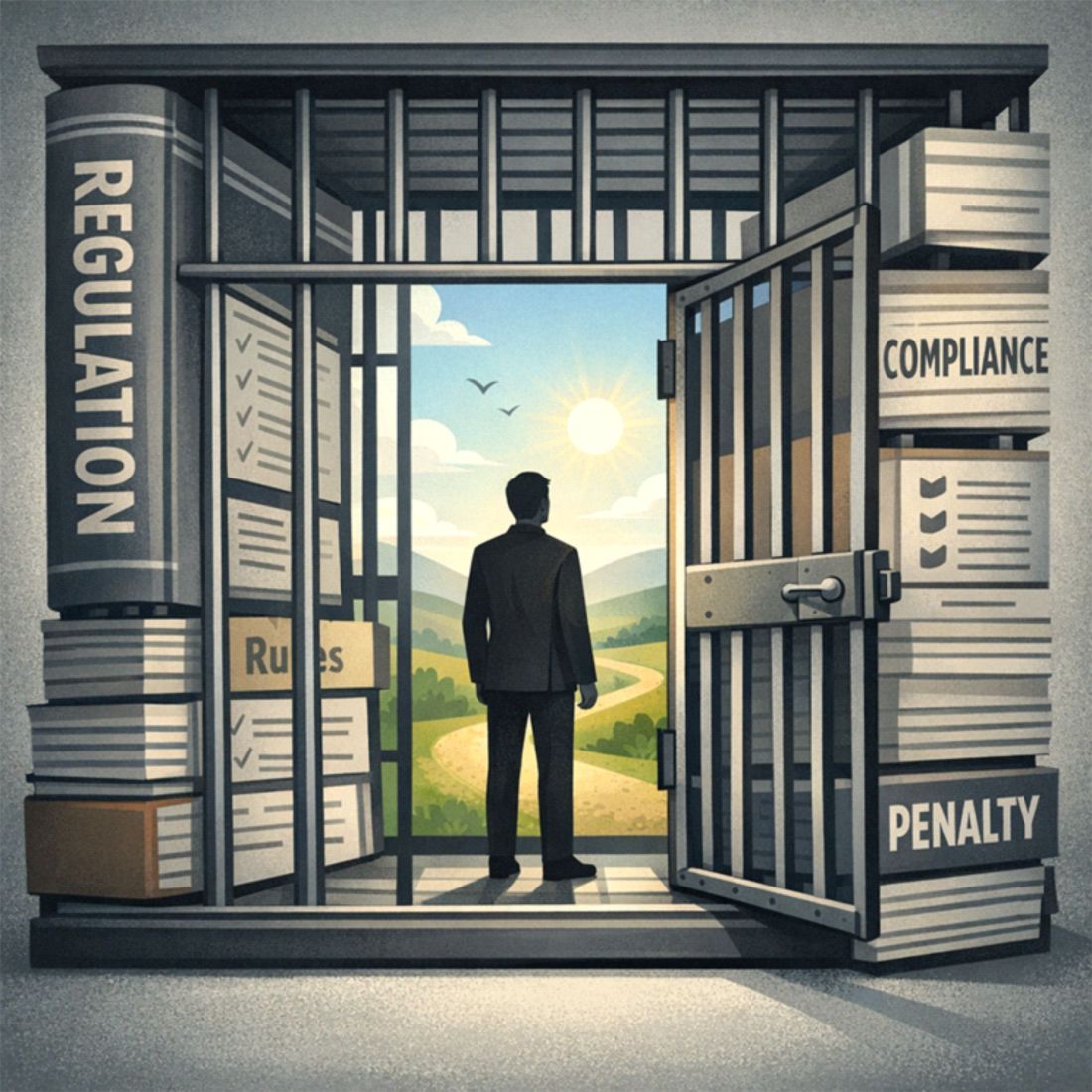
Yet we all live under rules that must be followed – rules which few would deny are becoming more intrusive, more prescriptive, and increasingly powerful in the consequences they impose if we fail to use our “freedom” in the way someone else has dictated it must be perceived and lived.

The Everyday Policing of Speech

Some reading this may respond with something like “Tell me something I don’t know.” And that would be fair enough, given the growing body of anecdotal evidence confirming that freedom of speech is not what it seems.

Almost everyone we might consider “ordinary” – those without an agenda, simply wishing to get on with their lives – now finds themselves policing their own relationships and interactions with the outside world.

Speaking truths rooted in common sense, or even in the way things have always been, increasingly risks offending those who demand the world operate according to their own design.

The Marginalisation of Independent Thought

Even reflecting on what is, at best, the marginalisation of independent thinking – and at worst, the steady criminalisation of individual thought – opens up a maze of debates.

These debates inflame questions about the role, scope, and power of groupthink, and how establishment narratives are not only shaping, but increasingly dictating blueprints for how everyone must live their lives.

Encroachment by the Establishment

To believe we are free in a world, country, and culture where the establishment seeks not merely to encroach but to manage every part of life is alarming enough.

Yet it becomes even more disturbing when we recognise that these restrictions and attacks on freedom are not created for the common good, but to benefit someone else.

The Role of Money as Gatekeeper to Life, Peace, Happiness and Freedom that is Governed by Someone and Something Else

Freedom Defined by Money, Not Ourselves

Yes, we are already in a fight for those freedoms outlined above.

The fight is increasingly hard because a division has already been created between what we believe freedom is, and what we believe we already know it to be – which itself isn’t what we are experiencing.

That we continually look outside of ourselves for validation should make sense, because when we think about the difference between what we imagine freedom to be – doing whatever we want – and what society actually allows us to do, shaped by those who create the narratives that control society, we quickly begin to see that there is a significant difference involved.

The Manipulation of Meaning

Creating circumstances where somebody can change the meaning of something so that a word comes to mean something very different from what we know it to be could never happen in an environment where people are confident in who they are, their communities, their culture, and what it ultimately means just to be themselves.

We have now reached the point where even the term common sense is being brought into question, sometimes considered offensive or demeaning.

This is because the fundamental basics of life – the value set that upholds the framework for a good life – have been replaced by a system that places money at the heart of everything.

Money at the Centre of Every Choice

Money has become so ingrained in every part of life that, without even questioning our motives, it dictates the decisions and choices we make.

Everything in life is based on what we can afford, earn, save, accumulate, or the cost and risk of cost.

Jobs are about what we earn now and in the future. Insurance is about betting against risk. Education is about securing a career that pays more than a working wage. The house we live in depends on the mortgage and deposit we can save or borrow. What we own depends on money already earned or borrowed. Holidays depend on savings or loans. Cars depend on leases or borrowing, unless bought outright.

Contracts Before Basic Essentials

It doesn’t matter who we are or what we earn. The world now requires us to sign up, subscribe, or rent services and products we once simply bought.

These arrangements are backed by contracts that must be paid before any income can be considered disposable.

Only food and basic essentials remain in the realm of pay-as-you-go – and even those are increasingly tied to credit cards, buy-now-pay-later schemes, or payday loans.

Judgement Through Wealth and Appearance

We judge people by their appearance, their property, their clothes, or their transport – signals of “who the world tells us they are.” And when we consider how much future earnings and financial security matter, even ordinary people outside the elites evaluate partners and marriage commitments based on what a potential partner can afford.

The Private Turmoil of Dependence

Few can see just how powerful, overwhelming, and controlling money has become.

Fewer still talk about it comprehensively.

Yet the reality is that what we do, what we have, how we are perceived, and whether we are accepted or rejected all revolves around money.

This leaves us in private turmoil and pain – what some might call or know as hell – because parts of life, or what is respected as life today, are cut off or restricted by money’s role.

The System’s Sick Success

This system is not natural. It has been deliberately created for the benefit of those who already have much more than they will ever need.

Its success lies in convincing the masses that freedom and status are directly proportional to wealth.

Meanwhile, the mechanics of the system ensure that resources flow away from those who have every right to them, leaving them dependent on credit and enslaved by debt.

In return, people have unwittingly surrendered property, ownership, and the peace of mind that comes only from self-sufficiency.

Fear as the Final Driver

Everything in life is driven by money – or more precisely, by the fear of not having it.

Everyone, at every level, makes decisions and behaves according to financial implications.

When people or businesses are pushed into dependence on external finance, even reason itself is abandoned. Questions of viability or self-sufficiency are ignored, as survival becomes the only priority.

When this mindset dominates, it doesn’t matter who someone is or what position they hold. They become vulnerable to the power and control of whoever influences what happens next.

This is the world we live in today. The plans, strategies, and changes overtaking life – many of which defy common sense – have taken hold because someone, somewhere, intended and created it to be this way.

This Is by Design

Where this all becomes difficult to accept is in recognising that nothing about the journey which has brought the world to this point is accidental.

It is by design.

The reason is simple: people who know they are free, cannot be controlled.

Freedom Cannot Be Controlled

If people cannot be controlled, they will not accept, take part in, or contribute to a system that is stripping away everything from them.

Everything that should, and always will, remain naturally theirs.

The Drive to Own and Control

Those who want more – who want to control more, own more, and take everything from everyone else – cannot succeed unless they first control people themselves.

They cannot take everything away unless they make the process appear legitimate.

Control must come first, because without it, the system suffocates and then collapses, under the weight of its own injustice.

Freedom Does Not Look Like This

Because most of us are not physically imprisoned and we face each day with choices that seem to be ours, many believe we are free and living free lives.

However, what we are experiencing – where we are coerced by narratives, advertising, groupthink, the media, and even the “free-minded” influencers we follow online to keep up – is not freedom at all.

Coercion Disguised as Choice

Beyond the natural requirement to meet the basic and essential needs of maintaining human life, anything that influences our behaviour or sets frameworks for “acceptable” choices is not freedom.

It is an infringement upon freedom.

At its most basic level, it is simply doing what we are told.

Money as the Measure of Freedom

Because of the way the money system has been designed, people believe they are free if they have enough money to do what they want or to buy what they think will meet their needs, as the system suggests them to be.

But money has become the value itself – rather than the work, the products, the property, the services, or the people involved.

We now believe we can only have anything, whether it is to meet needs or wants, if we have or can obtain the money to pay for it – and that these things are all the same.

Our freedom is dictated entirely by our relationship with money.

The Illusion of Value

If money were as real as we believe it to be, the value of the money in our pockets or the salary we earn would not reduce without us doing anything that changes anything.

Yet it does.

And the value of our money changes, because money is under someone else’s control.

The game, or rather the whole deck of life, is stacked in someone else’s favour.

The Mathematics of Decline

In the UK, inflation typically reduces the value of the £Pound by 2–3% each year.

This means prices rise, and your money buys less over time.

  • Inflation is measured by the Consumer Price Index (CPI).
  • If inflation is 3%, £100 today will buy only what £97 did a year ago.
  • The effect compounds: after 5 years at 3% inflation, £100 is worth about £85.87 in real terms.
YearReal Value (£100 Start)
0£100.00
1£97.00
2£94.09
3£91.27
4£88.53
5£85.87

To keep up, your income must rise at least as fast as inflation. Otherwise, your purchasing power declines each year. And in truth, when we look more closely at the figures against what it costs to buy the things that we rally need, inflation seems to be putting those prices up a whole lot more.

Running to Stand Still (Revised)

Because inflation in the UK typically reduces the value of the £Pound by at least 2–3% each year, you must increase your income by at least this amount just to maintain your current standard of living.

The effect compounds: after five years at 3% inflation, £100 is worth only about £85.87 in real terms.

This means you are running uphill simply to stay in the same place.

Of course, this is assuming the official rate of inflation is accurate – if the real rate is higher, the decline in purchasing power is even greater.

It Doesn’t Have to Be This Way – The Alternative Is The Basic Living Standard and an economy that puts People First

Because money sits at the heart of everything in life, very few of us can visualise a way of living that works differently. And as we’ve already discussed, you aren’t supposed to – because this is how you come to believe you are free, when in fact you have been enslaved.

Money as the Toolkit of Control

Money, in the way we use it today, is the toolkit of the greatest crime ever inflicted on humanity.

Its genius lies in the way it convinces people to participate in, and even further, the very crime being committed against themselves.

In this system, money is the only god. But it is not benevolent or caring.

It is unjust, unfair, and strikes no balance when it comes to equity, equality, or what is good for mankind.

Two Masters Cannot Be Served

Man cannot have two masters.

For as long as money and the money system remain the only god, people, community, the environment, and basic human values will never be what life is truly about.

The system is designed to keep us dependent, fearful, and compliant. Whilst it slowly takes or destroys everything that is genuinely important and of value to us all.

The Alternative: The Basic Living Standard

There is an alternative. And although it may sound radical to suggest that one rule changes everything, the truth is that a future awaits where real freedom is not only possible for some, but becomes the way of the world for all.

The Basic Living Standard (BLS) is that rule.

It guarantees that everyone’s essential needs – food, shelter, energy, water, clothing, healthcare, and the means to participate in society – are met.

It is not charity, welfare, or a handout. It is a universal right, paired with universal responsibility.

Real Freedom Through Self-Sustainability

By meeting everyone’s basic and essential needs, the BLS creates the foundation for self-sustainability and genuine freedom.

It dismantles the false god of money by ensuring that survival is no longer dependent on debt, wages, or exploitation.

This is the only way to achieve real freedom: freedom to think, freedom to do, freedom to be, and personal sovereignty that gives peace to all.

What Financial Freedom Is and What It Means

The simple difference between the world that is destroying us and the world we need is this principle: We should only take what we need to meet our basic and essential needs, and reject completely the idea that there is anything good in accumulation, control, or influence beyond that.

No person or organisation should have the right hold or control any more than they need for themselves or those they have direct and meaningful responsibility for.

Abundance

Natural abundance is the state of having our basic needs met and knowing they will continue to be met through our contribution and work – without interference or control from others.

Yet what we have come to believe abundance to be is wholly manufactured. It equates to accumulating, owning, and controlling as much as possible, regardless of the cost to others or to the environment.

When we recognise that true abundance is simply safety, security, health, happiness, and the basics that sustain them, we will also understand that these are the real foundations of inner peace. And peace is what abundance is really all about.

The Peace to Relax

Think carefully about how you feel when you no longer have to worry about what you will earn, borrow, or buy; how people will judge your clothes or job title; or anything else that creates fear of loss, anxiety about the future, or depression about what you think you may have already lost.

Yes, life has its own natural anxieties – relationships, health, and personal challenges.

But these are not manufactured to benefit someone else or a system that exploits us in every conceivable way.

When you have natural peace – because you are not in a constant race to keep up (while condemned to fall behind unless you add more than 3% value to your financial ‘worth’ each year) – if you are not already too far behind – you begin to see life through an entirely different lens.

Freedom to Think

When we have the freedom to think, we have the freedom to learn what life is really about.

We can be open to joys and pleasures that appear too simple or meaningless when we are trapped in pursuit of someone else’s agenda.

These joys hold value and meaning that help us grow into the human beings we truly are.

With this level of freedom, we see life’s mechanisms and systems in a healthier way.

Our expectations become simple. We develop patience with others and understand that we are not defined by what we have or earn, but by how we treat and respect others – even when there is no advantage to gain.

Freedom brings the ability to experience natural joy, not happiness sanctioned by someone else’s criteria.

It allows us to make and learn from mistakes, seeing them as value rather than cost – a perspective denied by the money-centric world.

Personal Sovereignty

Freedom on this level opens the door for us to be exactly who we are meant to be.

It facilitates personal sovereignty – the ability to make real, independent, and meaningful choices that affect only us, without fear of consequences from outside of ourselves.

This sovereignty exists beyond the participation and contribution required of us within the community to do our part, ensuring that everyone’s basic and essential needs are met.

It is the balance between individual freedom and collective responsibility, and it is the essence of financial freedom.

The Framework for a People-Centred Life

The Basic Living Standard is the formulaic basis of the life we all need.

It guarantees that everyone has access to everything necessary to meet their basic and essential needs, in return for each person contributing through work and activity to ensure that every necessary process – and yes, every business – is completed so that everyone’s needs are met.

Businesses That Serve Needs, Not Greed

The entire system revolves around this formula.

Businesses and organisations exist only where a basic or essential need must be met.

They never grow beyond the size necessary to serve the community in which they are located and involved.

This ensures that the purpose of business is not accumulation or profit, but service to people and the environment.

Technology as Support, Not Replacement

In this system, people are supported and aided — but not replaced — by technology and AI. The need for human contribution remains central, because participation is not about money or profit. It is about people, community, and the environment around which our lives revolve, and the experiences we share together.

The Same Rules Must Apply to Everyone

For fairness, balance, and justice to exist, the same rules must apply to all.

Part of the human condition is the instinct to survive – an instinct that quickly evolves into selfishness.

It drives us to use any advantage, whether through opportunity or design, to take more, hold more, or obtain power over more than we actually need.

We often justify this behaviour by believing it makes us special compared to others, or by using it to visibly demonstrate superiority.

Survival Instinct vs. Shared Responsibility

Yes, it can be argued that this is how humanity naturally behaves.

But just because it appears to be the default response to fear of lack, it does not mean it is right.

When there is enough of everything for everyone, and when we have the knowledge and understanding to build and manage a world that works for all – as we now have, the pursuit of excess is neither natural nor justified.

The True Depth of the Basic Living Standard

In this sense, the Basic Living Standard is not just a benchmark or guarantee of dignity and financial independence.

It is also a framework that requires everyone and everything to function with its principles in mind.

Every process, system, and mechanism must flow from and to its implementation.

The BLS is not simply about meeting needs – it is about ensuring that the way society operates is aligned with fairness and responsibility.

No Special Rules, No Hierarchies, No Excerptions

There can be no special rules for anyone. No exceptions or hierarchies where some hold more power or influence than others. No materially based differences that allow one person to be perceived as fundamentally different from another.

Only when everyone and everything plays by these basic but essential rules, can the integrity of the system be assured.

Integrity Between Person, Community, and Environment

Ultimately, it is the integrity of the relationship between person, community, and environment that must be protected.

This integrity ensures that fairness is not just an ideal, but a lived reality – one that sustains balance and justice for all.

The Local Economy & Governance System (LEGS)

The Local Economy & Governance System offers the framework and societal structure that enables the Basic Living Standard to function.

It ensures that everyone can thrive and enjoy the freedom to think, to be, and to do – the personal sovereignty that guarantees peace for all.

A Human Economy

LEGS is a human economy.

Everyone who can, works or contributes, and contribution replaces currency as the foundation of exchange.

This means that the value of each person’s effort is measured not in money, but in the way it sustains people, community and the environment.

The End of Inequality

Most of the social issues we experience today are the effects of inequality – wealth inequality, social inequality, and the distortions created by a money-centric system.

In LEGS, these issues disappear. They no longer exist because the system is built on fairness and the natural law of cause and effect: when everyone contributes and takes fairly, everyone’s needs are met.

Businesses That Serve Communities

As described in the Basic Living Standard framework, businesses and organisations exist only to meet essential needs.

They remain the size necessary to serve their communities, never expanding into monopolies or profit-driven empires.

This ensures that resources are not hoarded, and that abundance is measured by access, not accumulation.

Technology as a Partner, Not a Master

Technology and AI support people but do not replace them.

The purpose of contribution is not profit, but participation.

Work is about sustaining life, community, and environment – not about chasing growth or accumulation.

In this way, LEGS ensures that human dignity and responsibility remain at the centre of society.

A System Built for People

The Basic Living Standard cannot work within the collapsing money-centric system that we have today.

It requires a new foundation – and LEGS provides that foundation.

By reorienting governance and economy around people, community, and environment, LEGS makes possible a society where freedom is real, sovereignty is respected, and peace is shared.

Benefits of the Basic Living Standard and LEGS

The benefits of the Basic Living Standard (BLS) and the Local Economy & Governance System (LEGS) are wide-ranging.

They work not only at the individual level, but also across communities and the environment.

Together, they create a framework where fairness, responsibility, and sustainability replace fear, inequality, and exploitation.

Reducing Crime

When everyone’s essential needs are guaranteed, desperation disappears.

Crime rooted in poverty, scarcity, or inequality declines because survival is no longer at stake.

Contentment and Peace of Mind

True abundance is not accumulation, but having enough.

By ensuring that everyone has what they need, BLS and LEGS foster contentment.

People are free to live without constant anxiety about money, status, or survival, creating peace of mind and stability across society.

Removing the Mental Health Crisis

Much of today’s mental health crisis is driven by insecurity, debt, and the relentless pressure to “keep up.”

With BLS, those pressures dissolve. Freedom to think, be, and do allows people to experience natural joy, rather than manufactured happiness tied to wealth or possessions.

Ending the Benefits Problem

The current welfare system is built on dependency and stigma.

BLS replaces this with a universal guarantee: everyone has what they need, and everyone contributes what they can.

This ends the cycle of benefits, bureaucracy, and inequality, creating dignity and independence for all.

Sustainable Living and the End of Overuse

Because businesses under LEGS exist only to meet essential needs, they never grow beyond the size and capacity required by the communities they serve.

This prevents monopolies, overproduction, and exploitation of resources.

Communities consume sustainably, and the environment is protected.

Work and Contribution as Valid Beyond Pay

Contribution replaces currency. Work is valued not by wages, but by its role in sustaining the community.

Whether paid or not, every contribution matters – from caring for others to maintaining essential services.

Valuing Every Kind of Work

In a system where survival is guaranteed, people see the value in every kind of work.

No job is “beneath” anyone, because all jobs contribute to sustaining life.

Happiness in Any Role

People become happy and content to do any kind of job, because work is no longer about survival or status.

It is about contribution, community, and purpose.

Experience as a Shared Tool

Life experience itself becomes valued as a tool for the benefit of all.

Wisdom, skills, and lessons learned are shared within communities, enriching collective wellbeing.

Care Rooted in Community

Care for those who may be too young, too old or unable to contribute for any other reason is carried out by members of the community who are best able, and who still receive what they need to meet their basic and essential needs.

This ensures that care is not commodified or dependent on profit, but is a natural part of community life.

A System That Benefits All

The benefits of BLS and LEGS extend beyond individuals.

They strengthen communities, restore dignity to work, protect the environment, and create peace of mind.

By removing scarcity, inequality, and fear, they build a society where freedom, sovereignty, and justice are not privileges, but universal realities.

Life Beyond Survival

Freedom Creates Time for Life

When freedom and personal sovereignty are real — when the compulsion to “keep up” is gone – something remarkable happens. Time and space open up.

Social activities, sports, and hobbies stop being luxuries or calculated uses of “spare” time that isn’t really spare at all. They become normal parts of everyday life.

The Basic Living Standard and LEGS make this possible by removing the constant pressure of survival and competition.

Instead of chasing money or status, people can invest their energy in pursuits that bring joy, health, and connection.

Communities thrive when individuals have the freedom to play, to create, and to participate in activities that enrich life rather than drain it.

Yet the greatest gift of this freedom is not only the chance to do more, but the chance to be more.

With peace of mind and comfort secured, people gain the space to think differently and expansively about who they are and what their existence really means.

Freed from fear and scarcity, we can explore our true selves, discover new perspectives, and embrace the human experience in full.

Rediscovering Real Relationships

Equally important is the refocusing and repurposing of face-to-face, in-person, real-life relationships.

In the money-centric system, digital interactions and transactional exchanges have all too often replaced genuine human connection. But under the Basic Living Standard, relationships regain their rightful place at the centre of life.

The priceless social skills and social learning that come from real-world interaction equip every person for a happy, healthy life.

They foster empathy, cooperation, and understanding – qualities that cannot be replicated by algorithms or screens.

When survival is guaranteed and competition is replaced by contribution, people are free to build communities rooted in trust and shared experience.

This is not just a benefit of the system; it is its very purpose.

Human beings are not data points or consumers. We are social creatures, and our wellbeing depends on the strength of our relationships.

Conclusion: A Future Built on Real Freedom

The journey through this essay has shown that what we call freedom today is little more than an illusion.

Rules, narratives, and the money system have combined to create a world where survival is dictated by fear, debt, and inequality.

Yet this system is not natural – it is by design, and it benefits only those who already have more than they will ever need.

The Basic Living Standard and the Local Economy & Governance System offer a different path.

Together, they dismantle the false god of money and replace it with a framework built on fairness, contribution, and sustainability.

They guarantee that everyone’s essential needs are met, that businesses serve communities rather than greed, and that technology supports rather than replaces people.

The benefits of this transformation are not limited to crime reduction, mental health, or dignity in work. They reach far wider – across personal wellbeing, community strength, and environmental sustainability.

They reshape how we understand abundance, how we value relationships, and how we live in balance with the world around us.

They restore the integrity of the relationship between person, community, and environment, ensuring that freedom is not just an individual experience but a shared reality.

Beyond these practical gains, BLS and LEGS deliver something even greater – the freedom to live fully.

Time for hobbies, sports, and social activities becomes normal, not a luxury. Real relationships are rediscovered, and the social skills that equip us for happy, healthy lives are restored.

This is not utopia. It is a practical, people‑centred system that aligns with the natural law of cause and effect: when everyone contributes, everyone’s needs are met.

It is a vision of a world where freedom is not defined by money, but by sovereignty; where justice is not a privilege, but a universal reality; and where peace is not manufactured, but lived.

The choice before us is simple. We can continue down the path of fear, inequality, and exploitation and the destruction of humanity that it guarantees. Or we can embrace the Basic Living Standard and LEGS, and build a future where freedom, fairness, and community are the foundations of life.

The Basic Living Standard and LEGS create a human economy, where balance, fairness, and justice underpin life. They place people before money, with priorities fixed upon community and environment. The BLS is the simple benchmark rule — the rule of all rules – upon which all systems of trade and commerce are aligned. By recognising abundance in its natural form, where everyone has enough to meet their needs but not their wants, the dynamics of life are transformed. Every need beyond the tangible can then be met, because peace, freedom, and personal sovereignty flow from financial independence. This is what allows each of us to enjoy and learn from the human experience in full.

Glossary of Key Terms

Basic Living Standard (BLS):
A universal framework that guarantees everyone’s essential needs—such as food, shelter, energy, water, clothing, healthcare, and the means to participate in society—are met. It is not charity or welfare, but a right paired with responsibility.

Local Economy & Governance System (LEGS):
A proposed societal structure that replaces currency with contribution, ensuring that the value of each person’s effort is measured by its impact on people, community, and environment. LEGS supports the BLS and aims to eliminate inequality and exploitation.

Personal Sovereignty:
The ability to make real, independent, and meaningful choices that affect only oneself, without fear of external consequences. It is the balance between individual freedom and collective responsibility.

Contribution Economy:
An economic system where work and participation are valued by their role in sustaining the community, not by monetary reward. Contribution replaces currency as the foundation of exchange.

Universal Rights and Responsibilities:
The principle that everyone has the right to have their basic needs met, and the responsibility to contribute to the wellbeing of the community so that others’ needs are also met.

Abundance (Natural):
A state where basic needs are met and will continue to be met through contribution and work, without interference or control from others. True abundance is defined by safety, security, health, and happiness—not accumulation or control.

Money-Centric System (Moneyocracy):
A societal structure where money is at the heart of every decision, relationship, and opportunity, often leading to inequality, dependence, and loss of freedom.

Groupthink:
The tendency for collective narratives or establishment views to shape and dictate how individuals think and behave, often at the expense of independent thought and personal freedom.

Self-Sustainability:
The ability for individuals and communities to meet their own basic needs without reliance on debt, wages, or exploitation. It is a foundation for genuine freedom.

Universal Guarantee:
A commitment that everyone’s essential needs will be met, removing the stigma and dependency associated with traditional welfare systems.

Further Reading:

To help deepen understanding of the ideas behind the Basic Living Standard (BLS) and the Local Economy & Governance System (LEGS), the following resources are grouped by theme.

This structure will help you explore the foundational critiques, proposed solutions, mindset shifts, economic mechanisms, and personal perspectives that underpin the vision for a fairer, people-centred society.

Each link includes a brief summary to guide your reading.

Understanding the Problem

The Basic Living Standard & LEGS Framework

Mindset and Social Change

Economic Mechanisms and Work

Personal Transformation

The Future of Work: Redefining Value, Meaning, and Human-Centric Employment in the Age of AI and Economic Change

AI’s Crossroads: Choosing a Human-Centric Future for Work and Society

Artificial intelligence is rapidly transforming the world of work, automating roles created by money-driven systems and exposing the fragility of an economy built on profit and status rather than genuine human need.

Without a deliberate change in direction, society risks deepening inequality, eroding community, and reducing work to a function of control and dependency.

The current trajectory, shaped by decades of economic and technological planning, threatens to devalue essential contributions and undermine the foundations of freedom and dignity.

But this path is not inevitable. There is an alternative: a future where work is meaningful, communities are empowered, and the economy serves people – not the other way around.

This work challenges the prevailing narrative and introduces The Local Economy and Governance System (LEGS) – a model for a human economy built on the basic living standard.

LEGS offers a practical framework for restoring value to real work, strengthening local governance, and ensuring that technological progress enriches lives rather than diminishes them.

The choice is ours: continue down the AI-led road of exclusion and control, or embrace a system that prioritizes human well-being, fairness, and genuine prosperity for all.

Rethinking Work in a Human-Centric Future

Beyond Money-Driven Roles

The work and employment of a better, human‑centric future will be real, tangible, and deeply meaningful. Unlike many roles today that exist primarily to prioritise the flow of money, this future will focus on impact, purpose, and the enrichment of human life.

The Challenge of New Realities

The near future is poised to introduce truths, realities, and perspectives about our lives that many will find extremely difficult to accept.

This difficulty arises because true freedom – freedom to do, freedom to think, and freedom to be – requires us to revalue everything: how we see, how we interact, and how we set expectations.

These expectations will need to operate in a completely different, yet ultimately rewarding, way.

Shifting Perceptions of Good and Bad

In this transformation, what seems good today may quickly be seen as bad, while what appears deficient or undesirable now may suddenly reveal itself as profoundly valuable.

One of the most striking areas where this reversal will become evident is in our daily relationship with work – what we do, and how we define the very act of working.

The Distortion of Work by Money

The concept of work itself has become twisted by its association with money and the reward of money for labour.

Work is widely accepted as “work” only if it pays a wage.

Within this framework, society has conditioned us to undervalue technical, hands‑on, manual, and physically demanding forms of labour.

These roles, despite their essential contribution, are treated as if they hold little real value.

The Rise of Professional Roles

Meanwhile, a whole range of so‑called “professional” roles – many of which either had no necessity or no clear purpose until recently – have emerged and now dominate the employment landscape.

Some of these roles did not even exist a few decades ago, yet they are rewarded and elevated far above the practical, human‑centric work that sustains daily life.

The Devaluation of Real Work in a Money-Centric Culture

When Real Jobs Lost Their Value

Money‑centric culture has made “non‑jobs” real while rendering real jobs valueless in the eyes of society.

Historically, work was simply whatever it took to make life function. People played different roles – some paid, some unpaid – to sustain a household.

There was an unspoken recognition that it takes diverse contributions from everyone to enjoy life together, no matter what those contributions might be.

The Shift to Consumerism and Financial Systems

This balance changed with the rise of consumerism and the adoption of the moneocratic FIAT financial system, reinforced by GDP metrics and decades of law and regulatory changes.

These shifts progressively pushed households into a world where every member had to work for financial reward before the essential tasks of maintaining a home could even be addressed.

Even self‑sufficiency – achieved through both employment and domestic work – was no longer enough to live on if one was engaged in “real jobs.”

Such jobs now attract only ‘minimum wage’, a measure that has never represented the true benchmark of what it takes for a household to live independently and for its members to experience genuine financial freedom and the peace of mind that it facilitates.

The Mechanics of Wealth Transfer

With an economic system so fundamentally bogus, it should come as little surprise that its clever mechanics were designed to transfer wealth to those in control.

To achieve this, the system had to create a mindset that persuaded the masses to facilitate what is, in reality, a crime against humanity – not only against those they were conditioned to believe were ‘lesser’, but ultimately also against themselves.

This required that people be “bought in” to a value set where a select few and those who took every step necessary to be like them, could become disproportionately rich by doing ‘jobs’ that required little effort – or none at all.

The Creation of Jobs and Economies of Scale

Jobs were reshaped and split off from existing roles as money began to demand output.

Economies of scale, hailed as progress, destroyed local businesses and community systems that had worked perfectly well and had the ability to facilitate self-sustained models of family life.

These practices imposed a new slavery to money, progressively making it our master.

Careers as Money Machines

Jobs that supported the growth of money‑centric culture became the new measure of success.

Young people have shifted from more traditional aims of living a balanced, all‑round life to pursuing careers defined not by trade, service, or goods, but by the pursuit of money.

Careers have become all about making money, expanding the ways to make money, and protecting every part of the machinery involved.

Quality of customer experience and the delivery that brings it seldom now sit at any industry or profession’s heart.

Entitlement and the Multigenerational Workforce

The splitting of systems into job categories defined people not by the real work they did, but by the possessions and status attached to their roles.

This slowly created a culture of entitlement.

A multigenerational workforce has emerged that takes much in life for granted, including the myth that wealth can only grow while jobs become less like work.

The belief that “what one wants is what one deserves” has spread, with the expectation that such entitlement can be imposed upon everyone encountered without consequence – even in the digital, parallel world.

Sleight of Hand at Scale

Those in created jobs believe life can only get easier, while those performing the essential tasks that make life work for everyone cannot earn enough to escape the constraints of their labour.

These ideas and the narratives that underpin them are little more than a distraction – a sleight of hand on an epic scale – deliberately hiding what has truly been happening at the cost of everyone involved.

The Switch in Values

The shift from valuing people and the work required to live, to valuing money as the only important thing, has made society lazy, entitled, and ill‑prepared.

People now accept change passively, no matter how illogical or damaging, even when the same destructive process repeats with increasingly bizarre and counterintuitive outcomes.

These changes almost always come at a cost to people, communities, and the environment, whilst being presented as having the best interests of everyone at their heart.

The Direction of Travel that the World as we know it is on

The Difficulty of Belief

People often find it hard to accept that all of this was deliberately planned by others.

Yet money – and the possession of wealth, power, control, and influence – is an extraordinarily powerful motivator.

For those who become addicted to it, there is almost no limit to what they will attempt or achieve.

The Mechanics of Power

When such individuals hold power, or gain access to those who do, they can reshape systems so that authority itself works in their best interests.

Slowly, almost imperceptibly, they change the structures of life so that everything begins to function in ways that serve them.

Long-Term Planning

The plans that have brought the world to its current state have not emerged overnight.

They have been underway for well over 150 years, steadily unfolding across generations.

This long trajectory has seen massive changes in the way international business is conducted. Changes that were only made possible through the upheaval of two world wars.

Unseen Problems Do Not Cease to Exist just because they are Unseen

The Hidden Nature of Change

Just because we cannot see or fully understand a problem does not mean it does not exist.

The adoption of a financial system that has created unprecedented wealth transfer – not only in the value of money itself, has also resulted in the ownership of business, property, and infrastructure, which has all steadily shifted into the hands of the few – at what could now be a disastrous cost to us all.

Technology as a Companion to Wealth Transfer

Alongside this financial transformation, technological progress has advanced in lockstep.

The chronology of events, from digital systems to information technology and hardware innovations, shows that these developments did not simply arrive at the moment we first experienced them.

They were planned, anticipated, and in many cases known to be possible for long periods of time.

Artificial Intelligence, and the AI takeover we now hear so much about, is not an isolated phenomenon. It is part of this broader strategy and plan, woven into the same trajectory that has shaped finance, ownership, and control.

The AI Takeover and Its First Victims

It is no accident that the first jobs to disappear in the AI takeover are those that are tied directly to the money project itself.

These roles, created and sustained by a system designed to prioritise financial mechanics and the transfer of wealth over human value, were always the most vulnerable to replacement.

Collective Choice and the Future of Work

The loss of other jobs, however, is not predetermined. It is our collective choice.

How we respond, adapt, and redefine the meaning of work in response to what is happening around us will ultimately determine the direction of the future.

Opening Ourselves to an Alternative Future

Awakening to a New Reality

Influencers are now beginning to ask the pressing question: “What happens to everyone whose job is taken by AI?”

At the same time, members of the elite openly declare that many jobs will no longer be needed within a decade.

People are slowly awakening to a new reality – one where the expectations we have been spoon‑fed and accepted so willingly, because life has seemed distractingly good, no longer add up.

This awakening is compounded by the fact that the economy itself sits on a knife edge.

Governments, behaving with illogical static rigidity, offer no meaningful response.

The contradictions are glaring, and the narrative no longer holds together.

The World Envisioned by the Few

The architects of this system – the people who designed and intend to run the world as they envisage it – have exploited and legitimised the theft of wealth, resources, and tools from the masses.

Through this process, they have been creating the foundations of a new world order built on control and deprivation.

Technology, ownership, and finance have been reshaped not to empower humanity, but to strip it of independence and place power firmly in the hands of the few.

The promise of “you will own nothing and be happy” is not a utopian vision. It is the culmination of a strategy that has taken from everyone to enrich the few, ensuring that the majority remain dependent while the architects consolidate control.

Systematic Devaluation of Real Work

It was purposefully engineered that people in manual, technical, and real jobs have been systematically devalued.

This devaluation has been reinforced by every institution and system.

Governments have deliberately abused their mechanisms to top up and subsidise wages, hiding the reality that the lowest paid wages are insufficient.

At best, this is exploitation; at worst, it is slavery – successfully concealed from view.

The True Value of Real Jobs

These real jobs are the ones that should be paying what it actually costs to live.

Yet the people in these roles – the very ones the new system will still need – will not willingly participate in servicing its demands if they are free to choose otherwise, especially when everyone else has been effectively cast aside.

Freedom as the Ultimate Threat

Freedom itself is the greatest threat to greed and to the furtherance of the moneycratic system.

Everything aligned with that system depends upon control.

True freedom undermines it, exposes it, and ultimately resists it.

Choosing Jobs That Make Life Work Rather Than Making Life Out of Work

The Dystopian System Already in Place

The dystopian system you may now be able to visualise is already baked in.

Within this dynamic, all the “non‑jobs” that the system has encouraged us to hero‑worship will inevitably disappear, replaced by AI.

The flow of money and wealth these roles facilitated has already reached its destination.

The elites are openly telling us this, and they are not trying to hide it.

The Fate of Technical Work

Yet not all jobs will vanish on the same timeline.

Technical roles – or at least a restricted number of them – will remain for longer than the created non jobs will.

This reality matters. It may be the knowledge of which jobs endure, and why, that provides people with the opportunity to resist and to choose a new direction, rather than surrendering to what otherwise appears to be a very dark fate.

All Jobs Must Have Meaning for People to Understand Their Value

The Illusion of a Life Without Work

Whilst we may like the idea of never working again and having every conceivable need met, there is nothing about this that is real.

The reality of being provided for in this way requires conformity and restricted behaviour.

No matter what toys or distractions we are given, such a life would resemble what we recognise today as being no different to that of a caged pet.

Activity as the Source of Value

Activity that contributes to a good life is not only necessary; it is fundamental to the value we each hold.

In the alternative future we must now consider seriously, contribution matters not because it is labelled as “work” or “employment,” but because it makes life good.

Any act that sustains or enriches life carries meaning, regardless of whether it fits the narrow definitions imposed by what the current system teaches us, or not.

The Irony of Non‑Jobs

It is ironic that people in high‑flying “non‑jobs” today often dream of simpler lives -baking cakes, crafting cheese, keeping animals, growing food, building with bricks and wood, or fabricating metal – rather than being controlled by the rules of a game and chained to a city desk.

The truth is that jobs with meaning are those that provide or support the provision of life’s essentials.

This is what every form of work, employment, or contribution should actually be about.

A Future That Serves People, Not Money

The future that serves people instead of money will be built upon direct relationships and locality.

 In such a future, everything will be transparent, and people will work and provide only for the people, communities, and environments that directly touch their own lives.

This is the foundation of meaningful work: activity that sustains life, nurtures community, and strengthens the bonds between people and the world around them.

Quality of Customer Experience and Locality Will Define Business Sizes – Not the Myth That Bigger Is Best

Freedom Through Localised Business

To choose freedom from the unnecessary oppression and exclusion that serves the few – and exists only by design – requires that we create businesses and operations focused on people, community, the environment, and their genuine needs.

True freedom lies in resisting the structures that prioritise profit over humanity and in building enterprises that serve life directly.

Rethinking Work and Economy

Some question how a future can exist where everyone works and still has enough.

Yet when work is about life rather than money, the realisation emerges that there is indeed enough of everything for everyone – provided we focus on need rather than the want that money‑centric thinking encourages for the benefit of the few.

In such a system, the economy ceases to be about job titles and power; it becomes about what we all do and achieve together.

Enough for Everyone

Everyone can work. Everyone can have a job. And everyone can have their needs met if we accept that there is no legitimate reason for any person to accumulate more than what meets their own needs.

Exploiting even the smallest advantage to gain whatever one desires undermines fairness and perpetuates inequality.

Integrity, Fairness, and Justice

Balance, fairness, and justice require integrity.

Everyone must act with the awareness that their choices affect others.

Taking more than one needs – no matter the opportunity, no matter how easy it may seem – always results in others having less. Even when the outcome is invisible to the one who takes.

Work With Meaning, Not Slavery

Work is necessary for everyone. But fulfilling work – work that sustains life and community – is not the same as financial slavery, where greed and exploitation are the only measures of value.

The future must be built on meaningful contribution, not on the hollow pursuit of wealth which can never and was never intended to be made available to and shared by everyone.

Key Takeaways

Before moving on to further resources, here are the central messages and insights from this work.

  • AI is Transforming Work: Artificial intelligence is rapidly automating roles created by money-driven systems, exposing the weaknesses of an economy built on profit and status rather than genuine human need.
  • Current Trajectory is Unsustainable: Without a deliberate change, society risks deepening inequality, eroding communities, and reducing work to a function of control and dependency.
  • Devaluation of Real Work: Essential manual and technical roles have been systematically undervalued, while “nonjobs” and money-centric careers have been elevated, distorting the meaning and value of work.
  • Freedom and Dignity at Stake: The existing system undermines freedom and dignity, making people passive in the face of damaging change and reinforcing cycles of exploitation and dependency.
  • A Human-Centric Alternative Exists: The Local Economy and Governance System (LEGS) offers a practical, human-centred framework for restoring value to real work, strengthening local governance, and ensuring that technological progress enriches lives rather than diminishes them.
  • The Choice is Ours: Society can continue down the AI-led path of exclusion and control, or embrace a system that prioritises human well-being, fairness, and genuine prosperity for all.

Further Reading

The following works are arranged to guide you through a clear progression: beginning with the foundational principles that challenge the myths of money and value, moving through critiques of collapse and exploitation, examining the role of technology and AI, and finally presenting the Local Economy Governance System (LEGS) as a practical blueprint for transformation. Taken together, they form a journey from diagnosis of the problem to the design of solutions, and ultimately to the vision of a sustainable, human‑focused future.

Foundations of Change

  1. One Rule Changes Everything – full text (20 December 2024)
    Introduces the single guiding principle that underpins systemic change, framing the rest of the discussion.
  2. Future economics must be tied only to people, their contribution, what is important to sustain good, fair and balanced lives – and legal currency must never again be open to speculation and manipulation (25 July 2025)
    Outlines the foundational principle that economics must serve people directly, not speculation or manipulation.
  3. The basic living standard explained (24 October 2025)
    Defines what a fair and sustainable living standard should look like in practice.

Collapse and Critique

  1. Breaking the money myth: rethinking value, exchange and equality (12 November 2025)
    Challenges the myths surrounding money and explores alternative ways of defining value and fairness.
  2. Money is the greatest crime of our time (12 November 2025)
    A powerful critique of how money has been weaponised against society and freedom.
  3. The coming collapse and the revaluation of everything needed to regain personal freedom and control (12 November 2025)
    Explores the inevitability of collapse and how revaluing essentials can restore freedom.
  4. Facing the economic collapse: the real crisis behind money, wages and freedom (14 November 2025)
    Examines the deeper crisis of wages, freedom, and exploitation hidden beneath economic collapse.

Technology and AI

  1. People need jobs more than AI and the tech revolution (1 September 2025)
    Argues that human work is essential for dignity and meaning, beyond the promises of automation.
  2. Technology and artificial intelligence should only fill jobs when no humans are available (13 November 2025)
    Argues for a human‑first approach to work, with AI as a last resort rather than a replacement.

Workforce and Revaluation

  1. Revaluing the workforce: escaping the grip of greed (26 November 2025)
    Calls for a revaluation of the workforce, freeing people from exploitation and restoring dignity to work.

LEGS and Transformation

  1. The Local Economy Governance System – online text (21 November 2025)
    Provides the full text of the Local Economy Governance System (LEGS) as a framework for change.
  2. LEGS – The Human Economy: a blueprint for transformation (1 December 2025)
    Introduces LEGS as a practical blueprint for building a human‑centric economy.
  3. The Local Economy Governance System (LEGS): escaping the AI takeover and building a human future (4 December 2025)
    Explains how LEGS can resist the AI takeover and create a sustainable, human‑focused future.

Closing Note

Taken together, these works reveal both the depth of the crisis and the clarity of the solutions.

They show how money has distorted value, how collapse is inevitable under the current system, and how technology – if left unchecked – will accelerate exploitation rather than liberation.

Yet they also illuminate a path forward: one built on fairness, locality, transparency, and human‑centric governance.

The choice is ours. By engaging with these ideas, we prepare ourselves not only to understand the scale of what is happening, but to act with integrity and courage in shaping a future that serves people, community, and the environment above all else.

LEGS: The Human Economy – A Blueprint for Transformation

Introduction

In a world increasingly shaped by the pursuit of economic growth and the dominance of monetary values, our understanding of what truly matters has become distorted.

The language of economics, once intended to serve human wellbeing, now often justifies systems that place money above all other forms of value.

This Local Economy & Governance System (LEGS) challenges the prevailing money-centred worldview, exposing the myths that underpin it and the consequences for individuals and society.

By re-examining the purpose of the economy and redefining value at the level of the individual, we offer a blueprint for transformation – one that places human needs, freedom, and wellbeing at the heart of economic life.

The following pages invite you to reconsider what it means to live well, to recognise the moral costs of excess, and to envision an economy built on natural abundance, justice, and personal sovereignty.

The Rise of a Money‑Centred Worldview

Over time, the words economy, economics, economic policy, and economic theory have been shaped by a money centred worldview.

They became part of a language and narrative designed to justify systems that placed money above all other forms of value.

This worldview gradually embedded itself into culture, until money was positioned at the centre of almost every aspect of life and treated as the primary measure of worth.

How Policy Reinforced the Myth of Economic Growth

Governments, politicians, and established institutions reinforced this belief by placing the economy at the heart of public policy.

They encouraged the idea that a good life was only possible if the economy was considered healthy and growing.

Measures such as GDP were promoted as the ultimate indicators of national wellbeing, and people were led to believe – often without explanation – that their personal success was somehow tied to the financial success of the economy itself.

Reducing Human Value to Economic Data

By turning everything of tangible value into something economic, measurable, and defined only in relation to the economy, society gradually stripped away the inherent value of each person.

Individuals became reduced to data points – digits on a screen – an effect amplified by digital tracking and the rapid development of AI.

The Hidden Myth of External Power

The central myth that upheld this money centric system was not only the false belief that money is inherently valuable.

The deeper, more powerful myth was the idea – never openly stated but widely accepted – that real power lies outside the individual.

Because money appears external to us, it became easy to believe that our worth and our agency also exist outside ourselves.

The Illusion of Money as Value

In truth, money has no intrinsic value. It is simply a tool for exchange.

The belief that money is value created the foundation for many of society’s problems.

The FIAT System and the Concentration of Power

This belief was further exploited through the rise of the modern FIAT monetary system, which used complexity, misplaced trust, and practices that would otherwise be considered unethical or criminal to shift wealth – and therefore power – from the many to the few.

All of this was presented as progress. As the natural direction of a modern world.

The Moral Cost of Excess

Yet in any genuinely civilised society, there is no moral justification for one person to hold more than they need when that excess comes at the expense of others.

When someone accumulates far beyond their needs, someone else – often someone they will never meet – is forced to go without the essentials required for a life free from deprivation.

How Scarcity Is Manufactured

Taking more than we need, in any form, inevitably creates shortage elsewhere.

Possession alone does not justify allowing others to suffer lack.

No individual has the fundamental right to hold more than they require when doing so directly or indirectly harms others.

Economics as a Tool of Justification

In this way, the language of economics became a tool to legitimise imbalance and injustice.

It normalised greed and elevated the pursuit of material wealth and power to something admirable – something to be celebrated above all else.

The Local Economy & Governance System: Defining the Economy and Economics for a Humane Existence and Way of Life

Real value does not exist within money itself, nor within the material possessions that money – despite having no intrinsic substance – can be used to persuade others to “buy or sell.”

True value can only be defined at the level of the individual. It arises from the meaning and importance a person attributes to something from within themselves, not from any external price tag or monetary label.

Money is simply a practical tool. Its purpose is to make the exchange of value easier when direct barter or exchange – trading goods, services, or labour – is not possible or convenient.

Money is a facilitator. Not the source of value itself.

In reality, people are the economy.

People are the reason the economy exists, the purpose behind it, and the driving force within it.

Every meaningful economic activity begins and ends with human needs, human choices, and human wellbeing.

With this understanding, the LEGS interpretation of economy can be defined as follows:

Economy is the collective presence, activity, and contribution of people working together to provide and supply all the goods, services, and forms of support that are essential for every individual within a community to live well.

Its purpose is to ensure that no person experiences need or scarcity severe enough to undermine the natural state of abundance – a condition in which all basic and essential needs are reliably met.

In this state of abundance, individuals are freed from the pressures of deprivation or want, allowing them to experience a form of personal freedom that is not compromised by the struggle to secure the necessities of life.

Thus, the economy is not merely a system of production and exchange, but a shared human effort to sustain the conditions that make genuine freedom, well‑being and the experience of Personal Sovereignty possible for all.

Summary

These pages challenge the prevailing money-centred worldview, revealing how economic language and policy have often placed monetary value above human wellbeing.

They expose the myths that underpin this system – especially the illusion that real power and value exist outside the individual – and highlight the moral costs of excess and manufactured scarcity.

The Local Economy & Governance System (LEGS) offers a transformative blueprint: it redefines the economy as a collective human effort, focused on meeting essential needs and fostering abundance, justice, and personal sovereignty.

True value, as argued here, arises from within each person – not from external price tags or monetary labels.

Money is a facilitator, not the source of value itself.

By placing human needs, freedom, and wellbeing at the heart of economic life, The Local Economy & Governance System envisions an economy where no individual suffers deprivation, and everyone is empowered to live well.

The path forward is one of re-examining our assumptions, recognising the moral imperative to share resources fairly, and building systems that sustain genuine freedom and wellbeing for all.

Minimum Wage, Maximum Exploitation: A Collapsing System Propped Up by Rising Taxes

Introduction

As the cost of living continues to climb across the United Kingdom, many households find themselves struggling to maintain even the most basic standards of financial independence.

With impending tax rises on the horizon, the pressure on those already living near the edge is set to intensify, pushing even greater numbers below the threshold of self-sufficiency.

This is not a temporary crisis, but a symptom of a deeper, systemic failure—a collapsing economic model that now survives only by extracting more from those who can afford it least.

The money-centric economic system that we have – The “Moneyocracy” – perpetuates itself by shifting the burden onto workers and taxpayers, while the promise of prosperity grows ever more distant for the majority.

Against this backdrop, it is essential to confront a fundamental question – one that exposes the uncomfortable realities at the heart of our economy.

A Question:

Do you believe the minimum wage is enough for a full-time worker to live on – and if so, why?

The answer to this question, which varies depending on one’s relationship with the minimum wage, reveals uncomfortable truths about the foundations of our economy and the way work is valued in this country.

What is not surprising is that those who already have financial security often agree in principle that low-paid workers should earn more. Yet when confronted with the implications of paying every worker enough to live independently, many recoil. Why? Because such a change would disrupt their own relationship with the economy.

The Minimum Wage Reality

Let us be clear: the national minimum wage in the UK is not enough for anyone working a full-time 40-hour week to live independently—free from reliance on benefits, charity, or debt.

The widespread acceptance of this wage stems from government and establishment narratives.

What is legally mandated is presented as morally and practically sufficient.

Yet, in truth, the minimum wage is a carefully placed rock covering a pit of myths and lies.

Those who benefit from the system prefer not to lift that rock, because doing so would expose their complicity in maintaining the illusion.

The Employee

A worker earning the minimum wage – currently £12.21 per hour, equating to £488.40 per week or £25,396.80 annually – cannot afford the basic essentials required for independent living.

The gap between what they earn and what they need is effectively the amount by which they are underpaid.

Employers exploit workers by failing to cover the true cost of living.

Regardless of how the deficit is filled—through benefits, charity, or debt—someone else is subsidising both the employee and the employer.

The Employer (Small Business)

Small business owners often insist they pay fairly because they comply with the law. Yet compliance does not equate to fairness.

Paying the legal minimum is not the same as paying enough for employees to live independently.

Common justifications include:

• “They can top up with benefits.”

• “I can’t pay more or I’ll go out of business.”

But these arguments miss the point. The government—and by extension, taxpayers—should not subsidise businesses that cannot afford to pay workers a living wage.

In reality, small businesses are also exploited: they cannot operate independently within the current economic system, because they too are constrained by models that undervalue their work.

The Employer (Big Business)

Large corporations differ because they can afford to pay more.

Supermarkets and other major employers of minimum-wage staff generate enormous profits – even during a cost-of-living crisis, like the one we are experiencing now.

They could easily pay wages that allow workers financial independence, if boards and shareholders accepted smaller returns.

Instead, big businesses exploit both employees and taxpayers. Workers are underpaid, while the government subsidises wages through benefits.

This allows corporations to maximise profits while keeping the mechanics of exploitation hidden from public debate.

The Government

Why does the government subsidise wages so small businesses can survive and big businesses can thrive? Why not simply set a minimum wage that reflects the true cost of living?

The answer is stark: doing so would collapse the system.

The economy functions by undervaluing the majority of jobs deemed “low-skilled” or of “little value.”

If wages reflected reality, the house of cards would fall.

The Taxpayer

The system is a con. The complex machinery of what can be called a Moneyocracy manipulates trust and deference so effectively that taxpayers rarely ask basic questions.

Why, in an economy where corporations make billions annually, must taxpayers top up their employees’ wages through taxes?

Why are we threatened with price hikes whenever government policy shifts, while corporate profits remain largely unscrutinised?

Following the money reveals the truth: wealth is funnelled in one direction, made possible only by exploiting workers, taxpayers, and weak governments.

Corporations profit by underpaying staff, then spin narratives that justify charging consumers more.

Reality Bites

Exploitation of normal people has gone too far. The system enriches the few by exploiting the many – sometimes multiple times over – so profits can grow while wages stagnate or reduce in real terms.

The Moneyocracy survives by perpetuating the myth that it is acceptable for many to grow poorer while a few grow disproportionately rich.

The promise dangled before workers – that if they play the game long enough, they too might “live the dream” – is false.

Humanity is destroying itself chasing a dream that continually recedes, because playing the game requires forgetting our true worth.

The basic equation of the Moneyocracy is simple: for some to be rich, most must be poor.

This is neither humane nor true.

The Alternative

There is another way. A system built on real values – where people, communities, and the environment come first – can replace the current money-centric model.

This alternative requires transparency, local systems, and a commitment to prioritising human worth over profit. Instead of hiding self-interest behind complex structures, society must embrace a model where business and life are conducted openly, sustainably, and with fairness at the core.

The choice is absolute: continue with a Moneyocracy that exploits us all or build a future centred on people.

Path Forward

The Local Economy & Governance System provides the foundational framework for a truly people‑centric future – one where People, Community, and Environment sit at the heart of every decision.

At its core lies a new benchmark: The Basic Living Standard, a guarantee that every individual receives a weekly wage sufficient to cover all essential needs.

This principle of equity and equality is not an optional add‑on, but the priority that guides every part of the system.

By shifting away from exploitation and toward fairness, transparency, and sustainability, this model offers a pathway to rebuild trust and resilience in our economic and social structures.

To explore how this vision can be realised and what it means for the future, please follow these links: