If you are able to overlook the impact and outcomes that come from such a chaotic mess, the current political environment and the media circus that surround it can certainly provide a lot of entertainment.
Sadly, growing numbers of us are either feeling the pain of many years of political incompetence or at the very least having our breath taken away by the constant flow of unbelievable actions and decisions that politicians are taking not just in the UK, but across the world.
In the UK, many who had been hoping that the Reform UK party would prove to be our saviours when the next General Election comes (whenever that might actually be) have found themselves awakening with a jolt this week as the real character and depth of the Party has been exposed by the expulsion of MP Rupert Lowe and the allegations that have been made, after he openly questioned the prime ministerial credentials of Nigel Farage.
However, behind the ‘let’s back whatever we can see as being different’ facade – which is regrettably just a second attempt at what the UK basically voted into No.10 last July – there exists the rather unsettling reality for everyone that Reform offer nothing that is fundamentally different to any of the other Political Parties that we currently recognise.
The Reform MPs and active members who are working towards elections and seats across the Country are motivated like the majority of the political class that exists in and across the UK today, in the very same way. And doing more of the same, isn’t going to deliver change, no matter how different the choice may seem or look.
A good example of the many problems that any political movement or group that has a genuine desire to change anything that the UK government and public sector system faces, can be illustrated by how well people (especially on the political ‘right’) have been responding to DOGE (Department of Government Efficiency) in the USA, since Trump returned to Office and Elon Musk began his ‘job’. As it demonstrates just how out of touch with the way our own system of government and the public sector in the UK works, and how little regard there is for the consequences and impact of doing anything with public policy in isolation, without considering the interconnectedness and links between all policies and how everything works.
Regrettably, it is unlikely that even a Parliament filled with 650 of the best MPs that we could identify as being available and willing to take on the real responsibility that each of them has to the British Public would be able to deliver the kind of change that we need in the UK today, because they wouldn’t be able to agree on the way to make change work, without having to reach compromises and going down the same routes where all of today’s problems could be viewed as having began.
Whilst the idea conjures up all sorts of negative parallels, the reality we face is that achieving the type and level of change that decades of the wrong politicians has given us now requires a level of single-mindedness that can only come from having one person at the very top.
Yes, that one person would have to be a very unique kind of leader, who not only understands the true realities and depth of all the problems alongside how everything works; they would also have to be incorruptible and driven with a sense of public service and selflessness that we simply haven’t seen in politics as we know it at any time before.
No, it’s not impossible. But it’s certainly a lot to ask.
However, with things going as they are and in the circumstances we are already experiencing and where many of us are now realising where everything is already heading, there may never before have been such a need for a Good Dictator and the leap of faith from us all that would back them to do what it will take to get everything done.
The coming weeks are likely to see increasing talk of benefits, unemployment and what it costs to live as the government makes budget cuts and then as the reality of the changes to National Insurance contributions really begin to bite in early April, alongside the rise in the Minimum Wage.
Whilst the current government is very much the focus of blame, the difficult truth that many still cannot see and politicians will not talk about – IF they actually understand, is that the Minimum Wage is the benchmark that is used by everyone as the ‘accepted’ level of what it costs someone to live.
However, although the Minimum Wage will rise to £12.21 in April, this level of pay – even for a 40 hour working week, is nowhere near enough for a single person, living alone to cover the cost of everything they need to pay for each week, without seeking benefits, help from charities such as Foodbanks, going into debt (or using savings), or a mixture of them all.
Regrettably, the way that our economic system works and has deliberately been developed and evolved over a period of more than 50 years means that money and everything related to it can only make some people fabulously wealthy in the way that they are now, by many others being financially left behind.
Although this unbalanced financial system has appeared to work for a very long time, and long enough that it means most of us cannot picture the world we live in working any other way, the reality is that it could only work for a period of time, because it has developed around the growth of what we all know as the wealth divide.
Money has been created in such volumes, especially since the Great Financial Crisis, the Covid Pandemic and the War in Ukraine, that the shelf-life or end-date is arriving even more quickly than those who understood and benefitted from the system imagined, and it is the reality that the impact and consequences of decades of having this system in place which are now proving very difficult for politicians to hide and why we are now experiencing so much that people in power are either avoiding or simply refusing to explain.
Money is the centre of everything. It’s the reference point for the value of all that we have, want, need and do, and its presence and influence has reached the point where the role that money now plays in our lives is dehumanising everything – and being helped to do so by those who are benefitting from what we believe about money (that isnt actually true), and what we will accept from them as a result.
However, the world could be very different. And to be very different, we need to put people, community and our locality and environment back at the heart of everything.
The Basic Living Standard is the radical proposal to change the way that economics and money works, so that everyone working a full working week would be guaranteed a level of pay that would ensure that they could be completely self-sufficient, and live independently, working in the lowest-paid employment, thereby giving EVERYONE the same benchmark for life and minimum human value in all and whatever they do.
The Basic Living Standard would require everything in business and across society to change, so that we all recognise the value of people and what living a good, healthy, happy, safe and secure life within a genuinely fair, balanced and just system, in every part of life and in everything that we do – as it should be – rather than the focus always being upon profit, greed and advancement, as it is right now.
Please follow the link below to read the Full Text of TheBasic Living Standard, download the FREE PDF version or buy the Book for Kindle.
Published in this second form as an eBook for Kindle on Amazon on 14 April 2024, From The Basic Living Standard follows here in the form of the original text, with some minor editing principally to allow publishing in online format and this PDF form.
First discussed in Levelling Level, published in March 2022, The Basic Living Standard has become a common theme of the eBooks that have followed that are listed with links to purchase and/or download as PDFs to read FREE under ‘More Reading’ which follows at the end.
If you understand that the way we value money and how money has become the benchmark in all things across life is the root cause of just about every problem the world now has, you may be ready to accept that meaningful change requires that our relationship with money and everything that places money at its heart MUST be thought about and acted upon differently.
The Basic Living Standard cuts straight to the bottom line and if instead of immediately accepting any thoughts you have that might sound like ‘This wont work because…’, and then repackage those thoughts as pointers to what The Basic Living Standard would require to change, you may then begin to grasp just how extensive the changes that are required for humanity to flourish really now are.
Thank you for your interest.
AT, Cheltenham, UK. 6 March 2025
Epigraph
Trust your instincts. Trust the thoughts, the feelings, the unexpected, unsolicited and unemotive words that ‘arrive’ in your mind.
Trust the messages that don’t suggest outcomes or results, but when trusted always deliver the better outcome for you and as you will only ever appreciate given time.
Trust yourself before all others, and when you find yourself ready to embrace truth that others contradict or don’t appear to believe in, remember that both things can be true – from your respective points of view.
Preface
Nobody has the right to make a profit
Government and politicians have willfully overlooked this truth for decades, whilst helping to remove the regulation and safety barriers that once helped to keep life for the lowest paid affordable to live.
Whilst many pour score upon the lowest paid and society’s most vulnerable and buy into the propaganda that their financial misery is somehow self-inflicted and that only they are at fault, the truth is that the prices of all the essential basics that we all need would never have escalated and reached the unstoppable highs that they have already, if the whole business and financial system hadn’t been manipulated to serve the interests of profiteering and greed.
We have all been conditioned and enslaved by money, the accumulation of material wealth and the status that goes with it.
These are the only things in this world that count. Today.
The function of every real business and organisation is to provide goods or services that support or improve the lives of people. Not to generate income. Yet the businesses that don’t do anything to support or improve the lives of people are the ones pushing up prices and making life for everyone else so hard.
This, the cost-of-living crisis and all of the UKs social problems have come into being because we have become obsessed with money as the key priority in life, rather than having values and humanity which are the benchmark of how a good life should be.
However, the world is changing, and it is changing fast. Nothing is certain in the way that we used to believe, and we are now experiencing a time of chaos and change that cannot offer any certain outcomes for any of us, unless we all embrace the need for meaningful change as a conscious and voluntary choice.
Money is God (But not for much longer…)
The FIAT monetary system that we have today has slowly been destroying our humanity and replacing it with commerce and consumerism since 1971.
FIAT translated quite literally means ‘let it be so’, and if the majority of the population already understand that the money that is holding them and their misery to ransom doesn’t even exist but is created out of thin air by their jailers, it is fair to assume that this tyrannical financial system that effects everything, would no longer exist.
FIAT is no better than a massive confidence trick that relies on those with influence and power gaining too much from their involvement to stand against it, and everyone else never understanding or asking the questions that would immediately make it fall apart.
Whilst FIAT has always been flawed, it has taken until now and the massive bouts of public spending that have been underway since the government responses to the Covid Pandemic, which have led to the runaway price escalation in every area of life.
This is the warning signal that the system is about to break.
The return to values and humanity
Because money has been our priority in everything for so long, we have lost sight of what the experience of having a good life is all about. We have quite literally forgotten our humanity and find excuses to apportion blame and see guilt in others who are struggling, when we are doing well – because when things are good for us financially, it’s all too easy to assume that everyone who counts in life will be doing exactly the same.
However, we are all in for a very rough ride and whether the establishment succeeds in their aims of introducing a new financial system of their own that will herald in an unprecedented level of human control, or we collectively wake up and reject their ‘leadership’ and replace it with something better that we can call our own, FIAT as we know it and the unsustainable way that we have been living may not yet be over, but it is certainly now at its end.
Rejecting the lead of money and embracing people-centric economics
Difficult as it might be to visualise a world that works with money in a very different way, there is no universal law that says one person has the right to exert any form of control over any other, even if the methods, the yolk or the chains they use restrain us using forms of fear that are carefully hidden from everyday view.
With the monetary habit or addiction regrettably now ingrained, we must embrace the opportunity that this period of inevitable change now offers, to create a new system, and to create and embrace new laws, that put people and specifically the essential or basic needs of each person, at the centre of life and of every business transaction. Rather than being like today, where those people ‘without’ or who have become vulnerable to the greed of others, are just considered to be a lost cause.
The Basic Living Standard and the way that it can be used to influence change throughout everything in life, offers precisely that choice.
Introduction
Life is our economy. Economics should never be our way of life
Wealth divide
We are living in an age when nobody should go without. There is wealth of a kind that the world may never have experienced before and living standards have reached heights that have extended human lifetimes massively, whilst drastically reducing mankind’s susceptibility to disease and physical ailments that were guaranteed to kill or be life-changing for everyone exposed, perhaps as recently as 100 years ago.
Yet poverty and the vulnerability that sits alongside it is relatively unseen and draws scorn, whenever those in need of benefits, the support of food banks or of other kinds of support demonstrate an experience of life that we believe to be intolerable and one that deserves punishment and guilt, because we somehow believe that we are better and that it could never happen to us.
This phenomenon isn’t new. Government of one kind or another has been legislating to support society’s poor since Tudor times. Despite all of the advances that include the industrial revolution and the period of rapid technical change that we have experienced in recent decades, poverty continues to exist. In fact, poverty is thriving. Yet few really ask the question why and nobody has dared suggest a real solution or fix.
We believe that for some to be financially rich, it is necessary for others to remain poor.
Uncomfortable and as disagreeable as this statement may appear to be, the actions of the culture and the society we live in and are experiencing today, tell us that this is our unspoken truth.
Yet this statement isn’t the truth. It is just how our experience of the world we live in today has conditioned us to think.
There is no need for anyone to be left behind. There is enough of what we need for everyone
As we buy in and commit ourselves to the rat race, consumer-led mentality that has been ruling the world and steadily taking over every part of human life since the end of the Second World War, we easily learn to lose sight of what is really important in life as our values switch from relationships, our community and our immediate environment, to seeking qualification and acknowledgement from the material world that now dictates everything from outside.
What we have forgotten and learned to overlook, is that everything we really need to be happy, content and lead very good lives is already available to us from all those things, and that the real answers that we are looking for can only come from looking within.
It is in everyone’s interests that nobody is left behind. It is because we have forgotten this that so few of us could argue that we have really prospered, whilst even those who believe themselves financially wealthy in today’s terms have actually been left behind.
We can all have the happiness we only believe to be available to those who are billionaires just by doing our bit to ensure that everyone has access to meet their basic and essential needs, without being forced to experience the fear, worry and anxiety that comes from debt, being forced to seek charity, or being beholden to and exploited by others who have embraced the idea that their own success can only be achieved at someone else’s expense.
This pathway of inescapable change is likely to result in the complete reform of our financial system and the money we use, alongside everything we know involving the way that business and industry run, and even our government and political system work too.
If we are to make the best of the difficulties we face and achieve meaningful change as the outcome, we must accept that we have all played a part in what is happening to some degree. Even if it is just down to the products we buy, or what we do or don’t do when it’s time for us to vote.
Understanding the need to change how we think about money and economics
Hear the words economy or economics, and you will probably have the word ‘money’ come immediately to mind.
But the idea that money = the economy isn’t really the truth.
The truth is that money is just a part of our economy.
Money should play a part in the economy, just like all the other things that we do and the interactions we have in any relationship that we have with the world outside of our door.
A twisted reality
Because we have been conditioned to believe that the economy is our life, it has been very easy for us to accept that there is a monetary value to all things, and that anything that cannot be given a monetary value, simply has no real value at all.
Life has literally become all about money. Money – and everything to do with it, whether it be power, influence, ambition and anything that can be considered to be material wealth – is how our world qualifies absolutely everything.
But the true cost of building our lives around money has been that we have forgotten who we really are and that we no longer place value upon the things that are really important in real life.
We are addicted to money. Money is our habit. Habits become our truth
Money is an addiction. An addiction like every other, whether it be alcohol, smoking, drugs, gambling or anything else.
Money is an addiction that brings nothing but misery whose lives are on the wrong end of its power. The deception of being happy and in control when we have more money that we need takes complete control of us but delivers nothing but pain when we don’t have enough of it and money becomes the only thing that we want.
As with people, our culture, community, and entire country (and World) has become addicted to the money myth and everything that surrounds it.
We are the drunk or drug addict that we have collectively become. Rolling around in a world we have allowed to become our own gutter, thinking all about the next ‘fix’, but with no idea who and what we really are.
Those who have experienced the realities of addiction know what comes next.
Remove the metaphors, and the collapse of everything we know is now knocking at the door.
This is who. This is where we are right now.
We can have a money-focused economy, or we can have a people-focused life. We cannot have both
Turning the period of crisis and change that we are going through on its head so that it becomes beneficial and meaningful through the experiences of constant price rises and the cost-of-living crisis will be horrifically difficult. Because progress is dependent upon our understanding and accepting that our destructive relationship with money is all about the way that we think.
We quite literally have to do ‘cold turkey’ to get over the money-based addiction that is destroying us and the world around us.
We MUST accept that as with every other kind of addiction, there really are no different levels of addiction involved.
There is no halfway house.
We either believe in the power that money has over us today. Or we don’t.
If we continue to maintain our belief in money and award it the value that we do today at any level, we will damn ourselves to repeating exactly the same mistakes of the past. No matter how much we do to correct everything in life as we have the opportunity to do so right now.
The Basic Living Standard and locality-based economics are the building blocks of the to a good future for everyone, rather than the pathway we are on right now
The Basic Living Standard follows Days of Ends and New Beginnings and builds upon the suggestions, ideas and principles that you will find mentioned there.
In the coming chapters, we will add further detail to the proposals already made that surround the creation of a new (or renewed) fully locality-based economy or what would be easier to imagine as being a large series of micro economies covering local communities and their geographical areas.
Whilst we could much more easily move to a locality-based system of economics voluntarily today – and it would be highly advisable for us to do so, for the purposes of this Book, it has been concluded that voluntary change will not be possible and that instead, this fundamental switch of systems and governance will instead hinge upon or be anchored to The Basic Living Standard.
The Basic Living Standard and related Basic Living Standard Wage are covered a little later.
Together, The Basic Living Standard and locality-based economics offer an alternative economic structure that that has the ability to turn every social problem and the difficulties we face in our relationships with the World around by refocusing both our thinking and our activities back to valuing people and therefore ourselves.
The alternative, which is a choice, nonetheless, is the passive acceptance of the changes that are now being dictated and imposed upon us by somebody, somewhere else, that will only make any sense to us for as long as we value money and everything that goes with it, above all else.
An economy focused solely on money and a Locality based Economy focused on values and people are mutually exclusive. We cannot have both at the same time.
There is no in-between or hybrid system that sits between either money or people-based values.
As such, the proposals built around The Basic Living Standard for the new world ahead and where we go next, really are the alternative to everything that is going wrong for us all now.
It is up to us whether we want to take control of the process of change so that we can reach that new world, or just accept the inevitable change as it comes to us each day anyway and whatever that means for our quality of life in the times that lie ahead.
Part 1:
The Principles of the Basic Living Standard.
The Basic Living Standard is the foundation of a locality-based economy that puts people, values and humanity first
There is one fundamental rule of a system that will be and remain balanced, fair and just, that works for everyone:
That every rule and law remain subservient to and respectful of the Basic Living Standard, and that its existence or impact will not compromise the principle of The Basic Living Standard in any way, no matter the relationship.
The adoption of The Basic Living Standard, whether through a resetting of the current system of governance or as the result of everything we know stopping and then starting all over again, is the act of completely overturning the top-down or hierarchical system of governance.
Implementing The Basic Living Standard will turn the mechanics of the whole top-down, hierarchical system on its head, so that the system becomes ‘grassroots-up’.
The Basic Living Standard is the rule that puts people and values first.
It will end the prioritisation of money, the disproportionate accumulation of material wealth, the abuse of power, influence and of gaining more of anything and everything before considering anyone else.
A fair, balanced and just society can only operate by maintaining a fundamental benchmark for equality across the system.
This can only be achieved by creating and maintaining a framework of governance and rules that ensure the material independence of each person cannot and will not be compromised by either the action or will of any other.
It MUST be the primary objective of the community and any structure of governance around or beyond it, to ensure that this principle is maintained at all times.
By adopting and maintaining the principle of The Basic Living Standard, the overwhelming number of societal problems that we face today will be addressed.
As long as the individual remains respectful of the dynamics of the principle of The Basic Living Standard which is and always be ‘treat others how you wish to be treated yourself’, almost everything that needs to be fixed, needs answers or requires solutions will create its own fix.
The Basic Living Standard (BLS):
The Basic Living Standard is a formula or form of words designed to ensure that every person, no matter who they are, will have the unhindered ability to sustain themselves independently and without help.
The Basic Living Standard is summarised as follows:
Each person working a full working week must be able to feed, house, clothe and provide adequately for their own travel, whilst providing for all their essential needs, without credit, loans, benefits or third-party support of any kind.
Every part of business, charity and civic life MUST prioritise The Basic Living Standard as its focus and run with this priority in mind at all times.
For absolute balance, fairness and justice across society, the commitment to that system of balance through fairness and justice to each person MUST be absolute too.
How the Basic Living Standard (BLS) will work practically through the Basic Living Standard Wage (BLSW)
The Basic Living Standard (BLS) is based on the proportional division of what a working adult would earn for the equivalent of a working week in the lowest paid role.
The BLS Wage MUST be equal to the minimum amount necessary for that same adult to live safely, securely and healthily in a self-sustainable way, without the need of any kind of subsidy, the requirement to engage in debt, or the need to fall back upon charity such as food banks.
Money-centric thinking makes people-centric thinking feel impossible
The immediate response to the suggestion that the whole system is built around the lowest paid being financially independent in every way is likely to be, ‘That’s not the way that wages work. We get paid and then we see what we can afford!’ – or similar.
This is the thinking of the money centric world that we are experiencing today.
It is the thinking of the old age.
It is the thinking of the system and the governance that we are now leaving.
It is the thinking of a system that is about what’s best for somebody somewhere else.
It is the thinking that always prioritises someone other than us – all too often without you, me or any of us realising that’s the way that it always works.
Once the framework has been established that says the first rule of the new system will always be the BLS Wage, everything that relates to or relies upon what workers are paid, will have to redirect, recalculate, reform, reset or even restore to values that reflect what the lowest paid can afford, rather than the profit that any business decides it may be entitled to make.
The BLS and The BLS Wage will mean that personal freedom through material independence will be assured for each person and no longer be threatened by the actions of those who abuse the power and influence that they may have.
The BLS Wage and The Basic Living Standard will ensure that greed, profiteering or the accumulation of disproportionate wealth of any kind will no longer lead the way for everyone in how they conduct their lives.
Personal Freedom through material independence is how life should always be.
The mechanics of the Basic Living Standard Wage (BLSW)
In Days of Ends and New Beginnings, we discussed the basic needs for each person to function and survive.
Foods, goods & services that meet each person’s basic needs are essential.
Essential Foods, Goods & Services are what each of us need. They are not what we want.
What we need and what we want are two very different things.
The Basic Living Standard is a benchmark that allows each person who genuinely wishes to work to live, rather than live to work, has the choice to do so.
Through receipt of the Basic Living Standard Wage, given by employers in return for providing the most basic functionality to fulfil the most basic role, each person can live and maintain their own personal freedom through material independence.
The Basic Living Standard is not inflationary. Therefore, the Basic Living Standard Wage is not inflationary.
If an individual wants to earn more than the Basic Living Standard Wage, they will have the option to gain more through the accumulation of skills, experience and/or time served that they can then offer to fulfill the needs of business and/or the community.
Each person can fulfill a role that requires a greater level of skill or experience once they have it. But that role cannot change or be awarded a higher wage, just because it’s what the employee wants.
If the principles of The Basic Living Standard are followed, the highest wage within any organisation will find its own natural ceiling.
However, reaching this point of balance will take time and in the first instance, it is suggested that the highest paid employee or income earner within any organisations should not receive a gross income larger than the Basic Living Standard Wage any greater than five times (5x).
Breakdown of the Basic Living Standard Wage (BLSW):
The following Table provides a suggested breakdown of how the BLSW should be apportioned:
The Essentials:
% Proportion of Income / Time (Suggested)
Basic Food
20
Accommodation
20
Utilities
10
Healthcare
5
Transport
5
Clothing
5
Communication
5
Entertainment
5
Savings, Investments & Other Eventualities
15
Taxation and/or Community Contribution
10
TOTAL (%):
100
Figures of this kind may be unrecognisable in today’s terms. But that is because the cost of living has been pushed so disproportionately out of control and driven by the greed and profiteering of private interests.
Inflation only exists because the current financial system isn’t balanced, fair, or just. It allows anyone able to influence the system to do so, purely on the basis that doing so will enable them to make more – no matter the true cost.
The Reset or Great Reset: Recognising inevitable change and making it meaningful
In Days of Ends and New Beginnings, we referred to the period of change and crisis that we are now experiencing as a system ‘reset’, ‘restart’ or as a complete flipping of the system which has money at its centre, and which relates to how everything is governed and how everything works.
Due to the way that the establishment uses the media to create narratives and also the way that many of us have responded, we often refer to this process as ‘The Great Reset’.
Whether we see the danger of the message being conveyed by use of ‘The Great Reset’, the fact remains that World Elites and the World Economic Forum have been building a narrative around this term and it has become vital that we all recognise that ownership of this process of change and the future beyond it is ours.
The Great Reset is not theirs.
Reset or Great Reset – it doesn’t matter. Reset is likely to prove to be the most accurate term. As whatever happens, what is affected or however we look at it, unless the world is completely destroyed, there will be restarts, re-establishment, redirection and resets of everything at all levels, right across everything to do with life.
IF we take control of this process with the aim that the change will be good for all of us, everything will be corrected so that it works fairly and in a balanced way – as it always should.
As part of the price correction or system reset, each business and organisation must restructure their pricing so that it reflects genuine worker input, rather than the bottom line
With the collapse of the existing money-centric system taking place step-by-step, like a series of falling dominoes, where one is knocked and then they all follow, it may seem strange that the reconstruction process that will create our new world, could be achieved in a very similar way.
It is the adoption of The Basic Living Standard and with it, The Basic Living Standard Wage, that MUST be the first principle to be adopted.
Adoption of the Basic Living Standard Wage will serve to be the first domino that knocks over all the others that need to fall into place so that the Basic Living Standard becomes the benchmark for all.
Our system of governance only has to adopt and get the framework that guarantees The Basic Living Standard right, to set off the process that will ensure that it works and operates in every way that it should.
Once the Basic Living Standard becomes the principle upon which all rules and laws governing business and finance are based, all activities will then realign away from profit to people.
Putting the value of people right at the heart of economics and making every business and legislative process think of each person in this same way will be like a catalyst that leads to everything that is unjust, unfair or out of balance, being put into its correct alignment with the outcome that everything will work out right.
Defining the prices of all the essential basics that each person needs
Within the system based upon The Basic Living Standard, there are two forms or streams of commerce we can identify: The foods, goods and services that we need (The essentials) and the foods, goods and services that we want (The non-essentials or ‘luxuries’).
The retail or consumer cost prices of ‘essentials and every part of the process that provides for them must always correspond to the requirements of The Basic Living Standard in every way.
When the rules and principles of locality-based economics and the Basic Living Standard that underpin it are followed in every way, the entire system will function as it is intended to do so and as it should.
On this basis, business and industry would adopt the following basic formulas to identify the prices of essential foods, goods & services or their proportional attribution.
For purposes of illustration, this Table is based on the current Minimum or Living Wage (£11.44 per hour, per 40-hour week as of April 2024) and demonstrates the maximum corresponding prices or compounded values for essential goods and services, in today’s terms and based upon what the lowest paid are likely to receive for a full working week:
The Essentials:
Monthly % Attribution
End of Month Value £UK
Basic Food
20
396.59
Accommodation
20
396.59
Utilities
10
198.29
Healthcare
5
99.15
Transport
5
99.15
Clothing
5
99.15
Communication
5
99.15
Entertainment
5
99.15
Savings, Investments & Other Eventualities
15
297.44
Taxation and/or Community Contribution
10
198.29
For anyone attempting to gauge how unaffordable life is today for each person on the minimum or living wage and why we are in a cost-of-living crisis, this table demonstrates just how much they would be paying, if the minimum weekly wage were enough to support the lowest paid outright.
This table shows how wages would then be apportioned in a way that was both affordable and fair to cover the cost of basic essentials at the end of each month if the minimum wage could cover these costs in April 2024.
Please note that these figures assume there being no requirement for Benefits Payments (subsidy) or taking on debt (loans & credit cards etc.) in any way.
The figures and proportionality suggested would be agreed democratically before the Basic Living Standard Wage system is adopted and implemented.
However, given how the cost of essential basics would be apportioned fairly and in a balanced and fair way, it the variance is unlikely to be any more or any less that 1 or 2 percentage points either way (+/- 1 or 2 %).
Once adopted, the rates of apportionment will not be changed because one interest or another claims that their business or industry wants, is entitled to or must have more. Changes would only be permitted as any change to the way that we live dictates any related change to the goods and services that are essential for each person to be able to sustain themselves.
The prices of the essential basics each person needs MUST remain fixed
The relationship between the Basic Living Standard Wage (BLSW) and the prices of essential goods or services (or their accumulated value), MUST remain static, for a fair, balanced and just society to function and for locality-based economics, underpinned by the Basic Living Standard to work.
Setting the exact value of the Basic Living Standard Wage, versus the monthly value of each person’s essential costs is not the most challenging issue to be faced, once everyone is committed to putting people first.
In today’s terms, the minimum or living wage would have to rise or the current prices of essentials would have to fall to meet the requirement of meaningful change, one way or another.
We are emotionally tied to the perceived value of the £Pound ($Dollar etc.) as we experience it today. So, for the purposes of illustrating this people-centric way of using and valuing money, it may be helpful to use another form of nomenclature or currency in order to establish the Basic Living Standard and Basis Living Standard Wage, at least on a temporary basis.
Quality of life for everyone should never hinge on a name or label and in the next part of this Book, we will adopt a new currency value to help visualise this very different and much more beneficial picture of the future.
Part 2:
The Locality based Economy
The future is local
Few can see it; many would pour scorn upon it. But the future is local, IF we genuinely have the desire to live in a fair, balanced and just system, where we are all happy, healthy, safe and secure to enjoy the freedom to be in the most meaningful and human way.
We have regrettably become so used to the money-centric, consumerism-led world that we live in today, because many of our living generations have not experienced life in any other way.
We genuinely believe that the unsustainable way that we live life based upon what we want is here forever, and that having the next or newest available technology is what we need so that we can be the best that we can be.
But we are using money that few of us really have, all the time under the direction and adoption of a values set which comes to us from someone, somewhere else, using digital devices that plug us into a parallel universe which isn’t real, but we accept it as such because everything seems so much more credible when it comes to us ‘online’.
Consumerism and the globalisation that it opened the doors to is quite literally killing us physically as we eat foods that are increasingly bad for us, whilst the flow of meaningless information and opinion presented as fact are destroying our ability to be healthy in our thought processes and to look at every interaction or encounter with others in a helpful and human way.
The point has been missed or is being deliberately obscured, that the healthiest and most beneficial way for each person to live is to interact with, listen to, eat, work with and have relationships of any kind with people, places, goods, services and anything else essential to life – that we can physically touch.
We should only use digital technology as a way to improve life. Not so living life digitally becomes the way of life itself.
The future is local. Because it is only by adopting systems of production, supply and relationships built upon real interaction with the people within the communities that actually surround us, that we will be able to rediscover who we really are, embrace a life with humanity and values, and then build a new world around us which is balanced, just and fair.
The real value of money and cryptocurrencies (DeFi) today
Crypto or cryptocurrencies have become increasingly popular in recent years. But in their current form, they have a massive and potentially terminal flaw: Today’s cryptocurrencies are worth ZERO.
Today’s cryptos work on the same basis as the FIAT money system that they were intended to side-step.
The value of Cryptocurrencies is based only on what anyone using them, buying them or accepting them as payment believes.
For many of us, this is a very difficult truth to understand.
We only have to look at news in the media that suggests cryptos such as Bitcoin are worth tens of thousands (x10,000) of £Pounds, $Dollars or the equivalent in many other currencies or monetary terms to see what people believe they are worth.
Yet cryptocurrencies are not tied to anything of value. They do not have anything of value linked directly to them.
Even the arguably sensible idea of only creating a limited or finite number of them doesn’t answer the fundamental questions or realities of what a currency or any form of money is, and how they should really work.
Money is a unit of exchange. Money is a value transfer tool. Money is a medium and nothing more.
Money has become the benchmark that is set against everything in our lives. Because making us believe that the value of money is real has benefitted someone else’s greed for wealth, power and influence in some way.
With the FIAT Money system on its way to collapse, we are all going to go through a process of realising the real value of the things that we genuinely need, as opposed to the things that we want.
That process will lead to us rediscovering the true value of money and any form of currency.
When money or currency of any kind can no longer be used to buy anything, either because we simply don’t have enough of it, it’s not tangible, or because what we need is not available to buy, circumstances will force us to appreciate what the value of the things that we need really is.
The tipping point
Whilst a systemic and financial collapse may not appear to be a one off momentary event, or have the stop-start feel that the ending of one system that will have to be replaced by another suggests, the reality we face is that for what may only be a short period of time, it is likely that there will come a time when none of the currencies we use either in physical or digital form, will have any value when it comes to being able to secure anything that we need to buy or survive.
Despite what your immediate thoughts might be after reading that we might find ourselves having to function without any form of money, it is within the collapse of the mechanisms of the current money-centric system where the seedbed of the greatest opportunity to secure meaningful change exists.
When boiled down to its purest elements or the nuts and bolts of the current top-down hierarchical system, we can see that our belief in the money-centric system is based on the idea that everything we do or that we can achieve in life is about the value of money, the accumulation of material wealth, and the power and influence that supposedly goes with it.
At the point in this process of change when circumstances and practicality tell us through our experience, that this belief, idea, principle, motivation – or whatever you want to call it, no longer works, we will have reached a seminal moment.
This will be the moment in time when the light can shine through on the darkness of our current reality, and our true values and understanding of what life is and how it should really be will face an open door to changing life so that it is better for us all.
This is not about making light of what will happen when the World we know today, that runs on money in every way, simply stops functioning. Because money doesn’t work anymore.
It will be hard. In fact, it will be very hard.
But adversity really is the mother of invention. And it is at this point that we have the opportunity at the local, community level to establish a locality-based economy, founded upon Local Market Exchanges (LME), that will feed into and provide the basis of how a new system of governance works.
Locality based economics is focused on people. Not money. Not things.
The basic building block of locality-based economics will be the value that we place on each person in a very practical and measurable way: The input or contribution that each person makes.
Locality based economics is quite literally all about putting the value created by people first.
It is by founding and then building a system of locality-based economies upon the value of the input or the contribution that each person makes, we will successfully create The Basic Living Standard for All.
It will be the priority of the new system of governance to maintain The Basic Living Standard. As by doing so, the majority of the social problems that we have today won’t just disappear or be removed from view. They will be gone for good.
If money no longer works, the basic laws of trade and commerce will rule
So, let’s imagine we have reached the point where the financial system as we know it has collapsed.
Money simply doesn’t work. What happens next?
Well, people need to eat. People need to be able to buy essential food. People then need to be able to secure the basic essentials that they need.
With no money in circulation, or no money that has value in circulation, people will begin to exchange or swap what they have and have accepted they don’t need, or can do without, for the things that they do need and that they cannot do without.
No law, regulation or threat from any authority will stop this.
When people are hungry or need to provide, they will do whatever they can to secure whatever they need, and swapping, exchanging or bartering is a lot more civilized than what will happen if theft or violence becomes the next step.
The good news for us all is that whilst the system may have collapsed around us, the technology and infrastructure are unlikely to have disappeared.
The issue we face is that the technology and infrastructure isn’t currently set up to work in a very localised or microeconomic way, when this is how we need technology, infrastructure and the governance that oversees it, to operate so that it can help and support All of us.
The emergency birth of Local Market Exchanges and Local Market Exchange Platforms
We should all feel confident that we can survive and thrive through the coming years and months.
We can all play an active and positive part in creating the new system that is balanced, fair and just for all, because much of the creative and innovative thinking already exists that we will need to build every part of it.
It is just the question of what, why and who people will be doing their bit for that has to be settled before work on our new world and the locality-based economy can begin.
If the moment is reached when money doesn’t work for the majority of people, events could unfold in a number of ways.
A note of caution: Please look kindly at anyone who loses their shit in these circumstances. Desperation doesn’t excuse poor behaviour of any kind. But it does provide good incentive to organise anything and everything that we have available to our communities and the people within them, as quickly and as efficiently as we can.
The first step to maintaining civil order is to pool everything that the community has available and to be fully transparent about what the community has, and how it can and will be shared.
If events should result in a situation where people are going hungry, transactions cannot be based on exchange, and must be based on the simple act of sharing all that we have and don’t require to meet our own immediate requirements.
Genuine help cannot ever be provided on the basis of what others can ‘afford’.
The next step is to create a system of fair exchange, that functions on what everyone can give, or what they can trade or barter.
The principle value of this exchange system, or Local Market Exchange, will be based on the time, skills, experience and basic labour that it took to provide whatever the essential foods, goods or services being exchanged might be, or what it would be when the complete process of producing that food, those goods or services would be, when considering the process or supply chain from end-to-end.
The creation and development of the Local Market Exchange will take place in two primary stages:
Bartering & Exchange of goods, supplies and services that the community already has available, or which it has the ability to grow, manufacture or provide, and
The creation of a new localised currency linking, anchoring or pinning transactional value of foods, goods and services directly to the number of people and/or the contributions (input to the system) that they make.
Bartering & Exchange
There will be a transition between the thinking that people have today – the current money-centric ‘value set’, and where it will end up – the ‘people-centric’ value set.
During this process of transition, where it is likely we will experience shortages, through necessity people will want to use goods that they have but do not need to exchange or swap for the foods, goods and services that they do.
To maintain order and promote community cohesion, communities will be required to create markets in a physical form, to allow bartering, swapping and exchange to take place in an open forum that supports transparency of distribution for all.
Historically in times of shortages, black markets have always thrived. But they are also representative of the same power structure that top-down unfairness and bias creates.
It is essential that the communities come together to provide a support structure that ensures transactions of any goods or services deemed essential to each person are made available to all.
Beyond ensuring fair distribution of everything each person needs that is available, the creation of formal exchanges will ensure that any goods or services that can be considered beyond what is essential – i.e. anything that anyone wants to trade, are exchanged in a way that reflects the newly developing local economy, and doesn’t change hands at a level that continues to promote the money-centric value set that we have moved away from.
The Basic Living Wage has been constructed, so that the process of calculating the true value or price of any essential foods, goods or services will be as straightforward as possible within the new Local Market Exchanges and locality-based economics.
As discussed in Part 1, it is the apportionment of essential basics in relation to the Basic Living Standard that is most important. The money or currency adopted will literally just be a method of exchange – not a device that can be used to manipulate the price or value of anything that is essential to life – and can therefore be massively exploited, as is the case today.
Developing new local currencies (Cryptocurrency, DeFi)
The Basic Living Standard and Basic Living Standard Wage create the basic principle, guidance framework or directive for the operational priorities of Local Market Exchanges and how governance of locality-based economics will function.
All transactions anchor to or hinge upon The Basic Living Standard, a universal benchmark, which through the mechanism of the Basic Living Standard Wage, provide the basic rate of exchange between all local or decentralized currencies, or any umbrella, centralised or connective currency linking them all, as the basic unit of value remains constant throughout.
A currency that works on a fair, balanced and just basis MUST correspond exclusively to its own system of governance.
The fairest, most balanced, just and most democratic form of governance is where power has been attributed and responds in its most local form.
As such – despite the commonalities between different currencies, the power to govern local currencies must remain in local community hands – not for the purchase of essentials – but so that non-essential or luxury goods, can be exchanged at rates which correspond to the idiosyncrasies of production in their very localised form.
Beyond the practicalities of the requirements of the Local Market Exchange system, it is also ethically correct to keep the balance of power that accompanies use of currencies and finance in their most dispersed, local and transparent form, so that they cannot be used as a leverage tool within an oversized governance system that relies upon coercive control.
Local decentralised finance (DeFi) in the form of both paper or coin and local blockchain derived cryptocurrencies, based on an intrinsic population-based value and linked only by the Basic Living Standard, will assure our personal freedom from economic tyranny, in the most basic sense.
Supply chains of every kind must always be as simple as it’s possible for them to be. As it is through the accumulation of additional stops or steps in a supply chain that don’t add value, but add additional and unnecessary costs, where so many problems begin.
The roles that each person has within the locality-based economy will be redefined and reconsidered as the evolution of our new system takes hold.
Some forms of employment that are today highly regarded for all the wrong reasons will no longer be ‘needed’ and will no longer have any reason to exist.
Using Tech and AI for good: Developing the Local Market Exchange app
If you are one of the many people with an interest in new currencies, new ways of living and a new (or a return to) people-centric way of living you will already appreciate that a process of change and chaos is underway. Even if you are not sure what it all means.
Many of us find the idea that massive change can happen without us even being aware very challenging. So, the suggestion that the world we know could change in just about every way imaginable step-by-step is equally hard to accept. However, we all need to be open to the reality that the collapse of the system or any part of it doesn’t necessarily mean that absolutely everything stops.
Within the process of change that we are now experiencing, it could well be the case that because the world doesn’t stop many of us will continue to believe that nothing has changed.
This creates two specific dangers for us all:
That the people who believe nothing has changed will stand still, do nothing and allow those who have created all the social problems that we have now, to dictate and recreate a system that continues to work only for them, and:
That when things do reach a critical point and we are experiencing social disorder, people will not look to themselves and to our communities for the answers and the solutions, and instead will continue to listen to the same old sources and go around in circles – back to point 1!
Preparation today, is and will be one of the most effective ways to counteract and lessen the risk from the impact of change, whether that change is step-by-step, or should happen as part of a recognisable event.
More importantly, preparation today is the best way to help ourselves, the people we care about and everyone within the communities where we live.
There is no doubt that the long-term success of the Local Market Exchange and within locality-based economies will require the development of a new app-based exchange systems for foods, goods and services, and that these are fully interactive and linked to or with the fully localised or decentralised currencies that we need to create and correlate them with.
In time, Local Market Exchanges will require a localised or franchised version of an app that works as follows:
Operates within geographical parameters that are definable using existing postal codes or GPRS
Allow an item (or group of items) to be swapped directly for a rate of currency to be agreed, OR another item (or group of items) IF the two parties involved in the direct transaction should agree
Allows a source of community governance to set the values of basic or essential foods, goods and services, but prohibits any other kind of change
Shows what essentials foods, goods and services are available collectively to the community transparently at all times
Makes any goods that are not essential to community members, (which could be the surplus of otherwise essential foods etc.) available to other Local Market Exchange Franchises – in the order of prioritising immediate neighbours first
Is based on a membership structure that requires sign-in and acceptance of all terms
That will either be or can quickly and easily become fully interactive with a new Local Digital Currency that is directly linked to the number of ‘members’ in terms of the structure of its value, with the ability to change or rescind those values on the membership status of each member of that community group
That is fully open source
Each ‘franchise’ will be owned by the community that manages it, with a salary to be paid from the local governance body to those administering the system on behalf of it
Locality based economics revolve around the mechanics of a genuine minimum wage
The Basic Living Standard is based on what we would today recognise as a genuine minimum or living wage.
Genuine, because the Basic Living Standard is a minimum wage based on what it costs the employee to live and to support themselves. NOT on what the government has told employers it is acceptable for them to pay, which is less today, than it costs for anyone to live independently with all their essential needs met without benefits, charity or going into debt.
Today’s minimum or living wage is just a sum that is set by the government as the minimum amount per hour that every employer must pay.
The Basic Living Standard instead tells suppliers of essential foods, goods and services, what the recipient of The Basic Living Standard Wage will be able to pay for everything that is set within the standard. Suppliers will not be able to charge more for essential foods, goods and services, because The Basic Living Standard will be a universal framework rule.
It will be a legal requirement that every supplier provides essential foods, goods and services of some kind.
‘Luxury’ or ‘non-essential’ products must always be the secondary purpose, not the primary purpose of any business or organisation.
No business will be able to develop their primary business, based on what people can ‘afford’.
Valuing each person and the contribution they make
Through the creation and implementation of The Basic Living Standard, we will give back the real to each and every person who contributes to the community by working in any role, no matter how much it is paid or how it might be perceived.
It is essential for everyone to recognise the value to all of our lives, that contributions made within the most basic of roles actually have.
People who pick fruit. People who empty our bins. People who fix the roads. People who stack the supermarket shelves. People who deliver parcels and takeaways to our doors. People who make and serve our coffees. People who serve us a pint in the pub.
These are the people who undertake all of the very different tasks that make our life experiences easier in the real and everyday sense.
These are the people who must be recognised through the award of The Basic Living Standard Wage, so that contributing to all our lives by filling any of these roles can be a genuine and happy lifestyle choice.
The value of currency is anchored to the value of the contribution or input that each person makes
Money and cryptos or digital finance today have no real value, other than what any of us believe.
Today’s money or currency system may now be over, even though it hasn’t ended yet, but that doesn’t mean physical money in the form of paper/coins and cryptocurrencies won’t have a place in our future.
Local digital currencies, built on a Local Market Exchange platform or exchange, will be the best way for our communities and a world built on locality-based economics and microeconomies to thrive.
To make any form of currency work properly, it is necessary to give or attribute a system around them that underpins their value as a medium or a unit of exchange.
The basic unit of value in locality-based economics is the Basic Living Standard Wage, or any part or unit thereof.
However, the figure or the specific values agreed for The Basic Living Standard Wage is not the important factor.
Once the whole system works around The Basic Living Standard, the figure itself is a technicality.
It is the value or de facto guarantee that we attribute to the Basic Living Standard, where the importance of the whole principle must be placed.
Foundations of Value in locality based economics
For the purposes of illustration and suggestion, we will create a new unit of currency for locality-based economics and the new system itself.
We will name the currency a ‘Goal’ and give it ^ as its symbol.
So, if we begin with the BLSW being set at 75 units per agreed working week, it would be written like this: ^75.
^75 is the weekly rate of pay that each person will have available to them as a gross wage, from working a 40-hour week, before any deductions are made.
To establish the new system, each person within it must be given or awarded a residual value, so that the total value of the currency available within the system is always proportionally and directly related to the number of people who exist within it.
So, at the establishment of the new system, let’s say each person is awarded ^75.
The ^75 apportioned to each entrant is added to the Local Market Exchange balance sheet, so that an overall ‘market value’ and record of the ‘Goal currency’ in circulation always exists from that point.
The entrant can spend the ^75 or begin using it as a medium of exchange within the Local Market Exchange immediately. But the entrant can never withdraw or draw into this sum in cash or equivalent form.
When the entrant leaves the system, the ^75 must be removed from the Local Market Exchange Balance Sheet.
Newborn babies (and children under 14) would be added to the system @ ^25, with their ‘account’ being managed by their parents or guardians until they are 14 years of age, with a further ^50 added to their own independent account.
Whereas the above table illustrates monthly and annual equivalent values of all essential cost centres, the table below uses basic foods to show what the daily allowance (maximum) would be:
Essential Foods
Weekly Allowance ^
Daily Allowance ^
Meal Allowance ^
Basic Food
15
2.14
1.07
Essential basic foods are quite literally the ‘meat and two veg’ or very basic, healthy food options that are available, or will become readily available, once locality-based supply chain structures have been (re)established to create the microeconomies that our new localised world will require.
Once again, these are the foods that people need. Not the foods that people want.
Essential or basic foods typically remain identifiable in their prepared (cooked) form, with they were when they were in their pre-harvested form or the condition in which they entered the food chain.
The exceptions are good basic foods that have been through traditional forms of processing, such as bread and basic dairy products. Foods that can be produced through processes that can be powered by hand, or using energy in very sustainable forms, through processes of milling, baking or churning, that can be powered directly by wind or by water, without any reliance upon electrical power or energy in any other form.
Please remember, it will be perfectly normal to look at these figures and think ‘that doesn’t sound like a lot’. But that thinking relates to how things operate today, within a money-based system.
Locality based economics is people-centric or ‘people first’, and values driven.
The value of everything will be determined by people. Not by ‘market forces’ – which is profiteering or greed using another name.
Community Contributions: Our contribution to address shared need across the community
Another change that will be necessary for us to achieve a workable Basic Living Standard is our relationship with charity giving. How we pay for services in the community, and how we all give back or contribute in ways that give us ownership or a stake in the success of the society we are part of.
The fairest way to achieve personal buy-in and a pay-off that creates a positive impact on the world around us that we can see, will be for each person to give the community 10% of our working time or income – or the equivalent of one-half day working per week, through Community Contributions.
Many of us could easily use the specialist skills and experience that we have to offer during a three-and-a-half-hour weekly contribution of massive impact and contribution within public service delivery. We could also volunteer to support charities and public organisations with three and a half hours each week of whatever help they may need, where we cannot.
By providing such help and support, through a new local community services hub, linked to the revamped and localised system of governance, we will reduce the cost of the local public services that we still need. We will reduce our reliance on ‘professional’ government staff, and we will all be able to play a part in improving the experience that we all have of our local environment, which will help us all regain a healthy view and respect for all the public services and infrastructure that we share.
Community contributions: A public sector run by and for us all
The system of community contributions will allow the cost, influence and involvement of the public sector to be returned to the level where it should be, with its focus being service to the community and not as a business or sector in its own right as it is seen today by too many to be.
There will always be a need for full-time roles. But the emphasis will return to front line professionals that carry out purposeful and dedicated professional roles, such as Police Officers, Doctors, Nurses, Firefighters and Paramedics, rather than disproportionately sized backrooms and systems of managers behind them, that refocus energy and resources away from what public services are actually there for.
Taxation & community contributions in the locality based economy
Taxation would run not on a Pay as You Earn basis (as in the UK today) or as a simple tax on income as it is earned.
Taxation would run as a flat tax at the equivalent of 10% of income, OR the contribution of one-half days’ work, within any basic role that the community needs fulfilled, or the equivalent professional skill that the individual can offer – if and only their skillset, experience or knowledge is something that the community needs.
Community contributions rather than tax would be obligatory for a period of 5 years from the end of each person’s period of full-time study or apprenticeship (vocational pathway), which would normally be 21 years.
The half day to be worked as a contribution to the community would be given ‘back’ at any time during the standard working week which would be mornings and afternoons on Mondays to Fridays and Saturday mornings too.
Employers would be expected to release staff during the week, with any such absence made up on Saturday mornings.
Working from home (WFH) sports, spiritual well-being and time off
In an economy where you work only to live, rather than being expected to live to work, we will all be much happier with the way that our days and weeks are broken down.
A working week will cover five and a half days and be the same for everyone within the locality-based economy, with only very few public services needing to be operated around the clock.
Working from home (WFH) or hybrid working will be normal for every form of employment where no physical presence is required, with those who have to attend their place of employment to complete their work doing so very locally and paid higher remuneration if there is any need for them to travel beyond their locality.
Saturday afternoons should be dedicated to community activities and sport, which will always be participatory for those who wish to take part.
Sundays shouldn’t normally be commercial or work-focused in any way and should be a day of rest and spiritual development in whatever forms each person would choose that to be.
Weekdays are used for illustrative purposes only. Different Religions place different values on different days of the week, and there is nothing contrary to the purpose of the locality-based economy if rest days or spiritual days should be defined as a personal preference or choice. In fact, the overlap is likely to be beneficial to the community, ensuring that the number of those working when others with shared priorities are not, are kept to the absolute minimum in every respect.
Back Page
We can only solve the problems that society faces if we give the lowest paid the means and opportunity to earn enough to sustain themselves independently and without the need for support.
The national minimum or living wage will never achieve this, because within this broken financial system, the nearer the minimum wage gets to the true cost of living, the faster the cost of all the essentials that we all need will inflate or go up.
We need nothing less than a paradigm shift from a money-centric system to one that puts people first in every respect.
The Basic Living Standard introduces the principle of Locality Based Economics and offers the basis of a new financial system in which we can achieve financial freedom for ALL.
The Basic Living Standard was the second book in a series that I began writing about three years ago in early 2022 and has been featured throughout.
Each of the Books that follow are a variation on a shared theme, working very much under the principle that it is not only possible but actually healthy to be able to understand, value and even hold different views or perspectives of the same situation or set of circumstances at the same time, whether that be in the Past, Present or Future tense.
Equally, it is also important to be able to consider different pathways for the future that sit beyond what many consider to be the obvious, simply because the obvious itself is usually inextricably linked with what has already been done and what sits in the past.
All of the following titles are available to purchase as complete eBooks for Kindle from Amazon using the links provided.
Where indicated, titles may also be available to download FREE as PDF Copies from my Blogsite in different forms, using the links provided.
If you would like to discuss any of the works listed, please get in touch.
Living through the end of the FIAT Money Based Order, Surviving and Thriving through the Great Reset & Establishing Principles, Systems and basic Governance for the People-Centric World to come
Published as an eBook for Kindle on Amazon on 3 October 2022, From Here to There Through Now follows here in the form of the original text, with some minor editing principally to allow publishing in this online format and in PDF form.
Much has changed across the world and the UK political environment over the time since the original publication and it is important for the reader to bear this in mind. Not least of all as the relevance of the content may now feel clearer than ever.
Here is where we are, and where everything is as we know and understand it, right now.
There is where we are going; the destination and outcome(s) that many of us cannot or will not recognise with the understanding of the world that we have today – which we too easily allow to draw the outline of what we expect to experience tomorrow.
Now is the moment and every moment that we must experience on the journey that takes us From Here to There and what we may encounter in the Here and Now.
The third book, following the original versions of Levelling Level and The Basic Living Standard, From Here to There Through Now focuses on the practicalities of change and what it is likely to take to Thrive and Survive through what might be a prolonged period of turmoil and chaos where little as we know it today will continue to work as we have been conditioned to believe it should.
The books that follow create an unplanned series that go on to cover different aspects and approaches to voluntary change and what a fully people-centric, community-driven and locality-based way of living and governing ourselves might look like. All of those that are available to buy as eBooks for Kindle or Download as FREE PDFs will be linked at the end of this version under ‘More Reading’.
Thank you for your interest.
AT, Cheltenham, UK. 6 March 2025
Introduction
I will begin with an apology. Not for the content, words, ideas and solutions to our current, transitory and longer-term problems that follow. But for the fact that whilst I have attempted to put all of the material together so that it flows in a conventional way, the subject matter or content within the different subjects that most definitely relate to each other, do not relate to each other in any kind of accepted-as-being-conventional kind of way.
Indeed, many of the problems that we face and that we have faced for decades have existed as they do. Because very few have tried and almost all have eventually failed to join up the dots of the complicities of the system. One that fools everyone into believing that their own view and experience is the only one that is true. And therefore, the only one that counts.
As an observer, interpreter, commentator, strategist and understander, I appreciate that if I were to set about presenting this work in the form that would cover everything and every subject whilst considering the interchangeability and relationship that every part of life or policy has directly or indirectly with the other(s) – AND do it in such a way that would make sense to everyone, the reality is that even as a halfway house or completely esoteric form of work that would perhaps only be acceptable to the most open minded academics, this is not something that could not realistically be done.
Life doesn’t actually work that way. In fact, the pathway to real life is following that gut feeling, trusting your instincts or learning to be discerning enough to really listen to your heart, that gives anyone and any of us the real opportunity to succeed in a genuinely good and healthy way, in any part of life.
If you’ve picked up this book, or any part of it, the chances are that you are and have been following that internal compass or radar system either knowingly, or in an indulgent way where something has just prompted you to look at things a little more closely and take those little steps that take you beyond.
I would simply ask that you read everything ‘as you go’ and focus on the immediate content as you do so. As I have found as the different blogs that make up the majority of this Book have been published, some will resonate with people simply because of the very specific lens or experience they have that dictates or flavours the way they look at the world.
However, if you really want to get the benefit of the ‘bigger picture’ that I am only trying to open the door to – and not even really begin to get on paper (because as I’ve just said above, it basically cannot be done), From Here to There Through Now, along with Levelling Level will certainly help you step inside and offer you the opportunity to see a world and life experience that’s as good for you as it is good for all.
Just try and leave your prejudices – which will have come from the old world that we are now leaving – behind.
The Structure of this Book
This is not a conventional book and was never intended to be so.
From Here to There Through Now is not a story either. But it is an invitation to write a different story.
The intention is to begin by making some sense of what is happening at the present time – very much as a carry on from my previous Book ‘Levelling Level’.
We then move onto the aspects of surviving and thriving through the very challenging period that lies ahead, and then begin to establish new systems and governance that will support the kind of change that we need.
From Here to There Through Now offers and suggests an alternative approach to embracing the destructive chaos and inaction that ‘false prophets’ as well as the dying embers of this establishment will continue to offer us, throughout.
This is not a perfect work. Rather a patchwork of different work that will only interlink when the reader can see everything that is happening in a very objective way, stepping beyond the idea that subjectivity IS objectivity when the individual blocks out reality with simple mantras such as ‘I am right, so everyone not with me is therefore wrong’.
My sincerest hope is that before we reach a point of crisis where unthinkable alternatives will be empowered and march in, more and more people will step outside of their bubbles and recognise the commonality that we all have with the people we share each and every day of our lives with. Rather than maintaining blind faith in the people we rarely or will never meet, but media tells us are more important to trust.
Whether your interpretation of this book is random or not, I hope that it will help you and others just like you and I as we turn that different page together.
Levelling Level
In early 2022, I wrote and published an e-book called ‘Levelling Level’.
Levelling Level was named as it was as a direct rejection of both the so-called ‘Levelling Up’ agenda that the Johnson era Tory Government created and the ‘levelling down’ way of thinking and doing that successive Labour governments in the UK have destructively lived.
‘Levelling Up’ was created by The Conservatives as a sop to do little more than keep ‘The Red Wall’ happy by doing nothing more than spending money. Whilst the decades-old socialist-driven Labour ideology of ‘levelling down’ has proven to be a perverse idea of equality that thrives on destroying anything considered ‘better’ or ‘elite’, so that everything stops at mediocre and is therefore considered ‘fair’.
Levelling Level discussed how we got to where we are and the need for change. It concluded by suggesting the fundamental building blocks that would facilitate real change and lead to the creation and ongoing maintenance of a genuinely fair and balanced model of governance, the systems that would support it, and the ideology that would have to be adopted not only so that it would work, but also to ensure that our society could experience genuine happiness and real freedom to enjoy the human experience too.
The role of Levelling Level in this Book
When I wrote Levelling Level, I didn’t focus or go into any great detail about the changes that are coming, or that by the time ‘From Here to There Through Now’ is published, will for many of us already be very clearly underway.
Whilst I began writing the content for what was to become this book almost straight away, I chose to publish all of the content in the reverse way.
However, as one, then two and finally three shorter e-books took shape, I decided that it was only the further work that I had completed on bringing more shape to The Basic Living Standard that should be published.
Much of the material I have written could be argued by some as being predictive after all, and I would be the first to admit that even I recognise the apocalyptic flavour that accompanies the idea of some kind of manual to help the reader ‘survive & thrive’, even when the intention is for the work to be nothing more than a map or guide through a challenging and difficult period of history to help people get restarted and established to make the very best of things for everyone once we are on the other side.
By ‘other side’, I do of course refer to the problems we are only beginning to experience now in the form of the ‘cost of living crisis’, energy problems, threats of war, currency crisis, inflation, shortages of every kind and more – all of which were touched on in ‘Levelling Level’, and will be referred to in greater detail as part of the ‘system collapse’, ‘Great Reset’, ‘crash’ and other, where appropriate in the pages of the book that now follow.
Things will get much worse before there is any hope that they will get better. But whilst it is only human to focus on the problems, difficulties and challenges that are looking us in the eye, the real door of opportunity for a better world, a truly balanced and fair way of life, and a whole system that promotes a way of being that values people, communities and our environment in the way that it genuinely always should, is now opening slowly but very surely, with everything we all have the power to influence and change now reaching the point where it is for many just hiding, albeit briefly, in plain sight.
Why Levelling Level is important now
Beyond the quick fixes that will solve the problems as we now see them or are only consciously aware of, the change that is now required is so profound that it is only a unique set of circumstances that touch everyone and causes pain to each of us in some way, that will provide the incentive for us to think differently.
Only then will we be open to a change in thinking that will create a much healthier way of living for us individually, as well as making fairness and balance a part of everyone’s life.
Such a unique set of circumstances or events now exist and are underway.
Government responses to a series of events, which began with Brexit, then The Covid Pandemic, the Invasion of Ukraine and latterly the energy crisis, have become the catalysts that have precipitated and accelerated everything that we know to change around us.
They are the first steps of a Financial and Systemic collapse that none of the current political elites have the power to control.
Somewhat ironically, it is the decisions that these same ‘leaders’ have been making in response to these events that are the real cause of all the problems that society faces today. This same malign influence has been at work, not only for the past six or seven years. But for what we must recognise as being decades of time.
These same few are using the term ‘Reset’ or ‘Great Reset’ as a forewarning that we will ignore at our peril.
Their misuse of these terms is a forewarning that the existing elites intend to use the collapse that is underway as an opportunity to reboot the existing system that has benefitted them so well, so that it will work even better for them – all under the auspices of what will be much tighter and fully digitalised control.
However, what the elites haven’t banked on, is that things are set to change in such a way, and to such a degree, that all of the reasons and motives that drive these people – at considerable cost to us all – are going to be exposed to daylight. The actions and motives of the elites will then be seen and understood by all.
The unsustainable ways that we have been living under their manipulative leadership will come to an end.
We will be forced to revalue life and what the important parts of it are.
Times ahead are likely to be painful for us. But the pain of experience is how we really learn. And as we learn and realise what the basic essentials for life – in both a practical and mentally healthy way – really are, we will also understand what any of us would need if we found ourselves in circumstances where we were having to ‘just get by’.
How to Read Levelling Level
Levelling Level is available and downloadable as a Book for Kindle for a small cost.
However, Levelling Level is also available to read FREE in blog form and can be found HERE:
A Community Route: The process of moving from Top-Down to Grassroots-Up
Obsessed as we are with the Money-focused world, even the most intelligent of our economists and academics cannot see or rather visualise the world being able to function in any other kind of way. Even the reality that many have or are quietly admitting that they cannot see where the growing crisis ends, hasn’t brought into question the belief that whatever happens next or whatever the world may look like in the future, it will still revolve around and be completely money-based.
The alternative truth that even the greenest, socialist, new-worldish of our communities cannot reconcile is that an economy doesn’t have to be all about money or even based on money for that economy to either be successful or for that economy to exist.
Money is only the blood or medium that conducts or rather carries the different elements or functionaries that carry out all the functions. It is just a question of priorities and the basis upon which all our assumptions and our entire value set is made that counts.
Changing that value set all begins very close to home. Firstly, it’s about the way that we think. Secondly it is then about getting everything right in the world that we can see.
Everything will therefore be about locality and community. Today, it’s just not all that easy to see.
Redefining government, governance and the way we live from the grassroots up
Who makes the choices in your life? Who takes the decisions that really affect your future and all the things that happen to you? Is it you? Or is it actually someone else?
We are all remarkably good at using the power of imagination to picture or visualise the way we would like our lives to be.
We use this power to be drawn in and taken over by the power of stories written by others. Stories that find their way to us either through books, magazines and the media. But also, through the different genres of film and cinema too.
This power to see, feel and even empathise with characters in stories that may not appear real, is very profound. So profound, that it can be confused with reality right across our range of senses.
That is, until a story and the reality it represents threatens the reality around us that we consider to be real. The reality which we believe to be our own.
Everything going on in the world around us today, whether it be inflation, problems with the cost of living, a distant war in Ukraine and even the death of Queen Elizabeth II appears real to everyone, in some particular way. But unless these events have reached beyond words or a screen and have come directly into our lives where they have touched us, they remain real, but outside of us. They are only real for someone else.
The things that we have in life and the way that life works around us are something that we all take for granted, for as long as we remain unaware of change. Even when change is happening around us – often through sleight of hand.
Change of one kind or another is constant. It is happening all of the time
Yet what is it that is common to all the things that are happening around us? What is it that influences everything in life without most of us even being aware? What is it that really sits outside of us that has fooled us into living our lives in a way that has been conditioned to benefit others, whilst making us all believe that the decisions, we make have always remained our own to define?
The commonality that flows between everything and everyone in this world today is money.
Everyone and everything is connected by the creation of money, its accumulation, its worship.
Life as we know it is run by a money-based system that has conditioned us all to believe that the value of everything in life can be determined by what somebody has, where somebody lives, what somebody earns, what somebody owns.
What few of us realise is that we have all been enslaved by a money-based system. A culture that has affected us all so deeply, it has even taken over the way that we all think.
We are enslaved by money and chained by the value set that accompanies it
We may not be the bankers, the politicians or the world elites. We may not have the material wealth, the power and influence that they think they do.
But their plans and the actions that they have taken to help themselves over a prolonged period of time, have made everyone inherently selfish, focused upon themselves and acting and thinking the same way.
Yes, the process may be nuanced and working at different levels. But the vein of commonality that runs throughout life makes us all responsible for what is happening to the world now in some way.
In the world we live in today, wealth and the flow of money is the only thing that matters. And if we follow the money and where it always goes, we quickly understand where the power behind all of the decisions that each of us makes really lies. That money flows following an upwards and funneled path to whoever it is who sits at the top.
We are trapped in the thinking that those at the top of this hierarchy or triangle are better than us, simply because they appear to be higher up, and we are placed further down.
This Top-Down system gives the impression of being fair and necessary so that there is some kind of order at work. But it is all about money.
Hierarchies of any kind are not aligned with the way that real humanity and true values in life should ever work.
The FIAT Money System or Money Based Order that we are currently in
When money and everything to do with money (which is basically everything) is the most important value system or value set that we have, it naturally follows that those who have most of it or have most influence over it will always be the people who are in charge.
Whilst the concept, suggestion or idea that whoever has all the money dictates our lives may be one that we find somewhat hard to accept, anyone who can stand still long enough, look at themselves and look at the way this whole system around us works and operates for long enough, will soon understand where the real power, influence and decision making that affects all of our lives really lies.
As the sickness which is the money based order and the worship of wealth and money has slowly but steadily taken over aspect of life, the disease, habit and addiction that money as the only value set really is, has permeated through every decision, every action and every activity to the point where we have not only lost sight of basic decency, humanity and care for others in everything that we do. It has gone even further and made us jealous of anything threatening to the money-based value set that comes into view.
Sickness cannot last if anyone genuinely wants to be happy. Ultimately, sickness must be cured, or life will remain unfair, unbalanced and in all likelihood intolerable without both the cause and the effects being addressed. The alternative is that life reaches its end and dies.
A Bright and Happy Future. But one which requires a leap of faith from us all first
The good news is there is a cure for the sickness of this world which is today all about money.
The cure for the money and greed-based problems that we face, is to value people and everything about life before anything else instead.
Valuing people and everything in life is the greatest power that any individual has. It is the way to cure all of the problems that we have in our lives and around the world, and it really is this powerful, because the change that it represents is all about each of us learning to take full responsibility for our actions, and rejecting the directives, the influence and the commands of others than come from outside of us and placed as a burden we no longer need to carry meaningfully in our own hands.
Rejecting the money-based system itself doesn’t mean rejecting the use of some form of currency, or the great advances that have come as a result of the money-driven technical age.
It quite literally means switching the priorities of life to their polar opposite, so that the focus of everyone and everything is to provide the fairest, most balanced, happy and equitable life for absolutely everyone, instead of one where those at the next level are always doing better, are treated better and expect to be thought of as better, so that the few at the top will always prosper, whilst life becomes increasingly difficult and the experience of it increasingly more painful at each and every level or tier that sits below.
Fear: The biggest barrier to change (as its easier to keep cowering, than to stand up)
Today, even the most intelligent and learned of the specialists and commentators who beyond the mainstream media are discussing the details of the financial and economic catastrophe that is underway as it unfolds, cannot tell us what the solution to all of this mess that the collapse of the elite-driven money-based system and globalised order will be.
Even the cleverest people we have in the public spotlight, cannot see any other way of life and of living life being possible, when everything operates and everyone has been conditioned to think life is literally all about what we have, what we want, what we can get and what we already own.
The pain, the flashpoint, the scarcity, the depravation, the hunger, the want, the unrest, the anger, the frustration, the intolerance, the hatred that are all coming are now unavoidable, literally because we will not accept the alternative way of being and of living life in every sense, until the pain and tragedy has hit each and every one of us in some way.
Yet this is the point when we have to be brave. It is the moment when we must be big enough to break our links with the selfishness and unacceptable behaviour of the past.
Yes, even when people are in the streets, there is hunger and everything we know as civilization is under threat, there will be many who just want things to be returned to being just as they always were.
For as long as such thinking exists, for one to gain, someone else will always have to lose. And this is neither acceptable nor necessary. It is just the easy – and very selfish or self-serving choice.
A New Beginning isn’t a choice, but it is the commitment to see it through
We already know that we can visualise and therefore write a new story. A story that is very real. A story that is very good for us all.
As difficult to believe as it may seem, this coming change is no longer a choice.
Those who still worship the money-based order can only delay it. Their attempts will ultimately prove futile, but the delays they cause by creating lies and baseless objections will prolong and cause a lot of needless and unnecessary pain.
Whereas the money system has grown, developed and suffocated everything through the use of smoke and mirrors, manipulation, lies and pretending that only those with special knowledge can ever understand the complexity of the game, the alternative life and way of being is simple. It is a code or mantra that simply states that the basics of life should be the priority of everyone and everything, and that the circumstances that surround the basics of life should be and should always remain exactly the same for us all.
The code or statement that everyone and everything should be focused on is The Basic Living Standard, which follows as one of the Chapters later in this book.
If your only thought as you look at the world is ‘how does this affect me’, think again
We exist in very selfish times. Without even realising it, we, our families, our friends and the generations of those before us, have all lived through and experienced changes in the way that everything around us works. Changes that have often happened in such small ways, that we have not even realised that change was underway, until that moment we might have suddenly thought ‘that’s not the way that this used to work’.
The change and the many changes that I speak of, have made us increasingly selfish. Bit by bit, they have delivered a whole new culture that focuses on money and material wealth, rather than values and humanity.
We have literally reached a point in world history where we have forgotten what it really means to live and to be alive.
With our cultural and therefore our conditioned focus being all about what we can get, what we have, what we want, rather than being about who we really are, our default setting is to see and experience every interaction in terms of its value to us, rather than it being just the next opportunity to grow by being who we are really supposed to be.
Relationships and our own Humanity are key
It is important to understand how we interact and relate to everything going on in the world, because our failure to do so, will leave us dangerously vulnerable and ill-equipped to function, to survive and to thrive through the turbulence and challenging times that have become unavoidable and now lie on a timeline which is very close ahead.
The world that we will soon leave has taught us that selfishness and self-interest are good things to indulge. But in the world that we are about to enter, it is our relationships, collaboration with and care for others that will dominate our priorities in ways that nobody living today will have experienced within their lifetime before.
Forget what’s on your screen. Forget what’s in the paper or in the news. Forget what anyone wants to tell you about the world you cannot see or feel but have been assured by others that it exists somewhere beyond.
Life is now about the people, the neighborhood, the places and the communities that you experience firsthand in your life, each and every day.
That’s where a life of true value already lies and it’s by getting everything right in this very localised sense, that we can all now create a much better world for us all that lies in everything beyond.
The Story (or rather, the current story, so far)
The challenge of writing meaningfully about societal and systemic change, when the majority of people genuinely a) believe that they are happy b) believe that things will always remain the same, and c) that there is no way of doing anything any differently, is far from being negligible.
It is however pretty certain that the same majority of people do already quietly acknowledge that things aren’t good, no matter the direction that any of us look. It is just the case that when people reach that point, there is some kind of conditioned internal dialogue that tells us these issues aren’t worth looking at if they aren’t touching us, and that someone else will deal with them and make them go away.
If you’ve read this far, you will not need me to spell out the answers to the questions that any of these points raise. But it’s probably going to be helpful to think about them more deeply and in different ways:
Something is happening. Something is underway
As I am sat with a coffee and my laptop in a Starbucks, early on a Monday morning in May 2022, I look out of the windows ahead of me.
I see a world that looks the same as it did three months ago – before the Invasion of Ukraine began. The same as it did two-and-a-half years ago – before the Covid Pandemic Began. The same as it did six years ago – before the Brexit Vote and all the subsequent drama began.
But things are not the same.
The one thing that I am sure of is that even the most optimistic of us, or those of us who feel most insulated and secure from problems that we can see and hear about on the news and TV have one thing in common with the rest of us that we are likely to agree on: That something doesn’t feel right.
Yes, your response might be to overlook that niggle you have and immediately look at people like the politicians running our Country, or those with zillions in the bank who are ‘at the top’. You think to yourself, ‘That guy doesn’t see or feel like there’s anything wrong – so how could that possibly be so?’
No matter who we are or what role we are playing in a game which is to all intents and purposes, a very complicated life for us all, there has never been anything more certain than the reality that each and every one of us knows that something isn’t right about our personal experience of the world we all share and live in right now. Right here, today.
We all know deep down that something is wrong. We just have very different stakes in the game.
For some to be rich, it does not follow that everyone else must be poor
Only accelerated by the arrival of the Internet and the media age, the dehumanisation of the relationships between each of us and any of the people we do not know has become destructively profound.
Greed has always been a problem, particularly for those who are insulated by the privilege of their positions, conditioning or upbringing.
But the impact from the lack of care or the consideration of the impact or consequences of actions that are increasingly profitable for the self-serving who have power, have never done so much damage to the lives of others as they are doing right now.
As the unscrupulous have increasingly taken more influence and control, they have changed the rules and frameworks that govern our system to push balance and fairness further and further away from us. Meanwhile, they have continued to consolidate the grip that they have, enriching themselves and those they identify as being of their kind, in a process that works purely on the basis that so they can win, it follows that many others must be the ones to lose.
There is nothing natural about the way that any of this works. The system is based on the accumulation of wealth and of money. Money, that has power only because of the belief that we have all foolishly placed in it. Money that doesn’t actually exist.
Money makes money, when it should only be effort and the contribution that any of us make, that defines any of us beyond a Basic Living Standard or benchmark that should exist and be maintained at the same level, so that there are the very same opportunities as a basis for all.
Until we reach the point when we all realise and accept that it is our values and our integrity in our relationship with others and the world around us that makes us ridiculously rich, rather than the money we have or the things that we own, no matter what we have, we will all remain very poor.
A Complicated World means Complicated Lives. Complication means the truth gets lost in the detail
You cannot and will not see the problems that are creating the feeling that something isn’t right, unless you are open or receptive to that information, or you are actually looking out for it.
To do that effectively and rationally, you have to have experienced those kinds of things before.
You will need to have studied them, worked with them, or your life needs to have already been touched by similar experiences in some way.
The chances are you don’t ‘get it’. But that doesn’t make you wrong. In fact, it really is OK
The world we live in is ridiculously complicated. And by that I am referring to the many different worlds or rather the world or bubble as each and every one of us experiences it. Worlds which sit billions or times over, beyond the one that we feel is more than complicated enough in which we personally exist.
No. Our lives really are not the same.
We are the sum of our experiences.
Even the conversation that I am about to have with the barista when I order my next coffee, will make me a different person in the sum of those experiences. I will be different to the person that I am right now, or rather the person I was before.
We don’t know all the details that make up the stories of all the things that come into our lives. How food was produced or how it got to the supermarket shelves. Where the computers and phones that we use were designed or where they came from. What it took and who was involved in bringing everything to us.
We certainly don’t understand or appreciate the whys or how’s of how decisions were made by different layers of government, that are having an effect on just about every part of our life.
Just because you cannot see a problem, doesn’t mean that a very big problem doesn’t exist
None of our lives are simple – no matter what anyone else thinks.
The complications within our own lives or ‘bubbles’ mean that we really are blind and deaf to anything and everything going on outside of our own bubble – unless there is something within our bubble which gives us a specific interest is something that could also be very specific outside of our bubble. A specific something going on in one of the many worlds that make up the whole world that sits beyond our own.
A disaster could be unfolding in the world bubble and life of the person sat on the table next to me in this Starbucks, but I cannot see it because I have had no reason to do so.
This is the way that we all look at everything.
It’s how the whole world and the many worlds that exist within it work.
Until any problem or the many problems from many bubbles come into our lives and touch us directly, they may as well not actually exist.
That feeling that something isn’t right is your real alarm clock going off. It’s time to wake up!
That feeling of disquiet that we all have, is like a knock at the door or an internal alarm clock going off. It’s the real you, reaching out to say that something that isn’t good for us is going on right here, right now.
Whilst I am using the metaphor of an alarm clock and telling you that it’s time for us all to wake up, this isn’t the clarion call of the ‘great awakening’ that those who are converting a material form of self-interest into one sold as spiritual piousness would like us all to buy-in and believe.
Insisting that anyone must be part of this or that or have specific knowledge or experience to be accepted is no better than the demands of a money obsessed society that insists you have to demonstrate your wealth to be accepted, to ‘get in’ or ‘to be someone’.
The awakening, or process of waking up I am talking about, is that of learning or rather re-learning to trust yourself and the feelings that you might inexplicably have.
Instead of looking to the worlds and words or others and everything outside of yourself for answers to YOUR questions, you should instead look to the yes / no, right / wrong, feelings that come without internal dialogue or commentary and without reason and without emotion.
Instincts, when trusted, will always deliver. Simply because you have had the good sense to look within and not gone without.
Trust Your Feelings. Know Your Emotions.
Feelings are a funny thing. In fact, we are constantly told by people and the world around us that our feelings, gut feelings or the instincts or that knowing that cannot always be elucidated with words, should be overridden.
The messages of the world insist that it is the messages and ‘things’ that are outside of us that are the only thing we can trust.
That is of course, unless those feelings are not really feelings at all, but are in fact the emotions that relate to our own perceived vulnerabilities and ideas of isolation. Thoughts that we are then ‘progressively’ encouraged to shout about from the rooftops.
‘Weaknesses’, celebrated openly with others can then be exploited to weaken others and make them believe they are vulnerable too. All at our own expense whilst our willing participation in this charade fuels a system that has evolved to benefit only the few
What’s Really Happening
Everything in our lives is interconnected with everything in everyone else’s lives in some way.
Like a giant jigsaw puzzle, all the different parts come together to make one big picture.
But the parts are always changing (people, technology, thinking etc). And as we can only look after or move the parts of the puzzle around which are our own responsibility within our own lives to do, we have been led to believe that it has become necessary to trust others with responsibility for the parts that we believe to be beyond our own control.
Over time, that trust or rather the power over others that it commands has corrupted the people that hold it. Yes, that’s our politicians. But more importantly, it’s the people leading business and finance who appear to have or possess all the things that our politicians believe that they need to have or possess – just like we have all been conditioned to think we need too.
A Broken System. A System Out of Balance. A System Where More Wants More
It is a strange and regrettable truth that a system of any kind doesn’t have to be principled, ethically run or morally correct to exist, to survive or to experience longevity – no matter what the cost, impact or consequences might be to anyone not directly involved or those who are in reality its victims or those that it exploits.
What any system does need to work well, to work efficiently and to survive in the very long time or in perpetuity, is balance, and for it and everything it produces or projects to be fair.
The system that we have is well established in the sense that nobody alive today could tell you either an accurate or true story about what it was like before it existed.
But the system that we have today is built on the foundation of the belief in money. And money doesn’t exist.
The Lie About Balance & Fairness
We are told that the system we have is the fairest that we could have. That by having so much emphasis on ‘the markets’ and the role that money plays in everything, we can keep having more and more of the best things that we have ever had.
But the system isn’t fair, because it is driven and motivated by greed. But that greed is not just at the top. Those at the top have been able to do all that they have done to benefit themselves, because they have used the system that greed has created to convince all of us that we can keep accumulating little pieces of all the things that they have.
The irony is that even within a system built on and servicing greed, there is a point of balance, which once exceeded, may appear to keep working. But it is in fact on its way – through increasing and accelerating disfunction – to ending in a massive and potentially epoch defining crash.
How did we get here?
To put it as simply as possible. The reason that we are here today, is because we have accepted and enabled the wrong people to be in control, and those people have been in control for too long.
Greed, envy and the desire for wealth has built, propagated and redesigned existing parts of the system so that the values that we once had and should always have had, have been replaced by a view of the world which makes us always ask the same question: ‘What is it worth?’
Real life, a life based on values, care for each other, care for our environment and care or respect for all the things that we don’t understand, has been completely replaced by money and material wealth as a benchmark.
We have literally forgotten what we are all about.
When, Where & How did all the economic problems we have today really begin?
Okay, so we have to wind back the clock. Not just a little. But a very long way, before we can begin to start a whistle-stop tour of the key events and motivators that have contributed to or rather their impact on everything else have accumulated to create the situation that we are facing now.
Firstly, it’s important to understand that this is a story about human nature before anything else.
It’s a story about what happens when people obtain power, influence, wealth or a mixture of them all, and either don’t have the moral fibre, ethics or principles to always do the right thing for everyone at the start, or they end up that way because they have been corrupted by what they have experienced or gained along their life path.
Oddly enough, morality and values seem to become increasingly absent across society, the further from general hardship or real hardship that effects everybody within it becomes.
Without the experience of hardship, or ‘making do’, even the poorest members of society can quickly become mesmerised and emotionally tied to an obsession for what they could have, rather than really appreciating all that they have already got.
More wants more. And in 1971, with promises of benefits that could only be unleashed by so-called ‘market freedoms’, deregulation of financial systems and services, and the proposition that an economy unhindered by government will always look out for us all, Neoliberalism was unleashed upon the western world when US President Richard Nixon did away with The Gold Standard, and a world based on FIAT or rather created money was born.
Commercialism had been picking up great speed before 1971, particularly in the United States. The emotional fix of material possessions and the social benchmarking that became definable by ‘showy wealth’ for the masses played perfectly into the hands of those economists with an agenda. False prophets who were able to whisper their intoxicating poison into the ears of politicians and influencers who didn’t have the scruples to know or even suspect any better.
So, with the launch of the FIAT system – that the western world has all but since adopted – a cultural shift from values to ‘money is god’, through a process based on the success of media manipulation and brainwashing was well and truly unleashed.
The cultural shift from having values to nothing but the worship of money was built on our own weaknesses and vulnerabilities, exploited by those at the top
The dreams of big money and corporate interests had all come true, the very moment that this age of Neoliberalism was born.
Not only because the elites had untapped the rivers of gold that only ‘those in the know’ had access too because they or their friends could literally print money out of thin air to invest in whatever they wanted with ‘real’ money from customers coming back at them in return.
Not only because the elites could use the useful idiots they had found in the form of stupid, ambitious and above all corruptible politicians who would change rules and regulations to favour their interests at every turn.
Not only because they could move just about every form of production and manufacturing that existed to Countries far away, where the rules that more westernised nations had fought for and took for granted could be ignored and ridiculous increases in bottom line margins would result.
But because above all, this group of politicians, business leaders and people with a lot of money now knew that they had the power to tell people who were losing their jobs, losing their incomes, losing their communities, losing their value and losing their integrity, that the whole thing was in their best interests, and that they would be much better off financially and materially as a result.
The whole thing has been the world’s biggest confidence trick. But it worked and it has continued to work for as long as it has done, simply because so many of us have been blinded by the ‘easy money’, the great cars, the fashionable clothes, the foreign holidays, and the blinding light of money becoming the ruler of everything.
This is where self-interest and the lack of questioning from us all has now led. And it’s all about to collapse.
Why our broken system has lasted for so long
Some of you, probably many of you will be thinking that a system that works ‘successfully’ for over 50 years, cannot really have all that much wrong. But that will probably be because you haven’t yet been knowingly touched by the fallout from the collapse of a system built only on greed, as you can and will be.
The foundation of this entire system has been making money and how to improve or develop the ways to make more and more money, along with ways of increasing the profit margins from what everything within the system already does.
Rather ironically, it has been the same time and distance from the hardship caused by wars and nationwide events that allowed the ‘elites’ to manipulate us all into believing this created world was real, that wooed them into their own false sense of security. One that encouraged them and the people desperate to be and become like them, to overlook the basic rules of contingency planning, of making reasonable provision against risk and of not doing things to make even more money – not because they should, but because they can.
The whole global economy or global economic system has been built on luck and not judgement. The luck being that until 2020, there had been no nationwide or world events that had been big enough to blow the whole house of cards down. That is, before some other clever device or fudge could be invented that could arrest the timeline decline of the system, or keep it going long enough so that the incumbent elites could wash their hands of it, pass it on to the next generation of greedy bastards and proclaim, ‘keeping the lie going is now your problem, not mine’.
The role of Brexit, Covid & Ukraine in The Great Reset
It is important to understand that the whole system has been dysfunctional for a very long time.
That is, if it can even be said that the system was genuinely functional at any time.
It has been momentum or a seemingly unending direction of travel that has kept the whole thing going. Just as long as the lie didn’t get uncovered, there remained untapped resources to exploit and the elites or those in their pay could find new ways of rolling this turd of a story in glitter, so that the truth remained hidden in plain sight.
The European Union has been a very useful part of this money-making con. It is no accident that the steps towards increased EU power picked up speed and political acceptance in the ways and on the timeline that it otherwise inexplicably did.
That is why the Brexit Vote in 2016 hit the elites and the establishment with such a bloody great big shock.
In fact, Brexit was to be only the first blown tyre on a bus that was never meant to be stopped. The elites didn’t bank on Covid, nor Ukraine being the next two to go. Nor, that in terms of political drivers in time of an unplanned crisis, they had only ever made provision for there being useful idiots at the wheel or ready to step in from the bunk.
Even a corrupt, unethical system that exploits others can survive for a very long time. That is, as long as those with their hands on the levers of power, don’t overreach and break the systems own rules.
The End of Globalisation, The FIAT Money Based Order and the collapse of a whole system dressed up as change
Objectivity in a world that is only able to function because it distracts so many of us from asking the questions that we really should be, isn’t at all easy. We all lead very subjective lives with our focus, perspective and experiences very much controlled by what interests us within what many refer to in social media terms as a ‘bubble’.
Bubbles today are very much the same at the most base or practical level to the villages of old, where every part of life revolved around the locality itself. The difference is that we take every functional part of life and how it comes into being for granted and believe that nothing outside the views and motivations that we share with the others in our bubble is important. The major commonality is the subjectivity and the reality that our lives are almost perfectly insular, and we have little time for learning about, understanding and even stepping into the world beyond.
All well and good. That is until everything that allows us or facilitates our lives so that we can continue to think that way stops or comes to an end.
What everyone beyond those who have an interest in pretending everything can continue to work in the way that it has been will soon realise, is that life as we believe it to be isn’t sustainable and hasn’t been sustainable for a very long time. In fact, if there ever were to be an example of the perfect lie, in terms of just how long it has worked for and benefitted those doing the lying, then Globalism, the FIAT Money or Money Based Order and everything wrong with the system that we are living in today, would be it.
The Great Reset, Great Correction, System Collapse or Crash that lies ahead
You’ve probably already heard the term ‘The Great Reset’ being used by other people, by politicians and by representatives of an organisation based in Switzerland called the World Economic Forum or the WEF.
Whilst many people with an interest in doing so are trying very hard to take ownership of the events that are now happening and giving the whole process its own name, the reality is that it doesn’t matter what terms we use or attribute the period of history that the world is now going through.
After decades and possibly centuries of the world being run and ruled under a system that has become less and less fair and more and more unjust, the collapse of this system and a period of rebalancing, refocusing, resetting, restarting, restoring and reforming has always been inevitable.
It was always just a question of when, how that change would begin and what it would be that the people who have been controlling everything would do to precipitate its end.
Some things can no longer be controlled
Whilst the cumulative effects of a system that benefits the few by taking from the many have been taking their time to work through and become any real threat to its existence, they have been in the offing for quite some time.
The question of something happening that would act as a catalyst for long overdue change was only ever about when such an event would happen. It was never about if.
Yet the arrival of Covid nonetheless caught the elites on the march. Indeed, the response to the ‘Pandemic’ by the fools we have in Government, by printing far more money than the system could absorb without exposing the truth of the entire money lie, was only made worse by the knee-jerk implementation of draconian social distancing measures that weren’t thought through and were simply too obvious in their intent to hide in plain sight.
In time, it was always inevitable that the game was going to be found out. And nobody can control the narrative when we are all victims of a crash.
The ‘Great Reset’ and the role of The World Economic Forum & The World ‘Elites’
It is only our belief in this system that makes it work.
The people at the top of what is ourtop-down hierarchy are only there today, because we have a misplaced sense of deference to power and money, and we are continually still being conditioned to believe all that they say.
These people look at people like you and I and they think that we are all stupid, because we have been fools to give them our trust.
Yet they are all the truly stupid ones. Because they have been given the privilege of power and influence which they could have used for good. But instead, they have neglected our trust.
They have known for a long time, that the system built on lies that they sit on top of, has been at growing risk. This is why talking shops like the World Economic Forum (WEF) actually exist. It’s why so-called leaders like Klaus Schwab have been creating narratives over many years, in order that the same people in control now can use the same system of manipulation that has served them so well to ensure that they ‘own’ the inevitable process of change.
They hope to then reposition themselves to lead and benefit from exploiting us all in just the same ways, when they have taken credit for leading us through an inevitable period of crisis and pain for everyone else – that they all themselves helped to create.
‘The Great Reset’ is probably the most appropriate term for the process that is now happening. It was no accident that with the arrival of the Covid Pandemic and the realisation that ‘their system’ was in existential crisis because of the different ways that it was being handled, the WEF were very quick to begin upping the publishing of plans for ‘The Great Reset’.
This was so that they could immediately begin to create a credible narrative in the minds of people, that those at the top of all this had planned it and had been in control of it from the start.
Call it planned acquiescence if you like. Albeit, an emergency fire-fighting version, that deep down they know can only succeed for as long as we, that’s the general population, believe that we are ok, happy, in some ways and that the problems we have are problems that we have alone.
The elites know that the game is over if we reach the point where we are ready to take to the streets – because we have lost faith in their authority and no longer are prepared to accept that we have anything to lose by doing so.
There is no new world order conspiracy. There is just what the elites are confident they can get us to believe and do as the old one collapses
A lot of people are very nervous about the things we are hearing from the WEF.
Let’s face it, after the very strange experience that we have all shared over the past 2 or more years, logic hasn’t appeared to be present in any overwhelming force. A lot has happened that there simply doesn’t seem to be any explanation for.
However, whilst many of us are convinced that there is some great conspiracy underway, that Covid and every part of the response to it was orchestrated and part of some ‘grand plan’ to create a new dystopian New World Order, the real truth of that matter is that our deference is being given and credibility is being awarded to the elites because of the role that they appear to be playing in all of this.
None of the respect given or fear we have of any of these people who eat, shit, breathe and think just as we do, is based on what they are actually doing or have the ability to do.
Power, position, wealth & influence are no insulation against complete stupidity
Anyone can be as clever or as intelligent as they like or as the world considers them to be. But if they don’t care about anyone but themselves at the end of the day, the outcome of their actions will always end with consequences that we might expect if we were to knowingly place the world’s greatest fools in the very same roles and handed them the same power, influence and ability to control.
These people at the top, across governments, business and the financial worlds today, cannot and will not be able to continue to ‘reign’ over the world or any country, IF we all stop believing that running the world and our country is only something that these people – who we don’t even know – can do.
The real risk to us and to our future is the way we think; the way we see power and the people who are in control of everything today
Right now, we have idiots controlling everything. People who are fundamentally just the same as you or I. But because of their experience of life so far believe that everyone outside of their ‘bubble’ is stupid.
They think that we are all stupid, because most of us do not understand what is going on and aren’t even looking out for what is happening around us that is hidden in plain sight.
They are confident that the world as they see it or plan for it to can be maintained, as enough of us can always be bought off (because we are also selfish and greedy), and that this is how they will ultimately always remain in control.
The system collapse and ‘The Great Reset’ is already underway
Many of us cannot see that the collapse is already underway. Simply because we are still tied to wealth and material things that we cherish and are emotionally tied to, that we still believe we possess.
We literally still have skin in the game, for as long as we believe that the system continues to be beneficial in some way.
The really frightening thing is that for many of us, that perceived benefit is likely to be very small.
This Money-Based system will exist only for as long as we fear material loss
The obsession with material wealth and money that so many of us have, is what the so-called elites are using to control us.
Because the world they have created around us teaches us that there is nothing that we could be more afraid of than losing the ‘things’ that we possess, or of having more than anyone or rather somebody else.
It only works – that is, we can only continue to be duped, conned or tricked into thinking that this is really the way things are, and that it is in our best interests for it to continue in this way – with the elites remaining in charge – for as long as the bogus mechanics of this very perverse and exploitative system are maintained.
What is really happening now, that makes the collapse of the system and ‘The Great Reset’ something that we actually need?
The problem for the politicians, the elites, the people who like trips to Switzerland to have expensive dinners around a table with their chums at the WEF, and ALL the people who remain ambitious to be where they are and just like them – is the system they have created has always been flawed, and because of the things that they have done, it has become inevitable that it is going to completely crash.
Nothing is going to work as it has been.
The Global Economy and Global Supply Chain is collapsing.
The Markets – based on ‘FREE’, non-existent money, are going to crash.
Selfish ‘commercial interests have control of all the services, products, manufacturing and services that everyone needs to live and enjoy a basic life – meaning that self-serving individuals and private interests – rather than public representatives – can dictate what qualifies as a ‘good life’ and what should be its £Price.
Businesses can no longer sustain the rights and regulations that have been imposed universally, but only work and exist to benefit big companies that are usually shareholder (market) owned.
Real life for everyone and the communities that we live in is no longer sustainable, because we have completely lost touch with and don’t even understand the lives and experiences of our own neighbours.
We are having our ability to think as individuals labelled as a crime and are instead having our ways of thinking dictated to us by people we will never meet or never know, who appear to speak on behalf of everyone, from an app that everyone seems to have on their phone.
The list goes on. But none of it is sustainable or in the best interests of us ALL.
When the system has crashed – or rather, once enough of us have been touched by any one or a number of the many things that we cherish, suddenly coming to their end, that is the time when we will realise and have the opportunity to understand that none of this is what our lives are really about.
That’s when we will understand and accept that we really do need wholesale change. It is when we will know that the days of the top-down hierarchy have to end.
The Opportunity we all now have for something much better may not feel like an Opportunity, YET
I did suggest earlier that the content of this book may appear to jump around. When it all makes sense, it will make sense.
The underlying reality to all of this, no matter how apocalyptic the content may or may not feel, is that everything under discussion here is about the process that covers, surrounds, leads to and is facilitating the opportunity for change that we, our communities, our countries and the whole world so badly now needs.
However, the challenge that we all face is the reality that whatever happens next, it is all about our own interpretation, our own participation, our own CHOICE.
If we choose to let somebody else make all of our decisions for us, we will only have ourselves to blame for everything that happens next.
The process, challenges and period of massive change that we are now entering calls upon us all to awaken and see everything happening around us for what it really is, and where our continued blind acquiescence will actually lead.
Counterintuitive as it may feel, this is the time to reject the concrete options that politicians, the media, the establishment and people with platforms will give you. It will all come down to a momentary leap of absolute faith.
What happens after The Great Reset is your choice. OUR future is not the Elites nor the WEFs to decide
The politicians that we have, the business ‘leaders’ running the corporate world, the bankers & financiers and all of the so-called elites of today can and will only be able to continue after the Great Reset IF it is what WE collectively allow them to do.
The decision that we must make will be between waiting for them to come up with all the solutions and the answers to the problems we are facing – as we are already trapping ourselves into a false sense of security by doing now. Or to accept that nothing about the world around us and the lives that we have been conditioned to live really serves us in the beneficial way that people we don’t even know have been using their power and influence to make us think.
Some of you will be thinking that this sounds like a lifestyle that nobody is going to accept by choice. And that’s why we are still in the position that we are right now, staring at the steady but nonetheless downward spiral of a systemic collapse that we will continue to refuse believe exists until we no longer have any skin in the game.
When the system no longer benefits you in any way. That will be your time to decide.
The Great Reset will not happen overnight
One of the most challenging aspects of understanding change, is accepting that change is happening constantly and all the time.
Even the biggest changes that affect us all happen not in a moment. But as a process that involves many different events and actions, that can actually take a substantial period of time.
Just like the way we experience illnesses or diseases, change often goes through minor, chronic and acute stages.
When it comes to change of everything that we know and the very complex world around us – or what is being called ‘The Great Reset’, this is already happening many times over, right now, around us too.
The change going on already will be perceived as minor for those who do not feel directly affected.
It will be feeling chronic and unending for those that already are. People like those who are already struggling to pay for food, energy and any one of a number of things that would not make sense to anyone else who hasn’t been there or experienced that kind of hardship yet themselves.
That is just the cost-of-living crisis.
Every part of life is already being touched. And what you have yourself already started to see as being broken or dysfunctional, is a pointer for you to where changes coming as part of The Great Reset will be.
Sadly, this whole process will not stop there. The systemic collapse will mean that all the things we take for granted are likely to go through a period where they simply do not work.
What will happen during the acute stages of The Great Reset?
Whether it’s the supply chains that bring us our food, clothes and the things that we need just to survive, or the utilities, fuel, transport and other services that we are used to having access to, the chances are that they we will not be able to access them completely, or that access will be reduced to a rationed or irregular form.
For some things, the experience of shortages or going without will just be temporary, simply because they really are the things that we actually need.
Where the things that we only believe we need but are things that we only actually want are concerned, we are likely to find that the supply of many of these ‘things’ will never return.
It is during this ‘acute’ stage of ‘The Great Reset’ that things will be very uncertain.
The acute stage of ‘The Great Reset’ is when we will have to make do in ways that we have never experienced. It will be a time when we will not only have to do our part, but also rely upon the goodwill and a sense of community around us in a way that we have never lived our lives before.
The acute stage of ‘The Great Reset’ will be a period of time when we will need to learn to survive.
Why do we need to survive The Great Reset?
The uncomfortable bit about change of the scale that ‘The Great Reset’ will be, is that all of the things we take for granted are going to stop, at some point, at least temporarily.
Locking yourself away in a cold-war era bunker with a year’s supply of everything, your own power and water because you can financially afford to do so, might be taking it a bit far.
The best way to get your head around this is to think about or list ALL the things that you actually need to be able to bring into your home, or that automatically come into your home each and every day and then consider how you would feel if any one or all of them were to suddenly stop.
Let’s just have a quick run through of the things we need, that come or are brought into our homes in this way, each and every day. Let’s start with the immediate essentials:
Food (BIG HINT – this isn’t takeaways, or anything pre-prepared by anyone else. It’s the basics – it’s what we actually need)
Water
Then the things that we might use each day, that are important, but would not always be essential during a crisis:
Electricity
Gas
Solid Fuel (Wood, Coal etc)
Accommodation
Toiletries
Transport to obtain or access essentials
Then the things that help to make life easier, or improve quality of life:
Phones & PCs
Internet & Broadband
Transport for other purposes
Essential Clothing items
The things we don’t actually need, but want:
Okay, so if you’ve read this far, you probably already know and understand that it’s never a good idea to criticise taste or appearance.
The point is that beyond all of the above – which really is a sliding scale down from absolute essentials to stuff that should provide us with a happy life, to the rest that makes it a good life, there is a colossal section filled up by things can be very different, but which each and every one of us like or want.
NONE OF US need these things. Things like takeaways, £subscription TV streaming services, trips to coffee shops, the latest phone are all things that we want. They are things WE do not need.
You will know what yours are, once you look beyond the lists above.
Once you recognise what you really need if everything stops, then you can begin to plan ahead and insulate yourself against the risks from what lies ahead.
At best, by doing so, you will make a very difficult time much easier to bear and potentially even help your community or help others.
At worst, you may be able to stay away from social problems and civil unrest, if the worst should happen and frustration boils over into anger when no help comes, and others haven’t done anything to prepare.
If the Great Reset is already happening, why can’t I see it?
There are a lot of very big political, business and financial interests who believe that they have a massive amount to lose if the system that’s already in free-fall around us, does reach the point of a completely non-functioning crash.
This is why politicians, the media and all of the big interests that are behind them are doing so much to avoid changing the narrative, saying anything or even doing anything that suggests that a systemic collapse is now under way.
To speak of it would be to admit to it or acknowledge that the collapse – which makes The Great Reset necessary – is underway.
By doing so, they would ultimately be admitting that they all have responsibility for everything that is now going to unfold.
If you continue to listen to all the messaging that comes from politicians, big business, and the media, you are likely to suffer a lot more than any of them will, when part or all of the collapse finally steps right into your life.
These interests are very powerful. That is why things seem to be ok for many of us right now, because they are doing all that they can to keep the plates spinning.
The intention is that they will be able to weather what they hope is just a storm and then put everything back to where they want. They intend to continue doing it quietly and without too many of us being aware of what they are doing behind the scenes.
For the purposes of clarity here, behind the scenes really means the truth, rather than what we actually believe. Because the signs that the collapse is happening – like the cost-of-living crisis – are happening right now, but because they haven’t directly touched us yet, we don’t believe there’s anything to fear – and the collapse is as such being successfully hidden in plain sight.
The Great Reset is here. It’s time for you to refocus and think about who you really trust
Not everyone can see, will want to see or will even consider the reality that things are going to change in the way that they are.
However, if any of this is beginning to make sense or strike a chord with you in any way, this is the right time – yes, RIGHT NOW, to begin thinking about what you can do to prepare, produce and make provision for what are likely to be the very turbulent times that lie ahead.
Some of you will be asking what kind of timescale we are on, before the things that we are experiencing are really bad.
The truth is that it’s not really possible to say, as the problems that will touch us all, will arrive at different times and in different ways that mean we will experience much of the process differently.
As I wrote previously, The Great Reset will not happen overnight. That isn’t to say that some of it – perhaps something acute like a power or water shortage – won’t affect us all exactly the same and at the same time.
People are already going hungry because of the cost-of-living crisis. But because there aren’t enough people going hungry, the politicians don’t believe that people are really going hungry.
So instead, politicians are setting out to belittle those who are hungry and exclude them from ‘the accepted community’ in some way. It’s as if reaching out for help when the system created the problems we face, is a socially unacceptable disease – just because they say so.
How would you feel if you reached out to the people who are supposed to be there to help you at a time of need and they went on TV and laughed at you whilst saying you’ll have to perform a trick to show that you actually need help?
I for one, hope that neither you nor anyone else has to find that out.
The Great Reset: Knowing that others think so little of you only has consequences for you when they are the ones who are in control of everything
There’s a lot of irony in this statement, given the situation that we are now in.
Some people – like those needing food banks right now – are already experiencing the truth of this reality and the way the system actually works against us, rather than for us, right now.
Those of us who care about others may not be able to help those who need help right now, today.
But we can change and learn to do so. And by helping others through The Great Reset, we will end up helping ourselves.
This is what ‘Levelling Level’ is fundamentally about.
STOP believing that everything you need will always be on the supermarket shelves or simply arrive at your front door
Before anything else, we should dispel one rather large myth: That’s the idea that you never need to make provision for anything you might need for any period of time, more than a few days or perhaps for the week ahead.
We have been conditioned to take it for granted that everything we need or want will always be available to us either online, or at a ‘local’ shop (For as long that is, that they continue to exist).
There is a reason for this. It means that without even thinking about it, we have become dependent on commercial, profit-making supply chains for everything that we need or want. Simply because we have become very comfortable with the way that everything seems to always be there, and increasingly with the speed and low level of our own engagement and effort that is required for any of it to arrive.
We have been led to believe, through messaging, and our experience so far, that this is a good way to live. And that with tech gurus falling over themselves to find easier and easier ways for us to get everything and then pay for it too, the lives we are living can and will only get better too.
The problem is that this isn’t reality. It’s a myth that only works because the original lies that started it and formed one way of doing things have been covered by many other lies and other ways of doing things that were all about benefits being funnelled to the few. Sooner or later, the lies and a dishonest system was always going to meet up with the truth.
That point in time is here now.
An uncomfortable truth about what we believe about life and how everything works today
It is no accident that there are children in our cities and towns who have absolutely no idea that the milk they drink each day comes from a cow.
Somebody somewhere is benefitting from the accepted narrative continually going this specific way. And what you need to understand is that it is ALL about profit for the few.
None of how or why this system runs as it does is about anything that is good for you financially – as the messaging and culture we have tells us, or indeed your mind, your body and certainly not your spirit.
The age of consumerism is making us forget who we really are. It has dehumanised relationships, and this process has only been made worse by the arrival of the internet and smart technology – which pushes the focus of everything to the self or to our self-interest – which for all the good that the Net has the power to still do for us, this is above all the most hideous and socially destructive part of its darker side.
The truth of the matter is, that it is good to think ahead – even when we are not facing a national and worldwide crisis.
We need to learn – or rather relearn – to Prepare, Produce & make Provision.
We cannot rely on existing supply chains for what we need any longer
We cannot rely on any system where its reliability is based upon things that we cannot see or have no way to understand – i.e. you can’t pick up the phone or visit and speak to the farmer and ask in which field the wheat being sent to the local mill and then to the local baker is being grown.
The only system that we rely on is one that we either have responsibility for ourselves, or is being driven and managed by other people we know and can trust – because they are people who we may not be interacting with, but are around us and perhaps without us being aware, we are passing them and they are therefore in our lives each and every day.
As I write, I’m smiling. I know that there are people – and lots of them, who would respond to where this is going by jumping in and scornfully suggesting that what I am talking about does nothing more than hark back to either a medieval or romantically impractical age.
All well and good – if you live in a world that does everything for you, tells you that you can be everything to everyone else and does everything other than help you to help yourself, the very moment that even the smallest thing goes wrong!
The simple things are the most intelligent. It’s the process of storing up problems – and potentially catastrophic ones for us, where the real £benefit for others of hiding behind complexity and very complex systems lies.
The Supply Chain Break-Down that’s beginning to happen right now
You might have already noticed that different things that you usually or often buy when you visit the local supermarket or shop online are unavailable for some reason.
You might not have worried too much, simply because at the time you usually shop – let’s say late on a Saturday afternoon – you have become used to some of the shelves seeming to be a bit bare. It’s been a busy day, after all, right?
For most people, the experience has been a little different. In fact, no matter when people have been shopping, certain items have increasingly been absent from the shopping list. Perhaps temporarily – with them returning. But then they have been disappearing all over again.
The reason for this is that the supply chain for some foods and some goods is already at breaking point. Like a broken car, the supply chain keeps stopping and needs to be restarted or fixed, before it will work for whoever is running it again.
The problem for governments and big business, is that both the Global and National supply chain break down is not symptomatic or just a direct result of recent global events. And it is not just about the way that they have responded – although this has actually made things much worse.
The problems with the Global Supply Chain are all about the system now crashing.
Whilst we might see it as being possible to go without an expensive bag, a new smartphone or even a brand-new car for a short time whilst someone else solves the problem – as they always do, things are going to feel very different when the shortages start affecting all the basic essentials we need to live each day, and specifically food.
No, you may not believe this is going to happen. We are all, after all, used to and we take for granted that things can continue to go as well as they have been doing. That just like the shortages that happened during the Covid Lockdowns, after a few days, the problems will just go away.
They won’t.
The problems that we are only beginning to experience with shortages aren’t going to go away.
The only similarity to the experience we had during the unnecessary Lockdowns was what happens when certain things like toilet rolls and foods like flour and eggs suddenly disappear from the shelves and other people begin to hoard more of them than they could ever need or use, because they are terrified of going without.
Welcome to a drawn-out Global Supply Chain Crash. Welcome to The Great Reset. This is just part of what all the problems we now face are going to be about.
The Global Supply Chain only works because of lies. It’s breaking now, because the truth is catching up with it
If you read the papers, listen to or watch the news, or follow news on social media, you will be aware of a narrative that is increasingly anchoring supply chain issues and shortages of all sorts of things on the fallout from the Covid Pandemic, the Invasion of Ukraine and even Brexit.
It is because supply chain disruption has been involved with all of these events of what has followed them, that this very specific truth is being rolled out as the excuse for the systemic crash or ‘The Great Reset’ that is now underway.
After all. The greatest lies or marketing plans inevitably hinge on the tiniest of truths.
Sadly, we are all destined to wake up from the unreality of a world where everything has just appeared in our lives after a click or a short trip.
The Global Supply Chain has been built on greed and a convenient lie.
We have just accepted that it is cheaper to make and grow the things that we need on the other side of the world and then transport them to our front doors more cheaply than it would be for them to be made or grown and then sold to us at the end of our street. We believe that it has benefitted us to do so.
We have never thought to ask the question, ‘Do we really need these things if they are coming to us from this far away?’
We have never asked the question, ‘How can it be possible for these things from far away to be cheaper than they would be home-made or home-grown?’
We have never asked the question. ‘What is the real cost to all of us?’
The reasons for the Global Supply Chain breakdown are as complicated as the Global Supply Chain itself
On the face of it, the problems with the Global Supply Chain could appear to be the way the goods are transported. It could be just a temporary shortage of the goods we want supplied.
But Worldwide logistics systems are in freefall. Not only because of the impact of covid or other recent events on the world stage that have left ships queued up to be unloaded outside of ports for weeks. Not just because thousands of shipping containers stacked up and unmoved. It’s because of a very complicated web of issues.
Problems that we are aware of like the spiralling costs of fuel and energy, and shipping companies inflating prices exponentially, just because they can, are only the tip of the iceberg of the massive problems associated with the way we have been living, that we now face.
Amongst many other reasons that exists, you can be certain that less and less people are prepared to work very hard and unsociable jobs, for money that buys them less and less and is leaving them living lives that they can no longer afford. When other people to do less but appear to get more than everything they could ever possibly want.
In terms of the practical, technical or operational aspects of the collapsing global supply chain, there’s very little that can be questioned about the efficiency, planning or the sheer brilliance of how each and every part of a supply chain that can get a plug made in China to your door for a couple of £Pounds, all fit together like millions of pieces of a very large jigsaw.
The Global Supply Chain appeared to be truly brilliant whilst it was working. But the greedy and ambitious people behind all of it have been blind to its biggest flaw.
The absence of real values is the terminal flaw of our greed-driven Global Supply Chain
What is missing from the Global Economy. What has always been missing from this Globalised Economy are the real values that underpin stories of real, genuine human success. Experiences that are built on our care and consideration for others.
Where the Global Economy and the Global Supply Chain is concerned, their only values have been profiting, advancement and greed. The Global Economy has only functioned because we have forgotten and actively been encouraged to forget who we really are.
There has been nothing about the creation of this ‘Global Economy’ in terms of care, consideration or love for our fellow man, that exists in the system we have today.
It has worked for as long as it has done, because it has played to the same self-interest that distracts every one of us for as long as we believe we are benefitting, whist completely blinding those at the top for the care and responsibility that is required from privilege towards everyone.
Like the money that the Global Supply Chain and Economy has always been about, the whole thing is a house of cards, waiting to be blown down. The whole thing is a lie that only works for as long as enough people believe that the benefits to them of it existing and being used in the way that it is continuing to outweigh the disadvantages – which have been for too long not talked about, or deliberately hidden from our view.
The terminal weakness of a greed-based supply chain has always been present, hiding in plain sight
An entire generation of business and industry managers have been trained and qualified on systems that are all about reducing costs.
Their ‘qualifications’ play up to the belief that very elaborate supply chains that take or harvest raw materials to be refined, and then to be made in to small parts, and then to be made into bigger parts, and then those parts to be made into perhaps cars or machines, and then those cars or machines appear at a dealership where we buy them – with all of the transportation, sorting and storage in between – going back and forth around the world – can be maintained ‘just in time’ and with the minimum of anything being stockpiled ‘on a shelf’ at any location along that supply line.
The system that has developed around this idea has not only affected the apparently low price of the products we buy at the end of the chain. It has also relied on pushing every part of every possible chain involved to the limit where minimising the cost of raw materials and production of any kind to the absolute minimum is concerned.
Profit has been the only driver. But even the drive for profit against the steps that are necessary in any supply chain have been further complicated and exploited by the reality that people and interests that are completely unnecessary to each supply chain have become involved.
So-called ‘agents’ step into the middle of supply chains and buy goods and then sell them on at a profit – sometimes even years before they have even been grown or produced, making a profit and adding to the end costs – without adding any value to the end product. This often happens many times.
People or self-serving interests could not keep taking from and exploiting others in the way that this Globalised System has allowed them to do so without the cost to others becoming too high. In financial terms, that point has now been reached.
But the real price hasn’t just been the fact that the poorest and most vulnerable are no longer able to afford to live.
Neither is it the reality that poverty and hunger is an issue that more and more of us are about to face.
The real cost is that all of the ways of living and the localised systems that meant we always had access to the things that we genuinely need to survive each day have been removed or have been replaced, and this monstrosity of a system that works for no god other than profit, has been choking us all without us even realising, as it has aggressively been put in its place.
Today, we have literally reached a point where our farmers are not being paid what it costs them to produce foods at the first stage of a supply chain. They are now choosing to stop producing, because it costs them too much to do so. Right at the very moment when worldwide food shortages are coming into view.
Today, we are perhaps weeks or months away from the point when trouble for us all will really begin.
The Cost-of-Living Crisis, Inflation, a Bank of England that doesn’t know what to do and MPs who are blaming everyone but themselves: We are witnessing the first stages of a systemic collapse
In my book Levelling Level, which was published at the end of March, and in the blogs that I have been writing as a follow up since, I have been talking at length about a systemic collapse, which is now underway.
There is no joy in knowing that everything we are already experiencing and that we are soon going to experience, was never necessary.
This all could have been avoided at many different times, if we had elected politicians to be our public representatives – and they were people who actually cared for others enough, to put their own ‘necks’ on the line.
The so-called leaders that are already in office, along with those who are hoping to replace them, have no solutions to the crisis that is unfolding around us all, right now.
They, and the MPs from their political parties and movements that were here and influencing everything even from before when they were elected, have been responsible for all that is happening – often without even knowing. Because their own greed and ambition has blinded them to the things that have always needed to be done, and how they could use the great power and responsibility that they have – to create something better for all.
Generations of these same politicians, who talk differently and look different – but are fundamentally the same, have all played their part in allowing and facilitating the rise and evolution of a system based on nothing but greed, money and profit from the very start.
Yes, people are rightly shouting out at these politicians and the whole of the establishment that people need to eat and that the growing number of people at the acute end of the cost-of-living crisis, all need that help to come right now.
I’m afraid that the help that could make a real difference from any of the politicians we have got already isn’t going to come – no matter which of them we could elect.
The tools and thinking that these people have used to create this system and the problems that are now manifesting, cannot be the same tools and thinking that will affect a proper and permanent fix that works for us all.
Yes, they might print even more money as a way to say they have done something and stop people from literally rioting. But anything they do will amount to nothing more than a quick fix.
Quick fixes will be all that these same people – whether Conservative, Labour, Liberal Democrat or the others – can offer any of us now.
We are at their mercy until this horrific system has broken completely and WE have accepted that change and a fairer and more balanced way of living for us all can only come by changing the way that we think.
None of this helps those who are going hungry today, nor those of us who will have nothing in the coming weeks and months that lie ahead.
The light at the end of a very dark tunnel, is the opportunity and the direction that we can take next.
The opportunity to live in a very different way, governing for everyone from the grassroots up and turning away from a self-serving system that can only thrive through the imbalance which is top-down.
We need a Basic Living Standard for ALL.
Deglobalisation is underway and there will be permanent changes to the supply chain
The very challenging thing for everyone to accept as we look at the world we have been used to today, is that everything we have been taking for granted is going to change.
We will discuss other fundamental or building-block areas of change elsewhere. But in terms of the Global Supply Chain collapse that is underway, which has only been aided and abetted by the responses of Politicians to Brexit, The Covid Pandemic and the War in Ukraine, the massive change across the world that’s coming, will be felt by consumers and end users in terms of what goods we will be able to buy and what foods are readily available for us to eat.
The reality of this change will be the reconstruction of supply chains that focus on home and very localised production, processing, distribution and retailing, all of which have been progressively and aggressively dismantled as the shift from localised marketplaces to the so-called Global Economy has taken place.
The change and transition from Global to Local will be permanent. Globalisation is over. Our values and priorities are going to fundamentally change.
Yes. It was always intended by big business, politicians and the elites, that Global networks and systems they developed and sold as being beneficial to us would always be permanent. Unless or until they could find even more profitable ways to make even more money at even lower costs, without any consideration for the lives of everyone else apart from what money anyone else had to spend on the products that these increasingly nebulous systems brought to our doors.
But the Global System is no longer functional. The motivation and aims that created it are being exposed for what they are. This means there will be no going back to a greed-based economy.
A robust local economy is all about people and values, rather than money and wealth. There are benefits to our wellbeing from what lies ahead that money and marketing could never buy.
It’s time to think beyond just surviving The Great Reset to the light beyond and how we can then begin to really thrive.
The motivation behind the Global Economy brought us to this place
The Global Economy and Global Supply Chain have been based on this idea, aim or motivation:
That those who have the power and influence to do so, should take each and every step possible to maximise profit and the accumulation of wealth for all those who are intimately involved. And that the accumulation of wealth and power should be used to motivate those who work within and lead in support of the system.
Yet the calculations used in this equation were only ever based on the profit and the accumulation of wealth for the few who really benefited being involved.
There was never any factoring in for the loss of jobs, the loss of skills, the loss of communities or indeed any of the human costs that running a system based solely on greed and money have inevitably imposed.
The people responsible for all of this have quite literally had to create a monetary system that finds more and more innovative ways of funnelling money that doesn’t exist to the people who can’t earn enough – all through lending and often unpayable debt, so that the broken system they have built keeps running, and the flaws in the whole thing would not become exposed.
Be under no illusion. This is not a conspiracy. It’s what happens when people without values or good moral fibre find themselves in possession of a lot of money, power and influence, and then do all that they can without care, to increase and keep increasing all that they have.
This is the Story [metaphor] of The Ring [money/power] and the influence it has on Gollum [Politicians/Big Business/The Elites] in its most real-world and hideous form. And all those corrupted by this system and what they believe it gives them, are completely blind to the true cost of their actions to us all.
The Transition from Global to Local Food Production: What it really means for us
The complexity and size of the Global Economy has provided access to foods and goods that we do not need, along with access to some foods and goods that we do need, that could be home produced, but are being produced and shipped to us more cheaply from what might be continents away.
The collapse of the Global Supply Chain is already proving to be a massive shock and it can only get worse.
The transition that will be required so that we can ALL eat and access the basic essentials that we ALL need will require that as a Country we become as self-sufficient as it is possible for us to be.
Self-sufficiency of this Country will mean that our focus of growing and production will have to focus on the basic foods and goods that we need. Not the production of anything that some of us want.
This process of inevitable change will mean that many of the ‘fancy’, highly processed foods that we are used to eating and being readily available for us to buy, won’t even be available on a shelf or online. They simply will not be available to buy – no matter how much money someone might still have to spend.
Being ‘fine mouthed’ or enjoying the ‘finer’ things, will no longer be there as a real choice.
We will only have access to basic foods. Foods that are actually a lot healthier for us. Foods that will have very little processing and that we will prepare ourselves.
We will relearn to thrive on meat and two veg, and we will do this – not because we are being told to, but because we will be happy just to have it.
We will not miss having a so-called ‘choice’ that only serves to hurt us, whilst enriching others.
We surrendered our power to the money-driven world. Its collapse will allow us to remember who we are
Whilst there is a theme of warning or raising a red flag about the process of change that we are now within, Levelling Level is not here as some kind of apocalypse guide.
Although there are likely to be periods of time in the coming months and possibly years too, that feel like everything is about to end, that will only be because of how momentous the transition or shift we are going to experience will be.
After all, we are now in the early stages of a shift that will take us from a system where we have been continually programmed to believe that everything around us is normal, to one that many of us today believe not only to be an impossible way to live, but completely incompatible or at odds with where everyone believes that we currently are.
The material-focused, money-is-the-benchmark of everything world has been a very intoxicating experience for just about everyone.
One of its most compelling aspects is the way that more and more complication of everything convinces us that we are now beyond living more simplistic lives.
But the cost has been high. That complication has distracted us.We have given away our power to everything outside of us and have forgotten who and what we really are.
No amount of power, material wealth or money can buy, beat or outrun the universal laws of balance forever: Top-down hierarchy has reached the end of the line
There is a natural order of things. A system of universal laws that revolve around balance. Laws that defy the influence, will of control of even those who believe themselves to be powerful.
When those universal laws have been pushed too far, it is inevitable that they will return to where they should be. They will do so, without anything or anyone being able to stand in their way.
The problem for every one of us, no matter what part we have played in taking us to where we are, is that the pendulum of balance has been lifted from happy rest and balance to a world led by what we want rather than only by what we need.
That pendulum has now been released. It will pick up frightful momentum and it will cross back and go beyond that point of happiness and balance to where we go without and cannot meet our needs.
Only then will that pendulum return to rest and where it should always have been – and would have been, had we continually had respectful and caring leadership in control, not possessed by everything they want.
Even the path of that pendulum follows a process of observing that universal law.
It is through the hardship and the experience of what real want really is, that we will learn or rather relearn who we are. We will begin to remember the purpose, meaning and use of real values. And only then, will we collectively be ready to embrace the new future that is built around balance and fairness for all. A world that reflects who we really are.
Profiteering is alive and well and thriving today, fuelled by a culture where Politicians have proven that writing cheques is the only thing they know how to do
There is a cost-of-living crisis underway, right now, that is going to get exponentially worse. So much worse, it’s going to contribute to a complete systemic collapse.
However, the people least aware of what is happening and what this means for everything that lies ahead of them, aren’t necessarily the same people who you might immediately think.
So good have big business and corporate interests had it over the past two and a half years, whilst our stupid and inept politicians have tried to solve every single problem by writing cheques, that they have now fallen into a trap of their own making. They have decided to keep on inflating prices of the goods and services they sell – being as certain as they are, that government will have to step in and sure-up the price and the ability of everyone to keep on paying the bills.
Wholesale energy prices have come down, as have the prices of wholesale petrol and diesel in recent days. All this comes amongst other goods and services that each and every one of us are using every day, shooting up in retail price. Or being reduced in size or value – which in real terms amounts to exactly the same thing – as people have to buy even more of everything, just to stand still.
Yes, the very stupid people we have running the Country are responsible for creating the myth that no matter what happens, everyone will still continue to get paid. But that isn’t a green light for businesses to keep charging more and keep charging whatever they like.
Just because you can, doesn’t make it right.
Greed-driven, unethical business have been at the creative centre of the cost-of-living crisis, right from the very start.
Yes, our poor excuses for public representation have allowed industries to plunder resources and exploit us all and everything with it for profit. But that doesn’t make these private interests right.
The question of legality does not put any of these actions above that of morality and the duty of care that we all have to everyone else.
Life for all exists so that ALL of us can live. Not so that a profit can be made by the few.
No, we are not heading back to the stone age – even though it has become certain that some of us are going to feel that way during the months and possibly years that lie ahead.
But the technology we have has been used for purposes that only serve the interests of greed, profit and those who are ‘at the top’.
Technology doesn’t need to be used on a massive scale to make it work. Technology doesn’t have to replace people or human input – just because it can.
In fact, the technology that we have isn’t being used in the best way possible, at all.
Up until now, technology has all been purposed on the basis of maximising profit and then repeating the process of obtaining that profit, over and over again.
The technology we have has been pursued, funded and purposed without regard for the practical reality of life, that:
Life for all exists so that ALL of us can live. Not so that a profit can be made by the few.
Local systems and micro economies that use advances in technology in the most practical, localised and intelligent way, keeping people at the centre of everything, are the only way that a genuinely healthy society can advance.
Once you believe there is a need for change, you will need to change everything else that you believe
One of the hardest realities to get our heads around is that much of the way we behave with others and interact with the outside world is based on nothing more than belief.
Furthermore, we too often then fail to recognise that the beliefs that we have – which govern our behaviour for the future, are actually based on experiences that we have had in the past.
The past is quite literally governing how we will interact with our future.
We are allowing rules that we either created for ourselves, or that society created for us, to dictate what happens in circumstances and situations where those rules are no longer fit for purpose, or don’t serve any of our interests very well at all.
Yes, it can be quite a strange moment when we realise that we are living in the past. But what many of us don’t understand beyond this, is that our acceptance of this part of our reality – without question, means that we also don’t question change or the behaviour of others, when that change or behaviour can be quickly labelled with ‘That’s the way things are supposed to be’. ‘That’s just how it is’, or ‘That’s just the way that things have always been done’.
To be quite fair, it will feel to many of us that the system we have or the governance structure around us has been a good one.
It has allowed the world around us to keeping turning. It has kept everything outside of our own bubbles working, so that everything we want is ready and waiting wherever it should be. It has made us believe that life is easy and can only get easier, without us even questioning what the real cost of this automatic surrender of our trust would be.
But we don’t really think about what’s going on around us. Because this is the way that things have been done for so long.
We trust that the people we elect are in office to represent us.
We trust that big business always put the needs and interests of their customers first.
We trust that the public sector works and operates to make life for the public better.
We trust that the establishment together, will always do right for all of us.
Yet as an increasing number of us are now realising, the time when any of these beliefs were created, was a long way back in the past.
We are beginning to understand and accept that placing our trust in the establishment was at best a mistake. At worst, it is being proven completely wrong.
The ‘system’ no longer works for the people. But because of our collective belief and deference to the way we believe things should work – even when they clearly aren’t, we fail to realise that the power everyone within the establishment has isn’t theirs because of the money, status, position that they ‘have’ or because they are special in some way.
It is because we have given them that power. And we have forgotten that power is ours, and we have every right to take it back.
Getting your head around the reality of where power really lies is hard enough. What becomes even more challenging is taking the next step to understand and to accept that all the tools that the establishment have been using to make life so easy for us, only work because we believe everything that we are being verbally or experientially told.
We are collectively blind to the fact that any or every part of the system would stop working immediately the very moment that we stopped believing what we believe about it. And that at the very moment we did so, we would be withdrawing from the establishment, what is our assumed consent.
There is a very good reason to make the effort to try and making sense of how the governance or ruling frameworks of the world that we know around us really work.
That reason is the system as we know it has not been run or managed in our best interests for a very long time.
The cumulative effect of decision after decision being made to benefit the specific interests of those within the establishment has been catalysed by the government response to recent events and the whole system is now in the process of a massive collapse.
The challenge presented to us all by what is happening around us right now, is that you quite literally have to see it, to believe it.
And if you still believe that the ‘system’ you have spent your life believing in will always work for you, even when it becomes very clear that it doesn’t, it hasn’t and it won’t, then you will not be able to see the damage that it is and has been doing when the time comes for us all to do something. The people and people just like them who we have all believed to be ‘in charge’, will simply be able to continue to count on your vote.
If you have read this far and have concluded that I am talking bollocks, I’d like to thank you for doing so and sincerely wish you all the best.
However, if you can see any of the truth in what I am saying, or even suspect that at least some of it could be right, please do keep reading as we are all on a journey that can no longer be avoided.
What happens next, is all about us realising that the power to do everything that needs to be done is in the hands of each and every one of us.
The power for creating a much better future isn’t based on the past and won’t simply appear in the future. It’s all about what we think, decide and do right here in the moment or in the ‘now’.
When it’s crunch time, you can’t eat or there’s rioting outside the door, whose story will you believe: Yours or Theirs?
As I’m writing this, it’s the beginning of the last week in May 2022, and the stories talking about things like inflation and the cost-of-living crisis are picking up pace.
With the establishment invested in maintaining a narrative that will continue to capture yours and everyone else’s belief, we are facing a situation where our own senses will tell us more and more that everything around us is being consumed by some kind of fire, whilst all the people our experience and conditioning has told us to trust are continuing to shout a message akin to ‘Don’t panic – all is calm!’
Because the system is built on myths and beliefs, rather than basic practicalities, it regrettably stands to reason that we will not accept the practical message of a systemic collapse until such time as we have experienced something which shatters the myths that we still believe.
This is why talk of people needing help from food banks, or senior police officers being unable to pay their bills in the news isn’t registering with us, or if it is, it is only to look down on them with the thought that it must be their own fault.
Difficult truth to face as it may be, the systemic collapse is underway. It is showing up as problems faced by somebody somewhere else today, but will soon touch everyone’s life in some way, and it will come knocking on your door too.
It could be just the spiralling costs. It could be that you can no longer afford to eat. It could be that the goods you usually buy are no longer available. It could be that you cannot buy any food to eat. It could be that the civil disorder, rioting and violence outside your door proves to be the final straw that tells you that something in the world and system we have put our trust in, has gone very wrong indeed.
The interesting thing is that the Establishment has known for a very long time that their behaviour and the things that they have been doing have been unsustainable, and that sooner or later, the current system would reach a breaking point.
That’s why organisations like the World Economic Forum (WEF) have been busy for years creating the narrative for a new world. One that would not only allow the existing establishment to control the transition and period of change. It would also allow them to control whatever system supersedes the broken and unsustainable version they are already responsible for that they knew would have to be replaced.
Interventions from the WEF and other bodies such as The World Health Organisation (WHO) have only become so prevalent now, as the events that we all know as Brexit, the Covid Pandemic, the War in Ukraine and above all the responses of governments to them all, have catalysed or supercharged the disintegration of the existing system and the establishment is now in firefighting mode, and quite literally blagging its way as we descend into crisis, hoping that keeping enough of us believing they are credible and have our best interests at heart, will allow them to come out the other side of ‘The Great Reset’ and still be in control.
If no matter what happens that hurts you or makes life difficult for you in the coming weeks, months and years, you continue to believe everything that the establishment tells you, there is every chance that either they or people who will be just like them, will continue to control your life once we are through the Great Reset and have come out the other side.
Your life and everything about it will depend on the will and wants and thoughts of others. You will physically appear to still be free, but you will be held hostage or kept prisoner by your own mind under the control of other people and all you and everyone else will fall over yourselves to do will be to smile at, agree with and show your support for whatever rules are imposed upon you from the world outside.
No, it won’t feel voluntary for you. But that won’t matter, because everyone else will think that it is. It will appear that everyone is supporting this all to happen voluntarily, because of the collective belief in the system. Because of continuing consent.
By waiting for someone else to fix all the problems when everything has broken, you will be allowing someone else to choose and dictate what systems and ways of doing things – the governance of our system – will be created and implemented instead of the broken one that must now be replaced.
But you have a choice. You can contribute to, inform and be an active part of creating, developing and implementing the governance and system of a world that is balanced, fair and respects who each and every one of us are. Or you can accept all that happens to you, wait for someone else to solve your problems for you, and then sit back and watch the future unfold and keep asking yourself quietly why is it that after all that has happened, the deck is still stacked in the establishments favour, and everything seems to work for us, but only really benefits them.
A new, fair and balanced system, can only be built from the Grassroots-Up
There is no part of the system we have today or the governance framework that allows it to function and dictate every part of our life, which has been left untouched by somebody somewhere changing it to further or to protect their own interests in some way.
Whether it has been local public service provision, local interpretation of planning law, the way non-government organisations are run, the rules that govern imports, exports and supply chains, or how public policy is designed by civil servants in Westminster, EVERYTHING at EVERY LEVEL has been built to serve the mechanics of a system that is Top-Down.
If you are anywhere in this hierarchy or pyramid at a level which is below the top, it has only worked for you by giving you things you have been led to believe you need, but which you actually want that are outside of yourself.
The price will have been that to some degree or another, you will have forgotten something or perhaps everything about real life, real values and the fundamental building blocks of who you really are.
How we interact with others and with everything in the world outside of us, is a mirror image of the person inside us at that very moment. Its who we believe we really are at that time.
If you pause and take that in, you may begin to see the part that everyone has played in allowing the world to become the place that it is today.
However, rather than dwelling on the things you’ve said to others, or the things you have or haven’t done, the way to put that behind you and play a role in shaping a world that is fair, balanced and works in the best interests of everyone, is to put the value back into everything in your life, and make everything that feeds into your life experience have meaning. This is not only your first building block of a new life for you, but also the very first step towards the creation of the new world around us, beginning by changing the way we think about everything around us. It’s how the old world will be replaced.
YOU ARE THE GRASSROOTS – no matter who you are, where you come from, or what you have or haven’t already done.
Before anything else, it is you, the Grassroots that must come together as neighbourhoods and then as communities. We can then work together to rediscover, reinvent and reinterpret localised systems that work for and on behalf of everybody. Always prioritizing people’s needs before anything else, and not what money or profit can be accumulated, or what glory, status, power or influence can be attained.
Top-Down is over. It’s all about Grassroots-Up. And it’s the people who are the GRASSROOTS who must always come first.
Survive & Thrive: Living through the collapse of everything and ‘The Great Reset’ whilst learning to live a very different life as you go
I’ve tried to keep From Here to There Through Now as far away from the idea of ‘prepping’ or suggesting that we all become ‘preppers’ as possible.
However, the reality we face is that at some level or another, we will soon face a period of difficulty, where everything we are used to or that we take for granted will no longer continue.
The stoppage, shortages or delays may be temporary. They may be permanent. What we can be sure of is that on the other side of all of this, nothing will ever be the same.
The journey there will be easier for some than it will be for others. Not because of what we would consider to be the advantages that some have in life as things currently are, but because of the genuine disparity between where everything is and how it works in the system as it is now, and how things will need to change or be changed and the process and time that it will take to get them from being broken, to where they may be different, but in practical terms we will all recognise them as being fixed.
In this chapter, I will cover the changes and experiences that it has now become reasonable to expect. I will touch on some of the reasons for it happening. I will also make a series of suggestions or offer proactive solutions regarding what you can to now, to prepare, in a way that is realistic and based on the premise that the world as we know it is going to change, but life itself is not actually going to end.
Shortages of Food & Goods
In the coming weeks, months and years too, we are going to experience shortages of everything that we are used to being able to buy.
The shortages will not only affect the things that come from outside of this Country. And many of us will be surprised by just how many of these there really are.
The shortages will also affect the things that are still made and produced in this Country – such as very basic foods that are produced and grown even very close to our homes.
The reason for these shortages is that the system that we have become used to and that we take for granted, is now beginning to break.
Once we have accepted that the collapse of the system is not a problem that will be fixed – which will take us all a period of time, there will be a further period of time where necessary changes have to be made to everything and a new system of supply is developed that can be relied upon and that is balanced, fair and works in the best interests of everyone.
Some of the shortages will be temporary.
In some cases, the shortages will be perhaps as short as just a few days.
But in terms of many of the things that we believe we need, but actually want, the shortages will be permanent.
Production resources that we have available here will be re-tasked to growing and producing the foods and the things that we all actually need, as opposed to the things that some of us think we need but only want.
Think of the first weeks of Lockdown, when ‘panic buying’ left people unable to bake things or wipe their bum.
Roll that idea out across everything you really need to eat, drink and take care of yourself each day, and that is a reflection of the experience we will all have, that is to come.
Rationing
If you have been paying attention to the news, you will know that rationing has already been discussed with some things like Petrol and Diesel Fuel.
But as shortages of everything that everyone needs to live and survive each day begin to really bite, the reality that we face is that rationing is likely to become a legal requirement with allowances for certain foods and goods that are available being imposed.
We are not talking about a kind of rationing that is just the choice of a supermarket that knows how much of anything it has and can put on the shelves for its normal customer base, every day of the week.
That will be a sign that things are still pretty good.
We are talking about rationing of all the basic goods and foods that are necessary for each and every one of us to survive.
If you would like a good example of the kind of rationing that I am referring to, you need look no further than the period around the Second World War. When everyone had a ration book and was allocated a certain amount of each kind of food and the essential items that everyone needed to live.
Rationing ensured that of the very limited supply of foods and goods that we had available from being grown or produced in the Country, or that we could get from overseas using ships that were regularly being sunk by German U-Boats, was being divided up fairly.
Wartime Rationing existed so that the shortages that we did have were being shared as a burden by everyone. But that above all, everyone had just about enough to live.
We may not have a world war going on that means Europe is a closed door to us today. But in terms of a Global Supply Chain collapse that is now underway, the result is likely to be experienced in very much the same way.
When we experience shortages, hoarding food and goods will help none of us
We all saw the Lockdown videos of very silly, selfish people stacking up toilet rolls to block their toilet windows. Or making an assault course for their jack Russell dogs or their cats.
But we also saw the pictures of very elderly, frail and vulnerable people. Stooped, looking despairingly at empty shelves and wondering what the hell they were going to do.
When shortages bite us in the way that we can expect they will do, many of the goods and foods that disappear from the shelves, will not quickly find their way back.
In fact, many of the foods and goods we take for granted today, will in time, be replaced by alternatives that are foods and goods that we actually need.
From the moment that things we need become short, people will react irrationally.
It is vital that those of us who can do so, remain calm when shortages really get going. That we keep see the bigger picture of what is happening in view at all times. That we remain mindful of the forces that are at work.
A big part of the necessary transition that we face, is the process of changing the way we think about life. The change will be about everyone caring for and considering ALL others, rather than facing every interaction and every situation and thinking about it in terms of how its outcome will affect us, alone.
Taking only what we need – for as long as we still have the choice – will mean that others return that favour or that they show the same kind of care – when we are all short, and we no longer have the choice of what we can eat, or what we have to help us survive.
Once rationing of the goods that are still available through existing supply chains gets underway, it is reasonable to expect that like social distancing measures, the supermarkets that remain open will quickly put rationing management systems in place.
Until time slots to shop, pick up or take delivery are in place, we will all help ourselves greatly by thinking about the times that we go to a shop, or what we can reasonably expect when we get there.
For instance, if everyone goes to the shops at the most obvious time, we will all end up queueing, and beginning to worry about how many others are waiting in the queues around us – in front and behind us in the lines.
With proper rationing in place, we will only be able to buy or collect the supplies that we have been allocated anyway. So why not box clever. Manage your visit so you can reduce the amount of stress?
A fair and balanced world is the Aim. But we are on the first steps of very challenging journey, and it is essential that we Survive AND Thrive so that we can get there!
A better world and experience for us all is not only an aim. It is about the process or journey from where we are today, travelling through the turbulence of transition and change, so that we not only survive and thrive, but then recognise and fully utilise the keystone of the foundations that we will all build a fair and balanced world for everyone upon.
Looking after ourselves, so that we remember that every element of life is not just something that can be given a price tag and bought, will be a very big part of what our experiences in the near future will be about.
There will be shortages that mean there isn’t new to replace old.
There will be shortages that mean finding different ways to do the same things.
There will be shortages that mean we can never do the same things that we have been doing ever again.
When it boils down to it, the world as we know it and as we have experienced it is going to stop.
The good news – that many of our politicians, elites and those at the top don’t want any of us to remember, is that humans are intrinsically resilient and resourceful. As soon as real adversity knocks at the door, it reminds us of who we really are.
The very small amount of tolerance we have left for the people who are running this shit show today, will evaporate very quickly, once their continuing stupidity really has taken everything we are being led to experience, too far.
Then we will reimagine who we are, what we can do, how we will do it and who we will do it with.
Please get used to terms like community, local, reuse recycle repair, make do and mend, grow your own, rationing, sharing, cooperatives, swapping, bartering – and anything else that could frame living for at least a time where money isn’t available as a medium of exchange, and life is focused the value of what we need and what we can offer, rather than being all about what we can or cannot afford to buy.
Self-sufficiency and rejection of the current wealth-based rules structure
The thought or rather the question of how anyone can survive without money is not a pleasant one.
Indeed, please spare a thought for the many who are already in that place, not only in the UK, but right across the world.
People, like you or I, who are only different to us, because they don’t have enough money to even afford the basic essentials of life.
These are human beings, just like us. People who don’t have the option of becoming self-sufficient, simply because they are relatively few in number.
We frown on them or look down on them because the normal way of doing things is based on money being the benchmark of life.
Once enough of us don’t have enough, the shibboleths and miscreated rules of this current societal structure will no longer hold their meaning or purpose. We will no longer shame others, be shamed, feel shame or be restricted from simply doing the things that we need to in order to survive and live.
Make do and Mend
Make do and Mend is not a new catchy term that I have dreamed up to make a point. I am unashamedly borrowing this one from the most recent period of human hardship that I can reference around the Second World War, when Rationing and shortages of just about everything meant that people applying principles to their daily lives then, that in today’s world might seem to be lightyears ahead!
Yes, the supply of everything we either buy or have supplied to us could stop for at least a short time. But the shortages of everything will almost certainly fluctuate, with some things being available when others are not. Let’s just say that it is going to be a very interesting time!
What this means in reality, is that when anything we wear or use breaks, it’s quite likely that it will not be something that can easily be replaced.
The choice that we will have, will be as simple as this: Throw it away and go without, or repair it and continue to have it to use.
Regrettably, one of the massive overhangs from the world we are now leaving, will be the comparative poor quality of the things that we use daily, that because of planned obsolescence, were deliberately designed not to last.
Create your own self-sufficiency toolkit – NOW!
When we were kids, all had bikes, and were allowed to go off for rides, it wasn’t uncommon for us to have a puncture repair kit handy – even if we didn’t have any idea how to use it if we had a punctured tyre and would usually rely on a parent or another adult fixing it for us if we did.
Good times. Especially when there was always an answer to the problem, and everything could always be fixed.
As we navigate our way through the challenges that lie ahead, it won’t just be punctures on a bicycle that we need to think about being prepared for.
In fact, it would be a good idea for us to have the most practical contingency plan in place possible, to take care of anything that we have a genuine need to use regularly – if it’s something that can be easily fixed, or something that we need to use to feed, heat or support ourselves when we are unable to access our ‘normal’ supplies.
Some of the following items are things that we will need. Some we will use regularly. Some we will never need – but it will be better that we have and don’t use them, than finding ourselves without them if we do!
There will be others – and if you start thinking about what you would need if there were no power, water or heating, you’ll begin to get an idea of the things you might need for you to be able to do all the things that you need to do:
Sewing kit (including some needles, different coloured thread)
First Aid Kit (including plenty of plasters, some antiseptic cream etc)
Paracetamol/Aspirin or other basic pain relief tablets that you and those with you would normally use
Large air-tight resealable bags
A ‘Swiss Army Knife’ of multi-tool gadget that you have tested for robustness
Water Purification Kit – the kind you would take for a long camping trip
Firelighters
Matches
A small torch with spare batteries
Candles and/or Tea Lights
A wind-up / solar radio and phone-charger
Cable Ties (assorted sizes)
A hatchet or small handled axe
A small pan for boiling water that can be heated on a naked flame
A small frying pan / griddle pan that can be heated on a naked flame
A small sharp cooking knife
A few packs of baby wipes / wet wipes
Some basic dried and canned foods including pasta, rice, fish and the types of things that you can turn into a meal without need of anything else – clearly depending on what your dietary needs (NOT WANTS!) and those of the people with you normally are
A can opener (if there isn’t one on your tool gadget)
Batteries
There will probably be others too. But again, the emphasis is all about what we will need and not about what we want. The two are very different things and this is all about being happy with what we have already got!
Please remember that this is just a guide. Visualise a situation where nothing is available, and you will soon know what you will really need.
You will find all of these things online, and most of them will be available in supermarkets, DIY and home stores too. Please remember that as distribution systems increasingly fail – as they are going to, even goods that are available online, won’t be shipped or even delivered to local stores so that you can buy or collect them there.
The time to prepare for all eventualities is NOW. NOT when there are shortages of everything and being prepared makes real-time sense!
Reuse, Recycle, Repair
Whilst I have already touched on the revival of Make do and Mend, it cannot be understated just how much we can all help ourselves as this period of crisis deepens, by stepping away from the reliance we have, that everything we need, will come to us ‘new’.
It won’t. Easy everything is at its end.
Yes, the supply of new goods will appear to continue for a time, with that supply coughing and spluttering in terms of those things that remain available. But many other items – particularly those which are items we want, rather than what we need, or that come to us from great distances across the world – will simply disappear from our lives for good.
One way or another – affecting those most who find affordability the main issue first, followed by all those who believe they have plenty of money now and find that it quickly becomes less and less until what they ‘have’ has no value at all – ‘new’ simply isn’t going to be the ‘go to’ option anymore.
It’s all going to be about what we can reuse, how we can reuse it. What we can repair and how we can repair it. What we can recycle and how we can reuse goods that cannot be used again for their original purpose, and then repurpose them in the best way possible – to benefit ourselves and to benefit us ALL.
Think smart. Think about the skills that you really have already or those that you could easily learn. Think about a very practical world where everything revolves around life, living and the community, where people and not money are the centre of everything, rather than what we only appear to have going on around us right now.
If you have an interest or talent in arts and crafts, or even feel quite proficient at DIY, the chances are that you can put that interest or ability to good work. First to help yourself, but also to help others around your neighbourhood and community too.
The End of Throw-Away Culture
The throw away culture has been sold to us as making life our lives easier. Easier on our time and easier on what we can afford.
We have been paying little more than lip service to recycling for far too long.
The emphasis has been on what has been politically expedient for the political classes. That has been for us only to concentrate only on rubbish and changes that are perceived as being easy for everyone to do, of having no real effect, and of having no cost in terms of money or on what we perceive to be our quality of life.
Before they were emboldened by our willing response to their unnecessary Covid Measures, this was the only way that spinless politicians could be sure that anu kind of open green policy would not cost them votes.
But the throw away culture has come at a very high price. It has been built on the unnecessary use of resources that cannot be replaced. It has damaged the environment through the unnecessary processes of production, transport and the level of waste disposal necessary to cover the amount of discarded goods that were deliberately designed so that they would quickly have to be replaced.
We have unlearned the value of making the very best of everything that we already have or could even share or borrow. Meanwhile, we have been drip fed from every direction that the idea that we can have absolutely everything that we want – just as long as we can afford the £price.
Sucked in – as we have been – by the reality that we now qualify everyone and everything by what it looks like to us and to others, and what it tells everyone else about who we are or what we can afford, we have willingly taken every step possible to walk away from who we really are and leave the values that really help us all far behind.
The world around us reflects who we are inside. We have all played a part in what is happening. So, for us to accept that change and a different way of doing things in the world outside of us is now necessary, we must all embrace what that change really means for us within our minds.
A helpful lesson from our Farmers on Preparing, Producing & Making Provision
If you really want to understand how the basics of providing for life work, look no further than the cycles of activity that take place on one of those farms that too many of us overlook for providing our milk:
The grass that grows in the early spring is cut in mid-late spring and early summer. The earlier cuts are turned into silage (fermented grass which in a process not unlike brewing, means that nutrients for the cows are increased). The later ones into hay (dried grass which you often see as very green looking bales).
Silage and Hay are stored over the summer and early autumn, whilst the cows go out and enjoy all of their fields, whilst grass continues to grow.
When the autumn and winter comes and the grass has stopped growing and the ground has become too muddy for the cows and their hooves, they move inside and under shelter, where they are fed with either their Hay or Silage, and sleep on beds made from the straw of cereal crops, so that they are all dry and warm.
The Farmer will have planned and made enough Silage and Hay the previous spring and summer, to make sure that the cows have more than enough to eat for the whole time that they have to stay inside.
Throughout this period, the herd of cows will be providing milk perhaps twice or even three times a day – that’s during spring, summer, autumn and winter, so that milk, cheese, yoghurt and anything else that is made with dairy products or ingredients of some kind can come and will continue to come your way.
The whole process is a cycle that goes round and round. It never stops or finishes, if the cows and we want to continue to eat.
The Farmers prepare, produce and make provision. That way, their cows are always fed, can always produce their milk, so that we can all be fed and not go hungry too.
Why we need to be able to Prepare, Produce & Make Provision
Because of the way that the system around us has been developed to keep increasing and funnelling profits at the few, more and more of the lessons for life and good living – which are more often than not metaphorical – are being hidden from view.
Not only that. Very regrettably, because this whole system only works or benefits financial interests by becoming increasingly big, it means that the supply chains that get food to us – like the example of the production of the dairy products from cows – get more and more spread out over our Country, or even across borders too.
Supply chains involve more and more processing that involves more and more people and interests that we do not experience or see. And all the time this form of centralisation has been happening, the very stable, short supply chains that would mean all of the food that is grown or produced for us locally and where we can be in touch with the whole process, has all but been completely wiped out.
We are now in danger because we have become over reliant on a system that is already beginning to crash. And it’s a system that has been rebuilt so that it supports the way that big business works.
Farmers are not ready for the change. So, we must be ready until they are
The current system is not set up to get all the foods we actually need grown and prepared for us locally. So, when the acute stages of The Great Reset happen and the big profit-focused supply chains have irreparably broken down, the reality is that there will be a period of time when this ‘old system’ stops providing for us, and when the new (or rather renewed) local supply chain system has been put in place.
Yes, there are some really good examples of Farmers here in the UK and elsewhere too, who are offering us all their dairy products, meats, produce and even beer that has come from crops and animals grown and prepared on the farm.
If you’ve tried what they produce, you will already know that its fantastically good. But right now, it’s also very expensive – because of how the big corporate interests have such a ridiculous level of control.
If our politicians were awake enough and forward thinking enough to recognise what lies ahead – even though they bear much of the responsibility for it happening themselves, they would be doing everything they could to support our Farmers – who by their very nature are great innovators – to turn production on its head and grow and produce everything locally, either on their own, or as part of small and localised cooperatives that make practical sense with how different animals are taken care of and how different produce and crops are grown.
Politicians will not do that today, because like the big interests that profit from it, they have too much invested in everything continuing as it appears to be at the moment, and for it continuing to be run and to make money or to continue to benefit them in the same way.
We will have no option but to work with and support our local farmers to reequip and redesign their operations and business models when the time comes that we need them. This may even mean some of us literally getting out there and helping on the land. Otherwise, the future beyond The Great Reset will be one where our lives revolve around little more than the question of what we will next have to eat.
The hard message to take in and consider here, is that without the changes in policy and the contingency planning that our out-of-touch politicians should today be taking care of, there is a period of time – that will hopefully be short – when in respect of at least some foods, but potentially a lot more and possibly everything that we need, we may have to go without.
We cannot rely on our politicians to do the right thing. We cannot rely on Politicians to keep everyone fed. We cannot rely on Politicians to keep the things that are vital to our life working, when things will no longer work, and the only solution Politicians have is to ask how much it will cost.
We have to Prepare, Produce and make Provision.
It’s time to start growing your own food.
Grow Your Own Food – AND GET STARTED NOW!
Of all the things you can do to help and provide for yourself and those around you during The Great Reset and then beyond it too, the most helpful will be growing your own food.
Even during the acute stages of the Great Reset, the chances that there are absolutely no basic foods available for any prolonged period of time should be thankfully very small.
But that doesn’t mean the choice of what could be available over weeks or possibly months, isn’t very limited. Or, of that which is available, specific foods are not available either as regularly or in the quantities that we have become used to, or that we would like them to be.
As you read this today, many and indeed most of the ‘fancy’ or rather the highly processed foods that you are probably telling yourself that you need will still be available. Either on supermarket shelves, in chillers or in a frozen form.
But that availability is already changing.
Items you normally buy each week might already be missing one week and then back the next.
The number of items you are experiencing this temporary shortage of is probably already increasing.
The next thing that could happen is you could go online or walk into your local supermarket and find that the deliveries of all the things that you consider to be important hasn’t come in for your next shop. Then it doesn’t appear for weeks.
This could happen at any time. And it will.
AND IT IS NOT JUST A MATTER OF WHAT YOU CAN OR WILL BE ABLE TO AFFORD.
Grow Your Own: Take control now. Whilst you can. Whilst resources are available.
Anything that can happen probably will in some way. So once the idea of something happening has entered your awareness, it’s probably a good idea to make provision for its eventuality. So that you at least have a contingency plan in place.
However, there is a clear caveat to this. That is that at the same time, you DON’T let the possibility of something happening take over your life. Especially not in the way that you have probably imagined it could happen!
We don’t know what every part of The Great Reset will look or feel like for any of us. But what we do know is that food supply is now at a very high level of risk.
The time to offset the risk of food scarcity and food shortages for us and the people we care about is right now. NOT when the food supply has already stopped.
Your immediate reaction might be that you don’t have any idea how to grow food. It could well be that you don’t have the space. It’s very likely to be ‘I don’t have a garden!’.
None of these issues are likely to stop you from ‘growing your own’, if you really want to take the proactive steps that are available for you to make provision and start preparing for shortages right now.
FOOD AVAILABILITY WILL NOT BE ABOUT WHAT YOU CAN AFFORD!
Basic Foods that YOU CAN GROW
You may be surprised to learn that the number and range of different foods that you can grow at home is surprisingly large.
However, whilst there be the temptation to run off and start growing mangos or something that tastes sugary and nice once its picked, a lot of the options that are available won’t be practical either because of the time they take to grown, lack of space or the restrictions placed on you by the environment that is available to you.
The next and possibly the most challenging part of this big step towards what might feel like a very new way of living will once again to focus only on what you need and not what you want.
The aim above anything else is nutrition, so that even if you cannot reach the intake of the daily number of calories that would be recommended specifically for you, what you do have available to eat will always be good for you.
These are the kinds of vegetables that you can grow from not already doing anything – depending on what resources you have available or are able to secure:
Potatoes
Carrots
Lettuce
Cauliflower
Cucumber
Marrow
Turnips
Swedes
Parsnips
Tomatoes
Sweetcorn
Onions
The chances are that there are more options and different varieties of the options that are available to you, that will become clearer to you as you determine what your options really are, and what will work best for you in your situation.
My suggestion would be that you identify which growing systems are available to you, and that you then research which foods it will be easiest to grow in the shortest times possible.
You may also want to consider things like what resources you will need to keep providing on an ongoing basis, so that once you have harvested each crop, you will have all that you will require so that you can grow and harvest the next.
Like everything in life, growing food is a learning curve. Every time you go through the cycle you know more than you did before, and when growing food makes a real difference, it will help you to have already learned the lessons about what kind of growing works best for you and to have knowledge of all that is involved.
The best way to be able to Prepare, Produce and make Provision is to start growing your own right now!
Use the wisdom of others
It has never been easier to get help and advice on how to grow things. Gardeners and the people who already grow their own vegetable and fruits for themselves or on a small commercial scale are often very happy to share their experience and provide tips that will prove very helpful when it comes to growing your own.
There are plenty of blogs, websites and low-cost downloadable books and pamphlets available and you will find these literally by starting with a search of ‘grow your own’.
If you are a fellow blogger and author writing about growing your own food, nutrition from basic foods, growing methods or even if you are selling good, easy to set up and use equipment without looking to cash in, NOT for the apocalypse – but as a long-term thing, I would love to hear from you and share some links. We really will help ourselves if we work together to help all!
e-mail levellinglevel@gmail.com or let’s start a conversation on @levellinglevel on Twitter or Facebook.
Get Some Seeds & Seedlings
If you’ve ever heard someone you think of being a nerd, going on about saving or storing seeds, this is probably the moment when you will begin to make some sense of why.
Pretty much every vegetable, fruit or cereal that we eat can only be grown because someone has had the good sense to harvest, store and then distribute their seeds.
You will need seeds to grow whatever vegetables or fruits that you might choose.
Seeds are available online and even in some supermarkets, depending on the time of year. I picked up number of sachets a few days ago in Sainsburys (That’s well-known chain of supermarkets in the UK) and you are likely to find them near the flowers or any gardening things.
Again, it’s worth having a read up to check what you will be able to grow. Very little that you can grow in the garden will provide a crop year-round, if at all. So, the next question will be what, where and how you can grow (or store) so you have something available year-round.
If you are lucky – and especially so at this time of year (spring/early summer), you might happen across seedlings that are vegetable or fruit plants already beginning to grow on sale by the side of the road, at a garden centre or even in the plants section at your local supermarket. Grab a few if you can, as this is a great way to get a head start – and encourage yourself to get the growing bug – which can be very rewarding once you do!
Greenhouses & Glass Boxes
The easiest way to improve growth of vegetable that grow above the surface of the soil, is to grow them under cover of plastic sheets or glass.
If you have these available now, that’s great. If not, do have a look online, or go and visit one of the big DIY chains to get some ideas, and then go back online and find the most cost-effective versions of whatever you have been looking at.
Bigger greenhouses can be heated, and if you can heat a greenhouse cost-effectively when energy to do so is available, it will mean that you can grow some produce that would normally be seasonal, year-round.
However, the best use for glass or plastic coverings is to secure and keep your food safe from animals, insects or other pests – when you are growing outside.
Again, please do a web search using terms like ‘what to grow under glass’, ‘how to grow under glass’, or ’10 best foods to grow in my greenhouse’.
Using Your Garden to grow food
As you read this, you may be able to turn your head and look out of the window and see a beautifully manicured lawn, a play area dedicated to private use for your kids, or a yard space where you can just make out the evidence of a recent visit from your dog.
Either way and whatever you might use your garden for today, gardens have historically had a much more meaningful, practical and yes – essential use.
Lawned gardens outside houses today are a luxury. So, if your outdoor area is in sunlight and can clearly grow leafy or grassy things, there is a much better use for it than growing grass – right now.
The space that you have available and how much you use of it is up to you. But the more you can use, the more food you could grow and then have available, the more types you can grow, and the list goes on.
Once again, research on ‘how to dig my garden’, ‘how to cultivate my garden’ or terms like these should give you some great pointers on how to get started.
In terms of tools, a good strong step-on fork and a possibly a spade too might be all that you will need to get started, and these are all available online, at DIY stores or any large retailer that has a section for outdoors.
Something to bear in mind: If food does get really short for everyone – which is a very real risk, people who for whatever reason do not have food of their own available are likely to grab anything that it’s easy for them to do so – especially when its quiet or nobody is around at night. If you can, do grow your food somewhere that’s out of everyone else’s sight. You can always share, exchange or give away food that you have harvested when you have more than you or those around you will need. But that won’t be possible if you should find yourself short for reasons that are out of your control.
Use Window Boxes
If you don’t have a garden, you almost certainly have windows. These are great places to grow things you can eat – and they can behave a little like greenhouses do too.
Depending on the size of your window ledge, you may be able to place some trays or troughs along the ledge or perhaps affix some brackets with a trough or trays just underneath – as long as there is nothing like a radiator or similar in the way.
Do a search on ‘window gardens’, ‘what to grow in a window garden’, ‘setting up a window garden’, to get some ideas of what will be involved.
If your window box is outdoors, you may need to make sure that it is secured against wind or bad weather.
If the only windows you have available look abut a public pathway or road, growing food outside may not be the best plan for you – as your produce could disappear overnight when others who might be desperate can see – and easily reach – what you have grown.
Using an Allotment
If you don’t have a garden that you can change to grow your vegetables and fruits, it might be worth thinking about renting an allotment, so that you can grow and manage your basic foods for the longer term.
An allotment is basically a piece of open ground, often part of a large field or area that has been divided up into equally sized spaces or ‘allotments’ by the owner – which more often than not will be a local parish or town council.
Allotments are already reasonably popular. So, if you check with your local council, you may already find that there is a waiting list for those that might become available.
In the challenging times that lie ahead, it may be the case that ground which is already owned and managed on behalf of the community will be repurposed for allotment use, other ground is secured by the community for this purpose, or that farmers and landowners set aside and rent out land they manage as allotments for others to use.
Using Hydroponics
If the space you have available is limited, you don’t have a garden, window ledge or anywhere else you would immediately recognise as somewhere you could repurpose to grow your own food, Hydroponics could be the answer for you.
Hydroponics is basically growing things in a tray, trough or tank with flowing water, which contains all the nutrients that the plants, fruits and vegetables in them need to grow.
It is an amazingly efficient way to grow food, because of the limited space, energy and input that is required – once you are set up. And the great thing is that you can set up a Hydroponics system anywhere – often with only a very minimal requirement for energy or light.
In some ways Hydroponics is the most practical and most efficient way to grow your own food. It’s just that the food that is actually the easiest to produce will not look as appetising as we might like it to be.
The important thing is that you and the people you care for can eat and get nutrition for however long the system and food supply chain change and related shortages might be.
When it comes down to the absolute nuts and bolts of not going hungry for any period of time, having a Hydroponics system working away in your home, might by the best bet you can make on yourself right now, today.
Please do a web search on ‘Hydroponics’, ‘Buy Hydroponics’, ‘Foods you can grow with Hydroponics’. There is plenty to see, read, learn from and buy online.
Once again, the time to be setting yourself up with a Hydroponics system at home is right now. When food is short, it might be short because the system of distribution has stopped or broken down. As most of the equipment you will need will be online, it won’t be any good to you, if you can’t get to it or it can’t get to you!
Establishing Our New World in a time of crisis from the Grassroots and our Communities up:
Many cannot either see nor accept that there is an alternative way of being, of living and of doing everything that actually can and will work out much better for us all; YET.
Of those who do begin to sense or realise that there is something much better ahead that is available and that works for all, many become fearful when they listen to others who without explanation (and as such, understanding) condemn any alternative way to their own.
The reality is that nobody alive today can offer anyone an accurate or fixed idea, picture or understanding of what ‘good for everyone’ really looks like, because none of them have actually experienced it, and by its very nature, a societal transformation and change of this kind requires a collective leap of faith, rolled out individually many times.
Each and every choice or decision is as important as any other. And when it boils down to it, a good and happy future for all will depend not on everyone doing whatever is easiest but making the conscious decision to always do what is right – no matter how hard things will appear to be.
The Withdrawal of Collective Consent: Don’t riot or engage in civil unrest. Start building our new fair and balanced future for everyone instead
If you are of voting age in the UK (18 years or older), the chances are that you will be able to remember the 2011 Riots, which are sometimes referred to as the London Riots too.
During a period of 5 days and nights that August, many people took to the streets in different places and engaged in civil unrest.
You didn’t have to be there or in the middle of a riot, or anywhere near a shop being looted or burned to the ground, to be shocked, concerned or frightened by what you could see was going on.
It doesn’t seem normal or rational for people to behave this way. But we all need to understand that when fear and desperation leads beyond frustration to anger, and people no longer believe they have anything else to lose, there is no logic, no form of words and no out-of-the-moment promise that can be made to them, that will make the desire they have to act irrationally or without care, go away.
If people in the area you live begin to engage in any form of civil unrest, or you yourself feel desperate enough to join any group of people which has taken to the streets, please think about the point that we have all already collectively reached, and what we can all do together constructively without damaging anything or the relationships that we have with anyone, who or that can become part of the new system we can build from what we must now replace.
You may see policemen, paramedics, firefighters, soldiers and public sector representatives as representatives of the system. But they are real people behind their badges or uniform. People just the same as you and I.
We do not need to destroy anything or hurt anyone else to achieve change and to create a new system. We only have to withdraw our collective consent from the one that we must replace.
Nobody has to continue working for the existing system. But it will help us all if those who have public responsibility continue to fulfil the genuine purposes of their roles, and help and protect all others, whilst sense begins to be made of what we all need to do to ensure that above everything, each and every one of us is safe, has shelter and the things we need, and has access to enough of the basic essentials with the priority always given to basic foods.
The power that politicians and the elites have is ours and was only given on loan. The time is coming soon when we have the choice to reclaim our power and take it back
The system is supposedly democratic. But there is nothing democratic about a political system that exists around a Top-Down structure. One that is insulated from constructive change by a political party system that has effectively bolted the door to anyone who could have or still could bring real leadership to the Country, and with it much less difficulty as we are all forced to embrace change.
The collapse of everything that we know, or what we might otherwise call a systemic collapse is underway. It will get increasingly worse for everyone. It will touch everyone’s lives in some way.
Despite what appearances might be used to tell or suggest to us, the collapse of everything will come in the form of massive problems like shortages of food and essential goods, rationing, scarcity, delays, shut down of public services, strikes and may other changes to what we have considered to be normal or what we could expect. The collapse itself may not be recognisable if you wait around for absolutely everything to stop working or completely shut down.
The that we all must understand is that the Collapse of the System is not likely to be obvious, especially to those who are aware of changes, but have not had their lives directly touched.
Good people who care about others, will continue to do their jobs as best they can, because it is the right thing to do. But that will do the right thing could easily keep what’s left of the existing system coughing and spluttering long enough, that the same Top-Down interests can consolidate what they have left and begin to build their new system in its place.
The worst that is likely to happen, is people without food and essentials or the money to buy food and essentials, will take to the streets and seek out a focus for their blame.
One way or another, the moment will come when you will either be able to see, or you will simply know that the game is up for the system that has brought us all to where we are.
It is this moment or point in time when we all have the real opportunity to withdraw the consent, we have unwittingly given to this system that has hurt all of us. To realise that power and the power to change everything is actually ours. That the choice we have is either to take the easy option and let someone else create the new system. Or withdraw our consent to more of the same and instead take and act upon the decision to take all of our power back.
Each and every one of us gave our consent to this shitshow of a system – by the simplest acts of taking part
We previously discussed the role of belief, and how it is belief that makes things real.
By believing in the system and supporting or acquiescing to it by taking part in it in any way, we actively take that believe to a level where we are giving it our consent.
It doesn’t matter whether the people running the system and every part of it are doing so dishonestly once they have that power. By voting for their politicians, by taking their loans, by playing their stock market games, by betting on their sports, by taking their benefits, by being qualified by their education system and degrees, by believing everything they tell us through the mainstream media outlets that they own and through many other actions that cover almost every part of life today, WE ARE ALL GIVING THEM OUR CONSENT – to continue doing all the things that they do.
Some of you reading this will immediately scoff and be thinking something like ‘I’ve got their number. I know how it all works. I’m not part of this. I DIDN’T GIVE THEM MY CONSENT!’
But even those who are awake enough to see everything today for what it is, are continuing to give consent to the system that we have, by even the smallest act or action of taking part in it.
In fact, the system is now impossible to avoid, for as long as it continues to exist.
This broken system that is hurting us all, has a name: It’s called ‘Top-Down’
If you want to live in a different kind of world, where everyone is valued for who they really are and not what they have or what they can afford, it’s important to recognise what the building blocks that will make that world real will look like.
It’s also very important to recognise what represents the key tenets and elements of the old world, and the thinking that will keep the majority disadvantaged in some way, whilst benefits of every kind continue to be funnelled towards those either at or very near the very top.
The system that we have and that we are in the process of leaving, functions with people in positions of power and responsibility for the lives of others. People who believe that they are special and behave as if they are special in some way.
It doesn’t matter what the behaviour, skill or attribute might be that makes them believe they are special, whether its knowledge, popularity, position or wealth. If any person of group of people who have influence over or responsibility for others believe that they are different and better than those other people in any way, the system that they are influencing will always be about them and never about anyone else.
The people with power and influence who consider themselves above others, look down on everyone that they believe they have that power or influence over. This is the very basic mechanics of the system of ‘Top-Down’.
In its broader sense, ‘Top-Down’ is a hierarchical system. Power is always funnelled from the many to the few above them. Then from the few to the one or two that are then above.
The process can and does repeat itself over and over again and often resembles the shape of a pyramid.
It’s a relationship that thrives on the creation of distance. Because those with power we are in direct contact with and easily able to access in a way where they listen, are often much further away from those that they themselves are subservient to. This means that those who we should most be able to rely on to do what’s best for us rarely even understand the rules, diktats and instructions that come from their own hierarchy ‘above’.
You will recognise those who are beholden to the ‘Top-Down’ system, because they are always better in some way than us. They thrive on peddling the myth that there are those ‘in the know’ and that they have special skills or special knowledge. When in fact all their ‘position’ or ‘role’ does is give them an excuse to avoid truth or avoid make decisions based solely in the moment and on doing only what is right for everyone – not just their masters or themselves.
Question the integrity and values of anyone who presents themselves as a leader at any level, who has come from management within a large company or corporate structure, has been in a leadership role within community organisations or within local councils, or has been a politician and member of one of the well-known parties and not demonstrated an ability once elected, to stand out without their party on their own.
Beware the people who have said a few things that have struck chords with some people and given them what appears to be great popularity. Popularity and leadership skills in the untested are usually two very distant things.
Above all, be on your guard against anyone who tells you they have knowledge and networks but cannot give a credible and open overview of what they are or how they attained them. Run a mile from anyone whose credibility as a leader rests purely on a name or who they are directly linked as nepotism is one of the most insidiously destructive and corrupt elements of the Top-Down system by far.
Getting to Good Governance when everyone wants someone else to come up with the solution and someone else’s solution is what we’ve already got
The entire aim of Levelling Level may appear only to be a functioning and fully localised society that is built around a Basic Living Standard for All. In reality, it is all about the journey or process of getting there through this period of change and crisis too.
Governance or how we are governed in respect of everything, is key to achieving a new system that is built upon the foundation of a Basic Living Standard.
Work can only begin on building the new System of Governance that will provide a fair and balanced framework for all our lives, once we have rejected the current system that we know as ‘Top-Down’.
The point at which we will all accept that the current ‘Top-Down’ system cannot be fixed and has not or will not serve any of our best interests at any time will be different for each of us.
But when that moment comes, our thoughts will move on to what comes next.
The immediate problem is everyone wants someone else to come up with the solution, when someone else’s solution is what we’ve already got.
It is vital that when that moment comes. we all recognise that the solutions to the problems and the answers to many questions will not come by having another bogus election, where the faces and words might change, but we continue to have people motivated by self-interest at the ‘top’.
It’s time for us all to accept that the ‘Top-Down’ system of governance is over
We should avoid falling into the trap of believing that because something exists, it actually works.
Do bear in mind, that just because you can see a fantastic new car parked by the side of the road, it doesn’t necessarily follow that it has an engine, has fuel or even has a driver that will not crash it, just as soon as they get behind the wheel and are left in charge of it!
The ‘Top-Down’ system of governance that we have is completely broken.
It is because our system of governance that we have is broken, that we have all the problems that we have.
Yes, we can keep changing the politicians and even the policies that this system has. But the more things change, the more they stay the same.
We MUST reject the system that we have completely. IF we want to experience a way of life that is fair and balanced for us all, all of the time and throughout our lives.
What will make us accept we need change? What will make us change our minds? What will make us embrace a NEW System of Governance, built from the Grassroots-Up?
If Levelling Level were to depend only on changing the way people think to succeed, its success would be far from being assured. After all, people will not easily change the way that they think, unless they feel there is a good reason for them to do so.
The good reason for people to change the way they think, and what will make Levelling Level successful as an aim, process and outcome, is the system of governance that we already have does not serve our best interests.
The ‘Top-Down’ system has been used as a plaything to further self-interest and greed for far too long.
Those who have held power and influence within the ‘Top-Down’ system have broken and exceeded the laws of their own system. This has resulted in the collapse of everything that we know, and pain reaching each and every one of us somehow and in some way.
When things in the world outside of us aren’t working for us, we will be ready to change what’s going on for us inside of ourselves. We will be ready to change our minds.
The change in thinking required from us all, begins when we stop thinking that someone else will always take care of the things that we don’t or have no interest in, and accept that we all have a role to play, and that begins with each and every one of us taking part.
The part that we have to play, is stepping out of our doors and working with everyone else in our community to ensure that everyone has access to the food, goods and resources that they need. That when they are available, they are accessible fairly to all. And that where anything that any of us need isn’t available, we work together, harnessing the skills, experience and abilities that we can offer to our communities, to provide anything that we need in the quickest and most efficient ways that we possibly can.
When everything you know no longer works, be very careful who you trust
If everything breaks down and we are forced to navigate our way through and experience a period of civil or social disorder, we cannot be reliant upon the integrity of any person being reflected in the role or position of responsibility that they previously held.
When everyone is afraid, even the people we think can normally be relied upon because of who they are or what they do, are likely put their own interests before those of anyone else.
There will always be people present in any crisis who are ready and willing to exploit the fears of others to benefit themselves.
Stay with and around people you know before anyone else, and then only with people you are already aware of or recognise. Do not extend this circle to other people until you have together defined and agreed upon any rules you will use to define who you can trust.
Community Governance during any critical period of Crisis that we face: Roles & Contributions
Everyone has something to offer the community. But it may not automatically be what they think.
Despite the trauma of the experience that we may all be living through, some people will still be ruled by their egos when it comes to what they are prepared to do, offer or actually give.
The age of bullshit jobs and invented professions came with the Top-Down system. Incentivisation turbocharged the rejection of the risks that come with responsibility, building a backroom culture that gave license to the demand for more of everything whilst at the same time giving less.
Just because someone has been a manager, it doesn’t necessarily follow that they can manage. But a plumber is almost certain to know how to plumb.
When it comes to having food to eat and all the basics that anyone will need, everyone will need to quickly lose the ego that tells them they are this, they are that or they are anything that makes them different.
Everyone will need to fulfil any role that means that in return for having their fair share of everything that they need that is available, they are contributing whatever they have that can bring value to all in return.
Necessity is the seedbed of Innovation
Whilst my aim may be to provide a guide to navigating the very difficult times that may lie ahead, I also recognise the resourcefulness and creativity that lies within so many people – even when in many cases they have not recognised it, or perhaps do not have confidence enough to qualify it within themselves.
You can never be an imposter when it comes to taking responsibility for yourself.
When it comes to surviving The Great Reset, taking responsibility for yourself is the part you will play in a community taking responsibility for us all.
Too many of the things that we are used to about the world we have been experiencing have been reliant on very complicated supply chains involving great distances and many different people, as well as in most cases relying upon the accumulation of many different parts.
Any one of what could be hundreds of different points on these chains may no longer be available or be an option once the real stoppages and shortages have begun.
Any number of those points could be one or one of many, that means the goods, products, foods or experiences that is no longer available, meaning that we can no longer get something, or that if we have it and it breaks, we cannot get new supplies or parts that will enable it to work.
We MUST make use of all of the people, the resources and the opportunities that we have, so that everyone has access to a fair share of everything that they need, beginning with making sure that everyone has adequate basic foods to eat.
People in every community will have ideas, knowledge and skills to make existing resources work on a localised basis, to invent new ones and even create new equipment that can do the jobs or help fulfil the tasks that will help achieve the goal of ensuring that everyone can get by, whilst things remain acutely difficult for us all.
To innovate and provide the solutions that the community will need, people just need to be asked and then given the opportunity to respond.
It doesn’t matter who has an idea, who makes, grows or fixes anything. EVERYONE benefits when a job that needs doing for the whole community gets done. The priority of supply is the survival of everyone in the community. It is NOT about how the process was ‘owned’.
Let those who can, get on with it. Don’t get precious about what it looks like when and if you can’t.
The model for a NEW System of Governance that puts people FIRST
If you believe that we need the ‘Top-Down’, complicated and highly centralised system of governance that we already have to run a whole Country, I’m afraid I’m here to let you know that you have made a mistake.
A system of governance that works for the governed does not create more questions about it than it answers. Its intelligence lies in its simplicity. It only touches or guides the areas and functionality of life and business where the outcomes, impacts and consequences of any activity will reach beyond the thoughts and actions of the individual themselves. It does not promote the interests of any one above those of another. It recognises the best interests of all people as the qualified majority in all things and especially so when no form of election or plebiscite can be called.
It sounds serious, I know.
But in very basic terms:
Good governance is about always doing the right thing for everybody.
Good governance is about keeping systems relatable to the people who are being governed, as well as the people who are working within or otherwise contributing in some way to it.
A system of Good Governance is as decentralised as it can be.
A system of Good Governance prioritises the people it serves before the jobs of the people who work for and within it, or the consideration of any other material outcome in any way.
A system of Good Governance is responsive to change, technological advances and to genuine progress, but always seeks to harness these only to improve quality of life and not what people really need.
Yes, in time thought and action will need to be taken to provide governance at geographical levels where it makes practical sense to do so – but only where necessity really does make sense.
However, the key to making governance work at national or even international level, is to create governance models that genuinely work with people as the priority, and that model of governance has to begin and then be tried and tested within and based upon our Grassroots Communities first.
A Systemic and Financial Collapse is now inevitable, but a Great Reset as the WEF see it is not. We can define our own future, but it means doing politics like we have never done democracy before
If you have taken a close, objective view of every part of the Government response to the Covid Pandemic, you will see just how much power and influence can be brought to bear on normal people, by politicians and government officers when they want to use manipulation to bend people to their will.
With months passed since the end of Social Distancing measures, there are still many people who believe everything they were told about the risks of Covid. So much so, that they continue to allow fear of the virus to dictate how they live their lives when there is no need to do so.
Do consider your own experience of how messages from the Government and the Establishment were used to control the public in a situation that existed purely because the politicians we have are incompetent, were afraid, and thought that control was the only way they could lead.
The fear of politicians on all sides of Politics drove the Government response. It directly led to them making decision after decision that has contributed to the cost-of-living crisis we are fast descending into now, along with the inevitable financial and systemic collapse that is on its way.
The unavoidable collapse we are facing was supercharged by the Government response to Covid. But it has also been pushed massively by the response to the War in Ukraine and by Brexit before.
The Government responses to all three of these world-influencing events have catalysed the coming collapse. None of them alone or together were the actual cause.
The cause of the coming collapse are the ideals that have driven the way that everything around us has worked and has been governed for decades.
The entire Top-Down system has always been about putting the interests of those at the top first in all circumstances. Only lip service has ever paid to the problems that a greed-driven hierarchical structure inevitably causes for everyone else, and ever since the Gold Standard was abandoned and FIAT money was adopted in its place in 1971, it was inevitable that the piggies at the trough would keep going further and further with the aim of accumulating as much wealth as they can.
The people who have been controlling and driving the system that has enriched them at our collective cost, know only too well that the system of governance they influenced into being and developed always had a terminal flaw.
The flaw in this darkest chapter of a self-interest and greed-driven system was the inevitable growth of income inequality and with it, the rich – poor divide.
Those of their number who have been clever enough to come up for air, knew that in time, the mechanics of their self-serving system would push that divide too far. That through a systemic collapse that would likely involve complete societal breakdown, their system as it stood would meet its end.
The people responsible are the world elites. They come together in organisations that we know of such as the World Economic Forum (WEF) and the World Health Organisation (WHO). So-called Public Bodies that have become the sanitised or ‘acceptable’ face of everything their self-interest is really all about.
They have known for many years that their system and the way that it functions would come to its end. But in the same way that Government rolled out its narrative to control all of us during the Covid Pandemic, the Worlds elites have been developing narrative about ‘The Great Reset’ to establish the idea in the public consciousness that their control both through and beyond the collapse that they created, is already a done deal or an inevitable thing.
But the elites never banked on Brexit, Covid or Ukraine. They certainly didn’t factor in the knee jerk way that governments such as ours would react, looking to the creation of non-existent money to solve all the problems that they faced, in the very unimaginative and unnecessary ways that they did.
The alarm bells started ringing just as soon as the Covid Virus emerged. They went into a frenzy once Government responses to the Pandemic and the Lockdowns began.
Those at the top knew they were out of time. That is why the amount of propaganda being pumped out of Switzerland began flowing at what feels like a constant rate.
The elites have always known what is coming. It was always just the question of when and not if.
The elites know what a systemic collapse will mean.
The elites know that the only way that they have any chance of remaining at the top is by creating leverage through systems of societal control that are aimed to maintain their position throughout the collapse, so that they can then ensure they dictate the ‘resetting’ of everything so that they maintain the Top-Down structure within the new world that follows beyond.
However, the elites also know that the power they have to succeed in their aims comes down to everything that we already know and that we continue to believe.
Right now, all the things that the WEF and mouthpiece Klaus Schwab have talked about really could happen. Not because anything they have planned is inevitable. But because we could easily miss the opportunity to take control of what happens during the collapse and The Great Reset, and because we fail to make the Great Reset (or whatever you are comfortable calling it) our own.
Everyone in power today, is tied into the Top-Down hierarchy that swirls around and fuels the whole system that tips its hat to the worlds elites.
Many of our Politicians don’t even know what they are doing or what they are really doing it all for. Pretty much everyone and everything is coin operated at the top!
There is no original thinking. No real leadership. And worst of all, no care or consideration for the lives of real people driving this Country – as in a democracy there always should be.
Today normal people are nothing but playthings at best. Slaves within a financial or wealth-related prison at worst.
For many, whole lifetimes revolve around an unnecessary fight just to be able to live.
Many of us do see the wrongs of what is happening, even if we don’t really understand why. Some of us even know who are to blame, but see it as a conspiracy, rather than being the result of the way that any small minded and selfish person would behave if they had the same wealth, opportunities and power that these very self-obsessed people have, and wanted to maintain all of it at any cost.
The existential risk to our future – as we face challenges that none of us have ever experienced – is that we will keep falling back on the same people and the same ideas to try and change things, in the very same ways that we have always done before.
Instead of accepting that we must all embrace a very new way of doing politics that puts people first and functions from the grassroots-up, we are in danger of falling back on what feels comfortable, relying on personalities, individuals with a loud voice or anyone who promotes a message that suggests the same as we’ve always had before: Only they know how to lead. Only they know what’s best. Only they and their own set of special chums have the secret formula for success in a system that has already closed its doors to them.
Approaching political change with the tried and tested formulas that have always failed to break into or influence our political system before.
Doing so again will only help maintain positions for the same self-interested politicians we already have in power or waiting to bask in it – whether they are Left, Right, Conservative, Labour, Liberal Democrat, or are motivated just the same with a different name.
There are many false prophets who are talking up change to us today. But they are quietly linking up with the same old faces, the same old stories and the same old motives as all the people who have wronged us have done so before.
The more obvious are groups like Tony Blair’s ‘The Britain Project’. But then there are many others like those who missed the realities of single-issue politics who have been left over from the Brexit movement too.
What they share in common is a hope that they can become some kind of phoenix that emerges from the ashes of an already broken system, which will work better once they lead it. They are unaware that their current behaviour and outlook amounts to little more than the same sum total as the motives of the ‘leadership’ we have already got.
However well intended any of them might look, their motivations and failure to connect with real people or even read the room will only help to make the strategies of the WEF and those around it all the more secure.
This isn’t to say that none of them have anything to offer us. It is simply the case that no public representative will be putting any of our needs first, if the system they work within and benefit from is based on ‘Top-Down’.
If you really want to experience the genuine freedom that only independence from a system of governance based on material wealth can bring – before the opportunity is lost, you MUST embrace your own Power first.
Now is the time to collaborate and contribute to your community with everything you have the ability to give.
Everyone is waiting for someone else to come up with a plan. But the plan we are on the arse end of right now, was someone else’s plan too.
If we don’t come together and make a new grassroots/up, community-based form of politics and system of governance work, the somebody else will do it for us.
The WEF and the Worlds elites will continue to live gilded lives. But their ever-increasing fear of what will happen when enough of us do wake up to the myths they have created, will drive them to use every form of new technology they can in order to increasingly control our lives.
If you think that life is shit now. Wait and see how you feel about everything then.
We are approaching the crossroads, and the way out will soon be here.
But there is no easy option when it comes to the road to real change.
A fair and balanced system of governance that works for and on behalf of everyone is not the easy road.
What works for everyone fairly will not be represented by anyone or anything that feels familiar, makes feel comfortable, or makes you feel like you are the one on top before even the slightest amount of work has been done.
A happy future is about having faith in yourself, the people immediately around you and taking a massive leap into what appears to be the great unknown.
Are you ready to embrace and take yours?
We are in the End Days of a Money Based Order or System
The World is now in a period of massive and irreversible change. Change that has come about because of years, decades and yes, centuries of political and government mismanagement.
Leadership right across the World, has increasingly got its values and motivations completely wrong, leading up to and funnelling into the massive crisis that we are facing right now.
This age of public policy mismanagement is based upon and has revolved around one thing: Money.
Today, we are experiencing the death throes of the Money Based Order.
Money Based, because the desire and pursuit of wealth, influence, power and everything that goes with it, all feed into the same perverse and twisted reality. One that over a period of many generations, has led to money becoming the benchmark upon which we measure the value of everything in our lives
The greed that the creation of the Money Based Order unleashed could never be satisfied by the actions of those addicted to it.
Generation after generation of wealthy and powerful people, who have then handed that wealth and power down, have always wanted to accumulate more and more, with the next generation inevitably wanting to outdo the last.
What the elites responsible for all this have neither realised nor appreciated has been the true cost. The fact that every product, industry, profession or any other innovation or tool that has been created, that they have then harnessed purely with the intention of increasing the bottom line, has always come at an increasing level of human cost. One that could never be offset by the redistribution of even the largest sums of the profits they have made.
Through the cycles of the industrial ages, leading right up to everything and every innovation that we are experiencing now, the exploitation of the poor or poorer by the rich or the richer, has always been cleverer and better hidden than it ever was before.
The Money Based Order has gone through an entire process of evolution that began with slavery and people quite literally being physically shackled, through a process of evolution to the contemporary equivalent that we know as debt and every kind of financial misery that go with it.
Our plight today is arguably even more sinister and cruel. Because the prison cell is our mind, and the shackles hide in plain sight.
Why the Money Based Order or System is collapsing now
Even a system that is built upon a value set that is completely wrong, has rules that must be obeyed if it is to survive and last.
As generations of politicians, business leaders, bankers and other elites have passed, they have increasingly lost sight of the very framework that protects them.
They have taken their positions for granted, and increasingly failed to put enough back into the system to ensure that the myth still works for the very people they are abusing through their acts.
The combination of Globalisation and the adoption of The FIAT Money system took their greed too far, with the result that the divide between rich and poor has never been so far apart.
‘Wealth inequality’ quite literally leaves people living and experiencing entire lifetimes with their productive focus being only upon what they need to do to keep their heads above water.
Life for far too many, has literally and unnecessarily become all about the fight to survive.
The people who struggle at the hands of The Money Based Order have done nothing wrong.
Many are innocent victims of a system that quite literally exists on the basis that for some to obtain and maintain excessive material wealth, it necessarily follows that others must fail or go without – so that the few can quite literally win and keep on winning.
But it doesn’t have to be this way and it never did.
The Money Based Order lives and functions within the lives of us all
I have alluded to a history of the Money Based Order that covers hundreds of years, simply because it is important to understand how established the system that we have today really is.
In fact, so established is the Money Based Order both around us and within our lives, that many of us have still not awoken to the reality of how our attachment or rather our addiction to the world that qualifies each and every part of our existences based on money, really is.
The house we have, the areas we live in, the holidays we have, the car we drive, the career we have, the degree we qualify for, the clothes we wear, the phone we have, the streaming services we watch, the number of TV sets we have in the house – and what having or failing to have these things at any of the levels that they all seem to come, all play a massive part in the way that we value ourselves, how we value our friends, and how we believe everyone else looks upon us – when in the overwhelming majority of cases, each and every one of the people who have the views we are worrying about, are doing exactly the same things as us.
Whilst generations of marketing men have spent amounts of money that even today’s billionaires could never earn telling us otherwise, this whole way of looking at life and living our entire existence is all about what we want. None of it is about what we need.
It is Money, not the Technology that it finances, that dictates the way we behave in a Technological age
The myth of technological advancement is that innovation only exists to make money and that life must change to fit around it.
The truth is that innovation exists to improve and enhance the ways of living that we already have.
Those who have owned or financed technological change have simply harnessed and continue to harness it to make more and more profit.
Meanwhile, their actions have directly resulted in lowering the quality of life or even destroying the lives of the very people that every technology – used without the focus being on profit – could be utilised to improve.
The Money Based Order – The part we currently play
Sadly, we are or were all in on the con.
The very clever thing about the Money Based Order, is that its addictive nature thrives because it plays to one of the darker and most self-destructive parts of human nature, which is to put ourselves first.
When we indulge selfishness of the Money-focused kind, it simply doesn’t matter how big or how small the gain or advancement we perceive the accumulation of ‘wealth’ or ‘power’ in our lives to be. We are meeting the needs of that addiction, and somehow have the perverse message playing like a soundtrack that tells us all that we are on our way to the top.
As this is the way that every part of life now works, we have reached a point where pretty much everything we do, we look at or even the interactions we have, are all based on the bottom line of what value will come out of that interaction for us.
The strange thing is that by playing along with the workings of the Money Based Order in even the smallest of ways, we have dedicated ourselves to a pathway of addiction. An addiction that has the ability to change our lives and destroy our integrity at a personal level immediately, whilst at a community, cultural or national level, the whole process can and has taken decades or centuries to reach the outcome of its various plays.
The World can be focused on money, or it can be focused on people. It cannot be focused on both.
Man cannot have two masters.
We either value everything to do with money or we value everything to do with life.
The biggest challenge we face in the coming months and years, isn’t the cost-of-living crisis, the financial turbulence, the monetary or systemic collapse. It is the process of understanding, accepting and finding the resolve to live our lives in what seem to be an unfathomable way. That of putting People First.
Many will read this and argue that putting people first is what they already do. But they don’t.
In fact, if wealth, power and the accumulation of money in any form or in any way, comes into our thinking as the priority in the way that we approach any part of life, the reality that we all have to face is that our thinking is part of the problem and is therefore part of the cause of all the problems that we collectively now face.
This is not a question of having things or money of any kind. It’s the question of how and where our values are genuinely placed.
If we always consider the impact of what we do upon others, and what the consequences of our actions upon others will always be – not just in the room, but what the impact on the next person to visit or to follow after us might be, there will still be enough of everything for us to have and to enjoy our lives, but everyone else will always have that very same opportunity too.
We can only have a society, culture, way of living and experience that is fair, balanced and considerate of all, by putting People First in everything that we do.
We can quite literally live our lives with our focus only upon money, wealth, power, influence and everything to do with it. Or we can live our lives putting people and our relationship with others first.
There is no middle ground. There is no ‘so many parts of one’ and ‘so many parts of the other’. Our focus will either be on money and selfishness with an inevitable cost for others – no matter the part we play. Or our focus will be on people and putting people first in everything we do, knowing that we are always doing the right thing for everyone, and that by doing so, we are actually putting our own values system first.
What we have to accept is that rejecting the Money Based Order won’t result in loss. In fact, we have everything to gain. The only real difference is that we will not see money and the things that revolve around it in the same way again.
Money is our master now. But it is people that we should always be putting first.
One of the most unforgiving but least of all discussed aspects of the way politics works today is the reality that idealism always overshadows practical reality. It’s a problem born of the way that our money driven and money obsessed world works.
Turning everything on its head, means being very practical about the way that we use money and currencies now, and how we will have to change our habits, systems and way of thinking about money too.
The following Chapter focuses on some of the more practical aspects of Economics, Finance & Currencies.
However, this really is no more than just the start.
Our way of life should be our economy. The economy should never be our way of life
In the Book Levelling Level, we discussed the crisis we are heading into which will revolve around not just the collapse of our financial system and the money we use, but also a complete collapse of everything we know involving the way that business and industry run, and even our government and political system works too.
The most difficult message to covey as a speaker, and to receive as a listener is anything that makes clear that we have all played a part in what is happening to some degree. Even if it is just down to the products we buy, or what we do or don’t do when it’s time for us to vote.
Use the words economy or economics, and you will probably have the word ‘money’ come immediately to mind. But the idea that money = the economy isn’t really the truth.
The truth is that money is just a part of our economy. It plays a part, just like all the other things that we do and interact with in any relationship that we have with the world outside our door.
It is because of the reality that life is the economy, that it has been very easy for us to accept that there is a monetary value to all things, and that anything that cannot be given a monetary value, simply has no real value at all.
Life has literally become all about money. Money – and everything to do with it, whether it be power, influence, ambition and anything that can be considered to be material wealth – is how our world qualifies absolutely everything. But the price has been not only that we have forgotten, but that we also place no value on who we really are.
Money is an addiction. An addiction like every other, whether it be alcohol, smoking, drugs, gambling or anything else. An addiction that brings nothing but misery whose lives are on the arse end of its power, and the deception of being happy and in control of something that has complete control over you, for those who believe that they are still getting a buzz.
As with people, our culture, community, and entire country (and World) has become addicted to the money myth and everything that surrounds it too. What we are experiencing now collectively are the days of that drunk or drug addict, which is we have together become, rolling around in the gutter, thinking all about the next ‘fix’, but with no idea what and who we really are.
Those who have experienced the realities of addiction, know what comes next. Remove the metaphors, and the collapse of everything we know is now knocking at the door. This is who; this is where we are right now.
We can have a money-focused economy, or we can have a people-focused economy. But we cannot have both
The really hard bit of the coming collapse or crisis that through things like price rises and the cost-of-living crisis can already be seen to be underway, is understanding, accepting and then acting upon the reality that our destructive relationship with money is all about the way that we think.
We quite literally have to do ‘cold turkey’ to get over the money-based addiction that is destroying us and the world around us.
And as part of that process, we have to accept that as is the case with every other addiction, there really are no different levels of addiction involved.
There is no halfway house.
If we continue to maintain our belief in money and continue to award it the value that we do in any way at all, we will damn ourselves to repeating exactly the same mistakes of the past, no matter how much we do to correct everything in life as we have the opportunity to do so right now.
The real value of Money and Cryptocurrencies (DeFi) today
Crypto or Cryptocurrencies have become increasingly popular in recent years. But in their current form, they have a massive and potentially terminal flaw: Today’s Cryptocurrencies are worth ZERO.
Today’s Cryptos work on the same basis as the FIAT Money system that they were intended to side-step.
The value of Cryptocurrencies is based only on what anyone believes.
For many of us, this is a very difficult message to understand. We only have to look at news in the media that suggests Cryptos such as Bitcoin are worth tens of thousands (x10,000) of £Pounds, $Dollars or the equivalent in many other currencies or monetary terms to see what people think they are worth.
Yet Cryptocurrencies are not tied to anything of value. They do not have anything of value linked directly to them. Even the arguably sensible idea of only creating a limited or finite number of them doesn’t answer the fundamental questions or realities of what a currency or any form of money is, and how they should really work.
Money is a unit of exchange. Money is a value transfer tool. Money is a medium and nothing more.
Money has become the benchmark that is set against everything in our lives, because making us believe that its value is real has benefitted someone else’s greed for wealth, power and influence in some way.
With the FIAT Money system about to collapse, we are all going to go through the process of realising the real value of the things that we genuinely need, as opposed to the things that we want.
That process will lead to us rediscovering what the real value of money and any form of currency really is.
When money or currency of any kind can no longer be used to buy anything, either because we simply don’t have enough of it, it’s not tangible, or because what we need is not available to buy, circumstances will force us to appreciate what the value of the things that we need really is.
The Tipping Point of the coming Economic & Systemic Crash
Whilst a systemic and financial collapse may not appear to be or have the stop-start feel that the ending of one system that will have to be replaced by another suggests, the reality we face is that for what may only be a short period of time, none of the currencies we use either in physical or digital form, will have any value when it comes to being able to secure anything that we need to buy or survive.
Despite what your immediate thoughts might be after reading that we might find ourselves having to function without any form of money for a period of time, it is within or as part of the collapse of the financial part of the current system where the seedbed of the greatest opportunity for getting everything right for our future exists.
When boiled down to the purest elements or the nuts and bolts of what the current Top-Down hierarchical system really is, it is all about the belief that everything we do or that we can achieve in life is based on money and the accumulation of material wealth, and the power and influence that supposedly goes with it.
At the point when circumstances and practicality tell us through our experience, that this belief, idea, principle, motivation – or whatever you want to call it, no longer works, we will have reached a seminal moment when the light can shine through on the darkness of our current reality, and our true values and understanding of what life is and how it should really be will have an open door to changing life for the better for us all.
I’m not trying to make light of what happens when the world we know that runs on money in every way, simply stops functioning because money doesn’t work anymore.
It will be hard. In fact, it will be very hard. But adversity really is the mother of invention, and it is at this point that we have the opportunity at local, community level to establish a new True Economy, based on Local Market Exchanges, that will feed into and provide the basis of how our entire new system of governance works.
Where and how is it safest to invest now?
Whichever direction you look in, somebody somewhere will be telling you where to put your money. They are making promises about where your money will be safe. Some are even offering you cash back for signing up to loans, finance and other kinds of schemes.
The only part of the messaging put ‘out there’ for everyone’s consumption I agree with right now, is that we are heading at a rapid and increasing pace towards a massive financial crash.
What those so desperate to sell you financial products and even precious metals like silver and gold don’t tell you and probably don’t either realise or already know, is the coming collapse will not just stop with a recession, depression or anything else we equate historically with a ‘financial collapse’.
The collapse, crisis and the problems that go with it are going to be much, much bigger and unlike anything any of us have seen before.
In terms of so-called ‘financial investments’, this could prove problematic and very painful for many of us. Money and every kind of currency based on the current ‘FIAT’ money system, is quite literally about to go over the cliff, to where the intrinsic value of all of it will be found. (ZERO)
The collapse or rather the end of the money-based system or order as we know it, doesn’t mean that money or currencies will have no future use.
It is simply the case that in a People-centric economy, we will only value money and currency as the medium of exchange that it really is. We will no longer value everything and every part of life in monetary terms like we are doing right now and as we have done so before.
We are going to move from a system of finance and governance where money, material wealth, power and influence are the baseline of everything, to one where everything revolves around a reality where we put People First.
This means that the way we value everything today, whether it be houses, cars, holidays, clothes, qualifications, loans, credit cards or anything and everything that relates to money and how it can be used to demonstrate ‘wealth’ will not be valued as we have ever known it to have been before.
The money or currency that we have now will be worthless. And this means that those who are watching the horror story and dark part of this painful but necessary change arrive, will already know that owing money against anything we ‘own’ as we head into this crash, is not a sensible place to be.
You may be desperate to buy a house because you have been led to believe that house ownership is the only way to increase your wealth. But this story is a myth. Right now, that myth is quickly becoming a very dangerous lie.
Please think very carefully about taking on financial debt of any kind. And especially debt that either has variable rates of interest linked directly too it, or which you would be unable to immediately repay in full.
A period of doubt and uncertainty, along with what might be chaos for all:
The transition from a money based economic system to a people focused economic system will not happen in one stroke, or in one moment in time.
There is going to be a period of uncertainty over money and the supply of everything that we have become used to being able to access without any thought.
If you really want to prepare and invest for the future, it is preparing for what you will need to get through this stage of the crisis where you really need to invest and give yourself the springboard into what comes next.
This could be a very challenging time, with social unrest and civil disorder. Planning ahead now is one way that you will be able to reduce the risk to yourself and keep the people you care about safe.
Yes, the money that you have in your pocket or in your bank account right now, has value today. In fact, it will continue to have value right up until the very moment that it doesn’t. This will either be when you don’t have enough – because inflation and prices rises have just gone too far, or it will be when the things that you want are simply no longer available for you to buy on the shelves – because there is no longer any supply.
The best time to make provision for this happening is now. The real value in the money that you have available to invest today, is to invest it in making provision for yourself and the people you are responsible for, so that all the bases are covered then.
Food & Basic Essentials:
The key consideration is food. What will you eat when there isn’t any food on the shelves?
The best way to invest now, is to quite literally start growing your own. So that you have a supply of fresh, healthy food available to you regularly – even if you will always be eating the same things over and over again.
Start stocking up non-perishable items such as canned fish, beans, pasta and anything like that, which can be used many months or even years into the future, as long as it is stored properly and kept safe and dry.
Other items that it would be well worth putting by can be found in a list HERE.
With money not working, there will be a period of time before the community can get a new system up and running. It will probably take much longer before universality of a local currency is restored.
During this time, bartering and exchange are likely to be the primary method of securing anything that you need from others, that you don’t already have.
Yes, you will probably have many things already that will not have the same value to you, when it’s a question of having enough to eat. But with the values that everyone has changing too, it may quickly become a shock to learn what little value something you value highly in financial terms right now, then really has.
The best way to equip yourself with a real, practical currency so that you are fully equipped and ready to get through this period of time, is to stock up on extras of all the things we have discussed above, so that you can trade them with others for anything you need but don’t have.
It may be as simple as growing more of the vegetables or the fruits than you need, because you have the space or the resources to do so, so that you can trade all that you cannot use for the things that you will.
It’s not the end of the World:
Yes, this all sounds very ‘end of world-ish’. But it isn’t and won’t be. Although it is likely to feel like it is for a period of time.
Change or transition of the kind that we are going to experience isn’t going to come without cost. But we no longer have any choice.
The decision made by politicians, business leaders, bankers and the world elites, to keep pursuing their ideals through globalisation and economics based on nothing more than greed, has committed us all to experiencing the crisis that is on its way next.
But it is within our power to survive and thrive.
You have the choice to remain ‘invested’ emotionally and financially in everything as it is. But you will lose the money and the value you believe that you are investing in any of the financial systems, products and devices that exist today, and what is more, the loss of the freedom that you believe you have and enjoy right now will almost certainly be lost – and that will be the real price that you will have to pay.
The alternative does indeed involve a very big leap of faith. But if you stop buying into the propaganda and take this opportunity to invest in yourself and the part you have to play in your community thereafter, the benefits will soon come to you in every non-financial way.
The pressing need for Local Market Exchanges and Local Market Exchange Platforms
One of the reasons that we should all feel confident that we can survive and thrive through the coming years and months, and that we can all play an active and positive part in creating the new system that is balanced and fair for all, is because much of the creative and innovative thinking is already out there that will build every part of it.
It is just the question of what, why and who people will be doing these things for that has to be settled before work on our new world and The True Economy can begin.
When money doesn’t work for the majority of people, we will have reached a point where things could go a number of ways.
Please look kindly on anyone who loses their shit in these circumstances. Desperation doesn’t excuse poor behaviour of any kind. But it does provide good incentive to organise anything and everything that we have available to our community and the people within it, as quickly as we can.
The first step to maintaining order, is to pool everything that the community has available and to be fully transparent about what the community has, and how it can and will be shared.
If it comes down to a situation where people are going hungry, transactions cannot be based on exchange, and must be based on the simple act of sharing what we have and don’t need for our own immediate requirements, and not on what others can ‘afford’.
The next step is to create a system of fair exchange, that functions on what everyone can give, or what they can trade or barter.
The principle value of this exchange system, or Local Market Exchange, will be based on the time, skills, experience and basic labour that it took to provide whatever the essential foods, goods or services being exchanged might be, or what it would be when the complete process of putting that food, those goods or services would be, when considering the process from end-to-end.
The creation and development of the Local Market Exchange will take place in two primary stages:
Bartering & Exchange of goods, supplies and services that the community already has available, or which it has the ability to grow, manufacture or provide, and
The creation of a new localised currency linking, anchoring or pinning transactional value of foods, goods and services directly to the number of people and/or the contributions (input to the system) that they make.
Developing New Local Currencies (Cryptocurrency, DeFi)
The Basic Living Standard and Basic Living Standard Wage creates the basic principle or governance requirement for how a complete Local Market Exchange, True Economy and System of Governance will work.
Everything quite literally anchors to or hinges upon The Basic Living Standard, which is a universal benchmark, which in terms of the Basic Living Standard Wage, provides the basic exchange rate between all local or decentralized currencies, or any umbrella, centralised or connective currency that then can link them all.
A currency that works on a fair and balanced basis must correspond to its own system of governance.
The fairest, most balanced and most democratic form of governance is where power it attributed and responds in its most local form.
As such – despite the commonalities between different currencies, the power to govern local currencies must remain local – not for the purchase of essentials – but so that non-essential goods, can always be exchanged at rates which correspond to the idiosyncrasies of production in their very localised form.
Beyond the practicalities of the requirements of the Local Market Exchange system, it is also ethically correct to keep the balance of power that accompanies use of digital currencies and finance in their most dispersed, local and transparent form, so that they cannot be used as a leverage tool within an oversized governance system that relies upon coercive control.
Local Decentralised Finance (DeFi) in the form of Local Cryptocurrencies that are linked only by the Basic Living Standard, assure our personal freedom from tyranny in any kind of form, in the most basic sense.
That process or supply chain must always be as simple as its possible for it to be. It is through the accumulation of additional stops or steps in a supply chain that don’t add value, but add additional and unnecessary costs, where so many problems begin.
The roles that we have will be redefined and reconsidered as the evolution of our new system takes hold. In fact, some of the jobs that have been highly regarded for all the wrong reasons during this dark age that is now ending, will simply no longer be ‘needed’ and will no longer have any reason to exist.
A call-out to App, Platform and Crypto Developers who want to support their communities
The chances are that if you are one of the many people with an interest in new currencies, new ways of living and a new (or a return to) people-centric world and way of living who has been reading through Levelling Level, my blogs and material I am continuing to create, you will by now appreciate that the collapse that I have been talking about, is already well underway.
I cannot overstate just how challenging it is for many people to understand that systemic collapse doesn’t necessarily mean that absolutely everything stops.
Because it could very well be the case that not everything stops at the same time, many of those same people will still continue to believe that the world around us is continuing as it always had.
This creates two specific dangers for us all:
That these same people will literally stand still, do nothing and allow those who have created all the problems we have now, to dictate and recreate a system that continues to work only for them, and:
That when things do reach a critical point and we are experiencing social disorder, people will not look to ourselves and to our communities for the answers and the solutions, and instead will continue to listen and go around in circles – back to point 1!
Whilst I have little doubt that the world elites have simply gone too far to turn everything around this time (as they did when they last lost control during the Great Financial Crisis of 2008), it would be foolish to fall back on confidence alone to mitigate the inherent risk, that plans like those being pushed through the WEF narratives will succeed.
Preparation now, is and will be one of the most effective ways to counteract and lesson that risk. But more importantly, it is the best way to help ourselves, then people we care about and everyone within the communities where we live.
There is no doubt, that the success of the Local Market Exchange and the True Economy hinge on building new app-based exchange systems for foods, goods and services, and that these are fully interactive and linked to or with the fully localised or Decentralised Currencies that we need create and correlate them with.
All Local Market Exchanges will need a localised or franchised version of an app that works as follows:
Operates within geographical parameters that are definable using existing postal codes or GPRS
Allow an item (or group of items) to be swapped directly for a rate of currency to be agreed, OR another item (or group of items) IF the two parties involved in the direct transaction should agree
Allows a source of community governance to set the values of basic or essential foods, goods and services, but prohibits any other kind of change.
Shows what essentials foods, goods and services are available collectively to the community transparently at all times.
Makes any goods that are not essential to community members, (which could be the surplus of otherwise essential foods etc.) available to other Local Market Exchange Franchises – in the order of prioritising immediate neighbours first.
Is based on a membership structure that requires sign-in and acceptance of all terms
That will either be or can quickly and easily become fully interactive with a new Local Digital Currency that is directly linked to the number of ‘members’ in terms of the structure of its value, with the ability to change or rescind those values on the membership status of each member of that community group
That is fully open source.
Each ‘franchise’ will be owned by the community that manages it, with a salary to be paid from the local governance body to those administering the system on behalf of it.
Some of you brilliant people will know how to do this now. I realise just how time consuming this could be. However, the contribution that you could be about to make – if you can do this, or contribute to its creation – could be incalculable, in terms of the new world that we have to work together to create.
I will be happy to work with any of you who are developers to write the governance notes and create the process diagrams for the Local Market Exchange system model, so that a formal barter and exchange system that interacts with the creation of a localised Cryptocurrency can be created and be ready for when we need it, so that none of us have only the choice of beginning from the start with no help from others, when things are in a real mess.
It doesn’t matter where in the world you might be. Everything is about to become local in a way that many of us have never seen anything like before. However, it is also vital that we work from those grassroots-up, to ensure cooperation at every level right up to the equivalent of worldwide and international in the way that we understand it right now.
Love is international and has no boundaries. Practical reality always meets us at the front door.
We all have a stake in making sure that each and every community survives and then thrives as we transit through the change from the dark world we are exciting and meet the challenges that we face as we open the door to the new world of balance, fairness and light that lies ahead.
Please talk to me openly on Twitter or Facebook (@LevellingLevel or @AdamTugwell), or get in touch by direct message or by e-mail on levellinglevel@gmail.com
Why a New Economy and a New Economic Model is no longer a choice, but a necessity
The point that many knowledgeable and very clever people are missing, is that they cannot or will not accept that the current economic model or paradigm is broken beyond repair.
They cannot see an alternative, often because it would not be in their own career or financial interests to do so.
However, whilst most of the economically related material in From Here to There Through Now is presented as an alternative, the reality is that whatever the alternative to the FIAT Money-Based-System might be, adopting an alternative is no longer a choice.
The FIAT Money system we have today is in the process of collapse
Perhaps the biggest change that we face in the coming years and months, is that which will accompany the collapse of the money or currencies that we are used to, along with the system or rules that underpin every part of it, the way it functions and the way it can be manipulated by those ‘in the know’.
‘What would we do without money’ is a valid question. But it also reflects the situation and circumstances that we have been in for a long time. One where money has become the reference tool for just about everything – and regrettably for some, the way that we have started to value life itself.
There is no part of the monetary system that we have and use today, that hasn’t been broken and redefined to serve the self-interest and greed of people who have had the power, influence and ability to manipulate the monetary system in some way.
There is a natural order to everything. So even though it may take decades to happen, any system that is wilfully created and manipulated to serve the interests of a few at the cost of the many will always meet its end.
Every ecosystem has a point of balance and when that point of balance is out, the balance must be restored – either by the inhabitants doing the right and respectful thing, or when they refuse to do so, by the system itself breaking and coming to its end through collapse.
This is where we are now.
How we got to a place called stop: The Gold Standard to FIAT
What was historically intended to be a very practical way to exchange what you have for what you need, by creating a medium or go-between, so that your exchange or transaction wouldn’t be held up by what the person or business you wanted something from, wanted in return, has become all about the value of that medium itself.
For a very long time, there was a very distinct set of rules in place that meant the assumed value of money as a medium was underpinned by the value of the gold that the government – or in the UK, The Bank of England, held in its vaults.
This monetary system was known as The Gold Standard.
Over time, Bank Notes and coins became promissory notes, never actually holding the value they represented themselves, but bearing ‘the promise’ that if you were to produce the money you had in your pocket, the Chief Cashier of the BoE would ‘pay the bearer on demand’. (If you have a banknote on you, take it out and have a read of the details on it!)
Money, or rather the value of money has always been played with by ‘those in the know’. But in recent centuries, the way that the real value of money was manipulated with tools such as leverage – where typically a central bank like the BoE was allowed to print perhaps three times (3x) the monetary value of the gold it held.
The more adventurous those playing with the money system became, the more freedom they wanted so that they could do even more. After all, right from the very start, it was those who knew the so-called ‘secrets’ of money, that would always end up with more and more of the stuff.
In the history of money, the most influential or pivotal moment that led to where we are today came in 1971, when the US financial system rejected and removed the anchoring that The Gold Standard provided, and the current trajectory based on the FIAT Money system was born.
Realities of the FIAT system
There is nothing small about the irony that the introduction of the FIAT money system we have today was overseen by US President Richard Nixon, who was later impeached and had to resign because of dishonesty in Office.
There is little doubt that Nixon did away with The Gold Standard and brought FIAT in under the influence of the post-war business and explosive consumer culture that had grown exponentially in just two decades.
The role and use of money was quite literally being restrained by the rules that were meant to restrain it. Those with influence wanted to legitimise their freedom to do whatever they liked with money so that they could make more of it. This was the real moment that money became the real king.
As money, greed and the envy that propels it replaced the real system of human value, it also began to jet propel those who had most of it to the top of the ‘Top-Down’ hierarchical structure we currently have.
The ‘Top-Down’ system is where money and wealth are everything. Every part of the system corresponds to what you earn, what you spend and what you have.
There have always been wealthy people, but they have never been assumed to be ‘qualified’ previously, in the way that we do today’s ‘Billionaires’.
The FIAT Money Culture has made us all sick
We don’t realise it, but the money system we have is not only sick, but it has also been making us sick too.
Like every other addiction we could become blinded by, under its intoxication and the stupor that accompanies money today, we do not perceive either the harm it does us personally, or how it has numbed our inhibitions or values, to how we act, treat other people and how we generally behave.
Just like every substance we can otherwise abuse, the damage we can do to ourselves and those around us personally with our relationship with money does have limitations. But those limitations simply don’t exist when the addiction that surrounds the money and greed culture are prevalent – if not even worse – amongst those who are already at the top.
FIAT Money and the myth that the elites can print money and create value out of thin air without real cost
I could write an entire series of books on the technical workings of the FIAT monetary system. But many good books, videos and podcasts already exist, and there is little to be gained by taking any more time to talk about the detailed workings of a system that is about the break and will have to be replaced.
The point about FIAT is that the politicians, bankers and financiers who control the system have maintained that control by printing more and more money that isn’t itself pinned to anything of value being introduced to the economy or economic ecosystem that we have.
There are fixed or finite numbers of cars that exist, houses that can be built or tons of grain that can be grown and put in a shed.
Yes, the output may grow over time. But the amount of money that has been literally forced into the system – so that those in control can either have or do more, or both – has meant that what already exists – that’s what you or I earn or have as cash or in the bank, is always becoming less in real terms.
One of the most perverse elements of the FIAT part of the greed-driven story is the way that property values have continually shot up, giving the false perception of growing wealth – just as long as you actually own property, or can afford to buy it in the first place.
The rich get richer whilst the poorer get poorer has never been truer.
But a system built on nothing more than a myth or clear air was never going to last.
FIAT was always doomed. The speed of its damnation was always directly proportional to the stupidity of those in charge.
So, it was only ever a question of when those in control would succeed in devaluing that which the poorest had to the point where they couldn’t afford to survive under the rules of a system that the wealthy had themselves created.
For a long time, the continuing future of ‘Top-Down’ depended upon whether between them, the elites who influence the political classes could reimagine their top-heavy system in a way that would maintain the necessary belief of the masses. All before they lost control of the whole thing and it finally collapsed.
They had been working on solutions for a long time. But then Brexit, Covid and War in Ukraine came along, as did the ridiculous knee-jerk and ill-considered responses of the political classes. The elites then realised – like we are all about to, that their bogus greed-based system has now run out of time.
Our Divorce from FIAT Money
I sat for a time, thinking about the best way to make sense of a key part of The Great Reset that WE MUST OWN. What we are going to experience as the collapse of the monetary system that we know and have been led to believe serves our best interests.
I realised that the easiest way to describe it will be like that of going through a divorce. The process went like this:
We got together with and committed to an all-in relationship, lifestyle and way of living where we have compromised who we really are, because we convinced ourselves that this was what we needed, that we couldn’t live without it, and that this is who we really are. Over time, little things became evident that started to tell us that we weren’t really that happy with the choice and commitment that we had made, but we then talked ourselves out of acknowledging or dealing with the downsides we were uncovering, because to reject any of it would be to reject all of it, and that might come at too high a cost. Over time, the problems we experienced just accumulated and the pain we were experiencing just got worse and worse. Then we had a lucid moment when reality finally hit home and shouted, ‘this really isn’t you!’. We accepted it was in our best interests to divorce.
This might immediately resonate. It might not. But if it doesn’t, you might want to think about or perhaps visualise all the other kinds of reasons – usually painful and unpleasant – that bring a major relationship to an end.
One way or another, that divorce or end of our very personal relationship with money and all currencies based on or built around the FIAT system is fast approaching its end.
The good news here is that you don’t need to get an expensive lawyer. In fact, the benefits in the long term will make you happier, feel more relaxed, feel in control of your life and be at peace with everything in a way you might not even be able to imagine right now. And it all begins with the way that YOU think.
A point will come where you will be faced with the reality that the money you have is worthless. It won’t matter what form it is in – whether its cash, savings, bonds, shares, pensions, crypto or any other form that we currently equate with ‘wealth’ that is tied, anchored to or built around the FIAT system. It’s all going to return to the intrinsic value that our politicians, bankers and financiers have given it, just so they could extend their own bogus power, influence and wealth.
Money = ZERO VALUE.
It’s time to begin a new economy and story around it. It’s time to accept that the basic unit of value in any economy is the people within it. Not the wealth they can create.
The People First Economy
Everything today, is about money. Everything tomorrow will be about people, community and the environment around us.
By focusing on people and by using The Basic Living Standard as the focus, aim and benchmark, all areas of life that are currently out of sync and causing problems in any way that it is possible to imagine, will come back into balance, parity and fairness – so that everything works as it should, in a healthy way for all.
Starting anew: The economic phoenix without any need for ashes being involved
So, lets imagine we have reached the point where the financial system as we know it has collapsed.
Money simply doesn’t work. What happens next?
Well, people need to eat. People need to be able to buy essential food. People then need to be able to secure the basic essentials that they need too.
With no money in circulation, or no money that has value in circulation, people will begin to exchange or swap what they have and have accepted they don’t need, or can do without, for the things that they do need and that they cannot do without.
No law, regulation or threat from any authority will stop this.
When people are going hungry or need to provide, they will do whatever they can to secure whatever it is they need, and swapping, exchanging or bartering is a lot more civilized than what will happen if theft or violence becomes the next step by default.
The good news for us all, is that whilst the system may have collapsed around us, the technology and infrastructure are unlikely to have disappeared. The issue we face is that the technology and infrastructure isn’t currently set up to work in a very localised or microeconomic way, when this is how we need technology, infrastructure and the governance that oversees it, to help all of us.
A True Economy is all about People. Not money. Not things.
The foundation of the new economic system ‘The True Economy’ will be the value that we place on people in a very practical and measurable way: The input or contribution that each person makes.
The ‘True Economy’ is quite literally all about putting People First.
By basing and then building our entire economy on the value of the input or the contribution that each person makes, we will create The Basic Living Standard for All.
It will be the priority of our whole new system of governance to maintain The Basic Living Standard, as by doing so, the majority of the social problems that we have, won’t just disappear or be removed from view. They will be gone for good.
A True Economy is founded on value that each person contributes to it, partnered by the raw materials and resources that the world and environment gifts us
We have sadly all been drawn into an interpretation of life where money and the wealth that it appears to give us is considered to now be the benchmark or reference point for everything.
We literally value money to the point where it has not only become a thing in its own right, but it has also become the de facto god or deity that rules each and every part of our lives.
Today, we look upon others in terms of what they have, what status they hold, what they earn and what capacity they have to earn.
Yet the intrinsic value of money is nothing.
Money is worth zero.
Money is a unit of exchange and nothing more.
It is simply a change in our beliefs that has allowed the value of money to take over our lives in this way.
What we not only fail to realise, but have actually forgotten, is that the real point of value in anything is its beginning or its foundation. What it was built on or built with.
The true value of anything is not even the end product, or whatever the parts, inputs or elements of any constructive process add up to – or what things become.
People, or each and every human being on the planet are the basic elements or building blocks of The True Economy.
It is the Labour, Time, Skills and Experience of PEOPLE that add value, through process, to the raw materials and resources that we take from the world.
The Basic Principles of The True Economy
Each and every person should always have the right to contribute to the Economy on terms that are universally accepted through a Basic Living Standard. So that for the equivalent of a week’s contribution of the most basic kind of labour, they can be self-sufficient. Or through choice, ability or accumulation over time, they can add recognisable value to the contribution they can make, through the assimilation of skills and experience.
Neither people, nor the raw materials or basic resources that the world and environment offer should ever be under the control of private commercial interests.
The economic value of the person should always be definable on their own terms, with the only exception being at any time that they need help or support from the community to be able to live, when it should always be applied at the same rate or standard as the Basic Living Standard for All.
Resources such as Land, Water, Mineral Deposits, Fossil Fuel Deposits and anything that is derived from these are and should always be treated and regarded not as being ‘owned’, but as being the source of raw materials for every purpose and are under the stewardship or directive of the community at large.
Where any resource or raw material is not being used expressly for the production of the things that people or our communities need, those using or borrowing those resources should only do so under a non-negotiable license, that requires rent or a form of tax at a level that makes plundering and misuse of those resources unprofitable. It must also make provision for maintaining or where necessary restoring the environment from any impact that processing of anything beyond what we need will have.
The Value Benchmark of economic input in The True Economy = Labour, Time, Skills, & Experience
Our Time, Labour, Skills and Experience are the basic units that give value to what we can contribute to the world, to our communities. To The True Economy.
These units of value – our Time, our Labour, our Skills, our Experience, are what we have to use or to exchange before anything for the things that we need.
It is Time, Labour, Skills & Experience that develop and process every resource and raw material from their basic forms to everything that we need, including the machines, computers and tools that we undertake those processes with.
In a world that should always be focused on people and the worlds environment itself, we must be responsible enough to understand, accept and most importantly maintain, that it will always be the contributary elements of the human Time, Labour, Skills & Experience that it takes us as a community to sustain a Basic Living Standard, where the key values that determine how our Economy works – no matter how deceptively large it may be.
So-called economies of scale or ‘efficient’ working in the production of all essential foods and goods, should always be taxed to ensure that the prices of end products reflect the true level of human input for their end-to-end production, no matter what machines or labour-saving devices or technologies have been introduced. This will ensure that the value of everyone and the contribution they can make in creating and securing what we need, can always be maintained.
The transition from the Global FIAT Money Economy to The Localised True Economy ‘Exchange’
When the money that we have and use has lost its perceived value – as it is almost certain that it now will, the most orderly transition we could have to The True Economy and our new ‘post Top-Down world’ will not be possible until we leave the money and currencies we have behind and recognise their true value – which is nothing.
Yes, in time we will need to re-establish currency as a practical means of exchange. These new currencies might even still be called $Dollars or £Pounds.
However, we cannot create and develop the True Economy and ensure that the governance is agreed and secured that will ensure we always attribute value to everything in the way that we should, unless we recognise what the priorities dictated by genuine need really are first.
To bring an ordered system that works for all using money as a medium, we have to remember, recall and reinstate the basics of that order before we do.
The process begins first by recognising that money no longer works. It then continues by accepting that to survive and thrive, we must have a system of exchange at least temporarily in its place.
The end of the money system for many will come in the form of a crisis or critical point that they will recognise when they don’t have enough money to secure the basics that are essential to life.
Others will have to be big enough to recognise that the game is quite literally up, and that they can make a positive contribution to change, before avoidable circumstances finally give them an unwelcome push too.
Survival during this period of crisis and transition from the old system to the new, will rely on exchanging whatever we have, or we can offer to others, to secure whatever we need in return.
When we were children, and we swapped sticker cards, sweets, marbles or anything else we no longer needed but might want to exchange for something that we did, the stakes were no higher than the emotional value that you attribute to either. A process which may not have felt like it but was nonetheless very much under our own control.
When we are faced with the realities of swapping or exchanging anything that we have so that we or the people we care or are responsible for can continue to have the basic foods and goods that are essential to survive and live, the stakes will not feel like they could be higher. For many the emotional entrenchment of that process will reach to the sky.
It is inevitable that bartering and exchange will take place between individuals as reality begins to hit all of us very hard.
However, one-to-one transactions in these circumstances are likely to lead to greater levels of frustration, anger and violence than necessary.
The best way to address social issues in the community quickly and effectively will be to establish a non-monetary Local Market Exchange – that will also form the basis upon which The True Economy can begin.
The Basic Principles of Non-Monetary Exchange
What anyone wants, rather than what they need, will always be priced on the basis of what the ‘giver’ and get and what the ‘taker’ can afford.
The purpose of creating a non-monetary Local Exchange is to bring order to the transactions between people that involve the production and provision of the basic foods and goods that are essential for us all to live.
It is the first rule of a good community, that everyone adheres to the rules that are there to benefit and be fair to everyone, and especially so when they are there to ensure that everything that governs processes that apportion that which is available by sharing between everyone, is balanced and therefore proportional in every respect.
It is essential that everyone is fully committed to taking part, and that no level or partial form of opting out is allowed, so that people can do favours for friends or secure a higher return by taking part in a ‘black market’ or doing business on the side.
Yes, an individual should be able to opt out. But if they opt out in part, their non-participation should be taken as being in full and they should be excluded from taking any further part.
It is essential that all foods, goods and services offered are transparent and openly available to everyone within the community and participating within the system of exchange. The Local Exchange System will not be fair to everyone, if participants are able to ‘pick and choose’, as it will literally skew the value of everything on offer and diminish the value of ‘the community’ – taking us all immediately back to where we have just come from.
The People First Economy revolves around the mechanics of a real minimum wage: Welcome to the Basic Living Standard
The Basic Living Standard for All is based on what we would today recognise as the minimum or living wage.
Today’s minimum or living wage is just a sum that is set by government as the minimum amount per hour that every employer must pay.
The Basic Living Standard instead tells suppliers of essential foods, goods and services, what the recipient of The Basic Living Standard Wage will be able to pay for everything that is set within the standard. Suppliers will not be able to charge more for essential foods, goods and services.
It would be a legal requirement that every supplier provides essential foods, goods and services of some kind. ‘Luxury’ products must always be secondary purpose, not the primary purpose of any business or organisation. They will not be able to develop their primary business, based on what people can ‘afford’.
Through the creation and implementation of The Basic Living Standard, we will give back the real value that is provided to us all, by everyone who at any time contributes to the community by working in any basic employment or role.
It is essential for everyone to recognise the value to all of our lives, that the most basic of roles actually have.
People who pick fruit. People who empty our bins. People who fix the roads. People who stack the supermarket shelves. People who deliver parcels and takeaways to our doors. People who make and serve our coffees. People who serve us a pint in the pub.
These are the people who undertake all of the very different tasks that make our life experiences easier in the most real and everyday sense.
These are the people who must be recognised through the award of The Basic Living Standard Wage, so that contributing to all our lives by filling any of these roles can be a genuine and happy lifestyle choice.
Some Working Values for the People First Economy?
If you have read this far into From Here to There Through Now, it’s pretty safe for me to confirm that this whole work isn’t and never was supposed to be a rulebook or any kind of fixed plan. Rather a guide or stepping off point with many discussion points to begin this journey along the way.
There’s so much that I haven’t written, not least of all because I am just one person, and we all have a role to play and influence to bring to reshape, create and determine all that happens next.
As I wrote, I found that there were ideas spilling out on to paper that even I thought weren’t ready to be published, or would seem a step too far to consider, when much of this will already feel – at the time of publishing – like one colossal quantum leap!
The truth is, that what seems pretty ‘out there’ today, will not do so for very much longer.
In this Chapter, I have published some of the pages that have already been written, but haven’t been published elsewhere.
Local Market Exchanges: Suggested Foundations of Value
For the purposes of illustration and suggestion, I am going to call the unit of currency for The People First Economy a ‘Goal’ and give it ^ as its symbol.
So, if we begin with the BLSW being set at 75 units per agreed working week, it would be written like this: ^75
^75 is the rate that everyone will have available to them as a gross wage, before any deductions are made.
The percentage apportionments for essential foods, goods and services will be set at agreed levels:
The Essentials:
% Proportion of Income / Time (Suggested)
Basic Food
20
Accommodation
20
Utilities
10
Healthcare
5
Transport
5
Clothing
5
Communication
5
Entertainment
5
Savings, Investments & Other Eventualities
15
Taxation and/or Community Contribution
10
TOTAL (%):
100
To establish the system, every entrant to it must be given or awarded a residual value, so that the total value of the currency available within the system is always proportionally and directly related to everyone who exists.
So, at the establishment of the system, let’s say each person is awarded ^75.
The ^75 apportioned to each entrant is added to the Local Market Exchange Balance Sheet, so that a ‘market value’ and record of the ‘Goal Currency’ always exists from that point.
The entrant can spend the ^75 or begin using it as a medium of exchange within the Local Market Exchange immediately. But the entrant can never withdraw or draw into this sum in cash or equivalent form.
When the entrant leaves the system, the ^75 must be removed from the Local Market Exchange Balance Sheet.
New-born babies (and children under 14) would be added to the system @ ^25, with their ‘account’ being managed by their parents or guardians until they are 14 years of age, with a further ^50 added to their own independent account.
Local Market Exchanges: The value of currency is anchored to the value of the contribution or input that every person makes
We have established that money and cryptos or digital finance in their current forms have no real value, other than what any of us believe.
The existing money or currency system may now be over (even if it doesn’t look like its over yet), but that doesn’t mean that physical money and cryptocurrencies won’t have a place in our future.
In fact, digital currency in local forms that are built on a Local Market Exchange platform or exchange, will be the best way for our communities and a world built on many local supply chains and microeconomies to go.
To make them work properly, we have to give or attribute a system around them, that underpins their value as a medium or a unit of exchange.
The basic unit of value is the Basic Living Standard Wage, or any part or unit thereof.
The figure agreed for The Basic Living Standard Wage is not the important factor.
Once the whole system works around The Basic Living Standard, the figure itself is a technicality.
It is the value or de facto guarantee that we attribute to it that is where the importance of the whole principle must be placed.
Working from home, Sports, Spiritual well-being and Sundays (or their equivalents) off
In an economy where you work only to live, rather than being expected to live to work, we will all be much happier with the way that our days are broken down.
A working week will cover five and a half days and be the same for everyone in our new localised world, with only very few public services needed to be operated around the clock.
Working from home (WFH) will be normal for every job where no physical presence is required, with those who have to attend their place of employment to do their work doing so very locally and paid higher remuneration if there is any need for them to travel beyond their locality.
Saturday afternoons should be dedicated to community activities and sport, which should always be participatory for those who wish to take part.
Sundays shouldn’t normally be commercial or work-focused in any way and should be a day of rest and spiritual development in whatever way anyone would choose that to be.
Weekdays are used for illustrative purposes only. Different Religions place different values on different days of the week, and there is nothing contrary to the principles of a People First Economy if rest days or spiritual days should be defined as a personal preference or choice. In fact, the overlap is likely to be beneficial to the community, ensuring that the number of those working when others with shared priorities are not is kept to the absolute minimum in every respect.
A Public Sector Run by and for us all
The system of Community Contributions will allow the cost, influence and involvement of the public sector to be returned to the level where it should be, with its focus being service to the community and not as a business or sector in its own right as it now is seen by too many to be.
There will always be a need for full-time roles. But the emphasis will return to front line professionals that carry out purposeful and dedicated professional roles, such as Police Officers, Doctors, Nurses, Firefighters and Paramedics, rather than disproportionately sized backrooms and systems of managers behind them, that refocus energy and resources away from what public services are actually there for.
Taxation & Community Contributions
Taxation would run not on a Pay as You Earn basis (as in the UK now) or as a simple income tax.
Taxation would run as a Flat Tax at the equivalent of 10% of income, OR the contribution of one-half days’ work, within any basic role that the community needs fulfilled, or the equivalent professional skill that the individual can offer – if and only if it is something that the community needs.
Community contributions rather than tax would be obligatory for a period of 5 years from the end of full time any person’s period of full-time study or apprenticeship (vocational pathway), which would normally be 21 years.
The half day to be worked as a contribution to the community would be given ‘back’ at any time during the standard working week which would be mornings and afternoons on Mondays to Fridays and Saturday mornings too.
Employers would be expected to release staff during the week, with any such absence made up on Saturday mornings.
The Basic Living Standard
If there was one thing and only one thing from everything that I have written, discussed, suggested and proposed, that I would ask everyone to really think about and consider, it would be The Basic Living Standard, put in the context of being the alternative basis to our way of thinking, to the way that we regrettably all think now.
The Basic Living Standard is ridiculously simple as a principle. But it runs into trouble immediately, simply because it runs contrary to everything that we are used to and therefore, the way that we currently think.
If you can look at the way you will challenge the principle or nature of the Basic Living Standard, as soon as you here your inner voice say ‘it won’t work because’, you will have just found the first of many reasons that become barriers behind you, rather than in front of you, just as soon as you can see that a people-centric life is an all-encompassing direction of travel for the world, rather than a money-based one. It is just question of turning everything and harnessing everything we know to face a different way.
The Basic Rule of The True Economy or Grassroots-Up System |
There is one fundamental rule of a new system that is balanced, fair and works for everyone: That every rule and law remain subservient and respectful in relation to the Basic Living Standard, and that its existence or impact will or cannot compromise the principle of The Basic Living Standard in any way, no matter how unrelated in may appear to be.
In effect, the adoption of The Basic Living Standard, whether that be as a resetting of the current system of governance or as the result of quite literally everything stopping and then starting all over again, is the act of completely overturning the Top-Down or hierarchical system of governance, and turning the whole thing on its head, so that the system becomes ‘Grassroots-Up’.
The Basic Living Standard is the rule that puts people first, instead of the prioritisation of money, the accumulation of material wealth, power, influence and gaining more of anything and everything before considering anyone else.
A Fair and Balanced Society can only work properly and maintain the fundamental equality of its system by creating and maintaining a framework of rules relating to everything that ensures that the material independence of the person cannot and will not be compromised by either the action or will of any other, and that it is the primary objective of the community and any structure of governance around or beyond it, to ensure that this principle is maintained at all times.
By adopting and maintaining the principle of The Basic Living Standard, the overwhelming number of issues that society faces will be addressed.
As long as the individual remains respectful of the dynamics of the principle of The Basic Living Standard which is and always be ‘treat others how you wish to be treated yourself’, almost everything that needs to be fixed, needs answers or requires solutions will create its own fix.
The Basic Living Standard (BLS) Defined:
Adults, working a full working week in any job at any level, must be able to feed, house, clothe and provide adequately for their own transport needs, whilst providing basic necessities such as communication themselves, without the need for credit, loans, benefits or third-party support of any kind.
Everything must prioritise The Basic Living Standard as its focus and run with this priority in mind at all times.
For absolute balance and fairness across society, the commitment to that system of balance through fairness must be absolute too.
How The Basic Living Standard works in practical terms: The BLS Wage (BLSW)
The Basic Living Standard (BLS) functions on the proportional division of what a working adult would earn for the equivalent of a working week in the lowest paid role.
The BLS Wage must itself always equate or be equal to the minimum amount necessary for that same adult to live safely, securely and healthily in a self-sustainable way, without the need of any kind of subsidy, or the requirement to engage in debt of any kind.
It is likely that the immediate thought of many reading this will be something along the lines of ‘But that’s not the way that wages work. We get paid and then we see what we can afford!’ – or something like that.
But this is the thinking of the old age. It is the thinking of the system and the governance that we are now leaving. It is the thinking of a system that is about what’s best for somebody somewhere else. It is the thinking that always prioritises someone other than us – all too often without you, me or any of us realising that’s the way that it always works.
Once we have set the framework that says the first rule of the new system will always be the principle of the BLS Wage, then everything that relates to or relies upon it, will have to redirect, recalculate, reform, reset and even restore.
The BLS and The BLS Wage will mean that people and personal freedom through material independence will ultimately be assured.
The BLS Wage and The Basic Living Standard will dictate that greed or the accumulation of wealth of any kind, will no longer lead the way for everyone in how they conduct their lives.
Personal Freedom through material independence is how life should always be.
The Basic Living Standard Wage (BLSW): Proportionality & Breakdown
In Levelling Level, we discussed what everyone’s genuine basic requirements to function and survive at a basic level are.
The Foods, Goods & Services that provide for everyone’s basic requirements are essential.
Essential Foods, Goods & Services are what each of us need. They are not what we want.
What we need and what we want are two very different things.
The Basic Living Standard is a benchmark that means anyone who genuinely wants to work to live, rather than live to work has the choice to do so. That in return for providing the most basic functionality to fulfil the most basic role, the individual can live and maintain their own Personal Freedom through material independence.
The Basic Living Standard is not inflationary. Therefore, the Basic Living Standard Wage is not inflationary.
If a person wants more than the Basic Living Standard, they will have the option to gain more through the accumulation of skills, experience and/or time served that they can then offer to fulfil the needs of business and/or the community.
People can fulfil a role that needs a greater level of skill or experience once they have it, but the role cannot change or be awarded a higher wage, just because it’s what that person wants.
If the principles of The Basic Living Standard are always being adhered to, the highest wage within any organisation will find its own natural ceiling. However, this will take time and in the first instance, it is suggested that the highest paid employee or income earner within any organisations should not receive a gross income larger than the Basic Living Standard Wage any greater than five times (5x).
The following Table provides a suggested breakdown of how the BLSW should be apportioned:
The Essentials:
% Proportion of Income / Time (Suggested)
Basic Food
20
Accommodation
20
Utilities
10
Healthcare
5
Transport
5
Clothing
5
Communication
5
Entertainment
5
Savings, Investments & Other Eventualities
15
Taxation and/or Community Contribution
10
TOTAL (%):
100
Businesses & Industries must back-work or redefine their prices based on providing the BLSW to their lowest paid employees
In Levelling Level, we used the term ‘The Great Correction’ as a way of describing the ‘reset’, ‘restart’ or complete flipping of the system in which we are now beginning to engage. For practical reasons and so that it is relatable, we have increasingly referred to this process as ‘The Great Reset’ – simply because the world Elites and World Economic Forum have been building a narrative around this term and it is vital that we all recognise that ownership of this process of change and the future beyond it is ours. It is not theirs.
Calling the process, The Great Correction, is likely to prove to be the most accurate term, as whatever is done or however we look at it, unless the world is completely destroyed, there will be restarts, reestablishment and resets of everything at all levels. Everything will be corrected so that it works fairly and in a balanced way – as it always should.
With the collapse of the current system taking place like a series of falling dominoes, where one is knocked and then they all follow, it may perhaps seem strange that the reconstruction process that will create our new world, will happen or be set in motion in a very similar way.
It is the adoption of The Basic Living Standard and with it, The Basic Living Standard Wage that will be the first principle that must be adopted. Adoption of the Basic Living Standard Wage will serve to be the first domino that knocks over all the others that need to fall into place so that the Basic Living Standard becomes the benchmark for all.
Our system of governance only has to adopt and get the framework that guarantees The Basic Living Standard right, to set off the process that will ensure that it works and operates in every way that it should.
Once the Basic Living Standard becomes the principle upon which all rules and laws governing business and finance are based, all activities will then realign away from profit to people.
Defining where the prices of ‘Essentials’ should be
Within the system that is based upon The Basic Living Standard, there are two forms or streams of commerce which can be identified: The Foods, Goods and services that we need (The Essentials) and The Foods, Goods and Services that we want (The non-essentials).
The retail or consumer cost prices of ‘Essentials’ and every part of the process that provide for them must always correspond to the requirements of The Basic Living Standard in every way.
If all the rules and principles of The True Economy and the Basic Living Standard that underpin it are followed in every way, the system will function as it is intended to do so and as it should.
On this basis, business and industry would be able to rely on the following basic formulas to identify where the prices of Essential Foods, Goods & Services or their proportional attribution. For purposes of illustration, this Table is based on the current Minimum or Living Wage (£9.50 per hour, per 40-hour week) and shows us what maximum corresponding prices or compounded values should be:
The Essentials:
Monthly % Attribution
End of Month Value £UK
Basic Food
20
329.33
Accommodation
20
329.33
Utilities
10
164.67
Healthcare
5
82.33
Transport
5
82.33
Clothing
5
82.33
Communication
5
82.33
Entertainment
5
82.33
Savings, Investments & Other Eventualities
15
247.00
Taxation and/or Community Contribution
10
164.67
For anyone attempting to gauge how unaffordable life really is for people on the minimum wage and why we are in a cost of living crisis today, this table demonstrates just how much they would or should be paying, if their wages were to be apportioned in a way that was both affordable and fair for the basic essentials at the end of each month as things stand in May 2022, with there being no requirement for Benefits Payments (subsidy) or taking on debt (loans & credit cards etc) in any way.
For reasons of practicality the attribution or proportionality percentages suggested are likely to be changed before the Basic Living Standard Wage system is adopted.
However, the change is unlikely to be any more or any less that 1 or 2 percentage points either way (+/- 1 or 2 %).
Rates of apportionment will never be changed because one interest or another claims that their business or industry wants, is entitled to or must have more.
The relationship between the Basic Living Standard Wage (Minimum Wage) and the cost of monthly essentials MUST remain fixed
The relationship between the Basic Living Standard Wage (BLSW) and the monthly prices or values attributed to Essentials or the combinations that make that value thereof, MUST always remain static, for a Fair & Balanced Society to function and for the True Economy underpinned by the Basic Living Standard to work.
Setting the exact value of the Basic Living Standard Wage, versus the End of Month value of any Essential Cost is not the most challenging issue to be faced.
In today’s terms, the Minimum Wage would have to rise, or the current prices would have to fall to meet the requirement of the change either way.
Because of the emotional ties that we have to the perceived value of the £Pound ($Dollar etc), it will be practical to use another form of nomenclature or currency in order to establish the Basic Living Standard and Basis Living Standard Wage at least on a temporary basis.
Quality of life for everyone should never hinge on one name!
The Basic Living Standard: A Direction
Everyone is looking for answers to the growing number of problems that we are all experiencing. But what many of us don’t realise is that the difficulties that we now face all boil down to the way that the world – or the system around us works, and has been doing so without real scrutiny, for a very long time.
Today, the world operates in a Top-Down and hierarchy-heavy way. It does this, because everything has become money or wealth centric, and completely focused on what people have, what they earn, what they are or what they can be. The whole undercurrent is little more than greed.
To put everything right, we have no choice but to change and put people first.
The Basic Living Standard is the benchmark and foundation of how we can create a very different world where everyone has the same framework of support from which to step off into life from the start.
Yes, it’s a very different way of looking at life, at people and at the world. But at its heart is the reality that if we want life to work fairly and in a balanced way for everyone and not least of all ourselves, we have to make every decision about life and living not with money, the accumulation of wealth and what everything costs us personally; but with people, with relationships and with what’s really important in life, in mind instead.
The Basic Living Standard is “The winning line where everyone crosses, or nobody crosses at all”
The Basic Living Standard is the practical living formula for a people centric, vales-based world that is balanced and fair to everyone in each and every part of life
Success and results are always related to the use of formulas, whether it be in the form of an algorithm or what we learn through our experiences in life.
Creating and maintaining a people-centric and values-based world is no different, and the Basic Living Standard is the formula that once adopted universally will lead to a fair, balanced and values-centric life.
The Basic Living Standard can be defined as:
Adults, working a full working week in any job at any level, must be able to feed, house, clothe and provide adequately for their own transport needs, whilst providing basic necessities such as communication themselves, without the need for credit, loans, benefits or third-party support of any kind.
The people-centric, fair, balanced and values-based world that is ready and waiting, hidden in plain sight
Few may see it or even understand what it would mean for us all, but the alternative to this destructive and inhuman money and wealth-obsessed world exists and has always existed hidden in plain sight from us today.
The difference between the two worlds is surprisingly simple, but on its own would be perhaps the most challenging voluntary choice to make.
The choice for us is literally to reject the money and material wealth-based order, and to live a people-centric and values-based lifestyle in its place.
The change to a people-first order, isn’t about the rejection of money itself or even the latest forms of technology and advancements that we have; everything in a balanced and fair world still has its place.
The choice is about refocusing, returning and reforming our basic values set, so that we place value on only the ways of being and the experiences that should be valued, instead of placing value only on external ‘things’.
Learn to see or hear the news and understand how much of it is opinion or distanced from facts
In the blogs and pages I wrote specifically with the idea of DIY Politics in mind, I focused on our need to begin and to become good at filtering all of the information that is being pumped at us from every direction.
It’s not nice to think that we are being conned and even harder to admit that we have been, if we for even the slightest moment believe that we will look silly for having been so.
The reality is that to one degree or another, EVERYONE has been conned by the system that is now collapsing around us – even the people who still think that they are in charge and in control of what happens next.
The basic but nonetheless profound challenge in terms of our relationship with the world, is to cut through the noise and listen to the messages that the world outside of us is so desperate for us to forget.
Actually, it’s not the world outside of us. It’s just what the world outside of us represents. It’s what somebody else wants from us, or what someone else wants us to do.
The only really genuine source of guidance we should be listening to, is what comes from deep inside. Our gut feelings, our instincts, our inner voice or whatever you want to call the messaging system that we can really depend on – that often doesn’t even come with words or a voice – is the only thing that any of us should really allow ourselves to trust.
We will have to work with many others that the way the current material driven world suggests that we cannot trust – because they don’t currently have power, a public platform or a job title that tells us that they show us the example of who we need or should be.
So when people we don’t know or don’t recognise come into our lives and offer to take a lead and provide the help that we will need, it will be vital that we put our faith in what feels right, rather than what we are being told is right, and that above all, we can identify and then reject anything we might be able to call ‘Fake News’.
Fake news is a term that we have heard an awful lot of. But is it really all ‘fake’? Can we really trust journalists because they appear to be credible or represent a media outlet that appears legitimate from the outside? Are influencers and public personalities credible just because they have a platform with a ridiculous number of ‘likes’ or ‘follows’?
Speakers & ‘Influencers’ who need to invent credibility because their arguments have none:
Like most subjects being knocked around in the forums of public debate today, fake news is just another ridiculous umbrella term that has been coined by someone who wants to dismiss the arguments or facts being given by someone they disagree with, and they felt the need to be able to hide the inadequacy of their own views or ability to engage in a sensible debate by hiding it behind terms that people go along with – because the term sounds credible and they are afraid of what will happen if they don’t.
In this specific sense, throwing around terms like fake news just to dismiss someone else’s point of view is not only lazy; it is pretty much the same resorting to being nasty or calling people names when you are desperate to hide the truth in what they have to say.
Alternative Truths or Perceptions of the same experience or things:
OK, so fake news is a broader church. But that broader church is most often the difference that exists between one person’s truth, and the truth or true perspective on the same situation or topic as observed or experienced by someone else.
It doesn’t matter how persuasive an argument from one side can be. From the perspective of the individual, none of us experiences the same thing in exactly the same way. Indeed, even in an accident where only you are involved, there are always at least two truths: what actually happened, and then there’s how you experienced it yourself – i.e., your own.
Opinion presented as News:
Finally, there’s news which is actually opinion. And no, opinion is certainly not news in itself. Unless that is you were quite literally reporting something very subjective such as a story about a celebrity making a public statement about which political party they are going to support.
Regrettably, journalism within the mainstream has either become so poor or so corrupted by the wishes and aims of media platform owners, that very few of the so-called professionals that we access through supposedly credible channels every day, either don’t have the self-awareness to discern between what is the news and their own opinion, or they are deliberately pushing their opinions and abusing their position to influence the public in any number of different ways.
Learning to be a Critical Thinker:
Any one or all of the above may be at work within the news sources that you watch, read or listen to. It is therefore very healthy for us all to watch, read and listen with care.
Pick out the facts. Acknowledge and respect the content and presence of the opinion. But above all, do not let the opinion you have heard then influence how you feel about or how you have interpreted the news.
The easiest way to learn critical thinking – if you have not been taught and you don’t have the time to study the skill by reading a book or studying a course – is to follow and where possible read as many different sources on the same topics as you can.
Just by following different journalists and media platforms from right across the spectrum, you can quickly begin to appreciate the common themes – which on a universal basis will probably be the real news – and then begin to see the opinions, biases and yes – the propaganda at work.
Whatever you do, don’t let tribal thinking stop you from watching, reading or listening to media sources that are outside your ‘bubble’ or sit outside the mainstream. This is how echo chambers are created. It’s how we easily fall into group think. It’s how the destructive processes of relying on confirmation bias to legitimise views and perspectives is born.
It would be fair to say that even the most objective of writers will present their stories with a little bias – even if it really is the lightest touch. Simply because we communicate outwardly with the world based upon our past experiences and what information and interpretations of everything, we have experienced we have then taken within.
However, once you can break down the structure of a news report, an interview or even a Facebook Post or a Tweet, you will soon realise that all forms of news and information about current affairs can be a much safer place that we are being told or than it would immediately seem.
Stop reacting and being blinded by the agenda. Be proactive. Help create and frame a new system that works proactively for us all instead
The chances are that in terms of the world as we know it collapsing around us, you fall in to one of two categories.
Either you have confidence that the government and establishment have your best interests at heart in all that they do – and that we are just living through unprecedented times. Or you are already so convinced that such mismanagement and ineptitude on the part of politicians can only be deliberate, and that there really is some grand plan or conspiracy that links to the plans of the world’s elites and the WEF at work.
Sadly. No, very regrettably. There is very little, and in fact there may as well be nothing sat in between the two.
The funny thing is, that whilst pretty much everyone fits into one of these two categories today, these affiliations, de facto groupings or whatever you want to call them, aren’t where the majority of people within them either should be or indeed would be. IF they were to stop for a moment, stand back, see and consider the whole of this degenerating situation for what it all really is.
Predictions in the ‘let’s sit around the table and have a reading from the crystal ball sense’ don’t really help anyone when we are facing the wide-ranging problems that we are.
In fact, you don’t even need predictions now. Because a respect for history and some deep thinking about human behaviour and how it relates to the world we live in and how it has been developing to reach a situation like this today over decades, will tell you all that you really need to know.
Exploding inflation and the cost-of-living crisis as we understand it today – really is just the start.
Food shortages, famine, mass migration that will make the channel crossings look like a comedy show and a collapse in public services, financial systems and our whole system of governance is now locked in (or baked in – as our hapless outgoing PM likes to say it). So, in terms of what is on its way, you really aint seen nothin’ yet.
This isn’t something to celebrate. There will be no happy ‘I told you so’s’ or anything like that, when all that is now inevitable has come to pass.
Like many others on the outside looking in, I look at all this with a feeling of dread and sorrow for my fellow man. Not because it’s going to happen (It is inevitable and cannot now be stopped). But because we are all, collectively, doing absolutely nothing to mitigate, slow or resist any of it. And instead, we are en masse, continuing to make all the same mistakes.
The narrative that the WEF and the elites has crafted and uses the media daily to mould continually into a ‘this has already happened and cannot be stopped’ way of thinking, is very clever. Because the majority of people – even those who are the most vocal against it all – are actually accepting everything that they are being told.
That much is clear, simply because of the level of inaction. Or lack of meaningful action that is instead replaced with this way of thinking that comes with the social media age where otherwise very sensible people have fallen into the trap of thinking that getting your message of criticism and cries of war out there online or into some kind of highly myopic protest, are all it takes to precipitate an alternative to this elite serving reality, to unfold.
Only today, we have the example of these ridiculously stupid politicians who are now competing in a beauty contest to be the UKs next Prime Minister, crying foul of the Don’t Pay UK ‘movement’. Claiming that the groups plan for a million people to stop their energy bill direct debits in October are irresponsible. (Pot calling the kettle black, perhaps?)
I sympathise completely with the sentiment of the organisers and those who have signed up to take this action.
But just like a politician who claims they invented the concept of Free Ports as a teenager and who will no doubt soon claim the design of the wheel as being one of theirs too, the point is, that everything that everyone is doing or failing to do when it comes to public policy now, is making or will make an already catastrophic direction of travel, even worse.
SPOILER: The Government is no longer ‘in charge’ of anything. But neither are the politicians’ paymasters or the WEF. The ‘system’ is now so broken, that it simply cannot be fixed. It is simply existing momentum and the belief or investment that people have in it, that is keeping the wheels turning on the bus as its picking up speed and about to fire us all over a massive cliff.
Oh, and the people we are led to believe are competent politicians…. They really are not who we believe they are.
If we continue to do nothing. Everything that the WEF and their political puppets are saying and working towards will savagely and very painfully become true.
But it doesn’t have to be that way. The outcome they intend is not the only way. Their planned outcome may include us, but it is certainly not ours.
All it takes is for us all to stop going along with their agenda. We must use the momentum of this worsening situation to create our own alternative way and plan for the world. One that actually works for and on behalf of us all – instead.
Don’t be mad, angry or nasty to anyone who is still under the establishment spell. Some, yes many of them won’t wake up until it feels like it is too late. But wake up they will.
And when they do wake up, we must all come together and work constructively to rebuild, reform and regenerate everything in a much better, fairer and more meaningful way.
One that doesn’t value money, wealth and all things based on greed as it does today. But instead, simply puts people – and that’s all of us – first.
Pain is now inevitable. And there is trauma fast approaching us that is going to test all of us in ways that to many are simply unknown.
The most effective way we can make the best of a very bad situation, is to start working on the solution and the answers to what happens next, right now.
None of our politicians would know what to do, the moment that they experienced a genuine political threat.
Think Brexit Party and Vote Leave and the European Referendum in the UK in 2016. Then put it on steroids and think of something like it – this time not left or right but includes everyone – covering every kind of public policy that touches each and every one of our different lives, and in very meaningful ways.
It’s all about creating our new system from the grassroots up. And doing so as the very greed that this collapsing system was intended to serve finally destroys the whole meaning and existence of everything that seems important.
Musings
As the reader will now be well aware, there appear to be no snug fits in the way that all of this fits together.
Continuing this theme right to the end of From Here to There Through Now, there were a number of blogs that I wrote between books, which are certainly relevant and should be part of this book, but which I found myself unsure of in terms of where they should find their home.
This Chapter, that I have titled ‘Musings’, is the home for all those apparently random entries that didn’t find a place to sit above or elsewhere:
Money is the lifeblood of this upside-down world, and that lifeblood floods our heads when we are hanging from our feet
What we fail to realise and understand, is that in an upside-down world where all things money and material have become the benchmarks upon which we qualify each and every aspect of life, it simply doesn’t matter what your tribe, your group or your politics are, because we are all operating upside down.
In this upside-down world, where we unconsciously perceive benefits from the differences that we believe to exist materially between us, every value we have is completely upside down or belly up. So, the failure of one is the failure of all and failure for any one of us is exactly the same thing.
Selfishness and self-interest are borne of exactly the same value set, whether they are politically left, politically right or sat in the so-called political centre ground that sits in between.
It is only the forms in which that selfishness and self-interest is manifested, interpreted and perceived that is different, whilst the outcome for individuals, communities and the country alike, are exactly the same things.
This is a world where nobody wins – not even the elites who think they control everything. Because when any part of a world that operates on a values system that is upside down continues to exist, it is inevitable that it will always pull everything and everyone back to earth in a journey that will always end with a crash or a bang.
The Top-Down, Hierarchical World Deception
We are surrounded by illusions that only become real for us based on what we believe them to be.
Some, in fact many of these illusions are ridiculously convincing to the point where there seems to be little value in questioning them and our immediate response is automatically to believe.
Perhaps the most destructive of these on the level of our reality, is the concept, suggestion and the accompanying belief that the way the world works and can only work is with a hierarchical structure that you might otherwise know as ‘Top-Down’.
We live a life that tells us that someone always has to be at the top or at a higher level. That for anyone to win, someone else will always have to lose.
By doing this, we completely miss the point that by accepting and by playing an active part in this system and way of thinking at any level or in any wat, we have instantaneously bought into the myth that a world that values everything based on money, greed and that values that we attribute to every form of material wealth is normal and right.
In fact, this whole way of being, thinking and doing is representative of a world that is completely upside down.
This Money and Greed obsessed world wasn’t the only option. The alternative has always been with us, hiding in plain sight
Perhaps the most deceptive part of the reality we live in is the idea that the money and greed obsessed world and the way that it functions and has taken over everything around us is and has only ever been the only available choice.
To be fair to many, the intoxicating way in which a world that perpetrates self-interest at every turn works, leaves the option to see the mechanics of the deceptive lie and the myths upon which our whole way of being sits, very difficult to see, and even harder to believe for those who genuinely can.
In fact, the level of self-awareness that it takes not only to understand but also accept the role that each and every one of us is guilty of playing in this very unfair and imbalanced form of life is indeed the antithesis of everything this whole system has been constructed to be and how it governs and influences every part of our lives.
However, just because we cannot see the alternative, doesn’t mean that it isn’t there.
It doesn’t mean that the alternative to all this isn’t available to us right now.
It doesn’t mean that the alternative to this world hasn’t been a genuine option for us, all the way along.
Expect the unexpected in so far as the coming collapse is concerned
If there is one elephant in the room that nobody wants to see or experience in the coming months and possibly the years beyond, it will be the depth and nature of the crisis which the collapse that is now underway involves.
To say that this is a wilful blindness on the part of pretty much everyone would be wrong. It is instead much more to do with the reality that each and every one of us sees the world around us and everything that goes on within it in terms of what is important or relevant to us.
This view of the world that we all have is sometimes talked about as being a lens. Not only does a lens point at a very specific scene or picture, but it can also have filters added and be manipulated in all manner of other ways too.
It is from this perspective that without looking any further, all of us will already or will soon see the unfolding challenges that we all face coming into view. And that means that there is a very good chance that we are already missing, without realising avoiding, or simply bypassing real issues that don’t appear relevant to us because they do not feature within our current world view.
Wake up! Politicians cannot and will not change. They will not avert the disaster that they have created!
Uncomfortable as it may be to accept, the whole of the UK is on a downward trajectory and has a date with destiny that is going to touch everyone’s lives and will be very painful for most.
Many of us look at everything happening as if the problems that we are facing are only the result of or are related to other things that are happening right now, today.
In fact, that’s what politicians and the establishment want and like us to think. Because it distances them from any of the responsibilities from everything that has happened, is happening today, and what will happen in the days, months and the years to come.
Yes, there are a lot of very greedy and self-centred people out there who are making the race into not only a cost-of-living crisis but a complete systemic collapse that will accompany it a lot worse than it should be, by deliberately exploiting watered down rules and the incompetence of our politicians to stop them for doing all that they are doing.
It doesn’t matter whether its fuel prices, the obscene profits that energy companies are making when they complain that prices need to go up to cover wholesale costs, of the prices of food and essential goods in supermarkets that are jumping up purely, because the people responsible have nothing to stop them doing any of this, and they sleep at night with the idea that the government will simply fire more cash at us all to keep covering the incendiary cost.
They wouldn’t be able to do any of this, if we had politicians who held the responsibility of being our public representatives who were actually up to the job.
Instead, we actually have the complete opposite. So inept, incompetent and absorbed in their own race to obtain public glory by obtaining jobs that hold a level of responsibility, that our politicians do not understand and certainly do not want, the 650 people who ‘lead’ us don’t have the wherewithal to understand the consequences of anything they do.
Our politicians do not know how the systems of business and government really work. Worst of all, as they are not even leaders. Politicians do not have the ability to get all of the information and the wise heads together that they need to make decisions on our behalf in one room. And so, management of crisis after crisis by specialists from the most obvious sector, industry or area was born.
It is because we have had such levels of ineptitude running the UK (and in Countries across the World) for so very long, that we are in the mess that we are today. It’s why life for us all is now set to go very, VERY wrong.
Don’t be lazy and try to blame this on Brexit, on Covid or even Ukraine. Because by doing so, you are simply playing into these ridiculous people’s hands.
All of this mess was created by the people who are pretending to lead us today and by the people just like them who have been masquerading as our leaders from across all of the political parties for decades.
What is more, we really do have only ourselves to blame.
We have elected these people and every politician just like them. And if we want politicians to change, it is us and the approach that we all have to politics that cannot possibly remain the same.
Change starts with the way that we think about politics. The top-down hierarchy, the destruction it causes and the lives it is wrecking just so that the few can be happy has to stop.
Power must come back to our communities and reflect the lives of real people. It’s time for grassroots up!
It’s just the way it works, is no excuse
What makes you do the same things every day? What makes you behave with other people the same way that you do – even with someone new? What makes you accept things happening in the world that you know are wrong and are probably hurting somebody? What makes you believe that changing the world doesn’t have anything to do with you?
Even now, you will at some level have a twinge or even a thought that suggests these few words have hit a nerve, even if your inner voice is shouting something like ‘what a load of crap’!
Nobody wants to hear or read anything that speaks a deeper truth. Especially when we have convinced ourselves that the truths that we have been conditioned to accept by others are in fact ours, and that each and every one of us who is ‘normal’, does exactly the same.
That ‘normal’ is of course what we might otherwise call ‘the narrative.’ The narrative is all about what someone else wants us to think, how someone else wants us to behave, and most importantly, what someone else wants us to do.
The problem with all of this is that we are so convinced that we have to follow, submit to and in many cases promote that narrative, that we have completely lost touch with who we really are.
Never mind the talk of new world orders and WEF agendas. We are already behaving subserviently to the will, whims and choices of others, each and every time that we blindly accept that anything we do, say or think must be or correlate with what the narrative and the system around us tells us it should be, look or sound like.
You surrender your power every time you take instruction from someone or something else
Life is so busy around us that we rarely – if ever, give any thought to the part that we are playing and the contribution that we are making to everything that is now going wrong.
Harsh words I know. But we have all, at some point, fallen into the trap of thinking everything that happens, good or bad, is because of someone else.
Yes, you can make what seems to be the logically sound argument that this is the way that the world works. That everything outside of us is the reference point that tells us how our lives should be.
But this isn’t the case. We have all either forgotten, or rather been encouraged to forget, that we all have an inner compass that you might call gut feelings, your instincts or something else. And that when it comes down to having happy and rewarding lives, it is the messages coming from these real but nonetheless crowded out messages speak a certain truth about where every decision and therefore where our whole lives should be.
Think of it like this. If you were to think of yourself being blindfolded and being guided through the maze of life by a trusted friend, these messages or feelings represent the only source of guidance that you can really ever trust. The other voices and noise come from others who will benefit from each and every step that takes you the alternative way.
Of course, pictures are as noisy and as convincing as voices and sounds, as are unfounded emotions. And each time we listen to those words or follow the pictures and signs that appear to be outside of us – without even thinking about it and making it a fully conscious choice – we are surrendering our power to the will of others. We are taking a step away from who we should really be.
The UK will go hungry as the food supply collapses. But Boris and all the political buffoons seat blocking our Parliament will continue to have their day…
It’s difficult to imagine that anyone in big business or government has any real concern about supply chain security, when the Conservative-friendly Daily Telegraph carries a story about the CEO of the UK’s Marks & Spencer retail chain now being on a 4-day week for a salary of £750K. Meanwhile, the real people at the other end of the wealth divide are working every hour they have and cannot even afford to buy food from one of the stores.
I will leave the timing and reasoning for this announcement, along with the raft of announcements from No.10 suggesting that our self-regalvanised PM is only now ready to his job to the reader.
But to say all of these deliberate distractions overlook the many elephants in the room and particularly the questions surrounding what happens to us all next would be comical, if it were not the fact that for the majority of us all, shit is about to get very real indeed.
Call me dramatic if you like. But few of us will accept that we are already in the process of a massive financial and systemic collapse until it actually hits us, and we can feel the pain pushing into our own existence or life bubble in some way. Regrettably, that day will soon come.
However, whilst things like the housing market collapsing, or small businesses going bang because they simply cannot raise employee pay will inevitably hit or touch the lives of us all differently, there is one very profound and potentially very hard-hitting way that the collapse of the systems we currently take for granted is going to touch all of our lives in the same way. That’s the production, supply and the availability or shortages of food.
Before I go any further, it is important to get to the point that the supply of many of the foods that we probably all enjoy at home, from takeaways or when we go out to a pub or restaurant for a meal, are simply not going to be available in any of these ways anymore. Furthermore, this change to our lifestyles could well be pushing its way into our lives in perhaps just weeks or months from now.
The ingredients, the processing and the transportation of the foods that contribute to what might best be described as our very exotic, but nonetheless unhealthy diets aren’t just sourced from right across the world.
The foods we eat, and the ingredients used to make them are processed here there and everywhere too.
The journeys that make up the pizzas, pies and puddings that we have all been conditioned to love crisscross continents and countries in various and accumulated forms. All before they finally reach the shelves of our local supermarkets or distribution centres, usually wrapped in a load of packaging that will immediately be thrown away, just as soon as they have come through our doors.
That the global supply chains that support and provide for all of this are collapsing right now is problematic enough.
But the real problem for us all that accompanies this collapse, is that even the majority of our most local producers (that’s local farmers and growers) buy the materials they need and then supply the meat, milk, cereals, vegetables and fruit that they produce into what is in effect part of this highly centralised operational business model.
Farmers and growers in the UK and across Western Countries do not produce or supply in a way that means that any of us could simply walk up to the local farm and buy or trade with the farmer to get the basic foods that we need, when everything that we know and take for granted about the supply of foods and goods today breaks down.
The processes that take raw foods from farms and turn them into the products that we love to eat and buy are massively complicated.
This complication has itself been encouraged and legitimised by the creation of many different industry-serving laws and rules. Not least of all by our friends in the European Union, which became just another way of dressing up greed-driven globalisation, but in a more politically acceptable continent-wide way.
What we or rather more importantly all of our seat-blocking politicians in Parliament are failing to grasp right now – whilst they keep on attempting to distract us with soundbites and other hollow scheme imaginable, is that we have a massive food crisis ahead of us. A food crisis that is looming large that will not be temporary. And that in terms of re-tasking, repurposing, redirecting, and reimagining the most essential forms and mechanics of our basic food supply chain – we are now critically unprepared.
It’s not as if Farmers and Growers aren’t trying to make our politicians aware that there is a crisis coming either.
The issue with the politicians we have today is that everything they stand for, have bought and dragged us into and has been motivated by or is tied up in the money or greed-based system that we currently have.
By even acknowledging that the focus of food supply must immediately become local, as part of the now essential drive to make the UK self-sufficient in all basic foods, goods and services in the shortest time, our politicians will be admitting to the wrongs of the part that they and many others before them have played in contributing to this mess over decades.
That, however, is not an excuse for those in power and in our Parliament not to act now.
When we are all facing a change to our reality and a process of transition where there is a growing possibility that British People are going to starve, the public representatives that we have elected to look out for our best interests should be prioritising this change to local supply and UK self-sufficiency in every possible way.
We cannot win by fighting politicians over issues that are only important to us. We must fight them on the ground that’s important to them too
In the UK yesterday, protestors took to the motorway network to create a protest ‘go slow’, by deliberately blocking two lanes of three lane motorways with vehicles that are only travelling at fifteen miles per hour.
The protest itself was overtly against the cost of fuel duty, which makes up a disproportionate percentage of the rising cost of vehicle fuel – which most of us will agree is now completely out of control.
Whilst many and probably the majority of us sympathise with the reasoning and motivation of the protest, it is clear from the comments from people who have had their ‘normal’ days disrupted by the action, that not everyone has bought in to this particular action plan.
Indeed, in terms of any kind of protest, blockade or strike amongst what we can now expect will become a steadily increasing number of events involving direct action to demonstrate discontent to politicians and the government, the point that these actions not only divide, but can actually polarise what would have previously been support – all to the benefit of the government and those who are responsible for the problems – is being regrettably missed.
The truth is that the majority of people know that the system is not only broken. They also know that everything our politicians, the elites and the establishment does is now wrong.
The problem that those of us who have woken to the point where we are no longer ‘bought in’ to the system have today, is that for the majority of those who actually know they are being hurt by what’s happening and how it is already directly affecting them and their lives, the system still feels like it is working for them. As such, for that majority, the benefits of acquiescing at this moment in time, still appear to outweigh the cost.
That a point in time will come when for the majority this is no longer the case is now inevitable. It is not a case of if, but when. But that when could still be a very long time.
We are doing ourselves no favours in the meantime, by failing to box clever and fight the politicians in a way and on ground that is important to them and in ways that they have no way to ignore or to deliberately misunderstand.
The only fair and just solution to the problems we face, isn’t left or right. It is a middle way that no political or economic ‘expert’ will like
The only thing worse than the failure of the capitalist experiment – which is the reason for the cost-of-living crisis and the systemic collapse that we are now in the early stages of – is a new narrative, already at work across podcast, vlogging and social media platforms, telling us that capitalism is absolutely great – it just has to be done in a different way.
If this ‘we would do it better and make it work’ mantra sounds familiar, it’s because it’s almost exactly the same one that we have been hearing for decades from the apologists and champions of socialism. Or rather communism or even Marxism in its most inhumane and punishing forms.
Uncomfortable as the reading may be, the painful reality is that what socialism and capitalism in their many respective forms have in common, is it is only their leaders, crown princes and elites that benefit from these perverse systems of governance. They just play to the vulnerabilities and ignorance of the very people they keep captive, through idealism or an obsession with money and wealth, in their most malevolent and destructive forms.
Sadly, our cosseted and entitled world, is a very long way from the experience of Stalin’s historic Gulags, contemporary North Korea or some of the very dark places that China’s ruling CCP hides away today.
So, the innocent idealism that accompanies the inexperience of our massively overlooked young, is all too easily taken in. It is manipulated and misled by the militant generation and their sleepers. Unforgiving victims to the realities of life, whose anger, bitterness and complete lack of understanding of the human experience beyond their own bubble makes the young all too easy for them to betray.
At the other extreme, greed, self-interest and an obsession with power and wealth that drive everything in this failing system, have intoxicated even the most virtuous at every level and nuance of life.
Decades of manipulation and propaganda have made us believe that material wealth is the only way that happiness can be obtained. Old and young alike are so drunk on all that they have or could possess, that they do not believe it possible that a system that feels so good, could never ever fail them or go completely wrong.
Few understand that we are all part of an addicted society, where everyone’s habit is money, wealth and whatever it takes to get it.
Yes, the rules are set by some very wealthy and very greedy people at the top. But they have successfully bent every part of our lives to the will of a greed that has then infected our lives so effectively, that we have forgotten the true meaning and value of any part of life that doesn’t carry a price tag.
The most bizarre twist of similarities between capitalism and socialism is our obsession with this same material wealth. It’s just on one hand the messaging tells the unprivileged population that it should reject it and every part of it. Whereas the other demands that we allow it to take over our lives in every possible way.
Wealth, prosperity, ownership and individual success are not wrong. It’s how we behave when we have them, or what we do with them, that can lead to unimaginable crimes.
The biggest crime of all that has been visited upon humanity by these religions and wealth based political ideologies, is their success in making everything in life all about money in some way.
But it is people, not money or things, that we should always put first.
No Labour Government, no cryptocurrency, no Liz or Rishi, VAT Relief on Energy Prices, Cash Handouts, Qualifications without study, Universal Basic Incomes, Strikes, Inflation beating wage rises, The WEF ‘You’ll own nothing and will be happy’, or any other self-serving tool of the political left and right alike will work to benefit anyone but those who are sat at the top of these top-down, self-serving trees.
There’s a flow chart for all of them. It always goes in exactly the same way. The flow slowly but surely takes everything. In return it sells us much, but in truth gives very little back.
Yet the flow of life should always go full circle and come all the way back around. So that everyone is able to exist and just exist if that’s all they really want to do. Anything and everything else should just be effort related. This is the meaning of ‘you get back what you put in’.
The alternative to these failed and flawed political and economic philosophies that all belong to a money obsessed world, is for us to choose to take the middle way.
The only option or choice to solve all of our problems, is to put People First.
A People First society works from the grassroots up. It puts people and their communities first, providing the legislative, social, business and supply chain networks that put the sustainability of life and the self-sustainability of each and every individual who can work (supporting those who cannot), before anything else.
A People First society requires that all businesses and their processes place the needs of essential living for the community and the advancement of working conditions as their priority. That earnings beyond break-even, are responsible and not traded beyond those who have a direct interest or are actively involved.
A People First society puts governance of the people, for the people, by the people above all things, and always prioritises localism first. It recognises the need for collaboration at every level. But respects collaboration should never itself require the surrender of relative powers at any level of local agency or of our own control.
The central tenet, pivot point or anchor of The People First Economy is The Basic Living Standard or The Basic Living Standard for All.
The Basic Living Standard requires that the minimum wage or wage paid for the least demanding role that any society may have, will always be enough for the person who earns it to cover the basic essentials of life.
The Basic Living Standard for All requires that an independent adult will always be able to feed, clothe and home themselves. To provide for their own basic communication, transport and entertainment needs, along with everything that is essential to ensure that person can exist without third party support, without subsidy from government (benefits) and without having no choice but to go into debt.
By adopting this formula and requiring every part of society, business, industry and other to focus on The Basic Living Standard and doing nothing that will compromise it, either intentionally or unknown will assure its success.
The Basic Living Standard for All will ensure that every part of society, our system of governance and fundamentally the ways in which we live, will redirect to putting People First – which is now the only sustainable way that we will survive and live free and happy lives.
The Basic Living Standard will encourage people to achieve, excel and do whatever they really want to do. But in a People First economy, nobody will be able to do so by exploiting or riding off the back of others, or without regard for the real consequences or true cost of anything they do which can or has the potential to affect the lives of others.
The prioritisation of People, communities and locality first, will not only solve the problems created by greed, by envy and the hatred they promote. It will also address the climate issues, which are the consequences of years of greed-driven abuse of the environment and overuse of natural resources too.
***
With things as easy right now as we have been brainwashed to believe they are, change would not be possible for any of us in what we understand to be ‘normal’ times.
However, most of us already know we are no longer in ‘normal’ times, even if it’s not something that we find easy to say out loud.
Whilst politicians and the elites are still pushing a narrative using their pet media that suggests that everything is planned and thought through, there are no alternatives, and above all – that they are in control; the truth is that they are not.
The cost-of-living crisis and everything that is now going wrong with public services like the NHS in the UK, are all part of a systemic collapse. A collapse of everything we know that is both their responsibility and their fault.
When it hits YOU and the people who are important to YOU – in whatever way that will be, that will be the moment YOU have the choice to decide what YOU want to do.
Just remember; a leopard never changes its spots.
***
The Basic Living Standard is proposed as the solution to our problems in ‘Levelling Level’, a book that I wrote and published in early 2022, where I also discuss how we got here, what’s really going on, and how it’s possible for us to thrive and survive throughout the difficulties and challenges that we will soon face.
Both Levelling Level and my shorter e-book about The Basic Living Standard are available to read as books for Kindle and can be bought and downloaded from Amazon by clicking the links below.
However, the complete content is available to read FREE on this blogsite www.levellinglevel.wordpress.com, where you will find the index of all pages on the right-hand side of the PC or Laptop viewed screen.
10 Spoilers about the so-called ‘New World Order’ and what is really now underway
Despite the increasing talk about the plans of the World Economic Forum (WEF) and their dastardly plans for a New World Order, a lot of people have been blinded by the fear of what all this talk represents.
Sadly, many of thepeople outside of government and establishment influence who have public platforms have been drawn into behaving like rabbits in the headlights and they are unwittingly fueling this fear too.
Everyone needs to take a step back; count to ten and do the reading, research and thinking necessary to see the wider situation we face for what it is.
Yes, there is a massive system collapse underway. But this isn’t the birth of a ‘new’ world order. It is the death of the one that already exists. One that has been hurting us all more than we are ready to accept for a very long time.
Today we are watching the death throes of the world order that already exist. And the chaos is set to continue to get worse as all those who have knowingly benefited, desperately try to put out the flames of this collapse by adding even more of the fuel they used to create it (MONEY!).
If you are looking beyond the establishment and the mainstream media for answers that will only begin to make sense once you can move beyond the betrayal of trust and begin to reflect on how you have bought into all of this too, here are 10 SPOILERS or hacks for you to get started with:
SPOILER No.1: The WEF and all its cronies represent a dying world order. One that was once new, and you’ll find politicians talking about it historically too. However, their ‘new world order’ is being destroyed by the very same tools that they designed to propagate and assure their own power decades ago, whilst they filled their own pockets at the expense and impoverishment of everyone else.
SPOILER No.2: The System and Economic collapse are happening, because the clever system that the world elites created to enrich themselves had its own set of rules. Generations of foolish and stupid politicians and the bankers and business leaders who influence them – motivated by their own ambition and greed; have long since forgot, completely ignored or been left out of the loop of their own secrets. The mess they have created is what we are all now experiencing as it unfolds.
SPOILER No.3: The only tool that this Money-Based-Order ever had was to create money out of thin air. The aim was always to benefit the few who understood the reality of ‘The Lie’, whilst perpetuating the myth for the many, that money has always been real. They quite literally created rules to support ‘The Lie’, making it a crime to work against a value and morality set that is no more than an idea which is based on making something real out of nothing but thin air. The many have not only increasingly lost out, but they have also been punished for the inadequacies and unfairness of this duplicitous system too.
SPOILER No.4: The people behind the Money-Based-Order don’t have any way to solve the problems that they have created that we are all now facing today. Their only option now is to print more and more money that has no value other than the belief that we all still attribute to it. Then, when the system finally collapses, they will do all they can to attempt to maintain and further impose control. The desperate steps that the elites are taking under the guidance of the WEF (such as stopping farmers from farming) are no more than a pre-emptive attempt to destroy the infrastructure that they know people will quickly harness for the common good, once the collapse has destroyed any remaining practicality to their plans.
SPOILER No.5: YOU CAN SAY NO MORE TO ALL OF THIS AT ANY TIME. The secret is hidden within us all. The secret is all about the way that we think.
SPOILER No.6: The only reason that the things we consider to be normal and part of daily life around our Countries and around the World appear to be continuing to work, is because too many people still believe that the system they are living in and experiencing is beneficial to them in some way. We – that’s the people that this system is hurting – are actually the ones who are keeping this dying system alive right now!
SPOILER No.7: The collapse that is now underway will affect everyone. The Money-Based-System was built and perpetuated on greed that has benefitted the few at the cost of the many. Anyone – and that’s pretty much all of us – who has bought into the wealth-driven, money-is-god way of valuing everything in life, will be hurt as the material ‘things’ we believed to be important that it gave us – which it never really did – are taken away. No, not everyone will lose everything they ‘think’ they now have. But what is left after the collapse and the period of crisis is over, will be valued by us all in a very different and much healthier way. We have the opportunity and will think about life very differently to how we do now.
SPOILER No.8: The Money Based Order is OVER. We may not realise or even see it yet. But the Top-Down system has been on a downward trajectory for years and in reality, from the moment that the post-war pathway to globalisation began. The responses of Governments to Brexit, Covid and War in Ukraine – and now the resultant energy crisis too, have made it impossible for the Money-Based-Order (That’s the FIAT Money System) to be saved. That is why the collapse is now underway.
SPOILER No.9: We ALL have TWO CHOICES coming up. We ALL have the collective choice of becoming little more than caged animals, shackled with digital chains, kept happy with virtual reality and computer games in a world that revolves around an open secret which is our mass enslavement where existence will be about nothing more than making up the numbers for the few who believe that the world and everything in it was put here for them to own. The alternative choice WE ALL HAVE is to take back control of our own lives and rebuild society from the grassroots up, rebuilding and restoring a value set that revolves around the value of people, consideration for others and our whole environment before wealth or anything else, returning technology to its rightful place as our servant and money as the system of exchange it was always only supposed to be.
SPOILER 10: Your Community, Your Locality, the people you know and regularly see, is where the real power behind life for you and everyone around you should always be. By getting decisions in our localities right and stepping back from the dependence on systems and people who we do not know and will never ever see, we will return to a form of living and governance for us all that places true value upon everyone who takes part and is involved. Take care of what’s real first and the rest will follow!
WARNING: If you continue to live in fear of what people like those who represent the WEF are threatening, promising or arrogantly committing everyone too, that is exactly how the world you know will become.
THE OPPORTUNITY: No, we may not all be awake to what has happened and what is now happening and why life is now as it is. But the collapse and the effects and reach that it will have into the lives of everyone will present a real choice for everyone.
THE TRAP: The risk is that too many will hear the promises made by people they should never again trust and take what sounds like the easy options and a route back to how things were for ‘everyone’ before. Unfortunately, there is no route back and the days of endless abundance and the selfishness and loss of integrity for us all that it has encouraged are no more. If you listen to that lie, you will discover too late that the freedoms you never really had but which you still covet are no more.
THE ENDGAME: Freedom of a kind that you have never really known starts in the mind. Pain and difficulty are now inevitable. The choice you have is whether you want to experience it so that someone else controls every part of yours and everyone else’s lives, or whether you take the leap of faith and trust the people you know and see every day, and work together to make life better for everyone, beginning and getting it all right from the grassroots up.
Most of us already know deep down that the world as we have known it can no longer go on. The way we have been living has been completely unsustainable and we have placed our value for life on nothing but money and trinkets, whilst we have traded our integrity, our health, our happiness, our relationships and our humanity for nothing but thin air. It has been a very convincing lie!
Nothing is really free – whether we talk about how things are valued right now in terms of money, or how they should be in terms of thinking that really could be as simple as saying that ‘In life, you get back what you put in’.
Things are going to get very tough, very soon. The choice you have to make won’t be like voting, signing a form, buying something or agreeing to follow someone or something else. It will quite literally be about saying no to what appears to be more of or a continuation of all that you have known, and then to take the leap – with others – into what will only appear for a brief moment look like the unknown.
See you there!
More Reading
From Here to There Through Now was the third book in a series that I began writing about three years ago in early 2022.
Each of the Books that follow are a variation on a shared theme, working very much under the principle that it is not only possible but actually healthy to be able to understand, value and even hold different views or perspectives of the same situation or set of circumstances at the same time, whether that be in the Past, Present or Future tense.
Equally, it is also important to be able to consider different pathways for the future that sit beyond what many consider to be the obvious, simply because the obvious itself is usually inextricably linked with what has already been done and what sits in the past.
All of the following titles are available to purchase as complete eBooks for Kindle from Amazon using the links provided.
Where indicated, titles may also be available to download FREE as PDF Copies from my Blogsite in different forms, using the links provided.
If you would like to discuss any of the works listed, please get in touch.
Depending upon which side of the fashionable side of the divide you currently sit on, you could be looking in horror at the work and changes that Elon Musk has already made to US Federal or government spending structures.
Alternatively, and as many on the right of the UKs political spectrum currently are, you might be so enthralled by how the sweeping changes of the new Trump administration looks, that you are already championing a similar approach for the UKs Public Sector, just as soon as the next government has been installed.
That wastage, the pursuit of projects that should never have been pursued, and the existence of many public servants who have never once served the best interests of the public at all is a problem across government, public services, NGOs and anywhere that the public purse picks up the bill across the UK, is most certainly true.
However, to suggest that ‘the problem’ would be solved, merely by taking an arbitrary glance at what money has and is being spent on, then stopping the cheques without question where anything doesn’t resonate, is utterly foolish.
Expecting some unseen force to pick up the slack from any action that could shut down public service provision overnight, is the food upon which anarchy and civil unrest are built on.
Those seriously minded about finding the solutions to the mess that the UK is now in would do well to remember that sharing a language and words that we use with our American cousins is in many respects where the real similarities between the way that we are governed and how our very different countries are run simply ends.
Whilst many of us fall into the trap at election time of believing that we are voting for one Prime Minister or another, the UK doesn’t have a Presidential system like the United States.
Even though it can be interpreted as being exactly that way, when one minute Rishi Sunak goes and is replaced just an hour later by Keir Starmer in No.10.
The sweeping powers that the American President appears to have just don’t manifest in the UK in anything like the same way – even if that’s how they genuinely work in the USA.
A mistake that we can be reasonably confident that most of the Prime Ministers over the past 3 decades are likely to have made would be that they have headed from The Palace to No.10, with the belief that once the famous door closes behind them, it will be as simple as saying whatever they want to say, and that whatever they then goes’.
No decision can be made in any form of government without consequences – as many of us like our Farmers are now openly in the process of finding out.
Yet many would be amazed at how simple many of the politicians that we have today really believe that making reasoned and meaningful change in and across government really is.
To say that the public sector is a monster of our politicians’ own making would be an understatement of seismic proportions.
But to begin to understand what anyone who really wants to ‘fix’ anything is up against, it is essential to recognise that the public sector is little more than a patchwork of massive, money-burning fiefdoms, where nothing more than overarching ‘policy’ direction is set and paid for by central government (That’s the Westminster lot).
Every little thing that can be interpreted and managed in some way differently, will be. To suit the needs of an overwhelmingly protectionist sector that has truly forgotten what it was created for.
Decisions overtly made by public representatives are followed and implemented in ways that would only ever be recognised as being corrupt if and when it could be proven that the decisions made were directly paid for.
If the reader can appreciate this, it is also just as important to understand that very little of anything the public sector does is technically or legally wrong. Because the system, the rules, the regulations and the directions that they are given have evolved over decades of time so that all of these organisations can apparently be run in any way that those managing them choose, as long as it appears that they are doing what they have been told.
The reason that the public sector serves itself isn’t because the Councillors, Mayors, Boards, CEOs and Executives have all decided that they will go it alone.
It’s because the UK has been a rudderless ship when it comes to leadership at the very top of government for so long that the system is now one that it is almost impossible for anyone at the very top to lead.
The UKs public sector and system of government delivery has become far too centralised and hierarchical for the distance between decision maker and decision implementor to work efficiently and work in the best interests of all those who genuinely need it in any way.
No, it’s not as simple as placing someone at the head of government who means what they say. Even though there are many existing and would-be politicians who are desperate for us all to see it that way.
Besides the fact that the UKs ‘executive’ really should always understand what they are doing, the technical structure of government and service delivery it ‘leads’ also needs to be of a size and nature where decision making is genuinely in touch with reality.
Public delivery systems need to respond and feedback in ways that are not only seen as being effective, but actually do work.
If you are minded that it’s the delivery that is the most important thing when it comes to Public Service provision, you may also be able to see that it’s the way that our government is structured, that is and has led to the problems that we now have, right from the very start.
Centralisation of power has created circumstances where poor politicians can hide the poor decisions that they make. Because the chain of authority is simply too big for whoever is genuinely responsible for the damage that is caused by ineptitude to take the blame.
Lack of real accountability is a problem throughout the public sector as a direct result. And when public servants look for an example to follow, many see what today’s politicians are doing, rather than what they are saying they are doing, and then interpret that model of behaviour as being perfectly acceptable to define how they approach their own workload.
So, whilst the talk coming from Reform, what is left of the Tories and what we identify currently as the ‘right’ may be suggesting that they all intend taking an axe to all that’s wrong with the UKs public sector, the hard truth that sits behind the veil of electioneering rhetoric is the problems we face are much more severe and structurally embedded than anyone is currently prepared to publicly admit.
Knee-jerk cost reducing strategies enacted in isolation will end up hurting people, if not actually leading to chaos. And as public policy solutions go, a DOGE for the UK will not really take anyone wishing to be successful in government all that far at all.
The correct solutions for everyone are not always obvious. But fools with power will inevitably believe that they are.
The problem also isn’t a new one. It’s just that it is becoming clearer to normal people today in ways that it never has done before.
The system works as it does, because it benefits certain interests for it to do so. People have always missed out. But the number has steadily increased to the level where the problems caused can be seen today. Because every lie has to be hidden by many others, until no lie can hide the others anymore.
***
I first saw these issues over 25 years ago running charity-based services that were funded by public sector partners and then as a local government officer where I designed and set up a service to benefit not-for-profit organisations. I quickly realised that the system at that time was likely to have been four times as productive with a quarter of the people, if it wasn’t protectionist in every conceivable sense and encouraged public servants to serve the public rather than the organisations themselves.
Twelve years as a Councillor with four as a Licensing Chair served to develop my view and understanding much further and I have previously written in detail about the problem and will link those blogs below.


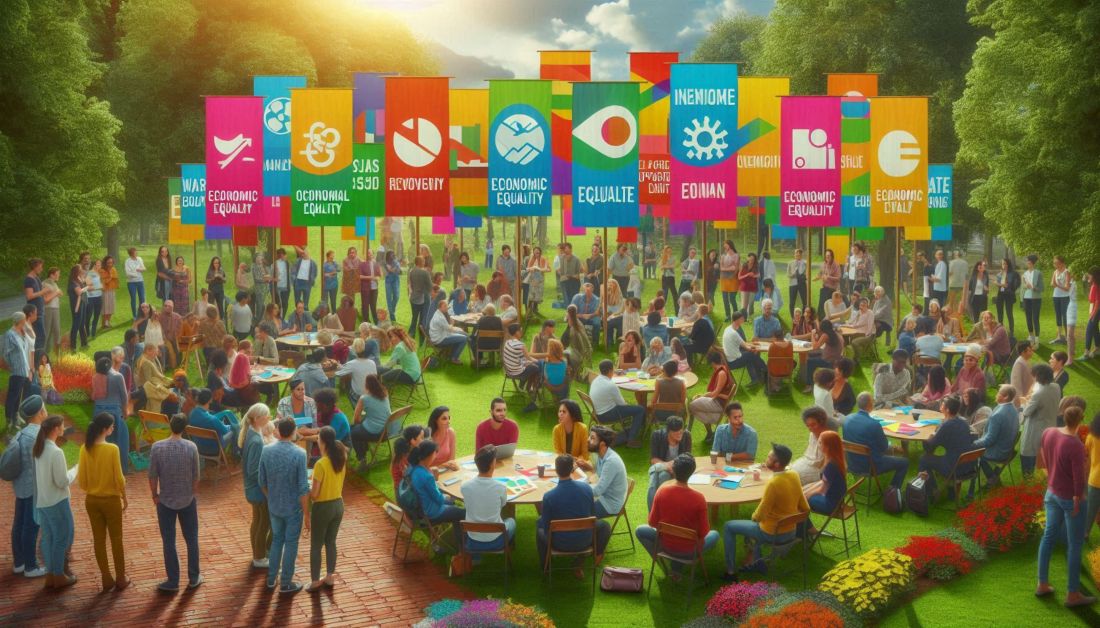


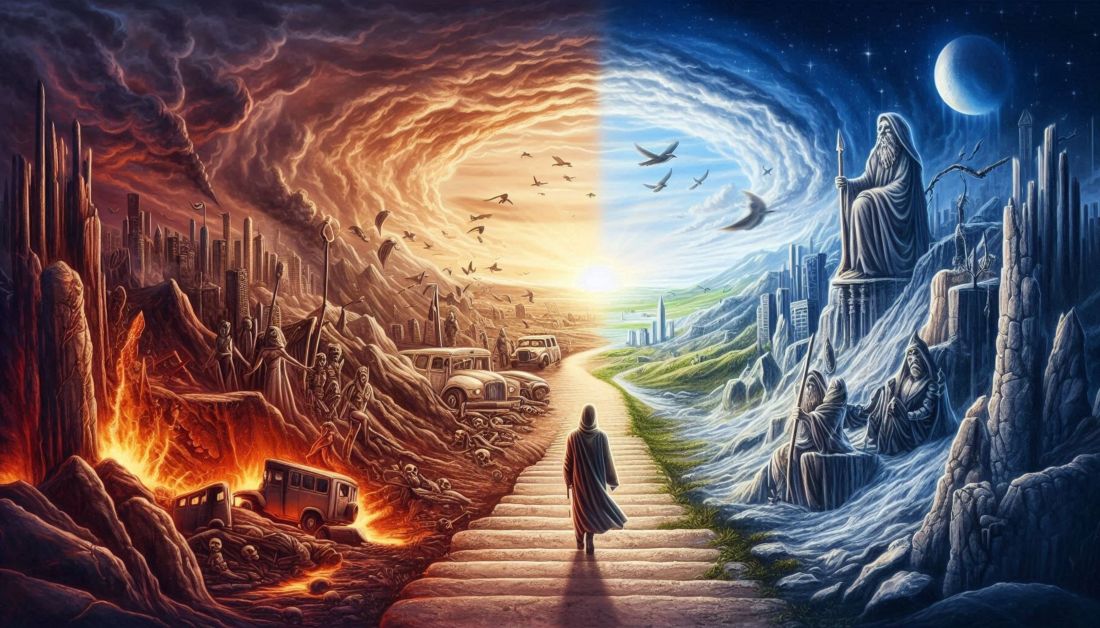
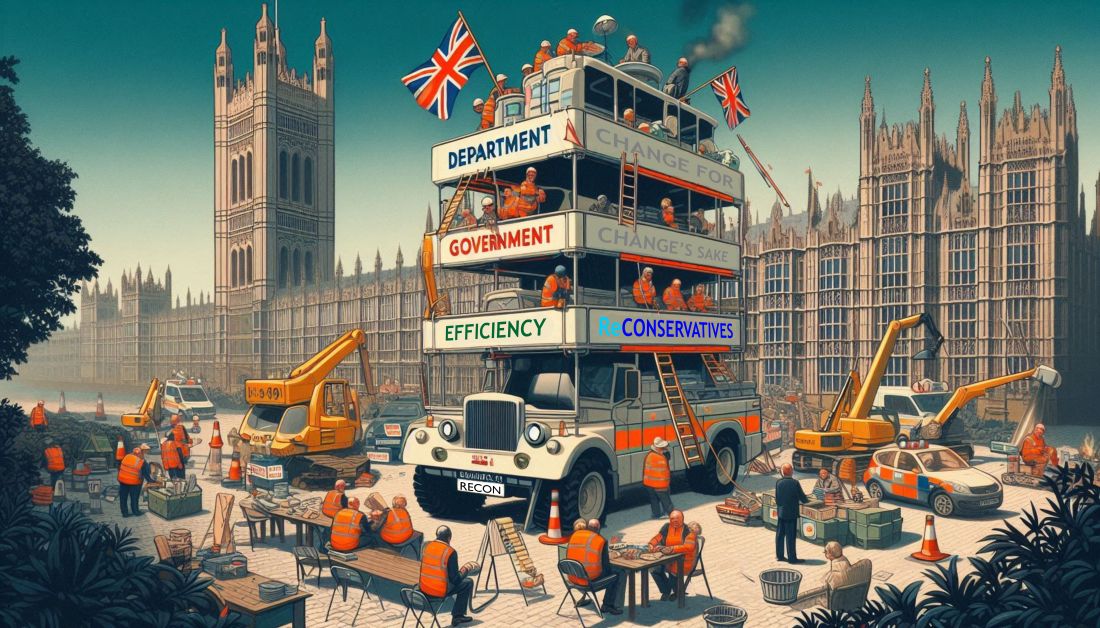
 Adam Tugwell