Whilst so-called socialists and capitalists alike will continue to argue that their destination would have been different, until whoever is in power takes the rap for destroying everything at the time – and then the other tries desperately to convince everyone that there’s still time for them, just to be sure, the very perverse and somewhat disturbing truth that is now coming into our view of reality is that the direction of both left and right political thinking takes humanity to exactly the same place.
What all these ‘philosophies’ – the ideas of academics, thinkers, economists, industrialists, tech moguls, agitators, the aggrieved, life’s bitter victims, entitled shirkers, greedy and selfish bastards – have in common, is the centralisation of power into the hands of one or just a select few – who for whatever purpose intended – control everything, so that they can enjoy their own lives and positions more than anyone they see as different to themselves and therefore as being a threat.
Verging on enlightened thinking, as many will surely argue their heroes and inspirations to have written these works will have been, enlightenment doesn’t revolve around creating environments that centre purely on a beneficial vacancy at the top. Which the design of these solutions surely was the intention, resulting from whatever experiences the authors had themselves experienced up until the time of writing.
None of these accepted visionaries were wrong. Or at least they were not wrong in the sense that we all are the sum of our experiences and our position looking upon or perception of life in any given moment will be correct, for us personally, in terms of what those experiences have taught us and what we have therefore concluded that they should be, right up to that same moment in time.
Let’s face it. The world is a very shitty place to be. Whether you have nothing and cannot escape poverty because of the boot that rides rough-shod over you; or at the other extreme you are as financially wealthy as it is possible to be and all you quietly worry about is protecting yourself, your wealth and how you are going to accumulate even more.
The pain that hides behind our eyes hasn’t changed over decades and centuries in human time.
Yes, the surroundings, clothes, transport, technology and everything else may seem different. But the nature of the experiences we are all having on our different pathways are in relative terms very much the same.
Wherever we may sit across this spectrum, 200 or more years ago at the dawning of the Industrial Revolution or right now as we are being prepared for the AI takeover, we all have an idea of what the perfect world for us would be.
It is regrettable that only some of us find ourselves able to share those ideas and thoughts and have them taken seriously by enough others for them to be seen to matter – which itself doesn’t mean they are genuinely enlightened or of benefit to greater humankind.
It’s simply the case that even when complete idiots or utterly selfish bastards are heard, their thoughts and views are swallowed up like nectar by people who themselves have a back catalogue of difficult experiences that identify with what they read or hear.
They pick those ideas – those philosophies – up and run with them, no matter how twisted or damaging in the longer term they might be. Leaving ideas behind in the dirt that the chaos they unleash leaves behind to fester for years and possibly centuries, that would otherwise deliver for the good of everyone when implemented.
We must be clear that all the ideas and philosophies for the world, whether they fall under the socialist or capitalist umbrellas or not, are without fail just ideas and suggestions.
Whether well intended or not, these philosophies were all packaged with the pretense that they were the ingredients, nuts and bolts or technicalities of a model of the perfect working world, for all people.
As history has demonstrated only too well, the actions of those underneath these umbrellas lead to both the imprisonment and oppression of the masses under the yoke of world elites.
We are fooled into believing there is a difference in outcomes because one system gets straight to work by enforcing its ideologies on people and the systems of the world as it tightens its grip and pushes those who are left into the cage. Meanwhile, the other drugs everyone with every conceivable high that they believe they like, creating mass addiction to ways of living that mean there is little hope of sobriety for anyone who has bought in and become addicted, until the very heavy jail cell door will have already slammed shut behind us all.
Centralisation is the flaw in all of these philosophies. Because it is impossible to centralise every part of life, for every single person across every country and across the entire world, without life, values, happiness, health, wellbeing and all the mechanics of essential function and civic society collapsing in their wake.
The clever tools and devices used by capitalists, globalists and neoliberals are ultimately no different to the level-playing-fields, street revolutions and guns employed by communists and socialists to enforce and police their point.
The painful outcomes that these forms of idealistic thinking inflict upon the masses always have agendas behind them, and none of those paying the real cost of these ideological-turned-material crimes ever agreed to the world being run this way.
The elites and those behind all of this have of course been aided by technological advances and the many different ways that the world has opened up and the distances between us all have been bridged.
Yet the point has always and pretty much systematically been missed that humanity and our morality based values system do not need and never needed to change to keep up with the material changes in the world, which have always been about the things that appear to be important beyond and outside of people.
Indeed, the changes that have been made to our frameworks for behaviour have always been made to suit those in power, with influence and who are directly benefitting from those changes. Those who perceive that the only way they can benefit more is for the old ways or ways that benefit others with fairness and balance must be left behind. Because they will otherwise get in the way.
So, was there ever a point in history where humanity genuinely got the whole thing right?
There is good reason to believe not. Or that if that moment of genuine balance has ever existed so far, it was momentary and could only really have been so, because the opportunity didn’t actually then exist to end the self-interest, anger, frustration, greed and every other dark part of the human condition that drives generation after generation to ingeniously, creatively and ignorantly to exactly the same things over and over again.
We may not see it, nor appreciate nor even find value in the suggestion. But a centuries-long pathway of humanity being led and controlled by interests that are not in any way genuinely shared, has led us all to a place where those who have benefited from that control and the generations following behind them, can no longer maintain that control. Because the whole pathway is about to have gone too far, before that door can be slammed shut and the final adjustments to the oppressed fate of humankind can be made.
The intention underlying of all these ideologies was that everything and everyone would be controlled throughout the journey, until that control was necessary no more.
Yet the systems we have been conditioned into accepting, like the out of control value of money, the rules that are supposedly there to protect and help whilst they disadvantage us, and the process of making very intelligent people doubt themselves or force them to believe and support ideas which run contrary to common sense or that are completely untrue, have all contributed to a situation where many already know the world is out of balance. People know that whatever is behind all of this has gone too far.
Natural, universal, unspoken rules have always existed that require each and every one of us to have the freedom to learn, to grow and to develop if we so choose to do so.
Because of the persistent actions of these patriarchal few and those who have followed them, that freedom for everyone to learn grow and develop, no matter their background or position in life, no longer exists. Because the way the system of the world has been developed now means that many no longer have the opportunity to experience the personal sovereignty to which every man is entitled. No matter how, where or to whom they were born.
A collapse is coming. That collapse is already underway. We are all within it and experiencing it at subjective levels that keep us from the objectivity that would make it much easier to define.
The critical point that is now approaching will be the moment that something happens, that could be civil unrest, financial collapse, the extension of foreign wars, civil war or something else, when each and every one of us realises and accepts that we have a Choice. And that we no longer have to be passengers or passively accept whatever someone else has engineered to be our fate.
The curse of overcentralisation is the never-ending desire of those who are at the centre of that centralisation process to centralise even more. Simply because of the greater rewards and control that they believe it will bring.
The outcome of the overcentralisation is that nobody ever has enough of any of the things they really need. When in a world and time when we have so much available to everyone, this has become a first-hand tragedy for us all to experience indeed.
The only centre that we need and that we should ever seek is the community, locality and to share responsibility for everything amongst the people we see face to face and interact with each day.
This is real life that doesn’t come to us through media channels, digital technology or through rules that have been made by some name without a face.
This system is the only resource and ecosystem that we need to sustain us, that we need contribute to and that can be relied upon to create frameworks and governance for life that will always be in our best interests.
It is the only system that will provide and leave us with the genuine freedom necessary to enjoy every aspect of a good life, as the majority of us would want and like to experience.
The decision to make this change and embrace the power to do so is ours already, if we actually want it.
There is no need for hierarchies, for top-down systems and procedures, for political parties, financial markets and devices, globalised business and supply chains, or anything else that makes life cheaper. When life being cheapened any further is the very last thing that any of us need.
Local communities that are genuinely local and locality driven, and the ecosystems and self contained economies that they will create, offer us everything that we will need to have to experience valuable lives, where the basics and essentials are always in place.
Locality driven communities offer a system of governance meaning that no matter the life choices any one of us makes, we can all live independently of help – and therefore will not experience the forms of lack that are responsible for so many of societies social problems as their root cause.
The value of every one of us is exactly the same and nothing can change this.
No matter what we do, wear, what we have or how we are seen to be, not one of us should be positioned to advantage ourselves by disadvantaging others.
This is where the fundamental basis and genesis of a new world philosophy must be able to begin. One that is designed by us all for everyone rather than by a few who want everything controlled and for that control to be in the hands of one.
***
Over the past 3 years, I have been writing about the different aspects of what is happening; what is likely to happen and how we can all get from here to a much better place.
Whilst the rules and frameworks that govern a new world that will genuinely be of benefit to everyone, must be designed and agreed freely by us all, we still need an idea or vision of the outcomes that we can expect.
Our Local Future is a model for future life that I believe to capture this, which I would invite you to consider. Before someone else has considered and though out an alternative, that when the time has come to make the choice that is genuinely good for us, will instead steal that opportunity and take its place.
Whatever you do next, please remember to beware the many false prophets who are shouting the attractiveness of populism and anarchy now.
Don’t listen to those who tell you they are putting people first.
Keep watching for those who are doing so.
The only centre we need is within our communities themselves. Everything will make sense when everything important throughout our lives revolves around everything we can experience daily at first hand in this way.
I have very mixed feelings about government strategies and reports.
Experience has proven that the real story usually lies hidden in how they say what they do say, what they actually say and why they say they’ve said it.
So, it’s only by carefully reading the political double speak, seeing what’s been missed or is merely present so it’s seen to be there, and then capturing what they really mean, that even people with real-life roles in the UK Food Chain have any chance of working out what’s really going on.
The use and misuse of There, Their and They’re perhaps offer a very quick analogical likeness of how different words, whole phrases and sentences that look and sound exactly the same are used by government to mean different things to us as opposed to what they mean to them.
Deliberately, with the intention to manipulatively mislead in ways that can later be used to suggest we were aware all along, relevant topics such as the intended use or application of technology are very carefully presented to us by those who supposedly serve the public, in the knowledge that anyone reading these carefully crafted messages, who isn’t pretty much fluent in the underlying language, will very quickly misread and therefore misunderstand the intentions, direction and desired outcomes.
The fact that a Food Strategy arrives on the Internet in polished form without anyone I or probably you would know from our daily lives and the communities around us having ever been asked or given the opportunity to genuinely engage, is a good indicator that what anyone on the receiving end of the policies in question thinks really doesn’t matter to whoever is driving their implementation.
When we begin to read about the consulting organisations and see that it appears at least some of them are newly created with the intent that they will do their bit at a time and place to be determined up ahead, we get a real feel for what the context of this policy direction instrument is likely to be. Given that food production is a subject that is deliberately played down politically – even though it should – as the intended backdrop of this document suggests – be a key issue of our time.
Rather than just provide a general commentary on the Food Strategy, for the purposes of this post, I have opted instead to pick out the points that are most important and then explain why they impact in that way.
Before anything else, you can read A UK Food Strategy For EnglandHERE and I will be very happy for you to comment on what I’ve written or what you’ve taken away from this page or from the Food Strategy itself.
Direction and the Outcomes Sought
“Food is a big part of life in the United Kingdom. It gives us energy, brings us joy, and helps us feel connected to our communities.”
The Food Strategy opens with this statement. And to be fair, it really does sound like the point is nailed immediately.
However, it’s important to think about that opening line and what it says much more carefully. After all, these are the words or statement that most readers will pay attention to before they glaze over – which is often the plan.
This first line tells us much about the real direction of travel and what this Food Strategy is really about. And it’s not about all the different things that are carefully included throughout this and the adjoining documents that are linked in the way we are intended to think.
So before breaking it down, let’s be clear about the message that should be jumping out in the first blast of the Ministerial Foreword instead:
Food isn’t just a big part of life; Food IS life and without it, we simply don’t have one.
Food is so much more than something that gives us energy and joy – which are the only real issues that the establishment are focused on when it comes to keeping public opinion on side.
After all, in their minds, as long as the food we eat means we don’t experience hunger and we are all are happy after eating, that’s all they need worry about.
Food – and Foods We Can Trust require a different approach and values set entirely and none of this is that in any real sense at all.
In so far as talking about the links to communities and the mentions of the word community are concerned, the concept of community is very important when it comes to the future of our Food Supply and Food Security.
But the use of community in this Strategy is just for the purposes of making it sound like the establishment is aligned with where the priorities of food and food production should be. Which as discussed within my recent works ‘What is Food Security’ and ‘Our Local Future’ is very much about locality in every sense and not just a badge that suggests politicians and government officers are reliable and ‘on side’ – just because they’ve again used words that say what they believe we want to hear.
The Food System
“With the right leadership, we can become a world leader in sustainable healthy food production – tackling climate change, boosting resilience and securing our food future”
This statement really sums up the political position of the establishment and what might be best called the ‘accepted narrative’.
This statement is the collection of key phrases that relate to the priorities that the establishment has in mind when it is thinking about Food, and what they want it to mean to the public.
Once again, the statement sounds like its targeted in just the right way with talk of becoming a world leader in sustainable healthy food production.
But sustainable can mean many different things. And whilst the document refers to sustainable a number of times, the Food Strategy doesn’t directly talk about Sustainable Agriculture, growing or indeed any other forms of natural, farmed food production in the UK itself. And whilst even some farmers would currently disagree, it is only as part of a wholly Regenerative Farming or Traditional Farming approach being adopted throughout UK Farming will be the only way that genuine Sustainable Farming can be achieved in a way that makes the UK genuinely Food Secure.
Resilience is another word that at first glance makes it sound very much like this is a government that means what it says when it comes to our future experiences of Food. After all, who wouldn’t want us to have a resilient food supply?
The problem is that resilience said, and resilience done are two very different things.
As the influences at work on this Food Strategy such as the relationship with the EU come into play, the resilience that is being talked about assumes that resilience will always be based and assured upon the existence of the import and export dynamics that exist today. Yet in a very uncertain world, any good politician or government leader would be foolish to assume these will always remain in place.
The reality we face is that this supply chain could collapse at any time.
“We are committed to transforming the food system – making nutritious, locally grown British food more accessible and affordable for all”
I really like this statement. I would love for it to be true. But I don’t believe it for a second. Because these words simply do not correlate with the actions of the government that to date have been fully in view.
Most people reading these words will assume or take away the idea that the government and all the organisations supporting the Food Chain or Food Supply are going to gather or coalesce around a community-centric transformation of the existing system and do everything within their power to make this happen – in the best interests of all.
Unfortunately, it really doesn’t work that way and isn’t going to work that way with the massive range of profit and agenda led interests that already have very influential roles throughout the Food Chain and which I discussed in ‘Who Controls Our Food Controls Our Future’.
The key thing that we all need to be clear about and accept – is that the transformation must be funded by private money, as this Food Strategy makes clear the government is committed to through the statement; “Government has an important role to play in supporting and creating the right environment for investment, but the majority of investment will come from the private sector’.
Whilst I’m sure that my views have annoyed many from the farming community for whom I have great respect, there is no question that if UK Food Production systems are going to be transformed and lead to an outcome where UK Agriculture, Growers and the UK Fishing Industry are restored to their rightful and appropriate place, it will be the Farmers, Growers and Fishers (and the industries that are aligned with them) themselves that will have to ‘privately fund’ this change.
That should make us all very happy. Because that’s where we need to be.
However, it’s certainly not where we are.
The majority of Farmers are still expecting that government will put up the money for any required changes – even though this statement makes explicit that the direction of travel will be funded by private interests.
If Farmers, Growers and Fishers aren’t the private interests that pay for and therefore own the direction of change, the private interests that dictate the future of our Food will be the big corporations, banks and financiers.
If big money interests fund the future of UK Farming (as there is much evidence to confirm they have already started) the vision of what Community Food Systems are and will become, will look very different to what anyone from todays UK Farming industry will believe they should be.
Its clear here, in black and white, in this Food Strategy who and what is really driving everything.
Farmers, Growers and Fishers still have the power to turn this all around and reject the inevitability with which this Food Strategy has been presented.
However, everyone within the Farming, Growing and Fishing communities that wants to save UK Food Production really does have to start collaborating; wake up to the reality that underpins the mood music and the subtext that is already at play, which is fast becoming direct messaging – all as the establishment concludes that these traditional industries no longer really matter and are so confident in what they are doing that they openly behave like they couldn’t care less.
‘Established in the early 20th century’
As the Food Strategy develops, it begins to make statements that have an estranged relationship with the truth at best. Like this one that talks about the existing Food System being established in the early 20th Century.
Be under no illusion; this is what the establishment want everyone to think.
The suggestion paints the picture that this Food Strategy is now being created and will be implemented to ‘save’ us from an antiquated and out of date way of ‘doing food’, which is no longer fit for purpose.
Yes, the Food System and Food Chain that we have today really isn’t fit for purpose. But it’s not fit for purpose because it doesn’t deliver Foods We Can Trust.
Today’s UK Food Chain certainly doesn’t prioritise human food consumption in the way that we should be able to expect government to prioritise something as important to human beings as the consumption of water and air.
The Food System in the UK – and across the world – is vastly different to what it was and what it was like a century ago – which to be clear would be a quarter into the 20th Century in 1925.
World War II made a significant impact on food production in the UK. As up until the outbreak of war, a similar complacency had taken hold of the food question, and the Country was left dangerously exposed by the reliance that we then had on imports from around the world.
The Battle of the Atlantic and considerable effort made by the German Navy to sink merchant shipping supplying the UK on all approaching trade routes helped pressure the strategy for domestic food production back towards self-sufficiency and a productionist or output-orientated approach that was then supported heavily by government once the war had ended.
Whilst the UK really has no excuse to not be self sufficient in the supply of essential food supplies, the change in post war financial dynamics, following the Bretton Woods Agreement in 1944, soon meant that commercial priorities took over and the productionist or output-driven agenda was adopted both by business and the neoliberal orthodoxy which fed into the push for globalisation that really took over formally in 1971.
It was the obsession with output, aligned with what seemed like the unimportant transition of industrial processes that had been created and pushed towards arms production and then repurposed into fertilizer production that helped with the strategy to move away from traditional, sustainable and environmentally beneficial farming practices. Moving to easy fixes that certainly made all kinds of land seem highly profitable for a short time but then fell afoul of the EU (Common Market and Common Agricultural Policy) that heralded British Agriculture’s definitive decline upon arrival.
Farmers being re-educated to the point where they have forgotten to be creative and entrepreneurial and instead have become reliant upon subsidies and then the contracts that the removal of organisations like the Milk Marketing Board led Farmers becoming beholden to, have all contributed to the highly vulnerable situation that the industry faces across the UK today.
This deliberately engineered mess has led to a level of Food Insecurity in the UK that is critically dangerous, with around only 11% of the food we consume being immediately or directly available to the UK population today, if we were for any reason to experience a real crisis that shut down imports for any prolonged period of time.
It is the strategy and those behind it – including the big global and corporate businesses, that have dictated the way that the UK has been farming for at least the past half-century.
It is massively disingenuous of the government and the establishment to speak or make any policy moves that suggest the farming methods of a century ago are the same as they are now. And that the only way that the UK can have a sustainable, robust and secure Food Policy is to leave the natural-orientated, genuinely traditional forms of farming behind – whilst they are actually methods of producing Food that have not formed the real basis of the way British Agriculture has worked, for at least that amount of time.
‘As our largest agri food trade partner, how the EU approaches these challenges are particularly relevant’
The influence of the EU and the current governments push, not only to realign but to reintegrate Food Policy with them is massively troubling. Not least of all because every step taken is one backwards from a genuine democratic plebiscite where the majority of the UK voting population voted for the UK to leave the EU – which in reality, it never did anyway.
Ironically for all those who believe that the now crumbling EU was and always will be the very best place for the UK to be, the whole EU project is and always has been nothing less than a continental franchise of the globalisation project.
The political takeover of nation states and the creation of centralised world government is at its very heart, and this is regrettably best demonstrated by the close and beholden relationship that all those committed to the WEF (World Economic Forum) throughout politics have in turn with the EU.
These are all organisations that are historically shown to have been exceptionally good at buying support by appealing to the base instincts of voters. Meanwhile hiding deregulation that hands power to big business, and then regulating people and small independent businesses more and more by creating rules, regulations and systems that supposedly raise standards, encourage safety and promote high quality, but do in fact control, exclude and shut down independent businesses – particularly in all parts of the Food Chain, that when able to operate and function independently as and within localised ecosystems are a complete threat to centralised control.
Shortly after this statement, the Food Strategy suggests that the relationship will cut red tape, which is genuinely hilarious, bearing in mind that the red tape they are talking about being cut is only that which will be removed by the UK once again having those systems not just aligned with but under the control of the EU.
“The next key milestone will be the development of metrics, indicators and implementation plans for the food strategy outcomes.”
If the realities of this document already discussed were not concerning enough already, we then move on to the development of metrics (that’s measuring progress), indicators (so the things that show their plans are proving to be successful) and the implementation itself, which should probably be seen more as a rubber stamping of the latest actions, rather than anything that may or may not be left to chance in the future.
Yes, talk of something that has been called the Good Food Cycle sounds very good when taken at face value.
But we are in times when words and terms that politicians and government officials use are deliberately misleading (as we discussed earlier with There, their and They’re). And when this catchy term is put in its objective context, there is every chance that the Food we all end up with will not have anything within it that’s in any way good about it at all!
Ending mass dependence on emergency food parcels would of course be a truly fantastic outcome to have achieved. But only in relation to how things are working now and not in the context which this Strategy could all too easily mean.
Based upon the way government is now behaving, the way that this Food Strategy is written is almost certainly just another step in plans for every part of life that will lead to at least 2 tiers of society. A situation where the poorest, vulnerable and by then those engineered to be unemployed using the AI takeover will be fed in the same way with Foods that simply have no relationship with natural food production. Thereby complicating removing what’s left of the remaining but nonetheless real component of the majority of the Foods that are available to us at exploding prices now.
Alternative proteins
Alternative Proteins are mentioned at different points throughout the Food Strategy.
If you weren’t concerned enough already, this is where this already dark Food Strategy starts to go completely black. As Alternative Proteins is the accepted term for synthesised and artificially created foods, that this whole Strategy is laying the way for.
General Comment
My real concern about this Food Strategy is that so few who read it and consider how seemingly well put together it appears, will see the content and direction for what it all really is.
Legitimacy to this ‘work’ has been given by the participation and ‘contribution’ of advocacy organisations such as the NFU (National Farmers Union) who are providing exceptional membership services to the members who they face. But have not got any genuine ability to advocate through the fear they have of having the relationships with government and the public sector cancelled or burned.
The advocacy organisations pay lip service and certainly make much noise when it comes to the issues. But they fear being excluded from the process, much more than what the outcome of what that process actually will be.
Lines like ‘We need to restore pride in and build on our unique food heritage and cultures’ and then the reference to the production of Food being ‘Patriotic’ certainly play to the whims of the growing populist movement that is becoming a massive threat to both the government and the public sector, and of which the Starmer led government is massively afraid.
But they are in no way related to what this Strategy really is or is about.
Regrettably, the damage that could already have been done to what is left of the UKs ability to feed itself once more, by the time we have a new government actually capable of driving reversal, will have already gone too far and the chance of the UK becoming self-sufficient in food production and therefore Food Secure in the real sense will have been completely undone.
It may be false. It could be true. But one way or another this is a story for our time and somewhere it will probably include you
Introduction
If you live a life where everything makes sense and everything you look, listen to or read during the course of your day seems normal and just as they should be, you are probably alone, but don’t even realise it.
Today, the world is in flux and to anyone paying attention to the things outside of us that ultimately govern how we will feel and experience that life within our heads, minds or the kingdoms that are hidden behind our eyes, it has become impossible to not recognise that the world as we know it is now on the steps of change.
However, that change and the outcomes that will almost certainly follow have not as yet been set in stone and what many people across all parts and all levels of society don’t yet recognise is that we all have a choice in respect of where everything around us and that we have, are and will experience goes.
Unfortunately for many of us, we have become used to just accepting that life or rather the life outside of what we believe to be our own control is something that just happens to us – even though this surrender of responsibility and accountability to ourselves, is actually a choice in itself.
To make choices we need to understand what those choices are and why we do need to make them.
The Choice is a story or a collection of small stories that interlink and effect or are affected by each other, often in ways that are hidden – either accidently, or more often deliberately – from our view.
To understand The Choice requires taking a rational view of what, why and how things are happening as they are now, and asking yourself the question of whether you believe the truth is even possible, or whether it will be easier to continue accepting the lie until the lie itself inevitably ends up delivering what will then have become the unavoidable truth.
Either way, whatever we may or may not believe, we will all be making The Choice, even if we aren’t aware that we are doing it.
Wouldn’t it be better to know what The Choice might be?
Part 1: Lifting the veil
It’s time to jump straight in. Things are changing fast and there isn’t time to sugarcoat the realities that are materializing around us all today.
True or False? Only you can choose. Only you can act upon whatever you decide
You are not a passenger in your life unless you choose to be. It just feels that way.
I’m going to make a suggestion. A suggestion for you.
It doesn’t matter who you are, where you are from, what you do, what qualifications you have, what you earn or anything else that can or could be used to create a difference between us.
My suggestion is that none of that matters to you, because at the end of the day, you feel like life or at least some of the biggest parts of it, are just happening to you.
In fact, no matter how many friends, followers and how popular you are, you still feel alone and not even those who the world sees as being very close to you really know what it’s like to be you or, for you, what’s really going on.
This suggestion is not meant to offend, single out or cast any kind of negative light upon anyone, especially you.
It is intended to set a scene and reveal the commonality that runs between most of us, where we identify with a group or groups. Where we have that idea represented and reinforced in whichever direction we turn. But at the end of the day, no matter what any sense of belonging, we still feel isolated and like we are journeying the world at a very turbulent time, all alone.
The truth always feels negative when it is a stranger
It maybe or maybe not a disclaimer. But there is, nonetheless, a little caveat that we should all consider.
Much of what you are about to read, whether true or false, will be read or heard by many to be negative.
If you believe that it is false, then by all means conclude that it is all negative and perhaps then assume that it was written with the intent that The Choice will convince you to change your mind about your experiences, just because the premise it offers you sounds negative.
The alternative view is that none of what you read is negative at all. It just sounds that way, because it is actually true.
Many of us don’t see that we don’t like to hear the truth about anything, when the lie or the lies that we are living are seen or experienced to benefit us in some way more than the alternative.
If it is true, what follows in the coming pages will certainly make many feel sick. Because the acceptance that what has been written here is true can only come with the realization and acceptance of the part or role that we have all been playing in the creation of the mess that we are all now in.
The upside of accepting the truth is that it provides the best foundation, stepping off point or platform for us all to create change and build something better, voluntarily and by choice.
The group thing
So, here’s the thing. You are not alone. In fact, WE are not alone, and almost everyone feels a similar way.
And it serves someone else’s purpose for as many of us as possible to do so.
In reality, the majority of us have been subject to decades or indeed lifetimes of gaslighting that pushes us to identify with group thinking – or the accepted narrative.
Meanwhile, as the power of the accepted narrative has grown, we as individuals have lost our own power and have come to feel increasingly alone.
This phenomenon actually has a name. It’s called Involuntary Sociocentrism, which makes it all the more concerning, as the so-called experts recognise it and record it as being true.
Some of us might not see or accept any risk or danger from sociocentrism of any kind, especially when it is overtly seen as being ‘normal’ behaviour.
However, the need to feel included, to be part of the group and to conform with whatever is required of us has become very compelling. Even when doing so goes against every instinct and sense of logic or common sense which usually sits at the basis of everyone.
That compulsion is dangerous.
At best, we can believe we are right or doing the right thing when in reality we are helping others with agendas to exclude, ostracize and maybe even criminalise those who are and are just being true to who they are.
At its worst it can end in horrific injustices being inflicted upon people we will never meet.
It’s time to be honest with ourselves – even if it hurts
We cannot avoid who we really are – no matter how long we crush our own truth to please others or to win their favour.
Compromising who we really are never works in the long term. Even though many make choices to conform for fear of loss which can and often do blacken entire lifetimes.
If we believe that we are benefiting in some way; whether it’s for a partner, material wealth, income, career progression, power, influence or anything else that we believe will improve us or our lives, we will typically overlook the consequences, even when either directly or indirectly, our lives and everything around us are on a clear pathway to being destroyed.
The irony is that the fear that has the power to do this to us doesn’t need to be real.
It can be as simple as worrying about what other people might think and how they will respond to what we do that can totally change our world.
The prison of conformity
If you’ve asked yourself the question, “am I free?’ The chances are that your answer was yes.
This will especially be so when you consider the stories we see on the news and the internet that clearly demonstrate what freedom really is with the overwhelming suggestion that we – in the West – really are free in every sense freedom can be.
However, just as you will have watched, read and listened to those messages, perhaps many times, you may also have encountered the saying thoughts become things. And in the sense of what we believe in terms of our relationship with the world outside of ourselves, we can certainly believe that we are free – or rather experiencing whatever those outside of us want us to believe freedom to be, whilst those thoughts and the conformity they require do nothing less than imprison the person, being or spirit that we really are, within.
The freedom that the so-called civilised western world we live in, and experience isn’t freedom at all.
Whilst this suggestion is likely to make many feel prickly at the very least, you only need ask yourself just how often you have had the experience of asking yourself ‘Will I be judged or get into trouble for doing or saying that’, that you can then begin to remove the curtains that have been drawn over society’s understanding of what freedom really is.
Whilst the establishment relies upon us believing so, and therefore that we will conform with whatever they are and may be, the fact that laws, rules and regulations of any kind exist or have been created, doesn’t automatically make them fair, balanced, just or morally correct – simply because they have been stewarded or brought into being by whoever is ‘in charge’.
In fact, the number of laws, rules and regulations that have been created, changed, removed and manipulated over decades, just so they suit the agendas and interests of those who are in charge, have done nothing less than create the prison of conformity that we now find ourselves within.
A prison of conformity that makes us all believe that our own common sense and instincts are wrong, when we see injustice in everything. But then we find that our relationship and fear of the world outside of ourselves compels us to go along with that which somewhere we know we should resist.
If you never question anything, you have become all the world outside of you could ever want
Some reading this will see nothing wrong with the world they live in and experience. They will certainly see no need to question it in any way or at any level.
However, they will be remarkably few.
Those most likely to unquestioningly go along with anything and everything that is happening to us will be those who believe that there continues to be greater benefit for them by doing so, rather than taking risks of any kind or at any level, by being seen by others to be nonconformist in any way.
Many people have bought-in and committed themselves to the way the world works for this very reason – even though that reasoning may not even be conscious. Even amongst people like academics, politicians, business leaders and other people with influence and power – who you might least expect.
It is because the system and the way everything now works appeal to the ‘need’ for material gain, whilst removing our freedoms in exchange, that so many not only go along with it and conform. They also react so angrily and perhaps even violently to those who have chosen not to conform.
Self-awareness is the key to becoming free
Most of us think or rather believe they are self aware, or aware of themselves.
After all, we all know who we are, what we are, why we are like we are, why we think like we do and we are able to think about all of that and understand how it is making us react to everything and every bit of information that is coming at us in real time too, right?
Well, controversial as this might be, the reality is that not nearly as many of us are as self-aware or aware of ourselves as we might believe and lack in-depth understanding of the way we feel about things at anywhere more than a very shallow level.
Knowing how we feel about anything isn’t as simple as knowing why we appear to feel the way we do it.
Really knowing how and why we feel as we do and why our thoughts may have become prejudiced or liable to pre-judge situations that seem familiar, echo or seem to repeat something that we have experienced previously or that we have been told or conditioned to respond to in a certain way before, is vital for us to be fully in control of our responses or to be response-able.
Some people don’t need to be self aware. Because they have a great, healthy and productive relationship with the world outside of themselves and there is no need for them to moderate their approach in any way.
They have great experiences whatever happens, as they do not hurt or affect others with their words or actions, and most importantly, they don’t harm themselves either, by responding to the world in the ways that they do.
Self-awareness isn’t something that can just be switched on.
Self awareness comes from looking at ourselves and who we really are.
It’s about being able to hear ourselves as clearly from within, as it is to hear everything that comes at us from outside, and it can involve a journey within that for even the best of us can at times feel like it’s pretty dark.
However, when we have opened the doorway to understanding who we are and why we are as we are, knowledge can begin to explain the life and experience of life that we are having with everything outside of us.
Most importantly self-awareness also begins to help us understand how and why other people are like they are.
Seeing and understanding who you are, how you can be better and how your state of happiness is and can only be dictated by you, by allowing yourself to be who you really are, will mean you are able to begin to understand what real freedom could really be. It will set you on a potentially very different path.
Relying on feelings or rather, upon emotions rather than self-knowledge and understanding to make our decisions, just makes us vulnerable to the information that comes to us. Messages deliberately designed to make us believe that things and situations are good for us, that when we actually listen to ourselves and the sources of information that we can genuinely trust, would quickly tell us that they are actually no such thing.
Critical thinking is the doorway to a very different experience and life
Whilst it’s not impossible for any one of us to have been born fully aware or as near to being enlightened as it will be possible for anyone having the human experience to be, the reality is that this is not a condition that reproduces itself that often in this world, no matter what many so-called spiritual sages and gurus would like to believe.
It is therefore safe to assume that even the most learned of us; most enlightened of us and the most aware of us, all had to begin on the pathway to understanding themselves and who they are at some point within this lifetime.
Regrettably, there is no idiots guide, quick fix or cheat when it comes to knowing who you really are.
But there is a way to begin the journey there that when used properly and religiously, will help guide you and avoid the problems that the world has set up for all of us along the way.
Put simply, the pathway to awareness begins with learning to always ask questions about anything and everything, and to be confident doing so, even when there appears to be a risk and the possibility of an outcome from doing so that makes you feel afraid.
The gaslit generations
Nobody likes to believe that they have been fooled, no matter who they are, where they come from, what experience they have, what they have achieved or whatever they have done.
However, the real challenge of the awakening question that The Choice hinges upon and what this book is all about, is for pretty much all of us, our parents and our grandparents too, to understand, accept and then work with the reality that we have all been gaslit or have been the victims of gaslighting that has been taking place under the direction of government and the establishment on an industrial scale.
The only things we should care to question about any of this will have been our willingness to go along with and keep going along with the group; of failing to trust our instincts, inner voices or gut feelings, and for failing to ask questions or research and check the validity of all the things we have been told that because of the sources we have simply accepted that they can be ‘taken as read’.
Gaslighting is an horrific form of abuse. It is an act of mental torture that forces people to question themselves, what they know, what they have experienced and what they already trust.
For an abusive partner, colleague or person we have face-to-face contact within our lives is serious enough and now acknowledged by society for the unacceptable behaviour and crime that it can all too often be. Yet for politicians and the establishment to do this to entire populations, just so that they can pursue agendas and plans that those people being manipulated wouldn’t otherwise accept, is itself a next level crime indeed.
Who are you and what is your place in this world?
If you’ve read this far, you are probably ready to start asking the questions that can really start to help restore your own power and understanding of your place and relationship with the world. Even though that will almost certainly be very difficult at times.
Once you can acknowledge that something doesn’t feel right, and that the next step isn’t to automatically go looking in the world outside of yourself for answers, for someone to blame, or for someone who is offering you what may only appear to be the solution, you will already have made a magnificent start.
The pathway of self-awareness is one that is closely accompanied by the state or condition of accountability, or of being accountable and taking responsibility for the role that you play in things. Even when that role is unconscious, without thinking, passive or when it seems that you have absolutely no control.
Accountability and being accountable is the only real way for each of us to begin making a positive contribution to the world around us, at a moment in history that is now looking like it is set to become increasingly challenging for us all.
Part 2: A time of uncertainty when very little makes sense
We’ve talked about how all this feels and why it might be feeling that way for us as individuals.
We have also been told that although it feels like it, it’s actually just a clever trick that is making so many of us feel like we are alone.
Now it’s time to consider at least some of the very different influences in the world outside we are looking at each day that have brought us all to this same place.
What is really going on
No matter the position that politicians and members of the government may openly take, most of us know and realise that there is a direction of travel at work, with life and everything that is going on around us, that didn’t simply kick off on the 5th of July 2024, when Keir Starmer walked through the Front Door of No.10.
In fact, whilst it is easy for the tribalism of the UKs dying political system to cloud the way, and take the ‘it’s your lot that gets everything wrong whilst we can never do any harm’ approach, you will probably be able to identify the presence and continuance of the same rot(ting) that was only too evident within the previous Conservative Administration – no matter which of the 5 different Prime Minsters were ‘in charge’ over a period of 14 years.
Let’s consider the different reasons or excuses that different people attribute to the problems that we have today. In no particular order:
The Conservatives
The last Government
Brexit
The War in Ukraine
Putin
Donald Trump
Big Business
Labour
Empire
Covid
The government response to Covid
Racism
Extraterrestrials and/or Lizards
Boris Johnson
Liz Truss (The very short tenure of)
Keir Starmer
Rachel Reeves
Money
WEF (The World Economic Forum)
Global Warming
Diversity (DEI)
Immigration
War(s) in the Middle East
The Israeli occupation and action in Gaza
Jews
Islam (The Ummah or whole nation)
Radical Islam / Militant Islam
The Global Financial Crisis or Great Financial Crisis (GFC)
Globalism
Politicians (FULL STOP)
Nigel Farage
Ben Wallace
Net Zero
Woke policy
LBGTQ
And there will be many more besides…
What all these have in common is they represent beliefs, or rather opposing beliefs, instead of being anything that everyone could universally agree upon. Such as we need to eat food, we need air to breathe, and we need water to drink.
Within this context, it would be fair to say and to conclude that there is very little in the world and therefore within our lives that doesn’t exist; has the effect on life that it has, or has the ability to affect us in the way that it does, that isn’t based on what at least a minority or more usually a majority of people believe about the world in some way.
The problem with beliefs, as we have already touched upon above, is that one person can believe something to be true, whilst another person opposing them is certain to be wrong.
Yet they could both be right. They could both be wrong. There could be at least one or more other ‘truths’ that could be right or wrong.
Or in some way or some manner of speaking, there could be a multitude of such truths or perspectives that are all right or wrong in some way too.
Understanding and being comfortable with why we believe anything can either become our jailer or liberator.
We have no choice but to apply the process of analyzing and understanding why we believe, agree or disagree with any of the things that we are experiencing and how we then respond to them, if we want to live in a world that works for us in every way that it genuinely could and arguably should.
Both things can be true
Whatever your view or beliefs may be about anything, they will always be right, correct or accurate for you, yourself, based on what you have already learned or experienced.
We are the sum of our experiences.
But that doesn’t mean that every other person on this planet isn’t right or correct about the sum of their experiences, and what that has led them to believe it at this exact moment too.
Once we find ourselves able to take that step back, being comfortable with what is our own truth, but are then also be able to take the risk of accepting that there are other truths, which consist of experiences outside of our own that may be beneficial to us, when they are added to our own, we put ourselves in prime position to be or to become the change, rather than resisting change at every turn.
The System
The system is everything outside of ourselves.
More specifically the system is the rules, laws, regulations and governance that reach into every part of life outside of us, that appears to make everything work around us in the way that it does.
The system is the laws, rules, regulations and the forms of behaviour that cross personal, business and other boundaries of every kind and create what is considered to be acceptable or ‘correct’ behaviours, actions, words and deeds.
We accept ‘the rules’ of the system, and trust that they are right, and that they exist and work with our best interests in mind.
Yet they don’t.
That’s not the way that the system really works at all.
In fact, the rules, regulations, laws and the way that we behave in just about every relationship that we have, exist and work as they do, because someone we don’t know has put them there or created messages that get us to accept that they are there and have meaning, simply so that everything works in the way that either they or whoever influences them want everything to work.
The trap that so many of us fall into, is to believe that because there is a rule which was created and put in place by the government, a council, a mayor, politician, judge, or because its what we have experienced through the media or through the behavior and words of someone who we follow or admire – that that is the way that we are supposed to behave, and that everyone else is also supposed to behave that way too.
There is a passive acceptance that the rules and ways of living and experiencing life that have come to us this way, or through the messages of any other organisation that can buy its way into our lives through advertising are normal, correct, and proper, and that they are what everyone wants.
The way the system works leads anyone who doesn’t question it to believe that what is legally allowed or correct is synonymous or the same as what is morally or ethically correct.
It is because we have not questioned the difference between law and morality that we have trusted everything without questioning for so long, and why so much is now going wrong.
The Accepted Narrative (Overton Window)
A little earlier, we covered ‘The group thing’, Involuntary Sociocentrism, or the phenomena which is how the need to feel like we are and will remain part of the group and therefore remain included and not excluded.
We understood how participation in group think can lead us to reject our own instincts and common sense and even do things or take part in things that can be very harmful to others who have done nothing more wrong than to behave in some way which doesn’t fit with the behaviour of the whole group.
We then came to the system and a very quick overview of how everything in life today is dictated to pretty much everyone, ironically including many of those who actually believe that they are the ones who are in control.
Knowing how this all works is important because of the collective sharing of the experience we are having and how we got here and how that participation is maintained.
What we all share, no matter our role, position, wealth, demographic or any other ‘label’ that society uses to identify us with some social group or another, when it comes to the messages that flow from the centre that tell us or rather dictate to us what is now deemed to be acceptable, we are all listening and buying into the same narrative(s) on some level. Even though many of the people who have positions of power and responsibility close to the centre often see and believe that the rules or working of the narrative work differently for them.
Whatever the role we play or whatever the impact that any narrative or the list of narratives that are in play will have on any of us at any moment in time, the narrative(s) that we are going along with, because that’s what everyone else does or are expected to do, is or are the ‘accepted narrative(s)’.
Public discourse, or what it is considered acceptable to say, think (yes – the establishment IS trying very hard to make us believe that they have the right to control what you think) and do, all fit within something you may or may not have heard called the Overton Window.
The Overton Window is the badge or label given to pretty much everything that is considered acceptable (behaviour and discourse) across society and the way it works.
Surprising as it may be, the Overton Window changes.
At different times, that change can take place so quickly that many people don’t even realise that it’s changed or even understand how or why it has changed.
The reason for this is that the Overton Window is more about a reflection of what is in fashion at the time.
The Overton Window can and is manipulated by the establishment, so that we can be herded by the individual fences that are used through engineering group think, to make us behave and do whatever somebody somewhere else with the power to dictate these things, wants us all to do.
Like most shared or common terms in public or contemporary use, Overton Window is of course interpreted and reinterpreted to suit the narratives of speakers of all kinds who want to push different agendas of any kind. Whether it’s about wealth, money, religion, immigration, politics, sex, gender, race, globalism or anything else.
The most sinister aspect of the accepted narrative or Overton Window today, is that you or I could quickly find ourselves thinking, speaking or doing something that sits outside what is considered acceptable by the establishment, simply because we haven’t kept up with how things have supposedly changed.
People feel genuinely bewildered by the phenomenon that the adaptive or dynamic nature of the accepted narrative or Overton window. Not least because it feels like something that is happening to us all, rather than something that is being considered and which we all have control.
The reason for this is that we don’t control the narrative. The establishment does.
We will not control the narratives that impact upon any of our lives as we all should be able to, by right, unless those narratives are set by people that we know and trust.
The system is set up so that information just comes at us in every conceivable form.
Yes, it looks like we have choices. But the choices that we have within this system have been created and dictated by somebody somewhere else, and they will inevitably always fit within the accepted narrative, so that it always feels like we are making a safe choice, when we comply or conform.
People can and should be forming and creating their own narratives for life with the people in their lives, within the communities that they know.
But that isn’t something that will ever happen for as long as we trust people we will never meet to make the decisions that affect our lives or continue to surrender our ability to think or interact to the parallel world that exists behind screens, digital tech and online.
The rule of division
You will have heard the phrase ‘divide and conquer’, somewhere before.
The reality that we experience across our lives today runs on the creation of unnecessary divides at all levels and right across business and society, whether it is at personal, business, community, regional, national or international level.
When we are divided, we focus only on the entrenchment of that divide and what it appears to mean to us, rather than why that divide is there or what that divide really means.
When divides between us can be exploited and pushed, they create distraction from what is really going on, much as the best playhouse magician would create ‘magic’ when using sleight of hand to fool an audience or crowd.
By being divided – no matter in what way – we have surrendered our power not only to the argument, but to whoever and whatever it is that will benefit from our focus and efforts being continually applied to anywhere other than where it really should be.
Today, this is the method which is used to distract a significant part of the population and keep our attention away from looking at any of the many things that we are not supposed to see, consider or ever ask questions about in the public realm.
The real black magic that underpins all the things that are hurting us is that we believe in the things that we are told and that things happen in our best interests. Whilst the truth of why things happen and more often than not what is really happening (rather than what the news tells us to believe) has been skillfully hidden in plain sight. So that even when the bullshit fails, those in control can honestly say that must have known what was going on because it was obvious all the way along.
Misunderstanding the role and influence of cumulative events over time
As we reflect on a growing list of dimensions to life where each one feels much more important than all the rest, perhaps one that might just pip them all to the post in any competition, would be the role and perception of time. Or more specifically, the way that many of us do not look at societal problems outside of the context that suggests that cause and effect are happening at the very same time.
When we discussed what is really going on earlier, we considered a list that represents just some of the different things that different people cite as the cause or point of genesis of all the problems that are going on. Or more specifically, the problems in the world as they themselves see them.
If you consider this list and any more reasons that you can think of to add to this list, the chances are that you will be able to see and understand a pattern emerging.
That pattern represents the cause-and-effect relationship between events or outcomes and the actions, behaviour or influence of other people or events that have happened within a short, relatable and recent timeline.
Look even further or more closely, and it may also become apparent that this timeline for many will cover no more than just a few years. With the somewhat bizarre phenomenon then playing a role where everything that has happened previously or before gets whitewashed, zeroed or has been rebooted so that it seems that everything happening is not only isolated, but simply cannot have any kind of connective timeline or relationship with anything that has happened before.
Seeing and understanding how outcomes or rather the problems that society faces today bear any relationship with anything beyond what is therefore obvious just seems too hard for many to do.
Whilst that creates difficulties with understanding how serious the problems we face really are and what it is going to take to get them fixed, because you cannot fix a problem if you do not know how it was caused, it also makes it a lot easier for people to point fingers and to begin to attribute blame. When many of those becoming the focus may indeed be contributing to the problem but have perhaps just carried on carrying the torch of a problem that has been in the working for a long time before.
Perhaps the hardest part of understanding the real chronology of events is crossing the threshold of belief required by the reality that the problems we are experiencing now are not only intergenerational in the making.
In the case of some of the most important problems we have that are affecting so many of us, the timelines that we need to consider may take over 100 years and perhaps 5 or more generations within just that time.
A sensible question, if not a conclusion, would be to ask or believe that only one person or one group of people working together during one period of time could sensibly be considered responsible for whatever they do. But that’s where shared knowledge that benefits those who are in charge, and which can be shared over time with those they then recruit to do their bidding comes into play.
Conspiracies?
A tried and tested or textbook approach to shutting up anyone who has anything to say that could disrupt the accepted narrative or the desired direction of the group, is to brand them as being mad or to label whatever their message might be as a conspiracy theory and them as a conspiracy theorist.
The use of the term conspiracy theory is proving to be somewhat ironic however, as time has began to show that many of the things that whistleblowers, disenfranchised former employees and basically anyone who actually asks real questions, does enough meaningful research and works out what is really going on behind the scenes, has being speaking up about has actually turned out to be correct – not always, but a significant part of the time.
Compelling as the accepted narratives have become, especially when they have been crafted in such ways that it appears there is real, tangible evidence to back up their truth and authority at every turn, those responsible for creating and pushing narratives that benefit themselves, but that are not for the greater good, know that there is nothing more likely to cause them a problem than the exposure to the truth.
And the truth begins to win, just as soon as enough people can no longer be kept happy by the advantages of ‘going along with the lie’. Because they have realised, they will benefit from being on the side of truth – no matter how hard that step might actually be.
Whilst there are some elaborate ideas and explanations out there that really do make the speaker very hard to believe, no matter how credible they may seem, it is often the case that even the strangest tales that people decide to go public with and share will have some truth involved at some level. Even if the way they are speaking can only guide the listener to hidden gems because the signposting arrives in some metaphorical form or way.
What many don’t see, because they haven’t been there themselves, is that wealth and power have a very powerful, toxic and all-controlling effect on even the strongest of minds.
Those who have succeeded in becoming wealthy, in the material sense, will typically do anything and everything to preserve, maintain and grow their control.
When you can fully grasp what terrible things man is capable of in respect of the way that they have, do and will treat others, just to capitalize upon their own role, power and position, it will perhaps then be clearer to see just how easy the unscrupulous find it to use modern tools and a world that is regulated in their favour at every turn, to carry out and effectively hide the crimes which historically were only noted when people were quite literally put to the sword.
Money
For anyone reading The Choice and looking for the fast-track to the root cause of the problem or the secret ingredient that provides the common cause amongst all of the problems that society has, money and the impact that it has had, has now and will continue to have until we make The Choice, is the common factor that runs like a vein of effervescent darkness through it all.
Indeed, the role of money and what it represents to people has been a problem throughout history.
Money is the ultimate go-to outside of us, when it comes to what appears to be the answer to all problems and increasingly the only thing that matters when it comes to solving those problems and the tool that will provide any fix.
The horrors that have been inflicted upon man by other men, just so that they could obtain, increase, posses and profit from money are truly unspeakable.
Whilst the barbarism that the pursuit of money inflicts upon the innocent may no longer openly be represented by the use of weapons or chains, the evolution of the technology that has become the face of money and the people behind it continues to cut, kill, obstruct, trap, manipulate and inflict incalculable pain upon others, through nothing less than the mental anguish that engineered lack and financial insecurity creates.
Not least of all because it is typically the victims themselves who are led to believe that they are the only ones responsible and that for them, there is simply no way out.
Money today is in no way simple. But we are conditioned to believe that it is so.
Money touches, drives, underpins and motivates everything, in every way possible.
What is more, money has replaced any kind of human-orientated value. Instead making the financial outcome of every decision, agenda and purpose the lead factor in any choice we make and the overwhelming factor that influences whatever we decide to do throughout our lives.
No, many don’t see it.
Money certainly takes away and hides our ability to stop, look and listen to everything that is going on around us and outside of us.
But no matter what we are doing and what our relationship with whatever it is that is outside of us, and our immediate relationships are concerned, money and what we will end up with in a wholly transactional sense, is the direction that everyone is now being led.
How money is controlled
One of the biggest problems that humanity has, and that humanity has always had, is that when we are not fully aware of ourselves and what we do or are doing, the human condition always pushes us to want more.
More of what?
Well, more of anything and everything.
And when we left the age of agricultural economies and the industrial and technical ages pushed their influence upon everything, those who were already profiting and doing exceptionally well from the direction of capitalism wanted even more.
The big problem when you have money which is linked or anchored to the value of a finite or fixed commodity – which is where the value is considered to be pegged – is that it becomes very difficult to obtain more of it, when everyone else either already possesses the money that’s available, and in some cases are looking to accumulate and grow the amount of money that they have too.
The Gold Standard was the way that the value of money was last fixed, all the way up to 1971 when Richard Nixion, the President of the United States moved the USA off the Gold Standard and the rest of the world followed suit.
The economic system around the world – or rather, the western led version of economics adopted the FIAT Monetary System, which is itself a key part of Neoliberal Economics and built around MMT (Modern Monetary Theory).
FIAT – which translated means ‘let it be so’ or words that are pretty much to that effect, is a system where money is quite literally created at will. Albeit under a very elaborate banking system and relationship with governments through ‘the markets’, that very cleverly hides the way that money is created. Just enough so that most of the public doesn’t see that it is private bankers and financers who print and therefore control money, hidden behind a system of screens that cleverly draw attention away from what is really going on.
When the Gold Standard existed and was respected, Governments found themselves increasingly restricted by the need to spend money on public services when capitalism was already pushing costs up and delocalising commerce, business, food supplies and everything else that when localised and transparent had kept price rises sensible, if not fully in check.
Those seeking to control a money system who conceived a new system where they could literally print enough money to buy and therefore take control of whatever they wanted, had little difficulty convincing weak politicians to adopt the new Neoliberal Orthodoxy.
Politicians bought in to the new system so that they could participate in using mass-scale accountancy tricks to hide public debt by deliberately growing the amount of money in circulation – so that if it kept growing through ‘growth’ – the scale of debt would proportionally keep getting smaller in proportion to the amount of cash in circulation.
Opening up the economy and facilitating ‘deregulation’ giving power to private interests to pretty much takeover the running of the world through money creation and policing meant that weak governments could keep ‘borrowing’ from private banks that created the money, by using financial tools like bonds which are traded on those open markets.
All well and good if you are a politician seeking to keep your plum job or save your skin.
Not so good if you are just a normal worker or any of the small community businesses that progressively became victims to large corporate businesses that were able to take over markets and buy up businesses and property with money that didn’t even exist.
Meanwhile, the growing pool of money available has only served to immediately devalue every Pound, Dollar or other form of currency that is circulating, the moment that the hidden ‘printing presses’ printed any more.
This is why we are all increasingly getting poor and everyone is getting poorer.
The world runs on pretend money that those in on the con have used to buy things they should never have been able to. The con has gone so far that everything is now breaking, and people are aware things don’t add up. Wait until people awaken and understand why, how and what this really means
How public spending is hidden by ‘Growth’
If you’ve ever wondered why politicians are talking about ‘growth’ to the point that it has become obsessive, you really aren’t hearing things.
Politicians really are obsessed with growth – Because it’s the only way they can keep the plates spinning, stay in power (or get there) and hope to keep everything from falling apart!
At around the same time that the Gold Standard for money was dropped and the FIAT Monetary system was adopted, the use of a statistical tool called GDP or Gross Domestic Product was introduced.
(This was no mere coincidence or accident!)
GDP soon became the world benchmark for judging how productive a country was in terms of the role they were playing when compared to everyone else.
GDP is basically the sum of the country’s business transactions or the number of sales that businesses and organisations that are monitored contribute to the economy in terms of how productive they are.
In its crudest form, GDP is the total money spent, or total amount of money that circulates within the parts of a country’s economic system that is measured within any given period – which is typically a quarter or three-month periods of the year ie 1st, 2nd, 3rd and 4th or final quarter of a calendar year.
However, the real swizz isn’t that GDP represents the amount of money that really exists being transferred through financial transactions between people’s pockets, bank accounts or in any other way that cash or monetary value can be considered ‘held’ somewhere. The real con of GDP and why growth is so important is that it is the same money being exchanged over and over again or changing hands many different times through multiple transactions, that can and is counted as many times as it passes through a transaction of some kind.
In this way, £1 carefully given, loaned or spent on a product or service that will then be passed through many different suppliers or different points in a supply chain quickly enough to make it make sense, will become worth that number of times more than the original £1 spent – (eg, if the original £1 passes through 10x transactions in that quarter, it actually counts as £10 and helps ‘growth’)
You may have noticed that public debt is always referred to in terms of its relationship with GDP and this is because the percentage of debt is supposed to be maintained at the same or similar proportion for the real value of the debt to remain hidden.
Whilst GDP grows, politicians can borrow more money to keep spending, whilst the borrowed figure always seems to remain static, because we are given the figures as how they stack up against GDP!
What we don’t get told of course is that with every pound added to the amount of money in circulation when it’s not pegged to anything of value, the value of the money that we actually hold (rather than how much something might be worth) keeps going down.
The other thing that nobody mentions is the reality that since the last Labour Government (1997 – 2010) took the decision to bail out the very same banks and financiers who had caused the Great Financial Crisis (GFC), the scale of public debt has exploded as politicians have cared less and less about anything that resembles financial prudence and have relied more and more heavily on buying their way out of trouble with borrowed money, rather than using effective public policy changes in the way that good and uncontrolled politicians once could.
Creating ‘explosive policies’ as a target to fire hose new public cash
One of the most troubling aspects of the way that GDP works and that ‘growth’ has become the key priority for our politicians, is that the government is already struggling to be able to justify the creation (or borrowing) of ‘new money’, when GDP growth is on the verge of going backwards, and the globalisation model that the UK is now completely geared to has pretty much removed all of the industries and organisations from across the Country that until this all started were the UKs natural engines of growth.
The ’growth’ that the politicians talk about therefore must come from the measurements that are made through monitoring and statistics of the ‘productivity’ that is counted towards GDP.
To achieve this, politicians have been and are literally creating exploding cost centres where cash that has been newly created and ‘lent’ to the government by private banks (that never had it in the first place) is firehosed with the aim that each £Pound they spend will quickly travel through the economy through multiple transactions, making may different stops and transactions, so that the net result is that the economy continues to grow.
The politicians are either beyond desperation already or too ignorant of the workings of the system they are technically in charge of to realise and/or act in any rational way that is necessary to begin shoring up anything that can be protected from the most severe parts of the collapse that is now underway.
It is clear that they will destroy what is left of the system before doing so, even though the reality that they and the generations of politicians that preceded them have created was always going to be the inevitable outcome that we are knocking on the door of now.
The menace of measurement
GDP is a measurement of productivity – albeit one that overtly focuses upon financial transactions in order to define a nations economic health.
When GDP was first implemented, it became the spearhead of an entirely new way of managing, or rather micromanaging, ever more parts of every industry and sector and the organisations and businesses that operate within them.
On the face of it, we are told that measuring the quality of production and management within any type of business setting improves things like safety, quality of goods and working conditions for staff, whilst ultimately ensuring that we get the very best of everything that we should.
What the narrative doesn’t tell us is that anything that can be measured can then be policed and can then be regulated so that those people and organisations who the people controlling the system want to be involved and rewarded can easily be let in or given more of what is on offer. Whilst those same created rules can then be used to push and keep everyone else out, usually because of rising expenses, or increasingly because services and activities that were traditionally done locally now mean that increasing levels of travel and (therefore) centralisation have become involved.
For 50 years, the technology hasn’t existed where every part of life, down to the very basic choices that each of us make every day can be monitored – and therefore restricted.
However, the arrival of digital tech of the kind that we now have available, along with the forms of AI that are now available means that this is no longer the case.
You will not need to look far to begin to experience the practical, far-reaching implications of digital measurement and what our acceptance of these systems will end up meaning just as soon as the options which give us independence from someone else’s overview have been removed.
The installation of smart meters for all the utilities we use within our homes is one such measure that will allow utility companies not only to vary the supply, but to charge us for use at different times under a system that they have called ‘surge pricing’.
This massive technical intrusion will also allow these privately owned businesses to switch the supply of essential utilities off whenever they decide.
In a similar way, the push towards electric cars may be sold to us as a push towards greener living (which itself has many questions that need answering), but is itself a giant step towards policing our every move through a transport system that can be monitored at every point, shut off at will, priced variably and therefore take away the opportunity for people who can still afford to own transport of their own to have the independence that combustion engine vehicles that ran independently with fuel supplies that it is impossible to monitor.
With every new part of life that we allow to be pushed online and into the digital sphere, on an app or tied to the internet in some way, we surrender another part of our freedom and also our humanity towards a destination where without waking up to what’s happening, we will all soon be restricted in areas of life and daily activity that we have always taken for granted, where we are already being ‘rewarded’ for whatever we do to conform or whatever is deemed to be right.
Use it or lose it is a phrase that we should all be shouting to ourselves at pretty much every point in our day.
Cash and our ability to learn, research and think critically without using AI are the most obvious ways that we are being stripped of our independence each day, and there are certainly many, many more that will come very quickly if we do not change paths.
Social Credit scoring already exists and is enforced in China, where pretty much everything is policed and every activity is monitored, measured and watched.
Western elites have seen this with eyes of envy and have little doubt that universal digitalisation of our lives is the surest way that they can cement control of everyone – no matter what lies ahead.
The duplicitous role of The National Debt
Many will have heard of Public Debt or The National Debt, especially in the context that some still use to suggest that the UK (and other countries) can and soon will go bankrupt.
However, whilst few in politics, the establishment or the media will suggest otherwise, the Public Debt is quite literally the amount of money that the government owes because of overspending and the interest that they are paying on the bonds that they have sold, in order that they had that money to spend in the first place.
Putting aside the reality that private banks create or print the money that governments are borrowing (by selling bonds), those bonds are then also being bought with money that also doesn’t typically exist.
The government is also then paying interest on our behalf to borrow all that money that doesn’t actually exist, with the banks and people who are in on this massive con, raking in unimaginable amounts of money which they are then using to buy everything that once had real value to all of us, all so that just a few will end up with compete control of everything.
Bankruptcy of nation states doesn’t happen under this system. Just as long as everyone who’s on the inside plays ball
Whilst greater numbers of people are now awakening to the realities that we face, usually in relation to the areas of life that they have the most reason to understand – few who are looking more closely really understand that unlike people or small businesses, a country cannot go bankrupt when money can be printed at will to cover the cost of everything that the politicians decide to pay for – no matter how ridiculous their decisions might later prove to be.
However, whilst the money cannot technically run out, it remains possible and in fact increasingly likely that the amount of money in circulation, that stupid political decisions keep adding to the economy to stimulate the growth they need to save them, will devalue the money that we all have by so much that inflation will make life impossible for everyone but the very wealthiest to afford, and the country and the systems that we have will just come to a halt. (Assuming that other events don’t take over first)
Ironically, whilst all the money that the government is using doesn’t really exist, because the power to create and lend – or for the money to be provided to buy up bonds, is all in the hands of private interests, the bankers and financiers can and very likely will refuse to keep buying up the bonds that the government needs to sell, if that is the terms under which the markets – which are again completely in on the game – charge too much interest on the bonds which effectively lead them to become junk.
Some will argue that this is what bankruptcy at the national level really means. Yet whatever you may or may not choose to call this situation, it will and can only be one that is ultimately the responsibility of everyone who has played a part in the creation, development and in maintaining an entire system that was crooked.
It is a deliberately biased and self-serving system that has been causing increasing, yet wholly avoidable levels of pain to millions of people, just so that a few could ultimately control wealth, ownership and every rule, regulation and law that governs human life.
However, it does and can only continue to run by ensuring that decision makers – that’s the real decision makers in government – are always ‘in’ on everything, but only know enough to make what they are doing by being duplicitous seem logical, correct and enacted on the basis that they know its in the best interests of all the ignorant people who cannot make good decisions for themselves.
Oligarchs, Oligarchy and The Moneyocracy
We, the everyday people, many of whom are struggling more and more to make ends meet, even when working long hours and feeling like life just revolves around work (because it increasingly does), look upon the billionaires, oligarchs and elites with a sense of awe and with a cringeworthy kind of respect and reverence. All for no better reason than most people would wish to be in their position without giving the matter another thought.
However, there is nothing normal, sensible or indeed human about the levels of wealth that now exist amongst the few.
The reality that we all need to wake up to, is that the entire system has been changed, manipulated, reformed and added to in order for it to become one where we worship money and those that are seen to have made it are worshipped and revered as if they are the living gods of our age.
What we don’t see within this Moneyocracy – or system where money is the only thing that is genuinely valued, is that it has only been possible for the wealth disparity that we are now experiencing across the world to exist, because those with power and responsibility have allowed the system to be evolved and developed to become one which is no better than a giant monopoly game, and it’s one that is actually played by and controlled by a group of cheats.
Money is a game with real life consequences for everyone
We all must be very clear about the system today and the way the world is currently working:
The levels of wealth accumulated; the expanding property portfolios, the public infrastructure takeover and businesses that have been developed and then bought up; the mind boggling levels of ‘investment’ in tech which blows our minds whilst offering the owners sinister levels of control – and much more ownership and the power, control and influence that is being funnelled towards fewer and fewer as a result of it all – NONE of this would have been possible without a mechanism of printing or creating money that we have all been fooled to believe has value, from nothing.
We cannot call the processes, changes, opening of markets, deregulation, tightening of standards or indeed any of the clever tools, devices and methods that have been used to swallow up ownership and control of everything that has value a crime, because the rules were changed using politicians and genuine governance processes to achieve the end result.
However, not being a crime doesn’t make any of this, at any level right, correct, moral, ethical or principled in any way.
People at all levels of society are being robbed of anything and everything that all people have the right to have access to, possession of, use of and the freedoms that go with all of this – and most notably the right to be able to function independently in return for any kind of contribution or work, and the whole system has been developed over a period of more than 50 years so that few would ever see what was happening to them – rather like the boiling frogs – until it was too late. As it is right now.
This is the perfect crime. Because every law, judge and legislator can suggest there is anything legally wrong with anything that is being done.
A system that can only enrich the few by impoverishing the many
Many myths have been created by the establishment to give the impression that the system we have today is good for everyone and that anyone doing their bit and playing along will thrive – and thrive even more if they fully conform and do everything that the system expects of them.
One of the cruelest myths – and many of them are very cruel indeed – was the creation of the ‘tickle down economics’ lie, that suggests people at the top of the money pyramid getting richer means everyone else in the layers or tiers below them automatically doing better and better, because the money always trickles down.
The problem is that within this system, created money may as well be called boomerang money. Because the way that people use and behave with money varies massively according to what they actually have or have the ability to earn.
Money always heads straight back to the place where it was created – or its source, where those who created it, are made wealthier and wealthier by the money flowing back, whilst they either print more to lend the people that the system they control is impoverishing and then charge interest upon it, or lend it back again, doing exactly the same.
The financial, economic and monetary system that we have today was designed this way. And the way it was designed means that the poorer get poorer – because the system cannot and will not work in any other way.
Those in the middle – who haven’t awoken to the reality that they and everyone outside the bubble and sphere of those controlling all this are being robbed – whilst gaslit to make it seem like they are the ones who are at fault because they aren’t keeping up – still look at those on benefits and using food banks as if the poor and vulnerable and those on benefits are in a mess of their own making.
Yet it is only the way that money now works and is controlled – and the shameful role that governments and politicians are playing by stacking the deck against the very people who elected them, that has, is and until change comes, will continue to mean that things go on this way.
The minimum wage isn’t anywhere near what it costs to live at all
Today, in the UK, and probably in many other countries too, what is considered to be the legitimate benchmark of life affordability – the minimum or living wage – is significantly lower than what it should actually be.
Yes, there have been what those on low wages will certainly interpret as being jumps in the legal rate or floor – most notably to £12.21 in April 2025 – some three months before I sat to write this book.
Yet in October 2023, a rough calculation I completed suggested that what it would cost a single person to live independently of benefits, charity or debt – or to be ‘financially free’, would be at least the equivalent of £14.00 per hour – at that time – and therefore at least £2.00 per hour short (net) of what that true benchmark for living would be for anyone working at least 40 hours per week.
That benchmark for living has gone up since then. And it has gone up a lot.
Yet the statistical figures for the rates of inflation suggest that the rise this year was generous. When anyone doing a regular shop in a well-known supermarket in the UK will have seen how prices of the things that people use and need every week don’t just jump by a few percent. But can do so at around 10, 20 or even 30% at one time.
Every month the establishment announces the rate of inflation which is then celebrated by politicians and the media alike as if it is the cost of living coming down, when in fact even 0.01% inflation still means that prices are continuing to go up!
The uncomfortable truth that we can be sure at least some of the thinkers with offices along the corridors of Whitehall and Westminster already know, is the lowest paid in the UK – or anyone that the narrative tells us should be forced to join them on minimum wage, is not and will not earn what it will cost them to live independently without help of some kind.
When that help comes with all of the emotionally destructive, human-devaluing and demeaning attitude that comes from within many parts of a system that doesn’t value those it says are not taking part, what incentive is there for anyone to ‘lift themselves out of the gutter’. When they will still get all of that, and then have to work hours for an employer where it is just as likely, that because they are in a ‘minimum wage’ job, they will be treated by employers and customers just the same?
Yes, we can be sure that people in power or within the groups of experts who influence them know that they are gaslighting people at an epic level. Indeed, it may well be the case that it was a rather messy attempt to at least find a way to navigate what is actually an unnavigable problem that the current Labour government has struggled to make the term ‘working people’ catch on and captivate in the way that the marketeers and nudgers intended.
The reality is that if this government, or any government were to openly say that the minimum wage isn’t enough for anyone to live on independently without help – and did so in a way that really made clear what the cost of this injustice, not only to the low paid, the vulnerable and poor, but to everyone else outside of the elites bubble itself, the whole thing would immediately crash to the floor.
Subscription Payments and buying everything by contract
One of the particularly insidious ways that commercialisation of everything for profit is now reaching into everything and making it increasingly difficult for people to change priorities when their circumstances change, is the all too common use of subscriptions and payment contracts that often require contract defined commitments where agreed regular payments must always be made, at the risk of damaging your credit worthiness if you don’t.
No, it is not as simple as saying ‘don’t buy what you cannot pay for’.
Many of the goods and services are things that people need to be able to function with the requirements that the current system places upon them and where group think and what culture tells everyone they must have to keep up then takes over.
Loss of salary, changes in circumstances and anything that can momentarily change income can and will remove the remaining disposable income of people who are earning considerable salaries and leave them needing help from food banks or other sources that few take time to try and understand the implications of using, even when those reliant upon them are the poorest in the land.
Credit Scoring
Our credit worthiness or credit score has become so important that we can now pay a monthly subscription to companies that monitor it and give us tips and advice on how to make it better.
What many people don’t realise is that the businesses that monitor our financial activity and that track our credit history are all private companies too and they provide data directly to the private companies that lend us money or provide the finance for the goods and services that we want to buy or pay for too.
This wouldn’t be too bad, were it not for the reality that a poor credit score can make it impossible for people to borrow or finance anything and may even make it impossible to get a bank account.
The companies that have this power over our lives are not government organisations at any level and this whole process – which can quite literally govern our lives already – is in the hands of the very people who are making money out of our every action at every turn.
We should not forget that these financial businesses usually don’t even have the money that they are lending or sending to the businesses that we lease things like cars and motorbikes from, and they are then charging large amounts of interest for having done so.
It is certainly very strange that they then have the power to wreck the lives of people struggling to pay or who for any reason they cannot pay the money back, when that money didn’t even exist in the first place – don’t you think?
The patriarchy and top-down
The whole system and what we have come to accept as being the ‘natural’ structure of the system is a hierarchy.
But it’s not just a hierarchy; it is a hierarchy that has always revolved around dominancy of men and putting men – or the values that men have come to represent – at the lead of every level and all the way to the top.
This Top-down system or ‘Patriarchy’ flows insidiously throughout the workings of life and is as strong – as if not more so – than ever. Even though there are plenty who believe that suffrage movements, feminism, equal opportunities and even the diversity movements of recent times have already won.
This system works by favouring those who are in favour and therefore at every level of this pyramid, the people who buy in to the moneyocracy in every sense and commit themselves to the glories that are fed to them, at each and every step that is opened to them as they climb towards the top.
As people who benefit from the patriarchy make their way up, the systems, processes, cheats and lets call it ‘magic’ that is used to keep people buying things they don’t need, living beyond their means, and doing things which are self-destructive and often personally harmful – often overriding common sense and the intrinsic voices or feelings that tell them ‘no’ or ‘stop’, are shared, just as the benefits of staying on board and on message are revealed.
The system is so well developed and appears to be so credible – not least of all because so many laws, rules and regulations now appear to make everything that benefits the system legal – that people at even the highest levels – and that does mean many politicians, ministers and even prime ministers, are likely to believe that what they are doing and what they are facilitating is good for everyone, and is certainly not in any way wrong.
The Fifth Column has already taken over
If you have a moment, do take a look at the meaning of Fifth Column. It’s a term that has been around from the World War II era that had great meaning and was spoken of by Churchill.
A fifth column describes the insidious action and behaviour of organised groups that entered and embedded themselves within and across the establishment with the purpose and intent of destabilising it, changing government direction and ultimately, to facilitate a takeover, usually for an enemy or foreign power.
The historic use of the term Fifth Column is highly valid today, as government and the establishment of the U.K. does not prioritise and therefore does not work for the very people that it represents, or that it has been elected by, on trust.
Since the election of the current Labour Government in July 2024, many more of us have begun to see and recognise highly questionable policy making and decisions from those who lead us, bringing into sharp focus the question of who our politicians actually serve. Given the decisions they are making and the problems that they talk about fixing, only ever keep getting worse.
Public policy decisions should always be made in the best interests of the public that the decisions are being made on behalf of.
Within a genuine democracy, there is no excuse for the wrong people to be in power and therefore for decisions that don’t actually serve the best interests of the public to be made.
What we can clearly see is that no matter who their master actually is; whether its just money, greed and advancement, the globalists at the WEF or the EU, or whether the people we have elected are just to incompetent and stupid to understand what making decisions on behalf of the many really means, the UK system of government has been taken over by a Fifth Column.
The U.K. is today at the mercy of a Fifth Column that is destroying the fabric of our culture and society in the pursuit of aims which do not serve the greater good. Whilst everyone involved or benefiting is happy to gaslight the people who they either represent or are working for into believing that the truth of our own eyes and ears is wrong.
Politics and the misuse of power
Many of us are still looking to the political sphere in the believe that it is still capable of solving all the problems that we can see to be growing – but more specifically the problems ‘out there’ that relate to you and to me.
You may have heard the saying ‘a week is a long time in politics’.
It is regrettable that this rule has an unfortunate habit of applying to how each and every one of us look at politics, what we expect from it and what we quickly forget when we are making judgements or allowances for those, we support versus those we oppose.
Tribalism and the group or subgroup dynamic of politics have become so rigid or emotionally entrenched that remarkably few of us are able to live, feel or see the massive range of commonalities that we all share.
Instead, we seek to cling to the wreckage of everything that decades of political mismanagement have already destroyed – all in the name of policies which even when they have a tint of real value, we have a tendency to reject without question, if it has been brought into being by a political group that was never our own choice.
In reality, there is very little good that now comes from within the existing political sphere.
The good outcomes that do come from government and the public sector are created either by accident or as a beneficial consequence, rather than the intended aim or benefit, which will almost certainly have been either a politically expedient choice, or more recently part of some strategy which is taken as read by politicians when advised by so called experts and accepted within a very complicated policy environment of bing the only viable choice.
We may not see it, but ALL of the political parties who are offering up their candidates in elections today are offering us and our communities nothing other than maintaining the status quo or what is regrettably the establishment choice, always to benefit them and someone else.
We don’t choose our political representatives; the parties do, and it is rare although not impossible for us to be able to choose even one candidate who has the skills, experience, understanding, motivation and commitment to public service which could work out better for us in a system which itself is fundamentally broken.
The system could work better, if we all paid more attention and were committed to contributing to the process of vetting and appointing the people we elect at every election time. Even if that were to be the limit to which we became involved.
Instead, we are at the mercy of a self-interested clique, masquerading as a range of different ideologies and motives, fighting to deliver the greater good, which has been taken over by compromised and self-interested people and a system that has absolutely zero to do with public benefit at its heart.
Labour
Let’s begin with the current ‘party of power’ first, as most of us will relate whatever is going on in the media to them.
They are of course the Labour Party, led by Keir Starmer, who is supported by a handful of fairly well-known names such as Rachel Reeves, Angela Raynor, Wes Streeting and a ‘government’ which at the time of writing holds 403 of the seats in Parliament with a working majority of 165 (which is regrettably big enough for any party to do pretty much do as they please (or as the PM pleases…), as long as its MPs continue to do whatever they are told.
Most people go along with the myth that the Labour Party are still the political party for the workers.
People believe this because Labour are seen to be on the left of the political spectrum, are considered to be socialist within the accepted narrative, and perhaps most importantly, because historically speaking, the Labour Party evolved from the Labour Movement and the outcomes that they arguably achieved during the first half of the 20th century, history tells us that the Party has been massively beneficial to the working classes across the UK.
However, as is often the case with anything to do with UK politics, government and the public sector, once Labour had pretty much achieved the good that it could, those remaining within the movement didn’t step back and say, ‘we’ve done what we set out to’.
No, instead they found or created new ways to keep themselves, their movement and what the Labour Party was doing ‘relevant’, increasingly creating more problems than they were actually fixing, as they have identified more and more issues that have divided people, that anything that genuinely needed to be addressed previously or exists.
Muscle memory is a powerful force within the sphere of politics. It is this that really makes many people who support Labour, and the Left believe that what they are giving their votes and in some cases membership fees is still a worthy cause and one that genuinely seeks to improve their lives – in the way that the Party historically once did.
Today, the Labour Party is a textbook example of everything wrong with British Politic being pushed into the daylight by having politicians in power and in parliament who really never should have found their way there.
People question what Labour stand for, because they don’t stand for anything that normal people recognise as what we either voted for or need to see happen in politics in a way that will make a tangible difference for us, our communities and the things that really matter.
The Prime Minister himself is on record answering that he prefers Davos (The WEF) to Westminster when asked. This is a statement that should tell you all you need to know when it comes to the decisions that have been made that make no sense and seem to have defied any form of real and meaningful consultation – even for the hundreds of MPs who are actually involved.
Sadly, whilst Labour may in truth be agents of change, working at double quick speed to implement everything that the WEF demands of those who it has power over and influences, it would be as ridiculous to believe that a change in Labour leadership is all that it would take to re-right the ship we are all on, as the U.K. heads seemingly rudderless towards some very dangerous rocks.
The economic, monetary and financial system that ALL of our politicians have been facilitating and pushing for over 50 years is now coming to an end.
Labour is currently the political party most likely to be in place (or power) when a system that was never sustainable but was always about theft from the masses collapses and we are left to see what is left and who will be there to run everything when the music finally stops.
As we will discuss with the political parties and movements coming next, every one of them is tied to the same system and way of thinking that has brought the UK (and the world) to this point.
Without fail, all of them are currently avoiding planning policy in any manful way and won’t even acknowledge what is going to happen next.
Reform
Next on the list is Reform.
Reform come next, because at the time that this book was being written, the polls in the UK suggested that Reform – led by Party Leader Nigel Farage, were on course to be the biggest Party. by number of seats, following the next General Election, with the possibility that they would win an outright majority (as Labour did so at the July 2024 General Election).
Regrettably, Reform really isn’t all it seems.
What many considering voting for them in any coming election don’t appreciate is that Reform is as establishment as any of the other political parties that are currently available to vote for. Even though they have to date found success in the creation of a perception that the establishment position and all its workings are a key part of what they intend to replace.
Sadly, there are some very dangerous parallels between Reform and the approach that Donald Trump has been taking during his second term in office as President of the United States.
All that Farage and those around him are seeking to do today is streamline what’s left of a broken system, so that everything works better for them.
What many of us don’t see about Reform and Nigel Farage in particular, is the policies that we can see, either through what they have made clear, or from what they are saying and doing already, are completely aligned with global or neoliberal orthodoxy.
It’s a clear juxtaposition between what they are and what they stand for, and what the public really believe.
Riding the crest of the wave of public feeling is clever and effective for any politician. But it isn’t leadership at any level.
Farage is a highly captivating figure nonetheless and as is the case with so many of the problems that we all should be seeing, we have a habit of assuming that the speaker will take care of all our problems, for no better reason than they are articulating how we feel about things or what concerns us, perhaps better than we can actually put those feeling and thoughts into words ourselves.
Reform is a potential danger to us all.
There is no evidence to suggest that the way the Party is currently being managed will change in any way before the next election, and that everything that the party representatives or its elected politicians (who should only be representing all of us) will therefore do, will be dictated from the centre, on an even more damaging level than what the Conservatives gave us during the last government and what Labour are giving us now.
It is no lie to suggest that on the current trajectory and what we are already experiencing, giving power to Reform will be no better than electing a dictatorship formed around the cult of Nigel Farage.
With the direction we can already see that the Reform Party is going today, this will not be a good dictatorship. But rather one that promises to make the current situation much worse and therefore very bad indeed.
The Tories
The Conservatives don’t actually know who they are and what they are there for (other than for themselves).
Few Tories, if asked, will be able to provide you with a coherent idea of what being a conservative actually is.
Many will call themselves Thatcherites as a fallback suggestion, in the sense that everyone surely knows what Thatcherism was, that it was good for us, and that being seen as being like Thatcher is what winning for any good Tory looks like and means.
Regrettably, whether intended or not, Thatcherism was a trojan horse for the neoliberal, globalist and money centric policies that have progressively wrecked everything good for people and the UK over decades, for nothing more than power and the fuelling of greed.
However, of the political parties that are capable of getting their candidates elected, the conservatives are the party most likely to be able to change.
Not because the others can’t. But because the Tories have just undergone a humiliating public collapse at last year’s General Election that should have woken them up enough to see and understand that the policy platform that they share with everyone else cannot just be repackaged and resold anymore.
If that’s not enough, the latest revelations about the Super Injunction covering the fall out, implications and government responses to the Afghan Data Breach and what that really means should tell them that there is nothing good that as a Party that they can hold on to from the past.
People now need something very different from politicians and the circumstances that the UK faces today are where genuine leadership must be born, if we are to share anything that resembles a good future.
Regrettably, the Tories have so far only proved to demonstrate that they remain stuck in the idea that politics in the UK just follows a set kind of cycle where the two main parties take it in turns to have power, and that with Labour tanking as they are already, things will come back around to them much more quickly than 2 or 3 parliamentary terms, once people get tired of Farage and realise that hes not actually offering anything new.
Even conservative politicians know that the Party is now finished, without there being a very profound level of change, that itself requires that they show a level of contrition that openly and honestly recognises the part that the Tories have played over a period of decades in bringing the UK to its knees.
Whilst you are there, do consider the reality that Reform is likely to already be on a pathway to becoming just a new, repackaged version of the Conservative Party that we all remember – not least of all because it contains a growing number of the very same politicians.
Together, in this hybrid ‘ReConservative’ version, everything will at its core just be the same, neoliberal, global money-centric same, albeit presented differently, not least of all because the top-down dictatorship that has for so long run the conservative party structure will have broken into the open with the model we can see unfolding under Reform.
Lib Dems
We cannot discount the presence of the Lib Dems. Because they have certainly been hoovering up council and parliamentary seats, where voters who are disenfranchised with Labour and the Conservatives have taken their vote when Reform (or any of its previous incarnations) has not felt like a plateable choice.
The Lib Dems themselves evolved from the Liberal Party which formed 4 governments in the time that it existed up until 1988, but really found itself on a pathway of descendance, once the Labour Party came into play as the left-of-centre political force.
The inclusion of Liberal in the Party name is a misnomer these days, as either being liberal or indeed the pursuit of liberalism itself isn’t what the Party is genuinely about.
What many don’t see is that the very open pro-EU approach that the Liberal Democrats have, is itself at best little more than subjugation to a globalized, centralised and top-down political model.
At worst, it is an outright surrender to the bureaucratic takeover of everything that is destroying our culture, communities, independent business practices and everything of value – including our humanity, even though the Party present themselves as being the agents of freedom and genuine choice.
Political parties and movements can call themselves whatever they like – and they most certainly do. But without exception – and certainly so in the case of the Liberal Democrats, what they say they are and what they will do when they have power bears no relationship with the outcomes that they create in office or when they have influence upon power, no matter the level of government to which their candidates are elected.
Advance UK, Restore Britain and others
The uncertain times we are in have created an environment where there are plenty of people who look at what is happening and quickly conclude that they could and would do better in charge than whoever they are watching on stage.
Sadly, many of those same people are also unaware that one of the reasons that the British political system is in this crisis, is because there are already far too many politicians who pushed their way into the system, who are just like them and put themselves forward based primarily on politics being perceived as a place where they could do well, just for them.
To say that there is an ego problem in politics today would not be overstating the kinds of issues that we face in any way.
Looking back over the past 10 years alone will demonstrate a conveyer belt filled with Prime Ministers who have reached the top of the political and government tree, not because they were genuine leaders who were committed to public service and doing what is best for everyone. But because they were very good at saying yes to all the right people on their way up and then continuing to do what they were told by the advisers and experts around them, who they naturally assumed were competent and able to do their jobs properly and selflessly, when they got to the top.
One of the biggest tells or giveaways that should sound the alarm for us all is the number of times we hear politicians modeling themselves on historical figures like Churchill or Thatcher, whilst making clear that is the kind of leader they will be.
Yes, we can all read biographies and often many of them too. But the thing that makes any politician a good leader is that they are able to lead on their own and be leaders of their own time.
The triopoly that the Conservatives, Liberal Democrats and Labour have enjoyed as long as anyone alive can remember has itself been greatly influenced and effected by the agendas that have been increasingly at work behind the scenes.
It is no mere coincidence that all of these political parties are filled with candidates and politicians who conform completely and do whatever they are told to, just to get on.
Such an environment certainly encourages people who become politicians and find themselves in the public eye to believe that they are special or different. And that once they see how things work from the inside, that they are not governed or restrained by any of the normal kinds of rules that everyone else outside must follow.
It’s not difficult to see and hear the disillusionment that so many members of the public have. Especially when you are enclosed within one or more of the bubbles that politics and all the forms of media that we use either are already or create echo chambers, where follows, likes and subscribers can very quickly convince anyone to believe their own hype.
So when politicians fall foul of the political mechanisms within the parties – which are pretty much dictatorships in their own right and run very undemocratically (although this is something none of us are supposed to know), it is not uncommon for them to believe that they can start a new party or political movement and that they will then quickly become the next best thing.
To be fair to the two figures who are currently in the public eye who we will now discuss, Reform has certainly lent itself to the idea that any new party will win anywhere in any election over recent months. But this isn’t actually the case.
Reform is only as popular as they are now. Because there isn’t an alternative that not only crosses but actually builds bridges across all of the political divides.
Politicians are aware of the things that need to happen. But saying (or promising) and doing are very different things.
Although Rupert Lowe MP and his new ‘movement’ Restore Britain tell us that they are welcoming people from all political directions, the mere fact that they are looking for funding for what seems to be being presented as a think tank (at this stage), whilst there are clear designs to become a new party that can upstage Reform, (where Rupert Lowe’s political name was made) doesn’t give us anything more than yet another version of the same promises we have heard so many times before; namely that ‘we are really different!’
It’s not hard to see why Lowe has a big following. He is perceived by many who follow him to be a very good MP.
Lowe does come across very well. Because he always seems to be busy raising issues and acting in any capacity that he can.
However, Lowe is only a good politician in comparison to all the others. Without fail all elected politicians should be making the kind of noise about issues that cross their desks, just like he does.
Actions speak much louder than words. And whilst Ben Habib, the former MEP who has also come from Reform, actually launched the Advance UK Party on the same day, Ben is also someone who has all the credentials of a politician suited to these times. But not for the change, transformation and management of a future that none of us should be happy allowing the past to define.
The one important thing to bear in mind about the political structure we have today and the politicians who occupy it, is that without fail, any of those names and faces we can see either are or have been part of the problem.
Whilst it’s not impossible for anyone to change, there is little to suggest that any of them really have. As such, voting for the same people is just going to keep delivering the same outcomes, when it comes to what they actually do.
Anyone can speak well and appear highly credible with the way that the media works today. However, it is the action and delivery that counts and as things stand at the time of writing, there is no political group, party or movement available to the voting public that will or is capable of taking the UK a different way.
Who are ‘They’?
‘They’, is a term or reference point that is likely to have appeared frequently within The Choice and is very common within the lexicon of terms or parlance of anyone sharing views, opinions and understating that sits outside of the accepted narrative.
Because speaking up about the topic ‘They’ sits outside the accepted narrative, it has itself become a term of ridicule to those committed to the system. With the seemingly unanswerable question ‘Who are They’ often being employed as a way that is seen to debunk any story where a reference to ‘They’ is contained. Because nobody can or will identify who ‘They’ are.
It’s time for the world to see for itself that this giant, system wide conspiracy is not only real. The reason that it works so well, seems credible and sits beyond question, is because so many of the managers, public servants, legal specialists, politicians and even world leaders who have made it all happen and are working to fulfil the real aims that are at work even now, are rarely, if ever fully aware of what the complete or full strategy or plan really is.
Yes, there are those who wish to go a different way. But many of the highest-level participants are held within their roles and forced to fulfill their commitment by being compromised. Usually because they were open to morally questionable actions or activities in the first place.
The secret sauce of the whole plan is the presence, creation and pursuit of so many different cover stories and their related policies that are so compelling, convincing and which in their own right can create mass buy-in across whole populations. Whilst playing on the knowledge that we have steadily been conditioned to accept the can we are handed, without ever questioning the contents that are contained within.
‘They’ are so many in number and have so many different roles that ‘They’ are impossible to count.
‘They’ are the foot soldiers of this whole extraordinary thing, that itself is led and controlled by generals, who the world rarely, if ever, actually has reason to see.
The system is the conspiracy of all conspiracies.
The system touches all of us and every part of society.
Its genius is the time and patience that it has taken those committed to it all to roll out in ways that have made normal, everyday people like you and I believe that this is ‘just the way things are’ and that we have been made to believe that we bear any and all responsibility for everything that is now going wrong.
‘They’ are very real. But to identify one rather than all is ridiculous. Because until now, we have all refused to question the legitimacy and scope of their roles.
The Destruction of Identity and Values
Money in the form it is used and worshipped today has become a poison that has been slowly destroying everything that we might consider to be ‘human’. Whether it be social skills and interaction, care for the community, care for the environment, basic good manners and politeness to others and basic respect for anyone who doesn’t possess more or at least the same.
Whilst the addiction that the whole of society has towards money is as much a condition, illness or even sickness with incalculable effects on the mental health of people irrespective of or the nature of their relationship with money, the reality is that like any addiction, such as drug abuse or alcohol dependency – which are very much the same thing but different because everyone is on board, the reality is that for many, there are circumstances that although difficult to embrace, would result in a cure.
One thing that people or rather groups of people who identify as communities or have common ground that they use to identify with, of any kind, cannot come back from, is no longer having that sense or belief in being able to create a better future for everyone, if that identity is destroyed.
There is an aspect to life as we know it and being who we are which is the real foundation – or rather that has been the real foundation of everything at all levels of our society that we need to regain. That’s our culture, rules, morality, way of life.
That’s the sense of who we really are at a personal level and the values or natural or observed rules that make us all function normally as human beings.
With time and effort, this identity and the beliefs that come with it can always be relied upon to help us come together with no more shared interests necessary other than recognising that we share the human experience, to come back from whatever problem or catastrophe we might have had.
Unfortunately for us all in this slumber, pushing humanity backwards makes people easier to control. And as our behaviour becomes more animal-like, the remedies, solutions and methods of control that whoever controls them feel compelled to use in order to achieve their ends and reach their desired outcomes, become easier to excuse.
Breaking people who have come to depend on the world outside of themselves for validation – is no accident.
It requires that everything people have been able to anchor their values system upon must become open to question. So that whatever people once considered to be unquestionable, unshakable truth, can no longer offer the assurance and grounding that it always did.
One step further and the process of punishing people who remain confident in what up until now they knew or had no question about believing becomes a clear option, where even the brightest and most intelligent members of society will soon be questioning who they are and what they believe.
The tools employed to achieve the destruction of the values set that define us, our humanity and provide structure to our culture may or may not seem obvious.
They include:
Wokeism
Cancellation
Rewriting history
Political Correctness
Use of regulatory standards to remove independence of small businesses and localised supply chains
Uncontrolled immigration
Reverse racism
Perceived prioritisation of non-white ethnic communities
DEI or Diversity
Attacks on the Empire
Far right labelling
Net zero
Globalisation (Centralisation)
Devolution (Which is actually Regional Centralisation)
Political disenfranchisement
Digital programming
Narratives
The Atlantic Slave Trade narrative
Poverty by design
The AI ‘Takeover’
The media
The requirement to ignore your own senses and common sense
And more…
The de-structuring of society and the erasure of the values that underpin our ability to be anything around which we can coalesce independently, in the sense that we do not have to be dependent upon the centre and those in control, have always been a key aim of the system.
Today, we are very much within the end game of this plan. But as with everything the system now does and is able to do, the problem does not and will not stop there.
The right to offend
The approach that the establishment has employed to break your spirit is universal – and deliberately so.
Most rational people, who have often the very same feeling of being isolated and questioning whether they themselves have got something wrong – can see and know that everything from political correctness to woke, cancellation and the division actually caused by what is supposed to be the fairness tool called Diversity or DEI – goes against everything that we would recognise as being normal or common sense.
This was intentional and is gaslighting on a scale so big that it is nothing less than the entire establishment operating in the capacity of an abuser could be able to continue unchallenged. Because the establishment controls the legislative processes and has steadily changed all the rules necessary to make its system of abuse work unopposed.
Nobody has the right not to be offended.
Simply because any rules that exist or that are created to remove the subjects that offend are themselves removing the freedom and right of the person deemed to be offensive, to be who they really are.
No sensible person would wish it to be legal for anyone to behave however they like and say or act towards any other person in any manner that they choose.
But this is not what the whole question of crushing the opportunity for anyone to offend or to become offensive is really about.
Being offended by anything that anyone else says because it questions anything that we believe – even if it is about ourselves or who we believe ourselves to be doesn’t automatically make them wrong, just as our beliefs being accepted by most other people would not automatically make anyone wrong who doesn’t think the same.
We may not like to think of it this way, but if we find anything that others do offensive, when it isn’t actually going to harm us physically or materially in any way, but it has upset us, the experience says more about what we believe about ourselves and how confident or sure we are of our own position on the issue, than it does about anyone else.
When we are confident in our beliefs, it simply doesn’t matter what anyone else says and we do not need to try changing others’ minds by forcing them to change their thoughts, attitude or actions in a way that means we are imposing our own beliefs and values on them, thereby making them wrong for being who they are, when very few of us would ever consciously seek to offend anyone, especially when it may be a simple matter of feeling fear about something that is unfamiliar or that feels uncomfortably different in some way..
Regrettably, the whole move towards making any form of offense illegal and for it to be seen as immoral was intended and deliberate as yet another way to sow division and for people to lose value and confidence in who they really are.
This is an attack on personal sovereignty, our independence and the right to be who we are.
It was purposely designed to create an environment where even the most confident and educated amongst us would begin to question, lose confidence and fail to trust who we really are.
All the tools we need to question and stand against anyone or anything that seeks to take over life and then impose control.
Making others wrong just to be seen as being right in the eyes of others helps no one. Unless it is done to create division and uncertainly as a pathway to someone else having control.
Privatisation
One of the greatest injustices enacted against the people – but sold as a way that they would benefit us all, was the series of privatisations of public services and providers that began under Thatcher in the 1980’s.
Under what seemed the very attractive proposition that in the early days suggested normal people could effectively become citizen shareholders in organisations that ranged from water boards, electricity boards and British Gas, to British Telecom; governments from that time onwards have steadily offloaded publicly owned services and operations, that were publicly run for the simple reason that everyone either needed them continually, or needed to have access to them because they wouldn’t be available to them in any other way.
The reality is that this sell-off was actually part of the plan to create the system. Privatisation of public services and infrastructure sits within neoliberal orthodoxy and was a big step in the process of handing control of anything and everything that people need every day to private interests. All so that guaranteed profits can be made and people can also be controlled by private interests having control of anything and everything they need.
Regrettably, like so many other changes, the real implications and future consequences were missed – not least of all because in the first instance even low earning people bought shares when they were offered – which were then offloaded when the big money from the banks and financiers (who were always set to be the beneficiaries of all this) got involved.
Man can only have one master.
Public services can either be run for the benefit of the public (as they were always supposed to be) or they can be run for profit. As is today typically the way with everything across the public sector that has a profit-generating value.
The water pollution issues, exploding cost of energy, lack of preparedness in infrastructure that should have been replaced, the sell off of valuable infrastructure and assets and basically each and every ingredient that has been making these sold-off services fail and become vulnerable has been based upon the actions of private interests taking every bit of value that they could milk from these services to pay out as dividends, salaries and bonuses.
Meanwhile they have ratcheted up borrowing and leverage on anything that they have been able to – given that public services provide a guaranteed income and then insisted that they must raise charges or receive government bailouts for repairs, upgrades and what for any good business would be the natural act of investing in innovation and investment for the future. All so that the ‘required’ bottom line to keep the city happy can always be maintained.
The bankers and fat cats who run these services from comfy chairs and big houses within a world that will never itself be affected by the crumbling services and poor delivery that we are all now experiencing, are too detached and distanced from the human cost of their actions to care.
They only have investment in ensuring that growing profits are always made.
Public Sector
The biggest giveaway when it comes to the delivery of public services is the word ‘public’.
Or at least it is for those of us who still believe that the tiers of government and all the organisations that operate within the public sector prioritise what is best for all of us as taxpayers and will always by default proritise the people that it or they are there to serve.
The reality is very different, however.
Almost every organisation, department or service that runs within the public sector today is run like a fiefdom. Where what is good for that organisation or more accurately the people who work within it are always prioritised before anything else.
Those working within the public sector typically follow their own agendas and ideologies, which at more senior and London centric levels are generally influenced by the EU, WEF, other worldwide ‘leadership’ groups, big business, banks and financiers.
We can all rest assured that whatever is really in our best interests will only be paid lip service as part of the real agendas that are at work and that our interests will certainly not come first.
The public sector is highly protectionist in the sense that those working withing it will stick so rigidly to the requirements of their job descriptions that they make it necessary for completely new posts to be created that would otherwise not be required to exist, and will openly dodge anything we would recognise a making them accountable as it could place them, their positions and pensions at too big a risk.
This culture has been created deliberately with the intent of removing local democratic power and making it very difficult to return to the people.
The agenda of the system has supported the creation of a government system and framework where rules are created to control everything and has made it impossible for all, but the most diligent and public service minded to do the jobs fully and to the best of the ability that many will almost certainly have.
The rules that contractors to the public sector must comply with have all but made the entire sector a closed shop.
Businesses that are now historically ‘qualified’ overcharge for pretty much everything. They do exceptionally well out of government contracts, because the system is not competitive in any way or open to new suppliers who would without question be able to deliver at a fraction of the price. Because they are not established and do not have the credentials that those milking the system and effectively ripping all of us off were able to accumulate over the time that the rules have been added, because they were there when at the start.
The public sector is not commercial, even though there are countless officials who talk about business cases and in their own minds believe that is exactly what they are running or managing.
The big difference is that no matter what those working in the public sector do, even when they are operating within the public sector’s internal market, the money that keeps them functioning is not earned commercially in any genuine kind of way.
The existence of any organisation or department in the public sector has rarely been at risk because of falling income – unless that has been by deliberate design.
Career public sector workers have no commercial awareness in the sense of what everything really costs. They certainly lack the wherewithal and on-the-ground experience to be able to see and anticipate just how the projects and services that they control can so easily be affected by so many factors and influences that are outside of their control.
Such a lack of worldliness, which has now become prevalent at the very top, leaves executives, specialists, consultants and advisers alike, completely detached from the realities being experienced by the very people that they are there to serve.
The obsession that public servants have with meeting targets and suppling the right measurements or statistics for the monitoring of what they are supposedly there to do means that they consistently overlook anything and everything that has a real-time human or public cost – as we have increasingly seen where issues like the Child Grooming Gangs, The Post Office Scandal, The Blood Scandal and even the Grenfell Tragedy are concerned.
The odd thing is that very little of this would be seen as being deliberate or even conscious for many of today’s public sector leaders. Because this is now the way that they have all been culturally conditioned or taught.
The public sector, what it means and why it is there, are perceived to be very different in the minds of the people who are invested in it as an entity, to what the rest of us, who should always be served by it, consider it to be.
War: The profit-making distraction and coercive call to join ‘the group’
Ask yourself: Do you know why any of the wars that are happening today are happening?’
Then ask yourself: ‘Is my answer to that question my own, or is it what I have been told?’
Don’t worry if you realise that you are or have taken the same position that the media has been pumping out and that so many across society will have been parroting back.
The narratives are designed to make us all see it exactly that way.
We need to be very clear that war isn’t a natural action for any human being. Even when it seems desirable or necessary, whatever the reason might be.
War is a sign of division between people. It means that ideas, behaviours and all manner of other things that can be used to divide us have done so at a level where rather than just two people arguing over who is right or wrong, or doing whatever they believe right to get their own way, the people concerned have armies, navies, air forces and unimaginable weaponry at their disposal and which they were prepared to use in order for them to make what is essentially the same point.
Sadly, people argue over ridiculous things because of the way that the systems work that we have across the world today.
And when certain countries and their leaders believe that it is necessary that the world never see or perceive them to be in the wrong, or they have vested (usually financial or commercial) interests in taking control of resources like oil or important minerals like lithium, those countries – or rather the powers and influencers who are controlling them will happily come up with all manner of excuses to create enemies. Even out of nations that are actually very friendly – but wish to be independent and do their own thing – just so the vested interests can change things and make that control their own.
War, regime change, revolution, coup (or coup de tat) are all tools that have often been employed by western states to take control, keep control and take resources from sovereign nation states, who don’t have the infrastructure or support to maintain the position of being who they are and who they want to be.
Regrettably, wars that have been created include pretty much all of those that we know of from across recent decades in the Middle East.
These have often come only when western nations – on behalf of specific vested interests – had already been exploiting natural resources and the sources of natural wealth that could and should have been used to enrich the areas and peoples where they came from, instead of going into the pockets of corporations from foreign countries and any corrupt local officials they could pay enough, to support them and go along with their plans.
A reason that radical Islam has become so prevalent and the terrorism associated with it such a threat to us today, isn’t because terrorism and sharia law are attractive propositions to the majority of people in what are today recognised as being Islamic majority countries.
Militancy has become attractive to otherwise moderate Muslims because the hoovering up of wealth, resources and the corruption that has been necessary to support the funneling of wealth to the West has made life dreadful for normal people in these countries, in ways that it is difficult for westerners to contemplate or understand.
People local to these countries have been spared the brain washing narratives and material takeover that has made us all believe that what is happening is for the best.
Instead, they have all too often been left in the hands of brutal tyrants who are themselves just representatives of the horrors of patriarchy, regrettably in this sense just being delivered in a much more inhuman and medieval form.
Do not fall into the trap of thinking that the war in Ukraine is different in any way.
There are powers at work who have deliberately engineered this proxy war that has been underway for three years, with the intent that it will escalate and draw attention away from the collapse that we are now experiencing across the west.
By pushing people into believing the narrative that war has now become necessary, the intention is that we will all come together as a group and support our ‘leaders’ to take whatever drastic steps they suggest necessary to secure peace. Whilst they then create new rules and ways of living that will mean they can enact even greater control over us in countless ways.
The relationship that we have or that we should have with Russia isn’t anything like that which the establishment intends we believe.
The last thing the establishment will do is admit that the way that arms and money have been fire hosed at Ukraine, over the period of the war, and the way that it has amplified the movement of ‘refugees’ across Europe, is actually speeding up the very collapse that they want, but are only just beginning to realise that they can no longer control.
Capitalism, Socialism, Globalism, Corporatism and Communism all end at the same place
One of the greatest paradoxes of the new media age is that at a time when technology should be making the flow of accurate and truthful information and news achieve legendary status, the idea of transparency and freedom of information is just a pipedream that sits at the polar opposite of the system that we have actually got.
Instead, what we have is the system of accepted or pushed narratives that are themselves built around and pursued in support of ideologies, agendas and pretty much anything and everything that we can think of that isn’t about putting the best interests of all people first.
Sadly, many of us fall into the trap of believing the narratives, which to all intents and purposes make sense of how all the things we see around us still appear to be.
We certainly don’t consider the greater detail or consequences of how the things that we are being told to support will actually work out.
Whilst only a few years ago, it would have for even some of the most open minded academics and leaders to accept – because the way politics of the left and right still appeared to be very different, even normal day to day people are now starting to see that what we used to see as Capitalism, business, globalism, neoliberalism and material-driven freedom on one side and then socialism, progressivism and even communism on the other all ultimately head towards the very same, centralised and highly controlling or tyrannical model where we are all told we are free, but freedom in the sense of personal sovereignty and the freedom to thing, make choices and simply to be no longer exist.
The system is about centralisation of power and control from that centre in any and every way that it can be achieved.
Centralisation IS delocalisation
One of the things we constantly hear is talk about making things cheaper and more efficient, so that everything will cost less and the cost of living will come down.
The question that we all need to ask about so many of the things that we are told will be good for us or will be helpful to us as part of the accepted narrative is this:
‘How many times does the cost come down and how many times has any of this actually helped me?’
Some of the biggest myths that the establishment and those that really pull the strings have spun are intended to ensure we give up knowledge, understanding, the way that we do things or what we are used to; all on the basis of a promise that the change we accept will improve our lives.
The problem is that the new ways don’t improve our lives, and of all of the myths that have been spun about making things better, centralization and top-down hierarchical working and systems are probably the VERY worst.
Today, the UK has undergone extensive changes to governance, our frameworks and even the systems that we use within businesses, all on the basis that removing boundaries, making operations bigger, streamlining decision making and breaking localised systems of any kind that can operate alone or independently, is better, more democratic, more cost effective and in the best interests of us all.
Slowly but surely, over the past half century or more, tools and clever devices which are really no better than trojan horses that have been presented to us as ways to improve life usually economically or in the sense of trade – like the European Union, have been used to benefit and enrich large international companies, whilst we have always increasingly lost out.
Those large companies have benefited from the myth of free markets, which we are led to believe apply to businesses of all kinds. But which actually favour big multinational and corporate monoliths with deep pockets.
The real meaning of free markets is the removal of the regulations that are actually protections for us and for small businesses – basically what were the guardians of our freedoms. Then in turn imposing new rules and regulations which, as customers we are told, are being introduced to improve quality and safety, whilst what they really are is a tool to stop small independent businesses either being able to start, operate or from existing (all of which are in time basically the very same thing)
The big money, the elites and those running everything have always aimed to remove our independence.
They have achieved this in a completely mesmerizing way by creating stories that suggest our surrender to these new systems will be great for everyone, then using devices such as trouble-free travel across the gateways of Europe to play up to the material lifestyle and selfishness which has infected so many of us. All of which itself rode into our lives upon the back of ‘cheap and quick everything’ so that it wasn’t something they had to impose.
Globalisation – which is the centralisation model of them all, has been the most useful of all the tools that this current world order created and implemented. Because if you were to stop any stranger in the street today and ask them what globalisation does for them, they will almost certainly respond that it gives us cheaper everything including travel, food and clothes.
As factories have been moved offshore and across the world, we have continually been told how much cheaper the goods that we are buying will now be.
Meanwhile there is never any conversation about what the cost will be for our communities, to jobs, to UK self-sufficiency, to our national security and above all, to the ability for us all to function independently and without the support and therefore the control of someone somewhere else, who we will never see and will certainly never meet.
Those who covet control over everything realised very quickly that localism and locality and the way of doing business, relationships, social skills development, community, food production, education, care within the community, care for infrastructure and the environment and civic care for everyone, is our independence.
The independence of localised systems is a direct challenge and threat to anything and anyone who wants to exploit people and resources at any level for their own personal gain.
Even now, the establishment is working ridiculously hard to diminish the public perception of the value of traditional farms and farmers. Because Whoever controls the food supply controls the people.
It is not part of the strategic plan to allow food chains to be in the hands of independently minded people or business leaders who can quickly rally people around them so that alternative choices for community governance can be made.
Those who want this power so badly – and who are now openly pulling the strings of the political puppets involved – do not care that the food supply that they are telling us that we have no choice to move towards is not healthy. Eating only the foods that the system under their control will supply us will have massive consequences for health and wellbeing for people like you and me if we become fully reliant upon it.
Indeed, the high-production model that this world order has pushed since the Second World War has helpfully created the excuse of pollution in rivers, depleted soil productivity and framed cows belching methane amongst many other dubious excuses as the way of justifying a future world that for us will exist on artificially and factory produced food, because naturally growing food is not good for us is so far as the accepted narrative is concerned.
The myths that create and mobilise our acquiescence to changes that are actually harmful for us, all so that someone somewhere else can profit, are truly boggling. Especially when we see that we are being gaslit with messages that cover up the truth that would expose the causes and responsibility for the real problems we face and make us feel guilty if we fail to commit to the ‘solutions’ to the very problems that they caused.
The benefits of centralization at any level and in any setting are a lie.
Centralisation is a power accumulating tool for whoever controls the process.
The process of centralisation is always about removing independence through the freedom to choose, to be and to exist as independent sovereign citizens making the decisions ourselves for you and me.
Those leading mankind have become too clever for everyone’s good
The history – or rather the real history of all the events and changes that have contributed to the situation that the world and humanity faces today, are difficult for even the most open of minds to comprehend. Because they have been unfolding over such a long period and in fact over decades and multiple generations of time.
It is regrettably the case that to anyone who really understands the multilayers of human behaviour and the human condition, and how that works relative to almost any kind of life situation – that surface-deep understanding of anything can be used to fool people into doing things and making decisions which they believe to be their own, but which are actually taking them towards experiences that will be painful, potentially costly and which in increasing numbers of cases will require going on what we believe is a justified guilt trip for no better reason than we typically reach that place on our own.
Under the system, the majority of people sadly always have a price.
When all those in the positions of power are already bought-in and conditioned to follow the rule book or way of working of the system, so that those who do exactly what is required of them without question will always get the highest rewards, it will sadly be the case that we have reached a time when even prime ministers of nation states, who hold the highest elected office in the land, will or can be coerced into making decisions that defy all logic and common sense.
The cost of doing otherwise – for them – will be perceived as being too high. No matter what the price their actions will impose or expose everyone else who they should be representing to.
The outsourcing of real life to digital masters
Few would be silly enough to suggest that AI – or at least the generations of AI that have come into the public sphere in early 2023 – are not very clever and that this is technology that has the ability to do things in ways that no human being can.
However, the magic of AI is the speed at which it can ready, analyze, interpret, report and ‘create’ using information or code that already exists on the internet, which no human could do at the same time in any way.
This is the most important factor about AI and what it does that we need to recognise. Because this seemingly instantaneous speed at which our commands have been answered makes it ridiculously easy to believe that the quality of the information or digital material created by the AI we use could only come from a sentient machine, or one that is going to make human work and effort redundant in some, if not every conceivable way.
The second important factor about AI that few even talk about, is the fact that AI – or the creation of codes that read digitally harvested data or information, are not new. They have been used by businesses for years already to monitor and measure our browsing habits, what we like, what we don’t like and what we get excited or emotional about online.
The third and perhaps most profound of the important factors we should all consider about AI is that it is not working creatively in the sense of creating anything new in any genuine way.
AI reads all the data it has access to that is already available- and therefore from the past – even if it was only created by an action or input somewhere else on the internet in the milliseconds before it was instructed.
Whilst the sum of the parts of the information that AI stitches together for us may look new, it really isn’t. It is just a patchwork of bits taken from potentially many different sources and then fixed together to look like a new piece of writing, a video, picture or even carrying out a set of instructions, based on data that is available from similar processes conducted and recorded many times before.
AI isn’t conscious or sentient and won’t ever be in the sense of what it is to be human.
Any argument that suggests otherwise must itself answer the reality that there isn’t a human being alive that has the cumulative experiences of every human on the planet that has ever lived to this point to draw from.
This kind of universal knowledge is something that belong to God, Source, or whatever it is that sits at the place where everything really comes from or from the very start or beginning.
We do not need go into the wide and growing range of uses that AI already has to be able to see that it seems perfectly reasonable to accept the narratives and messaging we are already hearing, that tell us AI is going to take over many of the jobs and professional roles that people have. And that it is an inevitable part of progress that it does.
After all, why would we fight the arrival and takeover of a system that makes everything so easy for us to do online already and promises to make life even easier, as long as we just accept what is coming and put all questions aside?
The speed and ease with which technology can provide us with whatever we want, wherever we are and whenever we want it, is frightening. It creates the perception of being as magical as the overwhelming speed and apparent delivery of the AI software that is already available.
However, this engineered blindness that so many of us already have doesn’t tell or explain the truth that AI is not sentient today and that AI really doesn’t think for itself.
AI reads or has read so much of the information that is already available online that it can quite literally take bits from multiple examples of the similar work that exists and patch them together in moments to make it look like original work created in just that moment of time.
We don’t see that the codes and the algorithms that drive every version of AI, no matter where it might be or exist, are always working within the coding frameworks or parameters of whoever owns and runs them.
This means that whoever controls AI can set the software parameters up in such ways that it can ignore history, facts, news, events and just about anything.
AI can create highly credible responses and solutions because of all this and the magic that surrounds AI will make even the most learned of us not see any need to question as to whether another view or even alternative story exists.
As with any of the technological advancements that have come into being since we left the agricultural age, technology and AI alike are sold to us all as being labour-saving and therefore cost-reducing tools that make life cheaper and make more things accessible to us easily.
Unfortunately, the true nature of changes that are being made to the structure of society – not least of all that the only reason to take away jobs is so that someone somewhere can make more profit, are hidden from view.
We are just expected to accept the changes as being ‘progress’, when the reality is that these changes are only coming so that greater profit and tighter control over those who are being impoverished by dependency on the system can be attained.
Understanding the perceived need of the elites to make more and more of us financially dependent upon the system is as important as being able to see the true motives behind the use of the current generations of AI in anything else.
The roll out of AI technology, that can monitor every activity that we conduct on online, will soon become the method that is used to police our activities and to punish or reward us all in real time – A level of control that is simply impossible to attain without this kind of technology being employed and us voluntarily embracing the roll out as it unfolds.
Today people still have a decision to make about how far we allow AI to come into our lives.
However, with the change underway that most have accepted is already out of our hands, the loss of jobs and the dependency on others that this will bring to so many of us is not the most chilling thing.
People are quite literally being deprogrammed from being able to ask and then answer questions about all aspects of life for themselves.
We are quickly becoming dependent upon the gadgets and devices that already sit with the smart phones we are using with our own hands.
We are being conditioned not to think and to never question by the very tools that we believe to be giving us an easy and quick life.
Yet the cost will be massive when anything in life goes wrong and we realise that we are tied to the digital oppressors who control everything and will be able to switch all aspects of our lives on and off at will, depending upon how we behave.
There is no need for an AI takeover of anything.
This is not a question of rejecting new technology.
It is the act of rejecting the current purposing of technology that will take people out of jobs and will create exploding levels of impoverishment, financial and digital dependency that will be worse than being chained or held within a prison cell. Simply because of how far and how intrusive the technology that is involved and that we have welcomed into our lives as if we were giving an open invitation for every vampire in the neighborhood to walk straight in.
The reason AI is a danger to humanity today is because of the reasons and motives that are driving its use and the way that it is being used.
Control and profit have nothing to do with improving life and working practices for the masses – which is the only reason that any form of new technology should ever be employed.
The state does not know best
Perhaps the most challenging factor that anyone – especially those who are of generation X or older – must reconcile, is that public figures, people in positions of authority and those who we were conditioned when we were young to believe could always be relied upon, because of their roles across society (like politicians, doctors, judges, lawyers and even the police), no longer have the integrity and independence that so many of us would still like to believe.
This is not to suggest that everyone who works for or represents the state – whether it’s working for the public sector, providing a professional service to the public where advice and guidance about our relationship with the law are concerned, or a politician (who is supposed to be a public representative) is corrupt and either deliberately or consciously so. But that the outcome of a long-term process of change and manipulation of everything that is supposed to serve us, and what that has done to the culture of politics and the public sector, leads to outcomes which are pretty much the same thing.
To be fair to you and to anyone asking questions about everything that is happening, most people genuinely believe that everything across the public sphere still runs as it should. With the same intent, the same motives and the same dedication and commitment to public service, that means anything that touches the statutory sector is conducted with the best intent and in the best interests of everyone.
To put it bluntly, it isn’t.
Anything that still runs in that way is either down to luck or the individual public servant concerned rather than anything else. Because the entire system has been corrupted by ideology, biases and agendas, that mean the genuine direction of travel for every area of public policy is serving interests which are not ours.
The rot dressed carefully as well considered strategies and tranches of work are very carefully introduced and all too often are tied to funding which is made conditional upon participation and achieving the required results.
New services, policies and projects are discussed behind closed doors and presented at all levels of the public structure to promote the idea and understanding amongst public servants of all kinds, that within the scope of their roles, responsibilities and whatever they touch, ‘They’ will always unquestionably know better than us. Even when more often than not, those public servants and representatives have never worked within a role within the industry or sector associated with the purpose of their job, and will never have held real responsibility, had ownership or had real ‘skin in the game’ where it comes to whatever they influence or control.
Asking questions that challenge the status quo can easily be an act of self-sabotage for public servants and politicians alike. Because this is a culture where someone else always knows better and inevitably has more responsibility that that person – even when we get to 10 Downing Street and the relationship between the PM and Davos, the WEF, WHO, UN and where even the real relationships we don’t see between the government and the EU and even the president of the USA are concerned.
These people, who may not even have the awareness to know what they are doing or being asked to do is fundamentally wrong, often genuinely believe that they know better than the people who they serve or who elect them. They have become contemptuous and disrespectful of any role that we, the public, play.
A question that will soon begin to become a significant burden for anyone who believes they are up to leading meaningful change in the U.K. will have to face is, ‘When do the people we serve become more important than everyone else?’
And it’s a question that’s not for the faint hearted. Because saying no to the things that the U.K. has been instructed to do, that it should never have been doing, is going to have a significant human cost involved. Just as it is becoming inevitable that it will also have such a cost, if not even greater, in many different ways if the current system succeeds in destroying itself through acquiescence with directions of stupidity that are going to lead to the loss of societal control.
Whilst there are certainly people in the public sector and politics who have the ability to do the right thing, the evidence we can all see with our own eyes is that they will not. Otherwise, they would already be doing so.
The going with the group excuses only go so far. History is regrettably littered with stories of great people doing unspeakable things to others, just so they could continue to fit in and go along with the prevailing winds – wherever they were blowing from and whoever it may have been blowing them.
We are therefore faced with the reality that everything that supposedly serves the public in the U.K. must now be changed, if any of it is to genuinely work for us once again.
This will only be possible by starting again and by keeping the rot and infection out of the services that serve the people, right from the start. So that the old ideas and ideologies that have created this mess and all the associated hardship cannot and will not be allowed to take hold again.
People are unhappy
As we begin to wrap up our journey through all the things that are really happening and why everything has been happening as it has, in order for us all to think this way, it is perhaps a good time to think about how you feel and how everybody outside of the sphere of people who are driving all of this madness really thinks and feels too.
It is fair to say that there is a situational bias at work across our culture and society. One that is only possible because of the nefarious way that groupthink has now been employed to work.
You, me and just about everyone we know will be experiencing at least parts of their life experience, if not throughout it, a situation where we really do believe that any hardship experienced or any conflict we feel with the accepted narrative and way that we perceive everyone else to be thinking or behaving, is completely at odds with who we are, or what we genuinely think.
Money has become the value to which all parts of life have become referenced, and there are few of us who have reached a point within the top-down hierarchy, where our incomes and financial security have reached the point that we believe we will never have to worry about money again. And that we can just have whatever we want when we want within our lives.
To be fair, if you are one of the people who doesn’t have to worry, it is unlikely, although not impossible, that you would even be reading this book. Because you are part of the problem and unlikely to feel any need or compunction to question whether there is an alternative to the money-centric choice.
Very few of those on benefits, who are vulnerable, going hungry or struggling to make ends meet, no matter how little life they have and how many extra hours that they work, are responsible for the situation they are now in.
Even people who are in what we might all agree to be well-paid jobs are increasingly tied to subscription contracts and new ways of living that are slowly but surely tying each and every one of us in.
When things are going wrong and you know deep down that you have done your best and that there is nothing going on for you that was ever a deliberate choice, it is hard not to question your circumstances and with it your own sanity. Especially when we are as a nation being gaslit into repeatedly making what are ever more quickly turning out to be self-destructive choices.
The reality we must all face up to is that we have been, are being and will continue to be played in ways that make us feel that we are wrong, deficient, inadequate, unimportant, incapable, stupid and dependent upon an establishment that will continue taking more and more, under the guise of helping us, right up to the point when humanity is itself destroyed.
Where does this all go now?
We are on a pathway today, that without meaningful change itself doesn’t make one outcome inevitable.
The establishment and the elites don’t have the level of choice that they once believed it possible to manipulate every system of governance across the world to engineer and guarantee. For the simple reason that they have broken natural, universal laws that require every human on this planet to have the freedom of choice to determine their own pathway, no matter the circumstances into which they are born.
There is an argument to be made that even within the confines of the looming dystopian digital prison, where social credit shuts down any unconforming thought process, that the ability to think behind this will still allow the soul or mind to make sense of and find comfort from what educated, learning and truth-seeking mind will still uncover.
However, whichever explanation or pathway of explanation, such as religion or science we might choose to explain life in basic terms, the human experience is about having the freedom to learn who we really are. Why we are here and how we really get the best from this lifetime that we have found ourselves within.
That pathway is simply no longer an option for anyone alive who may appear to be free, but has their life dictated by digital, financially monitored and policed processes, that interpreted at their very best cause mental torture, unhappiness, pain and discontent. And at their very worst remove our ability as human beings to genuinely live. All so that a few who have abused their power and then handed that torch on and on through generations of those who are born with privilege – can have even more.
People sense this deep down. Even when they don’t understand how or why and those who will not agree with a word in this book will find it difficult to disagree that no matter how and why we got here, whatever is happening cannot go on.
We are collectively, as people, as communities, as nations and as a world now racing towards a point of choice – that although shared, will come to each of us as if it is ours alone.
That choice will be between continuing just as we are, of choosing to live life very differently.
Yes, we can make that voluntary choice right now.
But the reason so many haven’t made that choice to live differently, better and ultimately more happily, is because so many of us still believe that we will benefit more than we will be disadvantaged by continuing to conform for as long as the world, as we know, continues to go on.
Regrettably, this means that an event or an accumulation of events that we may not even see linked at the time – and which may already be underway – is now likely lead to a point where the system that we know will collapse or in simple terms no longer be able to function.
A collective moment will arrive where no matter what our behaviour and reaction look like, we will all be asking the very same question; What happens next?’
Is this just a matter of thinking?
The way we think is very important in the sense of embracing the future and therefore embracing meaningful change.
To be different, we have to think differently, and we will not experience anything different if we do not choose to think a different way.
However, it is also important to understand that for increasing numbers of us, life really is something that is happening to them right now and everything that is unfolding in front of them has been defined by someone else’s choice. Even if there was a point when for all of us, there could have been a change in the direction of thought, and everything would then have unfolded in a different way.
The power of our beliefs is ultimately key.
But for as long as we don’t believe we have any reason not to believe the accepted narratives, that the worlds within worlds we inhabit have been allowed to become defined by, we may as well not have that power of belief at any level or in any way.
What we believe is the answer to everything
When we can see that our beliefs and therefore what we think are not only the essence of our human experience, but are actually our power, we can also begin to see that the establishment has the power that it has today only because you have given it to them.
In fact, we all have. And we, our parents, grandparents and everyone else has been doing so for a very long time – even though many will never accept that this is even the case.
No, we didn’t send a box to them labelled ‘power’, any more than we signed a written contract giving people we don’t know and will never meet the power to make decisions that have, are and will affect every part of our lives.
We didn’t knowingly do anything.
But we have unknowingly given up everything because of what we believe.
And right now, the majority of us choose to believe all the messages, systems, procedures, processes and ways of doing things that come to us, usually via some form of digital device.
No matter whether we are looking at the circumstances of someone we meet, the trading history of a business, what a politician tells us, or what is reported about anything on tv. As soon as we are happy to accept whatever messages we receive from outside of us as being true and have surrendered the choice to only follow what we can trust and ideally our inner voice or ourselves, we become open to accepting anything and everything behind those voices or sources that cannot be seen.
Just as you can use this knowledge to benefit yourself in many untold ways, others who already know this but also know that many people simply don’t look deeply into how life and people’s thinking works, use this knowledge or rather power, to cheat people.
They do so using what are effectively confidence tricks, to make people believe in things that simply aren’t true, and that will often end up helping them whilst they hurt you.
This following list of things we take at face value is regrettably already long but also growing longer.
It includes:
That Money is real
That credit status is given by the government
What rules and regulation are for
What deregulation is about
What free markets are
How banks work
What growth is about
Why we need immigration
What all the wars are for
Globalisation makes everything cheaper
That the way we live today is sustainable
That rules can change the way people think
That prejudice is conscious or a character flaw
That people can afford to live on minimum wage
That big business isn’t subsidised by the government when most of their staff are on minimum wage
That insurance policies aren’t a sanitised form of gambling
That the U.K. is food secure
That we no longer need traditional farms
That the AI takeover is now inevitable
Things really aren’t all they seem…
Although it’s impossible to not focus on specific things to convey the points that you may wish to consider, the level of understanding that we all need to find – even at the level of overview, is a process requiring that we all research, consider and ask questions for ourselves. Even if what you read here makes complete sense.
With this in mind, there is a (growing) list of topics and issues that have much deeper and, in many cases, much darker meaning behind them, that we at least need to be aware of and ideally understand.
Whether you believe or reject the premise of The Choice, it will be in your best interests and of those you care for or care about to better understand how things really work, and to have opened up to the processes and thinking necessary for any of us to get there.
Topics you may wish to consider more deeply include:
Immigration
House building (The housing ‘shortage’)
The ‘minimum’ wage
Food Security
Net Zero
Renewable Energy
Free Markets
Devolution
The War in Ukraine
The response to the Covid Pandemic
GDP and ‘growth’
Inflation
How the Government ‘borrows’ and ‘funds’ public spending
The origins of ‘woke’
The use of Super Injunctions by government
Diversity and DEI
Student Loans and the opening up of Higher Education
The Benefits Culture
Deregulation
Social mobility
How political parties work
The solution to the problem cannot come from within the problem itself
If you follow current affairs and politics and do so across the range of different mediums that are available, you will probably have noticed that even some of the more mainstream voices are starting to acknowledge that the system is on its way towards collapse. Even if the words they are using are perhaps more measured and just leveraged with anchors such as ‘reset’ or ‘inescapable change’.
To be fair to anyone who is or has been considered to be a credible voice from within the stations of the accepted narrative(s), it is refreshing to learn that there are now at least some from within ‘the tent’ who know that the current way of doing everything cannot continue. And that the system as we know it will soon be gone.
However, listen more carefully and you will soon begin to experience that there is a commonality between the messages of all mainstream voices that speak ‘openly’ and ‘honestly’ about imminent change.
It also tells us that the reset they all expect will just be a change that leads to the reset or rebooting of everything that we are already used to and that we already know.
It’s all rather like there is a tacit, yet unspoken acknowledgement that the way that money and wealth have been allowed to take control of everything has just lost its balance in some way and that it all just needs to be recalibrated, so that the same modus operandi exists, and the same roles are played out. But the rot, disparity and outright unfairness are rehidden and the real depth of the problems that we are all facing are no longer exposed.
In reality, this approach should tell you all you really need to know about those from within the stations of the accepted narrative who are selling themselves and their own narratives as the answer or solution that will lead to all the problems being solved.
Those who created and have run this system all knew that it was time limited and that whatever they wanted to be in place next would need to be in place before the system could no longer sustain itself with the lies needed to cover up what it has really been doing all along.
However, the problem today is that the wheels have fallen off, far too soon for them to be able to control what happens next. That’s why they now need to find ways to cover up and make people forget all that has already and is now being exposed.
Forget infrastructure like buildings, roads, schools, factories, cities and towns.
Forget technology, machinery, cars, lorries, trains, buses and anything that we currently use to do anything, go anywhere or get anything done.
These are not the system.
The system is the method, the ideas and the motives that direct and govern how all of these things are run.
And for as long as just the smallest part of that broken ideology remains and has influence upon power or decision making of any kind, the problem that we now so desperately need to fix will still be very present and remain.
What is The Choice
Whilst we all have choices when it comes to each and everything that we do, and it is the case that we may not only have to make just one but many and perhaps every future choice to deliver the change that we feel happy with, there is a choice of directions that we must take and keep in mind nonetheless, if we want to control our own destiny and future.
Again, it is very important to understand that by doing nothing and by continuing to do what we have been doing all along and by treating everything in exactly the same way, we are still making a choice.
In fact, we are making many different choices, each and every time we choose to do exactly the same things.
The directional choices or The Choice are thus:
Acceptance, acquiescence and unquestioned, willing participation in what has happened, what is happening and whatever is yet to come
Taking back control of your own decisions and choices, becoming a champion of your own personal sovereignty, making an active contribution to the future through change and creating a new culture based on a people centric and community driven way of thinking that has values and humanity right at its heart
The difficulty for almost everyone isn’t the idea or what these choices represent.
The difficulty is accepting what the truth is or will be that follows in more detailed and nuanced forms, along with what many will automatically assume to be considerable cost for an outcome they don’t believe possible or likely, in either respect.
Many of the things that look like we will thrive on will hurt us, just as the things that we assume will hurt us will ultimately lead us to thrive in every conceivable sense.
Whether you believe the story you have read so far to be true, false or just something to read, some and perhaps all of this will be unfolding in the pathway of your life today, whether you can see it or not.
Truth doesn’t need a marketing budget.
The truth will always be the one consistent. No matter what any man says. No matter how powerful or influential they might be.
Faith is that intrinsic feeling of trusting your instincts or whatever the messaging you have received that comes from within and then following that guide – even when it means going against whatever the messages may appear to be telling you from outside.
Either way, today, the future for us all is uncertain. Because all options are on the table and despite what some would like to think, there is no one person or specific group of people – no matter how powerful, that currently holds all the cards or the set of keys necessary for control.
The Choice itself could be defined as being the difference between two different futures where we are either controlled or free.
The cold hard reality is that freedom is without question the hardest choice. Because it requires the leap of faith or voluntary step into what appears to be the unknown whilst also sounding like the one that requires the most effort or work.
Part 3: Choice 1
Acceptance, acquiescence and unquestioned, willing participation in what has happened, what is happening and whatever is yet to come
Acquiescence to The Status Quo
It is important to remember once again and bear in mind that even doing nothing is a choice.
Things are changing. The U.K. is changing. The world is changing.
And all of that change is already happening at an alarming rate.
No matter how important, different, special, normal, middle of the road, disadvantaged, victimised or even alone you might believe yourself to be, things are happening to all of us right now that even the most powerful amongst us no longer have the power to change if things stay on course and stay the same.
This choice of inaction, of acceptance, acquiescence, consent, willing participation, agreement, or anything else that basically says yes, is already beginning to usher or welcome in a new world that will bring experiences that even those who have driven this have failed to calculate or consider.
Accepting Your Fate
If you don’t act (change), you could of course be proven right in the sense of whatever you believe and what all the things we are experiencing really mean.
However, by failing to act; to consider the alternative and through your passivity, or just doing nothing and thereby waving all of this through, you will have chosen what follows – even though just like choice 2, you will not have previously experienced the future that is going to unfold – although you probably believe it’s going to resemble your past, right up to, now.
What You can expect
The world, or rather the system we think we know and understand today, is built upon lies.
Nothing we are doing, that we have already done or that we have been encouraged to do, is sustainable in any way.
It is not misleading to say that the way the world has slowly been refocused upon the pursuit of wealth, power and control, has pushed us to live, think, feel, believe and most importantly behave outwardly, in ways that are massively destructive towards everything and not least of all towards ourselves.
Whilst this is all being driven by just a few people, we are all taking part.
We are all contributing to this process of falling. Because we have so far switched off and refused to look beyond the messages and consider what really lies behind.
We are now on the verge of destroying what is left of our humanity and anything that resembles decency, fairness, love of our fellow man.
And for added value, we have accepted being blind to the reality that our behavior has been destroying the planet and everything that naturally sustains us in the ways that we need, along the way.
In many ways, the specifics no longer matter if we choose to just go along with whatever happens. Because we aren’t going to get to choose much more about anything anymore as things stand today.
As human beings alone, we don’t have value, and we are all pretty much little more than a number or digital imprint for the companies, organisations and government bodies that are on the verge of controlling everything in life – and will achieve this just as soon as every part of life has been fully and comprehensively digitised.
Relationships
We no longer have real relationships.
Everything that encouraged the growth and development of genuine social skills, interaction and real-world learning from people who we could meet and communicate with face-to-face has almost entirely been destroyed.
This process will soon be complete. Once we are contained within our homes and have no reason to communicate directly with anyone other than whoever we might still be fortunate to share our living space with.
The digital universe will be all we believe we need in life as long as the accepted narrative continues to dictate wrong and right.
Everything around us will revolve around stimulating us and keeping us distracted during our waking hours. For however long that we continue to live and breathe.
Everything we need to learn, to know, to understand will be available to us from our own digital devices.
Sex or the sex acts that stimulate us – whatever our sexual tastes may be, will be met through the digital universe and whatever it provides us with too. Whilst everything that can be used to embarrass or punish us will be recorded and shared with those who monitor us. So that our most intimate and vulnerable moments can be used to guarantee that we will conform with the system that has been imposed, all with our consent too.
We will no longer need to have partners, relatives or people who we can talk about anything freely and without fear of prejudice to. Because the AI systems that we will have access to, night and day, will speak to us as if we are engaged in fully dynamic, emotionally aligned and considered relationships. Just as many using these systems are now already beginning to find.
Reproduction will gradually seem less and less important, as new and as yet indefinable needs that become more of a priority are met.
As we have less and less access to Foods We Can Trust and more and more exposure to diets and an environment riddled with toxins, microplastics and ingredients in whatever we are authorised to consume, the human race will soon begin to become infertile – all aligning with the aim that the masses no longer need to be replaced.
The information and the actions that are available as ‘choices’ to us will only be as the establishment has already defined.
We will learn what we are supposed to. Know what we are supposed to. Believe what we are supposed to. Do what we are supposed to.
Any deviation from this monitored and policed expectation will be punished to the point where even this dystopia feels like luxury, as everything essential is switched off for us across life.
The environment
We could argue about climate change forever and a day.
Many already are and few understand that Net Zero is just one of many distractions that have been tossed into the realm of public debate, carefully crafted and designed to create new ways to digitally monitor even more that we do, whilst creating new ways to generate profits and the ability to exclude dissenters from the system once the digital takeover has been achieved.
Regrettably, environmental issues and the climate change question in particular may be the ultimate gift to those who are busy enslaving humanity. As the topic sows such division and keeps people distracted by arguments of wrong vs right, whilst the real issues are conveniently never being addressed.
The climate is changing.
But the change in climate isn’t the problem that may or may not have caused climate change itself.
The cause of every environmental problem that we have is the same cause of the problems that are affecting just about everything else.
That problem; the root of the problem or the cause of the problem, rather than what we see and blame which is only the effects, is our unsustainable way of living and doing everything, which itself has been driven by and pursued solely in the pursuit of wealth, power and control by those who already had much, but would not accept anything less than accumulating even more.
The damage to the environment isn’t just about the amount of carbon – which those who created this mess are now working very hard to tax in every way possible, so that they can profit out of the damage that unsustainable living has already caused.
The damage – which includes the drop in fertility and utility of soil, lack of water, the pollution of water courses, pollution of the sea with chemicals and rubbish, flooding events, microplastics everywhere (including within many of our bodies) is all about the global business model and the exploitation and overuse of natural resources. With supply chains cross crossing the world in ways that were never necessary, using up oil, minerals and exploiting people’s lives in ways that were never meant to be.
The obsession with money – that has been introduced into just about every part of life and our consciousness has blinded us to the damage being done by throw away culture and a way of living that suggests it’s not only ok but normal to throw so much away, not least of all because doing ridiculous things like transporting goods we don’t actually need to transport from the other side of the world mean we must use packaging and refrigeration and transport that we somehow believe actually makes life cheaper and better by doing it this way.
We will build, concrete or solar panel everything over, by continuing to believe that nature, countryside, rivers, lakes, fields, mountains and natural landscapes are something that we don’t need, because it’s something that can be replaced with virtual reality and AI.
Yes, you will soon be able to walk in nature and feel like you are swimming with dolphins without having to get wet or even leave your bedroom.
But your bedroom will soon be where you are expected to stay.
You will be required to accept that living your entire life through screens and food that we will soon realise can only bring great harm, that arrives by delivery bike or perhaps in time a drip feed is all we can expect.
And when you finally realise that you have no value to anyone, you will be expected to be grateful that you only live to exist.
Dehumanisation of everything
The process of dehumanizing everything and everyone has been underway for decades already.
If you feel unsure of this, you should perhaps ask yourself how you feel about anything bad that has happened to anyone who you don’t know personally or care for, and how that genuinely makes you feel.
You are already just a number to companies that provide you with products and services.
Whilst many of them employ customer service representatives to provide human interaction throughout the stores that we are still able to visit; the truth you may already recognise is that we increasingly don’t get customer service at any level.
There are very few customer systems in place now that genuinely show any level of care when our experience is a bad one. Unless we take the step of employing ambulance chasing lawyers within the ‘where theres blame theres a claim’ mindset that the companies only then have fear of because where a no win no fee case has been taken, there will almost certainly be a quickly escalating cost.
Unfortunately for the companies who still have the premises that we can visit, the plan is that they will soon be closed down and the ‘everything will be delivered’ culture will take its place.
For the time being, where that is not possible, AI managed machines and devices will quickly take over all instore interactions and activities. So that the only contact that we will be able to have with anyone or anything from those companies will be digital, online and therefore all too easily proven to always fit within the rules that the companies themselves will be able to define.
The Digital Life
Shopping for anything will not stop at whatever we want to buy.
Everything that we will have want to experience will soon come to us digitally and it will come to wherever we are online.
The tools are already in place, through the smart phones, smart watches tablets, TVs and computers that we have willingly equipped ourselves with.
Whatever digital tools we use for everything that we do, eat, say, drink, buy, visit, experience, won’t matter. Everything will be recorded, monitored and measured.
Once the final touches have been made to the narrative of the AI takeover, all the steps needed for this universal dystopian nightmare to take over our lives in every conceivable sense will be in place.
Yes, many still believe that it will be possible to avoid the digital police, punishment and restrictions that will come.
But our acceptance of everything being for the better and in our best interests now will quickly mean that there will be nothing that we can do without taking part and continuing to comply. Unless we can and are able to live our entire lives unconnected and fully off-grid.
Social Scoring
By now you will have begun to see that the tools for social scoring are already in place. Because we welcomed them into our lives and paid for them to be there too!
If we cannot do anything without the consent of the system – whether its to travel, buy food, go on holiday, get a medical appointment, get a job (if we have the right skills and its still possible to get one), you will no longer have the ability to live as a human being, unless you choose to comply.
Social scoring that governs what you can eat, drink, learn, buy, wear, watch, read, listen to is the nature of life that your passive vote for what is already underway, and your acquiescence is leading you to.
And once everything is in place, you will not have the choice to leave. As everything and every tool you will then need to regain anything that resembles independence will be fully under the system’s control.
But don’t worry too much. The system will do all that it can to keep you amused for every moment that you are awake, and your mind as far away as possible from even the smallest thing that could help you to awaken and escape.
Dispossession comes next
Fewer and fewer people will have jobs or employment in ways that we recognise either of them to be today.
AI was just the next in line of a series of excuses that have been used to take away jobs, lessen our independence, create dependency and to move towards a society where it is no longer possible for anyone to exist or to have a life that isn’t fully controlled without the consent of the system itself and therefore those who are a actually in control.
We are racing towards a two-tier society that has been engineered by design. With everything that gives us identity, culture and independence being either deliberately removed or brought under such strict control that people no longer believe themselves when they try to remember who they really are.
The pathway that we are on is one of dispossession. Where no matter our background, race, sex, gender, religion or anything we might still recognise as being aligned with what we today call identity will soon be erased. So that we will no longer have any ‘legitimacy’ we can call upon when there is even the merest hint breaking into the open that part of this grand plan was always that the unrequired masses would need to be erased.
Gaza and Palestine are regrettably a realtime model of what the philosophy and aims driving this pathway to create a perfect world inhabited only by the beautiful people who qualify as being within the chosen few is really about.
None of us should be under the illusion that bombing and bulldozing communities across the supposedly civilised west isn’t possible – just because the presence of Islamic extremism has given the establishment what appears to be a credible and legitimate excuse.
Part 4: Choice 2
Taking back control of your own decisions and choices, becoming a champion of your own personal sovereignty, making an active contribution to the future through change and creating a new culture based on a people centric and community driven way of thinking that has values and humanity right at its heart
A not so small caveat
One of the reasons that those of us who are happy to go along with whatever happens without asking questions or showing objection of any level or kind, is that we have become used to living lives without any kind of real turbulence such as lack, want, war or any kind of oppression in what we would all probably agree to be an open and easily recognisable form.
It is easy to believe that the way we experience everything today will continue. For no better reason than without having experienced life any differently, things will always remain this way – even though we see wars, famine, destruction and oppression on TV or the digital devices that we are plugged in to almost every day.
Likewise, for those of us who already consider themselves to be ‘awake’ and open to change as soon as the right leader or party gets elected, or alternatively people with a different and what they might consider to be an ‘enlightened’ point of view, such as members of the spiritual community who believe that changes in levels of consciousness are something that can just happen without anything else taking place, the genuine view persists that everything that we know will continue as is. With the only change necessary being how it is all run and that a change in leadership is probably all that will be needed for the world to have changed substantially enough for us all to behave in completely different ways.
Unfortunately, this is wishful thinking at best. At worst, it is completely out of touch with who and where we all really are.
The way the world is working – because we have collectively lost sight of values and what a good, healthy, balanced, just, fair and humane way of living looks like, means that change of the kind necessary is no longer optional or coming to us as a choice.
We don’t have the option of picking and choosing so that the change that is coming resembles something that we may be happy and comfortable with in any way and adversity or worse is something that nobody will be able to remain untouched by, because there isn’t any part of the system as we know it, that beyond the momentum that continues to carry it, will soon be able to restart it or make everything we know already continue to work.
The point of change could be recognisable as a financial crash and everything that it will lead to. It could all begin with a much greater kind of war that starts to impact on real life in ways that reach out far beyond the safety of our digital screens. Or we could even find ourselves in the middle of a new civil war – as some very learned people already believe that we are.
We cannot learn from anything that resembles this very easy, connected and entitled life that all of us have so easily fallen into, and smiled and felt good about ourselves as we have unconsciously surrendered and left everything of real value behind.
Giving up a way of living that feels so good and so rewarding, because the cost never matters when it’s someone else who always pays, means that we will not awaken to the need for a new, sustainable reality, until enough of us have experienced pain from what we have been doing and allowing it to happen in some way.
It is important to know and to recognise this before we continue to look at The Choice, because The Choice will not be possible for any of us to act upon, until we have all arrived at that point where we share that collective experience of emotional pain.
Some will desperately want things to be papered over and to go on as they always have done before.
They will listen to the same voices, channels and organisations that have always been there until that point that will then inevitably offer a return to the same, just as long as we make some sacrifices that will be necessary for us to return to the same place.
The problem is that the same place will never exist again. That is what understanding Choice 1 is all about and what it is all really for.
Choice 2 will be something that will be very different indeed.
Choice 2 will require a very big leap of faith. Because we have not experienced a world where humans respect each other and the environment around us in this way at any point in living memory at all.
It is also vital to be aware that the point of realisation that will affect us all will also be the greatest point of our vulnerability.
It will make us open to the influence of many of the false profits who already speak with such conviction about everything that’s wrong, but don’t actually offer us any kind of solution beyond a world where they and their friends will be the ones who are in charge.
Humanity 2.0: The software upgrade of all software upgrades
Metaphors and analogies have often proven to be the best way to connect difficult ideas to realities which typically exist within their own bubbles or ecosystems of thought and action.
One of the hardest truths that so many of us must now face – if we genuinely wish to experience meaningful change – is that to some greater or lesser degree, we have all been living a lie.
A lie about sustainability, sustainable living, what life becomes without real values and how money – which itself is with nothing – has taken over life and so transferred its intrinsic value into everything and everyone.
The discussion over what life really is, how it was created, whether we have been here before and above all what happens next after death isn’t what this book is about.
But how we function and what our purpose is or should be really is, are vitally important when it comes to awakening to The Choice. Because without recognising that we have one and that it is something over which we have sovereign control is the same thing as accepting whatever our fate will be from that point until then.
A useful tool or example we can all relate to over how advances within our own lives and life at community, national and even world level develop and change is to think about all of our thought processes and our collective thought processes as being like advances in software.
After many different evolutions of the humanity platform (not unlike MS Windows and its associated software programs) we are now on the verge of downloading Humanity 2.0 – But all have a choice as to whether we want to pay the ongoing fee for it, or would rather cling to the wreckage of the older version, because it doesn’t appear to have any cost.
Humanity 1.0 was good. And let’s face it, it was around for a long time.
But a long time was long enough for many of the wrong people to hack it, write patches, viruses and malware that made something which could have evolved further and further to becoming good for everyone into a program that has made everyone and everything vulnerable to malevolent actors. The few who only want to use the tools they already have and that are developed to make a profit and increase their own control.
Humanity 2.0 offers something entirely different.
And it’s different because it is a new software platform that we can use to step off a develop a good form of humanity that works for everyone and is remarkably empowering in unimaginable ways, because it starts by bringing all of our personal sovereignty and therefore our power straight back.
The interesting thing about H2.0 is we have the opportunity to take anything that is good from the world today and repurpose it so that it works beneficially for everyone in potential myriad ways.
We only need to agree on the outcome that serves humanity and the environment we live in best. Then begin the process of building the frameworks for life and governance that make it work and will ensure that it is then kept and maintained that way.
Bringing back power to each of us is the ultimate act of devolution and bringing power back to people and the communities that they live and work in, where everything essential to life must remain and be available to touch, and open to scrutiny by line of sight.
Reclaiming Personal Sovereignty
The true value of every person is who we or they really are within the unchanging space that sits in the world behind the eyes.
Everyone’s true essence, spirit, soul, mind or whichever term makes the most sense to you cannot be defined and made different in any material sense or way.
Whilst our respective views may be different, because the sum of each persons experience are always different and make them who they are, it is the power that comes from understanding or having the opportunity to understand and fully utilise our freedom to be at this level where we are fully self aware, that provides genuine independence, freedom and a relationship with the world outside of ourselves that fully respects who we are.
The ability to choose or make a choice isn’t necessarily freedom in itself. As choices can, are and have already all too often been manipulated so that those who trust people with power in the world will believe they have choices which are not actually any choice at all.
Humanity 2.0 offers the opportunity for every person to reclaim their Personal Sovereignty, and for that Personal Sovereignty to be respected by others, even when for any reason the individual is unable or chooses not to exercise the extremes of this choice in relation to everything that effects or is sovereign to us.
People First is not just a term that sounds good. It is nothing less than the gateway to a restructuring of every part of governance and society that ultimately tips every conceivable domino in the direction of a chain that restores everyone’s Personal Sovereignty or Freedom.
Personal Sovereignty is genuine equality for everyone. As it values everyone in exactly the same way and requires that we all respect the sanctity of that sovereignty in all others as we expect it to be considered by others in relation to ourselves.
Recognising that the real value of everyone is essentially the same. Every one of us deserves the same opportunity to be themselves if they are able and choose to do so.
This is a key element of Humanity 2.0.
Dispossessing Takeover Tech
One of the most difficult challenges that we face in the transition to a new world, where values are the focus, within systems that are openly transparent and which we can trust, is the breaking and deconstruction of the myths and narratives that have been carefully crafted to support the digital takeover and the unnecessary pathway to dominance of AI.
The future of Humanity 2.0 recognises the value in all forms of technology that can enhance and improve life, the human experience and preserve and maintain the natural systems that sustain real living and real life.
We will dispossess all forms of technology that have sidelined human activity or literally made jobs and people redundant, simply so that a greater profit could be made.
Technology and innovation are developed and supported purely for the benefit of communities and the people within them, and no form of digital technology is allowed to function with rules, programming or algorithms that are driven by agendas of any kind.
Localisation
The Future is Local.
Everything, whether it’s what you understand today to be business, government, public services, supply chains, banking, news and media, education, training all runs within localised systems that disseminate from the collective control of the community and run as independent organisations in their own right.
Localisation returns the ability for everyone to contribute and work towards the supply of the goods and services that we need, rather than purely what anyone wants, and brings balance back to the division of activity vs reward, so that no person or group of people can subvert or rewrite the way that any system or part of governance works so they may profit or gain inequitably from the efforts or being of others in some way.
The community is the centre of everything.
No other form of centralisation is necessary for anything that is essential for life.
Power belongs fully to the people and communities choose their own representatives, who then choose from amongst their number to provide representation at regional and national level where the limited number of decisions are made where it is appropriate to do so collectively at that level. Because it will have exactly the same impact upon every person within that region or at national level in only a quantitative way.
Quality of life and our role in maintaining it is a key part of the way that everything runs and is designed and motivated within Humanity 2.0.
People, their freedom to be individuals and the opportunity for them to be able to exercise their Personal Sovereignty are always the priority in everything.
Community Empowerment
In Humanity 2.0, the role of community is to always be at the centre of governance frameworks that themselves allow as much freedom as possible for everyone and every business without then being able to take more or assert any kind of inappropriate control over others or any form of supply.
Restoring Democracy
Everyone contributes to the appointment and election of community representatives and is required to vote on any issue where changes are made that will have an effect on everyone.
There are clear rules about becoming a community representative that preclude anyone who cannot demonstrate openly to the community that they are not only fit and proper, but also appropriately experienced, skilled and motivated to prioritise the call of public service above all other things, when so ever and however their time, effort and commitment may be called.
Political parties no longer exist because they aren’t needed.
Although there is describable community leadership, the systems and processes that hide and facilitate tyranny and dictatorship no longer exist.
The democratic system is designed so that those making decisions that will affect any person will be accessible and answerable to that person and representatives are able to explain and justify fully how and why decisions are being made.
Locality Economics
Humanity 2.0 restores the value of people, their contribution and their productivity to the core of a local economic model, which uses money correctly as a unit of exchange, but also provides a system of Local Market Exchanges that are hybrid in nature and directly facilitate the exchange or bartering of goods, services and the provision of experience or skills to be traded for local forms of currency in digital or cash forms.
Banking is a service to the marketplace, as we do not require financial establishments for anything else.
The community itself sets trading rates for essential goods and services whilst facilitating outside trade and exchange for spare goods and underused capacity of services whilst securing anything additional that the community may require.
The most profound difference between the future Humanity 2.0 and the system that we are experiencing today is that every activity is focused on enabling everyone to live independently of support such as benefits, charity or debt, in a way that allows even the lowest paid workers or contributors to have what we would recognise as financial freedom.
Every part of the economic structure and everything that feeds into it is targeted and governed with this aim and we have a societal benchmark called The Basic Living Standard which requires that a full working week will provide remuneration that will never fall below that which is necessary for the employee to provide themselves with all of the essentials that they need, without having to call on help or become a burden to others, unless they are experiencing difficult times.
With the perceived need to always be seeking and finding new ways to profit removed from the system, everyone and every organisation is focused only upon doing work that supports everything that is essential for life.
This ensures that everyone’s basic needs are always met within the scope of what the lowest remunerated can afford.
The Basic Living Standard has recalibrated the relationship with money that everyone has and even without this vital framework for earnings, business ownership and earnings which are always appropriate and fair, the focus on working only so that we can all live happily and well has restored balance where once we experienced the growing and progressively disproportionate wealth divide.
Our Local Future
Humanity 2.0 is a future of freedom without oppression or control that isn’t needed that ensures that everyone’s basic needs are met – which is as far as any system of governance should reach.
Visualisation of what a locality-based future will look and feel like isn’t easy. But it is something that we need to consider at a detailed, functional level, all the same.
If you would like to begin considering what the choice of freedom for us all might look like and how it would work, please visit Our Local Future, which has been written and published to help you as you consider this choice and what the benefits of a people centric future will look like for you.
When there is a decision of any kind to be made, there is always a choice. Because opting not to pursue any choice is a rejection of that opportunity and therefore a decision to take the pathway which appears to continue to be the same.
If you are just going along with everything life does to you, for you and apparently on behalf of you, you are still making a choice. Even if you remain as passive in your approach to everything that it would be possible for anyone to be.
It’s no great wonder that Foods We Can Trust are thought by many to be boring and bland, as well as being expensive and increasingly difficult to buy or access.
The alternatives often taste good. Always seem to be available whenever and wherever we want them, and in terms of the cost of everything we buy today, the most convenient Foods also appear to be the cheapest.
Ask anyone how many natural, locally or UK produced Foods they could find at a shop they regularly use to buy today, and the list will probably be short and at the same time confirm everything that I’ve just outlined above.
However, the number and variety of Foods We Can Trust that are available across the U.K. and that may be growing on a farm, in an orchard, in someone’s allotment, or perhaps are being docked at a fishing harbour near us today is much greater than many of us think.
We will talk about nutritional values, seasonality, production and other really useful things to know about how we make Foods We Can Trust available to everyone as a part of normal life in other posts.
But for now, becoming aware of and understanding the list basic Foods, or Foods that are either available or could become available to us that we can grow, farm, harvest or catch locally across the UK or around our coastline, is a very important place for us to begin.
A Work in Progress
The information that I am about to share is based on what I either know already, or what I have been able to research using sources such as those that I will link later on this page.
One of the reasons that I began Foods We Can Trust is that I hope to share information about Food Production that isn’t widely known or acknowledge about the Foods We Can Trust that are already widely available, or could be, if we decide to take a different approach.
As such, I hope that the following Tables will be updated and will in time be accompanied by posts, videos and resources that will come from other contributors.
If you notice any errors, glaring omissions or would like to add something yourself, please get in touch!
For now, the Foods We Can Farm, Catch, Harvest and Grow Locally in and around The UK will be broken down into the following groups, with a little detail to help with each:
Fruits
Vegetables
Crops
Livestock
Wild Livestock & Game
Natural Fish and Seafood Landed at UK Ports
Natural Fish that can be Line Caught from UK Rivers etc.
Dairy Products that can be made from UK produced Milk
Please note that the inclusion or exclusion of anything may not be deliberate and anything you are aware of may be added later.
Equally, inclusion is not making any statement upon the views and perspectives of any individual or group that believe certain foods should be included or excluded for ideological, religious or other reasons. This is about being practical and realistic about the food that we can grow, produce and that is otherwise available across the UK.
Table 1: Fruits that grow or can be grown in the UK
Table 2: Vegetables that grow or can be grown in the UK
Table 3: Crop Types that grow or can be grown in the UK
Table 6: Natural Fish and Seafood that is or can be landed at UK Fishing Ports
UK Landed Fish (Seafood)
AKA
Anglerfishes
Atlantic Cod
Atlantic Halibut
Atlantic Herring
Atlantic Horse Mackerel
Atlantic Mackerel
Ballan Wrasse
Black Seabream
Blonde Ray
Brill
Catsharks
Nursehounds
Clams
Common Cuttlefish
Common Dab
Common Edible Cockle
Common Octopus
Common Prawn
Common Shrimp
Common Sole
Cuckoo Ray
Cuttlefish
Bobtail Squid
Dogfishes and Hounds
Edible Crab
European Anchovy
European Conger
European Flat Oyster
European Flounder
European Hake
European Lobster
European Pilchard
Sardines
European Plaice
European Seabass
European Smelt
European Sprat
European Squid
Garfish
Gilthead Seabream
Great Atlantic Scallop
Green Crab
Grey Gurnard
Haddock
John Dory
Lemon Sole
Ling
Lumpfish
Lumpsucker
Manila Clam
Megrim
Megrims
Mullets
Norway Lobster
Pacific Cupped Oyster
Periwinkles
Pollack
Pouting
Bib
Queen Scallop
Rabbit Fish
Red Gurnard
Saithe
Coalfish
Sand Sole
Sandeels
Sandlances
Sea Trout
Shortfin Squids
Small-Eyed Ray
Small-Spotted Catshark
Smooth-Hound
Solen Razor Clams
Spinous Spider Crab
Spotted Ray
Starry Smooth-Hound
Thornback Ray
Tope Shark
Tub Gurnard
Turbot
Undulate Ray
Velvet Swimming Crab
Whelk
Whiting
Table 7: Natural Fish that is or can be line caught from UK Rivers and Watercourses
UK Fish (Wild/River)
Barbel
Bream
Chub
Common Bream
Common Carp
Crucian Carp
Dace
Grayling
Gudgeon
Perch
Pike
Roach
Rudd
Salmon
Silver Bream
Smelt
Tench
Trout
Please note that whilst links to information sources used to create this page are listed later under ‘Worth a Look’, I have added a link here to Gov.UK – Freshwater rod fishing rules, as there are clearly stipulated fishing allowances for anyone wishing to catch fish with a line from UK Rivers and Watercourses.
Table 8: Fish that is or can be Farmed in the UK
UK Farmed Fish (Aquaculture)
Atlantic Salmon
Lobsters
Mussels
Oysters
Rainbow Trout
Sea Bass
Table 9: Dairy Products that are or can be produced from UK Milk
UK Dairy Products
Butter
Cheese
Cream
Milk
Yoghurt
Worth a Look
I researched the content for the 9 tables listed above on 9 May 2025 using mostly Google Searches made from Cheltenham.
There are a number of very useful websites that will follow from where I sourced most of the information that I have pooled together to construct these Tables. There are others and these have been used because the information they offer is easy to use.
Please note that whilst there is every reason to believe the information linked below is both credible and from organisations considered the same, the inclusion of these links is neither an endorsement nor recommendation of the information these organisations provide. Their referencing here makes no suggestion of there being shared views or objectives, even if there are areas relevant to this page which are aligned.
Overview on ‘Foods We Can Farm, Catch, Harvest and Grow Locally in and around the UK’
The information contained on this page is likely to be one of the most important parts of the Foods We Can Trust initiative.
When we remove all the noise and all the agenda-led information available about what Foods and Ingredients can be brought in from Overseas; what can be manufactured or produced in factories, and why these are the Food Sources that we can and must rely on, the reality is that it is only the Foods and the Ingredients for Meals that come from them that we can grow, catch, harvest and create from these, that have the potential to be classed as genuine Foods We Can Trust.
As this work progresses, I expect to reference this topic frequently, especially as we begin to look at different aspects of UK Food Production more closely, and at Grow Your Own and Home Growing in particular.
I am very keen to add as much information as I can in these important subject areas and will be very pleased to hear from anyone who can add to what is already here in ways that will promote awareness and understanding of the information and processes that will help everyone to have access to Food We Can Trust.
Food Security is one of the key reasons that Foods We Can Trust is here.
Because of what Food Security means to me, what I understand it to really be and most importantly, how important I believe Food Security to be in respect of everyone – and that means us all.
However, like many things about Food today and indeed pretty much every experience that we share with others beyond ourselves and what’s very personal to us alone, Food Security can mean a lot of very different things. And that difference is already doing a lot of harm.
What does Food Security mean to you?
Before we continue, could I ask you to please take a moment to stop and think about what Food Security means to you.
Is it about the Food that UK Farms produce?
Is it about being sure there is always Food available to eat?
Is it knowing that you will always have a choice of Food and whatever you want to eat?
For you, Food Security and what it means to be Food Secure could be any of these. It could be any of these in a manner of speaking. Or what Food Security means to you could be something very different, and ALL of the options could still be correct!
The things that Food Security can and does mean
It is important that we recognise and accept that different perceptions of Food Security not only exist.
To some, their own view, or what someone else like the Government refers to or considers to be ‘Food Security’ is the only thing that it can be.
Unfortunately, having any fixed or accepted meaning for Food Security can be problematic when there is a version of Food Security that everyone accepts as being what Food Security means, and those who are controlling that narrative then abuse the trust that people place in the understanding those people have of that version of Food Security and then manipulate information, statistics and even the truth, so that it can be said that either you or the UK is ‘Food Secure’, even when you are not.
In a moment, I will talk about the version of Food Security which is the establishment’s ‘accepted’ term.
I will then discuss the version of Food Security that UK Farmers and Food Producers generally think of when they talk about it.
We will then move on to discussing what Food Security should really mean, to everyone.
The Establishment view: If people can eat, they have Food Security
The way that the establishment, politicians and government operate today is built around this idea or philosophical standpoint:
If people can eat, they are Food Secure
Yes, I understand that suggesting this will annoy different people and organisations who are doing great things in the Food sphere. Because very few of us actually believe that as long as people have a meal of some kind, that’s all Food Security is about.
However, if you consider what having a meal of some kind can and regrettably does mean for so many different people in so many different ways today, you will then begin to see how those who really have control over Food policy, have come to think about their priorities and obligation to the Public in this perhaps honest, but nonetheless very unhelpful way.
If you aren’t hungry, you don’t have a problem
It sounds brutal I know, and it really is.
But with the issues that Government is really facing today – and that means the things that are really going on, rather than what the media and the narratives would suggest we believe, politicians do genuinely believe that if everyone can eat, they have done their job – no matter where our Food comes from or the Food we are eating really is.
This means that all the initiatives about healthy eating, encouraging us to eat properly and even the talk about how important our Farms and Fishing are, are really just wishful thinking and it doesn’t really matter to whoever is in power if they come to nothing. Because the only problem for them will be if people have nothing to eat and then everything as we know it stops as a result.
Foodbanks are a very uncomfortable truth
What I have just written isn’t easy to read.
I wouldn’t be surprised if it makes people feel prickly at the thought that so many parts of government, the public sector and all the organisations that are championing positive messages about Food and what we eat, are currently championing a lost cause.
But if you really want to try to get to grips with what the real priority around Food Security for politicians, the government and the establishment really is, then considering Foodbanks and the need for them – which is disputed by many – will soon begin to tell you what that priority is. And it has very little to do with Food and the role that Food does or should play in our lives.
When I was studying at the Royal Agricultural University, I wrote a paper after researching Foodbank use today and compared their role in poverty today in relation to my own experiences of poverty as a child. It’s called ‘Is Poverty Invisible to those who don’t Experience it’, and the full version can be read by following the link immediately below:
The Farmer view: Food Security is about the Food that we Produce in the UK
Whilst Food Security is a much broader set of issues than many realise, the one version of Food Security that is perhaps easiest to understand and relate to is that too much of our Food comes from overseas and outside of the UK.
Please read my last post on Foods We Can Trust ‘Rationing and Health: The Surprising Benefits’, if you would like to explore this view of Food Security and what the risks of being dependent upon Food from Overseas can mean.
However, as you read through the detail of this Government Report, you may note that this figure relates to ‘Food by Value’, which sounds very much like a way of using statistical jargon to make the figure sound higher than it actually is.
Regrettably, this is the kind of language or political double-speak that people in power and authority use, knowing that it is the figure that members of the public will usually note, rather than the words that the figure has been deliberately wrapped with!
During the 2023-24 Academic Year, the figure that I was using for my research, reports and writing was 54%. I found sources that suggested that it was already as low as 52%. I have seen no evidence to suggest that the UK has increased the amount of Food that it produces for our own consumption during that time.
The amount of Food the UK produces and what we would all have available for us to eat in a time of national emergency where the Food Chain was impacted are two VERY different things.
The impact of the Global Food Chain
Because of the way globalism has affected Food Chains and that Food ingredients are sourced and often moved around as they are processed and manufactured to become the Foods that we often eat, it means that very few of the Farms we pass by each day or know of, actually produce Food that we could eat or prepare to eat straight away, if we found ourselves needing to buy from the Farmer direct.
Even if we accept the figure of 58% that the Government has used in its latest Food Security Report, to quantify the amount of Food that the UK produces itself, the actual figure that relates to Food Produced in the UK, that people living in the UK can actually then eat is likely to be much less. Because so much of the Food Produced across the UK goes into Food Supply Chains where it is nowhere near ready for our consumption or is otherwise transported overseas.
The figures being used are therefore an equivalent. Because we have to import the equivalent of the Food that is grown in the UK and then exported or used for other purposes – because that’s how it goes into the Food Chain, and what we actually eat comes back into the UK from overseas.
The reasons that many farms don’t grow or produce Food that is ready for us to eat are many. It may be as simple as the way we eat and prepare Food in the UK means that we don’t like certain cuts of meat. It could be that even though the UK has vastly rich reserves of Fish and Seafood, we don’t actually eat that much of it ourselves and most of it goes to Europe. Or it may be that the wheat and the flour it produces that makes the kind of bread that Supermarkets have made us all believe we all want to see on sale, is most easy to produce when it comes from overseas.
If it sounds confusing, it is. And it helps those who are benefiting from the way that the Food Chain works for it all to be very confusing too!
The bottom line is this:
If we had a crisis tomorrow and the UKs borders were shut down, meaning that no more Food could come in from anywhere overseas, it wouldn’t take long before we all experienced Food Shortages. The Food Producers and Farmers that we have in the UK would have to undergo massive structural and system changes, before they would even be close to being able to meet that need. There is no way that would be possible, overnight.
This is scary stuff I know. But its very real and there are parts of government and other organisations that are researching, studying and thinking about what they call Food Resilience, the whole time.
If you would like to look more closely, here is an interesting link:
(Please note that this is not a recommendation or endorsement)
The UKs Food Security is at MASSIVE risk, right now
If you’ve read this far, you may be beginning to see the picture of just how vulnerable the UK Food Chain is, and that within the Food Supply that we are eating from and have available to us, the priorities of those with influence over the Food Chain are not anything like what most of us would think.
We are NOT Food Secure, anywhere in the UK today.
With global uncertainty unfolding in the way that it currently is, we could easily find ourselves experiencing Food Shortages or perhaps even worse, at any time.
Even supporting our Farmers with the Food Production related issues as they see them is not as simple and straightforward as campaigns like that driven by No Farmers No Food and some of the Farming Advocacy Organisations would suggest.
A successful outcome to any of their current aims wouldn’t be as effective for any of us, as they are suggesting the changes in government policy that they want for themselves would be. Simply because with the if the priorities remain the same, many of the Farms affected by the policies which are in the spotlight aren’t producing Food that would be of any immediate use to us to counteract Food Shortages in a crisis, anyway.
So, what does, or rather, what should Food Security really mean?
What Food Security and being ‘Food Secure’ should mean
To be fair, part of the problem, when it comes to the meaning of Food Security and being ‘Food Secure’, is that the whole subject and all of the other subjects and public policies that the issue of Food Security links to, are VERY complicated. And in many respects, deliberately so.
That’s why it’s very easy to be convinced by any soundbite we hear or read that makes some version of Food Security and what being Food Secure means to someone else, easy to get behind.
If we were to distil Food Security and what it means to be Food Secure into the simplest terms possible, it would probably be something as follows.
Namely that we will be Food Secure and have Food Security when:
Everyone can choose to eat enough of the Foods that are Good for them and that will meet their genuine needs at every mealtime, without any experiencing fear of going without or not knowing where the next meal will come from.
However, even this is open to interpretation.
Food Security will regrettably continue to be vulnerable and at risk for as long as what it means to be Food Secure can be interpreted differently by different parties, in ways that are not actually wrong. From a certain point of view.
To overcome this problem, it is likely that we all need to at least review and, in all likelihood, moderate or change the way that we think about Food Security and what it is to be Food Secure.
With this in mind, the key ingredients that together provide Food Security are that the Food Supply is:
Reliable and NOT under Threat
Available
Accessible
Meets Nutritional Needs and Health Requirements
Affordable
I will now add a little more detail to each, so that they and how they each interact with each other as part of the Food Security equation will hopefully begin to make more sense.
Reliable and not under Threat
Food Security can and will only be achieved when the supply of Food for everyone is not at risk.
If we are Food Secure as a Country or perhaps at the Macro level, the Food Supply cannot and will not be compromised by anything that we and our own systems of governance cannot independently address.
Today, government figures suggest that we are reliant upon at least 42% of the Food that we consume coming from Overseas. That’s before we consider that of the remaining 58%, only a fraction of that figure represents Food that any of us could eat at any time.
IF there were a national crisis and the borders shut down, this would mean that even if two thirds (66%) of the Food We Need were available to us every day, year round, that would still mean that more than 22 Million People in the UK would have to go hungry, if the rest of the population were to continue eating the same meals as they do, today.
However, we also know that even this isn’t the real figure. Because of the way that the UK Food Chain and Food Production works.
The reality is that if we were to experience a real national crisis where no Food from overseas could be brought in, the UK only has enough food AVAILABLE for everyone for perhaps a few days, before Food Shortages would cut in and people of all kinds would start to go without.
Available
We will only be Food Secure when the Food We Need is always available, to everyone.
Being available to everyone means that there is no reason that the Supply of Food can be obstructed or held up by anything that is outside of the control of the person who needs to eat that Food, or the People around them who they know and can trust.
The factors that can make Food unavailable to some are:
Cost
Food is too expensive for some people to be able to afford to eat properly at every mealtime. And the retail values of all the Food we buy today are continuing to shoot up!
To be Food Secure, the Food We Need MUST be affordable in the sense that the price to buy or exchange something for that Food is realistic and the price has not been overinflated by something like greed, profiteering or another agenda of some kind.
Supply
For most of us, the Food we are able to eat today relates directly to the Food that is supplied to the shops, websites or other sources where we buy it.
If we cannot source the Food We Need, the supply is not functioning as it should, and we are NOT Food Secure.
If the only Food Supply that we can Access will provide us with ‘Food’ that isn’t healthy for us or that we can afford to buy (with the money we have available) then that Supply is also NOT Food Secure.
To be Food Secure, we must ALL be able to Access the Foods We can Trust, without having to choose from Foods that are not good for us, as a substitute.
Religion and Ideology
Regrettably, agendas, ideas and even religion can get in the way of us being able to Access Food that is available. Because ideological restrictions can easily prevent some from accessing that Food, because others have made a ‘conscious’ choice.
This is not a matter of saying that anyone who will not eat certain Foods because of a religious or philosophical viewpoint is wrong.
It is merely a fact that many of those same people then influence the Supply of Food around them, because of the choices that they themselves make.
The agendas of other people are also important to consider. In instances such as the political pursuit of Net Zero, the choices that politicians are making and some of the worlds billionaires are using their financial resources to impose, will lead to the supply of Foods We Need being restricted and potentially stopped, only because of the ideas that they wish to pursue.
We will only be Food Secure when no other person can influence the supply of the Foods We Need, simply because they have the power, influence or financial means to do so.
Greed and Profiteering
In my recent book ‘Who Controls Our Food Controls Our Future’, we unpicked the layers of the Food Chain onion to expose just how the Food Chain that brings most of the Food we all eat today, isn’t really about the Food We Eat at all.
The Food Chain today is ultimately all about money, profit and the power and influence that go along with an entire Food System that is being increasingly used as a tool of societal control.
People, Communities and entire Nations can and will only be Food Secure when they have complete control over their Food Chain and Food Destiny.
That means Food being all about the Food and what Food really means to People and Life, rather than the Food Chain being all about money, profit, influence and control, as it is now.
Accessible
We will only be Food Secure when the Food We Need is always Accessible.
Access literally means that we can access the Food We Need for every mealtime and that no matter where we are, what transport we have available, or what physical barriers might be in the way, these factors will never get in the way or stop us from eating as and when we might like or need to.
To put this in context, most of us can access one of the well-known supermarket brands across the UK, either by being able to travel to one of their stores, or by being able to make an online order that will then be delivered to our home or wherever we are, from there.
However, our Food Access is now limited to whatever the stores we are able to access actually sell.
Food Security will not exist until we are able to access the Foods We Need, whenever and wherever we need them to be.
Meets Nutritional Needs and Health Requirements
We will not be Food Secure until the Food that is Available, Accessible and Affordable, also meets all of our Nutritional Needs and Health Requirements – not matter what we may then personally choose to buy, prepare and eat from the Food that is available.
No matter how politically convenient it might be for politicians and the establishment to work on the basis that ‘Food is Food, no matter what the Food really is’ – whether deliberate or not, the truth is that Not all Food is equal in the Food Chain today, and the greater percentage of the Food that is Affordable to everyone, isn’t actually very good for us at all!
Affordable
Whilst we have already talked about Cost and the price of the Food that we buy, there is also a much bigger and perhaps even more alarming dimension to the issue or question of the Food that people can afford to buy. It relates to the issue of the Affordability of Food itself.
If people cannot afford to feed their dependents and themselves for reasons outside of their control that mean they don’t have enough money to buy the Foods they Need, they are NOT Food Secure.
Food Security for them, is unaffordable.
It is very easy for those who can get by each week to look unfavourably upon those who cannot and to assume that anyone who doesn’t have enough money for Food – either for themselves or themselves and their dependents – will have found themselves in difficulty through their own financial mismanagement. Or because they don’t work as much as they should.
Whilst this may of course be true for some, the number which it would be accurate to describe will be significantly smaller than many might imagine.
Indeed, the reason why many people today find themselves short and in need of emergency help like that provided by Foodbanks, is because a significant part of our society does not either earn or receive an income high enough – even for working a full working week – to cover the basic cost of living and to provide themselves with the basic essentials that are necessary today, just to stand still.
In October 2023 I wrote about what it genuinely cost to live as opposed to the rate of the National Minimum Wage and calculated that the difference between what those working a full-time 40hr week on the lowest legal wage and what it would actually cost to live without claiming benefits, help from charities (Foodbanks) or getting into debt, was at least £2.50 per hour or £100.00 per week.
Although the rate of the National Minimum Wage jumped to £12.21 in April of this year, there is no reason to believe that with inflation continuing to push up the cost of living as quickly as it has, that anything is really different for anyone on the lowest wages now.
Just as serious is the reality that life for many today revolves around credit.
Those with monthly payment commitments, including even those earning what many of us would consider to be very good wages, can easily find that a list of monthly outgoings that seemed very affordable at the time the commitments were made, can suddenly become an unaffordable burden. When even the smallest of changes – perhaps to utility bills, fuel or similar takes place, and payments are raised with those higher costs automatically taken from a credit card or bank account.
As food is one of the few things that most of us still pay for, as we go, it is easy to see how the disposable income left for Food and other essentials can very quickly disappear, pretty much as we are all still asleep!
Food Security and Income are inextricably linked
The reality is that Food Security at the personal or perhaps micro level, is inextricably linked with income levels and what it costs to live.
Because government doesn’t priortise the Food Chain and Supply of Food in the way that we all really should, Food has become an afterthought in far too many ways.
No serious steps have been taken to acknowledge and certainly not to make provision for the need for everyone to be able to access and eat enough of the Food We Need, without being dependent upon the help or intervention of others to get by.
Any government that doesn’t recognise and legislate to ensure that everyone who is able to work can earn enough to cover the costs of the basics and essentials they need on a basic wage, without benefits, charity or debt, is not fulfilling its obligations or responsibilities to society at all.
Until the Food We Need is affordable for everyone – no matter how ridiculous in today’s terms that might seem, we will NOT be Food Secure!
Truth vs Truths that serve someone else’s purposes
The Food Security question and getting to grips with Food Security and what being Food Secure really is, demonstrates just how easy it has become for those with platforms and influence to speak about a subject and mean one thing, whilst knowing that to everyone else, what they have said will be heard as something very different.
Both the Establishment (Inc. Government, political, big business in the Food Chain) and the U.K. Farming industry hold positions on Food Security which are arguably right, from a certain point of view or from a manner of speaking.
Both positions on Food Security, either when:
People have ‘food’ or
Food should be produced on Farms in the UK
are both correct.
But they are also only partial truths.
Like any good sales tactic, a partial truth – or a sales pitch that contains an element of truth that they know will make the whole narrative, story or line sound like the whole thing is true – and is often enough to make an argument that is otherwise utterly flawed sound compelling, because we have fallen into the trap of assuming the rest!
So yes, it is certainly correct to say that we all need to eat food and if we are fed, we will not be hungry. But if the food itself isn’t good for us, is unaffordable, could potentially do us harm or comes with strings attached, it will not be Foods We Can Trust.
Equally, if only the equivalent of what we all eat is produced or grown on Farms across the UK, but is nonetheless produced with chemicals or processes that cause harm in any way, or the food grown is itself transported overseas and replaced by food that comes from overseas so that the net equation says we are producing what we eat ourselves, that also isn’t Foods We Can Trust.
Where Food Security is concerned, Farmers cannot be victim and saviour at the same time
It is important to add that I am massively pro-UK Farming. I’m just not pro-UK Farming in the sense that the industry typically functions today.
Farming today is actually part of the Food Problem. Because it has become part of the global model that is causing all the problems with Food.
Farmers understandably want help and support from everyone. But what they really want is for the establishment to change its policies so that the way farming works today stays the same, but just works better – more realistically, but also more profitably for them.
What many in the industry have not recognised yet is that UK Farming is no longer seen as being necessary to an establishment that believes it doesn’t have a problem with the Supply of Food, as long as people are being fed – no matter what they are being fed with.
Meanwhile, the people – that’s us – who desperately need UK Farmers to see the bigger picture and step up in a very different way – will lose out twice as badly if UK Farming collapses and the establishment gets its way!
If you’d like to read ‘Who Controls Our Food Controls Our Future’, a copy is available online HERE.
If you’d like to understand more about the realities that underpin the differences between what we say deliberately or innocently, and what others hear, a read of the very interesting book ‘Words that Work – It’s not what you say, It’s what people hear’ by American Pollster Dr Frank Lunz may be worth your while.
Going round in circles
You may now feel the need to circle back to the ‘as long as people aren’t hungry’ backstop – which is where without good governance and leadership, the bigger Food picture and the importance of Food and the role it should be playing in our lives usually falls down.
We can accept what others tell us. Or we can be clear that we require Foods We Can Trust to be normal life for all.

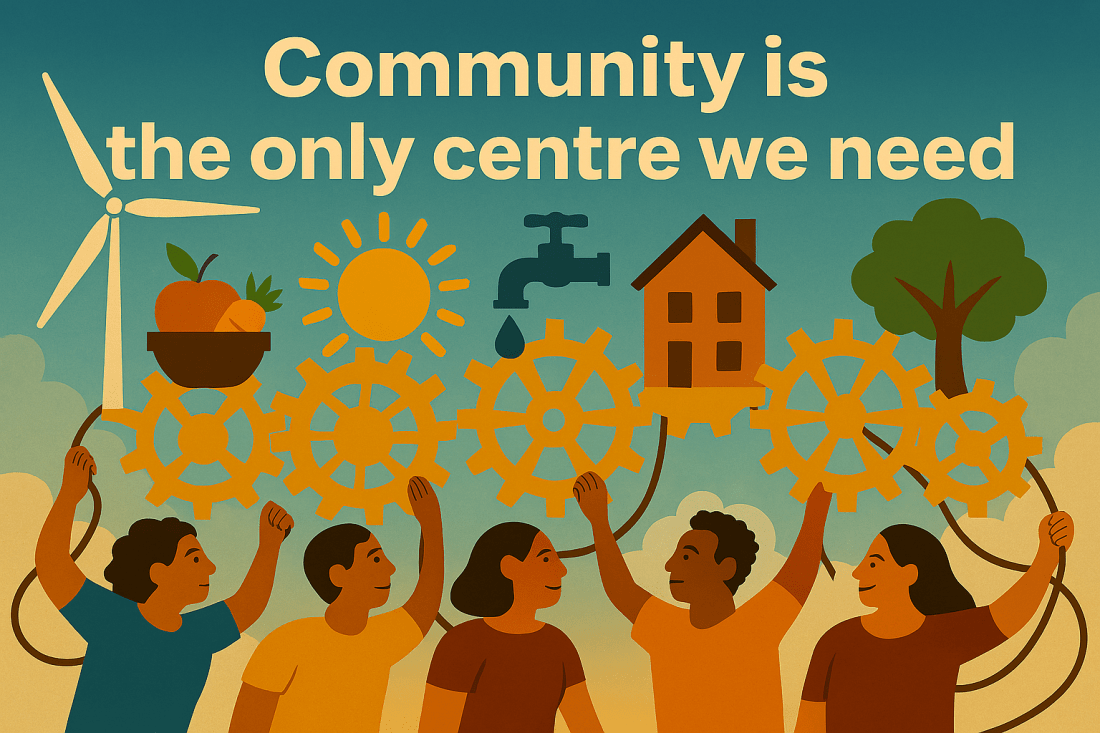

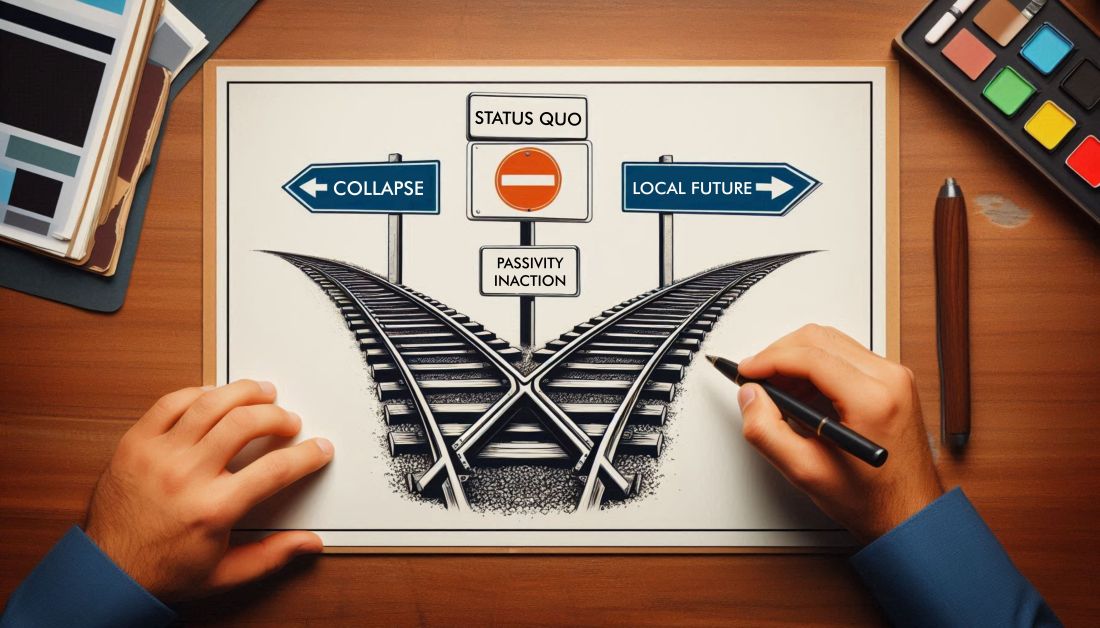


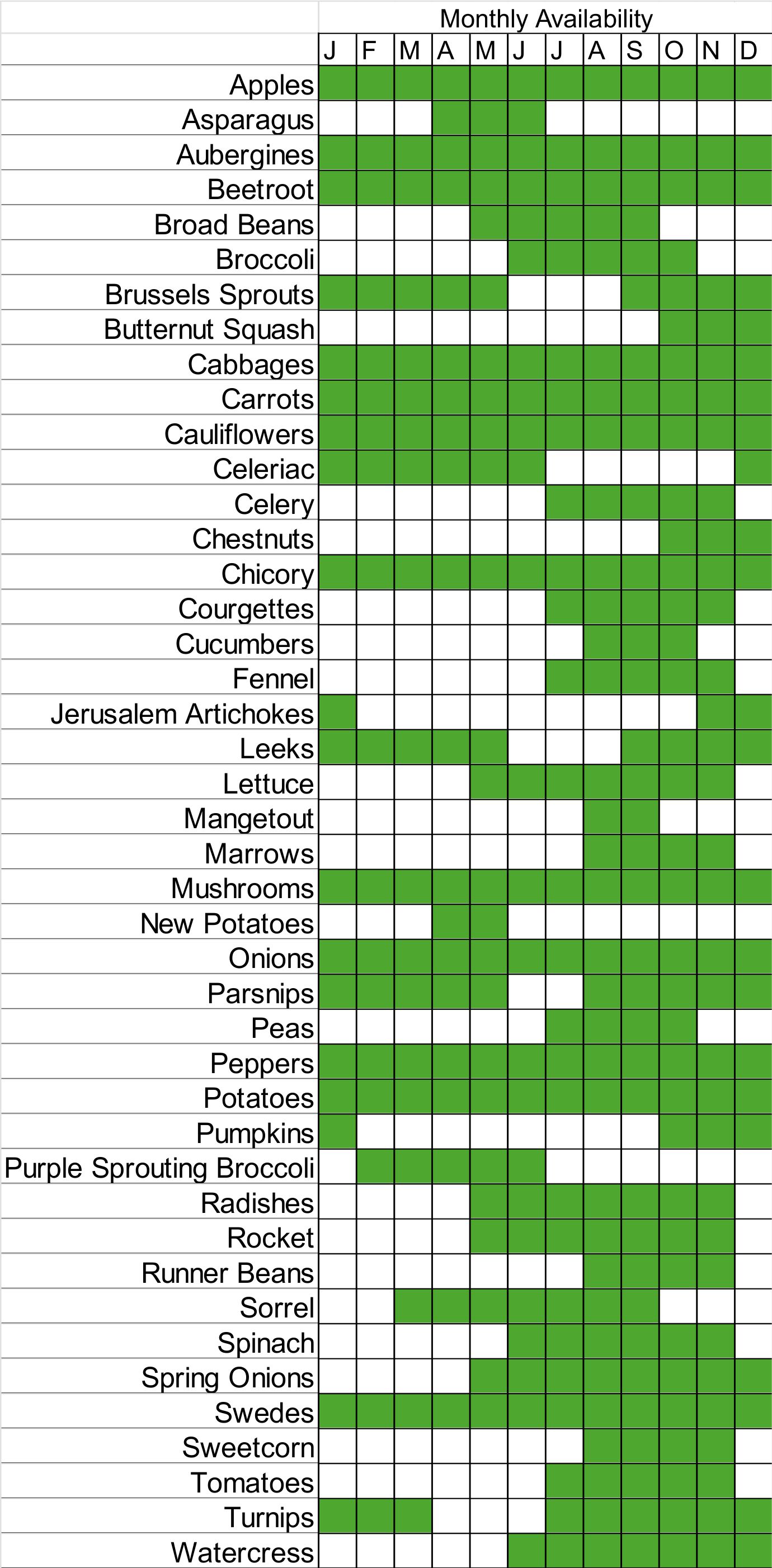
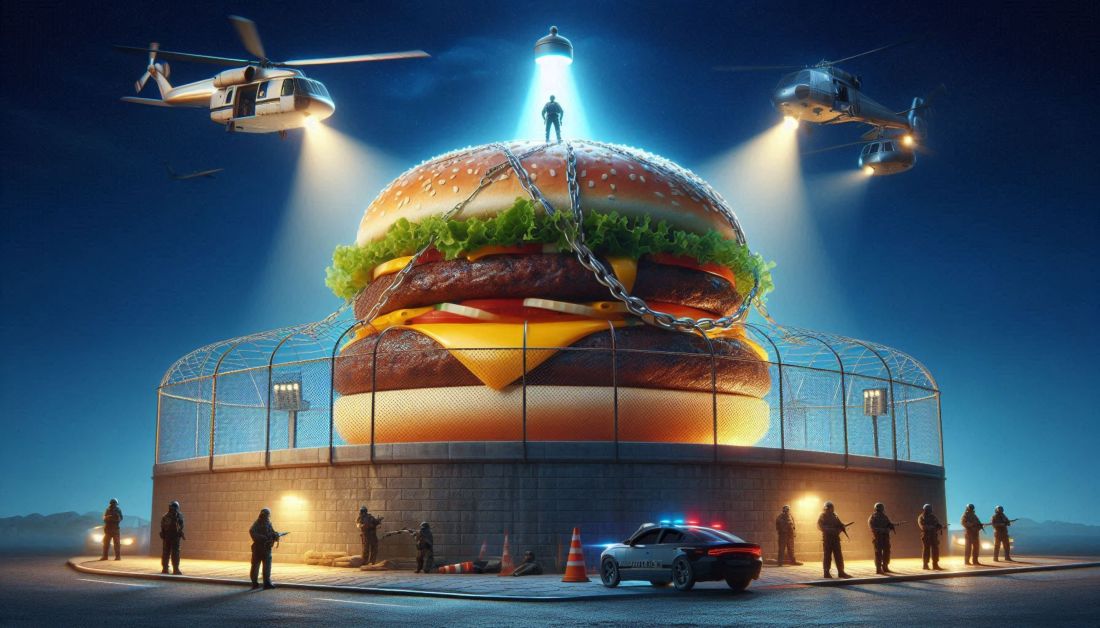
 Adam Tugwell