The Local Economy & Governance System (LEGS) presents a comprehensive framework for restructuring society, economy, and governance to address persistent challenges such as inequality, environmental degradation, and social fragmentation.
LEGS prioritises People, Community, and The Environment as the foundation for all policy decisions.
1. Principles for Policy Design
People: Policies must protect individual dignity, personal sovereignty, and wellbeing.
Community: Emphasize collective responsibility, local decision-making, and mutual support.
The Environment: Ensure stewardship of natural resources and embed sustainability in all sectors.
2. Governance Reform
Transition from hierarchical, distant leadership to local, democratic, and transparent governance.
Leadership is earned through service and accountability, not status or authority.
Decision-making structures (e.g., the Circumpunct model) ensure open, participatory processes.
3. Economic Restructuring
Implement a local circular economy: value circulates within communities, minimising external dependencies.
Money is treated strictly as a medium of exchange, not as a source of power or speculation.
Essential needs (food, housing, healthcare, transport, clothing, communication, social participation) are guaranteed for all through the Basic Living Standard.
4. Public Good & Social Provision
Redefine public services as Community Provision, locally accountable and ethically grounded.
Every working member contributes 10% of their working week to public services and charity, replacing traditional public sector staffing with a community-led workforce.
Health: Prohibit public smoking/vaping; deliver social care through relational, community-based models.
Housing: Limit ownership to one dwelling per person; treat housing as a right, not a commodity.
6. Education & Skills
Focus education on developing key life skills, self-awareness, and personal sovereignty.
Balance academic, experiential, and social learning to support independence and ethical awareness.
7. Business & Enterprise
Businesses must serve the public good, not profit. Social Businesses are non-profit, collectively owned, and fill gaps where private enterprise does not meet essential needs.
Ownership and wealth are distributed equitably among contributors.
8. Technology & AI
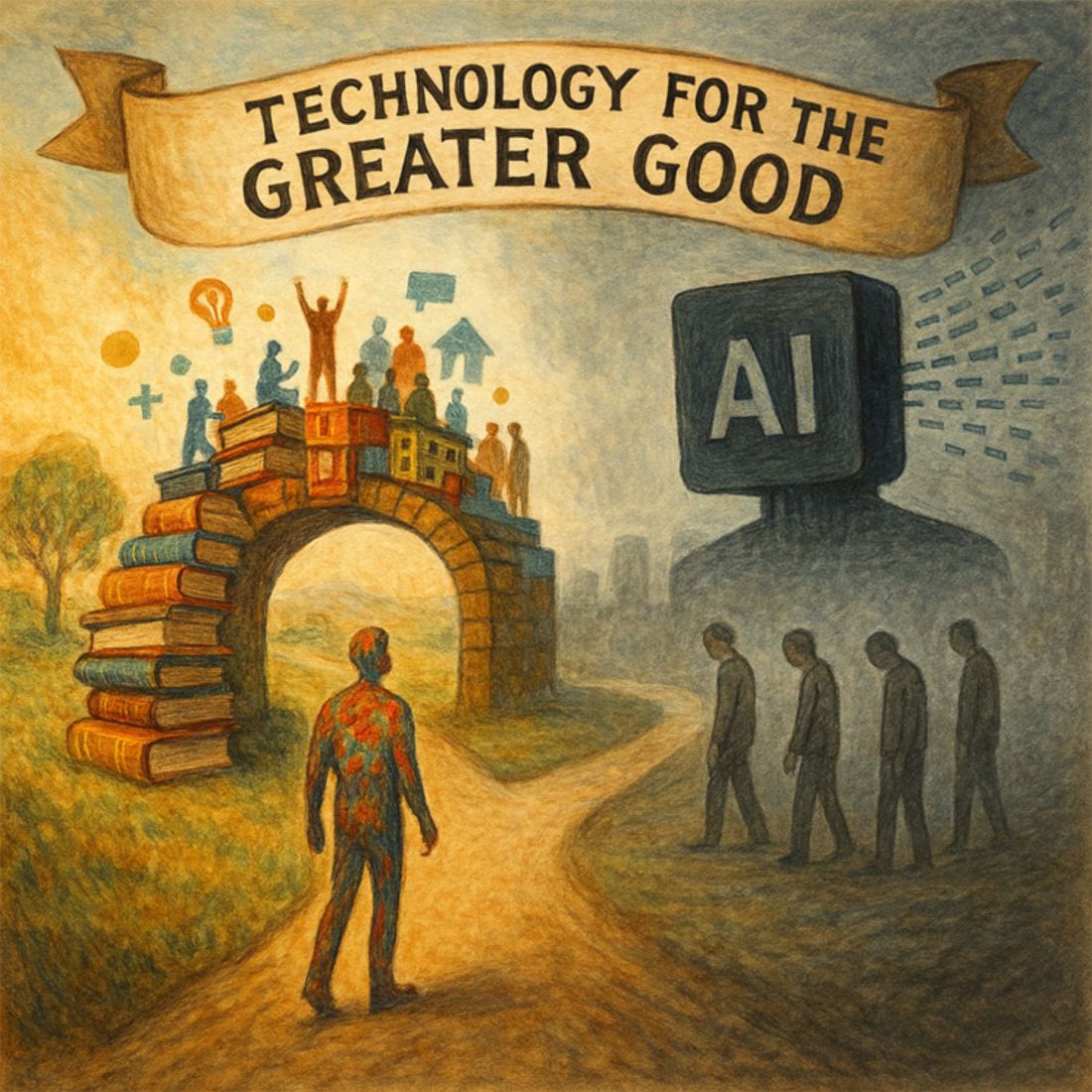
Strictly regulate AI and technology to ensure they serve humanity and do not replace human agency.
All essential services must have human-led, non-digital alternatives.
9. Freedom, Sovereignty, and Ethics
Protect personal sovereignty, freedom of thought, and belief.
Foster morality and ethics through freedom, security, and shared humanity—not through rules or oppression.
10. Decentralisation & Locality
Structure society around decentralised, self-contained Universal Parishes, ensuring governance, economy, and community life remain local, ethical, and responsive.
Strategic Takeaway for Policymakers:
LEGS offers a blueprint for policy innovation that centres on local empowerment, ethical governance, and universal access to essential needs.
Policymakers are encouraged to adopt and adapt these principles to create resilient, fair, and sustainable communities – where the public good is always the primary objective, and every individual’s dignity and wellbeing are protected.
Are you searching for a fresh vision of society—one that puts people, community, and the environment first? The new book, The Local Economy & Governance System offers a transformative framework for reimagining how we live, work, and govern together.
Why Read This Book?
A Timely Critique and Practical Blueprint: LEGS doesn’t just highlight what’s broken in today’s world—it lays out actionable steps for building a society where everyone’s essential needs are guaranteed, and collective wellbeing is the top priority.
People, Community, Environment: These three principles guide every aspect of the LEGS framework, from local governance and economic models to daily life and public policy.
Personal Sovereignty: LEGS places strong emphasis on empowering every individual to live freely, responsibly, and authentically. Personal Sovereignty is recognized as the foundation for dignity, ethical living, and genuine freedom within the community.
Authentic Governance: Say goodbye to distant, hierarchical leadership. LEGS champions local, democratic decision-making, where leadership is earned through service and accountability—not status.
Basic Living Standard for All: Imagine a world where full-time work at the lowest wage covers all core living costs—no more poverty, reliance on charity, or skipped essentials.
Community Contributions: Every working member gives back 10% of their week to support local services and charity, replacing traditional public sector staffing with a community-led workforce.
Ethical Business & Economy: Businesses exist to serve the public good, not profit. Social enterprises fill gaps where private business doesn’t meet essential needs, and wealth is distributed equitably among contributors.
Responsible Technology & AI: LEGS strictly regulates technology to ensure it serves humanity and never replaces human agency. All essential services have human-led, non-digital alternatives.
Who Should Read LEGS?
Community leaders, policymakers, and activists seeking practical models for local empowerment.
Anyone concerned about inequality, environmental sustainability, or the future of governance.
Readers interested in social innovation, ethical business, and resilient communities.
Get Involved
LEGS is more than a book—it’s an invitation to participate in shaping a fairer, more compassionate world. Start conversations, challenge old systems, and take practical steps in your own community. The journey to a better future begins with the choices we make and the values we uphold.
However, I have noticed that when people search for BLS using AI, a whole chain of stories and information—often including quotes attributed to me—has emerged, much of which is either out of context or entirely fabricated.
This is concerning, especially when those outside the mainstream are trying to share solutions and perspectives that challenge the compliance and blindness of today’s system.
We must recognise that the so-called AI takeover is being built on delivery levels that, in many cases, are no better than the efforts of a lazy teenager responding to an encouraging parent. And the outright creation of false information and narratives—even regarding work from independent voices—is troubling.
Given that AI now tells those seeking a quick overview that the Basic Living Standard is a way to fix our broken economic system, I feel it is time to clarify: while I believe BLS is a pivotal solution, it cannot and will not work within the current economic paradigm.
The integral priority of BLS is to put people, not money, first.
The Basic Living Standard: Not Intended for the Current Economic System
I have never created or published financial models or projections to ‘cost’ or predict the impact of BLS on the current economy or financial system, because the two are mutually exclusive.
BLS was not designed to be part of, or to work within, the existing paradigm, which makes it impossible to do so.
Decision-makers, legislators, and their influencers will not openly admit that our system is structured against equity and equality.
It is only because the system works progressively against these values that the disproportionate levels of wealth and benefits enjoyed by those in power can exist as they do.
Paying Lip Service to Parity
While the National Minimum Wage should be the benchmark or minimum earnings floor necessary for financial independence, the reality is that no person can be financially independent or live free of benefits, charity, or debt on this wage when working a typical 40-hour full-time week.
The current economic and financial system survives because the National Minimum Wage does not reflect the genuine cost of living for the lowest paid, who must then be subsidised by government benefits, seek help from charities such as food banks, or go into debt to meet the growing cost of living.
The FIAT, Neoliberal, Global-Driven Money System: The Perfect Crime?
A hard truth about our broken and collapsing system is that its design centres on wealth transfer and impoverishment, relying on the ongoing creation and addition of new money to the economy.
Currency debasement devalues the worth and ownership of the masses, while creating additional wealth for the elites and enabling them to secure property, public infrastructure, and ownership of everything devalued by their actions.
System Collapse and the Choice We Must Make
The finite lifetime of what may one day be considered one of the greatest ongoing crimes against humanity is fast approaching its end.
How the masses respond to financial and systemic collapse will dictate whether the Basic Living Standard, or a similar benchmark, forms the basis of a new people-centric economic and governance system.
This new system would put people back at the heart of everything, rather than the money-centric focus we have now.
The current system is collapsing because it is fundamentally corrupt and wrong.
Introducing a system like BLS within the current system—even under the name National Minimum Wage—could not achieve its true purpose, because implementing it honestly would speed up, if not immediately collapse the current money-centric system – and that’s why nobody in power today who benefits from this system will ever agree or willingly help for it to be done.
Embracing the Shift: Making Life About People, Not Money
If we accept and adopt an economy and governance system cantered on People, Community, and Environment, we will naturally move away from financial modelling, projections, profit margins, and all the tools that reinforce money as the only important value in life.
The Basic Living Standard provides a clear focus for the paradigm shift from money-centric beliefs to what everyone needs—not wants—and establishes the basic standard for independent living without dependency.
However, BLS is not a policy that can work in isolation or as an add-on to the current system. It is a fundamental building block of the universal change we must choose and embrace, because we cannot fix what cannot be fixed.
The Basic Living Standard: The Basis of a New Way of Living
By restarting, reestablishing, regenerating, reforming, and replacing our economic and governance systems, the Basic Living Standard becomes the benchmark for guaranteeing that the lowest paid can sustain themselves and be financially independent in return for a standard working week.
It requires all businesses, organisations, and systems within a new framework of economy and governance to realign with ensuring that every person experiences this minimum standard as the foundation of society, business, and culture.
Improving lives today really should be as simple as creating a Minimum Wage and changing everything for those who need help in one day. But changing perceptions is not the same as changing the way everyone thinks.
That is why the introduction of a system that genuinely works for everyone cannot be openly embraced before the pain of collapse and the reality it brings.
Everything we know today exists because of a system built around money as a value set—a flawed belief system we have all been conditioned to accept.
Only when this system fails and excludes people, step by step, do those affected awaken to the reality that something is fundamentally wrong.
Yet those excluded are often viewed by those still inside the system as the ones who are guilty and wrong.
Out of Our Problems, an Opportunity Awaits
The collapse offers a moment when the balance can flip, and those who have been excluded may reach a critical mass that signals to everyone participating in the money game that a better, equitable way exists.
However, ordinary people must see, understand, and accept this en masse.
Whatever happens next will lead to wholesale change—whether we choose it or simply go along with it.
Only by being aware and honest about what we need, rather than what we want, can we take the leap of faith necessary to change everything and contribute to the creation of a new system where people, community, and environment come first.
The Basic Living Standard offers a benchmark for the frameworks and opportunities of a new way of living. Yet, it will remain unknown and inaccessible to those unwilling to step away from the comfort of an unsustainable relationship with the past.
Money, democracy, ownership, business priorities, and practices are just the tip of the iceberg when it comes to the breadth and depth of necessary change.
Everyone must own and be part of the transformation ahead, because the change is about the needs of everyone, not just the wants of a privileged few.
There’s More…
In the coming days, and hopefully as soon as this week, my next book will be published, building on all I have been writing and sharing for over three and a half years.
Evolving directly from Our Local Future, first published in summer 2024, this latest work brings more detail and focus to the mechanics of implementing a new system for economy and governance, while simplifying previous concepts to make them more accessible and relatable.
The Basic Living Standard lies at its heart, and I am confident that we can flip everything to work for People, Community, and Economy, once we see the benefits and share the determination to implement a system and new code for life that truly works with equity and equality for all.
There’s something very wrong with the AI story that we are all being sold:
Nobody seems to have noticed that the script of man’s pathway to the pinnacle of human intelligence is about to come to its end, by handing our ability to think, over to machines.
As I write, I’m wondering if the name ‘Artificial Intelligence’ was a deliberate way to hide the truth in plain sight, all along.
Not because the technological breakthroughs that are coming at us thick and fast aren’t very clever.
But because just like the surrender of our value set to an artificial, valueless and damaging world dominated by money that manipulates everything about the way we think, we are about to give away our ability to even do that, to systems and technologies that cannot genuinely benefit any human being – other than those who own and run them.
In my eBook Actions Speak Louder than Digital Words, I talked about AI only having the ability to look back at history and the past. Even where back meant what had been published or ‘sensed’ by the Internet up to the very moment when the system was responding to a specific command.
This overlooked or deliberately whitewashed flaw of AI echoes one of the greater faults in the Human experience, where we inherently look backwards to our past experiences to provide guidance for the future.
This should be troubling enough.
But what wasn’t apparent even when I published that book in June 2023, was that as AI began filling everything across the web and digital sphere with its own responses, muses and anything else we can give AI-derived content as a name, it would then begin leveraging just as much and increasingly more of its own diluted content as a source, which is almost certain to increase as human input or creativity dries up.
And the contribution of human creativity and intelligence to the smorgasbord board of information and data that the AI engines feast on is most certainly drying up, as more and more of us surrender to the narrative we have been fed that tells us AI is now the only way, and jobs are threatened by the accompanying suggestion that AI can do things that we can never do!
Dictating our future by using the past as our point of reference certainly holds us back and creates all sorts of difficulties at all levels of life that we didn’t ever need to have.
However, the one thing that makes that experience manageable and, in some ways, arguably beneficial too, is that our human creativity and ability to look at every new situation and make sense of it and its context in ways that allow us to build bridges into the future, means that we are making progress all the time. Even if that progress is slower, whereas a machine that is limited only to reading what has already happened simply cannot.
People – and many of them too – genuinely accept the stories and myths that we have and are now being sold.
They believe and, in many cases, have become fearful that AI can already or very soon will take over every function that humans currently carry out within any business or organisation. Despite the reality that anyone using their common sense or daring to listen to their inner voice will recognise a very big question, ‘Where in this future does that leave any need for me?’
AI is very fast at what it does and is able to look at potentially all the information that is available to us in digital form at the very moment in time that a question is asked or an instruction is given.
That – and only that – is the real magic of AI.
It is the reason that we are all just accepting the idea that AI is already infinitely cleverer than Humans could ever be. Just as those who benefit from us believing this to be true intend us to believe.
However, our acceptance that we no longer need to be creative or think for ourselves, means that we will not only increasingly become dependent upon a pool of ‘knowledge’ outside of ourselves – albeit a very large one of everything that has been recorded, spoken, considered and then committed to the internet and digital platforms up to some point in history before. But this pool of knowledge that we will use for everything will become increasingly diluted by the growing amount of poor and corrupt information, data and ‘understanding’ that our already burgeoning use of AI with everything is now spaffing out into the digital ether.
As you read, Humanity is literally giving up the ability to think and create for itself, to a machine-driven world that is incapable of doing any more.
What is more, Humanity is surrendering these cornerstone abilities for survival voluntarily. Because someone who benefits from us believing we are inadequate without technology has told us this, when a change of the kind that overreliance on AI could be about to usher in would have needed something akin to an extinction-level event to take place at any time in world history before.
This uncomfortable truth will not stop those who stand to benefit from the AI takeover from pushing and promoting this path. They will continue peddling the myths that the AI takeover will be in our best interests and will be inevitable all the same. When it is nothing of the sort.
The Technology we have available to us today will not live up to its greatest potential. Because the greatest potential any technology that man invents will have, is to help improve the lives and experiences of all men, rather than to replace any one of them.
We know this to be true, as this has regrettably been the way that technological advancements have always impacted Humanity since the ending of the Agricultural Age.
Technology has always been employed to make money for those who own and control it since then.
The rise of new technology has always been at the cost of all others at some level. No matter who they are or what their connections might be.
The reality we face is that it may already be too late to save the world we recognise from a fate that we have all unwittingly chosen. Rather than there being any kind of event or catastrophe at the heart of future change that no one person could have been responsible for.
However, if we are to address the slide towards universal ignorance, with the accompanying potential to take us back into the dark ages once more, we must reassess, reimagine and regulate the uses of every kind of technology. So that technology’s master can only be the public good. Rather than profit and the disaster that is following hard in its footsteps right now.
If we value the Human experience and wish to improve it, it is time to learn, share and then live the truth that there is no need for any technology to replace jobs, other than so just a few can increase their profits and control.
The best way for everyone and everything to live well, is without the complications and diversions that misappropriated technology imposes upon us, and the technology we do embrace should always be used for the greater good and for the benefit of everyone involved.
You may have noticed that there is a growing trend for people to generate clicks on social media by creating long threads that tell interesting stories – many of which have already been told before.
One of them has popped up on my feed several times recently and outlines the predictions of some great contemporary sage of future tech who has apparently been proven right several times before.
The next prediction tells us that in no more than a few years, AI will have made everything so cheap that nobody will work and everything we pay for will cost just a few pennies and no more.
This prediction is popular. Because in today’s world everything relates to money.
Therefore, when people are handed the suggestion that everything they want will cost next to nothing, and there will also be no need to work, the immediate response and logic for just about anyone is to frame that in the way that we see, feel and experience our lives today or right now. Rather than considering what the pathway to that place will have changed in our lives and what our life experience will have then become.
The Moneyocracy or money-centric way of living that we are all experiencing today isn’t one where anything we need and certainly nothing that we want comes to us for free or without there being some financial-related cost of some kind.
Whilst the narrative that the establishment, big tech and big business would have us believe is that AI is here to make life much cheaper and easier for us all, the financial growth that the establishment’s pet politicians are so obsessed with and the picture of unfettered abundance for everyone that they want us to buy into, don’t go hand in hand.
Yes, there is of course the chance that the money hoarding elites are doing what they do today and that they have done everything that they’ve done in the past so that once they have optimal control of everything that we know, they will then benevolently give every one of us the perfect life experience that was always the aim. Which of course only ridiculous amounts of cash would allow them to do.
However, before we run away with that idea and think more about living our best material lives for free, there are perhaps just a few alternative truths that we all need to consider.
Money has made money by riding off the backs of the masses. First by making many hands do the work that enriched the few, through industrialisation and everything that came with it. Then by turning the mass population into debtors, exploiting the unwitting who have bought into the money myth themselves, so that the elites can continue to make ridiculous profits, just the same.
The system is very clever. And it is clever because it preys on the darker attributes of the human condition that make too many of us overlook common sense and basic logic when we are in receipt of money, wealth, position and shiny things. Everything that makes us live for a constant flow of temporary yet momentary hits that we have foolishly mistaken for what makes life and living feel good.
Addiction hides truths that are big, small and cover the multitude that sit between.
No matter our level or position within this carefully constructed top-down pyramid, the truth swirls all around us. But we remain blind to it for as long as we continue to be bought in.
So, in the sense of this coming ‘nirvana’ that AI is supposedly now promising us all, perhaps we should consider some of the more serious and consequential truths that we are almost certainly missing whilst we remain within:
The wealthy are only wealthy because of where their wealth sits within the hierarchy of the way that money and the wealth divide works against the rest of us today.
If the masses stop working, there will be billions of mouths around the world to feed and as many people to support with all the basics and essentials for life, just for people to continue to exist.
Even if machines are creating food, creating entertainment, providing transport, building houses and doing just about everything else we can imagine that has historically been done by hand up until now, there will always be a cost of some kind to pay.
The running, energy production, maintenance and replacement of the systems that would be required to enable such a massive workless population not only to survive, but to be sustained at what we would surely expect to be a good standard or experience of life, would remain very high.
Indeed, the cost of supporting billions of people around the world would still be much greater than many would imagine and would not be a cost that could be covered by playing with money and the way that people who are earning money today believe in the power of money right now.
In this sense playing with money means the way that the entire monetary, financial and economic system as we know works.
The ‘money’ and currencies we have today are part of the biggest confidence trick that has ever been played on humanity.
The whole economic system and the way money is created and managed within it is well and truly rigged.
The creation of the wealth, and the levels and scope of the asset ownership that the elites enjoy today would not have been remotely possible without them having and retaining the ability to constantly game the system.
Those running, managing and ‘in’ on the system use money that doesn’t exist to buy up everything that has real, non-monetary value to people.
This ‘ownership’ means that they will control our future and everything within it.
This has all been achieved under a system that they have created and manipulated using the establishment and the political and legislative processes within it to allow them to carry out what amounts to nothing less than legalised theft.
The wealth that has been created to enable this world take over by the wealthy can and will only achieve the aims of creating a utopian world if that world is inhabited by few enough to make the absence of money creation sustainable.
It will not be sustainable in any way, if the few have to manage and provide for a world population tomorrow, where the masses do nothing productive, become professional users and behave or act like farm animals or caged pets that exist in every direction and live all over the place.
Many baulk at even the merest hint or suggestion of there being some kind of plan for depopulation.
But anyone who understands how the money, financial and economic system we have today really works and where it is going, will see that depopulation of some kind is the unavoidable answer that bridges what is otherwise an unbridgeable void on the pathway to the outcome which has always been this Moneyocracy’s aim.
The only challenge they face is how to achieve this on a big enough scale without the masses ever awakening to the idea that national and worldwide crises can be planned and implemented by design. Just as easily as an entire monetary, financial and economic system that has led the majority of us to believe that those who don’t have enough of what they need to live today are the only ones who are at fault.



 Adam Tugwell