Writing about people, systems and the realities that shape our lives
Category: Contemporary Philosophy
Discussing the world and life today, how we behave, why we behave the way that we do, how we can change life, how we can improve life, solutions to the problems that society has
Whilst so-called socialists and capitalists alike will continue to argue that their destination would have been different, until whoever is in power takes the rap for destroying everything at the time – and then the other tries desperately to convince everyone that there’s still time for them, just to be sure, the very perverse and somewhat disturbing truth that is now coming into our view of reality is that the direction of both left and right political thinking takes humanity to exactly the same place.
What all these ‘philosophies’ – the ideas of academics, thinkers, economists, industrialists, tech moguls, agitators, the aggrieved, life’s bitter victims, entitled shirkers, greedy and selfish bastards – have in common, is the centralisation of power into the hands of one or just a select few – who for whatever purpose intended – control everything, so that they can enjoy their own lives and positions more than anyone they see as different to themselves and therefore as being a threat.
Verging on enlightened thinking, as many will surely argue their heroes and inspirations to have written these works will have been, enlightenment doesn’t revolve around creating environments that centre purely on a beneficial vacancy at the top. Which the design of these solutions surely was the intention, resulting from whatever experiences the authors had themselves experienced up until the time of writing.
None of these accepted visionaries were wrong. Or at least they were not wrong in the sense that we all are the sum of our experiences and our position looking upon or perception of life in any given moment will be correct, for us personally, in terms of what those experiences have taught us and what we have therefore concluded that they should be, right up to that same moment in time.
Let’s face it. The world is a very shitty place to be. Whether you have nothing and cannot escape poverty because of the boot that rides rough-shod over you; or at the other extreme you are as financially wealthy as it is possible to be and all you quietly worry about is protecting yourself, your wealth and how you are going to accumulate even more.
The pain that hides behind our eyes hasn’t changed over decades and centuries in human time.
Yes, the surroundings, clothes, transport, technology and everything else may seem different. But the nature of the experiences we are all having on our different pathways are in relative terms very much the same.
Wherever we may sit across this spectrum, 200 or more years ago at the dawning of the Industrial Revolution or right now as we are being prepared for the AI takeover, we all have an idea of what the perfect world for us would be.
It is regrettable that only some of us find ourselves able to share those ideas and thoughts and have them taken seriously by enough others for them to be seen to matter – which itself doesn’t mean they are genuinely enlightened or of benefit to greater humankind.
It’s simply the case that even when complete idiots or utterly selfish bastards are heard, their thoughts and views are swallowed up like nectar by people who themselves have a back catalogue of difficult experiences that identify with what they read or hear.
They pick those ideas – those philosophies – up and run with them, no matter how twisted or damaging in the longer term they might be. Leaving ideas behind in the dirt that the chaos they unleash leaves behind to fester for years and possibly centuries, that would otherwise deliver for the good of everyone when implemented.
We must be clear that all the ideas and philosophies for the world, whether they fall under the socialist or capitalist umbrellas or not, are without fail just ideas and suggestions.
Whether well intended or not, these philosophies were all packaged with the pretense that they were the ingredients, nuts and bolts or technicalities of a model of the perfect working world, for all people.
As history has demonstrated only too well, the actions of those underneath these umbrellas lead to both the imprisonment and oppression of the masses under the yoke of world elites.
We are fooled into believing there is a difference in outcomes because one system gets straight to work by enforcing its ideologies on people and the systems of the world as it tightens its grip and pushes those who are left into the cage. Meanwhile, the other drugs everyone with every conceivable high that they believe they like, creating mass addiction to ways of living that mean there is little hope of sobriety for anyone who has bought in and become addicted, until the very heavy jail cell door will have already slammed shut behind us all.
Centralisation is the flaw in all of these philosophies. Because it is impossible to centralise every part of life, for every single person across every country and across the entire world, without life, values, happiness, health, wellbeing and all the mechanics of essential function and civic society collapsing in their wake.
The clever tools and devices used by capitalists, globalists and neoliberals are ultimately no different to the level-playing-fields, street revolutions and guns employed by communists and socialists to enforce and police their point.
The painful outcomes that these forms of idealistic thinking inflict upon the masses always have agendas behind them, and none of those paying the real cost of these ideological-turned-material crimes ever agreed to the world being run this way.
The elites and those behind all of this have of course been aided by technological advances and the many different ways that the world has opened up and the distances between us all have been bridged.
Yet the point has always and pretty much systematically been missed that humanity and our morality based values system do not need and never needed to change to keep up with the material changes in the world, which have always been about the things that appear to be important beyond and outside of people.
Indeed, the changes that have been made to our frameworks for behaviour have always been made to suit those in power, with influence and who are directly benefitting from those changes. Those who perceive that the only way they can benefit more is for the old ways or ways that benefit others with fairness and balance must be left behind. Because they will otherwise get in the way.
So, was there ever a point in history where humanity genuinely got the whole thing right?
There is good reason to believe not. Or that if that moment of genuine balance has ever existed so far, it was momentary and could only really have been so, because the opportunity didn’t actually then exist to end the self-interest, anger, frustration, greed and every other dark part of the human condition that drives generation after generation to ingeniously, creatively and ignorantly to exactly the same things over and over again.
We may not see it, nor appreciate nor even find value in the suggestion. But a centuries-long pathway of humanity being led and controlled by interests that are not in any way genuinely shared, has led us all to a place where those who have benefited from that control and the generations following behind them, can no longer maintain that control. Because the whole pathway is about to have gone too far, before that door can be slammed shut and the final adjustments to the oppressed fate of humankind can be made.
The intention underlying of all these ideologies was that everything and everyone would be controlled throughout the journey, until that control was necessary no more.
Yet the systems we have been conditioned into accepting, like the out of control value of money, the rules that are supposedly there to protect and help whilst they disadvantage us, and the process of making very intelligent people doubt themselves or force them to believe and support ideas which run contrary to common sense or that are completely untrue, have all contributed to a situation where many already know the world is out of balance. People know that whatever is behind all of this has gone too far.
Natural, universal, unspoken rules have always existed that require each and every one of us to have the freedom to learn, to grow and to develop if we so choose to do so.
Because of the persistent actions of these patriarchal few and those who have followed them, that freedom for everyone to learn grow and develop, no matter their background or position in life, no longer exists. Because the way the system of the world has been developed now means that many no longer have the opportunity to experience the personal sovereignty to which every man is entitled. No matter how, where or to whom they were born.
A collapse is coming. That collapse is already underway. We are all within it and experiencing it at subjective levels that keep us from the objectivity that would make it much easier to define.
The critical point that is now approaching will be the moment that something happens, that could be civil unrest, financial collapse, the extension of foreign wars, civil war or something else, when each and every one of us realises and accepts that we have a Choice. And that we no longer have to be passengers or passively accept whatever someone else has engineered to be our fate.
The curse of overcentralisation is the never-ending desire of those who are at the centre of that centralisation process to centralise even more. Simply because of the greater rewards and control that they believe it will bring.
The outcome of the overcentralisation is that nobody ever has enough of any of the things they really need. When in a world and time when we have so much available to everyone, this has become a first-hand tragedy for us all to experience indeed.
The only centre that we need and that we should ever seek is the community, locality and to share responsibility for everything amongst the people we see face to face and interact with each day.
This is real life that doesn’t come to us through media channels, digital technology or through rules that have been made by some name without a face.
This system is the only resource and ecosystem that we need to sustain us, that we need contribute to and that can be relied upon to create frameworks and governance for life that will always be in our best interests.
It is the only system that will provide and leave us with the genuine freedom necessary to enjoy every aspect of a good life, as the majority of us would want and like to experience.
The decision to make this change and embrace the power to do so is ours already, if we actually want it.
There is no need for hierarchies, for top-down systems and procedures, for political parties, financial markets and devices, globalised business and supply chains, or anything else that makes life cheaper. When life being cheapened any further is the very last thing that any of us need.
Local communities that are genuinely local and locality driven, and the ecosystems and self contained economies that they will create, offer us everything that we will need to have to experience valuable lives, where the basics and essentials are always in place.
Locality driven communities offer a system of governance meaning that no matter the life choices any one of us makes, we can all live independently of help – and therefore will not experience the forms of lack that are responsible for so many of societies social problems as their root cause.
The value of every one of us is exactly the same and nothing can change this.
No matter what we do, wear, what we have or how we are seen to be, not one of us should be positioned to advantage ourselves by disadvantaging others.
This is where the fundamental basis and genesis of a new world philosophy must be able to begin. One that is designed by us all for everyone rather than by a few who want everything controlled and for that control to be in the hands of one.
***
Over the past 3 years, I have been writing about the different aspects of what is happening; what is likely to happen and how we can all get from here to a much better place.
Whilst the rules and frameworks that govern a new world that will genuinely be of benefit to everyone, must be designed and agreed freely by us all, we still need an idea or vision of the outcomes that we can expect.
Our Local Future is a model for future life that I believe to capture this, which I would invite you to consider. Before someone else has considered and though out an alternative, that when the time has come to make the choice that is genuinely good for us, will instead steal that opportunity and take its place.
Whatever you do next, please remember to beware the many false prophets who are shouting the attractiveness of populism and anarchy now.
Don’t listen to those who tell you they are putting people first.
Keep watching for those who are doing so.
The only centre we need is within our communities themselves. Everything will make sense when everything important throughout our lives revolves around everything we can experience daily at first hand in this way.
It’s no great wonder that Foods We Can Trust are thought by many to be boring and bland, as well as being expensive and increasingly difficult to buy or access.
The alternatives often taste good. Always seem to be available whenever and wherever we want them, and in terms of the cost of everything we buy today, the most convenient Foods also appear to be the cheapest.
Ask anyone how many natural, locally or UK produced Foods they could find at a shop they regularly use to buy today, and the list will probably be short and at the same time confirm everything that I’ve just outlined above.
However, the number and variety of Foods We Can Trust that are available across the U.K. and that may be growing on a farm, in an orchard, in someone’s allotment, or perhaps are being docked at a fishing harbour near us today is much greater than many of us think.
We will talk about nutritional values, seasonality, production and other really useful things to know about how we make Foods We Can Trust available to everyone as a part of normal life in other posts.
But for now, becoming aware of and understanding the list basic Foods, or Foods that are either available or could become available to us that we can grow, farm, harvest or catch locally across the UK or around our coastline, is a very important place for us to begin.
A Work in Progress
The information that I am about to share is based on what I either know already, or what I have been able to research using sources such as those that I will link later on this page.
One of the reasons that I began Foods We Can Trust is that I hope to share information about Food Production that isn’t widely known or acknowledge about the Foods We Can Trust that are already widely available, or could be, if we decide to take a different approach.
As such, I hope that the following Tables will be updated and will in time be accompanied by posts, videos and resources that will come from other contributors.
If you notice any errors, glaring omissions or would like to add something yourself, please get in touch!
For now, the Foods We Can Farm, Catch, Harvest and Grow Locally in and around The UK will be broken down into the following groups, with a little detail to help with each:
Fruits
Vegetables
Crops
Livestock
Wild Livestock & Game
Natural Fish and Seafood Landed at UK Ports
Natural Fish that can be Line Caught from UK Rivers etc.
Dairy Products that can be made from UK produced Milk
Please note that the inclusion or exclusion of anything may not be deliberate and anything you are aware of may be added later.
Equally, inclusion is not making any statement upon the views and perspectives of any individual or group that believe certain foods should be included or excluded for ideological, religious or other reasons. This is about being practical and realistic about the food that we can grow, produce and that is otherwise available across the UK.
Table 1: Fruits that grow or can be grown in the UK
Table 2: Vegetables that grow or can be grown in the UK
Table 3: Crop Types that grow or can be grown in the UK
Table 6: Natural Fish and Seafood that is or can be landed at UK Fishing Ports
UK Landed Fish (Seafood)
AKA
Anglerfishes
Atlantic Cod
Atlantic Halibut
Atlantic Herring
Atlantic Horse Mackerel
Atlantic Mackerel
Ballan Wrasse
Black Seabream
Blonde Ray
Brill
Catsharks
Nursehounds
Clams
Common Cuttlefish
Common Dab
Common Edible Cockle
Common Octopus
Common Prawn
Common Shrimp
Common Sole
Cuckoo Ray
Cuttlefish
Bobtail Squid
Dogfishes and Hounds
Edible Crab
European Anchovy
European Conger
European Flat Oyster
European Flounder
European Hake
European Lobster
European Pilchard
Sardines
European Plaice
European Seabass
European Smelt
European Sprat
European Squid
Garfish
Gilthead Seabream
Great Atlantic Scallop
Green Crab
Grey Gurnard
Haddock
John Dory
Lemon Sole
Ling
Lumpfish
Lumpsucker
Manila Clam
Megrim
Megrims
Mullets
Norway Lobster
Pacific Cupped Oyster
Periwinkles
Pollack
Pouting
Bib
Queen Scallop
Rabbit Fish
Red Gurnard
Saithe
Coalfish
Sand Sole
Sandeels
Sandlances
Sea Trout
Shortfin Squids
Small-Eyed Ray
Small-Spotted Catshark
Smooth-Hound
Solen Razor Clams
Spinous Spider Crab
Spotted Ray
Starry Smooth-Hound
Thornback Ray
Tope Shark
Tub Gurnard
Turbot
Undulate Ray
Velvet Swimming Crab
Whelk
Whiting
Table 7: Natural Fish that is or can be line caught from UK Rivers and Watercourses
UK Fish (Wild/River)
Barbel
Bream
Chub
Common Bream
Common Carp
Crucian Carp
Dace
Grayling
Gudgeon
Perch
Pike
Roach
Rudd
Salmon
Silver Bream
Smelt
Tench
Trout
Please note that whilst links to information sources used to create this page are listed later under ‘Worth a Look’, I have added a link here to Gov.UK – Freshwater rod fishing rules, as there are clearly stipulated fishing allowances for anyone wishing to catch fish with a line from UK Rivers and Watercourses.
Table 8: Fish that is or can be Farmed in the UK
UK Farmed Fish (Aquaculture)
Atlantic Salmon
Lobsters
Mussels
Oysters
Rainbow Trout
Sea Bass
Table 9: Dairy Products that are or can be produced from UK Milk
UK Dairy Products
Butter
Cheese
Cream
Milk
Yoghurt
Worth a Look
I researched the content for the 9 tables listed above on 9 May 2025 using mostly Google Searches made from Cheltenham.
There are a number of very useful websites that will follow from where I sourced most of the information that I have pooled together to construct these Tables. There are others and these have been used because the information they offer is easy to use.
Please note that whilst there is every reason to believe the information linked below is both credible and from organisations considered the same, the inclusion of these links is neither an endorsement nor recommendation of the information these organisations provide. Their referencing here makes no suggestion of there being shared views or objectives, even if there are areas relevant to this page which are aligned.
Overview on ‘Foods We Can Farm, Catch, Harvest and Grow Locally in and around the UK’
The information contained on this page is likely to be one of the most important parts of the Foods We Can Trust initiative.
When we remove all the noise and all the agenda-led information available about what Foods and Ingredients can be brought in from Overseas; what can be manufactured or produced in factories, and why these are the Food Sources that we can and must rely on, the reality is that it is only the Foods and the Ingredients for Meals that come from them that we can grow, catch, harvest and create from these, that have the potential to be classed as genuine Foods We Can Trust.
As this work progresses, I expect to reference this topic frequently, especially as we begin to look at different aspects of UK Food Production more closely, and at Grow Your Own and Home Growing in particular.
I am very keen to add as much information as I can in these important subject areas and will be very pleased to hear from anyone who can add to what is already here in ways that will promote awareness and understanding of the information and processes that will help everyone to have access to Food We Can Trust.
Food Security is one of the key reasons that Foods We Can Trust is here.
Because of what Food Security means to me, what I understand it to really be and most importantly, how important I believe Food Security to be in respect of everyone – and that means us all.
However, like many things about Food today and indeed pretty much every experience that we share with others beyond ourselves and what’s very personal to us alone, Food Security can mean a lot of very different things. And that difference is already doing a lot of harm.
What does Food Security mean to you?
Before we continue, could I ask you to please take a moment to stop and think about what Food Security means to you.
Is it about the Food that UK Farms produce?
Is it about being sure there is always Food available to eat?
Is it knowing that you will always have a choice of Food and whatever you want to eat?
For you, Food Security and what it means to be Food Secure could be any of these. It could be any of these in a manner of speaking. Or what Food Security means to you could be something very different, and ALL of the options could still be correct!
The things that Food Security can and does mean
It is important that we recognise and accept that different perceptions of Food Security not only exist.
To some, their own view, or what someone else like the Government refers to or considers to be ‘Food Security’ is the only thing that it can be.
Unfortunately, having any fixed or accepted meaning for Food Security can be problematic when there is a version of Food Security that everyone accepts as being what Food Security means, and those who are controlling that narrative then abuse the trust that people place in the understanding those people have of that version of Food Security and then manipulate information, statistics and even the truth, so that it can be said that either you or the UK is ‘Food Secure’, even when you are not.
In a moment, I will talk about the version of Food Security which is the establishment’s ‘accepted’ term.
I will then discuss the version of Food Security that UK Farmers and Food Producers generally think of when they talk about it.
We will then move on to discussing what Food Security should really mean, to everyone.
The Establishment view: If people can eat, they have Food Security
The way that the establishment, politicians and government operate today is built around this idea or philosophical standpoint:
If people can eat, they are Food Secure
Yes, I understand that suggesting this will annoy different people and organisations who are doing great things in the Food sphere. Because very few of us actually believe that as long as people have a meal of some kind, that’s all Food Security is about.
However, if you consider what having a meal of some kind can and regrettably does mean for so many different people in so many different ways today, you will then begin to see how those who really have control over Food policy, have come to think about their priorities and obligation to the Public in this perhaps honest, but nonetheless very unhelpful way.
If you aren’t hungry, you don’t have a problem
It sounds brutal I know, and it really is.
But with the issues that Government is really facing today – and that means the things that are really going on, rather than what the media and the narratives would suggest we believe, politicians do genuinely believe that if everyone can eat, they have done their job – no matter where our Food comes from or the Food we are eating really is.
This means that all the initiatives about healthy eating, encouraging us to eat properly and even the talk about how important our Farms and Fishing are, are really just wishful thinking and it doesn’t really matter to whoever is in power if they come to nothing. Because the only problem for them will be if people have nothing to eat and then everything as we know it stops as a result.
Foodbanks are a very uncomfortable truth
What I have just written isn’t easy to read.
I wouldn’t be surprised if it makes people feel prickly at the thought that so many parts of government, the public sector and all the organisations that are championing positive messages about Food and what we eat, are currently championing a lost cause.
But if you really want to try to get to grips with what the real priority around Food Security for politicians, the government and the establishment really is, then considering Foodbanks and the need for them – which is disputed by many – will soon begin to tell you what that priority is. And it has very little to do with Food and the role that Food does or should play in our lives.
When I was studying at the Royal Agricultural University, I wrote a paper after researching Foodbank use today and compared their role in poverty today in relation to my own experiences of poverty as a child. It’s called ‘Is Poverty Invisible to those who don’t Experience it’, and the full version can be read by following the link immediately below:
The Farmer view: Food Security is about the Food that we Produce in the UK
Whilst Food Security is a much broader set of issues than many realise, the one version of Food Security that is perhaps easiest to understand and relate to is that too much of our Food comes from overseas and outside of the UK.
Please read my last post on Foods We Can Trust ‘Rationing and Health: The Surprising Benefits’, if you would like to explore this view of Food Security and what the risks of being dependent upon Food from Overseas can mean.
However, as you read through the detail of this Government Report, you may note that this figure relates to ‘Food by Value’, which sounds very much like a way of using statistical jargon to make the figure sound higher than it actually is.
Regrettably, this is the kind of language or political double-speak that people in power and authority use, knowing that it is the figure that members of the public will usually note, rather than the words that the figure has been deliberately wrapped with!
During the 2023-24 Academic Year, the figure that I was using for my research, reports and writing was 54%. I found sources that suggested that it was already as low as 52%. I have seen no evidence to suggest that the UK has increased the amount of Food that it produces for our own consumption during that time.
The amount of Food the UK produces and what we would all have available for us to eat in a time of national emergency where the Food Chain was impacted are two VERY different things.
The impact of the Global Food Chain
Because of the way globalism has affected Food Chains and that Food ingredients are sourced and often moved around as they are processed and manufactured to become the Foods that we often eat, it means that very few of the Farms we pass by each day or know of, actually produce Food that we could eat or prepare to eat straight away, if we found ourselves needing to buy from the Farmer direct.
Even if we accept the figure of 58% that the Government has used in its latest Food Security Report, to quantify the amount of Food that the UK produces itself, the actual figure that relates to Food Produced in the UK, that people living in the UK can actually then eat is likely to be much less. Because so much of the Food Produced across the UK goes into Food Supply Chains where it is nowhere near ready for our consumption or is otherwise transported overseas.
The figures being used are therefore an equivalent. Because we have to import the equivalent of the Food that is grown in the UK and then exported or used for other purposes – because that’s how it goes into the Food Chain, and what we actually eat comes back into the UK from overseas.
The reasons that many farms don’t grow or produce Food that is ready for us to eat are many. It may be as simple as the way we eat and prepare Food in the UK means that we don’t like certain cuts of meat. It could be that even though the UK has vastly rich reserves of Fish and Seafood, we don’t actually eat that much of it ourselves and most of it goes to Europe. Or it may be that the wheat and the flour it produces that makes the kind of bread that Supermarkets have made us all believe we all want to see on sale, is most easy to produce when it comes from overseas.
If it sounds confusing, it is. And it helps those who are benefiting from the way that the Food Chain works for it all to be very confusing too!
The bottom line is this:
If we had a crisis tomorrow and the UKs borders were shut down, meaning that no more Food could come in from anywhere overseas, it wouldn’t take long before we all experienced Food Shortages. The Food Producers and Farmers that we have in the UK would have to undergo massive structural and system changes, before they would even be close to being able to meet that need. There is no way that would be possible, overnight.
This is scary stuff I know. But its very real and there are parts of government and other organisations that are researching, studying and thinking about what they call Food Resilience, the whole time.
If you would like to look more closely, here is an interesting link:
(Please note that this is not a recommendation or endorsement)
The UKs Food Security is at MASSIVE risk, right now
If you’ve read this far, you may be beginning to see the picture of just how vulnerable the UK Food Chain is, and that within the Food Supply that we are eating from and have available to us, the priorities of those with influence over the Food Chain are not anything like what most of us would think.
We are NOT Food Secure, anywhere in the UK today.
With global uncertainty unfolding in the way that it currently is, we could easily find ourselves experiencing Food Shortages or perhaps even worse, at any time.
Even supporting our Farmers with the Food Production related issues as they see them is not as simple and straightforward as campaigns like that driven by No Farmers No Food and some of the Farming Advocacy Organisations would suggest.
A successful outcome to any of their current aims wouldn’t be as effective for any of us, as they are suggesting the changes in government policy that they want for themselves would be. Simply because with the if the priorities remain the same, many of the Farms affected by the policies which are in the spotlight aren’t producing Food that would be of any immediate use to us to counteract Food Shortages in a crisis, anyway.
So, what does, or rather, what should Food Security really mean?
What Food Security and being ‘Food Secure’ should mean
To be fair, part of the problem, when it comes to the meaning of Food Security and being ‘Food Secure’, is that the whole subject and all of the other subjects and public policies that the issue of Food Security links to, are VERY complicated. And in many respects, deliberately so.
That’s why it’s very easy to be convinced by any soundbite we hear or read that makes some version of Food Security and what being Food Secure means to someone else, easy to get behind.
If we were to distil Food Security and what it means to be Food Secure into the simplest terms possible, it would probably be something as follows.
Namely that we will be Food Secure and have Food Security when:
Everyone can choose to eat enough of the Foods that are Good for them and that will meet their genuine needs at every mealtime, without any experiencing fear of going without or not knowing where the next meal will come from.
However, even this is open to interpretation.
Food Security will regrettably continue to be vulnerable and at risk for as long as what it means to be Food Secure can be interpreted differently by different parties, in ways that are not actually wrong. From a certain point of view.
To overcome this problem, it is likely that we all need to at least review and, in all likelihood, moderate or change the way that we think about Food Security and what it is to be Food Secure.
With this in mind, the key ingredients that together provide Food Security are that the Food Supply is:
Reliable and NOT under Threat
Available
Accessible
Meets Nutritional Needs and Health Requirements
Affordable
I will now add a little more detail to each, so that they and how they each interact with each other as part of the Food Security equation will hopefully begin to make more sense.
Reliable and not under Threat
Food Security can and will only be achieved when the supply of Food for everyone is not at risk.
If we are Food Secure as a Country or perhaps at the Macro level, the Food Supply cannot and will not be compromised by anything that we and our own systems of governance cannot independently address.
Today, government figures suggest that we are reliant upon at least 42% of the Food that we consume coming from Overseas. That’s before we consider that of the remaining 58%, only a fraction of that figure represents Food that any of us could eat at any time.
IF there were a national crisis and the borders shut down, this would mean that even if two thirds (66%) of the Food We Need were available to us every day, year round, that would still mean that more than 22 Million People in the UK would have to go hungry, if the rest of the population were to continue eating the same meals as they do, today.
However, we also know that even this isn’t the real figure. Because of the way that the UK Food Chain and Food Production works.
The reality is that if we were to experience a real national crisis where no Food from overseas could be brought in, the UK only has enough food AVAILABLE for everyone for perhaps a few days, before Food Shortages would cut in and people of all kinds would start to go without.
Available
We will only be Food Secure when the Food We Need is always available, to everyone.
Being available to everyone means that there is no reason that the Supply of Food can be obstructed or held up by anything that is outside of the control of the person who needs to eat that Food, or the People around them who they know and can trust.
The factors that can make Food unavailable to some are:
Cost
Food is too expensive for some people to be able to afford to eat properly at every mealtime. And the retail values of all the Food we buy today are continuing to shoot up!
To be Food Secure, the Food We Need MUST be affordable in the sense that the price to buy or exchange something for that Food is realistic and the price has not been overinflated by something like greed, profiteering or another agenda of some kind.
Supply
For most of us, the Food we are able to eat today relates directly to the Food that is supplied to the shops, websites or other sources where we buy it.
If we cannot source the Food We Need, the supply is not functioning as it should, and we are NOT Food Secure.
If the only Food Supply that we can Access will provide us with ‘Food’ that isn’t healthy for us or that we can afford to buy (with the money we have available) then that Supply is also NOT Food Secure.
To be Food Secure, we must ALL be able to Access the Foods We can Trust, without having to choose from Foods that are not good for us, as a substitute.
Religion and Ideology
Regrettably, agendas, ideas and even religion can get in the way of us being able to Access Food that is available. Because ideological restrictions can easily prevent some from accessing that Food, because others have made a ‘conscious’ choice.
This is not a matter of saying that anyone who will not eat certain Foods because of a religious or philosophical viewpoint is wrong.
It is merely a fact that many of those same people then influence the Supply of Food around them, because of the choices that they themselves make.
The agendas of other people are also important to consider. In instances such as the political pursuit of Net Zero, the choices that politicians are making and some of the worlds billionaires are using their financial resources to impose, will lead to the supply of Foods We Need being restricted and potentially stopped, only because of the ideas that they wish to pursue.
We will only be Food Secure when no other person can influence the supply of the Foods We Need, simply because they have the power, influence or financial means to do so.
Greed and Profiteering
In my recent book ‘Who Controls Our Food Controls Our Future’, we unpicked the layers of the Food Chain onion to expose just how the Food Chain that brings most of the Food we all eat today, isn’t really about the Food We Eat at all.
The Food Chain today is ultimately all about money, profit and the power and influence that go along with an entire Food System that is being increasingly used as a tool of societal control.
People, Communities and entire Nations can and will only be Food Secure when they have complete control over their Food Chain and Food Destiny.
That means Food being all about the Food and what Food really means to People and Life, rather than the Food Chain being all about money, profit, influence and control, as it is now.
Accessible
We will only be Food Secure when the Food We Need is always Accessible.
Access literally means that we can access the Food We Need for every mealtime and that no matter where we are, what transport we have available, or what physical barriers might be in the way, these factors will never get in the way or stop us from eating as and when we might like or need to.
To put this in context, most of us can access one of the well-known supermarket brands across the UK, either by being able to travel to one of their stores, or by being able to make an online order that will then be delivered to our home or wherever we are, from there.
However, our Food Access is now limited to whatever the stores we are able to access actually sell.
Food Security will not exist until we are able to access the Foods We Need, whenever and wherever we need them to be.
Meets Nutritional Needs and Health Requirements
We will not be Food Secure until the Food that is Available, Accessible and Affordable, also meets all of our Nutritional Needs and Health Requirements – not matter what we may then personally choose to buy, prepare and eat from the Food that is available.
No matter how politically convenient it might be for politicians and the establishment to work on the basis that ‘Food is Food, no matter what the Food really is’ – whether deliberate or not, the truth is that Not all Food is equal in the Food Chain today, and the greater percentage of the Food that is Affordable to everyone, isn’t actually very good for us at all!
Affordable
Whilst we have already talked about Cost and the price of the Food that we buy, there is also a much bigger and perhaps even more alarming dimension to the issue or question of the Food that people can afford to buy. It relates to the issue of the Affordability of Food itself.
If people cannot afford to feed their dependents and themselves for reasons outside of their control that mean they don’t have enough money to buy the Foods they Need, they are NOT Food Secure.
Food Security for them, is unaffordable.
It is very easy for those who can get by each week to look unfavourably upon those who cannot and to assume that anyone who doesn’t have enough money for Food – either for themselves or themselves and their dependents – will have found themselves in difficulty through their own financial mismanagement. Or because they don’t work as much as they should.
Whilst this may of course be true for some, the number which it would be accurate to describe will be significantly smaller than many might imagine.
Indeed, the reason why many people today find themselves short and in need of emergency help like that provided by Foodbanks, is because a significant part of our society does not either earn or receive an income high enough – even for working a full working week – to cover the basic cost of living and to provide themselves with the basic essentials that are necessary today, just to stand still.
In October 2023 I wrote about what it genuinely cost to live as opposed to the rate of the National Minimum Wage and calculated that the difference between what those working a full-time 40hr week on the lowest legal wage and what it would actually cost to live without claiming benefits, help from charities (Foodbanks) or getting into debt, was at least £2.50 per hour or £100.00 per week.
Although the rate of the National Minimum Wage jumped to £12.21 in April of this year, there is no reason to believe that with inflation continuing to push up the cost of living as quickly as it has, that anything is really different for anyone on the lowest wages now.
Just as serious is the reality that life for many today revolves around credit.
Those with monthly payment commitments, including even those earning what many of us would consider to be very good wages, can easily find that a list of monthly outgoings that seemed very affordable at the time the commitments were made, can suddenly become an unaffordable burden. When even the smallest of changes – perhaps to utility bills, fuel or similar takes place, and payments are raised with those higher costs automatically taken from a credit card or bank account.
As food is one of the few things that most of us still pay for, as we go, it is easy to see how the disposable income left for Food and other essentials can very quickly disappear, pretty much as we are all still asleep!
Food Security and Income are inextricably linked
The reality is that Food Security at the personal or perhaps micro level, is inextricably linked with income levels and what it costs to live.
Because government doesn’t priortise the Food Chain and Supply of Food in the way that we all really should, Food has become an afterthought in far too many ways.
No serious steps have been taken to acknowledge and certainly not to make provision for the need for everyone to be able to access and eat enough of the Food We Need, without being dependent upon the help or intervention of others to get by.
Any government that doesn’t recognise and legislate to ensure that everyone who is able to work can earn enough to cover the costs of the basics and essentials they need on a basic wage, without benefits, charity or debt, is not fulfilling its obligations or responsibilities to society at all.
Until the Food We Need is affordable for everyone – no matter how ridiculous in today’s terms that might seem, we will NOT be Food Secure!
Truth vs Truths that serve someone else’s purposes
The Food Security question and getting to grips with Food Security and what being Food Secure really is, demonstrates just how easy it has become for those with platforms and influence to speak about a subject and mean one thing, whilst knowing that to everyone else, what they have said will be heard as something very different.
Both the Establishment (Inc. Government, political, big business in the Food Chain) and the U.K. Farming industry hold positions on Food Security which are arguably right, from a certain point of view or from a manner of speaking.
Both positions on Food Security, either when:
People have ‘food’ or
Food should be produced on Farms in the UK
are both correct.
But they are also only partial truths.
Like any good sales tactic, a partial truth – or a sales pitch that contains an element of truth that they know will make the whole narrative, story or line sound like the whole thing is true – and is often enough to make an argument that is otherwise utterly flawed sound compelling, because we have fallen into the trap of assuming the rest!
So yes, it is certainly correct to say that we all need to eat food and if we are fed, we will not be hungry. But if the food itself isn’t good for us, is unaffordable, could potentially do us harm or comes with strings attached, it will not be Foods We Can Trust.
Equally, if only the equivalent of what we all eat is produced or grown on Farms across the UK, but is nonetheless produced with chemicals or processes that cause harm in any way, or the food grown is itself transported overseas and replaced by food that comes from overseas so that the net equation says we are producing what we eat ourselves, that also isn’t Foods We Can Trust.
Where Food Security is concerned, Farmers cannot be victim and saviour at the same time
It is important to add that I am massively pro-UK Farming. I’m just not pro-UK Farming in the sense that the industry typically functions today.
Farming today is actually part of the Food Problem. Because it has become part of the global model that is causing all the problems with Food.
Farmers understandably want help and support from everyone. But what they really want is for the establishment to change its policies so that the way farming works today stays the same, but just works better – more realistically, but also more profitably for them.
What many in the industry have not recognised yet is that UK Farming is no longer seen as being necessary to an establishment that believes it doesn’t have a problem with the Supply of Food, as long as people are being fed – no matter what they are being fed with.
Meanwhile, the people – that’s us – who desperately need UK Farmers to see the bigger picture and step up in a very different way – will lose out twice as badly if UK Farming collapses and the establishment gets its way!
If you’d like to read ‘Who Controls Our Food Controls Our Future’, a copy is available online HERE.
If you’d like to understand more about the realities that underpin the differences between what we say deliberately or innocently, and what others hear, a read of the very interesting book ‘Words that Work – It’s not what you say, It’s what people hear’ by American Pollster Dr Frank Lunz may be worth your while.
Going round in circles
You may now feel the need to circle back to the ‘as long as people aren’t hungry’ backstop – which is where without good governance and leadership, the bigger Food picture and the importance of Food and the role it should be playing in our lives usually falls down.
We can accept what others tell us. Or we can be clear that we require Foods We Can Trust to be normal life for all.
This booklet runs through the key changes to the way society functions that would make everything work much better for everyone and create a happy, healthy, safe and secure environment for us all.
Our Local Future is here because I’m fed up of listening to everyone who knows this or knows that, wasting valuable time arguing that only they know the next steps we should take.
People who should really know better are focused only on the journey and who controls it. Instead of considering the destination and what the outcomes will be that solve all our problems and create a world and culture where Balance, Fairness and Justice can be experienced by all.
Meanwhile, the constant debates over who or what is to blame; whether problems like climate change and the need for Foodbanks are real; or who is right vs who is wrong are just making everything that’s already wrong exponentially worse.
More often than not, these ‘blockers’ who let their egos get in the way, are the very same people who hear a new idea or proposal and immediately say ‘It won’t work’. Usually, because they only want change for everyone else, IF they can be certain that they will gain in some way, or at the very least don’t believe that they could lose.
Change is no longer a choice. It’s happening around all of us right now. And the difficulties we face are going to get worse before there’s any chance that things will get better.
The unspoken truth or secret ingredient that we all have to accept is that by embracing change that will help to make sure everyone has the best experience of life that they can, we will all end up with a system of governance and way of life that works in every good way that we could possibly wish for ourselves too.
We accept that Today’s World is dysfunctional and broken. But we refuse to discuss, consider or collaborate on solutions and new direction other than what we already identify with or believe we somehow own.
So how about looking at a snapshot of what a world that genuinely works for everyone might look like. With the Moneyocracy that we are all addicted to gone and an entire system built around Authentic Governance fully functioning and operating in its place?
The problems that the World is experiencing today need no further introduction.
The chances are that if you are here, you are already experiencing the problems that People power and influence are creating for you directly. Or you can see and feel how they are affecting others without the ability to change things in some way.
Our Local Future jumps ahead and takes the reader to the key structures, learning and understanding of a society of Tomorrow that has left everything that is wrong with Today’s way of living behind.
Our Local Future demonstrates what overarching Public Policy could resemble, IF We can ever come to accept that Life will be better for Everyone, once we can step aside from everything that we believe to be benefitting us today, but is in fact doing nothing but harming us, whilst offering no benefit to Humanity or The World at all.
From the Old World, which you may recognise as your today, we learned that The Elites were happy to destroy humanity.
The lives and the wellbeing of other humans were overlooked, so that the ‘few’ could maintain their position and an obsession with what they believed to be an indefinite flow of increasing profit and material gain. All considered obtainable without cost of any kind to themselves.
Money, material wealth and the influence and power that came with it were considered of more value than anything with true or real value, such as People, Community and The Environment.
Events and circumstances were created by The Elites and those controlling governments to enable profiteering, wealth creation and increased control over everything.
This wasn’t a conspiracy. It was the natural pathway of greed, an obsession with material wealth and the ignorance it fosters.
The circumstances that were deliberately engineered included wars, an environmental crisis and many other information-led events.
These events were justified by manufactured excuses and developed as narratives and a reliance upon the role of mass media to build stories that were accepted by the masses.
Yet these narratives were at best no more than partial truths with the wider and objective truths deliberately left absent, so that the real truth was almost always obscured or hidden from the view of the majority.
Whilst presented as being in the best interests of humanity with many goals, aims and agendas that sounded very plausible, many of these narratives and created stories promoted progress as the only option.
The narratives overlooked the certain reality the answers to mankind’s problems had already been demonstrated, tested and proven, and existed within historical working knowledge and understanding of the way that humanity works and nature functions wherever we might be around the World.
A healthy and motivated respect for People, Community and The Environment is notfinancially profitable for those who place material wealth, power, influence and everything that goes with it before anything else.
This basic but unassailable truth forms the basis of the blight that had for too long troubled and caused disharmony and unfairness for all humankind.
If you really want to get into the realms of understanding the flaw that has created so many of the problems that we have, why it has become near impossible to fix them, and why too many of us seem to let the problems of others pass us by – even though we would hope for better from others if we were to experience the same; It is because we always want more.
More money, more wealth, more power, more influence, more acknowledgement, more of the things we like, more popularity, more time to do what we want, more people to agree with us, more love, more sex, more deference.
It doesn’t matter what it is outside of us. We all want more of it.
Even when we’ve got more of it than we could ever need or even hope to use.
We have learned from the Old World that by living lives prioritising what we want as if it’s what we need, simply because what we want appears affordable in monetary terms, we condemn many others to being unable to afford what they need, with the outcomes that many experience want, in whatever form it may come.
Whilst the process, impact and consequences were hidden from view for so many, Wealth Inequality and what was known as The Wealth Divide was created from little more than the selfishness and greed of the few, which was supported and encouraged by all those who aspired to be like them.
We recognise that ignorance, blindness and the absence of awareness of the impact of our actions upon others does not and will not excuse those actions.
We therefore place our Self Awareness, Self Awareness of the Person and therefore Awareness of Others as key to maintaining a fully egalitarian model of society within our Principles of People, Community and The Environment.
Within the Old-World System and Money Based Order, the needs of Businesses and Shareholders were considered more important than any kind of human, community based or environmentally focused need.
Business, commercial activity and profit were therefore prioritised before anything else.
Driven by the accumulation of wealth, profiteering and the greed of The Few and those who aspired to be like them, words like ‘growth’ and terms like ‘GDP’ were presented as key measures for solving social problems and reducing reliance on government support such as welfare and benefits.
This manufactured narrative supported the concept or economic ideology of Neoliberalism which was embraced by the West around 1971.
Neoliberalism in led to Globalisation and the cultural acceptance that business and finance was and always would be more important than most people.
We have rejected this approach to business, economics and finance as a model for a fully functioning society.
The relationships between people of all kinds now thrive on the foundation of Putting People First before all things as part of the Three Principles of People, Community and The Environment.
NO business has needs which supersede the needs of The Community.
Any type of business or organisation that is essential to the safety and security of all Members of The Community is run and maintained as a Social Business with The Community as the only Shareholder.
The Old World taught us that Progress and Progressivism are one dimensional.
Whilst guarded by those who championed it, the failure to accept that progress can as easily mean appearing to take a backwards step or that progress can be as multidirectional as moving in the directions of three hundred and sixty degrees, obsessive leadership and activists failed to appreciate the damage they inflicted across every part of life.
Their error was to depend upon the misplaced belief that discarding history and experience by constantly pushing forward and calling it progress, often meant going backwards in the sense of how outcomes and experiences for others are formed.
We do not see failure in anything.
We acknowledge and appreciate the benefit of experience.
We know that returning to what has been shown to work – no matter how simple, is much better than believing that change and progress can only be achieved by rejecting the old and by embracing further specialization and the new.
We celebrate the tried and tested, and do not pursue change, just so that the process of change can provide evidence of action or ‘progress’.
One of the hardest and most difficult lessons to accept from The Old World was why the way money worked, the financial system and all of the devices, rules, laws and processes that had been created, changed and developed to allow it to function in the way that it did.
We learned that the Money and Financial system (known as FIAT) was the keystone or foundation of what to those who controlled it was nothing more than a game.
Games have no real consequences for those who understand that they are just a game.
What made the Money and Financial system that The Old-World Elites and the Few had championed so dangerous and so very damaging for the majority of people, wasn’t that those in charge knew it was all a game.
The real problem for Humanity and the World itself was that like most computer games that you will know of, this Monetary and Financial system also had a cheat code built into it.
When this cheat code was used, in the form of creating money out of thin air – as it was increasingly as time went on, the cost of that cheating – as in any simulated game – was massive and disproportionately damaging for all the people who still believed that this heavily manipulated system was real.
At the end of the Old World, those in control and benefitting from the system could buy whatever they wanted, whilst the buying power of the money those who were poorer possessed evaporated and those in control and ‘gaming the system’ just printed more and more.
We do not accept that money or any form of currency has anything other than a practical function.
We prohibit any form of communication, action or activity that has the potential to create, maintain or promote the idea or belief that money is anything or can be anything other than a system of exchange, a tool of exchange or a temporary method of transferring or exchanging value between transactions.
The Old World was obsessed with identifying what was ‘normal’.
It was increasingly believed that control of any narrative of what was ‘accepted’ as ‘normal’ could then be used as a weapon to make others ‘wrong’.
Normality or what is normal isn’t the ‘accepted same’ that many within and abusing others using the Old-World system thought.
Normal or ‘Normality’ is the experience of being within the state of Personal Sovereignty for the Person or Being, accepting that peace and happiness is something that is only within the power and gift of that Person, alone.
Every so-called democracy within the Old World failed because of the overuse and reliance upon hierarchies.
Hierarchies created the distance that came to exist between those who governed and the governed.
We learned that the distance created by hierarchies and the absence of contact between public representatives and the people they represent served only to create insulation from reality and real life for leaders.
We also learned that as this distance and insulation increased, there was also a collective failure to realise and understand that such distance creates dysfunctionality across any form of legislation or within any of the systems or services that serve the Public. As they were led by leaders who had effectively disenfranchised themselves from a population that increasingly felt left behind and ignored.
We learned that the point of power within a system of Authentic Governance is the People themselves.
We created and maintain a system of Authentic Governance that reflects this understanding.
Authentic Governance prevents the systematic abuse which was so prevalent within the Old-World systems of government.
The Majority rule by ruling together as a majority, within a system run by and for The Community, in the most localised and democratic form.
The Old World taught us that no matter the level or reach of the power and influence that its system conferred, even the smallest taste of it would be intoxicating enough to make those with responsibility for others lose any sense of genuine humanity.
Self-interest and the related diminishing awareness of others corrupted them to believe that what was in their best interests and what would be in the best interests of others were one and the same or exactly the same thing.
It didn’t matter whether it was related to politics and politicians, business, finance or any of the supranational organisations and bodies that appeared in from the Second World War era and into the early part of the 21st century too.
‘Leaders’ lost sight of what having responsibility and influence over the lives of others really meant.
Those governing and with influence over those who governed lost sight of their responsibility to the public and the vulnerable, and what it necessarily demanded of them.
They behaved as if the decisions they made could be made and actioned without fear of consequences – even when it became clearer and clearer that the ills facing all societies were the long-term consequences of every self-serving decision that they had ever made.
We have created a system of Authentic Governance that removes the ability of any Person to put their own interests or those of a particular group first, before those of The Community itself. Thereby keeping the entire system Authentic and true to everyone, whether they have power, position or influence of any kind, at any level or not.
The one true religion of the West and therefore by default, the entire Old World was Money and the accumulation of wealth, power and influence that were inextricably linked to it.
Many still disagree with the suggestion that every part of life was coin operated.
But it doesn’t take many moments of objective thought to understand and appreciate that money was the driver of everything; that money was the basis of our entire value system, and that as such, we have all been citizens or constituent parts of a Moneyocracy.
Arguably the greatest and most destructive force for any society is the misplaced and deliberately engineered belief that money creation, profit and economic growth are the key measures upon which success and happiness of the population can be measured.
What we now recognise as The Old World and its ‘System’ revolved using flawed, self-serving economic ideas such as MMT (Modern Monetary Theory) and Neoliberalism as their core for over 50 years.
More wants more isn’t just a saying. More of everything became the aim behind every driver in life and spread like a disease amongst us all.
The adoption of the FIAT money system and devices such as GDP as a measuring tool, all within the period around 1971 heralded the acceleration of every problem that a money based order or ‘moneyocracy’ creates at the social level.
Over time, the entire world was reset to function on the basis that money was the only priority and therefore the only basis of real value – often without people realising or being aware that was how every part of life had become governed.
This anomaly was only possible because of the beliefs that were created about money and the value system that surrounded it, at the inevitable cost of true and meaningful values which have People, Community and Environment at their core.
Every ongoing and apparently unsolvable problem within society in the Old World was created by the obsession and addictions surrounding money and wealth accumulation, with the flow of every part of business, legislation and thought process eventually bending to this pathway and the one directional flow of money towards those who already have much.
The workings of the Old-World system were reversed with governance switched from Top-Down to Grassroots-up.
The direction of all business has been switched from wealth creation to the prioritisation of People, Community and The Environment.
This switch was necessary as the pathways of Money and People, Community and The Environment are mutually exclusive systems or ways of living, with only the System adopted in Our Local Future able to provide Balance, Fairness and Justice for everyone.
In the Old World, AI was at first introduced over a period of years up to 2023 in forms based primarily on the use of Algorithms that left users without any awareness of their presence, other than the speed of responses within e-business and search engine use.
With openly direct and interactive forms of AI being introduced to public use from 2023, the true depth and direction of commercial use became transparent. As did the misuse of related narratives to spread fear amongst those using digital technology.
The failure of the governing classes to regulate the use and application of AI came at cost to Society which reached well beyond the financial.
The key drivers of AI misuse were as follows:
AI was rolled out to support the survival and aims of The Old World moneyocracy.
AI was used primarily as a profit generation tool
AI was secondarily used as a social control tool
The primary method of progressive social control in the Old World was the deprogramming of wider humanity using internet and AI based technology.
The processes used, both intended and symptomatic, removed or blocked usual cognitive processes and the ability of humans to learn, analyse and conclude independently in the course of a generation.
This attack on executive function and therefore Personal Sovereignty began with the arrival of smartphones and tablets and not in early 2023 as the narrative was widely accepted to make everyone believe.
Unregulated AI is recognised as being anti-human, anti-equality, anti-environment and anti-freedom. It is therefore considered a threat to People, Community and The Environment.
We recognise that the benefits of AI are only available to mankind under strictly controlled conditions, supported by Key Skills for Life training that is provided on an ongoing basis.
We reject any form of public policy based on fear or design which is focused on wealth accumulation for any specific person or group.
The implementation and maintenance of Sustainable Living Practices has addressed all ‘green’ issues that were being misused and politically manipulated in The Old World.
The elites and governing classes of the Old World engineered the centralisation and gradual destruction of genuine local food production, local food chains and the infrastructure to support it.
Globalisation went one-way in every direction, using devices such as The European Union and The Common Agricultural Policy, whilst leaving a hollowed-out core across society where happy and healthy live built around People, Community and The Environment had been.
Productionism was considered to be good. Because the narratives told Farmers and Food Producers so.
Yet it supported the massive rise of consumerism which opened the door to all the myths and narratives then created to suggest that globalism was good for everyone. Sadly, the only part of the Globalisation story that was required to make sense was the suggestion of the lowering of retail cost.
Unfortunately for those of us directly effected, lower prices made little sense when businesses, jobs and communities were lost and people began being unable to afford what consumerism offered them to buy. But the real-life cost was something that the majority of us would never normally be encouraged to see.
Productionism, in all forms of food production, focused on the use of chemicals and processes that over time destroyed functional capacity and soil health of significant areas of land.
As genuine land and soil productivity levels lowered, this allowed the elites the opportunity to create new narratives suggesting that traditional forms of agriculture were out of date and no longer required.
Worse, the ‘accepted view’ gave the impression that the production of naturally grown foods, grown and produced by independent farmers, small businesses and community enterprises could no longer be relied upon to meet the public need.
The prioritisation of greed, profiteering and control was the true driver of every narrative that was created to undermine healthy and sustainable food production and harvesting.
The greatest travesty of the whole story of centralisation, globalisation and productionism in the food chain was that every step of this ‘progress’ made the foods that people ate less and less healthy, and less beneficial in every way conceivable to society as a result.
We recognise that our Food Security is built upon the workings of an entire food chain which functions as an ecosystem within itself.
Our Food Chain is predominantly localised with the majority of Basic and Essential Foods available from local supply chains year-round.
Our Local Future and New System functions with a people-centric approach to all areas of life, including Our Values, Lifestyle, Business & Economy and Governance.
Our Three Key Principles are:
People
Community
The Environment
The Person and their Personal Sovereignty and how we value each other Person and their Personal Sovereignty is at the heart of everything.
We recognise that it is only through the systems and workings of a people-centric Community, operating as a fully functioning ecosystem with its relationship with The Environment considered to be a critical part, that a truly Happy, Healthy, Safe and Secure platform for life can exist.
A System that provides and maintains a framework of Authentic Governance that is Balanced, Fair and Just for All.
Locality and a fully Localised or Locally-centric Systems are recognised as A Public Good.
Local supply chains promote and allow transparency.
Transparency is the only effective way to encourage and solidify trust and accountability.
Trust and accountability are essential in building a system of Authentic Governance which focuses on People, Community and The Environment.
The circular functions of a fully Localised System operate and are maintained reliably based on the Principles of People, Community and The Environment in all things to deliver what is in the best interests of all.
The Public Good is the Standard or Benchmark set for our system of Authentic Governance.
We have different Public Goods that cover parts of life where access and availability to Basic and Essential Foods, Goods and Services must be assured.
Each Public Good contributes to the existence of a Framework upon which our System of Authentic Governance is able to function at its best.
Every Public Good recognises the role and contribution of any person, business, organisation and their respective action, agendas, activities, use of resources, ownership and use of property for their positive impact and consequence in benefitting The Community.
A Public Good functions to maintain the existing level of achievement of Our Three Principles of People, Community and The Environment or to develop or enhance them further.
A Public Good may not be changed, misrepresented, ignored or bypassed for any reason.
A Public Good has superseded all regulations, laws and practices of The Old World which relate to or have any relevance to it.
A Public Good is a practice required by The Community.
These are The Public Goods of Our Local Future:
All forms of Agriculture, Fisheries and Home Growing which are exercised to provide for the priorities of People, Community and The Environment are considered A Public Good.
The Authentic Governance System (TAGS) is A Public Good.
Basic Essentials for Life are A Public Good
The Basic Living Standard is A Public Good.
Essential or Basic Foods are critical for a Healthy, Happy, Safe and Secure life and are considered to be A Public Good.
Housing and the provision of housing for all is A Public Good.
Key Skills for Life are A Public Good.
The Local Food Chain is A Public Good
Locality is A Public Good
The provision of any service provided using Natural Resources is considered to be A Public Good
The provision of News and Community Information is A Public Good.
Social Learning is A Public Good.
Sustainable Living is A Public Good.
Transport for the purpose of meeting need and therefore necessity is considered to be A Public Good.
The Community expects that every Member of The Community will live the best life that they can, based upon the experience, enjoyment and benefits of Personal Sovereignty.
The conditions which enable Personal Sovereignty require that each Person experience a happy, healthy, safe and secure life, within a Balanced, Fair and Just System.
We recognise that it would be incorrect for the Community to hold such expectations of any Member of The Community, without The Community itself taking every step necessary to ensure that every person is fully equipped to exercise the full freedom of Personal Sovereignty.
The Community is therefore obliged to ensure that the Governance, Frameworks and Systems that make the existence of Personal Sovereignty possible are continuously maintained, in order that the very same opportunities and therefore the very same expectation can be directed at everyone alive today as well as those who will follow us in the generations yet to come.
People, Community and The Environment are Our ThreePrinciples, which are Our Priorities.
Together, as a Community we promote, encourage, maintain and ensure Personal Sovereignty for all People.
We prioritise what we need. Not what we want.
We recognise Money and Currency as a tool and nothing more.
To achieve Our Priorities, we have, maintain and seek to improve a System of Authentic Governance that is built and functions around a Local, Circular Economy, which involves Everyone.
Making decisions on behalf of, for the benefit of and in the best interests of the majority are not easy for anyone.
Many of the decisions and choices made by politicians and those with responsibility and influence in the Old World fell into a trap of their own making, which was to believe that they could dictate a whole series of decisions relating to public policy.
A decision made today would be taken on the basis of anticipating the outcome and consequences of its impact, when nobody has either the control over the circumstances of following decisions in the future, nor how the free will of others and the unfolding of events would take place, that are outside of Everyone’s control.
Making Policy this way is akin to lying and is certainly dishonest in every way. And the situation and consequences for us all were often made much worse by the lies, cover-ups and narratives that were then created to cover up the outcomes of poor decision making when it inevitably all went wrong.
We make fully informed decisions in the moment. In the here and now. Based upon everything we can be sure of at that moment in time and what the impacts and consequences will be for People, Community and The Environment, in addition to any existing Policies that the decision will affect.
This is a key tenet of Authentic Governance.
This is encouraged throughout society as a healthy and productive way to approach our lives and one that promotes and furthers our Personal Sovereignty.
Genuine, unrestricted Freedom is attained through Personal Sovereignty.
Each Person is Free to Think.
Each Person is free to act and behave as they wish. Unless their actions or behaviour compromise or have the ability to compromise the Personal Sovereignty of any other Person or Group of People.
Any action or behaviour which advantages one person or a group of people through the creation of disadvantage to another Person or group is considered to be morally and ethically incorrect.
The creation, existence, maintenance or modification of any law, legal device or regulation which may be used to suggest or disadvantage any Person or group is also considered to be morally and ethically incorrect.
What is right and correct for all People, following the Principles of People, Community and The Environment, irrespective of anything which may differentiate them from others, is the foundation upon which Our Local Future operates and is maintained.
Personal Sovereignty underpins the true meaning and benefit of The Community and Members of The Community coming together in recognition of Our Common Cause and The Public Good.
The Freedom to be, to exist, to choose and to act may not be compromised by any person or organisation. Unless the action of The Person or Individual has or is likely to compromise that same right to Freedom of any other person or organisation.
The point of value for every person is their soul, mind or spirit. The core essence of the Being which cannot be seen nor discerned in any way that differentiates one person or being from another.
The point of value is universal and considered equal for every Person or Being. Regardless of any discernable or perceivable difference.
Thought is the basic and essential function of the undifferentiated Person or Being.
Thought represents the one true Freedom.
No person may be punished for their thinking, nor the reflection of that thinking when shared openly in public forum and without intent to harm or compromise the Freedom to be, to exist, to choose and to act of any other Person or group.
The state of Personal Sovereignty may only be supported by parents during infancy, childhood and youth. Or when a person is incapacitated for any reason. Or during a period of incarceration, when it is accepted that the Right to Freedom beyond thought has been compromised by those actions which have compromised the rights of others and The Community.
The purpose of all work, employment, business, industry and The Community itself is to support, sustain, improve and maintain happy, healthy lives for Everyone as we all contribute to prioritising People, Community and The Environment.
Work and employment are only considered to be a part of a happy, healthy, safe and secure life for all Members of The Community.
Work and employment are NOT the purpose of Life.
Work and employment are a key part of supporting Life.
The Community recognises and celebrates the role, contribution and importance of all working roles and types of employment.
The only kind of deference given to a Person within the context of any trade or profession is that as recognised by the remuneration structures set within.
The contribution of the individual is recognised in relation to the impact of that contribution and its related benefit to The Community and no more.
We accept and live on the basis that we can only trust those who we know, see, meet and are freely able to interact with in daily life.
Whilst we recognise the value of digital devices as tools to enhance and support life, we reject their use as platforms of influence.
The Community recognises that Locality and Local Living offer the best environment for healthy, reliable and trustworthy interaction and as sources of information,
Our Society functions successfully by recognising that being able to trust those who have the power of influence over others is key to everything across The Community.
We therefore reject any form of ‘remote’ guidance and have developed a System of Authentic Governance which ensures that every decision that made by others than can influence our lives and the Basic and Essential requirements to live in a Happy, Healthy, Safe and Secure Way are taken by People we can access and know that we can trust.
As a culture, we do not encourage the transfer of wealth between families, unless the transfer of a business or property will be of benefit to The Public Good.
Our System of Authentic Governance, prioritising People, Community and The Environment provides the surety that Members of The Community can sustain themselves independently in every way.
The greatest inheritance is the provision of learning, the sharing of experience and the freedom that any person or being can attain from their ability to think freely and be fully aware of and open to their Personal Sovereignty.
The climate has changed, is changing and will continue to change, no matter whether humans impact the process or not.
We understand and accept that the greatest threat to The Planet and therefore to People, Community and The Environment was moneyocracy and humankind’s material wealth-based obsession with the unnecessary use of non-replaceable natural resources to meet created want, rather than simply meeting genuine needs.
Every Member of The Community practices Sustainable Living.
Sustainable Living is A Public Good.
Every system that we use, create or maintain exists to support and further the best interests of humanity, through the Principles of People, Community and The Environment.
Sustainable Living requires that we use natural resources sparingly, and only in circumstances where alternative sources or resources of energy or raw materials cannot be obtained.
Every form of private business, social business and activity that can be completed by Members of The Community is carried out locally within The Parish area.
We only grow, use and share what we need.
We do not encourage luxury consumerism or living.
Practices such as Planned Obsolescence are prohibited.
The unnecessary use of resources to enable, facilitate and promote working practices such as the transfer of employment, manufacturing processes or growing food, where such practices are carried out as a choice only for the benefit of private interest is prohibited.
We encourage manufacturing using naturally sustainable resources.
We Recycle, Reuse, Repair as a cultural norm and consider it to be A Key Skill for Life.
We Prioritise Basic Essentials across all Goods and Services.
Our Principles of People, Community and The Environment; Our culture built around Authentic Governance and the System that supports have all been developed to provide and promote a genuinely People centric way of life.
Whilst the way life works in Our Local Future keeps environmentally negative influences to the minimum for all Members of The Community, there will always be those who feel unable to participate in life and living in ways that might be called ‘normal’, or within the framework of expectation that we have.
The community recognises the value of each person or being at the undifferentiated level, which surpasses and extends beyond the material.
We do not aim nor try to ‘fix’ any person who cannot take part in societal structures in a normal way, unless their actions are either a direct threat to or have already harmed Members of The Community.
Homelessness is NOT a crime and is not treated as such.
We accept that homelessness can be the direct consequence of a life choice, as well as being perhaps the most challenging outcome that can arise for anyone experiencing difficulties in life that most would hope to avoid.
Our only requirement of anyone who is homeless at any time, is that they respect and do not bring harm to the Personal Sovereignty of others and act with respect, care and consideration towards Community Infrastructure and the services provided to them through Community Provision.
Businesses are encouraged to provide opportunities for people seeking a new start who do not wish to be defined by previous occupations, the qualifications that that they already hold or because they have exercised The Right to be Forgotten.
Each Community provides Homelessness services either directly or collaboratively with adjacent Parishes and often provide ‘Homeless Pods’.
The key approach of Communities to Homelessness is to assume nothing. Expect nothing beyond a respect for People, Community and The Environment, and to see any form of voluntary participation in what The Community can offer as a bonus.
What many have long failed to appreciate is that religions and belief systems have always been used and abused by the world’s elites and their equivalents as a tool of social control.
Religions and manipulative belief systems use fear of the things we do not know or understand to adjust, modify and subjugate our behaviour. All the time using the unwritten understanding that those at the top of any specific hierarchy are ‘special’ or that they have a ‘special relationship’ with whatever lies beyond life, and that they and only they have access to the real truth of whatever is or might be going on.
As the world has changed and the control of the information that informs people in a way that allows Everyone to think for themselves, religions and belief systems that do not encourage freedom of thought have either collapsed or have had to resort to ever desperate forms of spreading fear and the need for societal control in order to survive and to be seen to thrive.
Money or the Moneyocracy of the Old World was a religion or belief system just the same.
A rich mixture of learning for the masses, the failure of their own bogus systems, and the damage many of these systems of control were doing to humanity, the environment and the world, brought into question their existence and ability to continue in power in every form.
As the systems within these systems lost their control or relevance, ever more desperate measures were employed to attempt to control people, primarily through their behaviour, ultimately with the aim of destroying the freedom of thought.
Freedom of thought has always been the greatest risk to those who can only lead and succeed when they believe they are in control.
The One True Freedom of this world and the experience we know as life, is Freedom of Thought.
Freedom of thought is the ability for all of us to make the decisions, choose the choices and take the actions that will ultimately make sense of why each and every one of us is here and experiencing the lives that we have on the planet.
The elites and governing classes of the Old World failed to respect this and created the circumstances where increasing numbers of people around the planet simply had no way of being able to learn the rich tapestry of lessons that any and every life has the power to teach everyone, in relative to that life and its circumstances forms.
It is accepted that each person or being has their own direct, exclusive relationship with God, a Higher Being, Source or Spirit.
Any deviation from this relationship is a matter of choice for that Person or being that
NO other Person, Group or Member of The Community holds the right to question or influence, beyond the acceptable framework of parental care.
There is no Community or State Religion.
We maintain, champion and defend a secular Community culture.
Our Community culture can be defined as being aligned with Christian Values.
No Religion or Religious Practice may disrupt, influence or dictate matters within the Public Realm.
We do not accept that any Religion that uses fear, control of any kind, or that seeks to subjugate any person or being to achieve its aims is ‘peaceful’.
Personal Sovereignty is considered supreme to all systems of belief and nothing can supersede this.
Any form of submissive behaviour of any person to any Religion or Religious Practice is an infringement of Personal Sovereignty. Unless the individual’s participation is a clear and definable voluntary choice.
No form of permanent contract or arrangement exists where any Religion or Religious Practice may maintain or retain any form of hold upon any person involuntarily and ends immediately.
No Religion-based law, regulation or obligation may supersede the Community Governance Framework
Spiritual and Religious direction is a Personal Choice for every Member of The Community and is respected as a matter of Personal Sovereignty.
We encourage everyone to explore their own pathway or journey to belief through understanding and achieving Self-Awareness which is A Key Skill for Life and is supported by Critical Thinking, also taught as A Key Skill for Life.
We accept value in all pathways in the sense that a Personal Belief System and the place of Personal Sovereignty within our System of Authentic Governance are not mutually exclusive and compliment each other when respected as such.
As religion and belief systems have been misused as a tool of control throughout their existence, any ‘spiritual pathway’, or belief system that encourages independence of thought and understanding has often been actively blocked, through removal from records, scripture and doctrines, with punishment for continued participation ranging from ridicule to the most severe we can imagine.
Spiritual sciences or practices have often been misinterpreted as being purely tools of divination, prophecy or ‘fortune telling’, and this interpretation has not been helped by many proponents and speakers having chosen to prey on the vulnerable by abusing their understanding and knowledge, or the ‘skills’ they may have used.
It is by exploring belief that we improve our understanding of others and develop the dynamics of relationships which are most beneficial to us and to The Community as a whole.
We accept the use of narratives and storytelling only as metaphor or in the allegorical sense where they can be used to encourage and promote understanding.
We do not use narratives to create, manipulate, misdirect or replace understanding.
Each Member of The Community who has open access to news and the supply of information at any level is considered able to conclude and determine for themselves and able to discern appropriately.
We do not hide the truth with alternative truths at any time.
Essential or Basic Foods are Critical for a healthy and happy life and are considered to be A Public Good.
Accessible
Affordable
Nutritious
Grown and produced locally
Grown, processed, transported and supplied as locally as possible
Grown and produced using natural processes
Grown and produced using sustainable, traditional, regenerative, rotational and mixed farming methods without insecticides, pesticides or chemical fertilizers
Are subject to nothing more than ‘traditional’ or ‘by hand’ processing measures
Do not contain additives, manufactured preservatives, flavourings or enhancements of any kind
The most discernable characteristic of Essential or Basic Foods is that they typically resemble their original (harvested) form on the plate, or that form in which they exist after ‘traditional’ or ‘by hand’ processing.
ALL homes are required to have adequate food preparation, storage and cooking facilities.
The safe handling, preparation and cooking of Essential and Basic Foods is a Key Skill for Life and is taught as such.
It is considered to be the responsibility of the whole Community to ensure that every Member of The Community has ready and ongoing access to adequate supplies of Basic and Essential foods available to meet their needs.
Luxury Foods include all foods which cannot be catagorised as being Basic or Essential.
Luxury Foods include processed foods, ultra processed foods (UPFs), synthesized foods and any foods which are not visibly identifiable with their origin or original form.
Luxury Foods cannot be considered as Basic or Essential on the basis of labelling, on description or advertising of any kind.
Luxury Foods are A Lifestyle Choice.
No Basic or Essential Foods nor ingredients made thereof, may be used for the production of Luxury Foods unless there is a surplus after all local provision and trade with other Parishes has been met.
The supply of Basic, Essential Foods is as important as the air that we breath and the water that we drink.
The unspoken truth that whoever controls the supply of food has the power to control everything that a society does was massively abused by the elites of The Old World.
A Local, Fully Transparent and Circular Food Chain ensures that control of Basic and Essential Foods is kept and maintained within the hands of people who we know, who can be trusted, and is treated as The Public Good that it is.
Within a system of Localised Economies and Authentic Governance, the Food Chain is at the heart of The Community.
Food is as essential as the air that we breathe and the water that we drink. Yet meeting this Essential Basic need for life is the only one that we all need to apply effort and planning to each and every day.
We cannot afford to trust or trade away that trust in any way. Because our ability to live, to be free and to have happy, healthy and productive lives depends on the quality of the food that we each put in our mouths.
All food is produced as locally as possible, with the shortest journey times and with the minimum amount of processing or preparation from harvest to the front doors of our homes.
Where possible, farmers and food producers sell to other Members of The Community direct, through their own shops or delivery rounds.
Groups of farmers and food producers often work together within local cooperatives, run as social businesses, which themselves provide shops and deliveries, whilst helping to make Basic and Essential Foods accessible without unnecessary additional cost.
Home growing is also an important part of the Local Food Chain and Members of The Community are able to make surplus food available to others through the Local Marketplace Exchange.
The priority use of technology in Food Production is Food Safety and Good Working Practices.
Keeping the Food Chain Local allows Members of The Community to be more involved in farming and food production and we do not encourage the use of large-scale machinery where this is not beneficial to the ecosystem which is The Universal Parish.
Transparency and therefore trust is an essential part of Local Food Production.
Everyone is encouraged to participate in Home Growing as a minimum and Food Production is considered to be a Key Skill for Life.
ALL food growers, producers, processors and suppliers are required to provide Essential and Basic Foods within their business model.
Food supply prioritises Essential and Basic Foods to The Community at all times.
‘Specialist’ Luxury Food suppliers do not exist.
Food Production is undertaken ‘commercially’ by Agricultural and Fisheries Businesses (Farms and Fishers) within the Parish area, and domestically or privately using the process of ‘home growing’ within each household.
All forms of Agriculture, Fisheries and Home Growing which are exercised to provide for the priorities of People, Community and The Environment are considered A Public Good.
Food Production is itself taught as A Key Skill for Life.
Food Advertising is only permitted to raise awareness of Businesses, Social Businesses and Community Providers that sell or provide Basic and Essential foods either in pre-cooked or ready to eat forms.
Basic and Essential Foods are A Public Good.
We do not accept profit-making for some as a valid excuse for compromising the health, nutrition and wellbeing of all.
Luxury and non-Essential Food Advertising is therefore prohibited.
We consider it responsible and a part of life to Recycle, Reuse, Repair.
We reject ‘throwaway’ culture as unnecessarily expensive and unsustainable and encourage maximum use of all clothing and related items.
Every Community has access to at least one Clothing Library, usually run as a Social Business, that offers access to clothing for special occasions, events and changes in circumstances that might require access to otherwise unaffordable items.
Clothing Repairis also considered to be a Key Skill for Life and is taught as such.
No person may hold, possess or own and form of property or wealth that will not be used for the purposes of meeting their own basic or essential needs, unless to provide for the operation of a business which contributes to meeting the Basic and Essential needs of The Community.
The Basic and Essential needs of any Person include the provision of Basic Essentials to family and dependents.
Smoking or vaping in any public place is prohibited.
Smoking or vaping in any place, location or position where any person can be involuntarily affected by smoke, vapour or fumes of any kind is also prohibited.
Smoking or vaping is not prohibited but is considered to be an antisocial activity.
Social Care are the functions of support provided by The Community, through Community Provision for the Person, where that Person’s ability to exercise their Personal Sovereignty fully has been compromised for any reason.
We consider social care to be a natural support process primarily provided by people and their families with secondary support provided within the umbrella of Community Provision.
Charity is Not only a financial transaction or donation.
We consider all charity work conducted to provide support to People, Community and The Environment to be Community Provision.
In Our Local Future, Charities of the kind widely known in the Old World only exist where a cause exists which does not contribute to The Public Good.
These charities run solely from donations and on volunteer time from outside Community Contributions and do not attract financial support from The Community.
Every Member of The Community contributes 10% or the equivalent of their working week to Community Contributions. (This is usually half a day a week)
Members of The Community may make additional contributions of time or money beyond this voluntarily.
Any not-for-profit organisation that sells goods or services of any kind is classified and operated as a Social Business.
It is accepted that The Community has both the obligation and responsibility to equip each and every member of the Community with the Key Skills for Life and Social Skills necessary for them to function independently and with independent thought to a level or standard where and appreciation of ethical and moral boundaries will be prioritised where either an impact or consequences may exist for others from any action they might take.
The aim is to provide the tools. But not the programme, nor the ‘software’.
We recognise that the most important lesson for all people is to learn about and to develop themselves in the most effective and appropriate ways possible.
Self-Awareness is the most important tool for every person to be equipped with, so that they are fully enabled to exercise their own Personal Sovereignty.
Being able to exercise Personal Sovereignty fully is recognised as the most beneficial education goal for the benefit of the community in all things.
We therefore prioritise the ongoing development of Key Skills for Life and Social Skills above all forms of academic and experiential or vocational training, which directly benefit as the result of this approach.
We recognise that everyone has different learning styles and that for children and young people, these can be broadly described as taught or academic, and practical or experiential.
Education is split between three Priority areas within Our Local Future.
The Community benefits by focusing academic learning at all levels on children and young people who are academically inclined and are able to fully apply themselves to this style of learning.
All levels of academic education are funded by The Community and no educational establishment may accept payments or sponsorship of any kind from commercial business or governments outside of our National Boundaries.
We do not expect everyone to participate in a full programme of academic learning, simply so that their progress can be measured.
The Community benefits from applying a broad based, practical and experiential approach to learning for children and young people who are practically orientated or unable to apply themselves within a style of learning that is predominantly abstract.
We have full 7-year apprenticeship programmes for experiential learners that begin at the age of 14 years.
Social Learning provides Members of The Community with all of the Key Skills for Life required to support their journey towards and to maintain Personal Sovereignty.
Social Learning is built around a guideline framework without a fixed detailed syllabus.
We actively encourage grandparents to create added value during periods caring for grandchildren when they can share their knowledge and experience directly.
Social Learning is otherwise provided by Members of The Community through Community Contributions.
Members of The Community who have experience of the areas of life that can be shared for the benefit of others and The Public Good are able to commit their Community Contribution time to teaching, coaching and mentoring Social Learning and may voluntarily give additional time.
Our system of Governance is based and built upon the basic principle that every decision made by The Community will always be the right one for every Member of The Community, based upon what is known to decision makers at the moment that decision is taken.
We run, operate and facilitate a democratic system based on the accepted principle that the most reliable and robust form of democracy is the most local and most accessible to the Members of The Community.
We operate a fully transparent system of democracy and governance.
Decision makers must not only be accessible to every Member of the Community; they must also be known to them too.
Members of The Community are actively involved in the selection and management of Politicians, who we recognise as Community Representatives.
The Authentic Governance System (TAGS) is A Public Good.
Each member of The Community is actively involved in the selection of candidates for election as Community Representatives to The Community Meeting.
With Political Parties and any agenda-led groups prohibited from involvement in Community Governance, each Community selects an election list which will be at least 120% of the number of Community Representative Seats at The Community Meeting.
The Community Meeting selects representatives for the District and Regional Meetings which then select representatives from their number for the National Meeting.
All Local decisions are made at Community Meeting Level, with District, Regional and National level decisions being differed where collective agreement has been reached that it is appropriate for them to be so.
The People we know, The Community in which we live and work and The Environment in which we live our lives are the core of our existence and are therefore all we can trust and rely upon.
The structural unit or universal ecosystem model in which our society operates is known as The Universal Parish or Uniparish.
The Universal Parish is named after what were previously known in the Old World as Parishes in the UK.
The former UK Parish represented the lowest or most localised tier of (Local) Government as part of the formally Top-Down, Hierarchical System of Government
Our society functions with The Universal Parish, Parish or Uniparish serving as the central or key structure of society, business, community and governance
Within our System of Authentic Governance, all structures of Governance, Community Provision (Public Services), business or other are considered subservient to The Community itself.
This is why only Social Business models may exist ‘across borders’ so that no interest other than that of The Community and collaboration between Communities may be prioritised.
The Universal Parish is as self-contained as it can be.
‘Business’ interaction between areas is limited to meeting Basic and Essential needs that cannot be met within the Uniparish itself.
We reject hierarchy as the basis of societal structure, whether in terms of civic governance or any other organisational method.
We believe that leadership can neither be guaranteed nor relied upon from any formal role or position, whether publicly or privately appointed.
We value experience and the accumulation of knowledge above job titles or platforms of any kind.
We have a level, egalitarian approach to the way all societal frameworks operate and encourage the use of natural leadership where respect for the ability of those able to lead as part of the community, rather than having any need to be recognisably elevated above other members of it is neither necessary nor required.
Whilst basic hierarchies are necessary in some circumstances, these are accepted as being rare and as such very much the exception rather than the rule.
Everything within our societal structure is decentralized.
Our System is built around Locality.
Locality is key to good lives, happy and healthy living and a system for life that works to prioritise People, Community and The Environment in every way that works in a fair, balanced and just way for all.
We all have a shared interest in the future of Humanity, the World and The Environment that provides for us all today, and which if cared for and respected, will be able to continue providing for Our Local Future and Everyone’s Tomorrow.
Collaboration and working together to deliver outcomes that serve the purposes of every Community from the Parish upwards does not require the surrender of political or decision-making power.
World affairs are a matter for all Members of The Community and are discussed as part of Community Meeting business.
We reject all objectives which serve to centralise power and control, or which are created to enable the accumulation of wealth or circumstances that will be more favourable to some communities or nation states over others.
What was previously known as The Public Sector is now known as Community Provision.
Community Provision exists to create and maintain the environment and services necessary to support a culture built around People, Community and The Environment by providing services which are our collective responsibility and meeting need beyond the resources and responsibility of our own basic and essential needs and supporting us with those at times in life where we may not be able to meet them on our own.
The number of Members of The Community employed in either full or part time positions within our system of Community Provision is maintained at a minimal level and restricted to the key roles that are deemed essential for purposes of continuity.
The majority of roles and working capacity are met through Community Contributions.
Community Provision reaches across the administrative and technical functions of Local Government, Health and Social Care provisions and what were also previously known as NGOs and Charities.
As Members of The Community, we all accept that we share responsibility for the upkeep, maintenance and furtherance of Community infrastructure, services and everything that we have access to or the services that we can use in the Public Realm during our lives.
It is therefore a requirement that every Member of the Community contributes actively to the upkeep, running and development of the infrastructure and services that together, we provide as A Community.
All working people are required to contribute the equivalent of 10% (TEN percent) of their working week or the equivalent thereof either directly to the provision of Local Public Services or Charity Provision.
This requirement of participation in the delivery of Public Services or Community Provision is known as Community Contributions.
Community Contributions provide the greater part of the public sector workforce and civic administration.
Community Contributions offer everyone the opportunity to experience roles that may help with career choices at any time of life, and everyone can request the opportunity to work within specific roles so that this experience can be gained.
Community Contributions roles are otherwise allocated on the basis of the skills and experience that each member of the community possesses so that the contribution made will be of the most benefit possible to the whole community.
Primary responsibility for ALL Public Policy is that of each Community Meeting or Uniparish Council.
Laws, Regulations, the Legislative Frameworks they sit within and every key decision that makes Our System of Authentic Governance work is generated at Community Level.
Decisions on Public Policy are therefore developed at Community Level and made at the Grassroots, with their impact and dissemination operating Grassroots-up, rather than Top-Down as previously in the Old World.
This System of Authentic Governance ensures that decisions are made and can only be made by Public Representatives and Decision Makers who fully understand the implications, impact and therefore the potential consequences of everything they do when representing other Members of The Community.
We do not impose any form of taxation upon productivity, effort or success which has contributed to The Public Good.
Taxation is placed upon luxury goods & services, property, standing wealth, unearned wealth accumulation, rental earnings and the benefit to the person, business or organisation from access to Community Assets, Infrastructure and Resources.
We implement a Flat Tax system.
The rate of Flat Tax is 10% (Ten Percent):
The Flat Tax is calculated from the value of existing assets and added to the value of luxury goods and services at point of sale.
The Community Meeting places a charge levy against the benefit from access to Community Assets, Infrastructure and Resources.
No form of Tax Reduction is allowed to be used as an incentive for any purpose
Work is a necessary part of a good, Happy, Healthy, Safe and Secure life and a good life cannot exist without part of it being work.
The function of AI and Technology is to improve life; NOT replace it
The speed with which AI devices and technology operate led to the widely mis held belief in the Old World that AI had become fully sentient.
This false sentience was deliberately used as a tool of fear and manipulation, obscuring the truth that the capability of AI is based purely on its ability to process and draw upon massive volumes of information which are nothing more than records of the past.
All technology using AI, connection of any kind to the Internet, to the Cloud or to a third-party device, computer or remote source of any kind must have a dead man switch that can be operated locally and without remote intervention.
Where such systems provide services supporting the provision of Basic Essentials for People, The Community or The Environment, a fully functional parallel system that can operate without AI, without connection of any kind to the Internet, to the Cloud or to a third-party device, computer or remote source of any kind must be ready to seamlessly take over – ‘at the flick of a switch’, at all times.
Cost is not a valuable consideration and systems that do not rely upon digital technology must always be prioritised where the provision of Basic Essentials for Members of The Community are concerned.
The rejection of digital technology and preference for using human orientated systems and processes instead of installing or running both, is the only acceptable form of cost saving in business activities relating to the provision of Basic Essential Foods, Goods and Services.
The Right to be Forgotten is the opportunity that each Person has to ‘walk away’ from their existing life and have all records cleared, to be given a new name and identity, and to effectively have a ‘new start’.
To exercise The Right to be Forgotten means leaving everything behind and ‘start again’ in a new place, with no ties nor contact with anyone or anything from the person’s ‘past life’.
TheRight to be Forgotten is a significant step as it is viewed by The Community as an irreversible restart which is equivalent to the administration and processes that otherwise follow death, including the permanent surrender of all wealth and property, including academic qualifications.
Every Person has The Right to be Forgotten once during their Lifetime.
The total of active money whether physical coinage or in digital forms cannot be varied or influenced by any person or organisation other than The Community itself, either through The Community Meeting or through the Local Market Exchange.
The total value of active money and currency in circulation is directly proportional to the number of persons within The Community at any one time.
The total value of active money and currency in circulation is attributed directly to the ability of every person to contribute to the Local Circular Economic Model which exists within the Universal Parish system at any one time.
Different values are attributed to Members of The Community, as Levels of Economic Contribution.
They are as follows:
Children (Non-working age)
Young People in training
Adults
Adults (Non-working)
The value attributed to the presence of Members of The Community varies only:
Upon Entry or Exit from The Community (Birth, Death, moving in, moving out)
When the Level of Economic Contribution for a Member of The Community Changes
In Our Local Future we operate a predominantly Local Circular Economic Model.
The key elements of Our Local Circular Economic Model are:
Creating and maintaining a richly rewarding life experience for all Members of The Community by making everything important to a Happy, Healthy, Safe and Secure Life available within the Local Area.
Maintaining a culture where Members of The Community understand and appreciate the value of everyone’s role
The System of Authentic Governance
Focusing on Transparency and Trust
Keeping control and decision making is in the hands of Public Representatives who we can all access and Trust.
Keeping access to the Basic Essential Goods and Services open and secure for all Members of The Community
Sourcing raw materials within the Parish area or as nearby as possible
Using the minimum amount of Transport as possible
Using the smallest number of input points within every part of the Supply Chain
Using Technology ONLY where it can improve working conditions and output
NOT using Technology to replace jobs or complete any task that a Member of The Community can carry out
Focusing on jobs and occupations as a tool for life; not as a reason for it
We accept that the true purpose of money and currency is a Medium of Exchange.
Within our System, it is also normal for Goods and Services to be directly traded for other Goods and Services in circumstances using Bartering, where the use of money or currency as a unit of exchange is not necessary, or would encourage the addition of unnecessary costs.
The concept of Fair Trade is quite literally that we all trade as fairly and considerately with each other as we can, ever mindful that our shared Priorities are People, Community and The Environment.
Each District or Parish area has its own Local Market Exchange.
Local Market Exchanges are functioning Marketplaces based at a location which is central to the District or Parish Area.
A Local Market Exchange provides a Marketplace Trading Floor which is available both on and offline.
Within a Local Market Exchange, the core aspects of trading are always conducted in person and no forms of trading software or AI are authorised for use.
Local Market Exchanges operate and act as a conversion system and trade money for goods/services, goods/services to goods/services and goods/services to money.
A system of minimum value is set and revised by The Community Meeting for all Basic and Essential Goods and Services.
Any form of trade intended to raise or lower the value of anything deemed Basic and Essential to Members of The Community or The Community itself are prohibited.
Anything that can be traded can be handled by a Local Exchange.
It is a requirement that All Basic and Essential Goods that are not retailed by local small businesses and services that have been Licensed by The Community Meeting are traded through the Local Market Exchange.
We practice Locality Economics within The Universal Parish Principle.
Each Parish or Area operates and functions as its own Local Circular Economy
The Universal Parish aims to produce and supply all Foods, Goods and Services which are Essential for all members of the Community to live independent and self sustainable lives.
Basic and Essential Foods, Goods and Services that cannot be provided within the community are imported from other Communities where those Basic and Essential Foods, Goods and Services are in excess, primarily in Exchange or in Trade for any excesses of our own.
Money or any form of financial transaction is only used within this system of intra-community exchange where Basic and Essential Foods, Goods and Services cannot be exchanged directly between Communities.
All communities are expected to run and maintain a neutral balance sheet.
Life IS Our Economic Model.
Economics and ‘The Economy’ are functions or side-effects of a way of living or ‘system’ that prioritises People, Community and The Environment.
The unwritten, deliberately engineered cultural priority of the Old World was for some to be able to earn whatever they wanted at cost to the meeting the basic needs of others.
The disparity caused by disproportionately excessive wealth for some could only be maintained by increasing the level of cost to all others.
The whole process, underpinned by greed, only worsened over time, with the gap widening between the haves and the have nots.
Disproportionate wealth and earnings lead to the accumulation of Goods and the control of Services that under the control of those who want them but do not need them, leads to the inevitable situation where want either swallows up that which is needed or makes it inaccessible to those who need it.
The legitimisation of greed which drives and furthers the balance previously known as Wealth Inequality is now considered morally and ethically incorrect.
It is considered essential to The Community that Every person has the resources necessary to live Happy, Healthy, Safe and Secure lives by independent or self-sufficient means.
In Our Local Future, the ability of each Member of The Community to meet their own needs IS Everyone’s priority.
We created, adopted and maintain The Basic Living Standard to ensure that the Local Circular Economy and Universal Parish Model facilitates balance, fairness and justice to ALL Members of the Community, enabling them to enjoy Personal Sovereignty as part of Happy, Healthy, Safe and Secure Lives.
The Old-World failure of The Minimum Wage, The Living Wage and well-meaning concepts such at the Universal Basic Income required a radically different approach to address the existence of Poverty, which the capitalist, money-based order or moneyocracy of the Old World created and maintained.
Poverty is not real to those who don’t experience it.
Legislation to address poverty related issues had existed in England (The United Kingdom) since Tudor times and the rule of Henry VIII in the form of The Henrician Poor Laws.
With a very notable drive in the movement towards tacking poverty in the 19th Century, what seemed to be the silent acceptance of the eternal question ‘How do we tackle Poverty once and for all?’ never went away.
This was at no time more apparent than in the post-Covid period (2020-24) when both Conservative and Labour Governments in the UK failed to recognise the difference that existed between ‘technical’ acceptance that Poverty exists and the ‘experiential’ knowledge that Poverty is very real.
A cultural acceptance or shibboleth existed that ‘For some to be wealthy, it necessarily followed that many others would be required to be poor’.
Yet the reality was that those either controlling, driving or supporting this cultural anomaly were accumulating wealth to levels of disproportionate excess that could never be spent or used in a way that was based only upon personal need.
Furthermore, the process of investing to gain further did little more than accelerate the process of Wealth Inequality that they would then not accept as being real, for reasons that they had themselves created and used their position to legitimise.
Poverty has a 360-degree network of consequences. Not just for those suffering it. But also for the whole of The Community as a whole.
Whilst the processes and even the legislation that enabled and continued to facilitate the Poverty problem into the mainstream were legitimised and framed in law, not one act at any time in the pathway of history that led to Our Local Future was in any way morally or ethically correct.
Man cannot have two masters. Just as an archer cannot pull two bows or a jockey cannot ride two horses and it became inevitable that the entire system would have to be reversed, redirected, reformed and reestablished in order that the moral and ethical requirement that each member of The Community can live Independently and in a self-sustaining way be recognised as a natural right. One that any civilised society must not only recognise as being A Public Good, but also work continuously to maintain.
The Benchmark that every part of our Local Economic Model centres upon is the requirement that every Member of The Community be able to earn enough for a week’s work that will enable them to cover all costs necessary to live a financially independent and self-sufficient life that meets all Basic and Essential needs without the requirement for benefits, charity or debt.
In Our Local Future, all Businesses and Organisations exist to support, enhance and maintain life for People, Community and The Environment.
All Businesses and Organisations are required to prioritise The Basic Living Standard and the provision of Basic and Essential Foods, Goods and Services that each and every person is entitled to access within the Universal Parish Model.
All Persons are entitled to receive a wage for a week’s work that enables them to secure the Basic Essentials that will enable them to live independently without the need for to receive welfare or benefits, charity or to have recourse to debt.
Basic Essentials for Life are A Public Good and include:
Basic and Essential Foods (Which typically resemble their original form on the plate)
Basic and Essential Clothing
Basic and Essential Hygiene Products
Basic and Essential Housing
Basic and Essential Utility Supply
Access to Basic and Essential Transport
Access to Basic and Essential Communication
Universal access to Basic and Essential Healthcare and out of work support are also considered to be A Public Good.
Businesses may operate a branch system across a Region or District, where it is beneficial for the community for them to do so.
No business may operate, license or subcontract their business activities beyond any one Region.
Businesses may work or partner within cooperatives across Regions for the purposes of providing a universal supply of Basic and Essential goods and services to all Regions, Districts and Parishes.
All Businesses must hold a valid License to Operate, issued by The Community Meeting of the Parish where the Business Premises are located.
It is a requirement that ALL Internet Business is conducted in the same manner as any business which is offline.
All forms of Social Media are considered to be an online Business and are required to operate as such.
Privately owned Businesses may only offer goods and services directly to domestic or retail customers.
Business to Business (B2B) activities must be provided by Social Businesses.
The size of any Privately owned Business does not exceed that of what was formally known as an SME in The Old World (Small to Medium Sized Enterprise).
Business models that provide business to business services (B2B) are Social Businesses and operate as cooperatives with the Parish or Parishes of any District being collective ‘shareholders’ in ownership and therefore decision-making responsibility.
Companies may be Limited by Shares, but Shares may not be owned by any person who does not hold a direct working interest in that Company.
No company or organisation that provides any essential goods or services may be owned by any person or interest of any kind non-resident or with interests outside of the Region where that business is based.
The Shares of any Limited Company do not yield dividends and Company earnings beyond the apportionment of The Basic Living Standard Wage, costs and reinvestment are attributed proportionally to staff fairly, where such margins exist at the end of the Calendar Year.
The person or being may only prioritise themselves in thought as they exercise their right to Personal Sovereignty.
Whilst it is expected that the Self-Employed will earn an appropriate premium for the effort or commitment made and any level of risk taken, the aim of all Businesses is the furtherance of The Public Good.
No form of business may exist purely for the purpose of financial wealth creation or profit-making.
As such, no business may exist that does not grow, manufacture or supply Basic or Essential Goods or Services.
Profit is considered to be a happy consequence of having satisfied customers and a job well done.
All outward action and interaction is conducted with The Public Good and the Principles of People, Community and The Environment.
Social Businesses are non-profit making organisations which are run as efficiently as possible for The Public Good.
Social Businesses are typically present where Basic and Essential Goods and Services cannot or are not provided by Private Businesses.
Social Businesses are required to provide all Business to Business (B2B) Services and these may not be provided by Commercial or Privately Owned Businesses of any kind.
All Natural Resources remain under the stewardship of the community at all times.
All Natural Resources are a Community Asset.
No Natural Resource which meets the Basic or Essential needs of Members of the Community may be owned by private or commercial interests.
No Natural Resource which meets the Basic or Essential needs of Members of the Community may be sold, let or leased for rent.
Natural Resources that meet Basic and Essential needs must be delivered at cost.
The provision of any service providing Natural Resources to meet Basic and Essential needs is considered to be A Public Good.
Services providing Natural Resources to meet Basic and Essential needs are required to be Social Businesses and may not be provided by any privately owned company or organisation at ANY TIME.
The provision of News and Community Information is A Public Good.
News and Community Information is a Social Business.
Every Parish provides its own Local Media Platform which prioritises Local News from within the Parish area, before that of the District or at National level.
Local Media Platforms are run by key employed staff alongside others making their Community Contribution.
ALL Members of The Community are encouraged to contribute via one or each of the media methods used each year and the success of Local Media Platforms is built around Citizen Journalism.
Advertising on Local Media Platforms is universal and may not be targeted at any sub-group of the users or any specific users of that platform.
Any media business that is privately owned is required to make its interests and focus fully transparent to users and operate in the same way as all other commercial or privately owned businesses.
It is recognised that online interaction and activity in the Old World led to behaviour modification that then began to affect the offline world.
Online Communication, online relationships and online behavior are required to reflect ‘real world’ interaction, social etiquette and cultural frameworks.
Good Online Communication is considered to be A Key Skill for Life.
No digital system may exist that provides a function or service that cannot be replaced or carried out by a Person, with or without non digital tools or assistive management systems.
It is a requirement that all AI systems can be overridden through human intervention, locally, at any time.
The use of Smart Phones, Tablets and hand-held technology devices is regulated and may only be used for educational purposes for Members of The Community under the age of 21 years.
The use of AI is universally prohibited for any form of training, education or other online learning.
Digital watermarks must be present and identifiable for all AI use in digital creation of any and all kinds.
AI management systems for machine technology may only be used under human supervision.
AI may only be used as a tool to enhance or improve human working practices.
AI may not be used to replace any human working role.
Technical mechanisation of any kind may only be used where sufficient manpower is not available.
AI may not be used to make any judgement or decision that has the potential to affect the quality of life of any person, group or other.
Transport for the purpose of meeting Basic and Essential need and therefore necessity is considered to be A Public Good.
Our primary method of personal transport is walking, secondarily supported by the use of bicycles, battery powered cycles, mobility carts (where appropriate) and public transport.
We do not encourage the use of any form of transport that is not intended or designed only to meet Basic and Essential needs in a practical, comfortable and safe manner.
Working and workplace interaction are considered to be a positive and encouraging environment for social skills and the awareness of others.
Most businesses are located locally to homes as part of the Universal Parish System, and it is considered normal to attend the workplace when it is in the best interest of The Community and The Public Good for any business to have their staff present on site.
For those Working from Home where facilities exist for workers to be present on site, no form of expenses is payable from the employer.
As most businesses are local and therefore accessible on foot, by bike or with a short journey by public transport, it is not considered normal for anyone to commute to their workplace using a car or vehicle of any kind.
No person travels to a workplace outside of their Parish area unless they are specially trained or experienced in that role and have not had adequate time to move home.
Where any person is required to fulfill a role ‘outside of area’ on behalf of their employer, all travel time is considered as working time and all accruable expenses are reimbursed by the employer.
No employer may provide any form of pay structure that includes any accruable expenses.
For a long time, I’ve been concerned about Food Security, The Food Chain and the way that the role of Food seems to have been deliberately dismissed, as if Food is not something that is essential for everyone to consume, each and every day.
I wasn’t aware that a common theme was emerging as I began writing a series of eBooks that started with Levelling Level in early 2022, and has now spanned 8 or 9 different books, essays, and blogs.
Food is so much more than being about what it costs. Even though our culture expects and encourages us to think about Food that way.
However, Food isn’t all about Farms, Food Production and the Economy either. And I have been saddened as I have watched the growing issues surrounding UK Food Production and specifically the UK Farming industry. Not because I don’t agree that our Farmers need help. But because none of the issues surrounding Food are as they appear, but everyone continues to believe that treating them as if they are, is how all our Food-related problems will be solved.
The Food Chain should be at the centre of everything. And if we were treating the importance of what we eat in the way that we should be, the way that we live and the way that we experience life would be much better than what we are living through right now.
The Growing Food Crisis
Farmers, like many others with absolutely nothing to do with Food Production who will read this, are victims of a growing Food crisis that many of us don’t even realise exists.
Everyone is being affected in different ways.
This growing Food crisis isn’t directly to do with Farmers Inheritance Tax, building on green belt land, covering productive agricultural land with solar farms, any one of the seemingly endless issues in the News causing upset, or anything you are likely to find from an internet search around foods, farms, climate change or the environment. Although it will certainly flag all sorts of stories that will be viewed by different people, differently.
These Food-related issues are all important in very specific or subjective ways.
But there is a much bigger issue at the heart of all of this that we need to consider carefully before any of the solutions that we can come up with can really work.
The real crisis about our Food and what we eat each and every day, is this:
We take Food for granted.
We take Food for granted. Not just in terms of the supply of our Food and the misplaced confidence we all seem to have that Food will always be there, on a supermarket shelf or ready to be delivered. But more significantly, because we rarely, if ever, give real thought or think consciously about what it is that we actually eat and what the ‘food’ we treat as being a normal part of our lives contains.
Yes, you may have immediately thought something like ‘It’s not that I don’t think about it. It’s just not worth it because what I eat is always about what it costs.’ And you certainly wouldn’t be alone if you did think this.
However, this and the many other thoughts and different perspectives that might be triggered by touching on this question certainly reveal or open the door to a rather uncomfortable truth: We have all allowed or just accepted that the food we consume is not as important to everyone as it should be.
The importance of The Food We Eat
Let’s be clear. Food is as important as the Air that we breathe and the Water that we drink.
Yet because the results of eating food that isn’t good for us aren’t in any way as immediate as they are if we breathe bad (or oxygen deficient) Air, or drink Water that is contaminated in some way, we really have become dangerously indifferent about the Foods that we eat.
Perhaps the easiest reason to be dismissive (or excuse not thinking consciously about our Food) is the idea that as long as we are not feeling hungry, nothing else matters when it comes to what we eat.
Yes, people do eat whatever food is available, that is accessible and fits with their lifestyle and think that if it has all been financially affordable, then as far as what they eat is concerned, that really is all there is to worry about.
We cannot and should not blame anyone for feeling that way. They are supposed to.
Regrettably, accepting the status quo and all the messaging that goes with it, without question can have and for some already has had life-changing consequences.
Mental health issues, physical health problems, obesity, compromised longevity and the many offshoots that shoot out in every direction of life are just the issues already affecting millions of lives because of the Food that we eat. And that’s before we begin to consider what our relationship with Food should really be because of the impact that it has or will have in so many other ways across our lives too.
Changing Minds Changes Lives
The importance of the Food we eat is something that we all have in common – whether we like it or not.
Once politics, idealism, religion, profiteering and other agendas and self-serving ideas are removed from the Food Chain, We are all the same. We all have the same essential needs.
We are all human beings with the same need to consume Foods at every mealtime that are genuinely good for us.
Eating properly and eating well should be normal for all of us. Just as it once was, before an endless list of apparently compelling reasons began to grow, peddling what sound like compelling stories like the one that says, ‘Good Food is too expensive to eat’.
The reason stories like these become the accepted truth is because Good Food being expensive to buy IS the experience that some people genuinely have. An apparent problem that someone else always seems happy to provide a solution to that only really benefits them in some way.
If the idea that we cannot afford good food, as opposed to the reality that we cannot afford the cost of not eating well in so many ways sounds conflicted to you, you are certainly not alone. And thinking differently about ALL of the Food that crosses our lips and that we consume at every mealtime really is the start of a Food Journey that has the ability to fix so many different things that aren’t working well for us today.
Please join me on the Foods We Can Trust Food Journey
I’m writing about this today, because I have just launched a new website and social media channels to begin a discussion, information sharing, signposting and awareness raising ‘Food Journey’ that I have called Foods We Can Trust.
Foods We Can Trust really should be a name that immediately speaks for itself – and it does.
But ‘Foods We Can Trust’ also triggers many different thoughts, feelings and suggestions that always being able to eat the right Food for us is no longer something that the world we live in today can enable us to do.
I’m about to begin posting about Foods We Can Trust, and I hope that as someone who eats Food every day, you will join me along the way.
If once you’ve visited www.foodswecantrust.org, you’ve had a look around and you feel there is something more you could share that might help others – even if its just a recipe for making a great meal out of Foods We Can Trust, or tips on how and when to Grow Your Own, please do get in touch.
Let’s all share this genuinely important Food Journey together, as it may give us an opportunity to help everyone else who values Foods We Can Trust too.



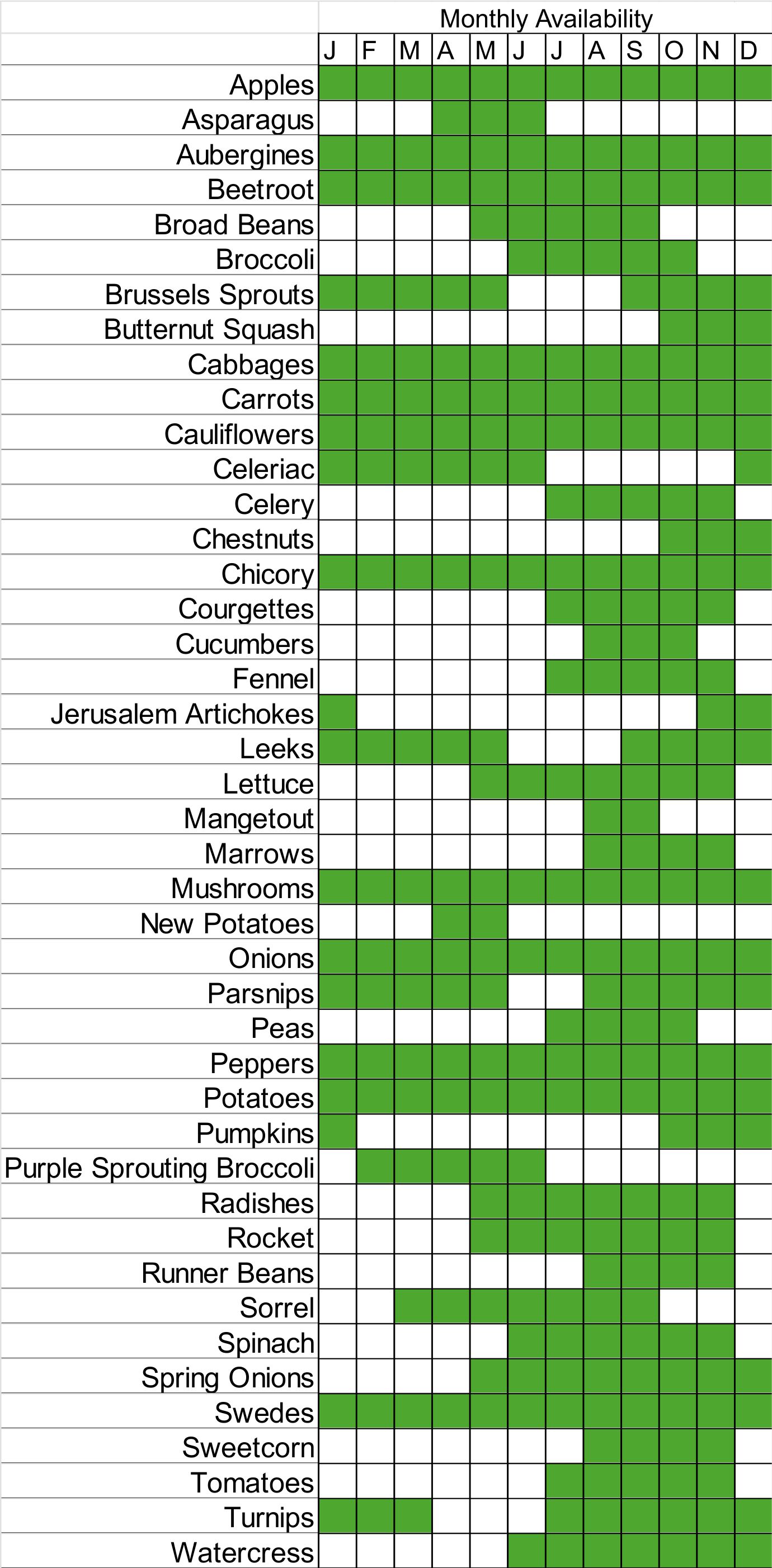

 Adam Tugwell