The money used to acquire assets, fund lavish lifestyles, and build business empires—ultimately shaping the marketplace and its problems—was never real.
It was a construct, a fiction sustained by systems designed to benefit a few at the expense of many.
From the manipulation of legal frameworks to the invention of financial instruments, the expansion of credit, and the unchecked printing of currency, this entire process amounts to a crime against humanity.
What makes it even more tragic is that many of its architects believed their actions were morally justified simply because they were legal.
This illusion of legitimacy has allowed the system to flourish, while millions suffer consequences so distant and abstract, they’re barely recognised as harm.
Excess is only possible when a system enables it. But the existence of such a system does not make its outcomes just. Those who have gained from it are not necessarily right—only advantaged by a structure built to serve their interests.
Money Isn’t Real—and It Can’t Be Permanent If Life Is to Be Fair
Money lies at the root of nearly every problem society faces today.
The relentless pursuit of more—more wealth, more control—has become a corrosive force, infiltrating every corner of life.
So deeply embedded is this obsession that many no longer recognize how money has replaced meaning as the dominant value system.
But money is not natural. It never was. It’s a human invention—an abstraction—designed to facilitate exchange, not to define worth. And yet, it has been deliberately shaped and deployed in ways that make it appear inevitable, even sacred.
To treat money as permanent is to elevate illusion over reality. It distracts us from what truly matters: relationships, community, creativity, and the tangible richness of life.
Money is a symbol, not a substance. Mistaking it for something real is like confusing the map for the terrain—an error that leads us away from what is essential and toward a world ruled by shadows.
Redefining What Things Are Worth
Many political groups, movements, and activists advocate for wealth redistribution as a path to restoring fairness in society. But there’s a flaw in what may seem to socialists like an unshakable argument: the money we use today is only worth what people believe it to be.
The deeper issue lies in how we assign monetary value to everything outside ourselves—objects, experiences, even property.
These values are rarely based solely on the intrinsic worth of the item. Instead, they’re shaped by layers of influence: creators, suppliers, marketers, and increasingly, intermediaries who add nothing of substance but inflate the price through financial manipulation.
This simplification—that everything has a financial value—makes it easy for anyone involved in a transaction to feel they’ve suffered a loss simply by paying too much or receiving too little.
Our relationship with money encourages a constant craving for more: more income, more for what we sell, more for the work we do. More becomes a measure of superiority.
Somewhere along the way, the line between reality and illusion blurred. We moved beyond what we need into what we want and were actively encouraged to do so by a system that insists it’s not just acceptable—but admirable—to want more.
Money has become the default value system, replacing ethical and moral principles. Even laws—once meant to reflect justice—are now shaped to serve the interests of lawmakers and their benefactors and are deemed moral simply because they are legal. These laws underpin the financial mechanisms that justify explosive inflation and guarantee profit, even when the cost to consumers exceeds what they can reasonably afford.
The truth that’s long been overlooked is this: money has no inherent value. Its worth exists only in relation to what it can be exchanged for. The things we truly need have been repurposed—not as tools for living, but as instruments for generating profit.
To build a fair and equal society, we must reject the illusion that our current relationship with money is real or necessary. We must erase the financial values imposed on every tangible thing and release ourselves from the grip money holds over our lives.
Shifting People, Communities, and the Environment toward a New Way of Living—Secured by a Governance Framework for a Better Future
The Revaluation marks a transformative period—a shift in thinking, behaviour, and systems. It represents the transition from a money-centric, neoliberal, and globalised world model to one that prioritises people, human values, and local communities. In this new paradigm, everything is reimagined to support meaningful, positive life experiences for all.
Traditionally, “revaluation” refers to reassessing monetary or financial worth. However, the term has long applied to any kind of review or reassessment—of objects, actions, or opportunities—where the value we assign influences our decisions and actions.
In essence, anything with value can be revalued. Within the context of the global systems that have shaped and often harmed humanity, The Revaluation is a comprehensive transformation. It aims to build a world that is truly better for everyone. This includes the development of new systems, processes, and governance tools that not only secure and sustain this improved future but also prevent any return to the corrupt, inhumane, and damaging structures of the past.
Why The Revaluation Is Necessary
Restoring Our Moral Compass and Reclaiming Humanity from a System That Has Lost Its Way
For too long, we’ve neglected our moral responsibility to consider others—people, communities, and the environment beyond ourselves. Even those most vulnerable, including the lowest-paid and those reliant on the state, have come to believe that success and survival require putting oneself first. This mindset has made it easy to overlook how those with power and resources have taken this pursuit of “more” to extreme and damaging lengths.
Exploitation—of people, systems, and nature—has become so normalised that many instinctively withdraw from acknowledging social problems, especially when solutions might come at a personal financial cost. Money has become the dominant tool for shaping behaviour, influencing every aspect of life—even those that seem unrelated to finance. It has replaced genuine values with a single benchmark: monetary worth.
This relentless pursuit of profit, wealth, and control by a privileged few has led to the collapse of communities, the erosion of human dignity, and the destruction of the environment. The natural systems that once sustained us have been disregarded, and the principle of sustainable living—once a cornerstone of generational survival—has been cast aside. The result is a world where ordinary people struggle to live independently within systems that no longer serve them.
Tragically, this outcome has not been accidental. It stems from deliberate strategies designed to exploit the masses, with depopulation seen as a desirable end once those in control have extracted all they can. By making life superficially easier, they’ve masked harmful changes and encouraged people to embrace their own diminishing value.
The most insidious part of this strategy is the willing participation of the public. Many still refuse to believe that those driving these harmful agendas have been openly declaring their intentions for decades. Our own selfishness has been weaponised—used to distract us and blind us to the truth hidden in plain sight.
When the truth finally becomes undeniable, few will challenge those responsible. Their defence will be simple: “We told you what we were doing, and you chose to go along.” This complicity is deepened by the addictive nature of money-centric living. Money has become not just a tool, but the ultimate goal—an addiction that feeds itself, offering fleeting satisfaction while eroding real happiness and human connection.
Addiction leaves little room for reflection or accountability. Many reject the uncomfortable truth about their relationship with money and its consequences. The illusion of comfort is easier to accept than the responsibility that comes with waking up and choosing a different path.
Spelling It Out: How Life Doesn’t Work
A Breakdown of some of the Systemic Failures We’re Living With
The minimum wage is not enough for anyone to live independently. Without benefits, charity support (like food banks), or debt, survival is nearly impossible.
It’s cheaper to buy food shipped from across the world than to purchase locally grown produce—despite the environmental and social costs.
Retailers are more focused on selling finance packages than the actual products or services we go to them for.
Politicians promise whatever they think we want to hear, deliver none of it, and then do as they please until the next election, when the cycle repeats.
Local councils seem more interested in fining residents for minor offences than in providing meaningful services that help people live well.
Police forces often appear uninterested in tackling real crime.
People are expected to self-censor their thoughts, speech, and actions to avoid offending anyone who insists their personal worldview must be universally accepted.
We’re told that if technology can do something, human involvement is no longer necessary—regardless of the consequences for displaced workers, shuttered communities, or the unsustainable use of resources.
Individuals are increasingly treated as reference numbers—valued only for their potential to generate income for those who can exploit them.
Through the influence of big business, government, and the establishment, we’re being led to believe that farms are no longer necessary to produce food.
Money has become more important than people, values, or the planet.
Private companies and individuals can own and charge rent for access to natural resources that should belong to everyone.
Blame is always shifted elsewhere, even though accountability is one of the most powerful tools for learning and growth.
We’re told to champion diversity, yet the way it’s framed often reinforces divisions between people and communities that might otherwise not exist.
What Will the Revaluation Look and Feel Like?
Understanding the Transformation We’re Already Living Through
The Revaluation—and the process leading up to it—is already underway. We are living through it now.
It’s profoundly difficult to recognise this transformation for what it is, precisely because we’re immersed in it.
Every part of it is unfolding around us and within our individual lives in deeply personal ways.
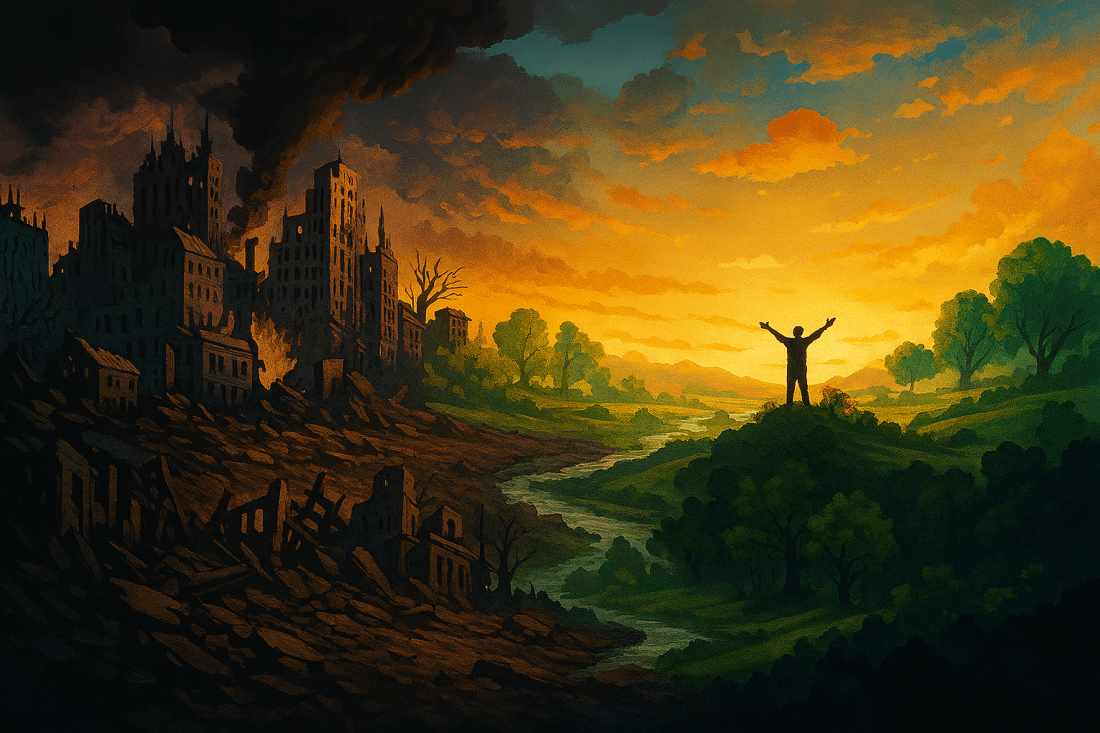
This makes it nearly impossible to take an objective view—much like walking through a forest and only seeing the trees immediately around us, rather than standing on a hillside and seeing the entire landscape.
The changes we’re experiencing—best described as the gradual disintegration of the system we’re leaving behind—are happening bit by bit, affecting each of us differently. Yet a growing sense of shared experience is emerging.
Increasingly, people are recognising that governments and public services are no longer functioning as they should, and that our current system of governance is in disarray.
This doesn’t mean a dramatic event or series of events won’t occur. In fact, it’s likely that such disruptions are already on the horizon. At some point, the system we’re all riding—like a train—will derail.
We’ll then face a choice: attempt to repair and continue on the same damaged track or accept that our future requires a new direction—one not bound by tracks laid by others and not limited by a system incapable of change.
In truth, we’ve come far enough to know that change is inevitable. The real question is whether we’ll embrace meaningful transformation that could benefit everyone or resist it out of fear—clinging to the comfort of a train we’ve grown dangerously accustomed to.
The opportunity to engage in conversations and act toward building a Local Economic and Governance System is already available to us.
While the defining milestones of The Revaluation may not yet have arrived, they are surely close. Now is the time to explore, plan, and consider how a fully localised, people-centric system can work—for us and for everyone.
This morning, Chancellor of the Exchequer Rachel Reeves delivered her pre-budget statement ahead of the Autumn Budget, scheduled for 26th November.
Despite mounting welfare costs, Reeves offered no meaningful solutions — only strong hints that taxes will rise, paired with blame deflected onto everything and everyone except the government itself.
It’s no surprise, then, that Nigel Farage rushed out a bold announcement promising welfare cuts if Reform wins the next general election yesterday, while Tory leader Kemi Badenoch quickly followed Reeves with an online broadcast that, in substance, amounted to much the same.
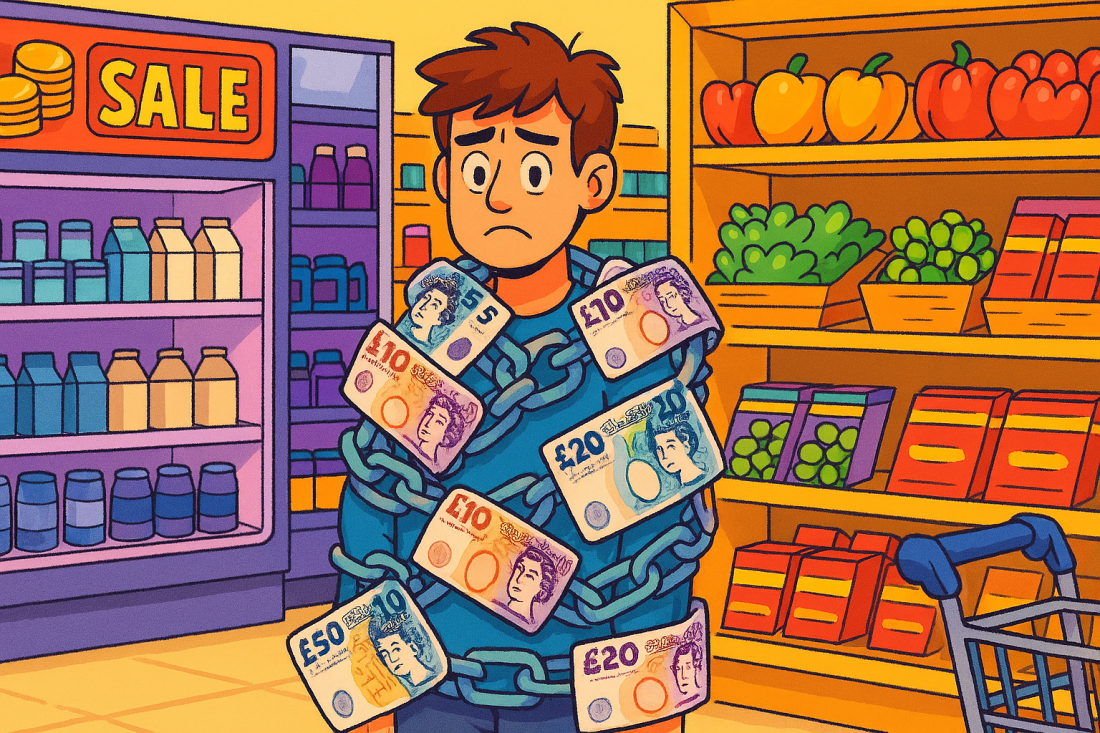
As the government flounders, it seems poised to announce little of substance of savings on benefits or public services — yet millions already trapped in a financial vice not of their own making will see the cost of living rise again, working harder for ever-diminishing returns.
The Tories — who helped engineer the current crisis over their 14-year tenure up to summer 2024 — and Reform — now visibly undergoing their own establishmentisation makeover — aren’t offering help to people either. They’re offering help to the economy.
And that’s precisely where the problems began for those whose lives revolve around the benefits system today.
There are hard truths here. Truths that many untouched by poverty still find just a little too uncomfortable to believe.
There will always be people who are:
• Out of work for valid reasons
• Unable to work due to illness, disability, or caring responsibilities
But there are also many people who want to work and are able to work — yet still can’t. Why? Because:
• They can’t find jobs that match their experience
• They can’t find roles that fit their qualifications
• They simply don’t “fit” the mould employers are looking for
It’s easy to assume that anyone who wants a job can get one — any job, at any time. And it’s just as easy to judge those who don’t take “any job” as lazy, entitled, or abusing the benefits system.
But those who make these judgments often haven’t experienced what it’s like to be unemployed and dependent on state support.
The Reality of Benefits
Let’s be clear: basic benefits are not enough to live on.
We’re surrounded by comforting myths — stories we rarely question unless we’re forced to confront the truth. One of the most dangerous myths is that the National Minimum Wage is enough to live on independently.
• Minimum Wage: £12.21/hour. For a 40-hour week, that’s about £2,116.40/month
• Actual cost of living: To live independently, a single person likely needs £16–£17/hour — around £2,773.33/month
That’s a shortfall of over £600/month, even for someone working full-time on minimum wage.
The Impossible Choice
Now imagine you’re unemployed, with no savings or support, and your only option is to claim £628.10/month. What do you do?
• Take a job that still doesn’t cover your basic needs?
• Or claim every benefit you can, just to survive?
For many, working full-time in a low-paid job — often under poor conditions and public judgment — while still needing benefits just doesn’t make sense.
The Myth of the “Benefits Culture”
The idea that claiming benefits is an easy ride is a myth. Genuine claimants are treated the same as those gaming the system. The rules are rigid, often making it harder — not easier — to find meaningful work.
Pushing people into low-paid jobs that still leave them reliant on benefits, food banks, or debt might reduce one type of welfare cost. But it could as easily increase the others — through the problems that an ill-considered attempt to push everyone into ‘work’ will create, like mental health issues, workplace burnout, and long-term poverty.
The AI Displacement Problem
A growing wave of joblessness is being driven not by lack of talent, but by the unnecessary and unchecked takeover of roles by artificial intelligence.
Skilled, experienced professionals — once vital to their industries — are being sidelined by automation that prioritizes cost-cutting over human value.
As more capable workers are pushed into the job queue, many will find themselves forced to claim benefits, not because they lack ability, but because the system no longer has space for them.
The Bigger Problem
Most people on benefits aren’t lazy — they’re surviving.
When life becomes a daily struggle, the benefits system can feel like the only option.
But simply cutting benefits without creating real alternatives — like jobs that pay enough to live on — risks pushing thousands into homelessness and crisis.
The Psychology of Work and Pay
Most people don’t need prestige — they need security.
If lower-paid or less challenging jobs guaranteed that workers could meet all their financial obligations and live with dignity, many would take them without hesitation.
The problem isn’t the work itself — it’s that the pay doesn’t match the cost of living.
When people know they can cover rent, bills, food, and essentials every month, they’re far more willing to contribute, even in roles that society undervalues.
What Needs to Change
We can’t fix the benefits system without fixing the economic system that creates the need for it.
If we want fewer people on benefits, we must:
• Build an economy where full-time work pays enough to live on — without top-ups
• Stop supporting a system that enriches a few by impoverishing the many.
Until the government legislates for a fairer system — one where the lowest-paid can live independently on a full day’s work — poverty will persist.
The Basic Living Standard is a foundational guarantee that ensures every individual earning the lowest legal weekly wage can afford all essential costs of living—without falling into debt, relying on welfare, or turning to charity.
It defines the minimum threshold of financial independence, where core needs—such as food, housing, utilities, healthcare, transport, clothing, communication, and modest social participation—are fully covered by earned income alone. It also includes provision for savings, unexpected costs, and fair contributions to society.
This standard is not aspirational—it is structural. It affirms that full-time work at the lowest wage must equate to full dignity, autonomy, and security.
***
No food banks. No emergency loans. No skipped prescriptions or unpaid bills. Just a life that’s livable, sustainable, and free from poverty.
Assisted Dying may be controversial for those uncomfortable with the realities of Death. But it’s not the same thing as suicide and anyone uncomfortable with that reality should not be influencing public policy
To say the issues underpinning the purpose of the Bill are proving to be massively controversial would be an understatement.
But the whole question is very complex even before beginning to consider the answer and mechanics of a solution. And this reality seems to yet again be being missed by many politicians by who really should know much better.
Sadly, for us, they don’t. And whilst the Bill could and should have been handled far better than it has by the current government, the different fear-driven arguments lining up against it risks thousands – and potentially even some of those who are arguing against it right now – finding themselves unable to access the relief that they need. For no better reason than the indulgence of the unfounded fears of those who probably never will.
The tricky part is Death
Perhaps one of the most difficult subjects for any of us to deal with in life, is the question of mortality and death.
Few of us find comfort with the certain reality that our bodies will eventually die.
We certainly don’t wish to contemplate the idea that we could find ourselves incapacitated one day.
And we really don’t feel comfortable considering the possibility of a situation ever existing where we would be unable to communicate with others at the time when wishing to find a peacefully assisted way out of life may in fact be the genuinely preferential choice.
It is much easier instead to assume that we would and could never want to end our own life and have reason to ask for help to do it. That this is something that would never happen to me. And that what life means to us today must be protected and held secure in any way that it possibly can be.
To be fair, this is a feeling shared by almost everyone who has no health problems; is perhaps younger than most, or who has no reason to believe that they could ever find themselves at a very difficult stage of life where death might be the preferable option.
A situation where they would be experiencing significant and potentially intolerable discomfort and pain, that may itself be beyond the scope of functional life if to continue means becoming dependent upon high levels of pain relief.
However, for those who have already found themselves staring their mortality in the eye, knowing that there’s unlikely to be anything good about their last hours, days and perhaps many weeks before they go, looking reality in the eye takes on a very different meaning.
As we consider what the outcome of this Bill really means for people other than ourselves, it’s important for us all to understand that the experience of dealing with an end of life that has now become expected and what that means to the patient can be just the same if not worse for very close family and loved ones – who will know what this kind of suffering means more than most thankfully could.
Assisted Dying and Suicide are only similar in so far as they both involve the choice to end your own life
The fact that we are culturally backwards when it comes to death, means that we fail to have or take part in the conversations and openness about what is essentially the last part of life.
We don’t discuss or consider the realities of death as we really should.
Therefore, we avoid looking more closely at what the process of dying for those who do go with the knowledge they are going to do so really means.
The prickliness this lack of discourse creates leaves many of us facing the ridiculous situation where we back off from friends and people we know with terminal illnesses and even cancer diagnoses; sometimes without even realising that we are avoiding the issues around mortality.
Issues that would make life a lot easier for everyone if we were more willing to embrace them as being normal.
That said, everyone should recognise that there is a very distinct difference between the circumstances where a person will have to contemplate the otherwise unthinkable need to alleviate pain and suffering by ending their life sooner than what will already be an early death, and the equally tragic but also all too often isolated and lonely circumstances that surround the question of Suicide for those who have reached or are reaching anything like the conclusion that they no longer wish to continue in their life.
Assisted Dying and Suicide are not the same thing
There is a significant difference between choosing to die by committing Suicide and choosing to die through a process of Assisted Dying.
People choose to end their life through Suicide because they find the prospect of continuing to remain alive in their body too painful to contemplate.
People would choose Assisted Dying, not because they want to die. But because remaining in their body has become too painful or difficult to continue being alive – and what we would likely all agree as being a realistic quality of life is therefore no longer possible.
Whilst some would argue that there is no difference between the two, or that the differences are too subtle to make any real difference, the reality is that the need for Assisted Dying is based upon the alleviation of pain and circumstances that are or will be created by our physical state. Whereas the wish to end life through Suicide reflects pain and circumstances that are ultimately created by our mental health – often by external factors and our relationship with them – that are outside of our control.
In the most basic terms, we are talking about the differences between physical and mental pain.
As Assisted Dying is about addressing physical pain, it seems only appropriate that this is dealt with as any other physical health issue would be – with specific policies and procedures to deal with it.
Being idealistic is great, until idealism meets practical reality
We are at least talking about Assisted Dying – even if there is a significant risk that those who are afraid of what will happen if the Bill becomes law are potentially being as inconsiderate to the few that really need this option, as those involved in the debate who may well have more sinister considerations in mind.
Suicide, on the other hand, is the silent tip of the wider mental health epidemic. Quietly swept under the carpet. Probably because just like the prospect of experiencing a natural death, which may be unbearably painful, very few of us believe that we could ever reach the level of desperation, where we might want to take our own life, simply because we no longer felt able to go on.
Where the picture can blur: Suicide and the Mental Health Epidemic
Regrettably, we are living in times where the boundaries of common sense and the values that underpin life have been deliberately blurred so that experiences and actions that are either different or motivated very differently can be argued as either being the same or resulting in the same thing.
People in genuine need of consideration and help are forgotten, whilst fashionable problems become the priority for all.
Whilst the realities that underpin Suicide and Assisted Dying can be defined between the escape from mental or physical pain, it must also be recognised that there is a potentially significant group of people who may feel more open to the idea of ending their lives, if they were to be able to engage in the process of Suicide with the assistance of someone else.
It’s easy for those looking on to scoff at this and therefore write off any such position as being whimsical. But for those who are thinking about the process of taking their own life methodically, the prospect of failing but making things worse for themselves is as real as the reality that others need help either to see things from a different perspective, or more likely changes to their circumstances which at that point feel well beyond their own control.
We should be under no illusion that those who have really reached the point where they cannot continue to live will find a way to make an exit.
The real selfishness that rumbles alongside the difficult subject of Suicide, isn’t the act on the part of the person who succeeds in taking their own life – no matter who or what circumstances they may leave behind.
The genuine selfishness surrounding Suicide is the lack of empathy and consideration on the part of others who cannot or will not conceive, just how desperate, lonely and hopeless a situation will have become for anyone, when they have concluded that the only solution for them is to take their own life.
Instead, many others make ‘their’ pain, about ‘me’.
It is an absolute tragedy that any person, no matter the circumstances, should find themselves considering Suicide as an option.
But the problem is very real, and anyone choosing to pretend that the questions this whole debate raises don’t matter, because it’s not something that normal people deal with every day, is simply deluding both themselves and anyone they are making decisions about life on behalf of.
Meanwhile, the ONS tells us that in 2024 there were 568,613 deaths in England & Wales, meaning that in today’s terms, we are talking about at least 1% of deaths each year for Suicide and Assisted Dying (More than 2% or 2 deaths in every 100), which feels like a lot of people to be trying to escape life or death level pain, who are currently being overlooked.
Assisted Suicide is something different, again
Opening up the meaning of Assisted Dying so that it is considered to be the same as Assisted Suicide could indeed be a significant problem. If the appropriate safeguards are not in place.
However, the circumstances should never exist where Assisted Suicide becomes a problem. Provided that an adequate system of checks and balances are put in place that prevent any situation from coming into existence where death could arguably become a lifestyle choice. Thereby effectively legalising the death of ‘unwanted’ people at the hands of others who get away with murder.Because the establishment has helpfully allowed circumstances to exist where this terrible act can be given a different meaning by using an alternative name.
However, shutting down those possibilities does not address the reality that there are a lot of very unhappy people across the UK.
People whose lives could be improved massively if those responsible for public policy and direction were doing their jobs properly.
And there are a lot more suffering with these problems than any of our politicians might openly like to think.
Regrettably, as with most things where politicians and influencers are getting so wrong about the lives they are supposed to be improving, you really do have to have experienced a mental health problem or had your life touched by someone experiencing one to even begin understanding how very real the impact on functional life for the sufferer and those around them can be.
It is horrid to have to consider that once any person has stepped into the living tragedy that is the mental health epidemic, there is very little available to help those suffering to find a cure, beyond management of the condition itself.
Unfortunately, many of the causes of the wider mental health problem and indeed the absence of the types of support and the environments that create real happiness stem from the massively unsustainable, money and material orientated and valueless lives that we are now leading and that we are encouraged to live.
It is a situation that is itself dehumanizing the way that we approach everything and is therefore making our interpretation of such difficult issues as Assisted Dying and Suicide considerably worse.
The role of fear for those making decisions for us who are themselves completely unaffected
Our political system is failing us through the selection and appointment of so-called leaders who cannot lead, who we know today as politicians.
Lack of good leadership and public representation has become so problematic and embedded across society that it has become difficult to comprehend just how far the rot has spread throughout the public sector and our entire system of governance.
Regrettably, poor leaders, who don’t have the qualities and abilities necessary to lead, are as likely to indulge their own fears whilst identifying them as being those of everyone, as they are to being led in any direction that they are advised by whoever they might choose to listen to or be influenced by at any time.
Yes, there are very good reasons why no sanctioned or legalized form of death that involves the assistance of anyone else should simply not be allowed.
However, this is the 21st century. We do not exist in times where a system of checks and balances would be difficult to put in place and maintain.
If any good government were to consider the facts and mechanics of how the genuine need for a pain-free or comfortable death for those who are already known to be terminally ill and have rapidly reducing or arguably no remaining quality of life, a properly considered and fully consulted process should be more than possible.
However, it would need to be conducted without the emotion and the irrationality that is running rampant through the corridors of power at this time.
We would then surely be able to create and implement a system that would work for everyone, providing all the assurances necessary, whilst managing what are the relatively small figures of people who need Assisted Dying as an option in real terms, so that they can make the choice.
It is unacceptable that we have people who have been elected to represent us and therefore make meaningful and fully considered decisions upon our behalf, who do not have sufficient self-awareness to be able to discern that they are considering only their own views and experiences.
Nobody should be enabled to consider their own view to be qualified and therefore more reliable than that of others, purely because of the position that they have attained, and nothing more.
The Depopulation Agenda
Perhaps the most destructive element of the Assisted Dying debate entering public discourse, is the growing fear that the whole Bill has been introduced as some kind of trojan horse; rolled into the legislative agenda with the intention of facilitating a Depopulation plan of the kind that has been mentioned by a number of different speakers linked either to the worlds elites or world-government-obsessed organisations such as the WEF.
Sadly, experience suggests that both the last Conservative as well as the current Labour Governments have pursued agendas that have zero alignment with the public good.
Decisions made and policies enacted are massively out of touch with reality and common sense.
They appear to have either been built upon the ignorance and ineptitude of the politicians themselves; because they are having their strings pulled by someone else, or both.
Regrettably, the fact remains that in terms of the things that politicians have and are doing that harm us and have the potential to harm us even more in the future, there are much bigger and much more real issues that we are choosing to ignore that are already affecting us and our lives today. Issues that are themselves laying the groundwork for sinister levels of societal control that make clear there really is no need for politicians to use such obvious tools as this Bill to achieve such aims – if that’s what they intend.
The fear that a growing number have of the establishment and all those who seem to have been able to maintain unquestionable levels of societal control, is very real to those who feel it.
But this fear could quickly be addressed if we were to all stop going along with the information meal that we keep getting served; take back our own power and begin taking steps to make every decision that relates to our lives, our communities and our environment, for ourselves.
Done properly, Assisted Dying would not be open to abuse by the State or anyone else
Were the process of putting a policy for Assisted Dying together conducted properly and with the resources, time and impartiality that it should be – given that as things stand, we are arguably kinder to our pets than we are to other people when it comes to the practicalities of dealing with a physical need for euthanasia, there is no reason to doubt that the necessary safeguards and protections could be put in place to ensure that no circumstances could exist where assisted suicide – whether voluntary or involuntary – could take place. Even in cases of dementia or other forms of mental incapacity where the sufferer had not themselves given reasoned and appropriate consent.
Regrettably, whether the Bill currently working its way through the Legislative system was as well intended as it arguably should have been or not, the reality is that like most things this political class touches, it is anything and everything else that sits beyond the real purpose and outcomes for the genuine beneficiaries of a successful process, that seem to be getting prioritised first.
Useful Contacts:
If you have been affected by any of the issues that have been discussed in this Essay, and are not already in touch with them, you can reach The Samaritans on the phone by calling 116 123 or Mind by calling 0300 102 1234.




 Adam Tugwell